
The best things to do in Lisbon on a first visit fit into three natural clusters: Baixa and Chiado, the Alfama hills, and Belém. Add an evening of fado or a short ferry ride across the Tagus, and the city begins to feel like more than a list of tiled façades.
Three days is a comfortable starting point. Lisbon looks compact on a map, but steep streets, polished cobblestones, and popular-entry lines slow the day in entirely reasonable ways. If an overnight flight from the United States is involved, keep the first afternoon gentle; a little preparation with these long-flight essentials can also make arrival less theatrical.
A Quick Way to Plan a First Lisbon Visit
Group each day by area instead of zigzagging across the city. Saving the places below into neighborhood lists—as explained in this guide to planning a trip on Google Maps—makes the hills and travel time much easier to judge.
| Area | Best for | Allow |
|---|---|---|
| Baixa and Chiado | Grand squares, cafés, shopping streets, and an easy first walk | Half a day |
| Alfama and Graça | The castle, viewpoints, old lanes, and historic trams | Half to a full day |
| Belém | Jerónimos Monastery, the waterfront, and pastries | Half a day |
| River or fado evening | A skyline view or Lisbon’s most distinctive musical tradition | One evening |
Three Details That Make the Day Easier
- Check opening days before choosing the route. Lisbon’s major sights do not all share a calendar, and temporary closures can change the sensible order. Use the attraction’s official site on the morning of the visit, not a screenshot of an old timetable.
- Buy official online tickets selectively. An official online ticket is useful for the castle or monastery when the date is firm. It can remove the purchase line, but security and capacity controls may still mean a wait.
- Protect one flexible hour. A tram may be full, a viewpoint may deserve longer, or lunch may be better than expected. That open hour is not wasted itinerary space; it is what keeps the day from becoming a commute with monuments.
Start in Baixa and Chiado
1. Walk from Rossio to Praça do Comércio
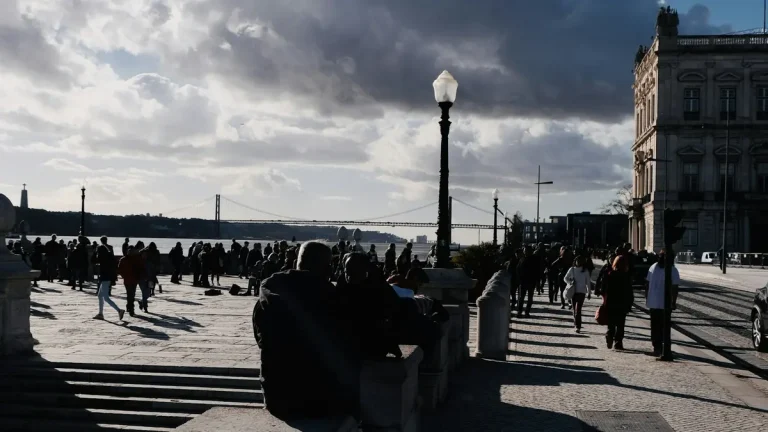
This mostly downhill route is a useful first lesson in Lisbon’s layout. Begin around Rossio, follow the broad streets of Baixa, and finish beneath the arch at Praça do Comércio, where the city opens onto the Tagus. The square is impressive, but the smaller details along the way—wave-pattern paving, old shopfronts, and glimpses of tiled buildings—do more of the storytelling.
Continue along the riverfront if energy permits. There is no need to schedule every block; this is the part of Lisbon that works well without a stopwatch.
2. Explore Chiado and Carmo
Chiado combines bookshops, cafés, shops, and some of the center’s easiest people-watching. Walk up toward Largo do Carmo for the roofless convent ruins and a quieter pocket just above Baixa. The Santa Justa Lift is striking from street level, but CARRIS currently lists it as temporarily closed. Walk up through Chiado instead, and treat the lift as architecture unless the official service page confirms that it has reopened.
Climb into Alfama and Graça
3. Visit Castelo de São Jorge
The castle earns its place for the wide city-and-river views as much as for its walls. Buy tickets through the official site to bypass the ticket-purchase line, then aim for opening time or later afternoon. Online entry does not make every queue disappear, especially on busy days, but it removes one avoidable one.
Afterward, walk downhill rather than trying to build a second major attraction into the same hour. The lanes below the castle are part of the visit.
4. Wander Alfama and choose one miradouro
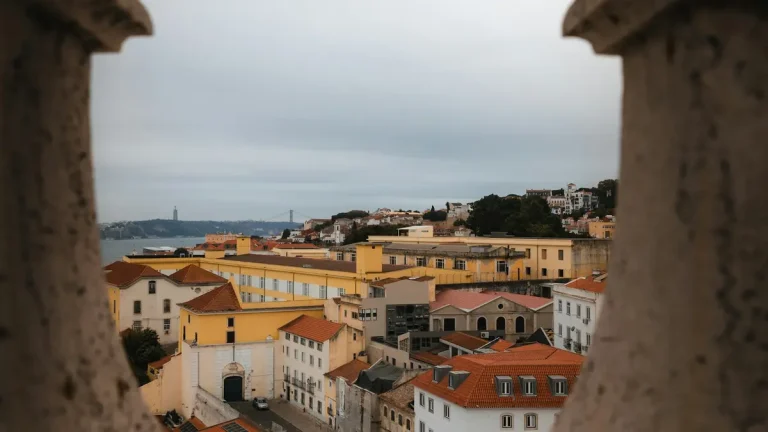
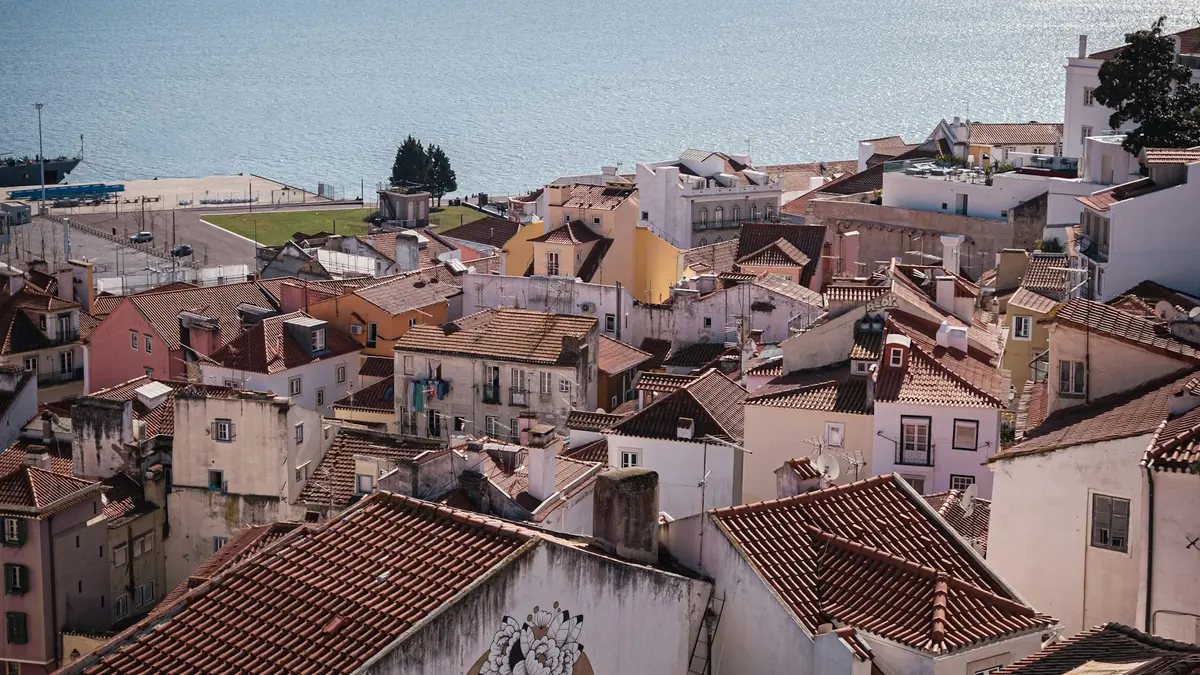
Alfama rewards slow turns, not a rigid route. Pass the cathedral, follow the lanes toward Portas do Sol or Santa Luzia, and stop at one viewpoint long enough to notice the terracotta roofs folding toward the water. It remains a residential neighborhood, so keep voices down on small streets and do not treat doorways or laundry lines as a photo set.
The slopes and slick calçada are real. Shoes with grip matter more than polished city styling; the Europe packing list covers the useful layers and walking-day basics without suggesting an expedition wardrobe.
5. Ride a historic tram—if the timing works
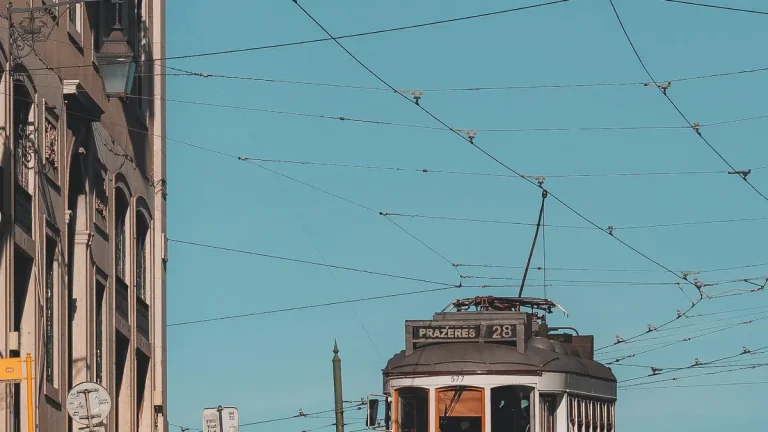
Tram 28 passes many of the historic neighborhoods, which is precisely why it can be crowded. Go early and keep belongings zipped on a packed car. If the terminus line is already winding down the street, Tram 12 offers a shorter circular route through the eastern historic hills. Walking part of Tram 28’s route is another useful alternative.
Lisbon does not award extra credit for waiting an hour for public transportation. A compact day bag and a charged phone help on long walking-and-transit days; this list of travel essentials for women keeps that preparation practical.
Give Belém a Proper Half-Day
6. See Jerónimos Monastery
Jerónimos Monastery is the architectural centerpiece of Belém, with intricate stonework that rewards looking closely. It is closed on Mondays, and the most useful strategy is to check the official calendar, buy the appropriate ticket online, and arrive near opening. An advance ticket may shorten the purchase process; it does not always eliminate the security or entry line.
Allow enough time to consider the monument’s maritime context, including the wealth and power behind Portugal’s age of expansion, rather than treating the cloister as an ornate backdrop.

7. Walk the waterfront to Belém Tower
From the monastery area, continue toward the Monument to the Discoveries and Belém Tower. The riverside walk gives the district room to breathe after the monastery’s detailed interiors. For many visitors, the best experience of the tower is its exterior setting beside the Tagus. Go inside only if the current line and opening status suit the day; the narrow interior is not mandatory for understanding the landmark.
8. Stop for a pastel de nata
Belém is the obvious place to try the warm custard tart dusted with cinnamon. At the famous bakery, check whether the seated rooms are moving faster than the takeaway line. Elsewhere in Lisbon, a good neighborhood pastry shop can deliver the same essential contrast: crisp laminated pastry, soft custard, and no need to turn dessert into endurance sport.
Let Lisbon Be Heard—or See It from the Water
9. Hear fado in the evening
Fado is a living Lisbon tradition, not simply background music for dinner. Choose a dedicated fado house or small performance, check whether food is required, and reserve ahead if a particular venue matters. During songs, conversation stops. That small piece of etiquette makes the experience better for the room and for the performers.
If a late evening is not appealing, the Fado Museum in Alfama offers a daytime introduction and a useful indoor option. Check its official hours before going.
10. Take the ferry to Cacilhas
For a different view of Lisbon, take the ordinary passenger ferry from Cais do Sodré to Cacilhas. The crossing is short, inexpensive compared with a sightseeing cruise, and good for seeing the hills as a single skyline. Walk the waterfront, have a meal if timing works, then return after the light begins to soften. Check the current operator schedule rather than building the evening around an old blog timetable.
What to Save for Another Day
Sintra deserves a full day and should not be squeezed between Belém and dinner. Parque das Nações and the Oceanário are worthwhile—especially with children or in poor weather—but sit apart from the historic-center clusters. LX Factory, Pink Street, and every famous rooftop can also be optional. A first visit feels better with one unplanned hour than with six neighborhoods collected before lunch.
Lisbon First-Visit FAQ
What should you not miss in Lisbon?
For a concise first visit, prioritize a Baixa-to-river walk, Alfama and one viewpoint, Castelo de São Jorge, a Belém half-day, and either fado or a Tagus crossing. Tram 28 is memorable when the wait is reasonable, but it is not more essential than the neighborhoods it passes through.
How many days do you need in Lisbon?
Three full days cover the central districts, Alfama, and Belém at a comfortable pace. Add a fourth day for Sintra, the Oceanário, more museums, or a slower food-focused day. With only two days, stay inside Lisbon and choose either Belém or a longer eastern-hills visit rather than compressing both.
Is Lisbon walkable?
Yes, within each neighborhood cluster. It is not flat. Use the metro, trams, or an occasional rideshare to handle larger jumps, then walk downhill where possible. Grippy shoes, water, and a route grouped by area are more useful than an ambitious step-count target.
Lisbon’s strongest first visit leaves time to look back from a miradouro, hear a room go quiet for fado, and reach the river without racing the clock.