A useful Lisbon Portugal food guide starts by separating the city’s own associations from the country’s pantry. Pastéis de Belém have a precise Belém story, bacalhau à Brás is closely associated with Lisbon, and grilled sardines become unmistakably local during June festivities. Bifanas, caldo verde, shellfish, petiscos, and egg-rich desserts are Portuguese foods you can eat in the capital—not souvenirs invented inside city limits.
For a first visit, prioritize a warm pastel de nata, one salt-cod preparation, sardines if they are in season, a bifana or prego, and either clams, grilled fish, or seafood rice. Add petiscos when you want to share. This guide explains the food and the ordering rules; the separate guide to the best restaurants in Lisbon handles where to book.
What to Eat in Lisbon at a Glance
| Food | What it is | Useful context |
|---|---|---|
| Pastel de nata | Flaky custard tart | Lisbon’s essential pastry; only the Belém bakery uses the Pastéis de Belém name |
| Bacalhau à Brás | Salt cod, onions, thin potatoes, and egg | Lisbon-associated and approachable for a first cod dish |
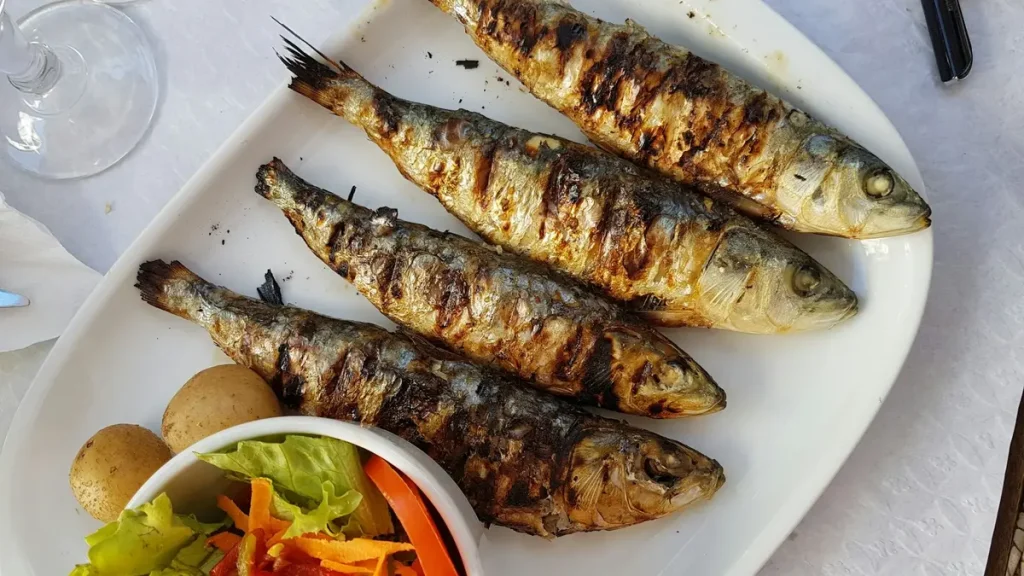
| Sardinhas assadas | Whole grilled sardines | Strongest Lisbon connection during June street festivities |
| Bifana | Seasoned pork sandwich | Portuguese, quick, and usually a better light meal than a tasting checklist |
| Prego | Beef sandwich, sometimes served after seafood | Ask whether it comes in bread or as a plated steak |
| Amêijoas à Bulhão Pato | Clams with olive oil, garlic, coriander, and lemon | Good for sharing; a mollusc-allergy concern |
| Grilled fish or seafood rice | Whole fish or brothy shellfish rice | Confirm price units and how many people a rice dish serves |
| Petiscos | Portuguese small or shared dishes | Portions vary; order a first round before estimating the table |
| Caldo verde | Potato and shredded-greens soup | From northern Portugal, though widely served in Lisbon |
| Pudim de ovos or arroz doce | Egg pudding or rice pudding | National comfort desserts when one more custard tart feels overly diligent |
What to Eat in Lisbon
Pastel de Nata: Lisbon’s Essential Pastry
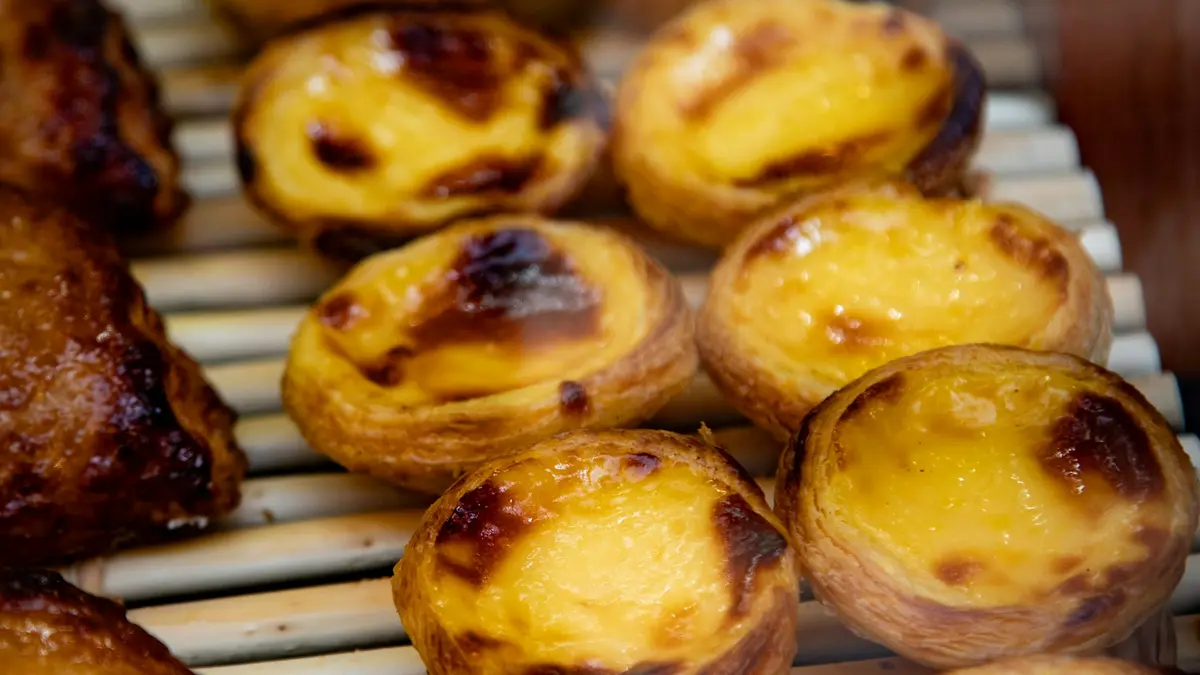
A pastel de nata should have crisp laminated pastry and custard with dark caramelized spots, not a uniformly pale top. Cinnamon and powdered sugar are optional. Eat one warm when possible, then decide whether the famous version is your favorite; pastry loyalty need not be settled by municipal decree.
The name matters. Pastéis de nata are made across Portugal, while Pastéis de Belém refers to the bakery in Belém that says it has produced its version beside the Jerónimos complex since 1837. A queue may change by time and season. It proves demand, not that every visitor must wait in it.
Bacalhau à Brás—and a Bowl of Caldo Verde
Bacalhau means salt cod, a national ingredient with many preparations. Bacalhau à Brás combines shredded cod with onion, thin fried potatoes, and egg, usually finished with parsley and black olives. Its soft, savory texture makes it a gentler introduction than a thick cod loin. It is widely associated with Lisbon, but the larger salt-cod tradition belongs to Portugal.
Caldo verde is another useful correction to city-only food lists. The potato-and-greens soup originated in northern Portugal and is eaten throughout the country. It often includes slices of chouriço, so vegetarians should ask about both the garnish and the stock rather than trusting the color green to complete the paperwork.
Grilled Sardines: Best With Seasonal Context
Whole sardines grilled over charcoal are woven into Lisbon’s June Popular Saints celebrations, especially St. Anthony’s night on June 12–13. They arrive with skin, bones, and a concentrated oily flavor; this is not a discreet fillet. Outside the main season, ask whether the sardines are fresh or frozen instead of treating them as a compulsory year-round order.
June street stands can be smoky, crowded, and informal. That is part of the celebration, not evidence that every sardine in town is identical. If navigating bones while standing is unappealing, order them seated elsewhere or choose another fish. At a street stand, hands are normal and expected; at a sit-down table, press the fish flat with a fork and use a knife to pull the flesh away from the central bone rather than trying to fillet it whole, and eat the skin along with the flesh, since much of the flavor sits there.
Clams, Whole Fish, and Seafood Rice
Amêijoas à Bulhão Pato are clams opened with olive oil, garlic, coriander, and lemon. They are fragrant, briny, and designed for bread to meet the sauce. They also belong to the mollusc allergen group; shellfish is not one single allergy category in EU guidance, so name the specific crustacean, mollusc, or fish concern.
At a marisqueira or fish restaurant, whole fish and shellfish may be listed ao peso or with a price per kilogram. Ask the price unit and the approximate weight—and therefore estimated total—before the kitchen begins. A figure beside the fish is not necessarily the price of the entire fish.
Arroz de marisco is a loose, brothy seafood rice rather than dry paella. It may be intended for more than one person. Ask para quantas pessoas?—for how many people?—before a solo lunch develops a supporting cast. The same question helps with large fish and platters.
Bifana and Prego: Two Useful Sandwiches
A bifana is pork in a roll; a prego is beef, often with garlic. Recipes and sauces vary by region and counter, which is more useful to know than any claim about the one authentic version. Either can solve a quick lunch, late snack, or solo meal without requiring several shared dishes. Ask no pão for the sandwich form if the menu also offers a plated version.
Petiscos: A Format, Not a Promise of Tiny Plates
Petiscos are Portuguese dishes meant for snacking or sharing, such as cod fritters, croquettes, octopus salad, or pica-pau. Calling them Portuguese tapas is convenient but incomplete. More importantly, petisco does not guarantee a two-bite portion. Ask how many dishes suit the table and order in rounds. This prevents both an austere dinner and the arrival of six plates that each believed they were the main course.
Dessert Beyond Nata—and Conservas to Carry Home
After the tart, look for pudim de ovos, a smooth egg pudding, or cinnamon-dusted arroz doce. Both belong to broader Portuguese sweet traditions. Tinned fish, or conservas, can be a practical food gift, but check species, origin, and production details rather than buying the most theatrical label. The guide to Lisbon shopping districts covers where to browse; food markets remain a separate question.
How to Order in Lisbon Without Bill Surprises
Decide About the Couvert Before Touching It
Bread, olives, butter, pâté, or cheese placed on the table may be a couvert, not a complimentary welcome. Portuguese law requires the couvert and its price to appear on the price list. It also says an unrequested item cannot be charged unless the customer has made it unusable.
The cleanest practical move is immediate: if you do not want it, ask for it to be removed and leave it untouched. If you eat or handle it so it cannot be served again, expect it on the bill. A bread basket should not require a small legal seminar, but thirty seconds of clarity helps.
Ask What the Price and Portion Describe
Dose means a portion and meia dose a half portion where offered, but neither guarantees a standard size. Prato do dia is the day’s dish; ask what comes with it rather than assuming a drink and dessert are included. For seafood or whole fish, confirm whether the menu shows a portion price, a unit price, or a price by weight. For shared rice, stews, and petiscos, ask how many diners the kitchen expects it to feed.
Order one fewer shared dish than your jet-lagged instincts demand. More food can be added; a crowded table rarely agrees to become uncrowded.
State Allergies Directly
EU rules require allergen information for non-prepacked restaurant food, and written information must be available on request even when staff communicate it verbally. The fourteen regulated groups include fish, crustaceans, molluscs, gluten, eggs, milk, nuts, and sulphites—several of which can share one Portuguese table.
For a severe allergy, tell staff before ordering, ask about cross-contact, and carry the condition written in Portuguese. An allergen chart is useful information, not a guarantee that every fryer, grill, or serving utensil is separate. If the kitchen cannot answer clearly, choose another dish or restaurant.
Many traditional kitchens split lunch and dinner service. Check current kitchen hours, especially if you prefer a 6 p.m. meal; an open door does not guarantee the full menu all afternoon.
Use a Three-Term Coffee Decoder
Order um café or, in Lisbon, uma bica for a small espresso. A meia de leite is coffee with milk in a cup, while a galão is a longer, milkier drink usually served in a glass. Exact strength varies, so these terms are a starting point rather than a chemistry formula. At a busy counter, pay attention to whether payment happens when ordering or after drinking.
Ask for the Bill; Tip by Choice
When ready, ask a conta, por favor. Check that the couvert and any price-by-weight item match what was accepted. Tipping is voluntary in Portugal. Round up or leave a modest extra for good service if you wish, but an American 20 percent default does not need to follow your passport across the Atlantic. If a suggested gratuity appears, you may decline it.
A Simple First-Trip Food Plan
Choose one pastry stop, one quick sandwich, one seafood or salt-cod meal, and one flexible dinner. Save them near the day’s things to do in Lisbon instead of crossing the city for every bite. The Google Maps trip-planning method can keep addresses and current hours together.
Leave food-hall and traditional-market comparisons to the planned Lisbon food markets guide. For this trip, the better goal is simpler: understand what is on the plate, ask what the number on the menu means, and leave room for the pastry you did not schedule.
Frequently Asked Questions
What food should you try in Lisbon?
Prioritize a warm pastel de nata, one salt-cod preparation like bacalhau à Brás, sardines if they're in season, a bifana or prego sandwich, and either clams, grilled fish, or seafood rice. Add petiscos when you want to share.
Is pastel de nata only made in Belém?
Only the Belém bakery uses the Pastéis de Belém name for its version, but pastéis de nata are Lisbon's essential pastry sold widely across the city under that more general name.