
Lisbon public transport is easiest once you stop treating it as one system. Use the Metro for fast cross-city trips, Carris buses and trams for hills and gaps, CP trains for Sintra or Cascais, and Transtejo/Soflusa ferries to cross the Tagus. The same rechargeable card can be a useful ticket carrier, but each operator still has its own fares and validation rules.
For most first-time visitors, the sensible default is one navegante occasional card per person, loaded either with zapping credit for flexible pay-as-you-go travel or the specific 24-hour product that matches the day. Direct bank-card tapping is useful, but it is not a universal London-style system across Lisbon.
Lisbon Public Transport at a Glance
| Mode | Best for | Main limitation |
|---|---|---|
| Metro | Airport connection, downtown, Avenida, Saldanha and Parque das Nações | Does not reach Belém or the upper lanes of Alfama and Graça |
| Carris bus | Hills, neighborhoods beyond the Metro and practical alternatives to a packed tram | Street traffic can slow the journey |
| Carris tram, funicular or lift | Belém, selected hill connections and short historic-center trips | Popular services can be crowded; funicular and lift status can change |
| CP urban train | Sintra, Cascais, coastal stops and selected suburban journeys | Separate railway platforms, schedules and fare conditions |
| Transtejo/Soflusa ferry | Cacilhas and other south-bank connections | Each route has its own timetable; only one ferry route is in the visitor-focused 24-hour product |
If the Metro is the only part you need, our Lisbon Metro map guide explains lines, directions and useful stations without dragging the entire ferry timetable underground with it.
Choose the Right Ticket Before You Tap
Navegante occasional: the flexible tourist card
The rechargeable navegante occasional card costs €0.50 and is valid for one year. Each traveler needs a separate card for the same journey. It can hold only one type of occasional ticket at a time: if zapping credit remains, you cannot simply add a 24-hour product on top. Use the balance first or buy another card. Keep the loading receipt in case the card stops working.
Zapping versus the 60-minute ticket
Zapping is prepaid credit. In 2026, Metro and Carris each deduct €1.72; a Carris validation covers its regular network for one hour. Changing operator starts the new operator’s fare and validity, so a Metro-to-CP journey is not one cheap, continuous tap.
The €1.90 Carris/Metro ticket is different. It allows Carris and Metro travel for 60 minutes from first validation, including multiple Carris boardings, but it does not permit two consecutive Metro entries. In other words, do not exit a Metro station to ask for directions and expect a free re-entry. Follow the interchange signs inside the paid area.
The three 24-hour products
| 2026 ticket | Price | What it covers |
|---|---|---|
| Carris/Metro | €7.25 | Unlimited Carris and Metro for 24 hours from first validation |
| Carris/Metro/Transtejo | €10.35 | Adds only the Cais do Sodré–Cacilhas ferry connection |
| Carris/Metro/CP | €11.40 | Adds CP’s Sintra, Cascais, Azambuja and Sado urban lines |
These are rolling 24-hour tickets, not calendar-day passes. The basic version begins to beat €1.72 zapping after roughly five Carris or Metro validations, but value depends on the modes you will actually use. Do not buy the train version for a city-only day because the name sounds impressively comprehensive.
Contactless bank cards are operator-specific
On the Metro, a direct bank-card or phone tap costs €1.92 for one ride. Use one card or device per passenger and the same payment token at entry and exit. Carris also accepts contactless payment on its buses, trams and elevators, but that purchases an onboard fare rather than loading zapping or a 24-hour ticket. Official 2026 onboard prices are €2.30 on a bus and €3.30 on a tram, with different fares for funiculars and Santa Justa Lift. It is convenient for a rescue ride, not automatically the best plan for a transport-heavy day.
Match the Transport Mode to the Journey
Metro: quickest for the broad city grid
The four-line Metro is usually the fastest option between the airport, central interchanges and modern districts. It normally runs from 6:30 a.m.; 1:00 a.m. is the last departure from each line terminal, not a promise that every station has a train waiting at 1:00. Tap in and out and use a wide gate with luggage. For the complete arrival decision, including steep addresses and late landings, see Lisbon Airport to the city center.
Carris buses: useful, unglamorous and often correct
Carris runs Lisbon’s municipal buses as well as the public trams, funiculars and Santa Justa Lift. Buses fill many gaps in the Metro map and can remove the final uphill slog to a hotel or sight. Board at the front where directed, validate immediately and wait for the green light. A bus is frequently the adult answer when the picturesque tram has a queue long enough to develop its own postal code.
Trams, funiculars and the lift
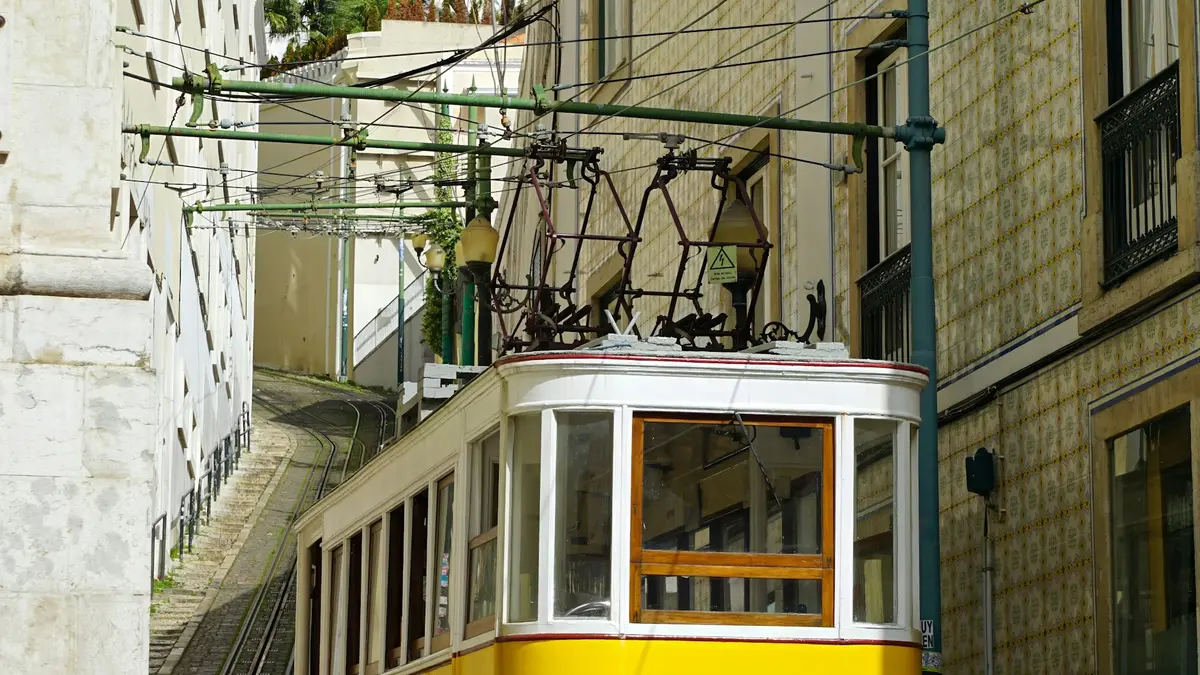
Tram 15E is useful toward Belém, while the small historic trams serve parts of the older center. The famous 28E is optional, not compulsory: if it is packed, take a bus, another tram or walk a short downhill segment instead. Check Carris service alerts before depending on a funicular or Santa Justa Lift, because maintenance and operating status change. A photo of a yellow tram remains available without spending an hour inside one.
CP trains: Rossio is not just a Metro name
CP operates Lisbon’s urban railway. The Sintra line commonly uses the railway station at Rossio; the Cascais line uses the mainline platforms at Cais do Sodré. Those are separate from the nearby Metro spaces, even when signs connect them. Validate before boarding every CP trip. Current zapping on CP deducts €2.05 and allows travel within the Lisbon urban service under CP’s time and re-entry conditions; alternatively, buy the route-specific ticket or the €11.40 integrated 24-hour product.
Use our restrained Sintra day-trip route for the palace-day logistics. The future Lisbon-to-Cascais day-trip guide keeps the coast plan out of this system overview.
Ferries: transport first, river view included
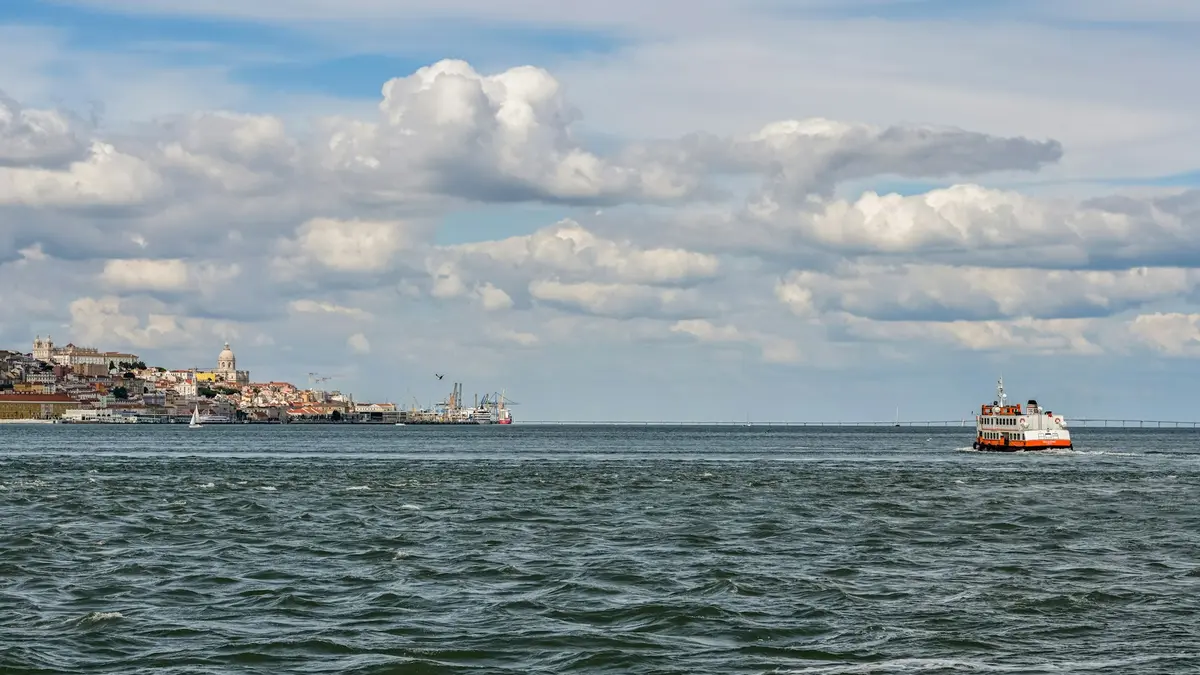
Transtejo/Soflusa operates several Tagus routes. The most useful for many short-stay visitors is Cais do Sodré–Cacilhas, normally about ten minutes. As of this snapshot, a simple ticket is €2 and zapping is €1.60. The €10.35 integrated 24-hour ticket covers this connection only, not every ferry on the network. Validate at the terminal and check the live timetable for the return; the water is scenic, but it does not negotiate with your dinner reservation.
Carris Metropolitana: similar name, different network
Carris Metropolitana serves the wider metropolitan bus network outside Lisbon’s municipal Carris operation. You may encounter it after a ferry or on a suburban journey. Do not assume a Carris/Metro city ticket covers it because the names share six letters and a transport theme. Check the exact route and accepted product in the official planner before boarding.
Choose by Destination, Not by Icon
- Baixa, Chiado, Avenida or Parque das Nações: start with the Metro, then walk.
- Alfama, Graça or a steep hotel address: compare a Carris bus or tram with the final climb. Our Lisbon neighborhood guide explains why the nearest station is not always the easiest arrival.
- Belém: compare tram, bus and a CP train that actually stops at Belém; read the platform display rather than boarding any westbound train.
- Sintra or Cascais: use CP and leave city-Metro assumptions behind at the railway gate.
- Cacilhas: use the ferry and verify the return timetable before crossing.
For complex days, plan the route in Google Maps, then confirm disruptions, platforms and last services with the operator. An app proposes; the platform display disposes.
Plan the Return Before a Late Night or Day Trip
Metro, CP, Carris and the ferries do not share one closing time. Lisbon does have Carris night buses: route 208, for example, currently links Cais do Sodré and Oriente through the airport on its scheduled overnight service. That does not make every daytime connection a night route.
Before leaving for Sintra, Cascais or the south bank, check the exact return date in the official CP or ferry timetable and save a realistic backup. On special-event nights, service may be added or changed; on ordinary nights, yesterday’s screenshot is not a timetable.
Seven Mistakes That Cost Time or Money
- Trying to tap one navegante card for several people.
- Loading zapping, then discovering the same card cannot also hold a 24-hour product.
- Assuming a bank card tapped on the Metro works the same way on CP or a ferry.
- Forgetting to validate again when the operator or vehicle requires it.
- Confusing Rossio Metro with Rossio railway, or the Metro with the CP and ferry sections at Cais do Sodré.
- Waiting for 28E when a bus serves the actual destination with less theater.
- Letting a phone, wallet or open tote become the most accessible object in a packed vehicle. Keep valuables closed and in front without turning ordinary transit into a crime documentary.
Lisbon’s network is broad enough to spare your knees and fragmented enough to reward five minutes of planning. Choose the mode first, load the product that matches it, validate every time the operator requires, and confirm the final ride home before setting out.
Frequently Asked Questions
What is the easiest way to use Lisbon’s public transport?
Use the Metro for fast cross-city trips, Carris buses and trams for hills and gaps the Metro doesn’t reach, CP trains for Sintra or Cascais, and Transtejo/Soflusa ferries to cross the Tagus. Each operator has its own fares, though a rechargeable card can carry tickets for most of them.
Does the Lisbon Metro reach Belem?
No. The Metro does not reach Belem or the upper lanes of Alfama and Graca, so those areas require a tram, bus, or a combination of transport modes.