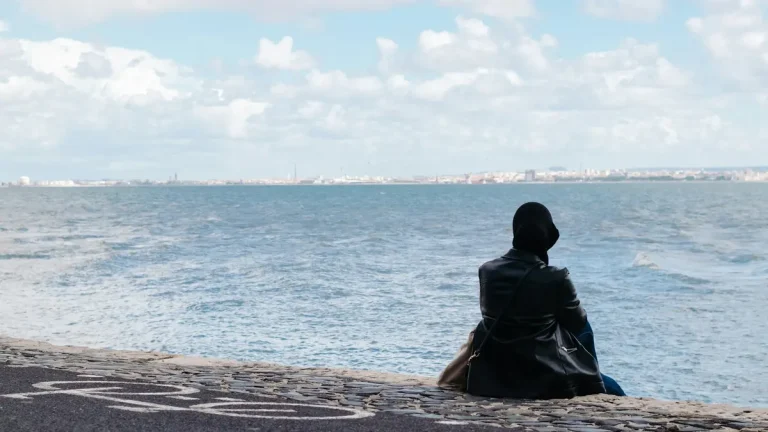
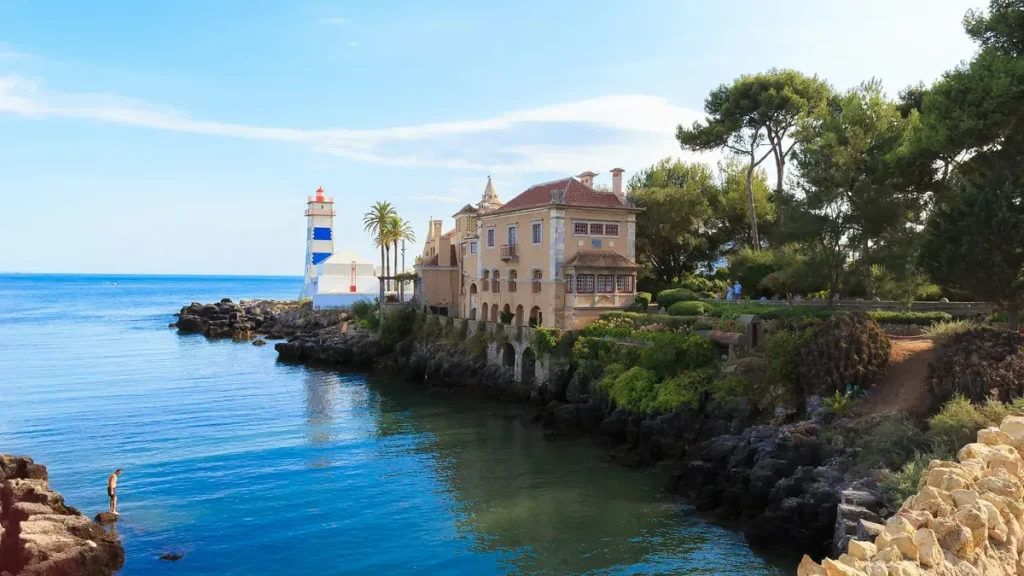
A Lisbon to Cascais day trip works best as a coastal reset, not a scavenger hunt. Take the CP urban train from Cais do Sodré, spend the morning around Cascais’s historic center, choose one town beach, and continue past the bay toward the citadel, marina, or one museum. Add Boca do Inferno only if the weather and your legs agree. Leave Sintra and Guincho for separate plans.
That restraint is the point. Cascais is one of the best day trips from Lisbon because the station, streets, sand, and seafront sit close together. Most of this route is gentler than Lisbon’s hillier neighborhoods, although polished paving, beach stairs, sun, and wind still have opinions.
Lisbon to Cascais Day Trip at a Glance
| Part of the day | Realistic plan | Decision to make |
|---|---|---|
| Morning | Train from Cais do Sodré; Praia da Rainha viewpoint; historic streets and bay | Pause at tiny Rainha or save beach time for later |
| Lunch | Eat in or near the center without a fixed sightseeing deadline | Choose shade and a comfortable pace over a famous queue |
| Early afternoon | Praia da Conceição/Duquesa, or the citadel, marina, and one museum | Swim or go indoors; doing both at length compresses the day |
| Late afternoon | Optional Boca do Inferno | Walk, take M27, use a short car ride, or skip it |
| Return | Back to Cascais station with a CP service buffer | Check live rail notices before committing to a late dinner |
Use these as blocks rather than appointments. A warm Saturday favors an earlier train and a flexible lunch. A cool or rainy day favors one museum and a shorter waterfront walk.

Take the Train From Lisbon to Cascais
Cascais Line trains leave from Cais do Sodré. The building is also a Metro and ferry interchange, so follow signs for CP trains rather than assuming every gate leads toward the coast. Cascais is the western terminus. For broader ticket-system context, see the Lisbon public transport guide.
Buy a valid Cascais Line ticket from a CP ticket office or machine before boarding and load it onto a reusable Navegante card. CP also accepts zapping under its current rules; at this research snapshot, CP lists a €2.05 deduction per validation. Fares can change. More important than memorizing the amount: check CP’s current ticket page, use one card per traveler, validate before every journey, and keep the receipt.
There are no reserved seats on this urban service. Allow time for the machine if you need a new card, especially on a sunny weekend, and keep your bag closed in the station and train. A compact beach bag is useful; a rolling suitcase is an unpaid antagonist. Leave luggage at your Lisbon accommodation or a verified storage facility rather than dragging it across sand and paving.
A Realistic Walk Through Cascais
Start with Praia da Rainha and the historic center
From Cascais station, walk toward Praia da Rainha. This small cove is an appealing first glimpse of the water, but the official beach page lists only about 50 meters of sand and stair access. In warm weather, it can fill quickly. Treat it as a short beach stop or viewpoint rather than building the whole day around finding an empty rectangle of towel space.
Continue along Rua Frederico Arouca and into the pedestrian streets around the historic center, then drift toward the town bay and Praça 5 de Outubro. The compact sequence matters more than collecting individual storefronts. It gives you tiled façades, patterned paving, lanes, and water views without sending you back and forth across town.
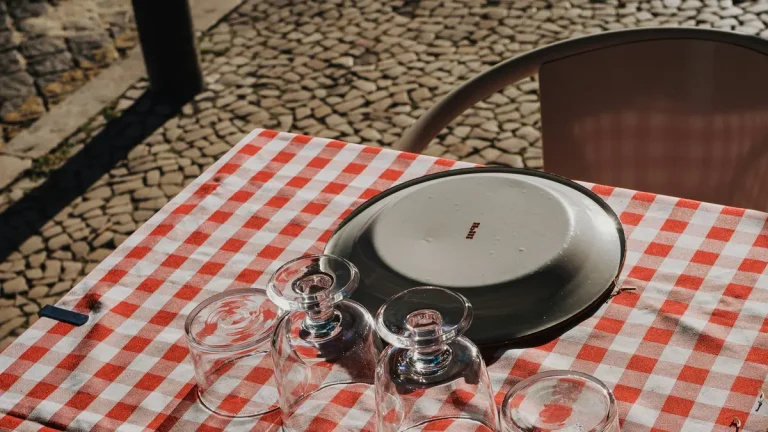
Give lunch a real buffer. Cascais is at its most pleasant when you can choose a table because it suits the day, not because a color-coded itinerary has declared an emergency. If one restaurant has a long queue, the center has alternatives; this article deliberately does not turn a simple coastal lunch into another ranking exercise.
Choose one central beach
If swimming is a priority, walk back toward Praia da Conceição and Praia da Duquesa, adjoining beaches close to the station. Conceição has ramp and stair access and is officially identified as one of the town’s more frequented beaches because of its central location. Duquesa has a broader stretch of sand and access from the waterfront promenade. Both are easier to fold into a mixed town-and-beach day than remote Atlantic beaches.
Pick one; there is no medal for placing a towel on three coves. Check the official occupancy and bathing-water links, read the flags on arrival, and follow lifeguard instructions. Conditions can change even when a forecast looks persuasive. For a wider comparison of Carcavelos, the town coves, and the windier coast, use the guide to beaches near Lisbon without a car.
Add One Cultural Stop, Not a Museum Marathon
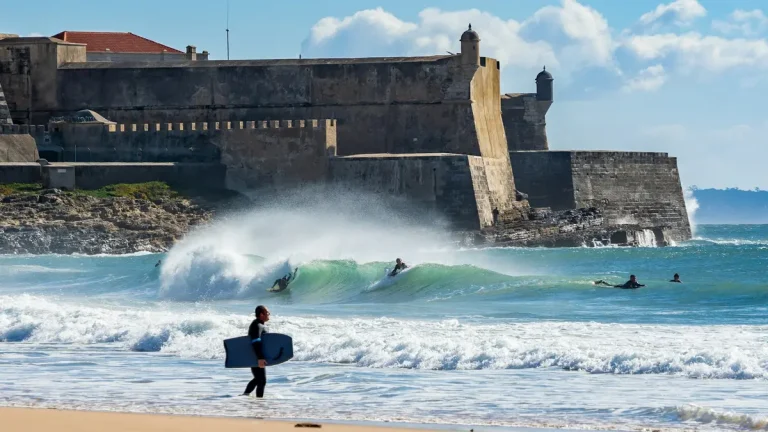
From the bay, continue toward the Cidadela de Cascais and marina. The citadel exterior, harbor, and sea walls create a natural transition from the commercial center to Cascais’s Museum Quarter. Public access inside individual spaces can change for exhibitions or events, so do not assume every door on a map will be open.
If you want one interior, Museu Condes de Castro Guimarães is a sensible route choice. The former summer residence sits within Parque Marechal Carmona near the Santa Marta waterfront, so the building and park fit naturally before Boca do Inferno. Check the official museum page for current hours and access. CP and Bairro dos Museus also list a combined rail-and-museum product, but compare the current price with what you will actually visit; buying a pass does not create additional hours in the afternoon.
Prefer modern art? Substitute Casa das Histórias Paula Rego rather than adding it. Prefer fresh air? Walk through the park and look toward Santa Marta instead. On a beach day, the marina and citadel exterior may be enough. On a wet day, the museum becomes the main event rather than a decorative checkbox.
Should You Walk to Boca do Inferno?
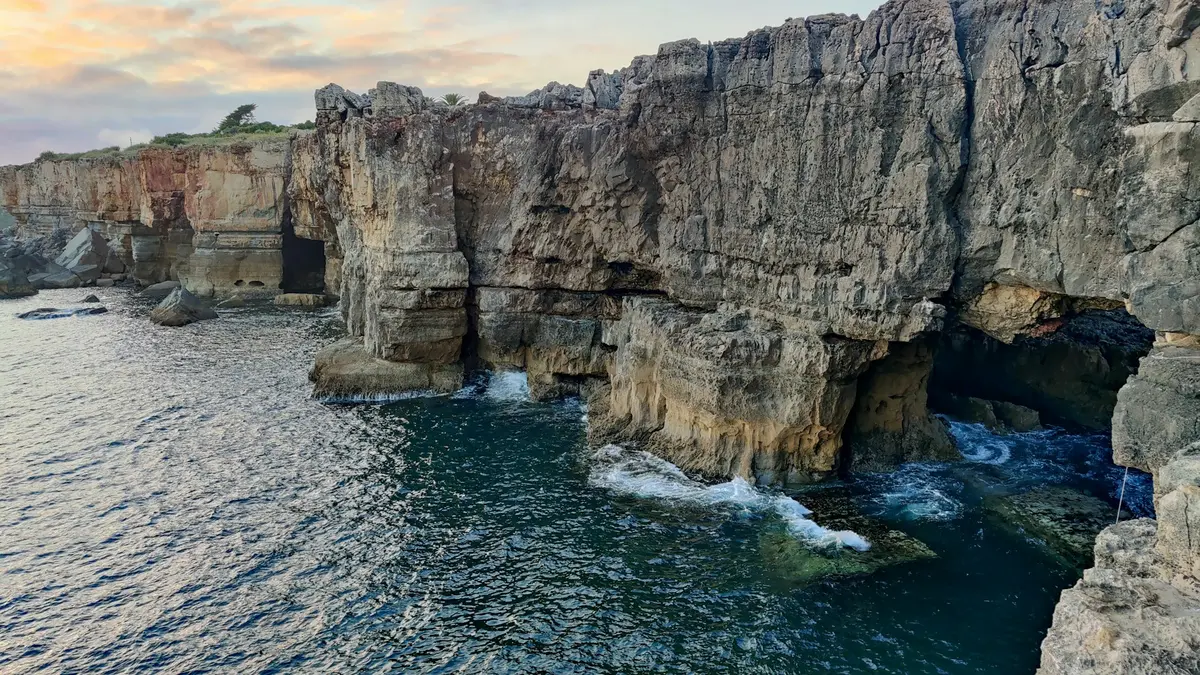
Boca do Inferno is optional. The rocky inlet lies roughly two kilometers west of central Cascais. The coastal walk is the attraction as much as the final viewpoint: beyond the museum area, the route becomes more exposed to sun and wind, and the round trip adds meaningful time after a swim.
Go if you enjoy coastal walking, have closed shoes, and the conditions are comfortable. The inlet looks most dramatic with active surf; on a calm day it may feel like a pleasant geological stop rather than the gates of the underworld. It is not a swimming beach. Stay behind barriers, avoid unofficial descents, and do not approach cliff bases. Cascais’s official geology guidance warns about rock fall, tides, footwear, and reduced-mobility limitations on parts of the coast.
If the walk no longer appeals, the municipal M27 route serves Boca do Inferno, or a taxi or app-based ride can shorten one direction. Check MobiCascais in real time because events and road restrictions can divert local stops. If lunch ran long, the beach was excellent, or the afternoon is punishingly hot, skip Boca without ceremony. Cascais still counts.
What Not to Add to This Day
- Sintra: Palaces, timed entry, hills, and local transport deserve a separate realistic Sintra day trip. Combining both towns independently usually turns Cascais into a hurried sunset stop.
- Guincho: It is not a casual extension of the central walk. Reaching it requires another bus, bicycle ride, or car journey, and its Atlantic wind and surf answer a different beach question.
- Both Boca and the full Estoril promenade: Choose west toward Boca or east along the flatter beach promenade. Adding both can push an easy town day toward an 11-kilometer project.
Before leaving Lisbon, save the route in Google Maps, but keep the route editable. Weather, water conditions, museum closures, and hunger are all legitimate editors.
Build In a Calm Return to Lisbon
Return to Cascais station by foot, M27, or a short car ride. Check CP again before leaving the waterfront, especially on Sunday or if you plan to stay into the evening. At the August 2026 snapshot, some late services involve a replacement bus and an onward train; CP explicitly notes that connections may not always be guaranteed except for the last evening service. That is a good reason to avoid making the final possible departure your plan.
On warm weekends, allow extra time for the station, ticket machine, and platform. Validate the correct card before boarding, keep wet items in a separate bag, and carry water for the return walk. If you prefer dinner in Lisbon, leaving Cascais before the late-evening service changes also makes the day simpler. If dinner by the water matters more, accept that the journey home may require extra patience and verify the live route first.
- Check the CP timetable and disruption page on the day.
- Check beach flags, occupancy, and water-quality information before swimming.
- Check the chosen museum’s current hours before walking over.
- Choose Boca, a longer swim, or an unhurried dinner—not necessarily all three.
A successful Cascais day is pleasantly finite: one train, one compact town, one beach, and one optional stretch of wild coast. The sea provides enough drama. Your schedule does not need to compete.
Frequently Asked Questions
How do you get from Lisbon to Cascais?
Take the CP urban train from Cais do Sodré station along the Cascais Line, which runs close to the coast and reaches Cascais's historic center directly without a transfer.
Is one day enough for a Lisbon to Cascais day trip?
Yes, if you treat it as a coastal reset rather than a checklist. A realistic plan covers the historic center and one beach in the morning, then the citadel, marina, or one museum in the afternoon, saving Sintra and Guincho for separate trips.