
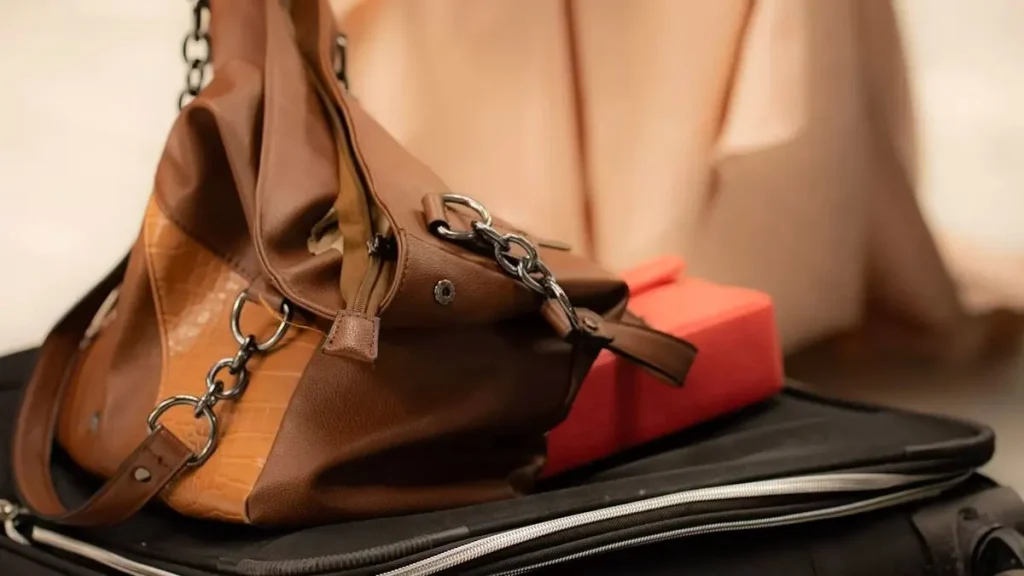
The most useful travel essentials for women protect the parts of a trip that are difficult to improvise: documents, money, medication, period care, phone power, comfortable movement and a workable first night.
A good list is selective. Start with what keeps you healthy, reachable and able to enter the country or check into a hotel, then add clothing and comfort items for the actual itinerary. Not every woman needs the same products, and a pink pouch does not turn a generic gadget into a female travel necessity. The aim is a lighter bag with fewer points of failure.
Travel essentials for women: the priority checklist
Keep the following in your carry-on or personal item, not in checked luggage:
- Passport or required ID, visas and booking details
- Wallet, two usable payment methods and a small amount of local or emergency cash
- Phone, charging cable, compact power bank and any required plug adapter
- Prescription medication in correctly labeled packaging, plus essential health information
- Period products, contraception or other personal health supplies you rely on
- One change of underwear and a simple overnight toiletry kit
- Glasses or contact-lens supplies
- Comfortable walking shoes and clothing suited to the forecast and local context
- Travel insurance details and emergency contacts
- A secure, fully closing day bag
This is the functional core. A beach trip, business trip or winter city break will add to it, but none of those scenarios makes a missing prescription or dead phone more convenient.
Protect the first 24 hours
Pack for the possibility that your checked bag takes a different vacation. Your personal item should contain everything needed to clear arrival formalities, reach the accommodation and manage one night without the rest of your luggage. Include the hotel address, an offline map or saved route, essential booking numbers and a screenshot of any transfer instructions.
Split financial backups rather than storing every card and banknote in one wallet. Keep one payment method accessible and another in a separate secure place. Digital copies of important documents are useful, but they are a backup, not a reason to leave the original passport in a seat pocket.
For the mechanics of what belongs under the seat rather than overhead or in the hold, use the carry-on packing list. The distinction matters most when a connection is missed or a bag is delayed.
Pack health and period care around your own routine
Woman-specific needs are personal, not universal. If you menstruate, pack enough of the product you already use for the expected cycle plus a modest delay buffer. Brands, absorbencies and applicator styles vary by country, and finding a familiar option after a long travel day is an unnecessary side quest. A small day-bag pouch can hold two products, spare underwear and a sealable bag.
Carry prescribed medicines in accordance with the rules of your destination and transit countries. Keep them in your hand luggage and bring the documentation required for controlled or injectable medication. Do not assume that an over-the-counter medicine at home has the same status abroad. Check the destination embassy, health authority and airline before departure when a medication or medical device may be restricted.
A compact health kit may include blister treatment, familiar pain relief, bandages, oral rehydration salts and any allergy medication you normally use. It should reflect your health and itinerary, not a fantasy in which you become the expedition medic for the entire hostel.
Build a toiletry kit that can leak without consequences
Decant products you use daily and skip the aspirational ten-step routine. Prioritize sunscreen, dental care, deodorant, basic skin care and any hair product that is genuinely difficult to replace. Keep liquids in a leak-resistant transparent pouch where required, and check the current security rules at every departure and connecting airport rather than assuming one airport’s scanner policy applies everywhere.
Place the first-night basics where you can reach them without unpacking the suitcase. A separate wet bag handles damp swimwear, laundry and the occasional bottle that has mistaken cabin pressure for an invitation. The travel toiletries list gives a fuller category-by-category checklist without importing the bathroom cabinet.
Choose a day bag for closure, access and comfort
The best travel accessories for women solve an identifiable problem. A fully closing crossbody, sling or small backpack is useful when it sits comfortably, leaves your hands free and does not force you to display a phone or wallet every time you need a transit card. The right form depends on the destination and what you carry; a camera changes the answer, as does a day involving several miles on foot.
In crowded transport or tourist areas, wear the opening where you can control it and avoid keeping valuables in an exposed outer pocket. For solo travel, share the itinerary with a trusted contact, save local emergency numbers and decide how you will get back after dark before the last train becomes theoretical. A personal alarm or door wedge may be useful in some settings, but no gadget replaces accommodation research, transport planning or attention to local laws.
Pack clothes for movement, weather and local context
Start with the forecast and itinerary, then build a small capsule in which most tops work with most bottoms. For a one-week trip with laundry access, a practical base is three or four tops, two or three bottoms, one warmer layer, sleepwear, underwear for the laundry interval and no more than two or three pairs of shoes including the pair worn in transit. Adjust fabric weight and coverage for climate, religious sites, work commitments and planned activities.
Comfortable shoes deserve more scrutiny than a new travel outfit. Wear them on several long walks before departure and test the exact socks you plan to pack. One polished flat, loafer or low-profile sneaker can often cover dinner and city days; special-event shoes earn space only when there is an actual special event.
A light scarf or overshirt can add warmth, sun coverage or modesty, but treat local dress expectations as context rather than costume. Research specific venues instead of relying on vague claims about an entire country. If the trip is in Europe, the Europe packing list explains seasonal layers, cobblestones, rail transfers and regional variation in more detail.
Make a small flight kit, not a second carry-on
Put the items you will use in the air into one pouch before boarding: headphones, charging cable, lip balm, eye mask, medication, tissues, hand sanitizer and period supplies if relevant. Add a toothbrush and clean underwear for an overnight flight. Fill a reusable water bottle after security and bring a snack that does not require an elaborate in-seat excavation.
Compression socks may be appropriate for some travelers, but individual health risks differ; ask a clinician if you have circulation concerns, are pregnant or have a relevant medical history. The long-haul flight essentials guide separates useful preparation from products that mostly occupy tray-table territory.
Adjust the list to the trip
International and solo travel
Add the correct plug adapter, offline translation and map access, copies of entry documents, relevant medication paperwork and a reliable mobile-data plan. Research local transport and emergency contacts before arrival. Pack culturally appropriate clothing when specific sites require it, but do not turn generalized safety advice into fear-driven overpacking.
Beach and warm-weather trips
Add high-SPF sunscreen, a hat, sunglasses, two swimsuits if swimming daily, sandals that tolerate water and a wet bag. Rash guards and light long sleeves can be more useful than another decorative cover-up. The full beach vacation packing list covers sun, salt, sand and the problem of packing damp fabric on departure morning.
Business travel
Keep one complete work look, essential chargers and presentation materials in your carry-on. Choose a compact wardrobe around a single neutral color family, and test every video adapter before leaving home. For a meeting-focused checklist, see the business trip packing list.
What women can usually leave at home
- Unbroken-in shoes and outfits without a place on the itinerary
- Full-size toiletries for a short trip
- Expensive or sentimental jewelry that creates more worry than pleasure
- Multiple single-purpose bags
- Every safety gadget advertised online
- Electrical hair tools that are not compatible with the destination voltage
- Duplicate “just in case” items that are easy to buy locally
Do not cut the items that are medically necessary, hard to replace or important to personal dignity simply to achieve carry-on minimalism. Packing light is a tool, not a moral achievement.
A practical seven-day packing formula
For a typical seven-day city trip with one laundry opportunity, begin with three or four tops, two or three bottoms, one versatile dress or alternate evening look if wanted, one warm layer, one set of sleepwear, four or five pairs of underwear, three or four pairs of socks and two pairs of shoes including the transit pair. Add activity-specific clothing only for confirmed plans. Use the packing list generator to adjust quantities for climate, luggage size, travelers and laundry frequency.
Frequently asked questions
What should every woman pack for a trip?
Every traveler needs identification, money, phone power, essential medication, suitable clothing and a way to reach the accommodation. Women should then add the personal health, period care, contraception, hygiene or safety items relevant to them. The correct list depends more on the individual and itinerary than on gender alone.
What belongs in a women’s travel kit?
A small accessible kit can hold medication, period products, spare underwear, tissues, hand sanitizer, lip balm, charging cable and a payment backup. Keep it compact enough to move between the flight bag and day bag; a kit that remains buried under shoes cannot solve much.
How can a woman pack light for seven days?
Plan clothing around one color palette, cap shoes at two or three pairs, decant toiletries and schedule one laundry wash. Pack for confirmed activities rather than hypothetical invitations. Wear the bulkiest layer in transit and keep health supplies, documents and first-night basics in the personal item.
Which essentials should never go in checked luggage?
Keep identification, valuables, payment methods, prescription medication, medical devices, electronics, chargers, essential health supplies and at least one change of underwear in the cabin. Airlines and governments impose specific rules for batteries, liquids and medication, so verify the current requirements for the exact route.
The useful test is simple: if an item is difficult to replace and its absence would disrupt the first day, protect it. Everything else has to justify the weight. That leaves room for personal style and comfort without asking one suitcase to prepare for every possible version of the trip.
Editorial note: Airline, airport, medication and entry rules can change. Check the relevant carrier, airport, embassy and health authority before departure.