Lisbon faces the Tagus, but its central riverfront is not a swimming beach. The easiest sand lies west along the Cascais railway or south across the river at Costa da Caparica. For a first beach day without a car, choose Carcavelos for the best mix of space, surf schools, and facilities; Santo Amaro de Oeiras for an easier family outing; or Tamariz when the shortest possible walk from train to towel matters.
Travelers who want more open coast can take a direct bus to Caparica, while Guincho rewards windsurfers and scenery seekers who accept an extra bus. These are beach decisions, not full resort itineraries. For palaces, historic towns, and longer combinations, use the broader guide to day trips from Lisbon.
Best Beaches Near Lisbon at a Glance
The travel ranges below are realistic planning allowances from a central Lisbon base to the sand, including the walk or transfer after the main train or bus. They are based on operator schedules checked on August 5, 2026, not promises for a particular departure. Verify the current timetable before leaving.
| Beach | Typical time to sand | Best for | Swimming reality | Surf | Main catch |
|---|---|---|---|---|---|
| Santo Amaro de Oeiras | 45–60 minutes | Families and accessible facilities | Better for casual bathing when flags allow | Not the main draw | Walk from Oeiras station |
| Carcavelos | 40–55 minutes | First beach day and full facilities | Variable Atlantic waves | Lessons and rentals | Busy on warm weekends |
| São Pedro do Estoril | 45–60 minutes | Smaller beach and local feel | Rocks and tide matter | Popular with surfers | Less sand at high tide |
| Tamariz | 45–60 minutes | Minimal walking and amenities | One of the more sheltered choices | Not the priority | Compact and quick to fill |
| Costa da Caparica town beaches | 60–90 minutes | Wide sand, surf, and beach bars | Exposed; use guarded zones | Strong choice | Bridge traffic affects buses |
| Guincho | 80–110 minutes | Wind sports and wild scenery | Poor choice for a casual dip | Surf, windsurf, and kitesurf | Wind plus a bus transfer |
Six Lisbon Beaches You Can Reach Without a Car
Santo Amaro de Oeiras: best for families and accessible facilities
Santo Amaro is a broad, practical beach framed by the Oeiras seaside promenade. Take the Cascais Line from Cais do Sodré to Oeiras, then walk toward the waterfront. The final stretch makes it slightly less effortless than Tamariz, but the larger sand area and promenade are useful when a family needs room, food options, or a stroller-friendly approach.
Oeiras runs its Praia Acessível program here during the 2026 season, with support for visitors with reduced mobility. Confirm operating dates and assistance before relying on it. Choose Santo Amaro for a straightforward swim-and-sand day rather than surf culture. As everywhere on this coast, “family-friendly” describes the setup, not a guarantee of gentle water; the lifeguard flag decides.
Carcavelos: best all-around beach and beginner surf base
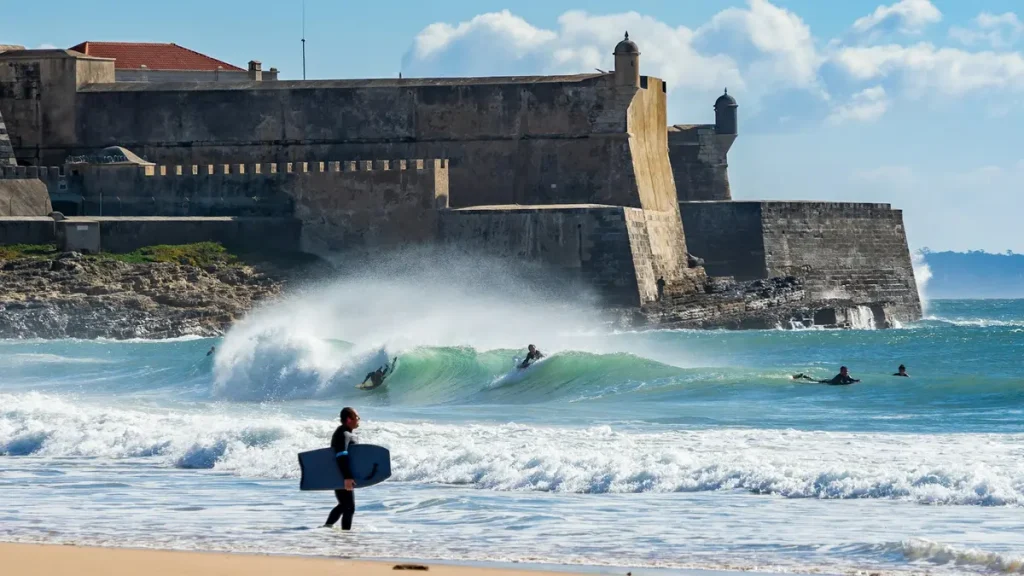
Carcavelos is the default answer because it solves several needs at once. Its long strip of sand has restaurants, bars, first aid, sports courts, and surf schools, according to Cascais tourism. Exit the train at Carcavelos and follow the signed walk to the sea. The beach is large enough for groups and active travelers, and a surf lesson can be arranged without building the whole day around equipment logistics.
Convenience creates the obvious problem: Lisbon also knows about Carcavelos. Public discussions consistently describe warm summer weekends as crowded, lively, and sometimes noisy. Arrive in the morning or come on a weekday, then walk away from the busiest café access points before settling. Conditions vary with the swell, so families should stay in the guarded bathing zone and follow the flag rather than assuming a busy beach is automatically a calm one.
São Pedro do Estoril: best smaller alternative for surfers
São Pedro do Estoril suits travelers who want an easy train ride without Carcavelos at full volume. The official beach page notes that the sand expands at low tide, while the shoreline around Pedra do Sal adds rock and geological texture. It is popular with surfers and has first aid, food, and a lifeguarded area during the bathing season.
Take the Cascais Line to São Pedro do Estoril and walk down by stairs or ramp. Tide timing matters more here than at Carcavelos: at high tide, a compact beach becomes more compact. It is not the strongest pick for toddlers who need broad, obstacle-free shallows, but it works for a couple or solo traveler who values a smaller setting and can choose the swimming area conservatively.
Tamariz: best when transport must be almost frictionless
Tamariz sits beside Estoril station, so the rail journey does nearly all the work. The official Cascais page lists a lifeguarded bathing area in season, first aid, restaurants, a ramp, an amphibious chair, and an ocean pool beside the pier. That combination makes Tamariz particularly useful for mixed-age groups or anyone who wants facilities close at hand.
The beach itself is only about 190 meters long. On a bright weekend, ease of access and limited sand are not a mysterious recipe: arrive early. Tamariz is better for swimming, sun, and a promenade lunch than for a dedicated surf session. If the goal expands into Cascais old-town streets, museums, and several beaches, save that broader plan for the forthcoming Lisbon-to-Cascais day-trip guide.
Costa da Caparica: best for wide sand and more beach choice
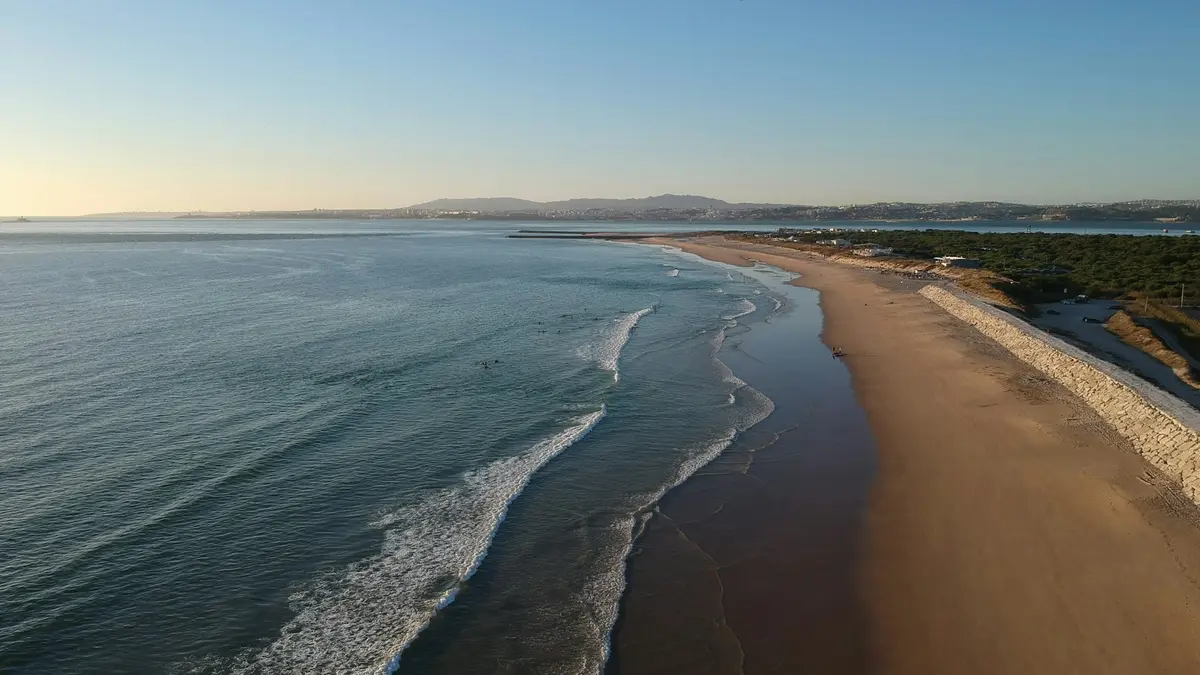
Costa da Caparica offers a long Atlantic shoreline rather than one urban cove. For the simplest car-free version, take Carris Metropolitana line 3710 between Lisbon’s Areeiro area and Costa da Caparica, then walk to Praia Nova or another guarded town beach. Near the town center, food, surf schools, and beach bars are easier to find; farther south, the coast becomes less urban but requires another local connection.
The bus crosses the 25 de Abril Bridge, which is precisely as traffic-proof as that sentence sounds. Public discussions repeatedly mention slower and less predictable weekend returns. Check live service, leave a generous buffer, and avoid making a last possible bus the plan. Caparica is the better choice than the Cascais coves for travelers who prioritize space and consistent surf, but the exposed water still demands attention to flags and lifeguards.

Guincho: best for wind sports, not easy swimming
Guincho is the most dramatic option on this list: a kilometer of sand backed by a moving dune system and the Sintra-Cascais landscape. Cascais tourism identifies surf, windsurf, and kitesurf as its core activities. That wind is not decorative. Public beach discussions repeatedly advise checking it before committing to a picnic, and official descriptions make clear why board sports thrive here.
Reach Cascais by train, then connect to the MobiCascais M43 circular service for Guincho. Verify the live bus schedule because the transfer determines the day. Choose Guincho to watch powerful water, take an appropriate lesson, or spend time in a less urban setting. Casual swimmers, small children, and anyone hoping to read an unsecured paperback should favor Tamariz or Santo Amaro instead.
How to Plan a Lisbon Beach Day by Public Transport
The Cascais Line is the low-friction system: one train from Cais do Sodré reaches Oeiras, Carcavelos, São Pedro do Estoril, Estoril, and Cascais. CP’s schedule in force from April 6, 2026 shows regular service, but engineering work and replacement buses can still appear. Check CP’s current timetable on the morning of travel and validate the ticket before boarding.
Caparica and Guincho require more attention. Save the exact stop and return direction while planning the trip on Google Maps, then confirm against Carris Metropolitana or MobiCascais. Accommodation also changes the calculation: Cais do Sodré favors the railway, while Areeiro makes the direct Caparica bus more attractive. The Lisbon neighborhood guide explains those bases without turning this beach comparison into a hotel directory.
Swimming, Wind, and Weekend Reality
These are Atlantic beaches. Even in summer, the water often feels brisk, and air temperature does not predict wave safety. Sheltered orientation can make Tamariz or Santo Amaro feel gentler on a given day, while Carcavelos and Caparica change with the swell. Guincho is deliberately exposed. None of those descriptions overrides the condition in front of the lifeguard tower.
Use the Portuguese Environment Agency’s InfoÁgua beach service for current water-quality information and active alerts. During the bathing season, choose a lifeguarded section, obey the flag, and keep children within reach. Outside the supervised season, facilities and rescue coverage may be reduced even when the weather looks summery. The Atlantic did not receive the city-break itinerary.
For fewer crowds, go on a weekday or arrive before late morning. Carcavelos and Tamariz absorb people efficiently but do not become private; central Caparica beaches are also popular with Lisbon residents. A farther or harder beach is not automatically better. On a short trip, reliable transport and a safe guarded zone usually matter more than winning a contest for the emptiest patch of sand.
Which Beach Should You Choose?
- First beach day: Carcavelos, for space, facilities, and easy surf access.
- Family or reduced mobility: Santo Amaro or Tamariz, after confirming current accessible services.
- Smaller train-line beach: São Pedro do Estoril, preferably with a favorable tide.
- Wide sand and beach bars: Costa da Caparica, with a generous return buffer.
- Wind sports and landscape: Guincho, after checking conditions and the M43 bus.
- Least planning: Tamariz, where the station-to-sand transfer is barely a transfer.
The best beach near Lisbon is the one that matches the day’s wind, waves, and patience for transport. Check live conditions, choose a guarded section, and let convenience count as a feature rather than a failure of adventurous spirit.
Frequently Asked Questions
What is the best beach near Lisbon without a car?
Carcavelos offers the best mix of space, surf schools, and facilities, reachable along the Cascais railway. Santo Amaro de Oeiras suits an easier family outing, and Tamariz works when the shortest walk from train to towel matters most.
Does Lisbon itself have a swimming beach?
No. Lisbon’s central riverfront on the Tagus is not a swimming beach. The easiest sand lies west along the Cascais railway or south across the river at Costa da Caparica.