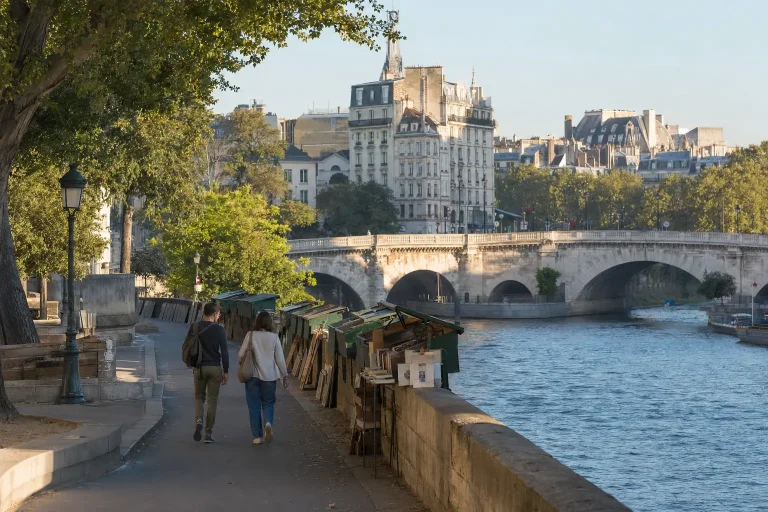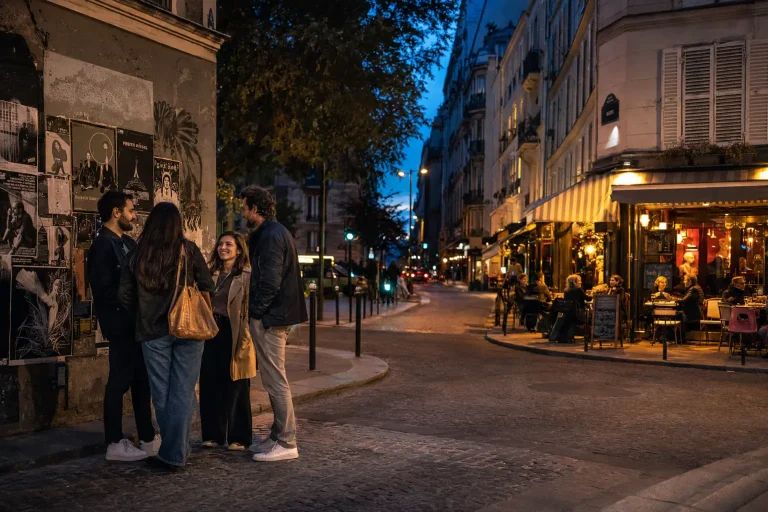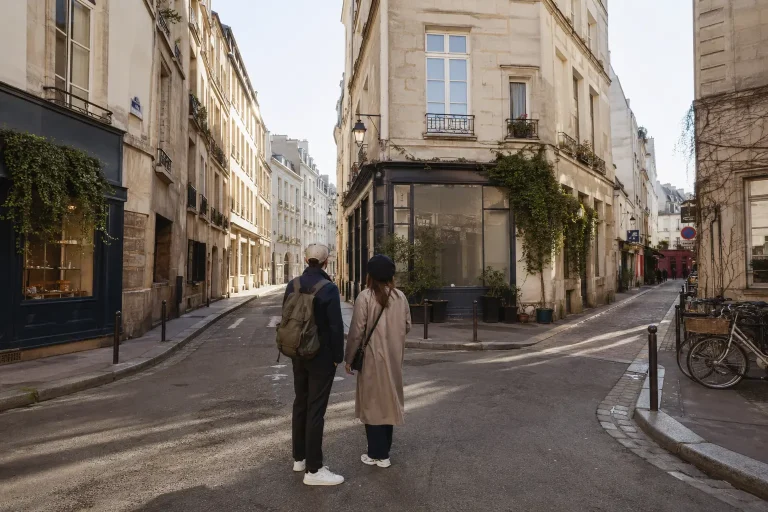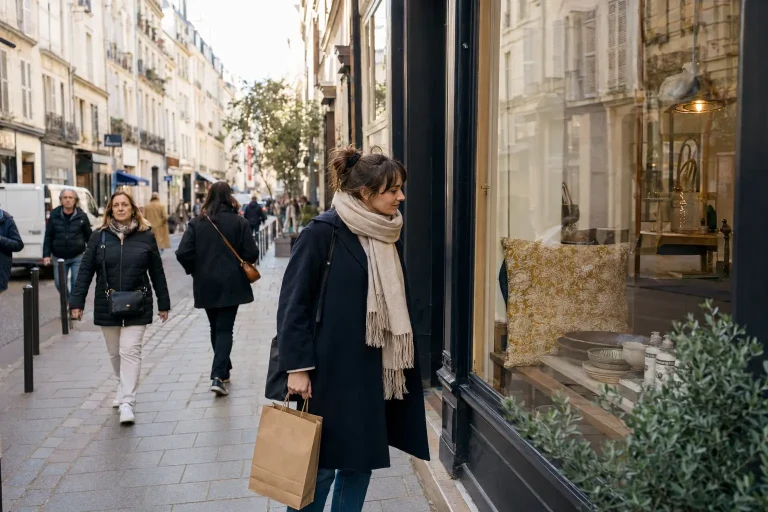
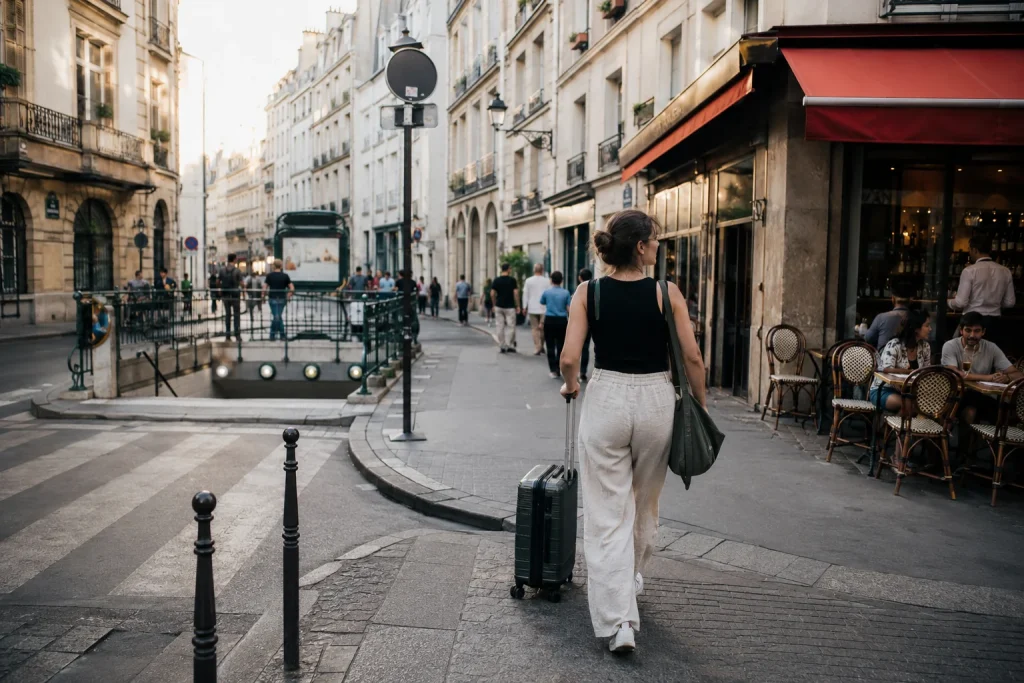
For most first-time visitors, the best place to stay in Paris is a central neighborhood with several useful Métro lines, restaurants that remain open after sightseeing hours, and a comfortable walk from the station to the hotel. Le Marais is the strongest all-round choice for atmosphere and walkability. Saint-Germain-des-Prés and the Latin Quarter suit quieter evenings, while the 1st and 2nd arrondissements make major sights especially easy to reach.
That answer changes with budget, nightlife, luggage and mobility. Paris has no single hotel district from which everything is walkable. A room beside the Eiffel Tower can be less convenient for the Louvre, Le Marais and the eastern neighborhoods than a less photogenic address near a well-connected station. Choose the daily journey first; choose the room second.
The best areas to stay in Paris at a glance
| Area | Best for | What works well | Main compromise |
|---|---|---|---|
| Le Marais, 3rd and 4th | Best overall first-time base | Central walks, food, shops and evening life | Expensive; some streets stay noisy |
| Saint-Germain and the Latin Quarter, 5th and 6th | Calm evenings, cafés and Left Bank character | Walkable historic core and a softer pace | High prices in the 6th; nightlife is restrained |
| Louvre, Palais Royal and the 2nd | Short visits and maximum centrality | Easy access to major sights and several lines | Tourist-facing, costly and quiet after offices close in places |
| Opéra and the 9th | Transport, shopping and better-value hotels | Multiple lines, department stores and useful dining | Exact street matters; the district changes toward Pigalle |
| Bastille and the 11th | Restaurants, bars and a more residential evening | Lively nights and more choice at mid-range prices | Longer journeys to western sights |
| Montmartre, 18th | Village atmosphere and a romantic stay | Distinctive streets and strong neighborhood identity | Hills, crowds and more transfers |
| Eiffel Tower and the 7th | Landmark views and quiet nights | Elegant, residential and close to the tower | Weak evening variety; not central to the whole city |
Parisian arrondissements spiral clockwise from the center, but the number alone is not a complete description. The 9th near Opéra feels very different from its northern edge near Pigalle. Le Marais crosses parts of both the 3rd and 4th. When comparing hotels, inspect the exact street, nearest station entrance and walking route rather than treating an arrondissement as one uniform block.
How to choose your Paris base before opening a hotel list
Start with three ordinary moments: the first arrival with luggage, the walk home after dinner and the trip you expect to repeat most days. These reveal more about a useful base than a balcony photograph.
Map the trip you are actually taking
Place five or six priorities on a map. If most sit around the Seine, Le Marais, the Louvre and the Left Bank, a central base will save time. If the itinerary includes concerts in the east, restaurants in the 11th and nightlife around Oberkampf, paying more for the 1st may solve a problem you do not have. Day trips also change the calculation: an early train can make proximity to the correct mainline station worth more than a postcard view.
Do not count straight-line distance. A 700-meter walk with cobbles, stairs and a large suitcase is not the same as a flat 700 meters after breakfast. Paris is highly walkable, but “walk everywhere” is usually internet shorthand for “walk to one useful cluster and take the Métro to the rest.”
Check the exact station, line and exit
A hotel described as “near the Métro” may be close to a station on a line that still requires two transfers for your plans. Look for at least two useful lines or one line that directly serves several priorities. Then inspect the station access itself. The RATP accessibility guidance makes clear that access conditions vary across the network; a station dot on a map does not promise a lift or an easy suitcase route.
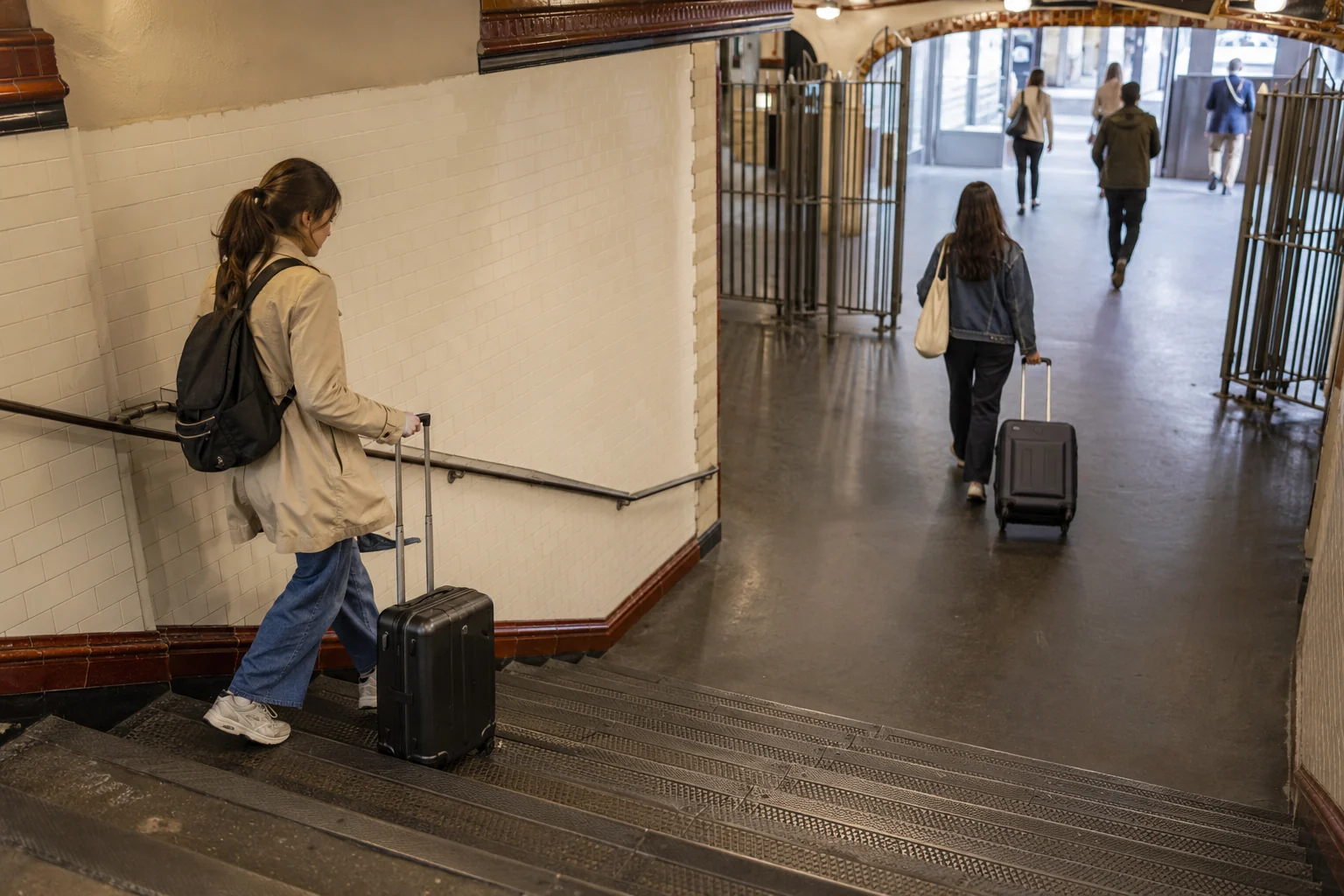
Travelers carrying luggage can use wider service gates, according to the RATP Métro and RER guide, but older stations still involve stairs and long passages. If mobility is limited, verify the current route with RATP rather than relying on a hotel listing’s “close to public transport” badge.
Read reviews for the street, not only the room
Search recent reviews for noise, station exits, steep stairs, late-night foot traffic and the walk from the main road. A lively neighborhood can be delightful one block away and sleep-resistant directly above a bar. Conversely, a quiet room facing a courtyard may work even on a busy street.
Solo travelers should also map the nighttime route from the station. The useful question is not whether an entire arrondissement is declared safe by a blog; it is whether the actual walk is lit, active, simple to navigate and comfortable for the person making it. Paris’s tourist office advises ordinary vigilance around busy transport and sightseeing areas, where pickpocketing and distraction theft are the more common visitor concerns.
Le Marais: the best overall area for first-time visitors
Le Marais is the most balanced answer to where to stay in Paris for a first trip. It places medieval lanes, 17th-century squares, contemporary galleries, Jewish heritage, fashion shops and busy restaurant streets in the same broad area. Notre-Dame, Île Saint-Louis, the Centre Pompidou area and the Seine are within comfortable walking range from many addresses.
The appeal is not simply visual. Le Marais continues to function after museums close. A traveler can return, change shoes and find dinner without constructing another cross-city route. The neighborhood also works well for a short stay because an unplanned hour still has somewhere to go: a small museum, a food market, a courtyard or a bench at Place des Vosges.
Its weaknesses are price and noise. Hotel stock is limited in some older streets, rooms can be compact, and addresses near nightlife may remain animated late. The quieter eastern side toward Saint-Paul often feels more residential; the western edge near Hôtel de Ville and the 2nd offers especially central access but heavier foot traffic.
Choose Le Marais if this is a first visit, the budget can absorb a central premium and you want the city outside the door. Skip it if a large room, silent night or bargain rate matters more than atmosphere. Paris does not award points for squeezing a suitcase around a beautiful bed.
Saint-Germain and the Latin Quarter: best for calm central evenings
The 5th and 6th arrondissements suit travelers who want historic streets and central walks without the same concentration of late-night bars found in parts of the Right Bank. Saint-Germain-des-Prés in the 6th is polished, expensive and convenient for the Seine, Musée d’Orsay and Luxembourg Garden. The Latin Quarter in the 5th mixes university life, older lanes, cinemas, bookshops and a broader range of casual food.
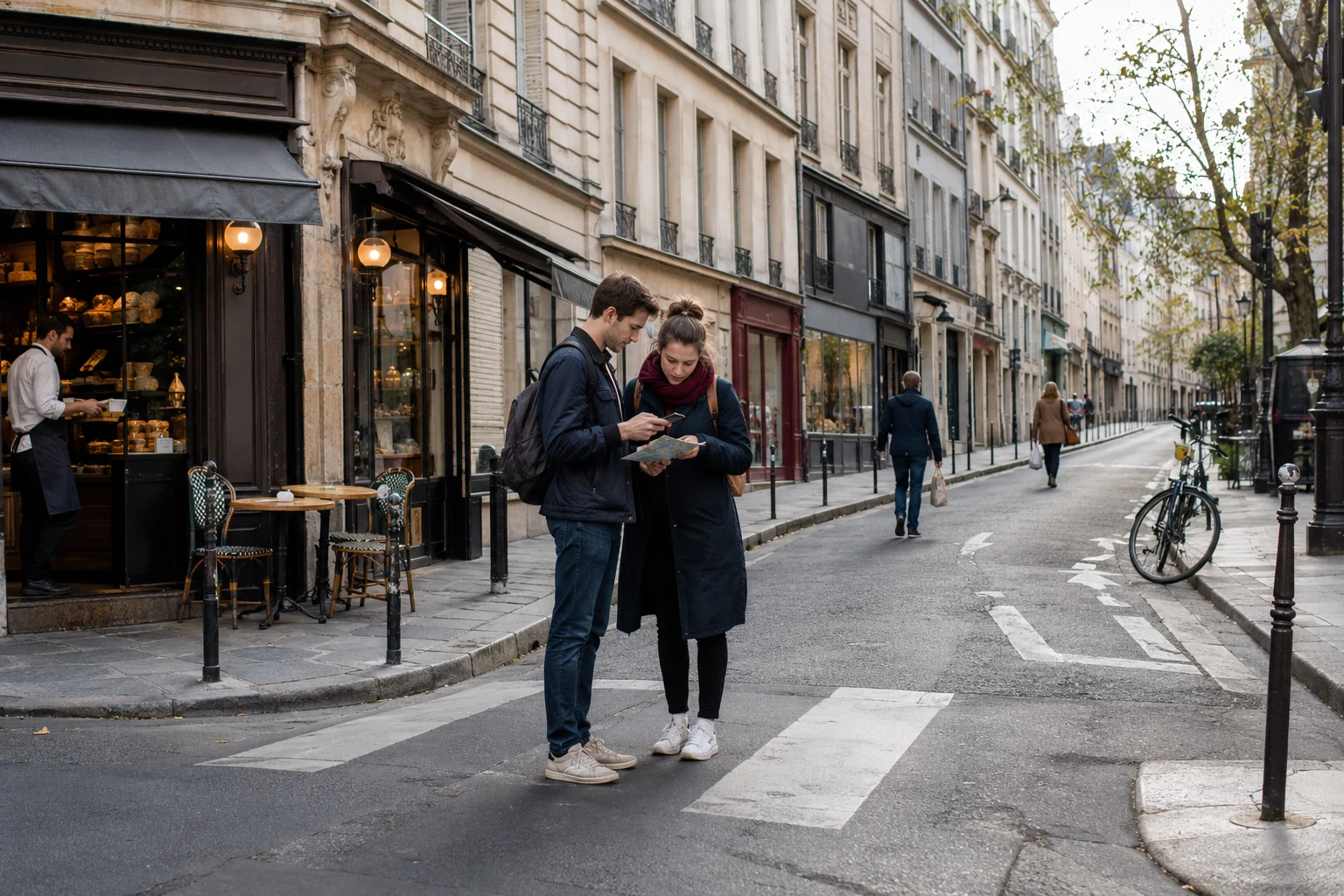
This is a strong choice for museum-focused trips, couples who prefer dinner to clubbing and first-time solo visitors who value active streets without intense nightlife. Many central sights are walkable, while Métro and RER connections vary by the exact address. The eastern 5th around Jardin des Plantes feels calmer but adds distance to western landmarks.
The familiar café image is real, but it is not automatically inexpensive or local. The most photographed corners of Saint-Germain charge for their location, and some streets are heavily visitor-facing. Move a few blocks from the famous tables and the area becomes more useful as a home base rather than a stage set.
Choose the 6th for a refined, quiet stay with a generous budget. Choose the 5th for a younger, less polished Left Bank rhythm and somewhat wider price range.
The 1st and 2nd arrondissements: best for a short, central visit
The 1st arrondissement contains the Louvre, Tuileries Garden and Palais Royal. The neighboring 2nd stretches toward rue Montorgueil, the covered passages and the business streets around Bourse. Together they form one of the most practical bases for a two- or three-night trip centered on the historic core.
Stay here when walking to major sights before tour groups arrive matters more than neighborhood intimacy. The 1st is particularly useful for the Louvre, Musée de l’Orangerie, the Seine and easy crossings to the Left Bank. The 2nd usually provides a better balance of food, evening activity and centrality, especially around Montorgueil and Sentier.
The tradeoff is that central does not always mean lively. Some blocks around offices, luxury shops and monumental buildings become subdued at night, while hotel prices remain high. Châtelet–Les Halles offers exceptional connections but can feel complex on a first arrival; its network value is greater than its romance.
Choose the 1st for a compressed sightseeing trip or a traveler who dislikes long morning journeys. Choose the 2nd when you want similar access with more everyday dining and a less ceremonial street scene.
Opéra and the 9th: best for transport and practical value
The 9th is one of the most useful compromises in Paris. Around Opéra, Grands Boulevards and the department stores, it offers several Métro lines, airport and station connections, shopping, theaters and a substantial hotel supply. Rooms may offer better value than equally central addresses in Le Marais or Saint-Germain.
It also changes character quickly. The southern 9th is grand and commercial; the streets toward Notre-Dame-de-Lorette and rue des Martyrs feel more residential and food-focused; farther north, the atmosphere shifts toward Pigalle and the slopes below Montmartre. That variety is a strength if you choose deliberately and a source of surprise if you book by arrondissement number alone.
This area works especially well for travelers arriving at Gare du Nord or Gare de l’Est, shoppers, and visitors who expect to cross the city rather than remain in one neighborhood. Check whether the hotel sits near the line you need and whether the walk from the station feels manageable after dark.
Choose the 9th for a connected base with active streets and a broad hotel range. It is less immediately storybook than Saint-Germain, but public transport rarely cares about the mood board.
Bastille and the 11th: best for restaurants and nightlife
The 11th is a better base for travelers who want Paris after 7 p.m. than for those trying to reach every western landmark on foot. Bastille, Oberkampf and the streets around rue de Charonne offer restaurants, wine bars, music venues and a residential city rhythm that extends beyond visitor hours.
Prices can be kinder than in the central historic districts, although desirable addresses are no longer secret bargains. Métro connections from Bastille are strong, while hotels farther into the arrondissement require more deliberate routing. The reward is an evening that does not end with a long trip back from dinner.
The 11th fits repeat visitors, food-led trips and younger travelers who prefer neighborhood energy to a landmark view. First-time visitors can also use it well if they accept a morning train ride to the Louvre, Eiffel Tower and Saint-Germain.
Choose Bastille for simpler transport and access to Le Marais. Choose Oberkampf or the inner 11th for nightlife and local restaurants. Skip the area if quiet streets and early nights are central to the trip.
Montmartre: best for atmosphere, with hills attached
Montmartre can deliver the most distinctive sense of place on this list. Its slope, stairways and former-village street plan create a neighborhood that feels separate from central Paris. Early mornings and later evenings are especially appealing once day visitors leave the area around Sacré-Cœur.
The compromise is physical and geographic. Hills complicate luggage, mobility and the casual decision to “walk back.” Reaching the Louvre, Le Marais or the Left Bank generally requires transit, and the busiest streets can feel overwhelmed during the day. A hotel described as Montmartre may also sit below the hill near a very different late-night environment, so exact location matters.
Choose Montmartre for a romantic trip, a longer stay or a traveler willing to trade convenience for neighborhood identity. Look for a route that does not require carrying bags up steep stairs on arrival. The charming lane remains charming after someone else handles the suitcase.
The 7th arrondissement: best for Eiffel Tower access, not overall centrality
The 7th appeals to travelers who want quiet, elegant streets and frequent views of the Eiffel Tower. It also provides access to Invalides, the Musée Rodin, the Champ de Mars and parts of the Seine. Families and light sleepers may appreciate its residential evenings.
Yet the tower sits west of many other first-trip priorities. Le Marais, the Latin Quarter, Montmartre and the eastern restaurant districts require transit, and dinner choices become thinner on some residential streets. A tower-view room may justify the inconvenience for a celebration; it should not be mistaken for the universally most central location.
Choose the 7th when the Eiffel Tower is a major part of the trip or a calm night matters more than spontaneous nightlife. Check the nearest Métro line carefully. Two hotels with similar tower views can produce very different daily journeys.
Where not to stay in Paris is the wrong question
Searches for where not to stay in Paris often invite dramatic district-wide warnings. They are rarely precise enough to make a good booking decision. Conditions vary by street, station entrance, time of night and traveler, while broad labels can turn diverse residential areas into caricatures.
A more useful exclusion test is practical:
- Do not book an address that adds two transfers to most planned days merely because the room is cheaper.
- Avoid a route with unavoidable stairs if luggage or mobility makes them a problem.
- Read recent noise reviews when the room sits above late-night businesses or on a major road.
- Check the walk after dark from the exact station exit, not just the arrondissement’s reputation.
- Confirm that a short-term rental follows current rules and has a realistic check-in process.
- Be cautious around major stations and crowded visitor areas with valuables, as you would in any large city.
If an unusually low rate appears far outside the center, calculate the transport time and late-night return before calling it a bargain. Saving money is useful. Buying an extra commute for every breakfast, museum and dinner is a less elegant form of installment plan.
Booking checks that prevent the most common mistakes
Confirm the legal property type and current cancellation terms
Hotels, aparthotels, hostels and furnished rentals operate under different conditions. Paris limits primary-residence vacation rentals to 90 days per year and requires compliance with local registration rules. A listing platform does not remove the need to check the host, address, registration information and cancellation policy.
Avoid building the trip around a non-refundable bargain before flights and major reservations are stable. Air-conditioning should be verified rather than assumed for summer. In older buildings, also check lift access, reception hours and whether “upper floor” involves stairs after the lift ends.
Plan the first and last kilometer
From 1 January 2026, the RATP lists the Paris Region airport ticket at €14 full fare for travel between the airport and the regional rail network. Orly is served by Métro line 14, while CDG connections depend on the current route and service pattern. Recheck the official RATP airport information shortly before travel because construction and service changes can alter the easiest journey.
If arrival is early or departure late, ask whether the property stores bags. Paris railway stations including Gare du Nord, Gare de l’Est, Gare de Lyon and Gare Montparnasse have left-luggage options, but availability and security closures can change. The official Paris luggage guidance is a better final check than an old forum answer.
Packing lighter expands the range of workable neighborhoods. Lush Nomad’s Europe packing list covers the trip as a whole, while the carry-on packing list helps reduce what has to be moved through stations. For an overnight flight, separate the items needed in transit using the long-flight essentials guide. Women traveling alone may also find the practical, non-destination-specific travel essentials for women useful before the arrival day.
Test the neighborhood at the time you will use it
Map applications often show a midday street scene. Your stay may depend more on 8 a.m. coffee, 10 p.m. dinner and the walk back after the last museum slot. Check grocery stores, casual restaurants and transit frequency at those hours. A neighborhood with famous attractions but few ordinary services can feel strangely inconvenient once the sightseeing day ends.
A simple final choice
Choose Le Marais for the best first-time balance of walking, culture, food and evening life. Choose Saint-Germain or the Latin Quarter for calmer Left Bank streets; the 1st or 2nd for a short, highly central visit; the 9th for transport and hotel choice; the 11th for restaurants and nightlife; Montmartre for atmosphere; and the 7th when the Eiffel Tower is the point rather than merely a photograph.
Then verify the exact station, nighttime walk, stairs, noise and arrival route. Paris rewards a beautiful address, but it rewards a workable one every morning.
Frequently Asked Questions
Where is the best area to stay in Paris for first-time visitors?
Le Marais is the strongest all-round choice for atmosphere and walkability. Saint-Germain-des-Prés and the Latin Quarter suit quieter evenings, while the 1st and 2nd arrondissements make major sights especially easy to reach.
Is it better to stay near the Eiffel Tower in Paris?
Not necessarily. A room beside the Eiffel Tower can be less convenient for the Louvre, Le Marais and the eastern neighborhoods than a less photogenic address near a well-connected Métro station, so it's better to choose the daily journey first and the room second.