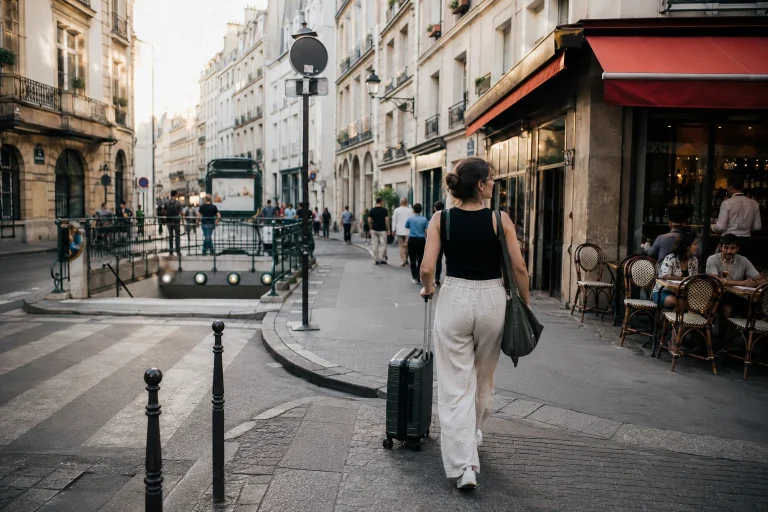
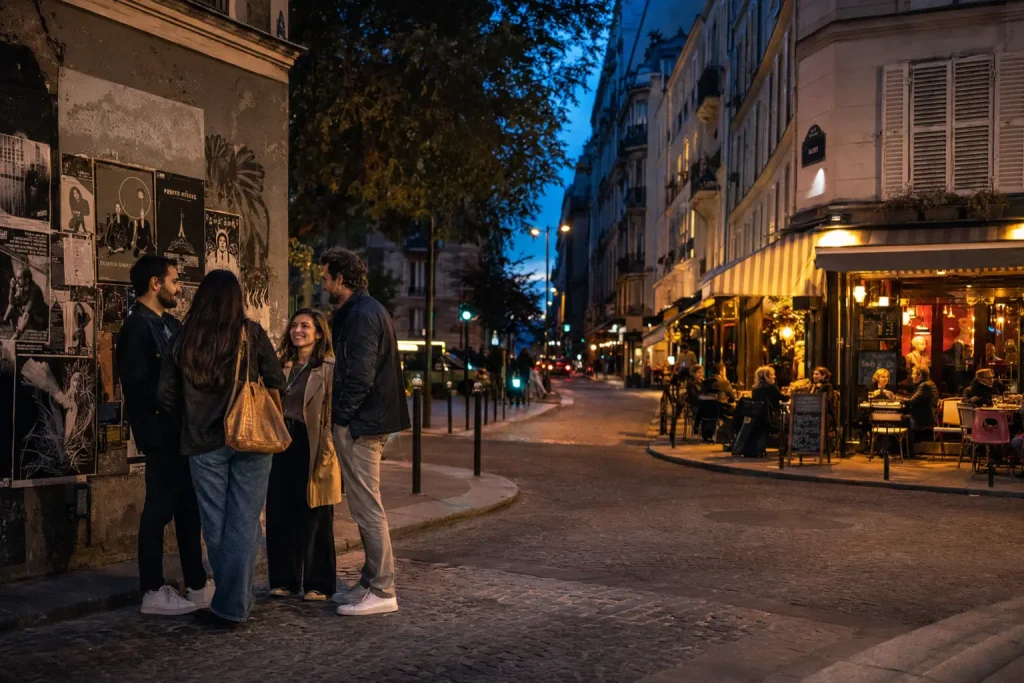
Paris nightlife works best when you choose the experience before the neighborhood. Go to the 11th, Bastille or Oberkampf for bars and an easy progression into late evening; Pigalle for music venues, cocktails and clubs; the Marais for LGBTQ+ nightlife and compact bar-hopping; Belleville and Ménilmontant for live music and mixed cultural spaces; and La Villette or outer northeast venues for larger concerts and electronic events.
Dinner starts the night rather than preceding it. Bars become busier around 9 or 10 p.m., while clubs may not settle into their real rhythm until after midnight. Check the return journey before the first drink: Paris stays awake later than much of its rail network.
Choose the night by format
| You want… | Best starting point | When it becomes lively | What to verify |
|---|---|---|---|
| Wine bars and conversation | 10th/11th, Canal Saint-Martin, Marais | 7–10 p.m. | Reservations, kitchen hours |
| Cocktail bars | Marais, Sentier, South Pigalle, 10th/11th | 8 p.m.–midnight | Booking and door policy |
| Jazz | Saint-Germain, Châtelet/Les Halles, 10th/19th | Show times vary | Set time, minimum spend |
| Rock and small live shows | Bastille, Oberkampf, Pigalle, northeast | 8–11 p.m. | Ticket, age rule, last entry |
| Electronic music and clubs | Pigalle, 12th/13th, 19th and beyond | After midnight | Lineup, advance ticket, transport |
| LGBTQ+ bars and clubs | Marais, plus venues across east/northeast Paris | 9 p.m. onward | Event identity and door policy |
| Cabaret or staged spectacle | Pigalle, 8th, Latin Quarter | Fixed show time | Dress code, seat, drink/dinner package |
| Late museum or cultural evening | Depends on weekday | 6–10 p.m. | Exact late-opening day |
A famous club is not automatically the best Paris nightclub for your music or tolerance for selective doors. The lineup and event promoter often matter more than the venue name.
The 11th, Bastille and Oberkampf: easiest all-purpose night
The 11th arrondissement is the most forgiving area for a night that has not been planned down to the final song. Bars, casual restaurants, concert rooms and late kitchens are distributed around Bastille, Rue de Charonne, Rue Oberkampf and the streets toward République.
Start with dinner or a wine bar, then move only a few blocks. The advantage is density without one compulsory destination. If a bar is too loud, too full or simply wrong, the next option is nearby.
The area is not uniformly inexpensive. Natural-wine bars, serious cocktails and fashionable restaurants can cost as much as central venues. Read the menu before sitting, and reserve dinner Thursday through Saturday when a particular place matters.
Oberkampf becomes more animated later, while Bastille absorbs larger mixed crowds. Side streets are residential. Keep voices down when leaving; a Paris night out takes place underneath somebody’s bedroom.
Pigalle: performance, rock history and selective doors
Pigalle and the streets below Montmartre contain concert halls, theaters, cocktail bars, cabarets and clubs. The neighborhood’s entertainment history runs from 19th-century dance halls through jazz, sex work, rock venues and contemporary hospitality. It is not one red-light caricature, though some streets still trade on that image.
Choose Pigalle for a specific show or bar rather than wandering the brightest boulevard. Check whether an old venue name still describes the same business: nightlife changes quickly, and the Bus Palladium’s 2026 transformation into a hotel is a useful warning against trusting an undated “legendary clubs” list.
For clubs, buy through the venue or event’s official channel and read the stated door time, re-entry rule and dress expectations. A ticket may not excuse intoxication or behavior that security considers unsafe. It should, however, make the commercial terms clear.
Cabaret is a separate decision. Moulin Rouge, Crazy Horse and other revue shows are staged productions with assigned times and pricing packages, not spontaneous bar stops. The official tourism office maintains current cabaret schedules. Decide whether you want historical spectacle, contemporary performance or dancing yourself; sequins do not make those activities interchangeable.
The Marais: LGBTQ+ history and a compact evening
The Marais remains the most visible center of gay nightlife in Paris, particularly around streets in the 3rd and 4th arrondissements. Bars range from easy early-evening stops to dancing and late events, while queer programming also appears across Oberkampf, Belleville, République and La Villette.
Do not assume every venue serves every part of the LGBTQ+ community equally. Check its current event, audience and access policy. Dedicated lesbian, trans, nonbinary and mixed queer nights may be temporary or hosted in venues outside the Marais.
The area works well for a compact night because dinner, bars and Metro stations sit close together. It also attracts tourists and weekend crowds, so guard phones and wallets on compressed streets just as you would in any busy entertainment district.
Paris tourism’s current LGBTQ+ nightlife guidance notes both the Marais concentration and newer inclusive venues farther east. Use it as a starting map, then verify the individual event.
Canal Saint-Martin: drinks beside a living neighborhood
Around Canal Saint-Martin, evenings often begin outdoors in warm weather and move into bars, restaurants or cultural venues. The water makes the area social without requiring a club. It also concentrates noise and litter beneath apartments.
Bring drinks only where current rules permit, respect temporary alcohol restrictions and use bins. During extreme heat or major events, authorities can impose specific limits; a summer ritual described online is not a permanent legal entitlement.
The canal is strongest for a relaxed early evening. For late dancing, you will usually continue toward République, the 11th or a ticketed venue elsewhere. Choose that second destination before the Metro clock becomes the evening’s least charming plot twist.
Belleville, Ménilmontant and the northeast: follow the program
Belleville and Ménilmontant support live music, bars, DJ nights, cultural spaces and restaurants shaped by the area’s working-class and migrant histories. Venues may combine concert hall, restaurant, exhibition space and dance floor rather than fit one clean category.
Check the night’s program. A place known for global music can host comedy, a private event or a completely different club night on the date you visit. Event-led planning is especially important in La Villette, Pantin and the northeast, where larger venues and temporary spaces may sit farther from the nearest late-night route.
This part of Paris can deliver the most interesting night for listeners who care about a specific artist or scene. It is a poor choice for arriving with only the instruction “take me somewhere authentic.” Neighborhoods are not auditioning for visitors.
Jazz: reserve your attention, not only a table
Paris jazz ranges from historic Left Bank clubs and cellar rooms near Châtelet to experimental spaces, jam sessions and larger concert programs in the north and east. The romantic image of walking into a smoky basement belongs partly to another legal and cultural era; the music remains, the cigarette haze does not need reviving.
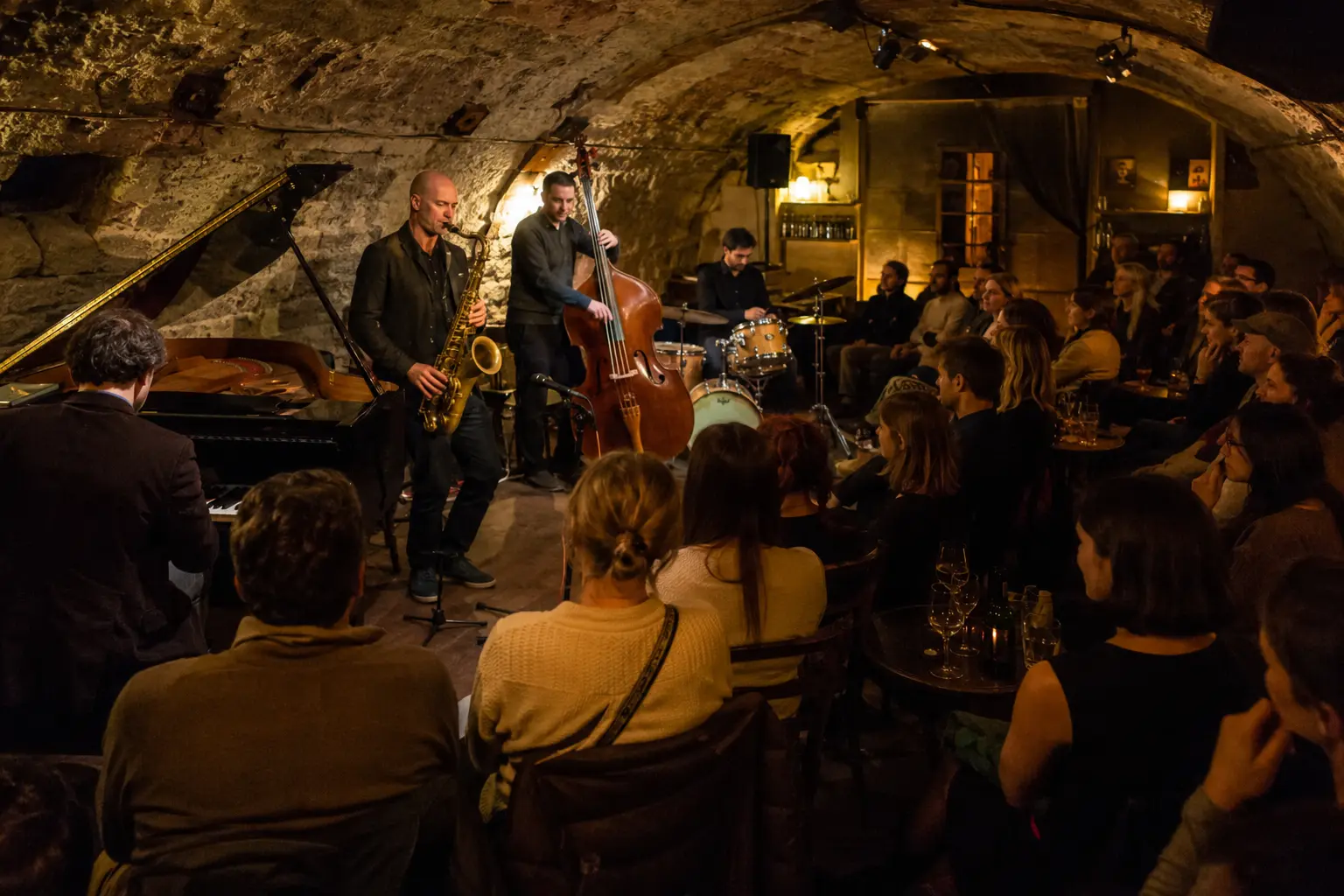
Read whether the night is a concert, jam, dinner show or bar set. Some venues sell a seat for a fixed performance; others charge entry plus a drink minimum; some allow standing. Arrive before the set if sightlines matter.
Small rooms magnify audience behavior. Silence phones, keep conversation for the break and do not film an entire solo over someone’s shoulder. The point of the cellar is proximity, not proof of attendance.
The tourism office’s current live-music overview is useful for finding program types, but the venue calendar is the final authority.
Nightclubs: the event matters more than the ranking
The best nightclubs in Paris vary by night because promoters, DJs and communities reshape the same room. Search the date, lineup, music style and ticket platform. A techno night, a hip-hop event and a general commercial dance floor should not be compared as though “energy” were a genre.
Door selection produces recurring visitor complaints. Reduce uncertainty by following the published dress and age rules, arriving in a manageable group, carrying official ID, buying from the recognized channel and avoiding visible intoxication. Do not argue with security; document a commercial problem later if necessary.
Check the last-entry time even with an advance ticket. Some events discourage very early arrival; others stop entry well before closing. Plan the return from the exact address, especially for warehouse-style venues beyond the central arrondissements.
If clubs are not appealing, a bar with a DJ, a late concert or a dance-oriented cultural venue can provide music without turning the doorway into the evening’s main event.
A Paris night without drinking
Nightlife does not require alcohol. Late museum openings, concerts, cinema, theater, comedy, cabaret and evening walks provide a social city after dark. Some bars now offer serious alcohol-free cocktails, though prices may remain impressively adult.
Museums choose different late-opening nights. Orsay commonly opens late Thursday, the Louvre has late sessions on selected days, and temporary exhibitions vary. Check the official venue page rather than a general list.
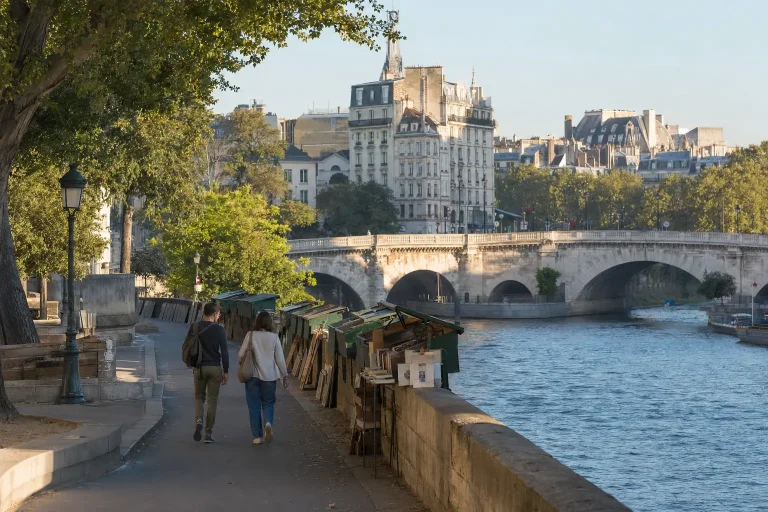
For a simple evening, eat early, walk the Seine’s populated central sections, see a performance and take the Metro home. Avoid isolated river edges late at night, particularly when tired or alone.
Metro, Noctilien and the trip home
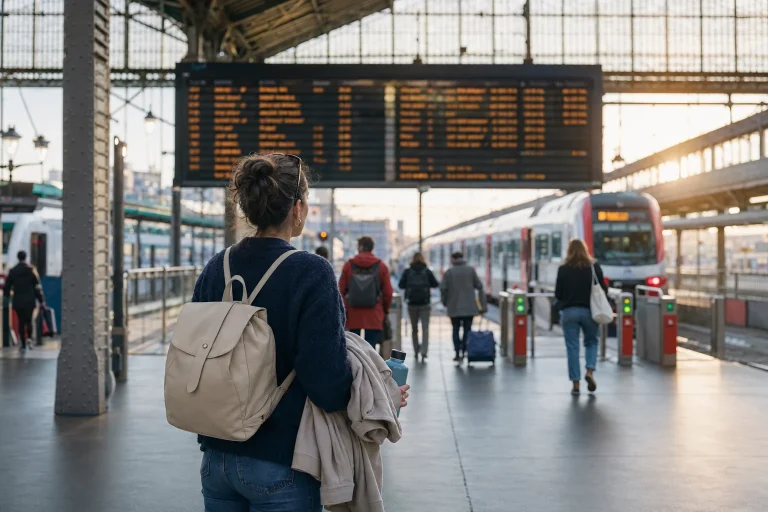
RATP’s current operating-hours page states that Metro lines generally run from about 5:30 a.m. to 1:15 a.m. on weekdays. On Friday and Saturday evenings and the eve of public holidays, service extends to about 2:15 a.m. Exact last trains vary by station and direction, and engineering work can change service.
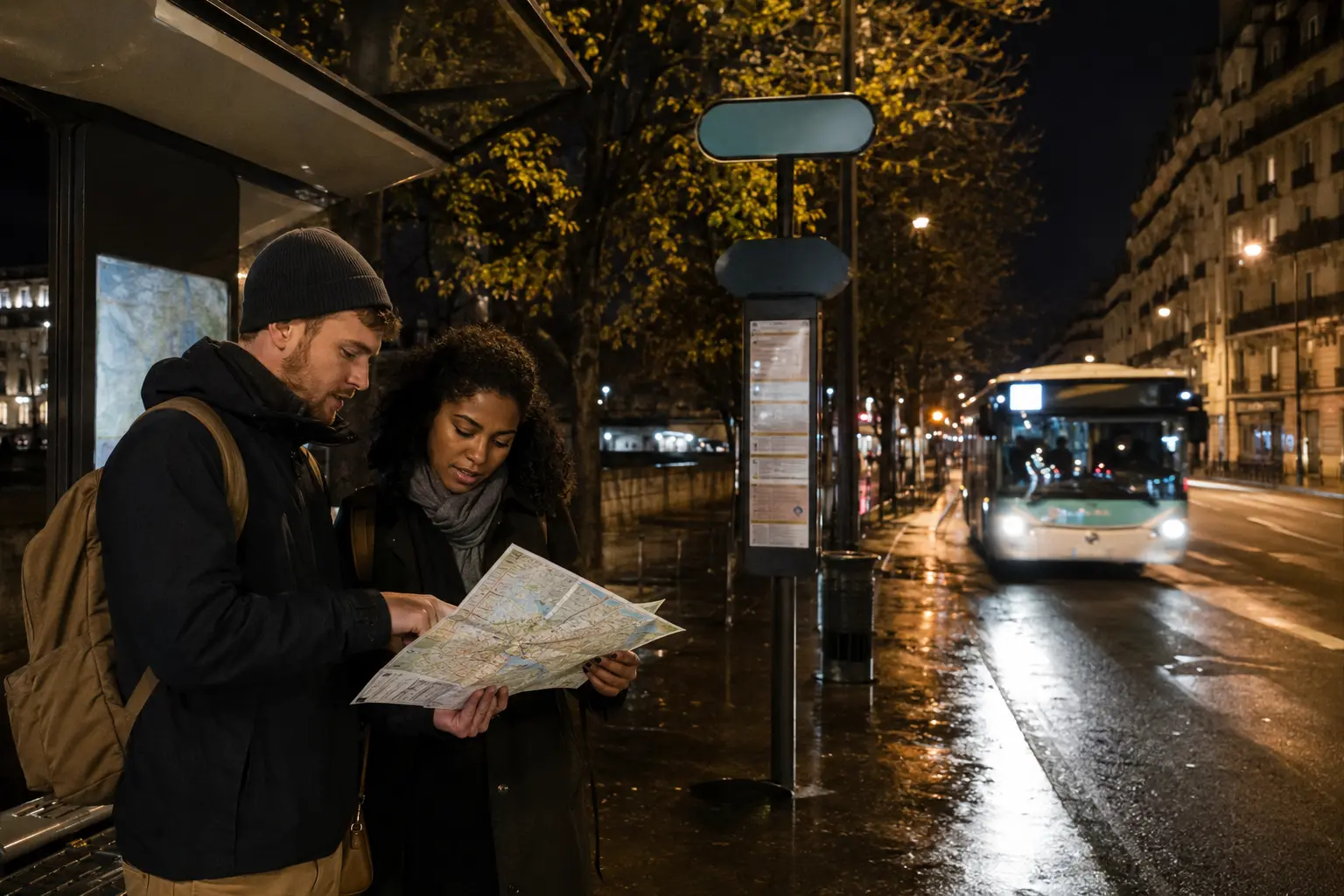
The Noctilien night-bus network operates roughly 12:30–5:30 a.m. and connects through hubs including Châtelet and major stations. The official Île-de-France Mobilités Noctilien guide publishes the network and current service.
Plan the route while still inside the venue. A ride-hail pickup point on a narrow nightlife street may be chaotic; walking to a brighter, wider road can help, provided the route feels comfortable. Confirm the license plate and driver in the app before entering.
Do not count on the final train if the evening depends on a connection. Leave a buffer or accept that the night bus, taxi or ride-hail cost is part of the ticket.
Practical safety without treating Paris as a threat
Busy bars, clubs and transport hubs create opportunities for phone and wallet theft. Carry only what you need, keep the phone away from the edge of café tables and close bags on crowded platforms. Do not leave a drink unattended or accept one whose preparation you did not see.
Stay with a friend who is unwell, use licensed or app-verified transport and share the return plan. The City of Paris’s 2026 safer-party guidance recommends eating, pacing alcohol and drinking water, particularly in hot weather.
In an emergency, call 112 for the European emergency number or 17 for police in France. Safety is not a reason to spend the night anxious; it is a reason to make a few decisions while everyone is still clear-headed.
Build one good Paris night
Fix one reservation
Make one reservation, choose one flexible second stop and know how you will return. A strong sequence might be dinner in the 11th, a concert near Oberkampf and a nearby bar, or an early Marais drink followed by a ticketed queer event farther east.
Keep the radius realistic
Do not cross Paris repeatedly because three listicles named venues in different arrondissements. Nightlife depends on momentum, and momentum rarely survives two transfers and a missed bus. Choose the part of Paris that matches the sound, conversation or performance you want, then let the night grow within a realistic radius.
Frequently Asked Questions
Where is the best nightlife in Paris?
It depends on the experience you want: the 11th, Bastille or Oberkampf for bars and an easy progression into late evening, Pigalle for music venues and clubs, the Marais for LGBTQ+ nightlife, and Belleville or Ménilmontant for live music and mixed cultural spaces.
What time does Paris nightlife start?
Dinner starts the night rather than preceding it. Bars become busier around 9 or 10 p.m., while clubs may not settle into their real rhythm until after midnight, so it's worth checking the return journey before the first drink.