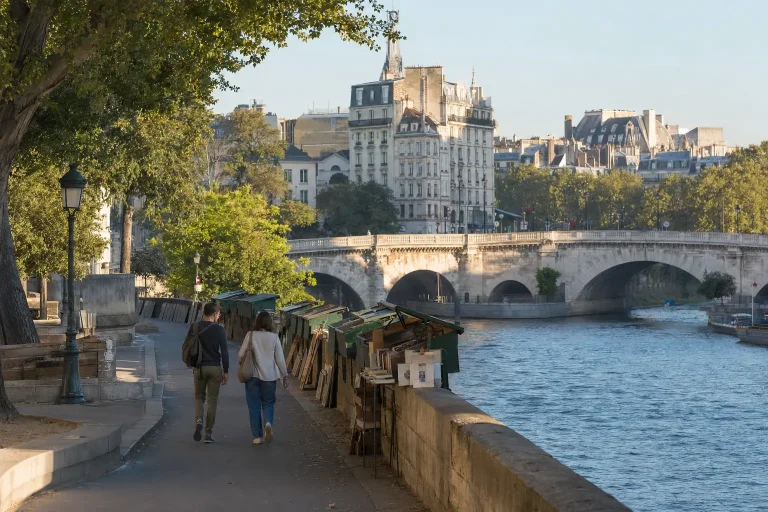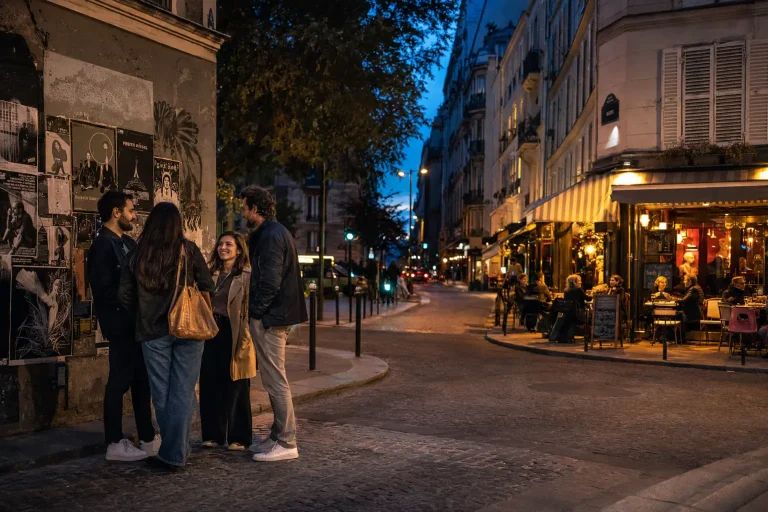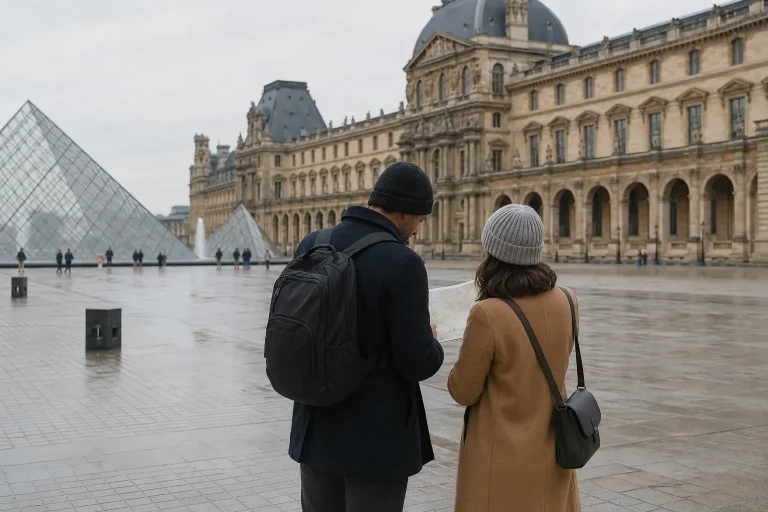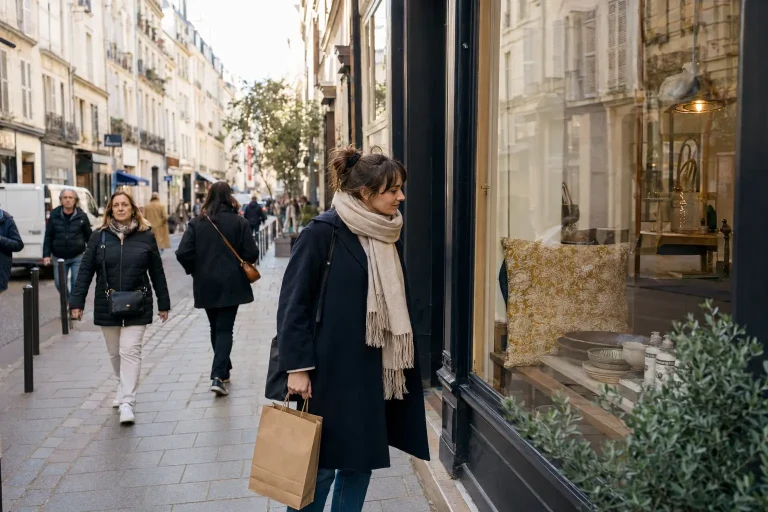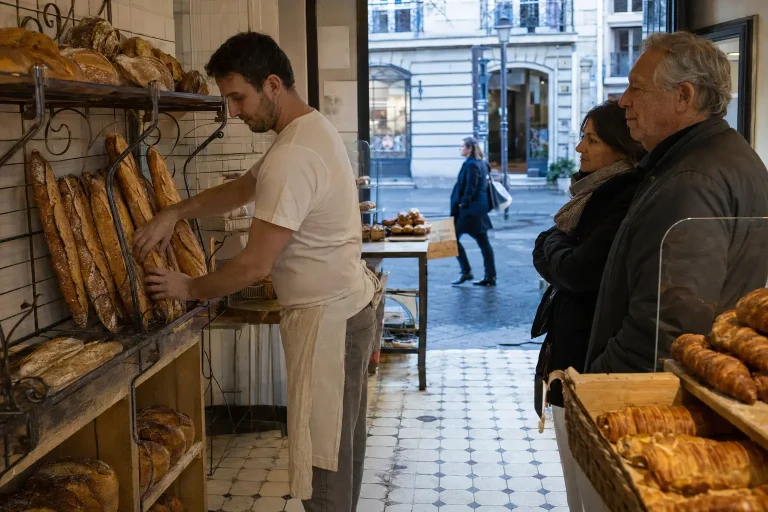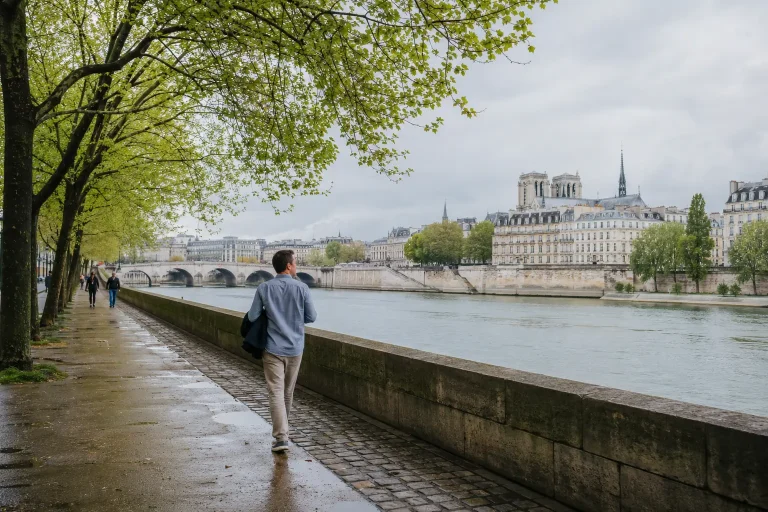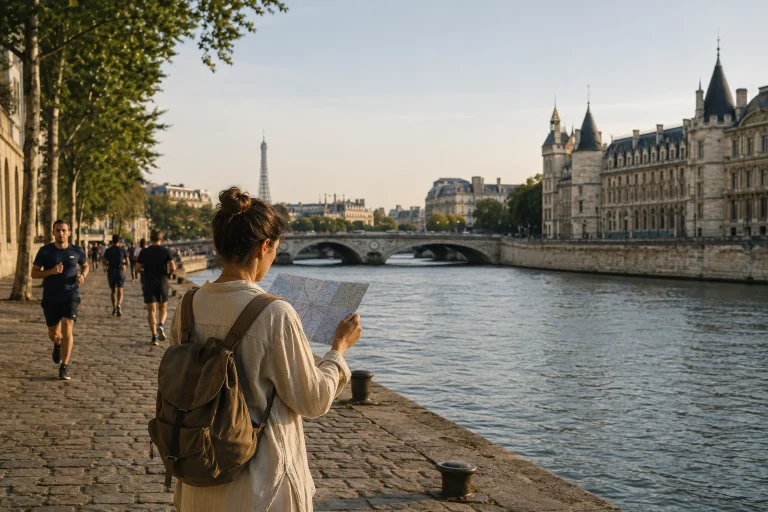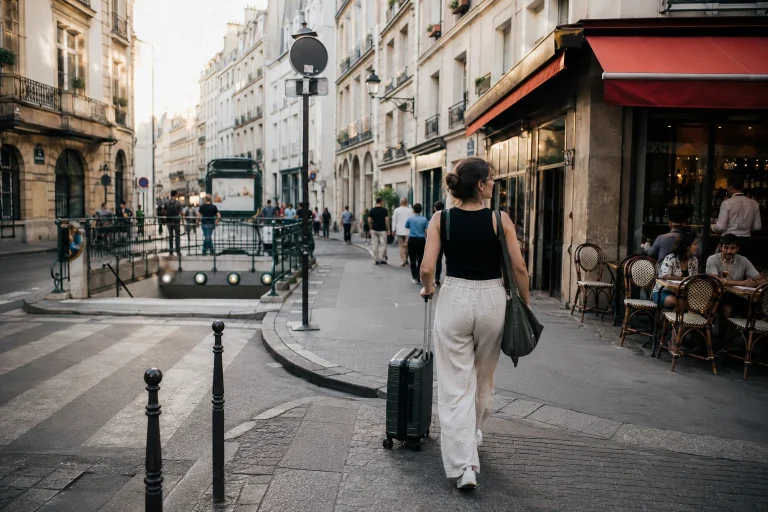
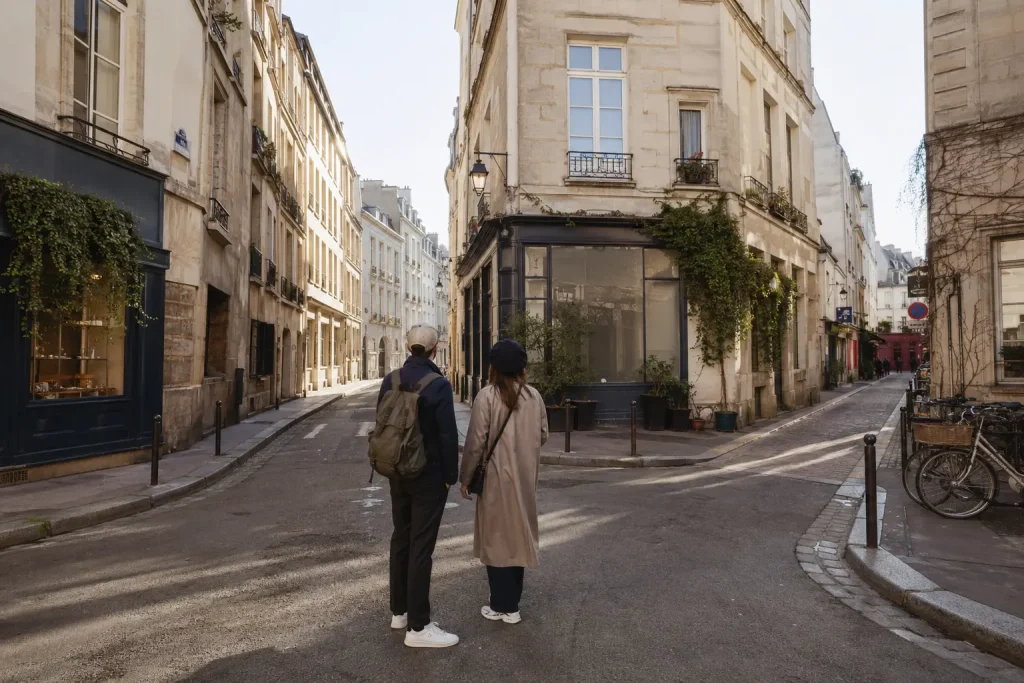
The best Paris neighborhoods to explore depend on the kind of day you want. Walk the Marais for layered history and dense browsing, Saint-Germain and the Latin Quarter for the Left Bank’s institutions and street life, Montmartre for hills and early-morning views, Canal Saint-Martin for water and contemporary neighborhood rhythm, and Belleville or Ménilmontant for food, music and a more visibly working city.
This is not a guide to where to stay. It is a guide to how different parts of Paris reward a few unhurried hours. Pick one or two adjacent areas, arrive with a loose route and leave enough time for the street that was not on the map.
First, understand arrondissement, quartier and neighborhood
Paris is divided into 20 administrative arrondissements that spiral clockwise from the center. Their numbers help with addresses, city services and broad orientation, but an arrondissement is not one uniform experience. The 18th contains Sacré-Cœur, residential streets, busy transport corridors and areas that feel nothing alike.
A quartier can mean an official administrative quarter or a less formal district with a shared identity. English-language guides use “neighborhood” more freely for places such as the Marais, Montmartre, Batignolles or Canal Saint-Martin. Their edges are lived rather than perfectly surveyed.
Use a Paris district map to understand the city, then stop treating every boundary as a wall. The most interesting walks often cross from one arrondissement into another without ceremony.
Match the neighborhood to the day
| You want… | Start with | Best time | Main friction |
|---|---|---|---|
| Historic streets, museums and shops | Marais | Weekday morning | Weekend crowds |
| Books, churches and Left Bank institutions | Latin Quarter | Morning to late afternoon | Tourist density near major sights |
| Classic cafés and galleries | Saint-Germain-des-Prés | Morning or early evening | High prices and polished sameness |
| Hills, views and village-scale lanes | Montmartre | Early morning | Steep streets and midday crowds |
| Canal walking and contemporary food | Canal Saint-Martin | Late afternoon | Quiet on some weekdays, busy in warm weather |
| Markets, bars and daily east-Paris life | 11th/Bastille/Oberkampf | Late afternoon into evening | Wide area; plan a smaller loop |
| Migration, street art and music | Belleville/Ménilmontant | Afternoon into evening | Hills and fewer headline monuments |
| Food shops and an easy north-central walk | South Pigalle/9th | Morning to lunch | Busy around major boulevards |
| Calm residential streets and parks | Batignolles | Weekend morning | Less compelling if time is very short |
“Local” is not a visual style that appears once souvenir shops disappear. Residents live in central, expensive and famous areas too. The useful distinction is whether the neighborhood gives you something to do beyond reproducing a photograph.
The Marais: dense history without a single storyline
The Marais spans parts of the 3rd and 4th arrondissements. Medieval street patterns, aristocratic hôtels particuliers, Jewish history, LGBTQ+ life, fashion retail and major museums occupy the same compact area. That density makes it excellent for a first neighborhood walk and easy to oversimplify.
Start near Place des Vosges or Musée Carnavalet, then move through smaller streets rather than treating Rue des Rosiers as the entire Jewish quarter. The Pletzl’s religious, commercial and family histories extend beyond a food queue. Likewise, the Marais’s LGBTQ+ venues are part of a living social geography, not a themed section of the city.
Weekday morning reveals architecture and ordinary deliveries before browsing takes over. Sunday brings energy and more open shops but also compressed pavements. Museums give the walk context: Carnavalet explains Paris itself, while the Musée Picasso and mahJ deepen particular histories.
Do not try to visit every boutique, museum and pastry counter in one loop. The Marais punishes completionism with a surprisingly high number of tote bags.
Saint-Germain-des-Prés and the Latin Quarter: two Left Banks
Saint-Germain-des-Prés is associated with publishing, cafés, galleries and postwar intellectual life, but current reality includes luxury retail and some of the city’s most expensive tables. The famous cafés still matter as institutions; they are not necessarily the best value places for an ordinary coffee.
Walk the side streets around the church, continue toward the Seine for books and galleries, or turn south toward the Luxembourg Garden. Early morning is calmer. In the evening, the area regains some social life after daytime shopping thins.
The Latin Quarter, centered more broadly around the 5th arrondissement and the Sorbonne, feels less polished. Roman remains, medieval institutions, universities, cinemas, food streets and tourist restaurants overlap. The Musée de Cluny and the Panthéon can anchor the walk, but student streets and independent cinemas explain the district’s continuing role better than another souvenir lane.
Combine the two if you have half a day. The border is not dramatic, yet the shift from gallery windows to lecture halls is visible.
Montmartre: climb early, then move beyond the basilica
Montmartre earns its reputation for topography. Steep stairways, small houses, surviving windmills and views across the city make it physically distinct. Its artistic history is real, though souvenir portraits at Place du Tertre are not a time machine to Picasso’s studio.
Arrive before 9 a.m. if Sacré-Cœur and the central lanes matter. The hill becomes heavily visited by late morning, particularly around the basilica, Place du Tertre and the most photographed façades. Early light and bakery deliveries offer a more coherent sense of place than squeezing between group tours at noon.
After the summit, walk west or north toward quieter streets, the Montmartre Museum, Lamarck-Caulaincourt or the northern slope. South Pigalle can form the downhill continuation. Wear shoes that handle cobbles and gradients; a Paris neighborhood guide should occasionally admit that romance has calf muscles.
Montmartre is not the right answer for a flat, efficient walk. It is worth the climb when views, urban form and the area’s artistic myths interest you enough to separate history from performance.
Canal Saint-Martin: watch infrastructure become public space
Canal Saint-Martin is most interesting when the locks and swing bridges are operating. Boats rise, traffic pauses, pedestrians rearrange themselves and a piece of 19th-century infrastructure becomes public theater without charging admission.
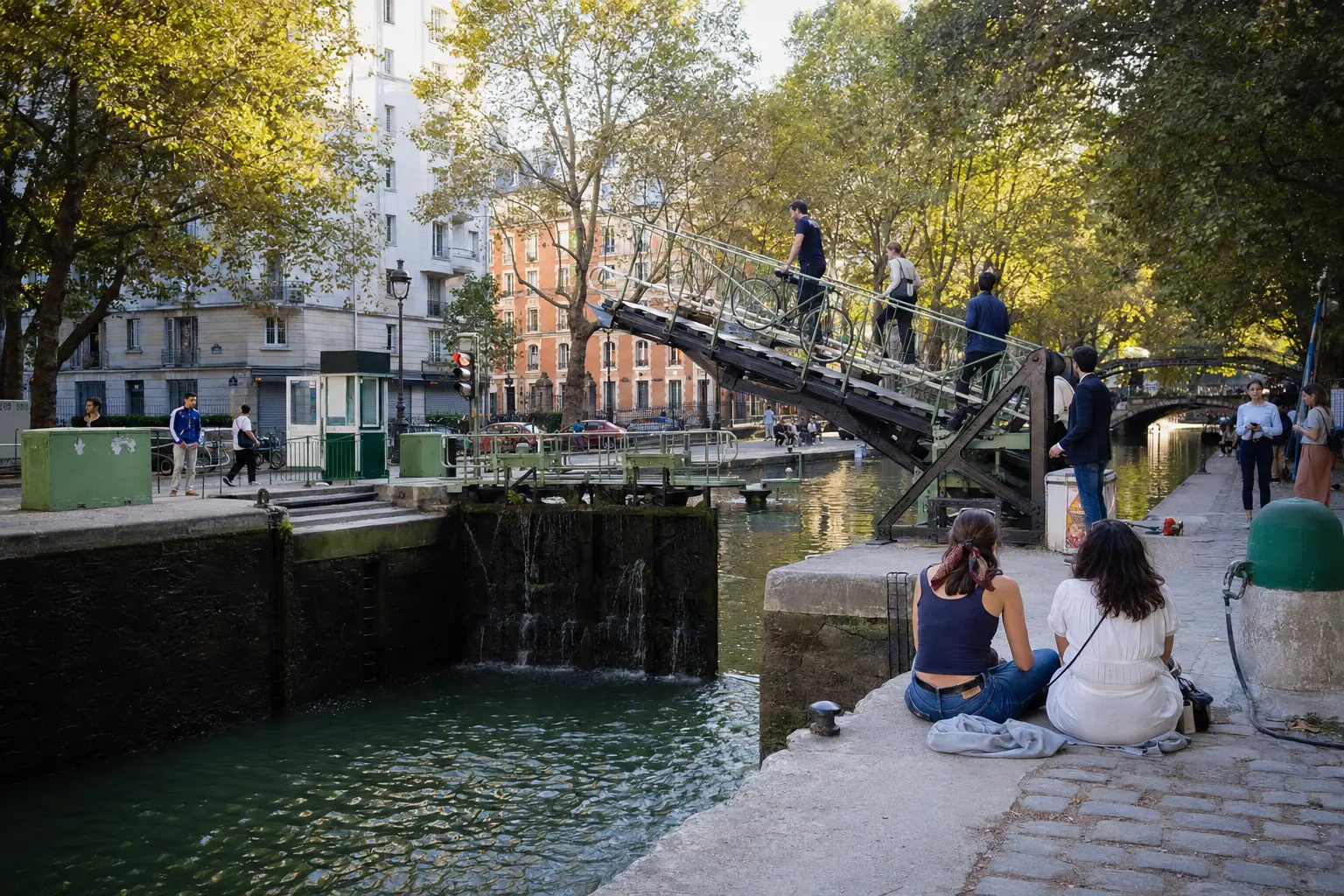
Walk from around République toward the canal, follow the water north and decide whether to continue to Bassin de la Villette. Independent shops, restaurants and bars sit near ordinary apartment buildings. Warm evenings bring groups to the banks; weekday mornings can feel almost empty.
The canal is not a monument-heavy route. Its value lies in watching how the neighborhood uses water, bridges and edges. Buy something only if the shop is good, sit without turning the pause into content production, and keep shared paths clear for cyclists and residents.
Paris tourism’s canal cycling route traces the water north toward La Villette. Walking a shorter section is usually better for browsing; cycling makes sense when the landscape beyond the central canal is the priority.
Bastille, Aligre and the 11th: build a loop, not a label
The 11th arrondissement is too large and varied to summarize as “nightlife.” Around Bastille and Rue de la Roquette, cafés and bars fill quickly. Rue de Charonne moves between design shops, restaurants and residential streets. Oberkampf and Jean-Pierre Timbaud carry a different evening rhythm. Farther east, the city becomes less monumental and more tied to daily errands.
Marché d’Aligre is a useful morning anchor because the covered market, outdoor produce stalls, flea section and surrounding food shops show several kinds of commerce together. Check operating days and arrive before pack-down. Continue toward the Promenade Plantée/Coulée Verte or walk north through side streets rather than following the broadest avenue.
For an evening route, begin with a specific restaurant, concert or bar and explore the nearby blocks. Do not roam the entire arrondissement looking for a generalized “vibe.” Paris is dense; a two-kilometer radius can contain more options than a carefully planned person needs.
Belleville and Ménilmontant: read the city uphill
Belleville stretches across arrondissement boundaries and has been shaped by working-class history and successive migrant communities, including Chinese and Southeast Asian, North African, Jewish, Greek and Armenian residents. Its shops, food and religious spaces are not decorative evidence of diversity; they are part of how the district functions.
Walk uphill through Rue de Belleville, detour into smaller streets and use Parc de Belleville for a view that feels earned. Street art changes, businesses turn over and older cafés sit beside newer wine bars. The area resists a single “bohemian” label because gentrification, long-established communities and nightlife occupy the same slopes.
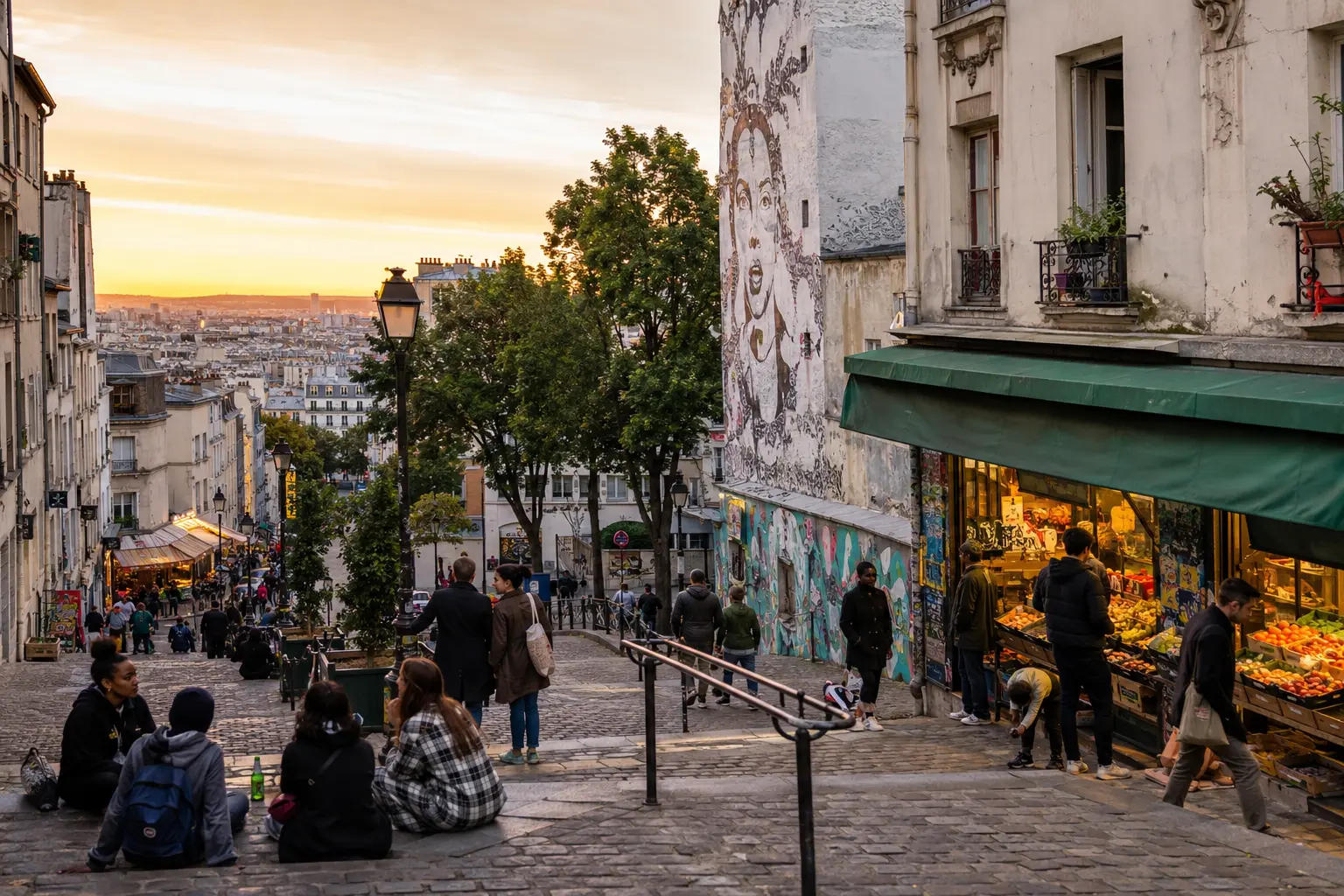
Ménilmontant extends the walk toward music venues, artist spaces, bars and Père Lachaise. The Guardian’s 2026 neighborhood reporting highlights its working-class and North African histories alongside contemporary cultural venues; current popularity should not erase who built the district’s social life.
Come in the afternoon and stay for dinner or a performance. The neighborhood gives less instant confirmation than the Marais. That is useful if you enjoy reading signs, menus, topography and public life rather than moving between major attractions.
South Pigalle and the 9th: food streets beneath the theaters
The 9th changes from grand boulevards and department stores to smaller streets climbing toward Montmartre. Around Rue des Martyrs, food shops, cafés and neighborhood errands create an easy morning walk. Farther south, theaters and music halls recall an entertainment district that has repeatedly reinvented itself.
South Pigalle’s current design hotels, cocktail bars and fashionable bakeries are only one layer. Look for older courtyards, religious buildings, covered passages and the routes that once connected central Paris to the hill.
This area works when you want breakfast, food shopping and a gradual transition toward Montmartre. It is less suitable as a substitute for the hill itself if views and Sacré-Cœur are the goal.
Batignolles: a quieter half-day
Batignolles in the 17th arrondissement offers market streets, cafés, Square des Batignolles and the larger Martin Luther King Park near the newer Clichy-Batignolles development. The contrast between older village-scale streets and contemporary urban planning gives the area more substance than the label “cute.”
Visit on a market morning, browse slowly and use the parks as real breaks. This is a neighborhood for repeat visitors or travelers with a longer stay, not an argument that every first-timer should abandon Notre-Dame in pursuit of fewer Instagram tags.
Pair it with the northwest edge of the 9th, Parc Monceau or an architecture-focused walk. If the trip has only two full days, central neighborhoods will usually deliver more context per hour.
How to walk a Paris neighborhood well
Give the walk an anchor and an exit
Choose an anchor, a direction and an exit. The anchor might be a market, museum, park or lunch reservation. The direction prevents circular wandering; the exit is a Metro station that keeps fatigue from deciding the end of the day.
Save five places, not twenty-five. Check which require a specific day or booking, then let the rest remain optional. A neighborhood is not improved by staring at a phone at every corner.
Read the ground floors
Notice ground floors. Bakeries, pharmacies, schools, workshops and building entrances explain daily use better than rooflines alone. Look upward too, but not while stepping into a cycle lane.
Return at another hour
Finally, return at a different hour when a place catches your attention. The Marais before shops open, Canal Saint-Martin at sunset and Belleville over dinner are not the same neighborhoods encountered at 2 p.m. The map stays still; Paris does not.
Frequently Asked Questions
What is the best Paris neighborhood to explore?
It depends on the day you want. The Marais suits layered history and dense browsing, Saint-Germain and the Latin Quarter suit the Left Bank's institutions and street life, Montmartre suits hills and early-morning views, and Canal Saint-Martin suits a contemporary neighborhood rhythm.
What is the difference between an arrondissement and a neighborhood in Paris?
Paris is divided into 20 administrative arrondissements that spiral clockwise from the center, useful for addresses and orientation, but an arrondissement is not one uniform experience — the 18th, for example, contains both Sacré-Cœur and areas that feel nothing alike.