
The best day trips from Paris are Versailles for palace history, Giverny for Monet and gardens, Reims for Champagne, Fontainebleau for a less exhausting château day, Chartres for an easy historic city, and Provins for a medieval town reached on regional transport. Rouen also works well when Normandy history matters more than minimizing travel.
Not every fast train creates a good day trip. Strasbourg, Colmar, Lyon and even London can appear close on a timetable, but station transfers, check-in margins and the desire to see more than a platform turn them into long, expensive days. Mont-Saint-Michel and the D-Day beaches involve even more ground transport. The useful question is not “Can this be done?” It is “How much of the day will still belong to the destination?”
Choose by experience and travel friction
| Destination | Best for | Day-trip effort | Main limitation |
|---|---|---|---|
| Versailles | Palace, gardens and French royal history | Easy route, demanding visit | Crowds and a very large estate |
| Giverny | Monet, gardens and seasonal color | Moderate; train plus local connection | Seasonal and weather-dependent |
| Reims | Champagne houses, cathedral and food | Fast rail, advance bookings needed | Tastings reduce spontaneity |
| Fontainebleau | Château and forest | Moderate; local transfer after train | Less instantly famous than Versailles |
| Chartres | Cathedral, old streets and an easy city day | Low | Quieter outside peak sights |
| Provins | Medieval architecture and family-friendly history | Low to moderate; slower regional train | Longer ride than the map suggests |
| Rouen | Normandy history, cathedral and urban walking | Moderate | Deserves a full day rather than a quick stop |
Travel times change by service and engineering work. Check the exact departure station, arrival station and last practical return for the date. A headline claiming “45 minutes from Paris” may refer only to the train, leaving out the Métro across Paris, security, the shuttle at the other end and the 20 minutes spent locating the correct platform.
Versailles: the obvious choice, but not a half-day palace
Versailles is the strongest first day trip for travelers interested in monarchy, political theater, formal gardens and the physical scale of royal power. The Hall of Mirrors is only one part of an estate that also includes the gardens, park, Grand Trianon, Petit Trianon and Marie-Antoinette’s Estate.
The Palace itself recommends spending a full day. Its official planning guidance notes that the palace is closed on Mondays, opens before the Trianon estate and uses timed admission. That sequence matters: book the palace early, then move into the gardens and outer estate rather than arriving at noon and discovering that the map has been politely understating the distances.
Versailles is easy to justify for a Paris stay of five days or more. In a three-day first visit, it consumes one third of the trip and usually costs too much city time. The decision should be based on interest, not obligation.
Who should choose Versailles
Choose it for art history, architecture, gardens or a first visit to France that would feel incomplete without the palace. It also suits families who can pace the day and travelers comfortable with substantial walking.
Skip it when crowds, formal interiors or long garden distances sound draining. Fontainebleau may offer a more manageable château experience, while a central Paris museum day will require much less transport.
Giverny: best for Monet and a seasonal garden day
Giverny is built around Claude Monet’s house and gardens, where the flower beds, water garden and Japanese bridge reveal how cultivated landscape fed the artist’s work. The experience is most rewarding when the traveler already cares about Monet, gardening or the relationship between an artist and place.
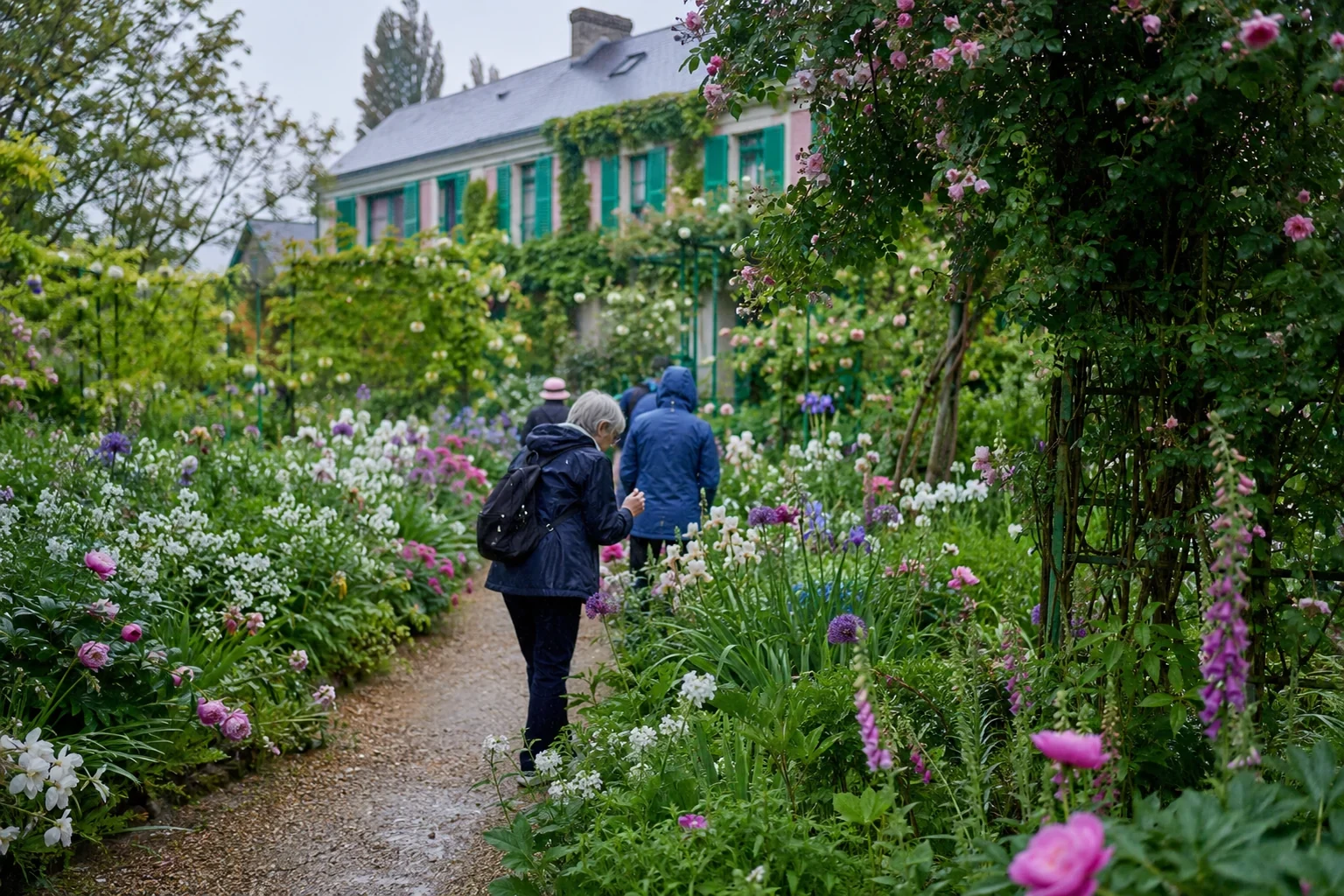
The practical catch is the final connection. Trains from Paris reach Vernon-Giverny, not Monet’s gate; visitors continue by shuttle, bus, taxi, bicycle or another local option. The garden is seasonal, opening dates and ticket rules vary, and peak flowering periods attract substantial crowds. Check the Fondation Monet visitor information before buying rail tickets.
An early departure improves the day. Visit the house and gardens first, then walk through the village, see Monet’s grave or add the Musée des Impressionnismes if its current exhibition is worthwhile. Do not add Rouen merely because it appears farther along the same rail line unless the main purpose is collecting stations.
Who should choose Giverny
Choose it from spring through early autumn for gardens, Impressionism and a slower day outdoors. Weather changes the experience but does not automatically ruin it; soft rain can make the garden color richer, provided footwear is suitable.
Skip it in the closed season or when the connection between Vernon and the site feels like too much coordination. Travelers who primarily want paintings may gain more from Musée de l’Orangerie or Musée d’Orsay without leaving Paris.
Reims: best for Champagne with a plan
High-speed trains make Reims feel deceptively simple, and the city center is compact enough for a strong day. The cathedral provides the historical anchor; Champagne houses, cellars and tastings create the commercial and cultural reason many travelers come.
The day must be reserved in the correct order. Choose one major cellar visit first, confirm its location and language, then fit the cathedral, lunch and another tasting around it. Some houses sit outside the most convenient walking core, and tastings may run longer than the advertised cellar tour.
Reims is not only a drinks excursion. Notre-Dame de Reims was a coronation cathedral, and the city’s rebuilding after World War I left an architectural record that extends beyond the grandes maisons. Still, a visitor uninterested in Champagne may prefer Chartres or Rouen for a more coherent history-led day.
Who should choose Reims
Choose it for wine culture, food, cathedral history and a day that combines scheduled experiences with city walking. Book tastings well ahead on busy weekends and harvest-season dates.
Skip it if the group includes travelers who will not enjoy cellar tours or if a flexible, reservation-free day matters. A rapid train is not especially useful when the central activity is sold out.
Fontainebleau: the château alternative with breathing room
Fontainebleau served French rulers across centuries and contains interiors from different periods rather than one dominant Louis XIV narrative. The surrounding forest adds a second dimension, making this one of the best day trips from Paris for travelers who want a château without devoting the entire experience to formal gardens.
The trip usually involves a train followed by a local bus or taxi. Check both legs and the château’s current opening information before departure. Within the estate, prioritize the main apartments and a walk outside; trying to absorb every room recreates the same fatigue some visitors hoped to avoid at Versailles.
The forest suits hiking and climbing, but combining a serious hike with a full palace visit requires an early start and practical footwear. For most first-time visitors, one château route and one modest outdoor walk is enough.
Who should choose Fontainebleau
Choose it for architecture, decorative arts, Napoleon-era history or a palace day with somewhat less ceremony. It is also useful when Versailles is closed on Monday, though current Fontainebleau hours must still be checked.
Skip it when the main wish is the Hall of Mirrors or the grand axial gardens associated with Versailles. Substitution works only when the alternative matches the interest.
Chartres: the easiest independent historic-city day
Chartres is a clean answer for travelers who want to leave Paris without building the day around transfers and reservations. Direct trains leave from Gare Montparnasse, and the cathedral and old center are walkable from the arrival station.
The cathedral is the central experience, particularly its medieval stained glass and the relationship between architecture and pilgrimage. The lower town, river walks and lanes around the historic center provide enough contrast for the rest of the day. Lunch can remain spontaneous.
Chartres feels quieter than the headline destinations. That is the advantage. The day allows time to look rather than repeatedly check the next admission slot. Verify cathedral services and access before travel, because it remains a functioning place of worship.
Who should choose Chartres
Choose it for Gothic architecture, stained glass, religious history or a low-friction first train day in France. It also works outside the garden season.
Skip it if cathedral architecture holds little interest and the traveler expects a dense list of major attractions. Chartres offers depth and atmosphere, not an amusement-park quantity of stops.
Provins: a medieval town on the regional network
Provins preserves the structure and monuments of a medieval Champagne-fair town. Ramparts, gates, underground galleries, the Tithe Barn and César Tower give the day a clear historical focus, while the upper town can be explored largely on foot.
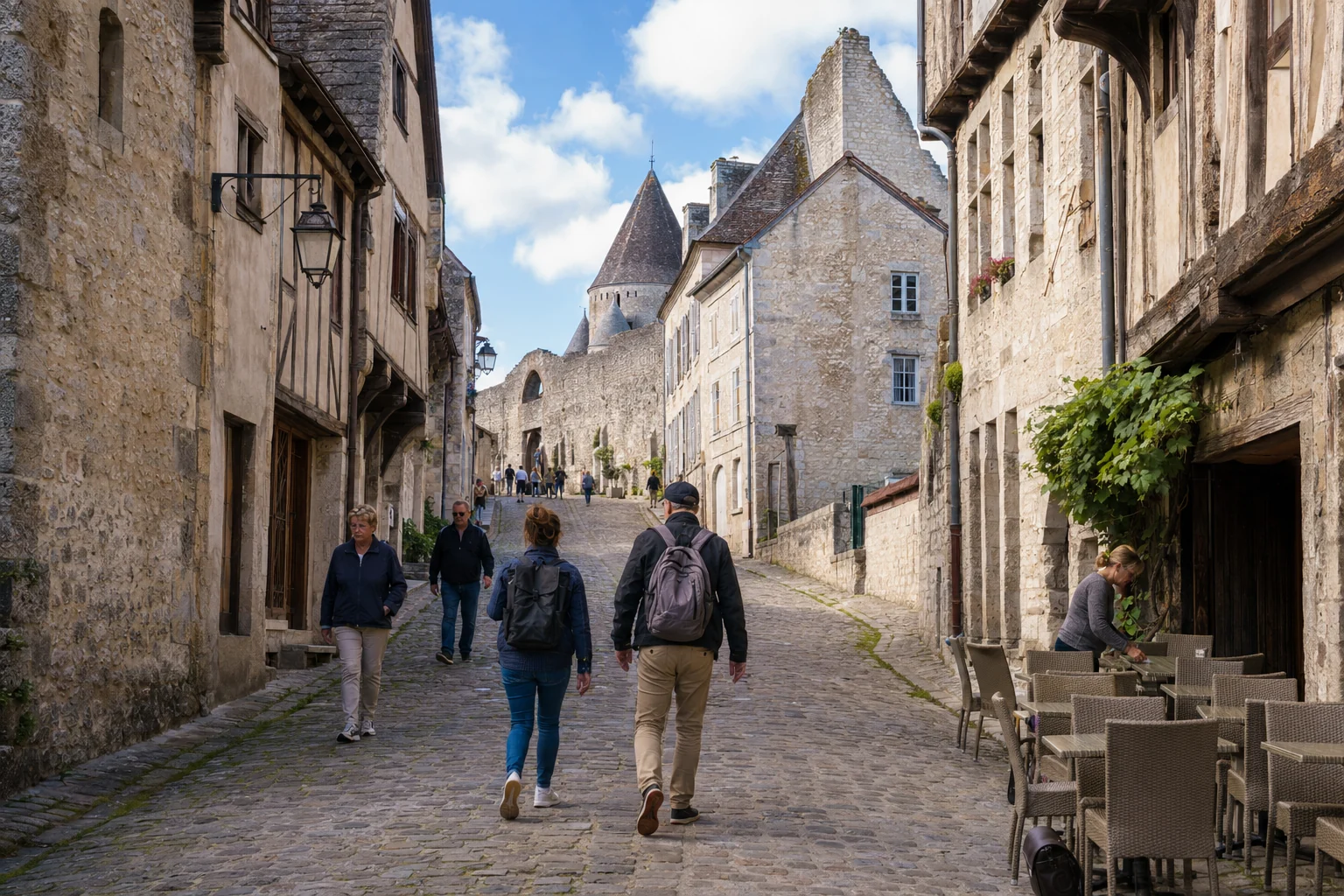
Direct Line P trains depart from Paris-Est. The official Provins transport page publishes current access notes and planned disruption information, which matters because replacement buses can turn a simple route into a slower one. The regional train is not high-speed, but the lack of a complicated connection keeps the day understandable.
Seasonal historical shows can appeal to families, though they should not replace the town’s real history with costume spectacle. Check performance dates and monument hours, especially in winter when access is reduced.
Who should choose Provins
Choose it for medieval urban history, ramparts and a self-contained town that feels distinctly separate from Paris. It is also suitable for travelers who prefer a regional train over a guided coach tour.
Skip it when long local-train rides are tiring or when restaurants and monuments have limited off-season hours. In winter, Chartres or Rouen may offer a more dependable urban day.
Rouen: the best Normandy city day
Rouen offers a Gothic cathedral, timber-framed streets, Joan of Arc history, museums and the Seine within a city that rewards a full day on foot. It provides a meaningful taste of Normandy without pretending that the D-Day beaches or Mont-Saint-Michel sit just outside the station.
The cathedral façade is closely associated with Monet’s series, but Rouen’s history extends through medieval commerce, religious conflict, industrialization and wartime destruction. The old center can look theatrical in photographs; it is also a working regional city with ordinary shops and modern traffic between the preserved streets.
Choose a morning train, build the day around the cathedral and one museum or historical site, and leave room for lunch. Adding Giverny is technically possible on some schedules but creates more transfers and less time in both places.
Who should choose Rouen
Choose it for architecture, Joan of Arc, Normandy history and a fuller city experience than Chartres. It works well year-round because the day does not depend on a garden.
Skip it when minimizing travel is the priority. For a short Paris stay, Versailles or Chartres creates a simpler return.
Day trips that are better as overnight stays
Fast rail has expanded what is possible from Paris, but possibility is not the same as a well-shaped day.
Strasbourg and Colmar
Strasbourg can be reached quickly by high-speed train and is walkable from its station. It can function as a long day when the sole goal is Strasbourg’s cathedral, canals and central streets. Colmar requires more travel and deserves slower exploration. Combining both from Paris compresses Alsace into transport and photo stops. One night makes the regional difference easier to notice.
Mont-Saint-Michel
Mont-Saint-Michel involves a long journey and a final road connection. Day tours spend substantial time on a coach, then deliver visitors during the busiest central hours. The abbey and tidal landscape are more rewarding with an overnight nearby, when evening and morning change the scale of the place.
Normandy D-Day beaches
The landing sites are spread across a large coastal area. A train to a Normandy city does not complete the journey, and historical understanding benefits from a guide or car. A long organized day is possible for travelers with a specific interest in World War II, but it should not be described as an easy train excursion.
The Loire Valley
The Loire’s châteaux do not form one walkable town. Reaching a rail station is only the first step; visitors then need a tour, car, bicycle plan or carefully timed local transport. An overnight lets the trip include more than one hurried château and a view through a minibus window.
London, Brussels and Lyon
International or distant high-speed city trips create impressive timetable screenshots and thin travel experiences. Security margins, station transfers and ticket prices take a larger share of the day than the train duration suggests. Stay overnight unless a single meeting, exhibition or event is the entire purpose.
How to plan a day trip without losing the day
Buy the main admission or tasting before choosing train times. Then leave a realistic margin at the Paris departure station, particularly when crossing the city during the morning commute. Check engineering work again shortly before travel; weekend maintenance can change platforms, routes and replacement buses.
Travel with a light day bag, water, a compact layer and a battery pack. Download tickets and the return route. Avoid booking the last possible train unless another service provides a practical backup.
Lunch also belongs in the plan. Palace estates and smaller towns may have fewer options near the main site, while Champagne tastings and long museum visits can push meals late. Reserve only when the destination is busy or the meal is central to the day; otherwise preserve flexibility.
Which day trip should you choose?
Choose Versailles for the grand first-time palace, Giverny for Monet and gardens, Reims for Champagne, Fontainebleau for a more varied château day, Chartres for the easiest independent historic trip, Provins for a medieval town and Rouen for a full Normandy city.
If the Paris stay is only three days, remain in Paris unless one destination is a genuine priority. With five to seven days, add one day trip. With a longer stay, combine one easy excursion and one interest-led long day rather than treating the rail map as a challenge to see how far breakfast can travel.
Frequently Asked Questions
What is the best day trip from Paris?
Versailles works for palace history, Giverny for Monet and gardens, Reims for Champagne, Fontainebleau for a less exhausting chateau day, and Chartres for an easy historic city.
Is Mont-Saint-Michel a good day trip from Paris?
It involves significantly more ground transport than closer options like Versailles or Chartres. The key question isn’t whether a day trip can be done, but how much of the day will actually belong to the destination versus transit.