The best answer to what to eat in London is not ten beige pub plates in a row. Start with two foods tied closely to the city’s East End, add a few British classics that London serves especially well, then make room for the South Asian and Caribbean cooking that also shapes the capital. If time is short, prioritize pie and mash, a salt-beef beigel, one pub meal, and one meal from London’s global food cultures.
This guide is about dishes and occasions, not a ranking of restaurants. Use it with our London restaurant guide when you are ready to choose a table.
10 London Food Experiences at a Glance
| Food | Best setting | Best for | Main tradeoff |
|---|---|---|---|
| Pie and mash with liquor | Traditional pie-and-mash shop | London heritage | The parsley sauce is deliberately plain and unfamiliar |
| Salt-beef beigel | Jewish bakery in the East End | Fast lunch or late snack | Popular counters can feel rushed |
| Full English breakfast | Caff, pub or hotel | A substantial morning meal | Often too heavy before a packed sightseeing day |
| Fish and chips | Busy chippy or careful pub kitchen | Casual British classic | Quality drops quickly when fried food sits |
| Sunday roast | Pub or dining room on Sunday | Long, convivial lunch | Popular sittings need planning |
| Savory pub pie | Pub with a serious food menu | Cold-day comfort | Fillings and pastry styles vary |
| Sticky toffee pudding | Pub or British restaurant | Warm dessert | Very rich after a heavy main |
| South Asian curry or chaat | East London, Tooting or Southall | London’s plural food culture | One famous street is not a quality guarantee |
| Caribbean plate | Brixton or another established Caribbean community | Spice, smoke and generous comfort food | Regional traditions should not be flattened into “Caribbean food” |
| Afternoon tea | Hotel, tearoom or museum dining room | A bookable occasion | Cost, dress and portion size vary widely |
London Heritage Foods
1. Pie and Mash With Parsley Liquor
This is the most specifically London meal on the list. East End pie-and-mash shops developed as inexpensive working-class dining rooms in the 19th century. The standard plate is a minced-beef pie, mashed potatoes and liquor: a thin green parsley sauce, not alcohol and not brown gravy. White pepper and chili vinegar are common additions.
Try it at a traditional shop in east or southeast London, ideally at lunch. The appeal is cultural continuity as much as culinary fireworks; the flavors are mild and the tiled-room ritual is part of the point. Jellied eels belong to the same history, but treat them as an optional texture experiment, not a duty imposed by the travel gods.
2. A Salt-Beef Beigel
Brick Lane’s beigel tradition arrived with Jewish migration to the East End in the 19th century. The London version is dense and chewy, split around hot salt beef, mustard and often a pickle. Americans will recognize the meat as a close relative of corned beef, though the compact, no-fuss bakery experience is its own thing.
This works best as breakfast, lunch or a late snack while exploring the East End—not as a cross-city pilgrimage to whichever counter is currently most photographed. Check the day’s opening status, order decisively when the line moves, and take the word beigel as local spelling rather than a typo.
British Classics London Does Well
These next dishes are British or English classics, not London inventions. The capital simply gives visitors a broad choice of old-school caffs, neighborhood chippies, pubs and polished dining rooms in which to try them.
3. A Full English Breakfast
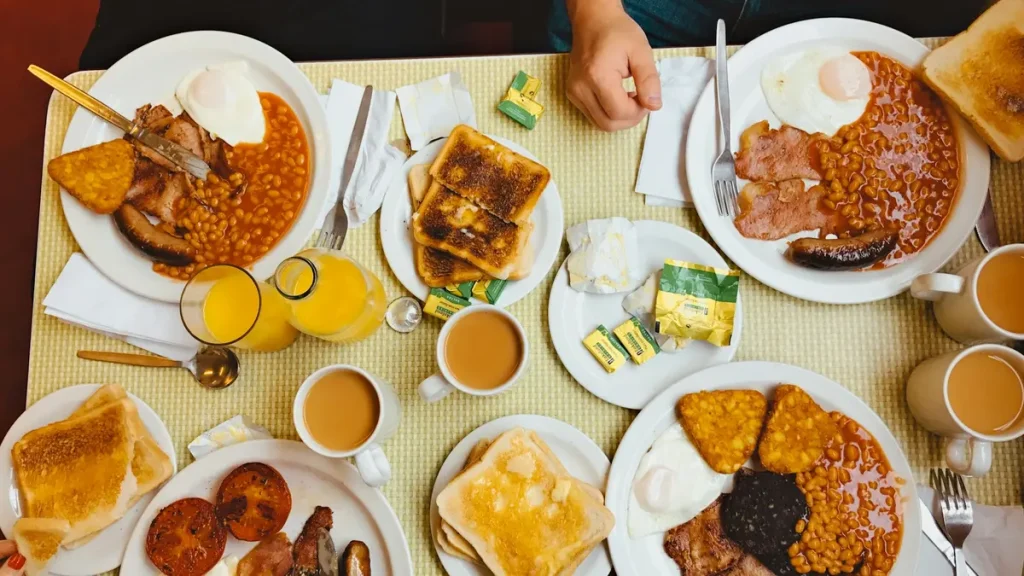
A full English, or fry-up, commonly combines eggs, bacon, sausage, baked beans, grilled tomato, mushrooms and toast; black pudding and potatoes may join the party. Components vary, so read the menu instead of policing authenticity. A traditional caff gives the meal more character than a generic hotel buffet, while many places offer vegetarian versions.
Choose it on a slower morning or before a long gap between meals. It is generous by design. If you want room for lunch, order a smaller set breakfast or split the ambition across different days.
4. Fish and Chips
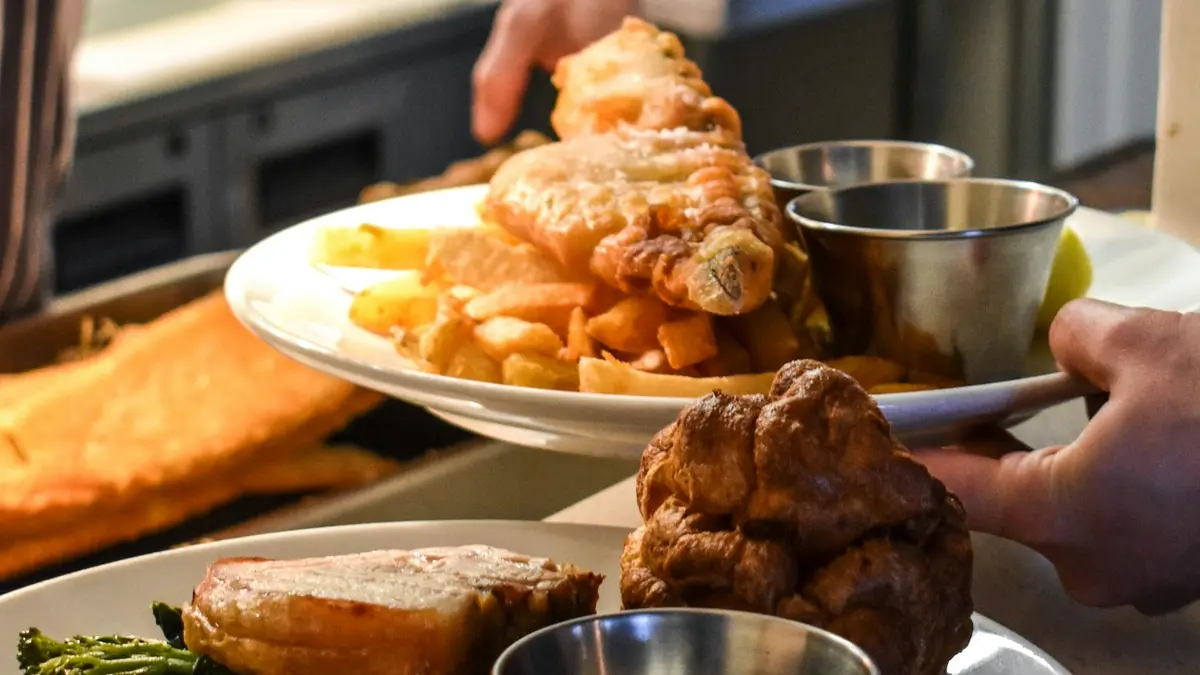
The essentials are battered cod, haddock or another white fish with thick-cut chips, usually joined by malt vinegar, tartar sauce and perhaps mushy peas. A busy specialist chippy is the clearest version; a pub can also do it well when the fish is cooked to order.
Freshness matters more than a famous postcode. Look for steady turnover and a crisp, non-soggy batter, and consider takeaway if the dining room adds cost without adding pleasure. Visitors often build the meal around a landmark and accept the nearest fryer. London has enough options that this mild tragedy is avoidable.
5. Sunday Roast With Yorkshire Pudding
A roast brings meat or a vegetarian centerpiece together with roast potatoes, vegetables, gravy and Yorkshire pudding—a baked batter, despite the dessert-sounding name. It is a ritual meal rather than a quick refuel. Go on Sunday, allow an unhurried lunch, and check the current menu before booking because choices and serving windows vary.
Popular pubs can fill their best sittings, so reserve if this is a trip priority. The tradeoff is commitment: a roast consumes appetite and time. Pair it with a nearby walk, not three timed attractions on opposite sides of London.
6. A Savory Pub Pie
Steak and ale, chicken and mushroom, and vegetable fillings are common, usually served with mash, greens and gravy. Some kitchens bake a fully enclosed pie; others serve a filling under a pastry lid. Both can be satisfying, but the menu should make clear what arrives.
This is the sensible choice after a cold or wet day, especially in a pub where food is more than an afterthought. Ordering style varies: some pubs take food orders at the bar and ask for your table number; others use full table service. Pause for ten seconds and look for instructions rather than performing an elaborate pantomime at the wrong counter.
7. Sticky Toffee Pudding
Here, pudding means dessert. Sticky toffee pudding is a warm date cake covered in toffee sauce, often served with custard or ice cream. It is sweet, soft and deeply comforting—the sort of finale that makes drizzle outside seem almost commissioned.
Order one to share if lunch already involved pastry, potatoes and gravy. It appears on pub and British restaurant menus across London, so there is no reason to travel far for it or treat one permanent menu as guaranteed.
London’s Food Story Is Also Global
8. South Asian Curry or Chaat
London’s South Asian cooking spans Bangladeshi, Indian, Pakistani, Sri Lankan and other traditions; “get a curry” barely begins the conversation. A first visit might mean a slow-cooked curry with rice or bread, or chaat: a snack-like combination of crisp, tangy, spicy and cooling elements. East London, Tooting and Southall offer different concentrations of restaurants, but reputation belongs to individual kitchens, not entire streets.
Choose this meal when you can share several dishes and ask staff about heat and portion size. Do not repeat the tidy but disputed claim that chicken tikka masala was invented in London. Its exact origin is contested, while the deeper story is Britain’s long, complicated relationship with South Asia and the communities that built London’s dining culture.
9. A Caribbean Plate in Brixton
Brixton Village and Market Row became a center for London’s Black Caribbean community from the 1950s. Today a Jamaican meal might include jerk chicken, rice and peas, patties or a stew, with vegetarian options depending on the kitchen. Jamaican food is one tradition within a much larger Caribbean landscape, so use specific dish and island names when a menu provides them.
Make it part of time already spent in Brixton rather than a token detour. Our London neighborhood guide helps fit that visit into a coherent half day. Smoke, chile heat and generous portions suit hungry travelers; the tradeoff is that the most convenient market counter is not automatically the most representative.
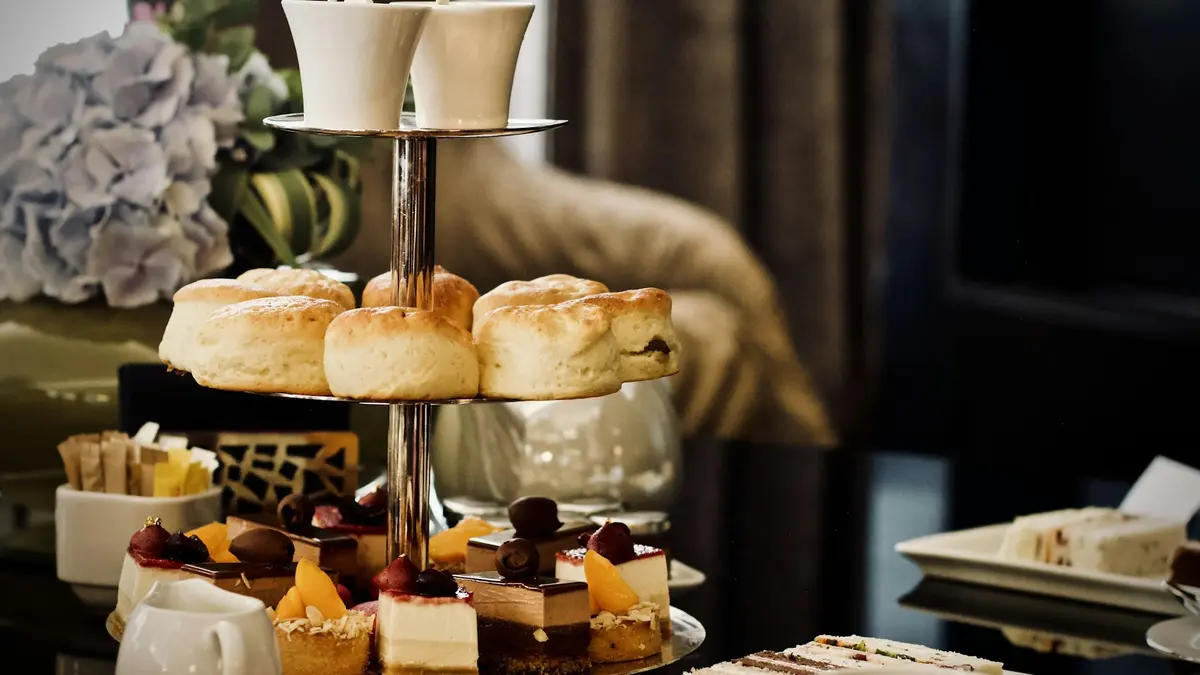
10. Afternoon Tea Is an Occasion, Not a Snack
A full afternoon tea normally brings finger sandwiches, scones with clotted cream and jam, small cakes and a pot of tea. It is British rather than uniquely London, but the capital offers settings from grand hotels to museum dining rooms. This is ceremony, atmosphere and a substantial amount of food—not the everyday cup of tea most residents drink.
Book ahead when a particular room matters, then check its current dress code, cancellation terms and dietary-request policy. Some venues are relaxed; others are emphatically not interested in your finest sightseeing sneakers. Avoid placing a large dinner immediately afterward. If the full production feels excessive, a cream tea—tea and scones—is the lighter answer.
How to Order Without Guessing
- Match food to geography. Save appealing places in Google Maps, then eat near the day’s sights. Crossing London for a merely famous plate is rarely a good exchange.
- Check Sunday and tea rules. Roast service, menus, deposits and afternoon-tea dress codes can change. Reconfirm on the venue’s official site shortly before visiting.
- Read the bill before tipping again. A service charge may already be included. UK guidance distinguishes voluntary from mandatory charges, so look at the wording and ask staff if it is unclear.
- State allergies directly. UK restaurants must provide information about 14 regulated allergens, but cross-contact still matters. Contact the venue ahead, explain the allergy on arrival and ask whether ingredients or preparation have changed.
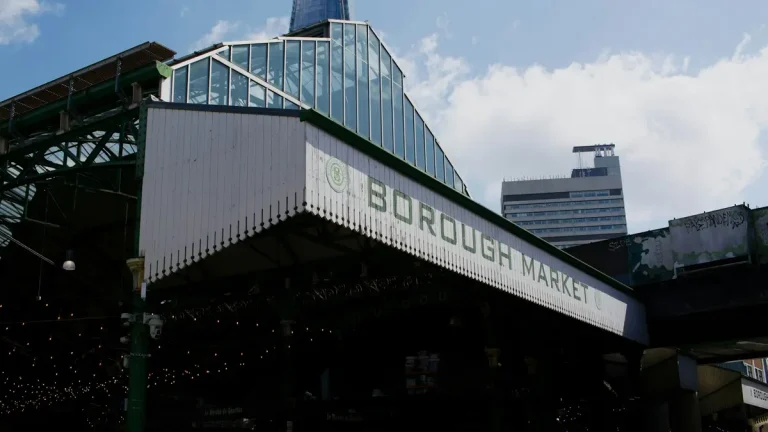
- Let markets be optional. Borough, Brick Lane and other famous food areas can be useful, but crowds and reputation do not guarantee the best version of a dish. A well-chosen neighborhood kitchen can be the more London choice.
For a first trip, three or four of these experiences are enough. Build them around the places you already plan to see in London, leave one meal unplanned, and let the city be more interesting than a checklist.
Frequently Asked Questions
What food is London famous for?
Foods tied closely to London’s East End like pie and mash and salt-beef beigels, plus British classics the city serves especially well, and the South Asian and Caribbean cooking that also shapes the capital’s food scene.
What should you eat in London if you only have one day?
Prioritize pie and mash, a salt-beef beigel, one classic pub meal, and one meal from London’s global food cultures rather than trying to fit in ten different dishes.