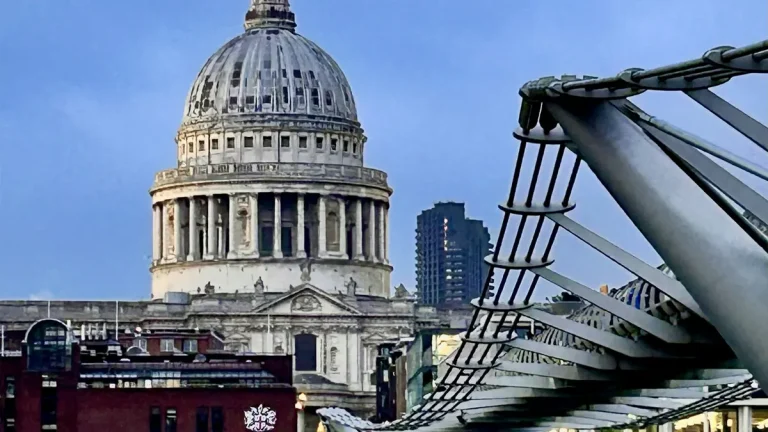
The best time to travel to London for most first-time visitors is late April to mid-May or mid-September. These windows usually balance walkable temperatures, useful daylight and less summer pressure—provided the dates do not overlap Easter, a half-term school break or a major event.
Choose June instead for the longest evenings, July or August for the warmest averages, late November or early December for festive atmosphere, and January or early February for a better chance of lower accommodation pressure. There is no magic month. London’s calendar is too busy, and its weather far too fond of improvisation.
London Timing: The Quick Decision
| Your priority | Best window | Why it works | Main catch |
|---|---|---|---|
| Best overall balance | Late April–mid-May or mid-September | Mild walking weather and useful daylight | Events and school breaks can erase the crowd advantage |
| Longest days and outdoor plans | June | Long evenings, parks and open-air programming | Demand is already rising |
| Warmest weather | July–August | Average highs near 74–75°F (23–24°C) | Peak crowds, higher room pressure and heat-wave risk |
| Festive London | Late November–early December | Lights and seasonal programming without choosing Christmas week | Short daylight, wetter averages and event-driven rates |
| Indoor culture and lower pressure | January–early February | Quieter post-holiday rhythm and strong museum days | Cold, limited daylight and February half-term |
The weather figures below use the Met Office’s 1991–2020 Heathrow station normals. They are climate averages, not a forecast for central London. Check the short-range forecast just before packing.
The Best Time to Travel to London by Priority
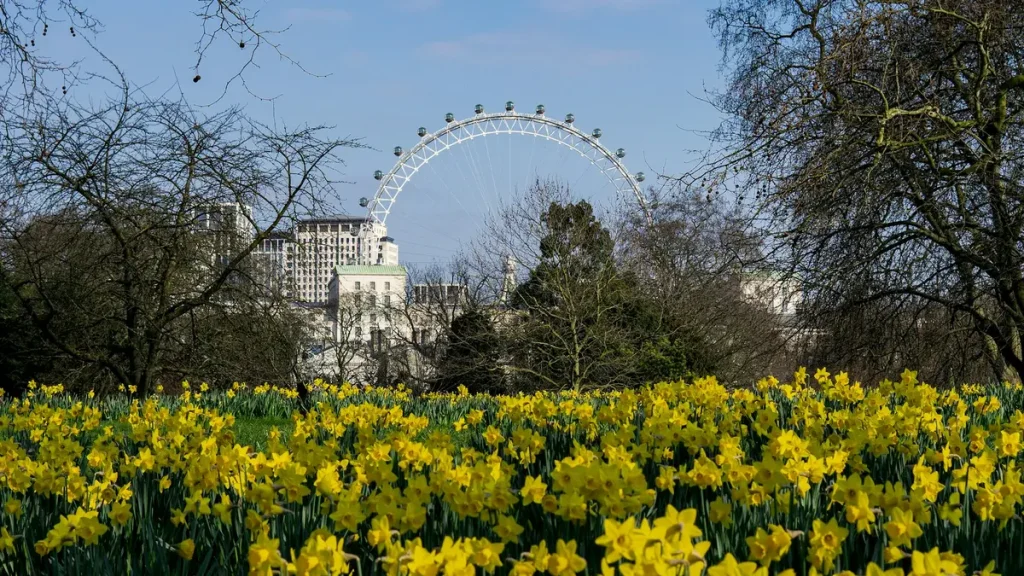
For Mild Weather and Walking: Late April to Mid-May
April’s average high is about 59°F (15°C), rising to 65°F (18°C) in May; average lows are roughly 43°F (6°C) and 48°F (9°C). May also averages about 207 hours of sunshine across the month. That does not guarantee dry park benches, but it gives long walking days without making every un-air-conditioned room a strategic concern.
Late April through mid-May is the strongest default for parks, riverside walks and neighborhood days. Avoid Easter, the late-May school break and event weekends if crowd control matters. The London Marathon, for example, can change road access and room demand on its dates. Check the official calendar before paying a nonrefundable rate.
For a Warmer Shoulder-Season Trip: Mid-September
September retains an average high near 68°F (20°C) and low near 53°F (12°C), with about 7.9 days reaching at least 1 mm of rain in the Heathrow normal. Summer tourism does not vanish on September 1, but pressure often eases after schools return. Mid-month is a better bet than assuming the first weekend has already become autumn.
This is an excellent window for travelers who want outdoor time plus theater, museums and pubs as weather insurance. Pack layers rather than one heroic coat. Warm afternoons and cool evenings can share a day without consulting your wardrobe plan.
For the Longest Evenings: June
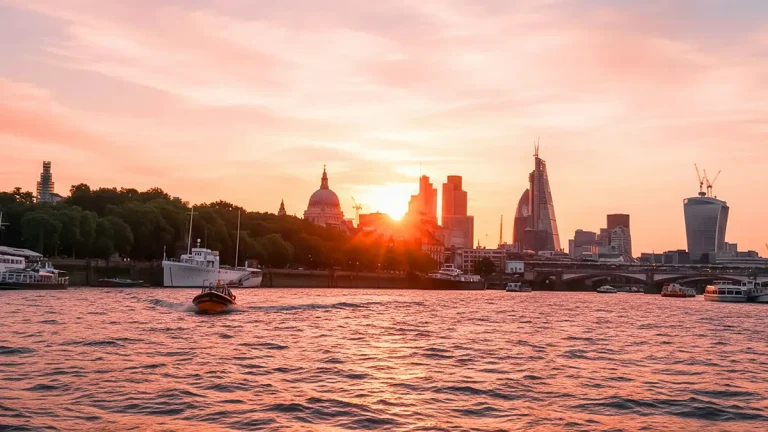
June averages a high near 71°F (22°C), a low around 54°F (12°C) and roughly 208 monthly sunshine hours at Heathrow. More important for a visitor, daylight extends well into the evening. A museum reservation can occupy midday without consuming the whole usable day; parks, the Thames and outdoor performances still fit afterward.
June is not a quiet secret. Events multiply, overseas visitors arrive and Wimbledon begins around the turn into July. Book essential tickets and compare rooms early, especially if a specific weekend matters.
For the Warmest Weather: July and August
July and August average highs near 75°F (24°C) and 74°F (23°C), with lows around 57°F (14°C). They also bring school holidays and high visitor demand. Rain remains possible, yet the more consequential risk may be a hot spell in a city where air-conditioning is not universal in older hotels, pubs or Underground spaces.
Summer suits travelers who will trade crowds for parks, festivals and long days. Confirm that a hotel advertises actual air-conditioning—not only “air cooling”—and schedule shade or indoor time during very hot afternoons. Reserve major attractions rather than treating a sold-out slot as a character-building exercise. Our first-visit London guide helps group those bookings without crossing the city repeatedly.
For Christmas Atmosphere: Late November to Early December
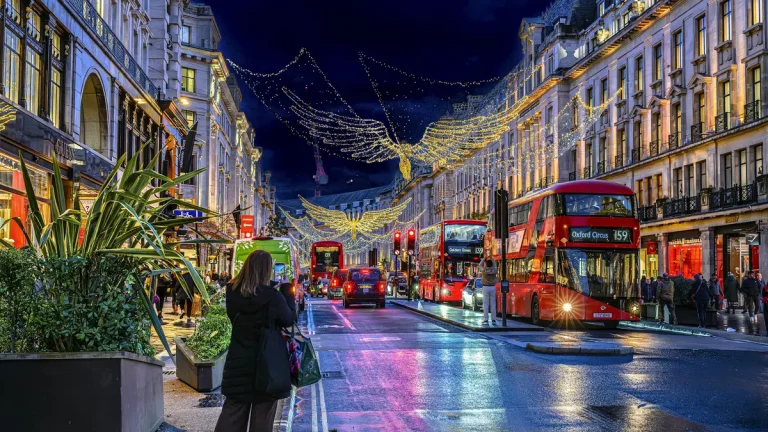
Seasonal lights and displays begin appearing from November, while late November and early December can deliver the mood without committing the trip to Christmas week. The weather is a real trade: November averages about 53°F/42°F (11°C/5°C), and December about 48°F/38°F (9°C/3°C), with far fewer sunshine hours than spring or summer.
This window is atmospheric, not reliably inexpensive. Holiday events, shopping weekends and popular shows can raise demand. New Year’s Eve fireworks are ticketed, and the release process changes, so use the official City Hall page rather than a resale promise. Leave detailed December planning to the dedicated seasonal guide.
For Museums and a Better Chance of Value: January to Early February
Visit London identifies January through March as the usual lower-cost period, and January and February are generally quieter outside half-term. Treat that as a market tendency, not a quote for your dates. Compare the total room cost and cancellation policy; a convention, match or school break can make an “off-season” weekend oddly expensive.
January’s average high is about 47°F (8°C), with 11.5 days receiving at least 1 mm of rain. The reward is a natural rhythm of galleries, long lunches and theater rather than an outdoor checklist. Use our London museum guide to choose two collections well instead of sheltering inside whichever marble foyer appears first.
What Each Season Feels Like in Practice
Spring: Variable, Green and Usually Easy to Edit
March can still feel wintry; April and May are more useful for a first trip. Trees and gardens change quickly, but so can the temperature. Bring a light waterproof layer, comfortable shoes and one warmer layer for evenings. Build an indoor alternative into each outdoor-heavy day rather than canceling a whole itinerary for a shower.
Summer: London at Full Volume
Long days expand what feels possible, while queues and warm transport quietly reduce it again. Book the non-negotiables, keep meals near the day’s neighborhood and confirm hotel cooling. July’s Met Office average looks gentle to many Americans, but an average hides heat waves and warm nights; historical climate should never be mistaken for a ceiling.
Fall: A Strong September, Then More Weather Tradeoffs
September is the cleanest balance. October can still be rewarding for restaurants, theater and color in the parks, but Heathrow averages more wet days and less sunshine than September. October half-term also lifts family demand. By November, plan around earlier darkness and let indoor interests carry more of the trip.
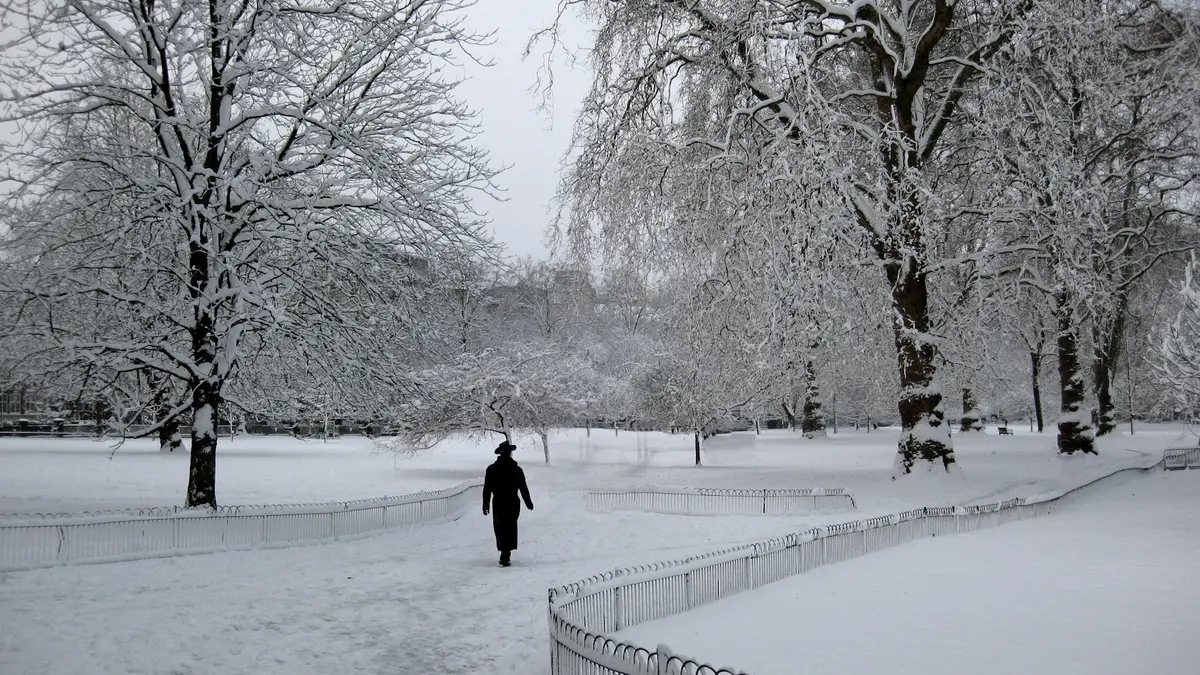
Winter: Culture-Rich, Daylight-Poor
Winter works best when museums, food and performances are central rather than consolation prizes. Use the London neighborhood guide to keep short outdoor blocks close to a warm indoor anchor. If day trips matter, check seasonal hours and transport before committing; our comparison of day trips from London can help decide which journeys still justify the daylight.
Crowd and Cost Triggers That Matter More Than the Season Label
- School holidays: UK term dates vary by local authority. Check the GOV.UK council-date tool for February, late May and October half-terms, Easter and the summer break.
- Bank holidays: Easter and May weekends can bring closures, altered schedules and domestic trips. Verify England and Wales dates on GOV.UK.
- Large events: The London Marathon and Wimbledon create localized transport and accommodation pressure. Check official dates before booking, even in otherwise balanced months.
- Christmas and New Year: Do not infer future service from last year. Visit London warns of reduced service and engineering work around Christmas to New Year; check TfL and National Rail for the exact year.
- Your room, not the city average: Compare the same neighborhood and cancellation terms across several weeks. Our guide to where to stay in London helps keep a cheaper rate from becoming an expensive daily commute.
A Simple Booking Rule
Pick the season for the experience, then test the exact week for school breaks, events and live room prices. Choose late April to mid-May or mid-September if no priority dominates. Move to June for daylight, deep winter for indoor culture, or early December for lights. The honest best month is the one whose downside you will notice least.
Frequently Asked Questions
What is the best time to visit London?
For most first-time visitors, late April to mid-May or mid-September usually balance walkable temperatures, useful daylight, and less summer crowd pressure, as long as the dates don’t overlap Easter, a half-term school break, or a major event.
Is summer a bad time to visit London?
Not bad, but it means the warmest average temperatures and the heaviest crowds and demand. July and August work well if warm weather is the priority, while late April to mid-May or mid-September offer a better crowd-to-weather balance.