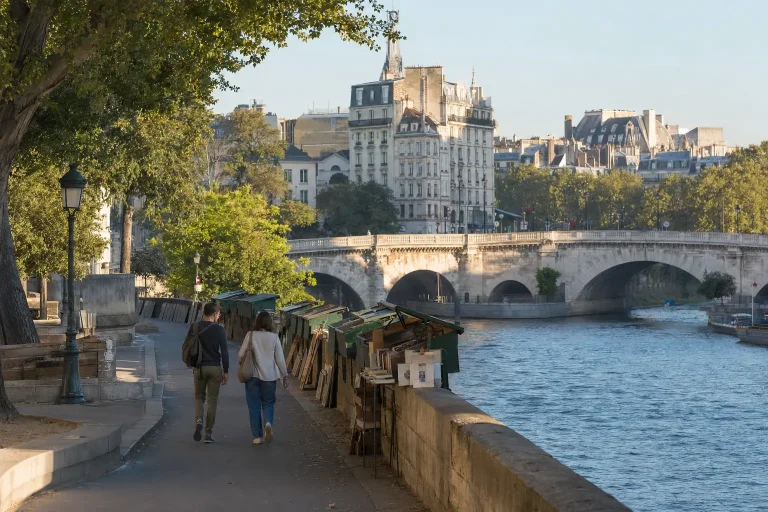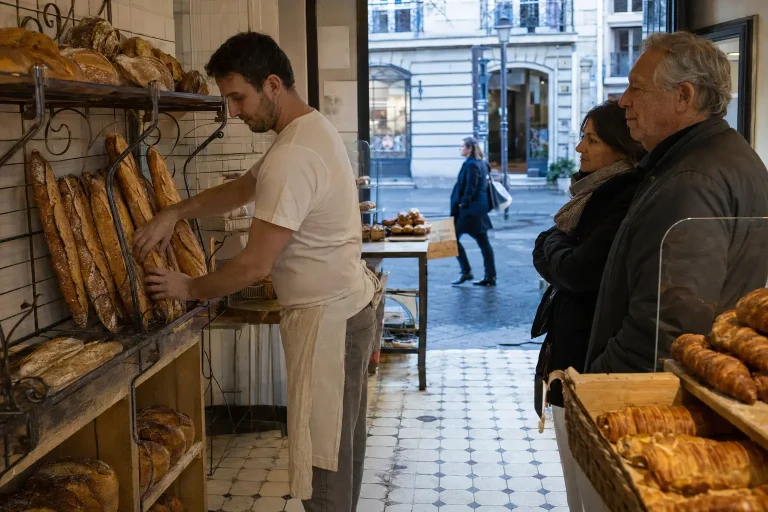
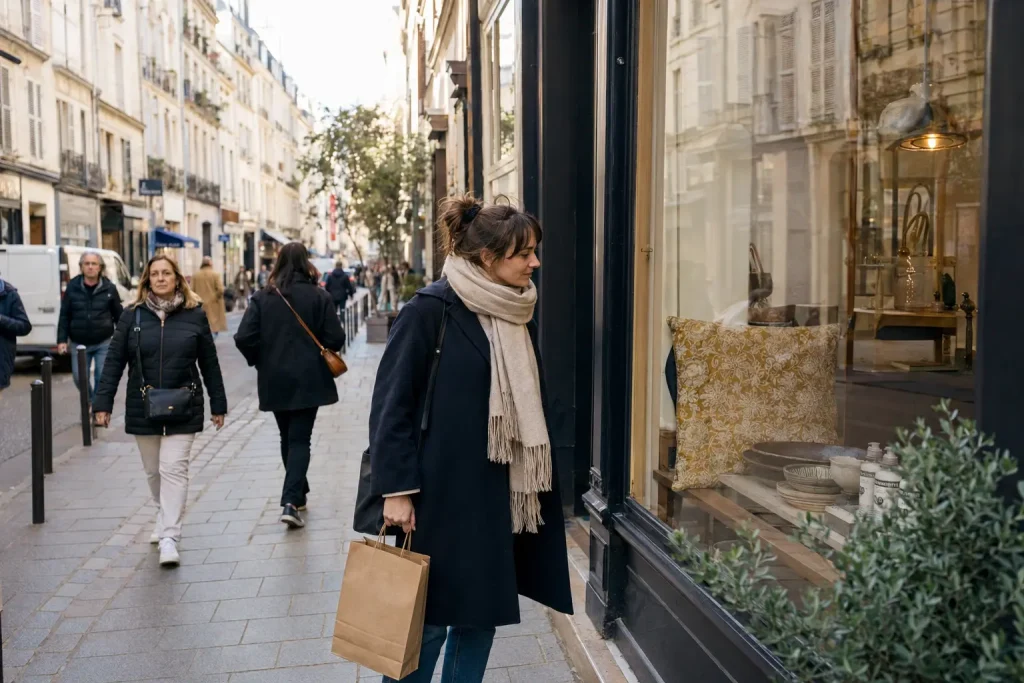
The best shopping in Paris depends on what you want: department stores for efficient comparison and tax-refund desks, the Marais and northern arrondissements for independent fashion and design, Saint-Ouen or Vanves for antiques, specialist food shops for compact gifts, and neighborhood pharmacies for French products that are actually cheaper or differently formulated.
Paris rewards targeted browsing more than a citywide shopping marathon. Choose one category, match it to one area and leave room to compare. Crossing the city for a product that is widely available online converts a purchase into a transport project.
Choose the right shopping format
| Goal | Best starting point | Main tradeoff |
|---|---|---|
| French and international fashion together | Major department store | Convenient but crowded |
| Independent labels and small design objects | Marais, Haut-Marais, 9th, 10th or 11th | Stock and sizes vary |
| Luxury flagships | Golden Triangle and Rue Saint-Honoré | Appointments, queues and high prices |
| Vintage clothing | Marais, 10th, 11th and specialist resale shops | Quality ranges from curated to chaotic |
| Antiques and objects | Saint-Ouen or Vanves | Requires time, judgment and transport |
| Food gifts | Market streets and specialist shops | Customs and luggage limits |
| Beauty and pharmacy products | Neighborhood pharmacy or parapharmacy | Not every product is a bargain |
| Books, prints and stationery | Left Bank and specialist independents | Fragile or heavy to carry |
Shopping areas overlap. The point is not to assign every arrondissement a personality; it is to reduce the number of places that cannot sell what you came to find.
Department stores: best for efficiency and tax-refund support
Galeries Lafayette and Printemps at Haussmann, Le Bon Marché on the Left Bank, BHV Marais and Samaritaine bring many brands under one roof. They work well for travelers comparing sizes, colors or prices without visiting several flagships.
The buildings are attractions in their own right, which means tour groups and viewpoint visitors share the space with shoppers. Arrive near opening for serious purchases. Check each store’s current Sunday hours and holiday schedule rather than assuming the whole district operates uniformly.
Department stores can simplify détaxe paperwork because they have dedicated tax-refund services. The convenience does not guarantee the lowest price or the exact product. Compare the euro price, home-market price, exchange rate, card fees and expected refund after processing costs.
Use the concierge or store map to group departments. Wandering every floor is enjoyable only when browsing is the activity; it is an inefficient method for locating one pair of shoes.
Independent fashion and design: browse beyond one famous street
The Marais and Haut-Marais have dense concentrations of fashion, jewelry, beauty and homeware, from international names to small French labels. They are easy to combine with cafés and museums, but rents and visitor traffic mean “independent” does not automatically mean inexpensive or locally made.
The 9th, 10th and 11th arrondissements offer more dispersed shopping around streets that still serve residents. Expect workshops, multi-brand boutiques, ceramics, stationery and clothing rather than one continuous retail corridor. Save promising addresses on a map, then walk a coherent loop.
Ask where an item was designed and made if local production matters. A Paris shop can sell a global product; a French label can manufacture elsewhere. Neither is inherently wrong, but the distinction should be visible in the decision.
Check return rules before buying. Small shops may offer exchange or store credit rather than the broad refunds US shoppers expect, particularly for sale items.
Luxury shopping: price is only one part of the plan
Luxury flagships cluster around Avenue Montaigne, Rue du Faubourg Saint-Honoré, Rue Saint-Honoré and Place Vendôme. Availability, queue systems and appointment policies vary. A widely discussed handbag may not be available merely because the traveler has reached its country of origin.
Bring a passport if requesting tax-free paperwork and use a payment card in the purchaser’s name. Ask the shop to explain the refund provider, refund method and validation steps before leaving. Keep every document together.
Do not calculate savings from the headline French VAT rate. The merchant or refund operator deducts fees, currency conversion can move, and the destination country may impose import duties or taxes. A lower Paris price is possible; it is not universal.
Avoid wearing or checking a purchase into inaccessible luggage before customs validation. Officials may ask to see the goods.
Vintage clothing: distinguish curated resale from bulk thrift
Paris vintage ranges from carefully authenticated designer resale to inexpensive bins sold by weight. Curated shops charge for selection, cleaning, location and knowledge. Bulk stores offer the possibility of a bargain and the certainty of more searching.
Inspect seams, closures, lining, stains and alterations. French vintage sizing does not map neatly to current US sizes, and a label is less informative than the garment’s actual measurements. Try clothing on when possible.
Authentication matters for high-value designer goods. Ask about documentation, return policy and what the seller guarantees. A confident story about an item’s previous owner is not provenance.
Second-hand purchases may not fit the same tax-refund process as new goods. Confirm eligibility with the merchant before relying on a refund.
Flea markets: choose Saint-Ouen or Vanves by scale
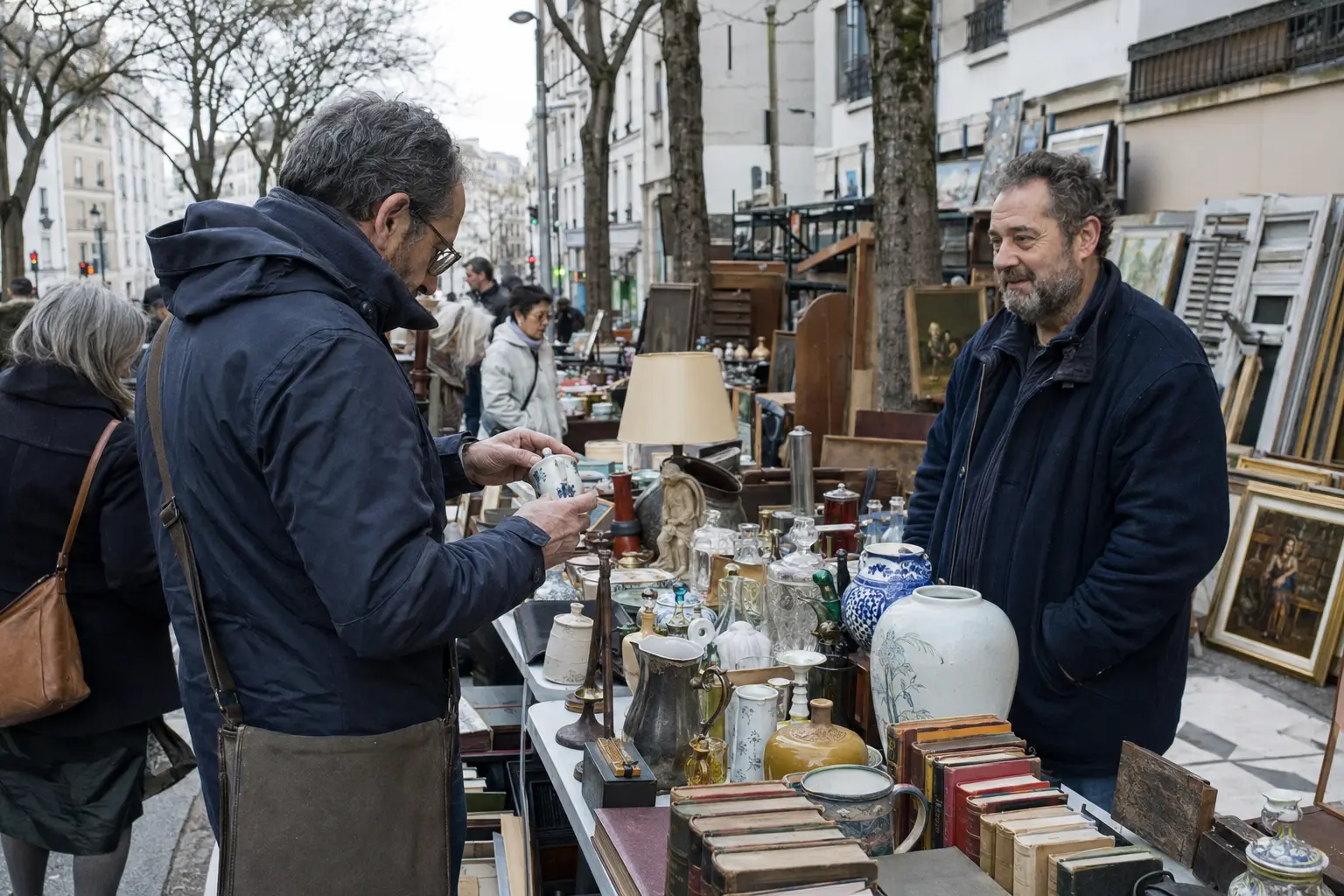
Saint-Ouen is an enormous network of markets and surrounding streets north of central Paris, with dealers specializing in furniture, fashion, books, jewelry, art and design. It rewards research: identify the sub-markets that match the category and check dealer days before going.
Vanves is smaller and easier to understand for a first browse. The official Paris tourism listing currently describes roughly 380 professional dealers and Saturday and Sunday morning operation. It suits ceramics, prints, small objects, textiles and items that can plausibly enter a suitcase.
The tourism office’s broader flea-market guide notes that the major markets are most active from Saturday to Monday. Individual dealers and sections differ, so verify the precise market.
Ask before photographing a stall closely. Negotiate politely where appropriate, but do not assume every displayed price begins a theatrical bargaining performance. Cash can help with small purchases; obtain a receipt for valuable objects.
Books, prints and stationery: buy for use, not weight
Paris supports art-book shops, museum bookstores, specialist publishers, antiquarian dealers and stationery stores. A museum shop can be the correct choice when a publication connects directly to an exhibition; it need not be dismissed as a souvenir outlet.
For old books and prints, inspect condition and ask whether an export issue applies to anything genuinely rare or culturally significant. Most ordinary second-hand books pose no such problem, but age does not automatically create value.
Paper goods travel well until rain, bent suitcase corners and an overfilled carry-on intervene. Bring a rigid folder for prints and use the same weight-first logic as when you pack a suitcase efficiently. Large art books are cheaper to ship only after the cost and customs paperwork are checked.
Food gifts: compact, durable and legal
Chocolate, tea, mustard, jam, canned goods and dry biscuits are easier gifts than fragile pastries. Choose products that survive room temperature and luggage handling. A delicate mille-feuille is an afternoon snack, not a transatlantic strategy.
Animal products, fresh produce and some plant materials face destination-country restrictions. Check US Customs and agriculture rules before buying cheese, charcuterie or fresh food for the flight. Vacuum sealing does not make a prohibited item admissible.
Specialist food streets and covered markets allow comparison, but supermarkets can be better for ordinary pantry products. Packaging intended for daily use may be more practical and less expensive than gift-shop presentation.
Keep liquids within cabin-baggage rules or use a carry-on packing list to decide what belongs in checked luggage. Olive oil has little respect for cashmere.
Pharmacy and beauty shopping: compare exact products
French pharmacies carry skincare, sunscreen, hair care and health products, often with broader ranges than US stores. Large parapharmacies may have lower prices; neighborhood pharmacies can offer calmer advice. A prewritten travel toiletries list is useful here: it separates an actual refill from the fifth tube purchased under excellent fluorescent lighting.
Compare the exact size and formulation. Products sold under the same name in different markets may have different ingredients, while an online US retailer may eliminate the supposed Paris saving. Stocking up only makes sense for something already used and tolerated.
Pharmacy staff can advise on nonprescription products, but a shopping trip is not a substitute for medical care. Do not buy prescription medicine without appropriate consultation, and check import rules for medicines carried home.
Sunday shopping and sales periods
Many central stores open on Sunday, particularly department stores and businesses in designated tourist areas. Independent shops may close Sunday or Monday. Paris tourism maintains current Sunday shopping guidance, but individual shop hours remain the final authority.
France has regulated winter and summer sales periods known as soldes. Dates change by year and region. Check the official government sales calendar for the trip year; outside those periods, stores still run promotions but different rules may apply.
Sale crowds are concentrated at the start, while selection narrows later. A discount is useful only when the item fits, can be returned under acceptable terms and was wanted before the red sticker appeared.
How the French VAT refund works
Before paying
Eligible travelers whose habitual residence is outside the European Union may receive a VAT refund on qualifying goods exported from the EU. The merchant decides whether to offer tax-free sales and prepares the form; French Customs does not directly refund the purchase.
The official French Customs PABLO guide is the authority for current eligibility and validation. Read it before a major purchase because thresholds, eligible goods, deadlines and procedures can change.
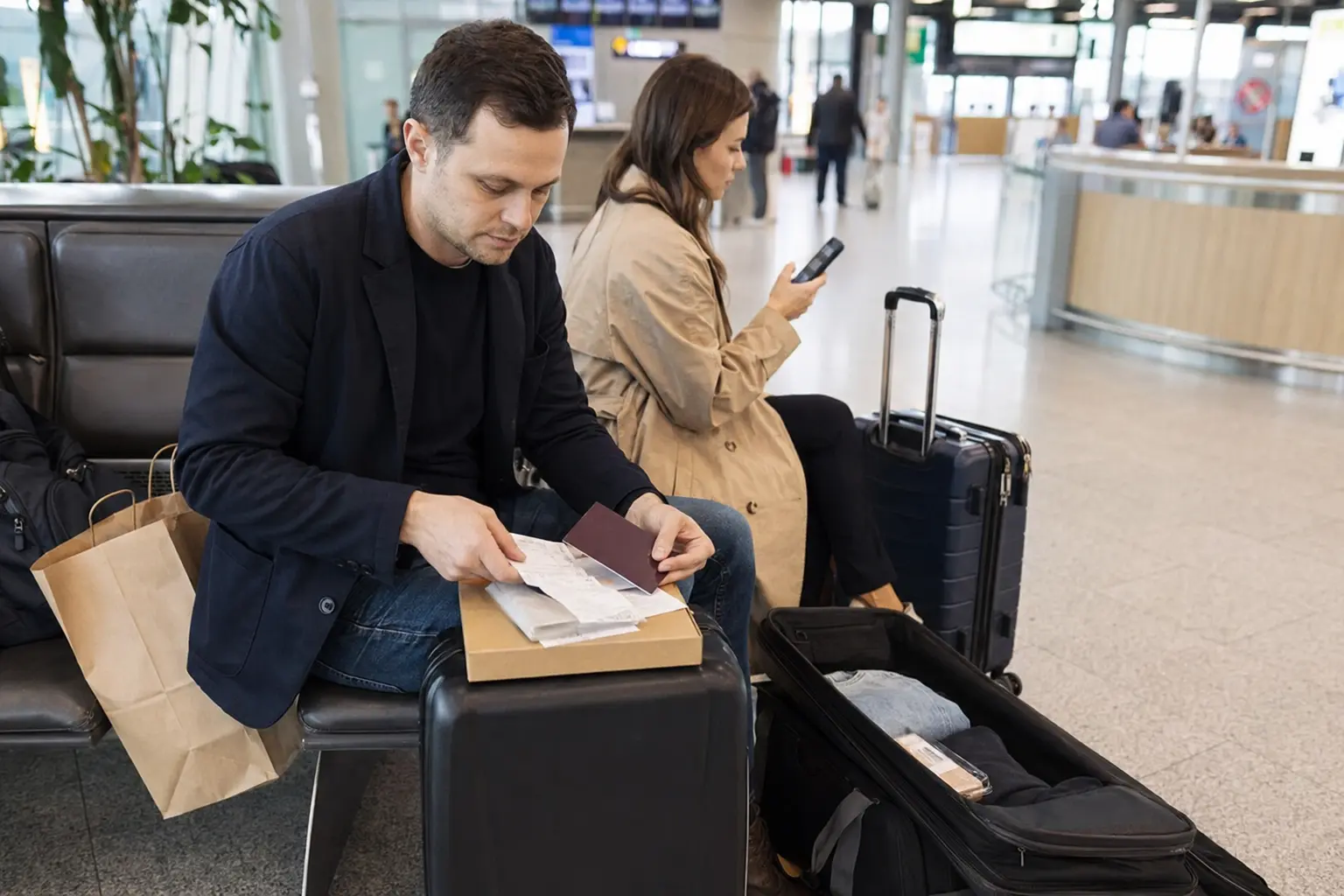
The basic process is:
- Ask the merchant whether it offers détaxe before paying.
- Present the required identity and residence documents.
- Check every name, passport detail and purchase on the form.
- Keep goods, receipts and forms accessible.
- Validate at the point where you leave the EU, not necessarily where you leave France.
- Follow the merchant or refund operator’s instructions for payment.
At the final EU departure point
At French exit points, forms carrying the PABLO logo can usually be validated electronically. A green result completes customs validation; a problem may require the staffed customs desk. Arrive with enough time before checking luggage or passing security.
The final EU exit rule matters on multi-country trips. A traveler flying Paris–Rome–New York normally handles validation in Rome because that is the departure from the EU. Confirm airport-specific procedures before travel.
Customs at home still applies
A VAT refund in France and duty-free treatment on arrival in the United States are separate matters. Declare purchases as required by the destination country. US Customs guidance for shopping abroad explains the current personal-exemption framework; the destination country, not the French shop, determines product restrictions and duties.
Keep receipts for expensive goods. Customs officers may need value and product information, and insurance may require documentation later. Splitting one person’s purchase among several travelers to avoid declaration is not a planning technique.
Currency conversion also affects the final cost. Choose whether the card is charged in euros rather than accepting dynamic currency conversion without comparison; the home bank’s rate is often more favorable.
A practical half-day shopping plan
Plan around one anchor
Begin with one anchor: a department store, a flea market or an independent-shopping loop. Give it two hours. Add one nearby category, then stop for lunch and reassess what is still genuinely missing.
Carry a foldable tote, measurements for clothing or home objects, photos of items already owned and a note of home-market prices for expensive purchases. Leave valuable documents secure except when a tax-free form requires the passport.
Do not schedule Saint-Ouen, the Marais, Haussmann department stores and Avenue Montaigne on one day. They sit in different parts of the city and reward different attention. Shopping fatigue produces poor judgment with excellent packaging.
What is actually worth buying in Paris?
Buy something whose design, fit, edition, craft or memory of the place justifies carrying it home. That might be a small print, a well-cut jacket from a French label, an old ceramic cup, pharmacy product already used, a cookbook or ordinary chocolate from a neighborhood shop.
Skip objects available at the same price online, fragile food that will not survive the trip and luxury purchases whose refund is the only reason they seem affordable. The best Paris souvenir should remain useful after the receipt and airport paperwork are forgotten.
Frequently Asked Questions
What is the best area for shopping in Paris?
It depends on the goal: department stores work for efficient comparison and tax-refund desks, the Marais and northern arrondissements suit independent fashion and design, and Saint-Ouen or Vanves are best for antiques.
Is it worth crossing Paris for a specific shop?
Usually not if the product is widely available online. Paris rewards targeted browsing more than a citywide shopping marathon, so it’s better to choose one category, match it to one area, and leave room to compare.