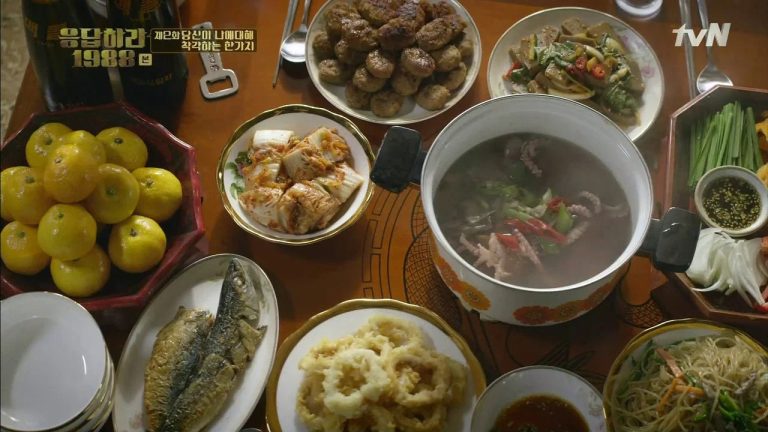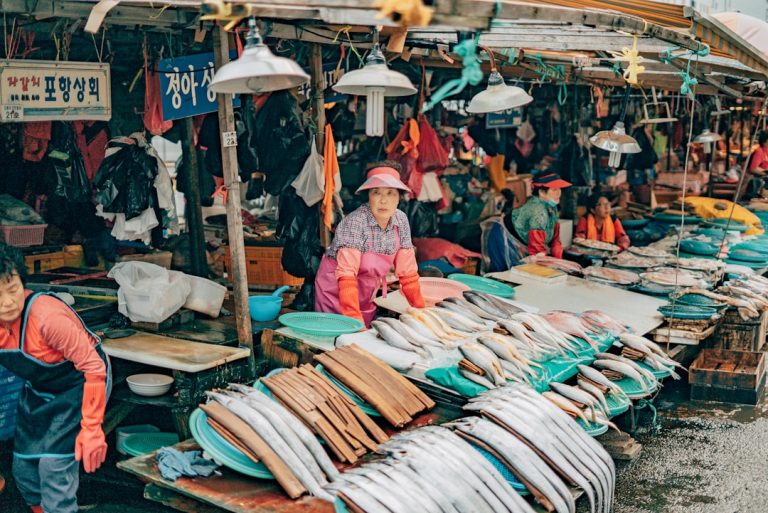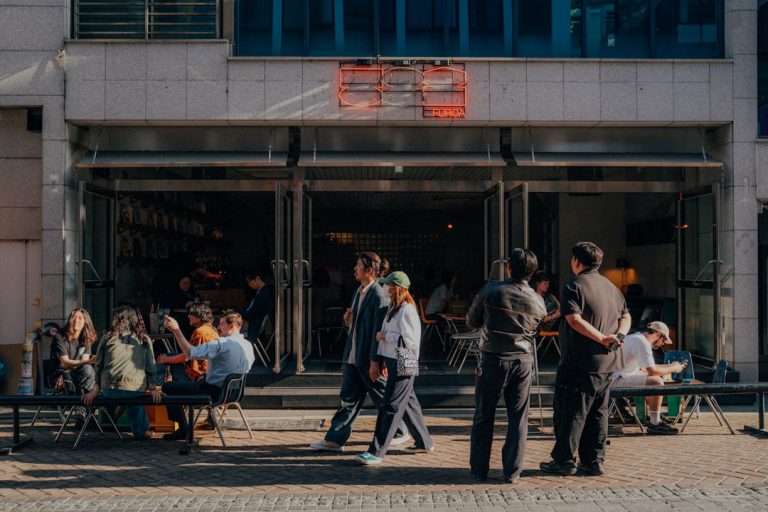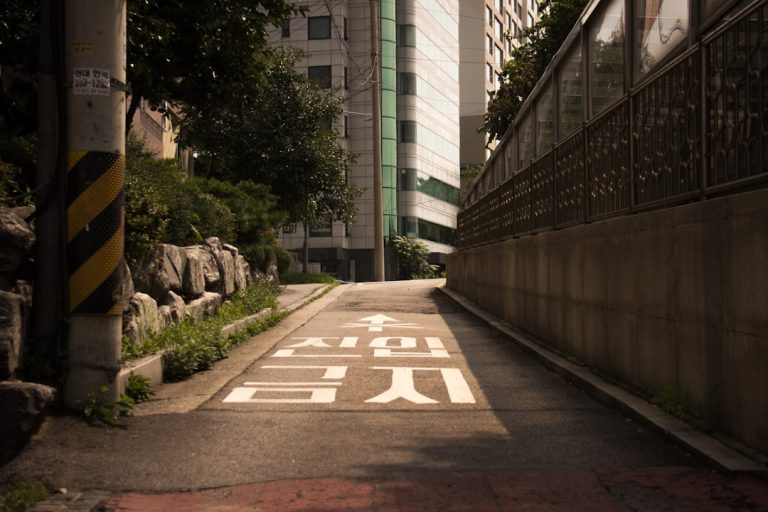
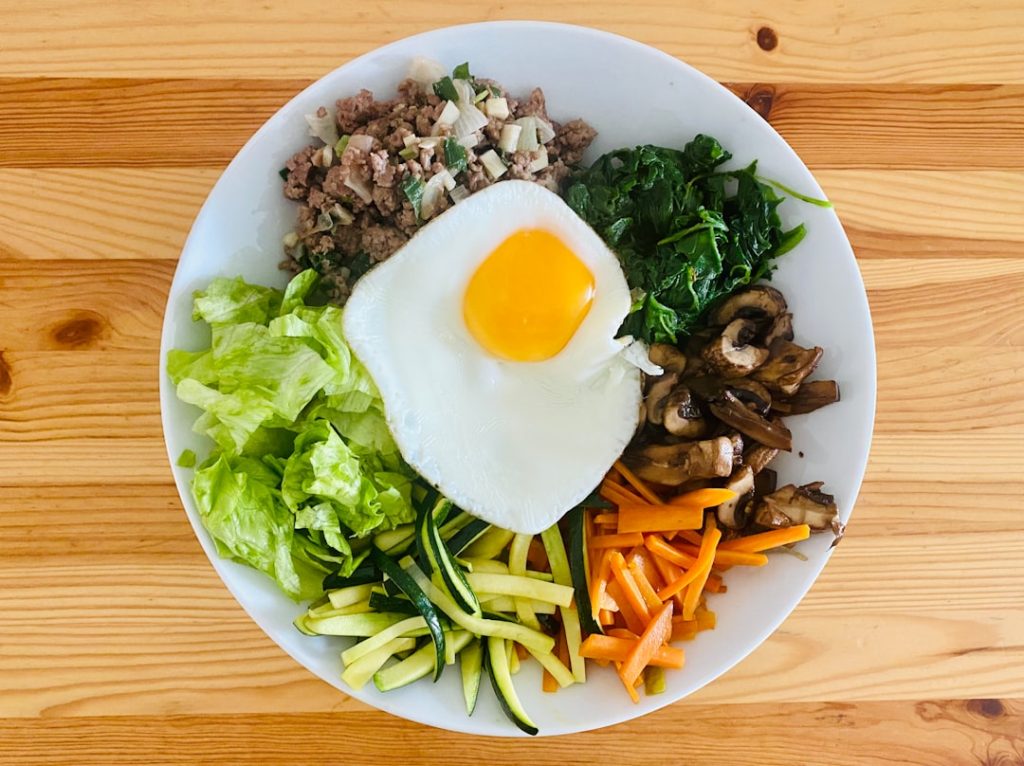
A first-timer’s short list of Seoul’s most soulful bites — chosen because you already know them from K-dramas, and because they taste even better off a real plastic stool.
Before you ever boarded a plane, you had already eaten in Seoul. You just did it at 1 a.m., laptop glowing, watching two characters lean over a smoking grill or slurp cold noodles after a breakup. Korean food didn’t wander into the Western imagination by accident — it arrived through our screens. And that’s the quiet secret to enjoying it in person: the dishes that feel most familiar from K-dramas are exactly the ones worth chasing on your first trip.
This is not a list of thirty things to rush through in three days. It’s ten. A handful of sizzling, slurpable, shareable, soul-warming dishes that are both unmistakably Seoul and impossible to miss in the dramas you already love. Eat them slowly. Let the city do the rest.
Still shaping the rest of the trip? Start with how many days to spend in Seoul and where to stay in Seoul, then let the meal map fill in the gaps.
You Already Speak Seoul Food
Here’s the thing I tell every friend before they go: in Seoul, a meal is rarely just fuel. It’s a format. Korean BBQ isn’t a dish — it’s a table you cook at with someone you like. A jjigae is a pot built for sharing and rice. Bingsu is a bowl two people fight over with spoons. When a K-drama character murmurs “want to come in for ramyeon?” the food is the excuse and the feeling is the point. Same rule applies the moment you land.
The fastest way to feel at home in Seoul is to order the dish you’ve already watched a hundred times. Your mouth knows the choreography. Your job is just to show up hungry.
So below, each pick comes with the scene you’ll recognize — and exactly where to live it in Seoul. A few are dishes Seoul can genuinely claim as its own (a royal soup born inside the old city walls, a century-old market that filmmakers can’t stop shooting). Others are Korean classics that Seoul’s neighborhoods have adopted and perfected. All ten are first-timer-proof.
The Top 10 Must-Eat Foods in Seoul
01 · Korean BBQ — Samgyeopsal & Galbi · Sharing
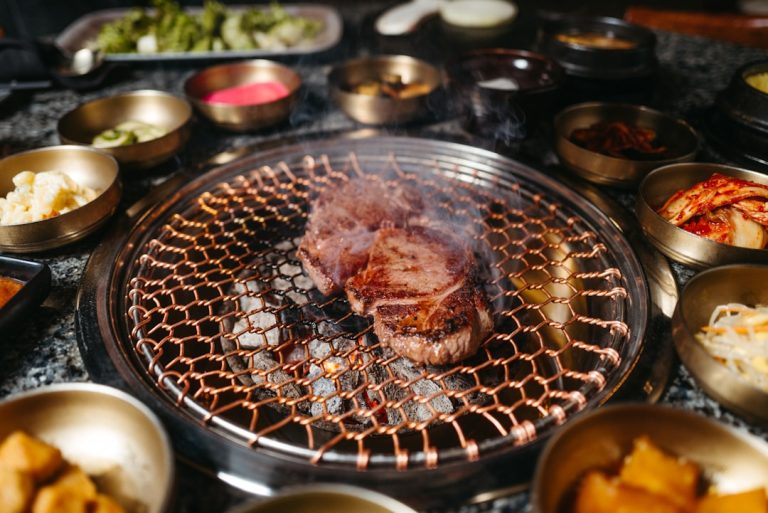
You’ve seen it a hundred times: the table grill, the sizzle, the careful lettuce-wrap assembly like a tiny edible origami project. Thick samgyeopsal (pork belly) and galbi (marinated ribs) are the heart of Seoul’s social eating, and the city has whole districts — Itaewon, Hongdae, Jongno, Mapo — built around the ritual.
On screen: Reply 1988, Vincenzo, Itaewon Class — basically any scene where alliances are forged over meat. Let the staff manage the heat; build one wrap at a time with meat, ssamjang, and a single accompaniment.
- Best for: a first-night group dinner.
- Spice: usually mild unless you pile on chili paste.
- Solo-friendly: sometimes — many spots set a two-portion minimum, so check before sitting down alone.
02 · Tteokbokki — Seoul’s Chewy Red Street Icon · Street
Glossy cylindrical rice cakes simmered in a sweet-spicy gochujang sauce: this is the sound of a Seoul side street at dusk. Sindang-dong even calls itself Tteokbokki Town, and Gwangjang Market fries up its own beloved version. The whole point is the chew.
On screen: Reply 1988 and Boys Over Flowers treat it as the food of friendship, heartbreak, and celebration alike. Share one portion before ordering more — “not too spicy” is a personal opinion, and a red sauce can bite harder than it looks.
- Best for: a market snack or casual bunsik meal.
- Spice: medium to hot.
- Solo-friendly: yes.
03 · Chimaek — Fried Chicken & Beer · Night
Crisp, double-fried chicken with a thin crust that stays crunchy under glossy sauce — soy-garlic, or yangnyeom, the spicy-sweet one. “Chimaek” (chicken + maekju/beer) is Seoul’s late-night religion, eaten on rooftops, in pojangmacha tents, or along the Han River.
On screen: Goblin and My Love from the Star turned chimaek into a global craving; Crash Landing on You made it a victory ritual. Order half-and-half so you can compare two flavors.
- Best for: a relaxed night with friends (alcohol optional).
- Spice: your call.
- Solo-friendly: possible — but a full chicken is a lot for one.
04 · Seolleongtang — Seoul’s Own Quiet Beef Soup · Seoul-rooted
This pale, milky ox-bone soup is the closest thing on the list to a dish Seoul can claim as its own — it was born here, tied to the old city’s royal tribute kitchens, and became the working-class bowl of Jongno. It arrives tasting deliberately underseasoned. That’s the point: you finish it at the table with salt, scallions, and a spoonful of tangy kimchi.
On screen: the go-to “I’m home and I need comfort” bowl in countless dramas — the meal a character eats in silence after a long day. It’s the gentlest possible first meal after a flight.
- Best for: breakfast, cold weather, or a low-decision solo meal.
- Spice: mild, with spicy kimchi on the side.
- Solo-friendly: absolutely.
05 · Bindaetteok — Gwangjang Market’s Mung-Bean Pancake · Market
Gwangjang Market, founded in 1905, is Seoul’s oldest permanent market and one of the most-filmed locations in the city — its iron griddles and shoulder-to-shoulder stools are impossible to fake. The bindaetteok is the star: a thick pancake of ground mung beans, kimchi, and pork, fried crisp at the edges and tender within.
On screen: Netflix’s Street Food devoted an episode to a Gwangjang grandmother; My Love from the Star and Signal used the alley as a shortcut for “real Seoul.” Look for a stall grinding beans fresh on-site, and pair it with a small bowl of makgeolli.
- Best for: market atmosphere and sharing.
- Spice: usually mild.
- Solo-friendly: yes — if you’re hungry, one pancake is heavier than it looks.
06 · Gimbap — The Everyday Travel Meal · Portable
Rice and fillings rolled in seaweed and sliced into coins. It looks like sushi, but the rice is seasoned with sesame oil, not vinegar, and the vibe is purely Korean lunchbox. On screen it’s almost always homemade — packed by a mom, a partner, or a friend who cares.
On screen: the emotional lunchbox of Boys Over Flowers and a dozen school-trip scenes. In real Seoul, grab mayak gimbap (tiny “drug” rolls) at Gwangjang, or a fresh tuna-and-egg roll from any busy shop.
- Best for: transit days, quick breakfasts, solo travel.
- Spice: usually mild.
- Solo-friendly: excellent.
07 · Naengmyeon — Cold Noodles With Serious Chew · Summer
Thin, chewy noodles in ice-cold broth (mul) or tossed in spicy sauce (bibim). The cold-snap and springy bite surprise first-timers — and yes, that iconic slurp scene where a character fights a too-long noodle is exactly this.
On screen: the post-BBQ palate-reset and the dramatic noodle-slurp moment in shows from Crash Landing on You to Reply 1988. Restaurants often hand you scissors — use them.
- Best for: hot weather and adventurous textures.
- Spice: mild-tangy in broth; spicy in bibim.
- Solo-friendly: yes.
08 · Sundubu Jjigae — Soft Tofu in a Bubbling Pot · Solo
A simmering earthenware bowl of silky tofu in a fiery broth with seafood, pork, or egg. It arrives boiling, so wait a beat before the first spoonful. The tofu softens the heat, but the broth still means business.
On screen: Itaewon Class made sundubu the comfort-food emblem of Park Sae-roy’s humble pub — simple, fierce, full of heart. It’s the ultimate one-person meal.
- Best for: tofu lovers and cool evenings.
- Spice: often medium to hot.
- Solo-friendly: yes — rice and banchan make it a full meal.
09 · Hotteok — A Warm Sweet Street Hug · Winter
A griddled dough pancake oozing brown sugar, cinnamon, and seeds. In Seoul’s winter markets it’s the thing you buy with cold hands and eat leaning against a stall. The filling is lava-hot — hold it upright and let the first bite cool.
On screen: the cozy market-wander shot, usually right before a chance meeting. It’s pure comfort, no subplot required.
- Best for: a winter walk or market dessert.
- Spice: none.
- Solo-friendly: perfect.
10 · Bingsu — Shaved Ice Made for Two · Dessert
Finely shaved ice piled with red beans, fruit, rice cakes, or modern flavors like matcha and chocolate. Seoul’s café culture treats it as a ritual: a mountain of ice, two spoons, zero urgency.
On screen: the dessert-date shorthand — two leads across a table, digging into the same bowl. Seasonal fruit versions (mango, strawberry) are the photogenic ones.
- Best for: summer, café breaks, sharing.
- Spice: none.
- Solo-friendly: sometimes — look for a small size.
Where to Eat Them (Without the 2-Hour Queue)
You don’t need one magic neighborhood. Traditional markets — Gwangjang above all — deliver tteokbokki, bindaetteok, hotteok, and mayak gimbap in one chaotic, delicious sweep. BBQ and chimaek districts (Itaewon, Hongdae, Mapo) handle the sizzling, social nights. Office and residential streets are where you’ll find the best seolleongtang, sundubu, and solo lunch sets — often with no line at all. Café zones (Seongsu, Samcheong-dong) own bingsu season.
For plans beyond the table, pair this list with the best things to do in Seoul or the guide to things to do in Seoul for young adults.
The truth is simpler than any viral list: try one grilled meal, one soup, one stew, one noodle, a few market snacks, and a seasonal sweet. That’s enough to understand several rhythms of Korean dining — and to feel, for a week, like a local who just happens to recognize the menu from TV.