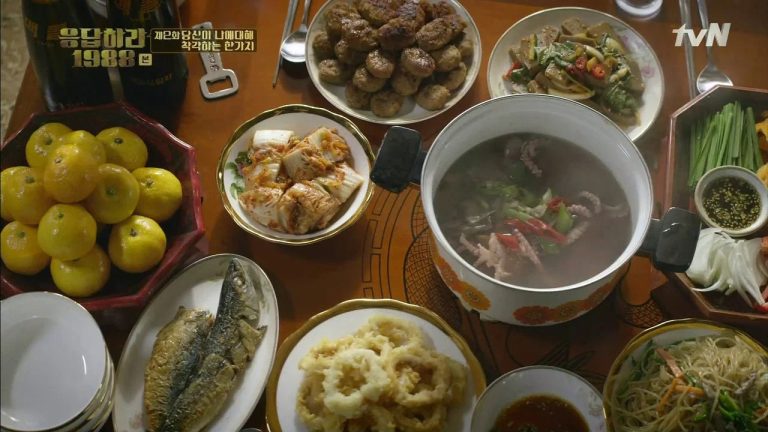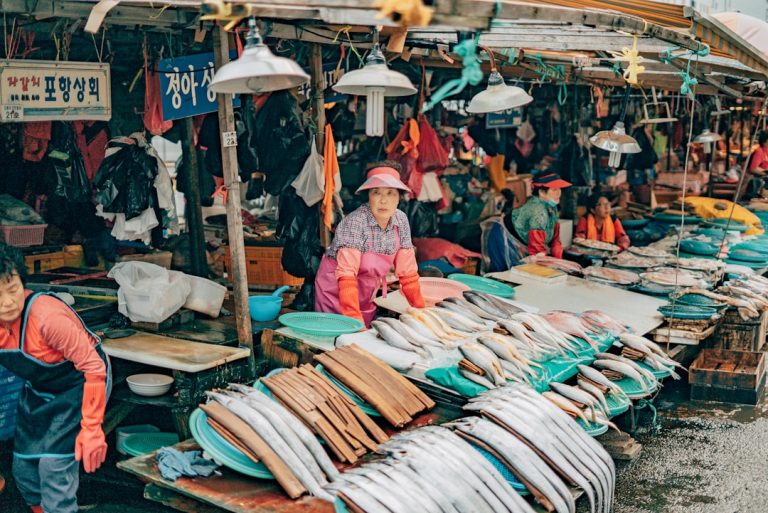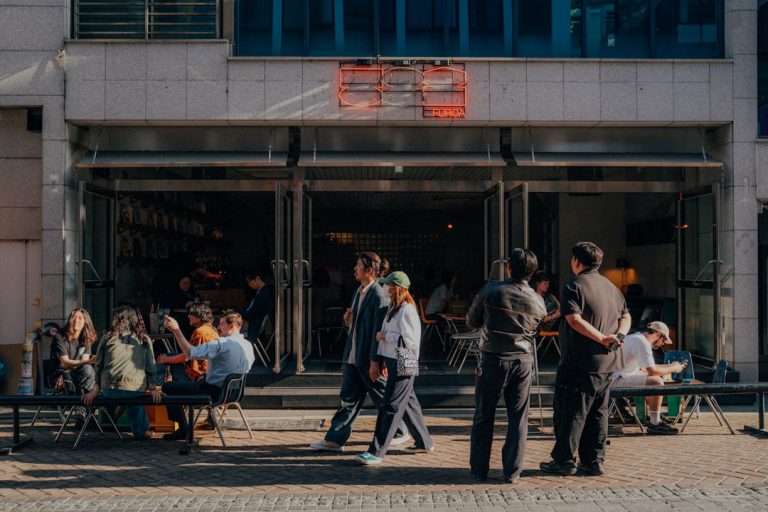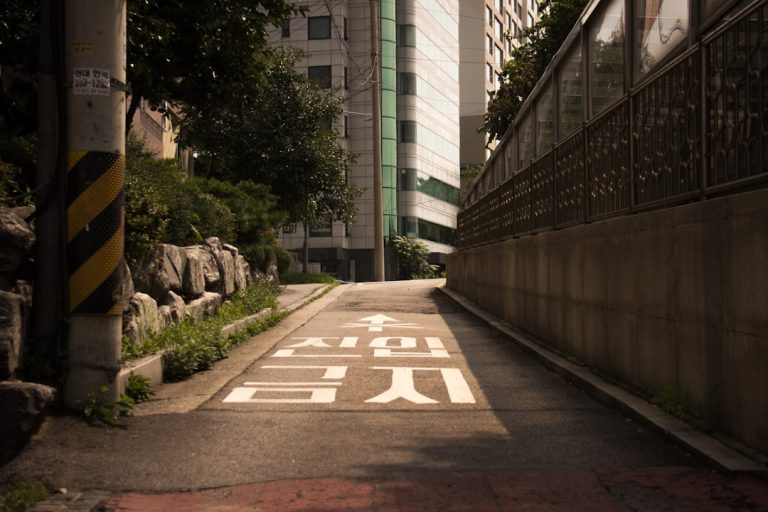
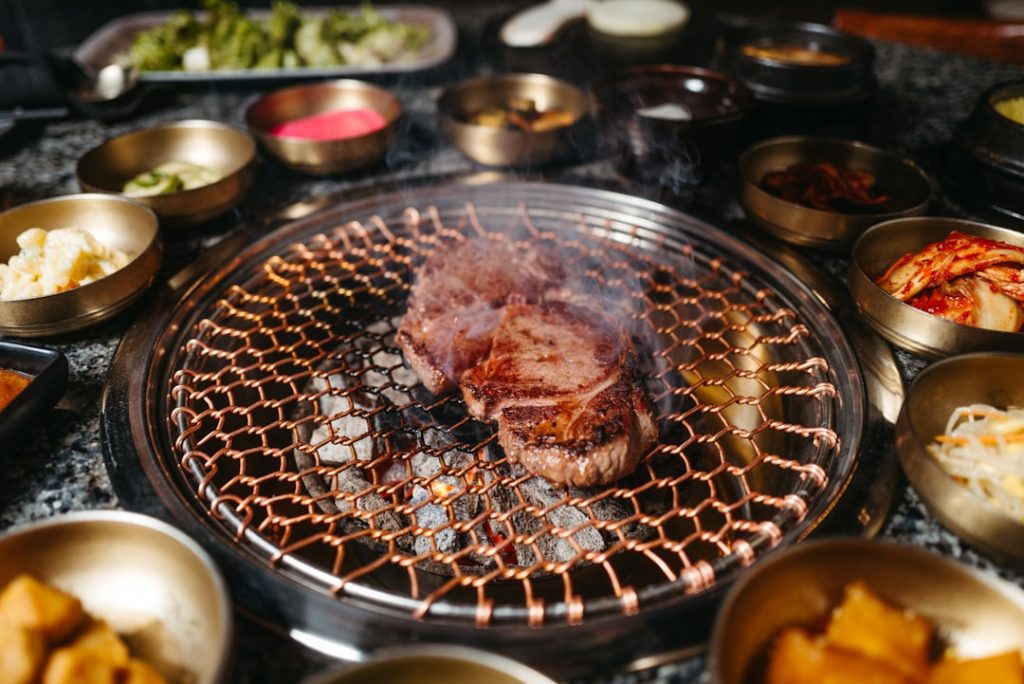
Seoul does not have one best restaurant. It has the right restaurant for a particular appetite, budget, neighborhood, and tolerance for waiting. A famous barbecue dinner can consume half an evening; a bowl of noodles near your next stop may be the meal you remember more clearly.
For most first-time visitors, the strongest food plan mixes one destination meal with several easy local choices: barbecue with friends, soup or noodles when dining alone, something unfamiliar but specific to Seoul, and perhaps one modern Korean splurge. This list favors restaurants that offer a clear reason to go, not places that are merely photogenic enough to survive a short video.
Best Restaurants in Seoul for Different Kinds of Trips
1. Myeongdong Kyoja: The Reliable First-Day Lunch
Myeongdong Kyoja has served a compact menu of kalguksu, dumplings, and cold or spicy noodles since 1966. The signature bowl is soft, savory, and comforting rather than delicate, while the kimchi arrives with enough garlic to make close conversation a democratic risk.
This is one of the easiest famous Seoul restaurants to use: central, quick, solo-friendly, and built for high turnover. Order kalguksu first and add mandu if you are sharing. The line often moves faster than it looks, but save the correct branch in Naver Map before joining whichever crowd happens to be nearest.
Best for: First-time visitors, solo diners, and a shopping-day lunch. Price feel: Budget-friendly. Main catch: Busy, functional, and not designed for lingering.
Practical details:29 Myeongdong 10-gil, Jung-gu; about a two-minute walk from Myeongdong Station. Open daily 10:30 a.m.–9 p.m. No reservations—join the walk-in line. Check the official website or call +82 2-776-5348.
2. Hongojib: Korean Barbecue Without Finding a Group
Many Korean barbecue restaurants will seat one person only if that diner orders two portions; some simply prioritize groups at busy times. Hongojib in Hongdae is designed around individual grills and counter-style seating, making it a much cleaner answer to the solo-barbecue problem.
The experience is casual and screen-led rather than ceremonial. Order a set if you want meat, rice, and soup without negotiating several separate dishes. It is particularly useful for younger travelers staying around Hongdae who want barbecue without recruiting strangers or treating two servings as a personal challenge.
Best for: Solo travelers and introverts. Price feel: Affordable to moderate. Main catch: More practical than traditional in atmosphere.
Practical details: 1 Donggyo-ro 30-gil, Mapo-gu, near Hongik University Station. The Hongdae branch is generally easiest as a walk-in; queues are possible at peak meals. Check the official website or call +82 2-333-9289.
3. Oreno Ramen: A Low-Cost Break From Korean Food
Oreno Ramen remains a Bib Gourmand pick in the current MICHELIN Guide. Its chicken-based ramen is rich without relying on the heavier pork broth many travelers expect, and the focused menu works well when the group has spent several days making every meal into a cultural assignment.
Several branches operate around Seoul, so confirm which one you have saved. Go outside the sharp lunch peak if possible. This is not a Korean-cuisine essential, but it is a very good Seoul restaurant for a fast, inexpensive, solo-friendly meal.
Best for: Budget travelers, solo lunches, and a change of flavor. Price feel: Budget-friendly. Main catch: Popular branches can still queue.
Practical details: Main store at 14 Dongmak-ro 6-gil, Mapo-gu, near Hapjeong Station. Open daily 11 a.m.–9 p.m. It is normally a walk-in meal with kiosk ordering and a possible queue; advance booking is not usually necessary. Check the official Instagram or call +82 2-322-3539.
4. Geumdwaeji Sikdang: Famous Pork Barbecue That Still Has a Point
Geumdwaeji Sikdang, often translated as Gold Pig Restaurant, built its reputation around carefully sourced pork cooked over briquettes on a cast-iron grill. Pair a fattier cut such as pork belly with a meatier cut, then finish with kimchi jjigae if the table still has room.
The food earns its place; the wait requires more judgment. Check the current queue system before crossing the city, arrive earlier than the standard dinner rush, and keep a nearby backup. Younger travelers often search for a single “best Korean BBQ in Seoul,” but the sensible answer depends partly on whether losing two hours to a wait sounds exciting or faintly absurd.
Best for: Friends who want a destination pork-barbecue dinner. Price feel: Moderate. Main catch: Queue logistics and minimum-order expectations.
Practical details: 149 Dasan-ro, Jung-gu, near Yaksu Station. Advance table reservations are not the normal route; use the current Catchtable waitlist instructions or register on site. Queue rules can change, so check the listing before traveling across Seoul.
5. Mongtan: Straw-Grilled Beef Ribs With a Serious Queue
Mongtan is known for udae galbi, thick beef ribs grilled over straw and charcoal, plus a smoky room that feels more dramatic than the average barbecue dinner. It remains one of Seoul’s most discussed reservation-and-waitlist restaurants.
Catchtable currently indicates that smaller parties should expect an on-site waitlist rather than an ordinary advance reservation. Treat Mongtan as an evening plan, not a meal inserted between other plans. If the queue rules do not suit your schedule, skip it without regret; Seoul is not short of grilled meat.
Best for: Groups who enjoy high-demand restaurants and smoky beef. Price feel: Moderate to expensive. Main catch: The wait can dominate the experience.
Practical details: 50 Baekbeom-ro 99-gil, Yongsan-gu, near Samgakji Station. Catchtable currently lists an on-site waitlist only, registered at the restaurant’s machine from 11 a.m.; ordinary advance reservations are not available for small parties. Check Catchtable or the official website; phone +82 2-794-8592.
6. Hannamdong Hanbang Tongdak: Roast Chicken Before a Night Out
This Hannam favorite slow-roasts small chickens scented with medicinal herbs and stuffs them with glutinous rice, garlic, jujube, and ginkgo. The result is quite different from Korean fried chicken: crisp skin, soft rice, and a gentle herbal sweetness that works especially well with beer.
Arrive near opening or be prepared to wait. The chickens are small but rich, so a group can begin conservatively rather than ordering as if each bird were a personal snack. Pair the meal with bars or cafés in Hannam instead of traveling across Seoul solely for one chicken.
Best for: Friends, casual dates, and an early dinner before drinks. Price feel: Moderate. Main catch: Limited quantities and evening queues.
Practical details: 38 Daesagwan-ro 34-gil, Yongsan-gu, in Hannam-dong. This is an evening walk-in restaurant and does not normally take reservations; arrive near opening to reduce the wait. Check the official Instagram or call +82 2-797-8677.
7. Wooraeok: The Best Introduction to Pyongyang Naengmyeon
Wooraeok has served Seoul since 1946 and is known for Pyongyang naengmyeon: buckwheat noodles in a cool, restrained beef broth. The flavor is intentionally subtle. Taste the broth before reaching for vinegar or mustard; approaching it as a spicy cold-noodle bowl leads to disappointment of your own design.
The restaurant also serves bulgogi, which makes the visit easier for groups divided on the emotional possibilities of pale broth. Solo diners can simply order noodles. This is a strong choice when food history matters more than trend status.
Best for: Curious first-timers and culinary-history travelers. Price feel: Moderate. Main catch: The restrained flavor is not universally loved.
Practical details: 62-29 Changgyeonggung-ro, Jung-gu, near Euljiro 4-ga Station. Current listed hours are 11:30 a.m.–9:30 p.m., closed Mondays. Call to ask about booking; otherwise plan for a walk-in queue. Check the Catchtable listing or call +82 2-2265-0151.
8. Mapo Ok: A Quiet Bowl for Solo Travelers
Mapo Ok specializes in seolleongtang, a milky ox-bone soup served with rice and seasoned at the table. Add salt and scallions gradually, then alternate the soup with kimchi. The restaurant’s focus means the broth, meat, and side dishes have nowhere to hide.
This is an excellent arrival-day meal: warm, restorative, and easy to order alone. It also answers a common Reddit concern about solo dining in Seoul. Soup and noodle shops are generally simpler for one person than barbecue, hotpot, or large shared dishes.
Best for: Solo diners, cold weather, and a low-effort first meal. Price feel: Affordable to moderate. Main catch: Recheck break time and the weekly closing day.
Practical details: 312 Tojeong-ro, Mapo-gu, near Mapo Station. It is normally used as a walk-in restaurant rather than an advance-booking destination. Check the current MICHELIN listing and same-day map information; phone +82 2-716-6661.
9. Hwangsaengga Kalguksu: The Smart Lunch Near Bukchon
Hwangsaengga Kalguksu serves knife-cut noodles in a rich ox-bone broth, along with large dumplings and boiled beef. Its location near Bukchon and the palace district makes it useful because the meal fits the day rather than forcing the day to orbit the meal.
Arrive slightly before or after the main lunch rush. Two people can share dumplings and order a noodle bowl each; solo diners can keep things simpler. The dining room is straightforward, which is exactly what a palace-heavy morning usually needs.
Best for: Bukchon and Gyeongbokgung days. Price feel: Budget-friendly to moderate. Main catch: Convenient location plus guidebook fame can create a line.
Practical details: 78 Bukchon-ro 5-gil, Jongno-gu, near Anguk Station. Current listed hours are 11 a.m.–9:30 p.m. Most visitors join the walk-in line; call directly if you want to confirm group arrangements. Check the official website or call +82 2-739-6334.
10. Buchon Yukhoe: A Focused Gwangjang Market Meal
Buchon Yukhoe has roots going back to 1965 and sits in Gwangjang Market’s raw-beef alley. Its Seoul-style yukhoe is seasoned with sesame oil and paired with crisp pear; yukhoe bibimbap turns the dish into a fuller meal.
Go because raw beef genuinely appeals to you, not because every market video says it is compulsory. Raw meat carries food-safety risks and is unsuitable for some travelers. If it is not your thing, the market has cooked pancakes, dumplings, noodles, and snacks that require far less courage from the digestive system.
Best for: Confident raw-beef diners and market explorers. Price feel: Moderate. Main catch: Raw meat and a busy tourist market are not universal pleasures.
Practical details: Main store at 200-12 Jong-ro, Jongno-gu, inside Gwangjang Market near Jongno 5-ga Station. It is primarily a walk-in restaurant and can queue at popular meal times. Check the official listing or call +82 2-2267-1831.
11. Jinmi Sikdang: Soy-Marinated Crab as a Destination Meal
Jinmi Sikdang specializes in ganjang gejang, raw crab marinated in soy sauce. The meat is cool, briny, sweet, and intensely savory; the pleasure is as much textural as it is flavorful. This is a specialist recommendation, not a safe default for every first-time visitor.
Booking can require more effort than an English-language reservation button, and the kitchen may sell out. Ask a hotel concierge or Korean-speaking contact for help if the current channel is difficult. Anyone avoiding raw shellfish should choose another meal.
Best for: Seafood lovers who already want ganjang gejang. Price feel: Expensive. Main catch: Reservations, raw shellfish, and a very specific texture.
Practical details: 186-6 Mapo-daero, Mapo-gu, near Aeogae Station. Phone reservations are strongly recommended, especially for dinner and weekends; the restaurant may close once its daily crab supply sells out. Check the Catchtable listing or call +82 2-3211-4468.
12. Born and Bred: Hanwoo at the Level You Choose
Born and Bred is a Hanwoo specialist in Majang-dong with several experiences under one name, from a relatively accessible barbecue meal to a high-end counter tasting. That distinction matters more than the brand: price, menu, booking difficulty, and service change depending on the floor or format.
Choose it when Korean beef is a trip priority and you want to compare cuts. Confirm the exact concept before paying a deposit; a review of the basement tasting counter does not describe the casual floor, however persuasive the photographs may be.
Best for: Hanwoo enthusiasts, celebrations, and small groups. Price feel: Expensive to very expensive. Main catch: Booking the wrong format can reshape both the meal and the bill.
Practical details: New Building, 1 Majang-ro 42-gil, Seongdong-gu, near Majang Station. The restaurant operates by reservation, and you must choose the correct floor or dining format. Book through Catchtable; international inquiries can also use reservation@bandb.co.kr or +82 2-2294-5005.
13. Onjium: Korean Culinary History Without Museum Stiffness
Onjium is connected to a cultural-research institution, and its tasting menu draws on historical and regional Korean recipes, preservation work, and seasonal ingredients. Near Gyeongbokgung, it makes a thoughtful finale to a day in the historic center.
The value lies in research and interpretation rather than luxury for its own sake. Reserve well ahead, read the current cancellation policy, and leave enough time for the full course. This is a meal to pay attention to, not the prelude to a club booking across town.
Best for: Culture-minded diners and special occasions. Price feel: Very expensive. Main catch: Advance booking and a long tasting format.
Practical details: 4F, 49 Hyoja-ro, Jongno-gu, near Gyeongbokgung Station. Advance reservations are essential and popular dates sell quickly. Book through Catchtable or call +82 2-6952-0024 for questions and waitlist availability.
14. Mingles: The Major Modern Korean Splurge
Mingles is the city’s highest-profile modern Korean restaurant in the current MICHELIN Guide. Chef Mingoo Kang’s cooking uses contemporary technique while keeping Korean fermented sauces, seasonal ingredients, tableware, and flavor structure at the center.
Choose it when one dinner is a major purpose of the trip. The tasting menu, beverage pairings, and polished service require both time and budget. Reserve as soon as your date opens, then confirm dietary, cancellation, and deposit policies directly.
Best for: Milestone dinners and serious food-focused trips. Price feel: Very expensive. Main catch: Cost, scarcity, and the commitment of a full tasting menu.
Practical details: 2F, 19 Dosan-daero 67-gil, Gangnam-gu, near Apgujeong Rodeo Station. Advance reservations are essential. Book through the restaurant’s international booking page or Catchtable; private-room requests are handled by phone at +82 2-515-7306.
What Younger Travelers Actually Need to Know
Solo dining is easy—until the grill appears
Reddit discussions repeatedly return to the same distinction: bowls, noodles, rice dishes, department-store food halls, and many casual restaurants are comfortable for one person; barbecue and shared hotpot can involve a two-portion minimum or group-first seating. Hongojib solves that problem directly. Elsewhere, go outside peak hours and ask whether ordering two portions is enough before sitting down.
Use Naver Map for local information, not only Google Maps
Google Maps is useful for collecting English-language recommendations, but Naver Map is usually better for the current Korean name, branch, opening hours, break time, closure notices, menu photos, and local reviews. Search the Korean restaurant name when possible. Translate recent reviews and look for repeated comments about a specific dish, queues, or service changes rather than trusting one star rating as a verdict.
Catchtable Global removes part of the booking friction
Catchtable Global supports foreign users at participating restaurants without requiring a Korean phone number, and it can accept foreign-issued cards where deposits are needed. It does not cover every restaurant or every waitlist. If a listing says on-site waiting only, believe it and build the evening accordingly.
Do not tip as if you are still in the United States
Tipping is not customary in South Korea. Pay the listed bill; upscale restaurants or hotels may already include a service charge. At casual restaurants, water and basic side-dish refills are often self-service or available on request. A clear thank-you is enough.
Dietary needs require direct confirmation
Seoul has vegan, vegetarian, halal, and allergy-aware restaurants, but a vegetable-looking dish may still contain anchovy broth, fish sauce, meat stock, or fermented seafood. Do not assume that removing visible meat makes a dish vegan, halal, or safe for an allergy. Use specialized restaurant lists, save a translated dietary card, and confirm ingredients directly.
How to Build a Better Seoul Food Plan
Choose one destination restaurant for every two or three days, then save several nearby backups in each neighborhood. For Hongdae, prioritize casual food, solo dining, and late-night flexibility. Around Myeongdong and Jongno, use institutions such as Myeongdong Kyoja, Hwangsaengga Kalguksu, and Buchon Yukhoe to fit sightseeing. Save major barbecue or tasting-menu reservations for evenings when nothing else has to happen afterward.
The best restaurant plan also leaves one meal undecided. Seoul rewards travelers who can notice the steaming soup shop beside a subway exit, the short menu filled with office workers, or the chicken place that becomes louder as the bottles empty. A reservation can secure dinner. It cannot guarantee that dinner will be the most interesting thing you eat.
Frequently Asked Questions
What is the best restaurant in Seoul?
There is no universal winner. Mingles is the most prominent modern Korean splurge, Geumdwaeji Sikdang is a strong pork-barbecue destination, and Myeongdong Kyoja is the easiest famous meal to fit into a first trip. The best choice depends on budget, neighborhood, party size, and willingness to queue.
Where should first-time visitors eat Korean barbecue?
Choose Geumdwaeji Sikdang for celebrated pork, Mongtan for smoky beef ribs and a high-effort queue, Born and Bred for a Hanwoo-focused splurge, or Hongojib when dining alone. Check minimum orders and waitlist rules before traveling across the city.
How much should I budget for restaurants in Seoul?
Excellent meals exist at very different prices. Noodles, soup, gimbap, and casual rice dishes can keep daily costs reasonable; destination barbecue, raw crab, Hanwoo, and tasting menus rise quickly. Check current menus before reserving, especially when deposits, pairings, or minimum orders apply.
Which Seoul neighborhoods are best for young travelers who care about food?
Hongdae and nearby Yeonnam are easy for casual meals, solo dining, cafés, and nightlife. Hannam and Haebangchon suit date nights and drinks. Jongno, Myeongdong, and the palace district are stronger for long-running Korean institutions. Gangnam has excellent dining, but distances within the district are larger than the name suggests.