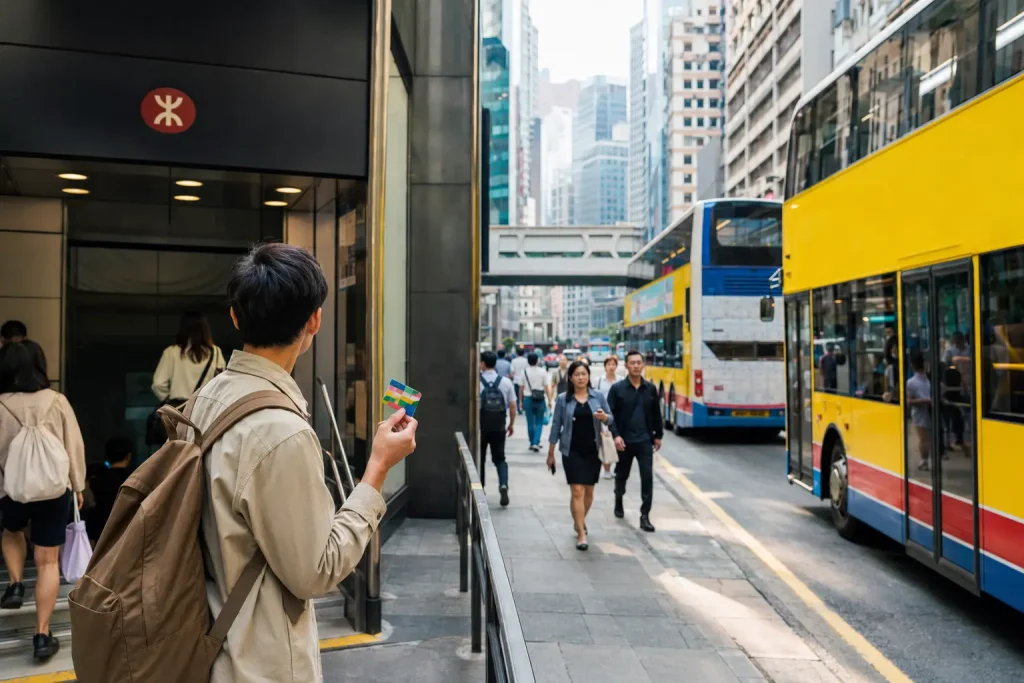
Hong Kong transportation is easiest when each mode has one job. Use the Airport Express or an airport bus to reach the city, the MTR for fast cross-district travel, buses for hillside and scenic routes, trams for short trips along northern Hong Kong Island, ferries for harbor crossings and outlying islands, and taxis when luggage, weather or late hours make transfers unreasonable. Buy or set up an Octopus payment method early; it removes most small-fare friction.
The system is extensive, but station exits, hills and interchange walking matter more than a schematic map suggests. A route with one extra stop can still be easier if it avoids dragging a suitcase through Central.
The quick transport decision
| Need | Best default | Why | Check first |
|---|---|---|---|
| Airport to Central or Kowloon quickly | Airport Express | Fast, luggage-friendly, about 24 minutes to Hong Kong Station | Final transfer to hotel |
| Cheapest direct airport trip | Airport bus | Reaches many hotel districts without rail transfer | Traffic and luggage space |
| Most city journeys | MTR | Frequent, clear and air-conditioned | Correct exit and last train |
| Scenic island travel | Double-decker bus or tram | Street-level context | Journey time |
| Cross-harbor sightseeing | Star Ferry | Short, memorable public transport | Service hours |
| Outlying islands | Licensed ferry | Direct from designated piers | Weekday/holiday timetable |
| Late night or heavy luggage | Taxi | Door-to-door | Surcharges and queue |
Airport to the city: fast train or direct bus
The Airport Express links the airport with Tsing Yi, Kowloon and Hong Kong stations. MTR currently describes the trip to Hong Kong Island as approximately 24 minutes, with trains normally running at frequent intervals. It is the least complicated choice when the hotel is near an onward MTR line or taxi stand.
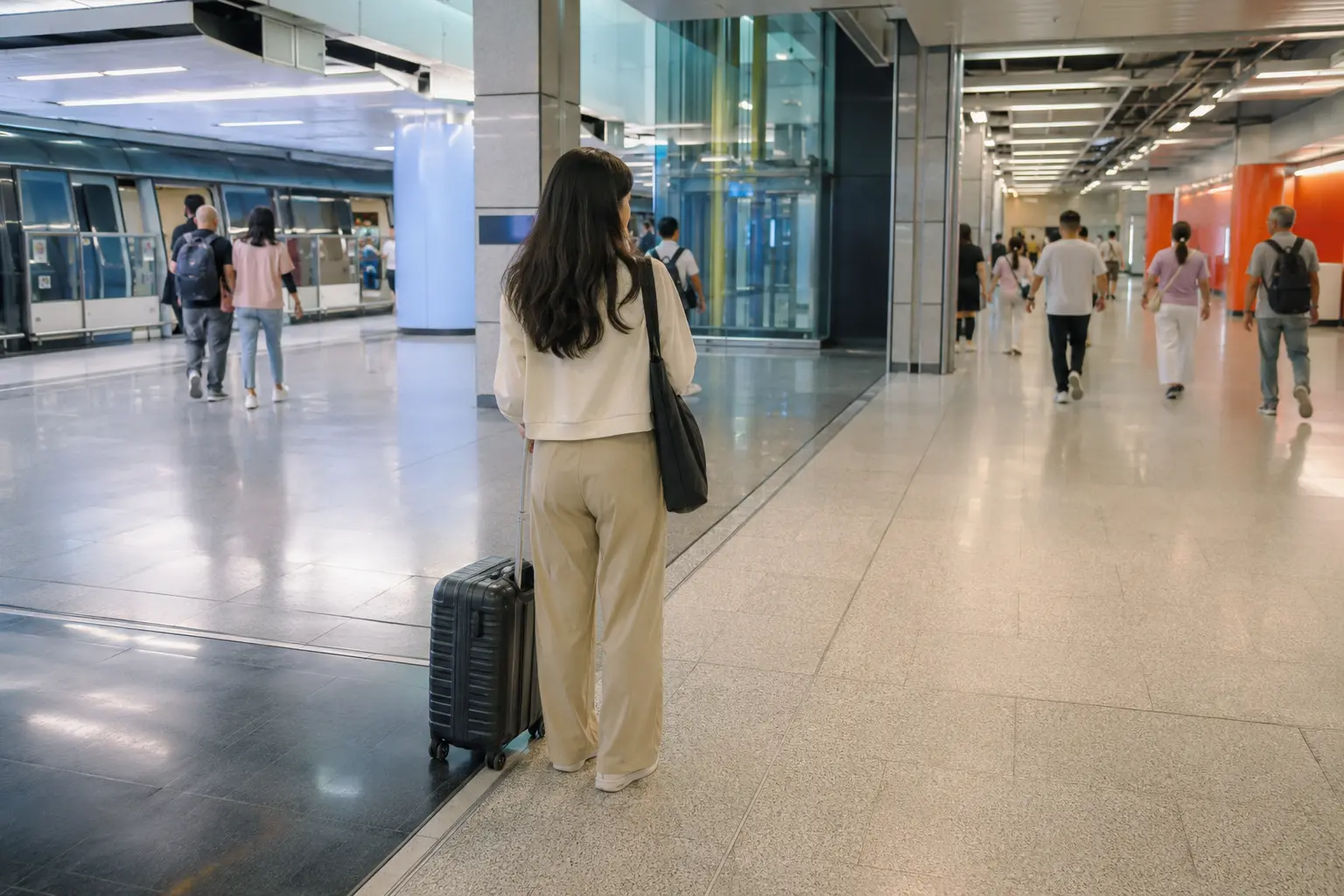
The train does not deliver every passenger to a hotel door. Hong Kong Station and Central Station are connected, but the walk can be long with luggage; Kowloon Station is not the same place as Tsim Sha Tsui. Before buying, map the final segment.
Airport buses are slower but often more direct to Tsim Sha Tsui, Mong Kok, Causeway Bay and other districts. They also reveal the city gradually from the upper deck. Check the route’s exact stop, operating hours and overnight version if landing late.
Taxis make sense for groups, multiple bags or hotels awkward from rail. Hong Kong uses different taxi operating areas, though red urban taxis cover most places visitors use. Follow official signs at the airport rather than accepting unsolicited rides.
Octopus: the payment tool most visitors should understand
Octopus is a stored-value payment system accepted across the MTR, buses, ferries and other transport, as well as many convenience stores and small purchases. Visitors can choose physical tourist products and, where device and account eligibility allow, mobile options. Product types, deposits, refund rules and supported phones change, so use current Octopus or MTR guidance.
Tap once at MTR entry and again at exit. On buses and trams, the tap point and boarding convention depend on the vehicle. Keep the card separate from other contactless cards to avoid a failed or double read.
An MTR tourist day pass can be useful for a rail-heavy day, but Octopus often suits mixed transport better. Calculate likely journeys rather than buying a pass because “unlimited” sounds industrious.
MTR: fast travel, long exits
The MTR is the backbone of Hong Kong transport for visitors. Lines connect Hong Kong Island, Kowloon, the New Territories, airport and boundary routes. Trains are frequent, stations are signed in Chinese and English, and fare gates accept supported payment products.
The hidden variable is walking. Major interchanges and linked stations can involve long corridors; Central–Hong Kong and Tsim Sha Tsui–East Tsim Sha Tsui are connections, not adjacent platforms. A hotel described as “at the station” may still be several lifts and a footbridge away.
Treat the exit letter as part of the address
Save the correct exit before leaving the train. Emerging on the wrong side of Nathan Road or below a steep Central block can add an unpleasant detour. Elevators may be farther away than escalators, so travelers with wheelchairs, strollers or luggage should consult station-facility maps.
Stand clear of doors and let passengers exit first. During commuter peaks, move inside the carriage rather than stopping at the entrance. Food and drink are restricted in paid areas.
Buses: better views and harder stop recognition
Franchised double-decker buses reach places the MTR does not, including the south side of Hong Kong Island, hill routes and many New Territories destinations. They are useful for Aberdeen, Stanley, Repulse Bay and routes where a rail trip would require a poor transfer.
Sit upstairs for views, but track the journey on a map and request the stop in time. Route variants can share a number with different letters or termini. HKeMobility, operator apps and map services help, but official stop information remains the final check.
Payment is usually made when boarding, and exact cash may be required if not using Octopus. Fare structures vary; do not assume distance-based refunds unless the operator states them.
Minibuses are faster and more locally legible than tourist-friendly. Some routes require calling out the stop, and red/green services follow different operating arrangements. They are useful once the route is understood, not a compulsory rite of passage.
Trams: slow by design
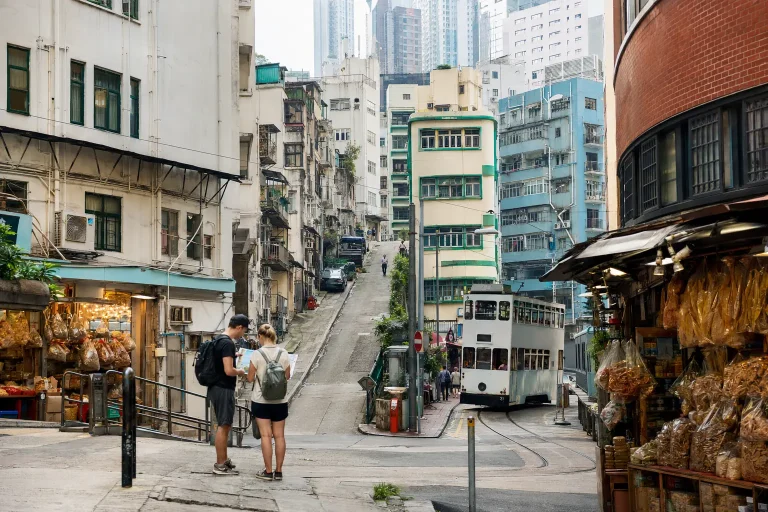
Hong Kong’s double-decker trams run east–west along the northern side of Hong Kong Island. They are inexpensive, frequent and ideal for short trips between neighborhoods such as Central, Wan Chai, Causeway Bay and North Point when time is flexible.
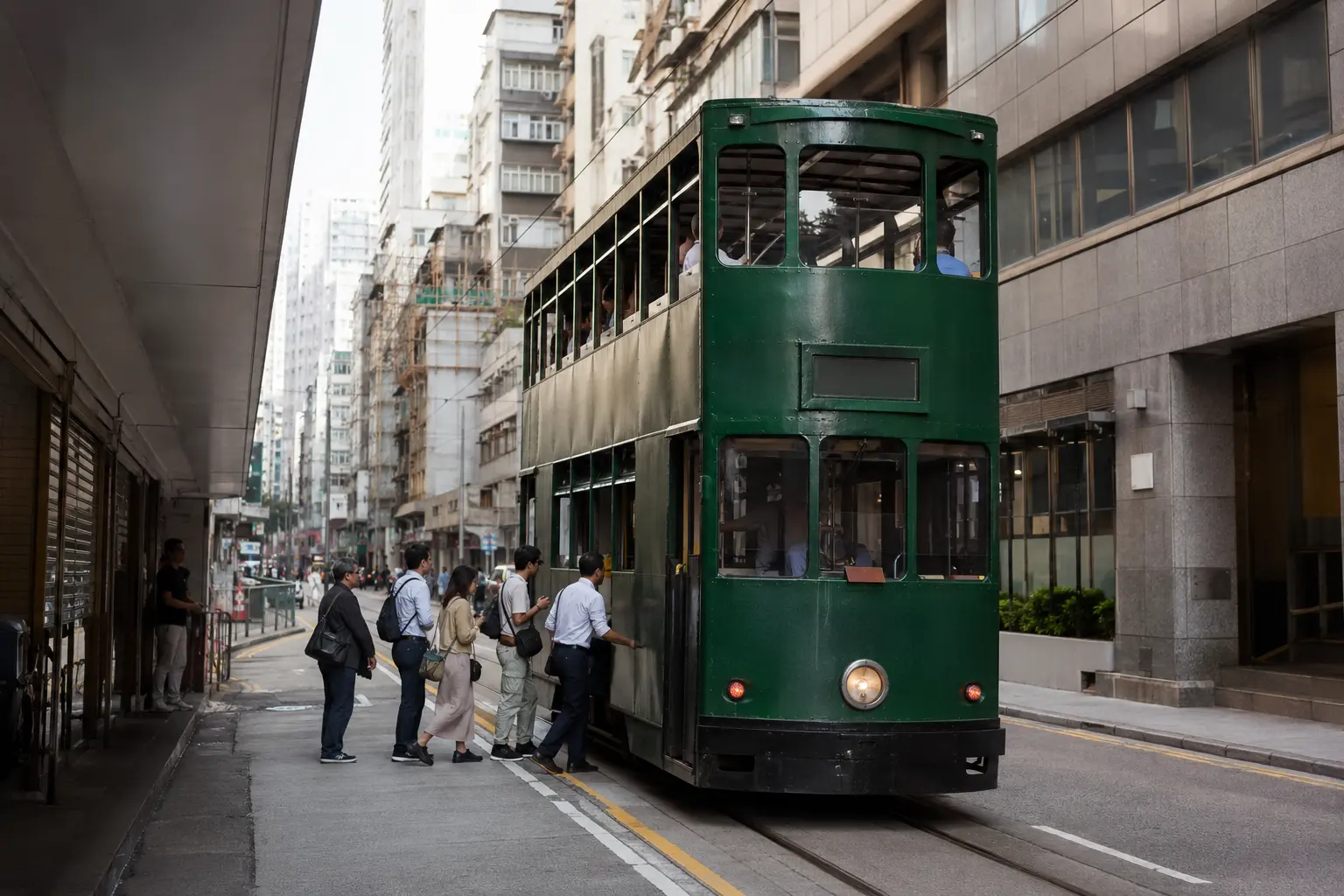
Board at the rear and pay when exiting at the front under the current convention. Watch the steps and keep bags compact. Traffic makes journey times variable, so the tram is poor for reaching a fixed reservation across several districts.
The upper deck gives a close view of shop signs, flyovers and street proportions that the MTR removes. Ride for several stops, not necessarily end to end. Public transport can be an experience without becoming an endurance test.
Ferries: useful routes with finite timetables
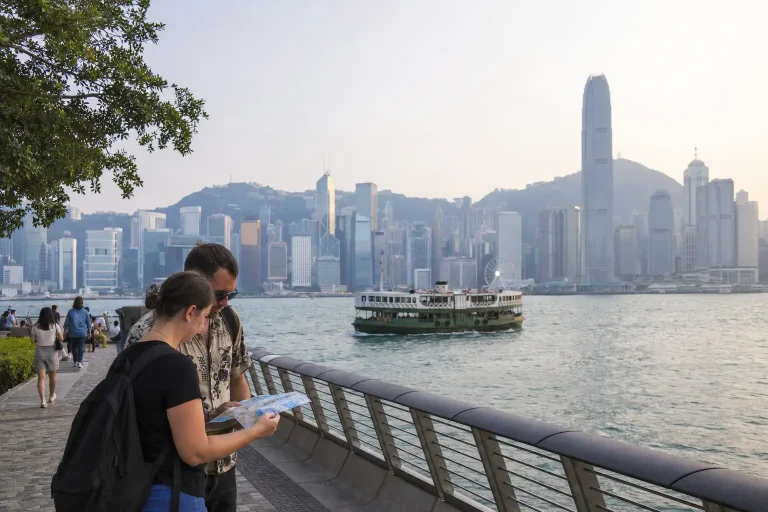
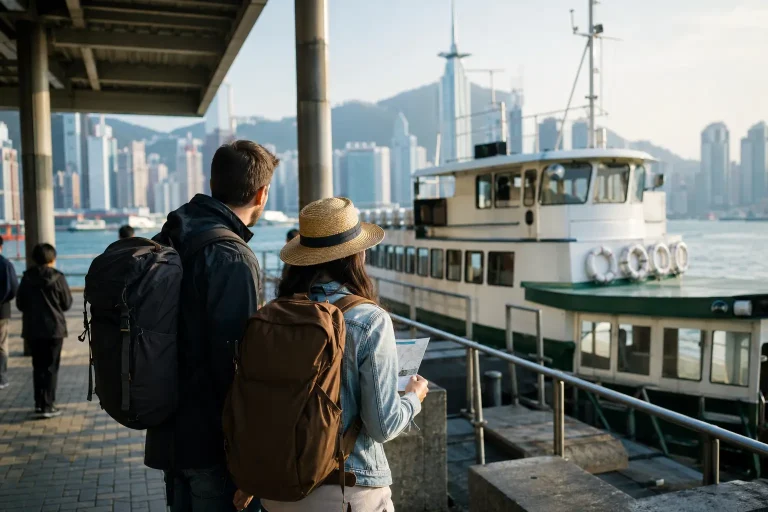
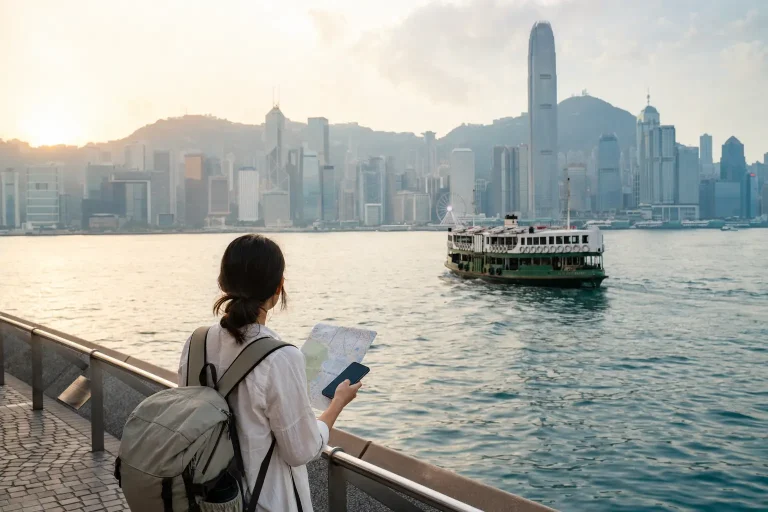
The Star Ferry operates franchised cross-harbor services linking Tsim Sha Tsui with Central and Wan Chai. The trip is short, affordable and visually generous. It is also real transport, so keep boarding areas clear and check the last sailing.
Outlying-island ferries depart from designated piers, many around Central, for places such as Lamma, Cheung Chau and Peng Chau. Weekday and Sunday/public-holiday schedules and fares may differ. Fast and ordinary ferries can also differ in journey time and outdoor access.
Buy or tap the correct fare, arrive before boarding closes and verify the return schedule before starting a hike or late meal. Island time is relaxed; the final ferry is not.
Taxis and ride-hailing
Urban red, New Territories green and Lantau blue taxis have different operating areas and fare structures. The Transport Department publishes current flagfall, distance, waiting-time and surcharge rules. Metered taxis may add legitimate charges for luggage, tolls or cross-harbor travel.
Match the taxi color to the operating area
Most visitors use red urban taxis because they cover Hong Kong Island and Kowloon and can reach many other destinations. Green taxis chiefly serve the New Territories, while blue taxis operate on Lantau. At the airport or a major interchange, join the signed queue for the destination area rather than selecting a color by availability.
Carry the destination in Traditional Chinese and use the taxi queue at stations, hotels and official stands. Drivers may change shifts or decline a route they cannot legally serve, which is different from negotiating a private fare.
Ride-hailing arrangements and licensed fleets continue to evolve. Use current official guidance and the platform’s designated pickup point. For a normal urban trip, a street or rank taxi remains straightforward.
Accessibility, strollers and luggage
Most major MTR stations provide lifts, but the accessible path may use a specific exit. Check station facilities before travel and allow extra time. Platform gaps, tram steps and crowded buses change which mode is practical.
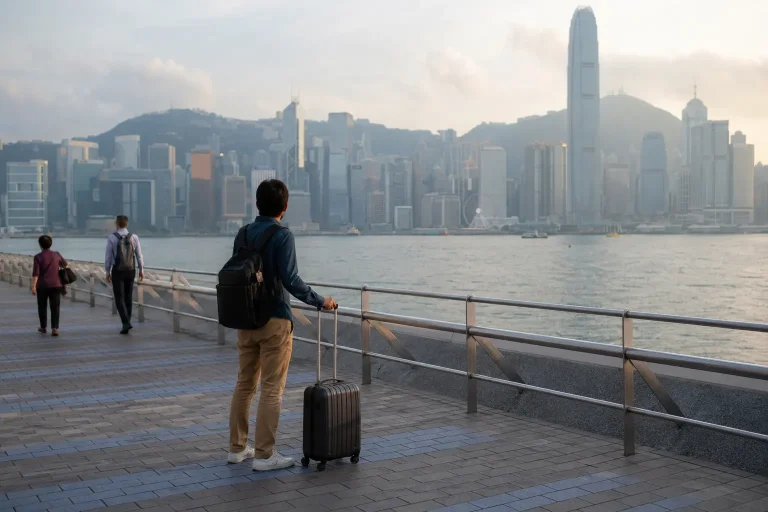
Families with strollers may find the MTR easiest outside peak periods; fold the stroller where required and avoid blocking doors. Travelers with large luggage should not design a trip around the tram or a packed commuter bus merely to save a small fare.
The where to stay in Hong Kong guide explains why slope, pavement width and the correct station exit belong in the hotel decision. “Five minutes from MTR” does not describe those details.
Late transport and last trains
MTR lines generally stop around midnight to approximately 1 a.m., but the correct time is station-, direction- and interchange-specific. Use the official trip planner on the day and enter before the gate cutoff. Special overnight operations on major holidays are exceptions.
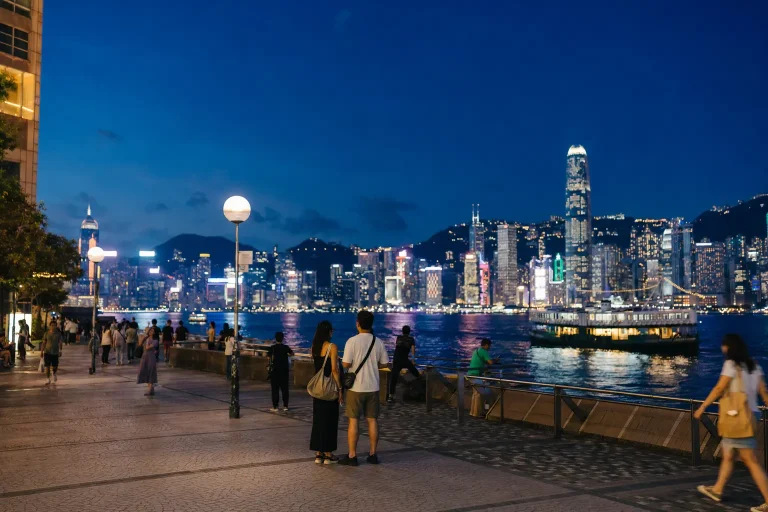
Night buses continue on selected routes with lower frequency. Save the stop and route before leaving a venue. Taxis are the practical fallback, especially after rain or when a cross-harbor journey has missed its final rail connection.
For evening planning, the Hong Kong nightlife guide treats the ride home as part of the night rather than an administrative surprise.
A simple three-day transport strategy
On day one, use Airport Express or a direct airport bus, then keep sightseeing on one side of the harbor. On day two, combine MTR for distance with one tram or ferry ride for street-level context. On day three, choose either an outlying-island ferry or a bus-led south-island route, not both.
The broader Hong Kong itinerary groups activities by district so transport serves the trip. Load Octopus value in sensible increments, save exit letters, and let the fastest mode handle distance while slower modes show the city.
The system works best when you stop optimizing every fare
Hong Kong’s network makes car-free travel remarkably practical. The useful skill is not memorizing every ticket: it is knowing when the MTR saves time, when a bus avoids a poor transfer, when a ferry improves the journey and when a taxi is worth the cost. Pay attention to the final five minutes on foot. They are where most “easy” routes become complicated.
Frequently Asked Questions
What is the best way to get around Hong Kong?
Use the Airport Express or an airport bus to reach the city, the MTR for fast cross-district travel, buses for hillside and scenic routes, trams for short Hong Kong Island trips, and ferries for harbor crossings.
Do you need an Octopus card in Hong Kong?
It's worth setting one up early. An Octopus payment method removes most small-fare friction across MTR, buses, trams, and ferries rather than buying individual tickets for each mode.