Hong Kong nightlife is not one scene. Lan Kwai Fong offers the densest bar-and-club circuit; SoHo and Sheung Wan suit cocktails and conversation; Wan Chai remains strong for pubs and live music; Tsim Sha Tsui has hotel bars and harbor views; Kowloon neighborhoods deliver late food, markets and smaller local venues. If alcohol and dancing are not the objective, the waterfront, Temple Street, evening ferries and dessert shops make an equally credible night.
Choose one side of the harbor for the late part of the evening and check the last MTR journey before ordering another round. Trains do not normally run all night, and “near Central” becomes a less persuasive description once the gates close.
Match the district to the night you want
| Mood | Best starting area | What to expect | Main catch |
|---|---|---|---|
| Easy bar hopping and clubs | Lan Kwai Fong, Central | High concentration, late energy, international crowd | Weekend queues, steep streets, higher prices |
| Cocktails and conversation | SoHo, Central and Sheung Wan | Smaller bars, restaurants, design-led rooms | Venues are dispersed and change frequently |
| Live music and pubs | Wan Chai | Bands, sports bars, long-running pub culture | Quality varies block by block |
| Views and polished drinks | Tsim Sha Tsui, Central | Hotel bars, skyline, easier reservations | Minimum spends and dress expectations |
| Markets and late food | Jordan, Yau Ma Tei, Mong Kok | Street life, casual meals, dessert | Not a conventional club district |
| Queer-friendly venues | Central, Sheung Wan and selected Kowloon spaces | Mixed bars and event-led nights | Check current event listings and venue status |
The table is a starting point, not a guarantee. Hong Kong venues open, relocate and change programming quickly. Check the same week, especially for live music, DJ lineups and queer events.
Start with Victoria Harbour rather than rushing indoors
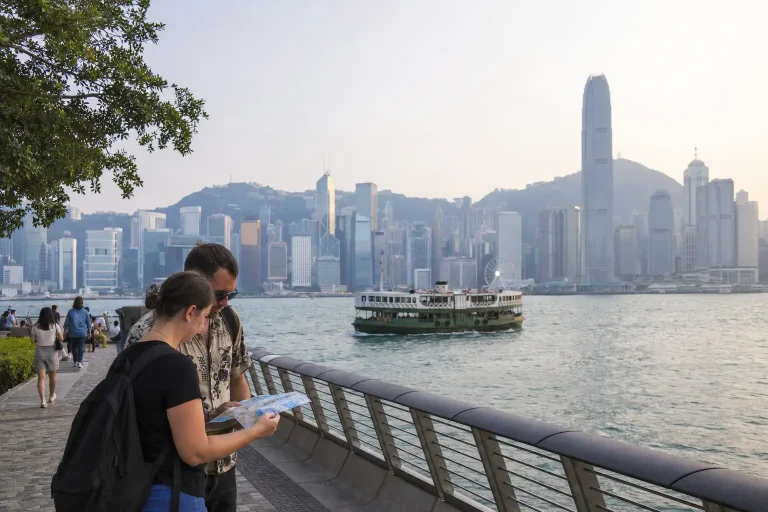
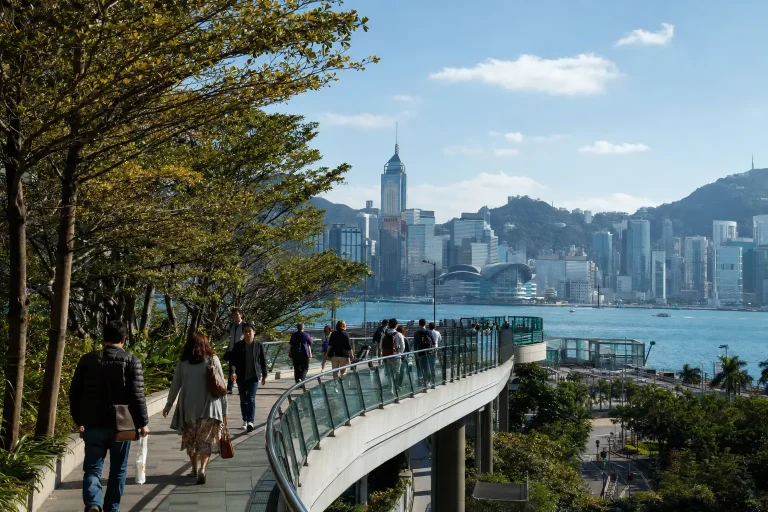
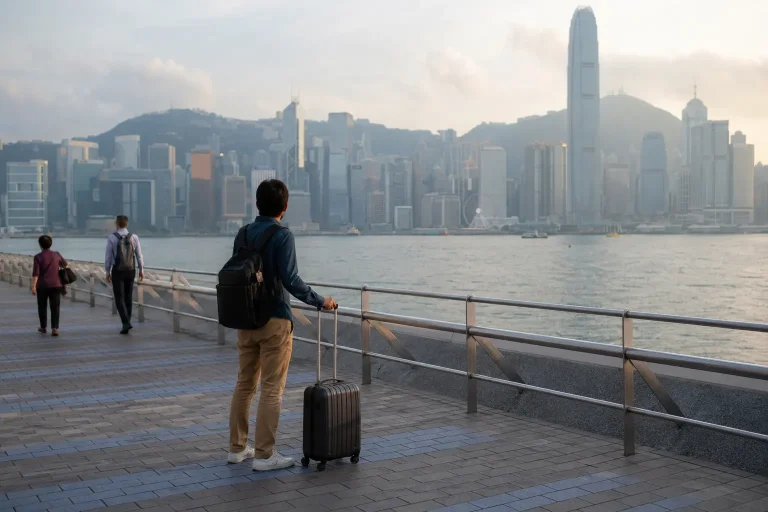
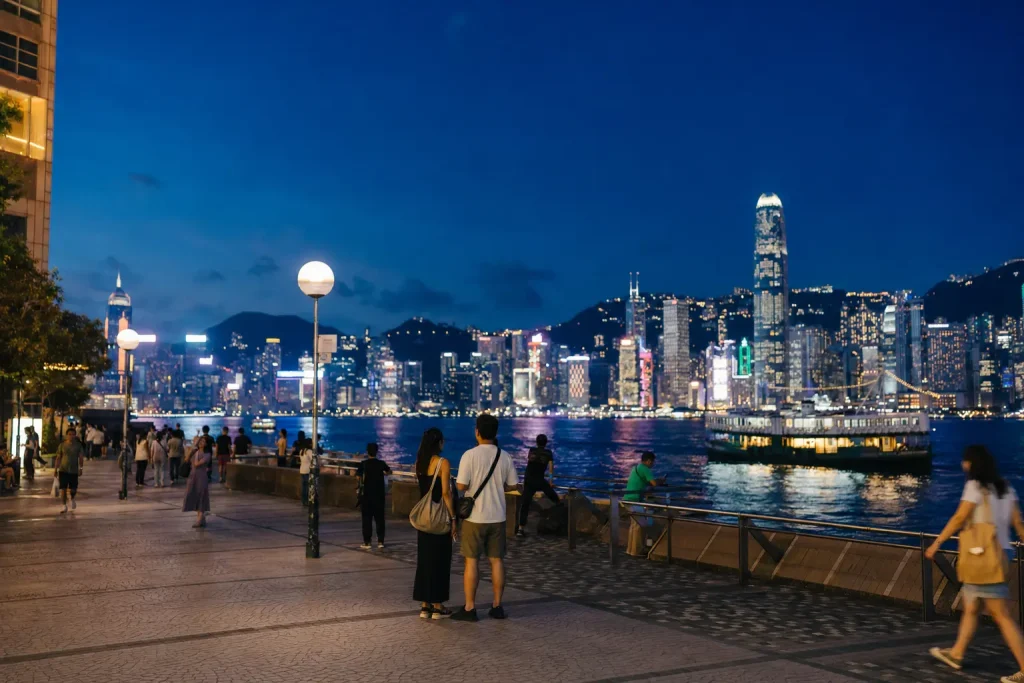
Hong Kong at night is clearest from the edge of the water. The Tsim Sha Tsui promenade gives a broad view of Hong Kong Island, while Central and Wan Chai look back toward Kowloon. The skyline is an active piece of infrastructure—offices, ferries, hotels and apartment towers—not merely a light show waiting for visitors.
The nightly Symphony of Lights is currently scheduled around 8 p.m., subject to weather and special arrangements. It is brief enough to use as the opening of an evening rather than its central purpose. Arrive a little early, watch from the public waterfront and keep expectations proportional; the harbor itself does most of the work.
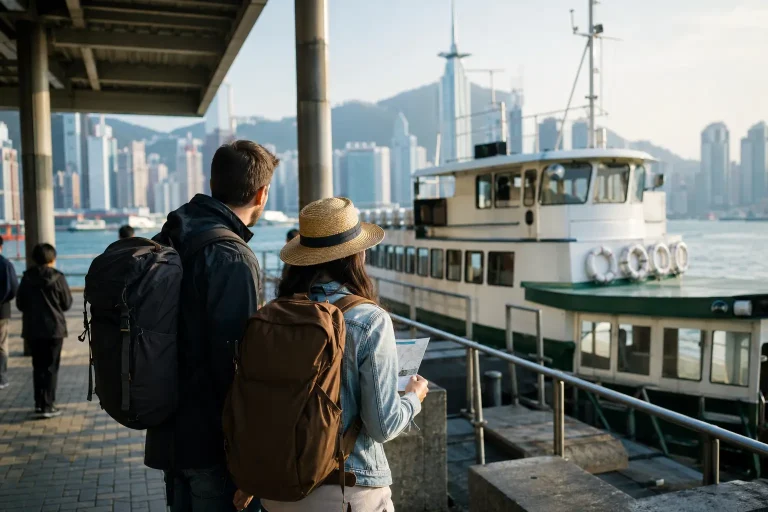
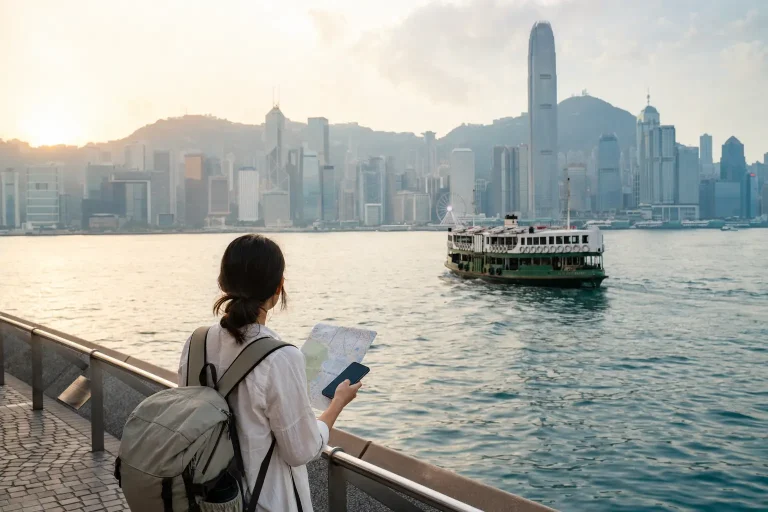
The Star Ferry can turn the view into movement for the price of a transit ride, but do not assume late-night departures. Check the current route schedule. Ferries wind down earlier than bars, and the last crossing is a timetable, not a mood.
Lan Kwai Fong: efficient, famous and not subtle
Lan Kwai Fong occupies a compact set of sloping streets in Central with a large concentration of bars, restaurants and clubs. It is the easiest answer for visitors who want to arrive in one district and decide in real time. On Fridays, Saturdays and major holidays, the street itself becomes part of the event.
The advantage is choice. You can begin with a casual drink, inspect the queue at a club and change direction without taking transport. The disadvantage is that high concentration produces high noise, crowded pavements and pricing that reflects the address.
Dress codes depend on the venue. Smart casual is safer for clubs and hotel bars, while pubs are usually more relaxed. Bring physical identification, avoid open drinks you have left unattended and confirm cover charges before entering. A street promoter’s confidence is not a contract.
SoHo and Sheung Wan when you want to hear the conversation
The streets around Hollywood Road, Staunton Street and Sheung Wan hold cocktail bars, wine rooms and restaurant-led evenings. These areas work better for two or four people who want a deliberate venue rather than a club circuit.
Reservations help at small bars because capacity can be genuinely small, not theatrically exclusive. The hills are also real. Shoes chosen entirely for the photograph may begin negotiating their retirement before the second venue.
Wan Chai: live music, pubs and a district with several lives
Wan Chai’s nightlife extends around Lockhart Road, Jaffe Road and nearby streets. The area’s history includes a former red-light district and a long relationship with sailors, expatriate bars and live performance, but today’s options are broader: local bands, sports pubs, casual drinking rooms and restaurant bars share the neighborhood.
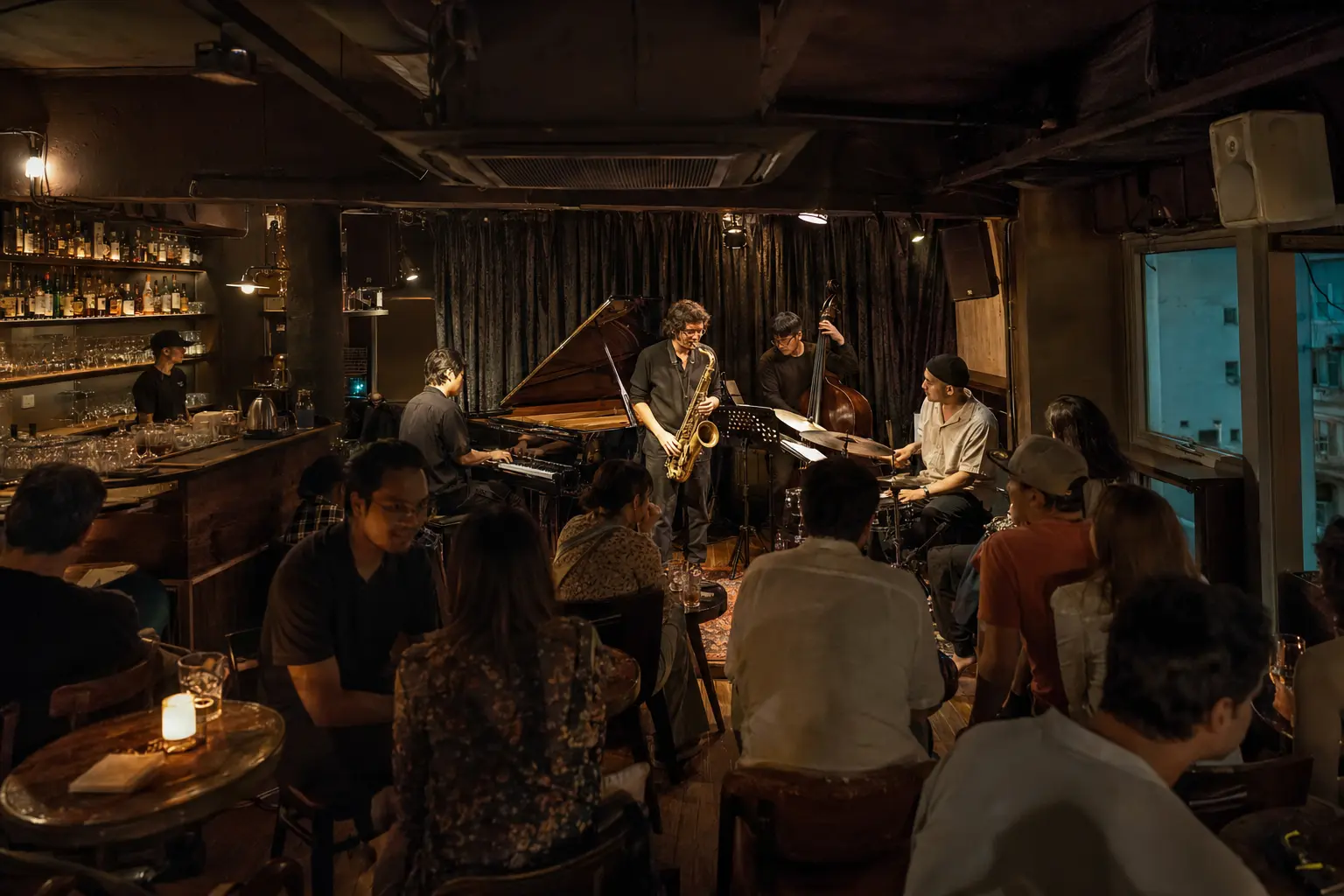
For music, choose by the current lineup rather than a historical reputation. Hong Kong Tourism Board currently highlights venues with scheduled jazz, rock and other live programs, but performance nights and start times change. Check the artist, set time, cover and whether seating is first-come.
Wan Chai is convenient because the MTR, buses and taxis are close, yet the late-night atmosphere changes within a block. If a street feels more transactional or louder than wanted, move toward a venue selected in advance rather than assuming the whole district is identical.
Tsim Sha Tsui: skyline drinks without crossing back later
Travelers staying in Kowloon do not need to migrate to Central for every night out. Tsim Sha Tsui has hotel bars, lounges, restaurants, waterfront walks and smaller drinking rooms. The view reverses the usual postcard, with Hong Kong Island across the harbor.
Rooftop and hotel bars may require reservations, minimum spending or smart dress. Ask whether outdoor seating is guaranteed; humid weather, rain and wind can close terraces. A high floor does not automatically produce a better atmosphere, especially when the room is organized around photographing the window.
For a more relaxed night, combine the promenade with dinner in Tsim Sha Tsui or Jordan, then continue to Temple Street. This keeps the evening compact and makes the trip home simpler.
Jordan, Yau Ma Tei and Mong Kok after dark
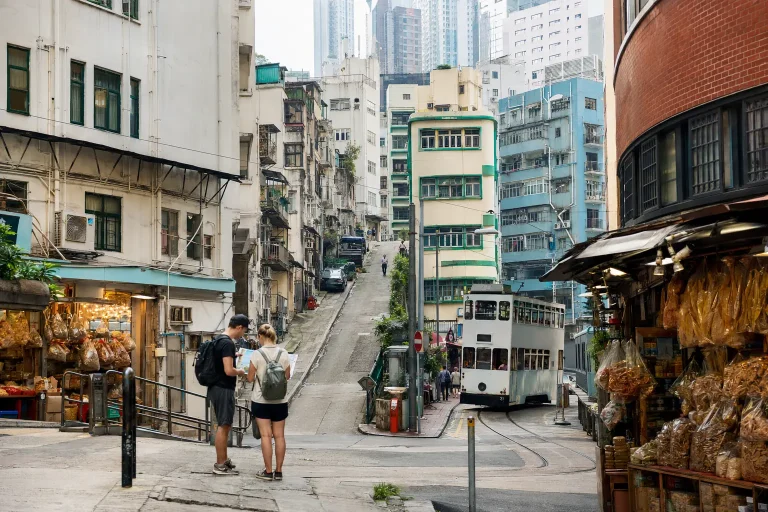
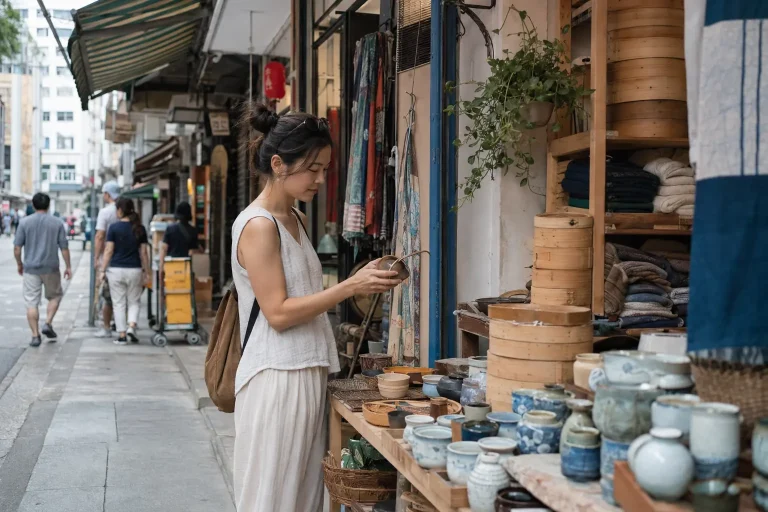
Temple Street Night Market gives Jordan and Yau Ma Tei an evening focus, but the wider pleasure is the neighborhood around it: casual restaurants, fruit stalls, old shopfronts, buses and residents finishing work. The market sells inexpensive goods and snacks; it is not an endless bazaar operating until morning.
The shopping in Hong Kong guide explains how the market differs from daytime specialist districts. At night, browse without making each stall a purchase, then use the surrounding streets for noodles, claypot rice in season or dessert.
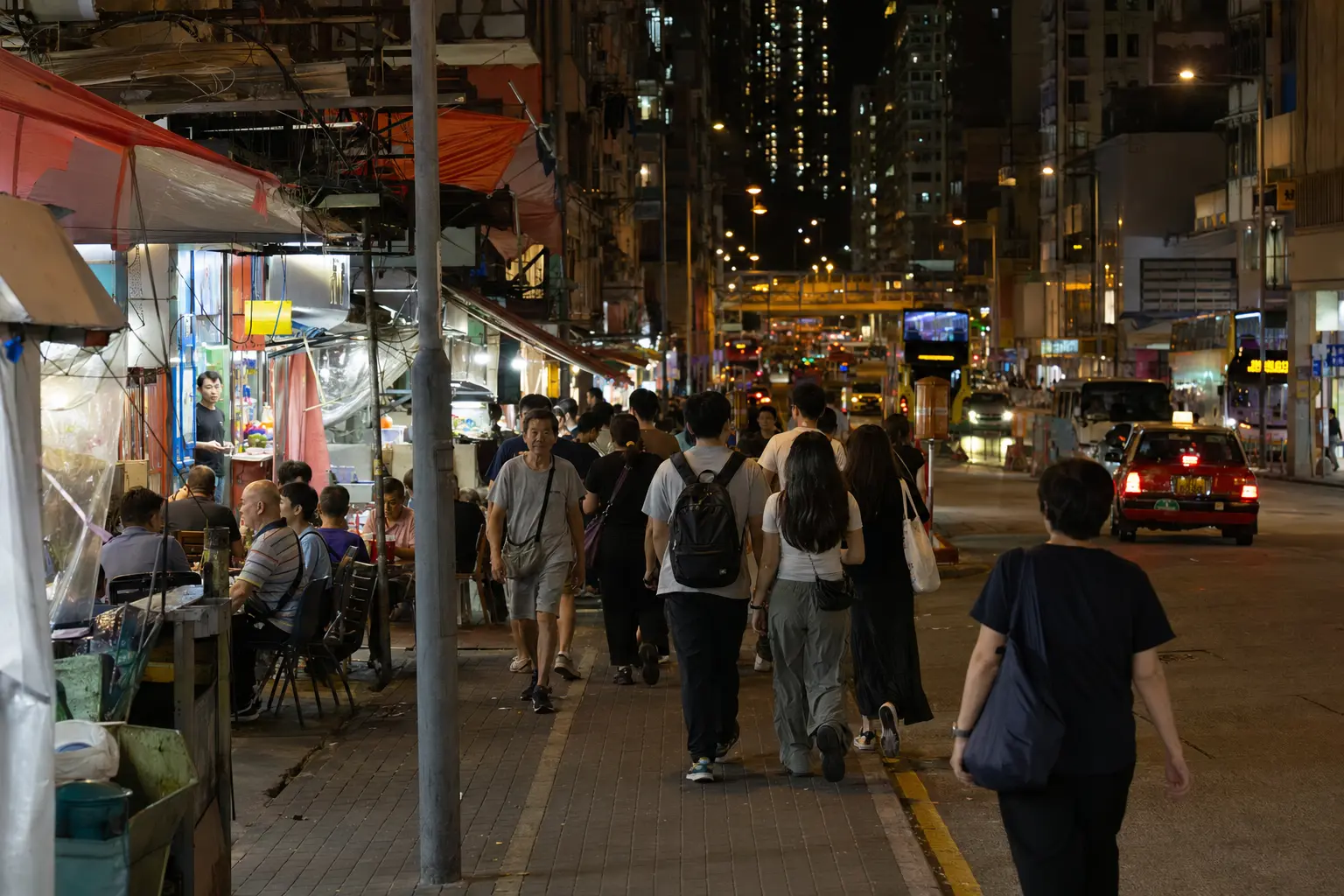
Mong Kok remains busy later than many business districts, with cinemas, malls, game centers, cafés and food. It suits travelers who want urban energy without a bar being compulsory. Keep an eye on closing times: “the neighborhood is awake” does not mean every attraction stays open.
Live music, comedy and cultural nights
Hong Kong’s live scene is event-led. Jazz bars, rock pubs, arts centers, hotel lounges and independent rooms may all offer strong nights, but a static “best venue” list ages quickly. Search by date and genre, then buy through the official venue or recognized ticket platform.
West Kowloon Cultural District, arts centers and major performance venues can add theater, Cantonese opera, orchestral music, dance or touring acts. These evenings require more planning than bar hopping but often reveal a more specific local audience.
Museum late openings and special programs occur on selected dates rather than every night. Verify the calendar. A building illuminated after dark may still have closed galleries.
Queer nightlife: follow current events, not old directories
Hong Kong has queer-friendly bars, mixed venues, drag events and community parties, with activity often centered around Central and Sheung Wan but not limited to them. The scene is smaller and more event-dependent than in some major cities.
Use recent social accounts and local LGBTQ+ event listings because venue names and weekly programming can shift. A place described as a gay bar in an older guide may have closed, moved or become a mixed crowd. Travelers should also distinguish an inclusive venue from an assumption that every nightlife district offers the same comfort.
As anywhere, consent, personal boundaries and ordinary situational awareness matter. Hong Kong is often experienced as safe, but safety statistics do not monitor a drink or arrange the ride home.
Late-night eating is part of the nightlife
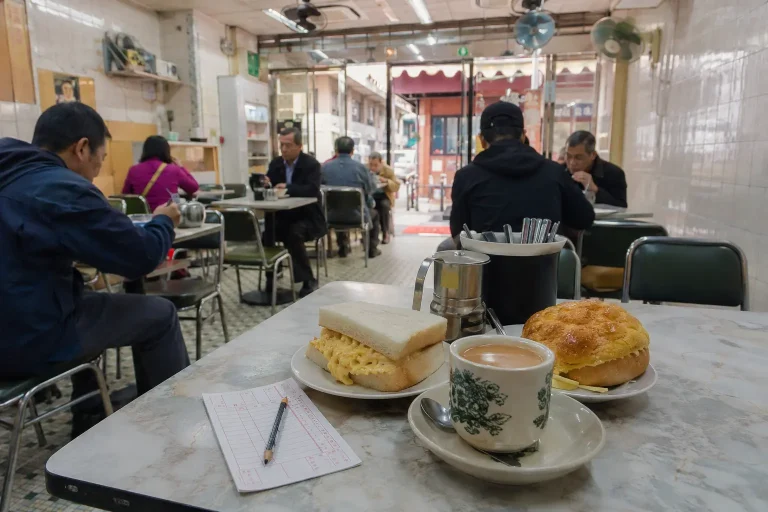
The most convincing Hong Kong night may end at a congee shop, noodle counter, cha chaan teng or dessert room rather than a club. Restaurant hours vary widely; some famous late-night institutions are no longer genuinely late, while neighborhood businesses may continue well past dinner.
Use the Hong Kong food guide to choose a format, then check the individual venue’s current last order. Kitchens often stop before doors close.
Dim sum raves and other hybrid events have appeared in 2026, reflecting a wider interest in combining daytime food culture with DJs and younger crowds. Treat them as scheduled events, not a permanent nightly attraction. The useful principle is broader: Hong Kong nightlife increasingly moves between restaurants, music and social spaces rather than remaining inside a conventional nightclub.
Last trains, night buses and taxis
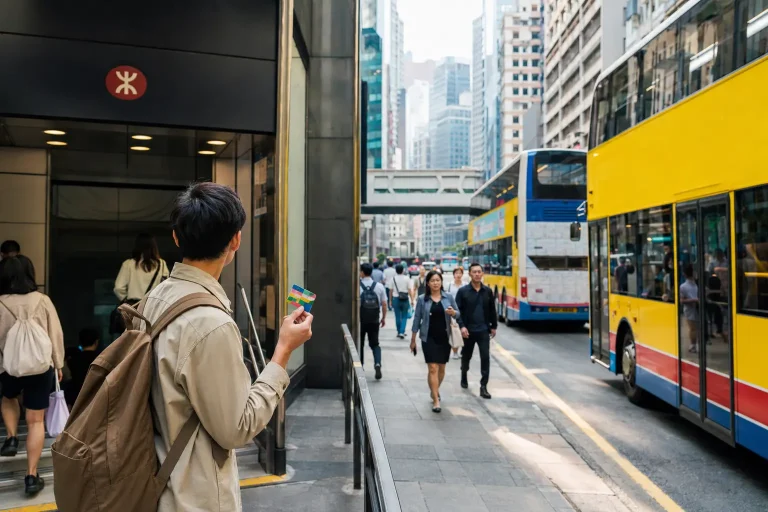
MTR service generally ends around midnight to roughly 1 a.m., but the correct last train depends on the station, direction and interchange. The official MTR trip planner provides current first and last train details. Enter the station at least five minutes before the scheduled departure; arriving at the platform time is not a strategy.
Special overnight service may operate on selected major holidays such as Lunar New Year, Christmas Eve or New Year’s Eve. Do not generalize those arrangements to an ordinary weekend.
Hong Kong has overnight bus routes, but they may run less frequently and use stops unfamiliar in daylight. Save the route and stop before leaving the venue. Taxis are plentiful in nightlife districts, although queues rise when bars close or rain begins. Confirm whether a cross-harbor surcharge or luggage fee applies.
Decide the ride home before the last venue
Save the hotel name and address in Traditional Chinese, and avoid waiting until the street is empty to look for transport. Ride-hailing availability and pickup points can vary, while ordinary red urban taxis cover most visitor districts. A clear destination and a route screenshot reduce friction when the driver and passenger do not share a language.
If your hotel choice is still open, the where to stay in Hong Kong guide treats the late-evening walk home as part of the location decision. Being near the correct MTR exit is especially useful until the MTR is no longer running.
A realistic Hong Kong night plan
For a first evening, reach the Tsim Sha Tsui waterfront before 8 p.m., watch the harbor, then eat in Jordan and walk through Temple Street. Return by MTR while service is comfortable. This plan works with jet lag and does not require a reservation.
For a social night, dine around Central or Sheung Wan, book one cocktail bar, then decide whether Lan Kwai Fong deserves a later stop. Set a transport cutoff before entering the club.
For live music, choose the performance first and build dinner nearby. Wan Chai makes this easy, while event venues elsewhere may require more exact timing. One good set followed by noodles is a night; six venues reached by taxi are an expense report.
After dark, choose specificity over hype
Hong Kong nightlife is strongest when the evening belongs to a particular version of the city: harbor movement, a small band, a crowded market, a precise cocktail or a late bowl of congee. Pick the district that supports that experience, verify the event and last journey, and leave enough flexibility for the night to change shape. The skyline will remain available even if the club queue does not improve.
Frequently Asked Questions
Where is the best nightlife in Hong Kong?
Lan Kwai Fong offers the densest bar-and-club circuit, SoHo and Sheung Wan suit cocktails and conversation, Wan Chai remains strong for pubs and live music, and Tsim Sha Tsui has hotel bars with harbor views.
Does the MTR run all night in Hong Kong?
No. Trains do not normally run all night, so it’s worth choosing one side of the harbor for the late part of the evening and checking the last MTR journey before ordering another round.