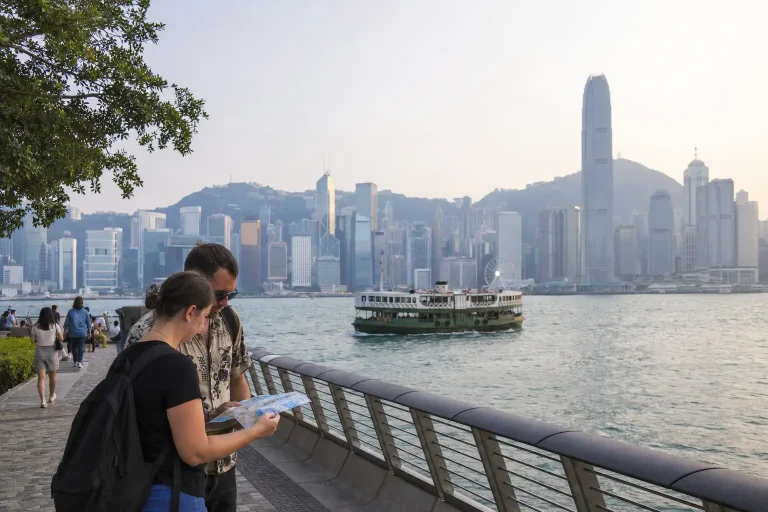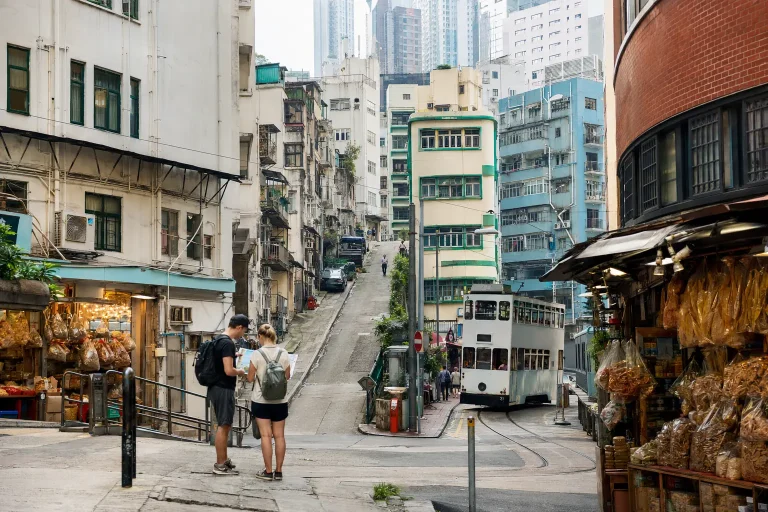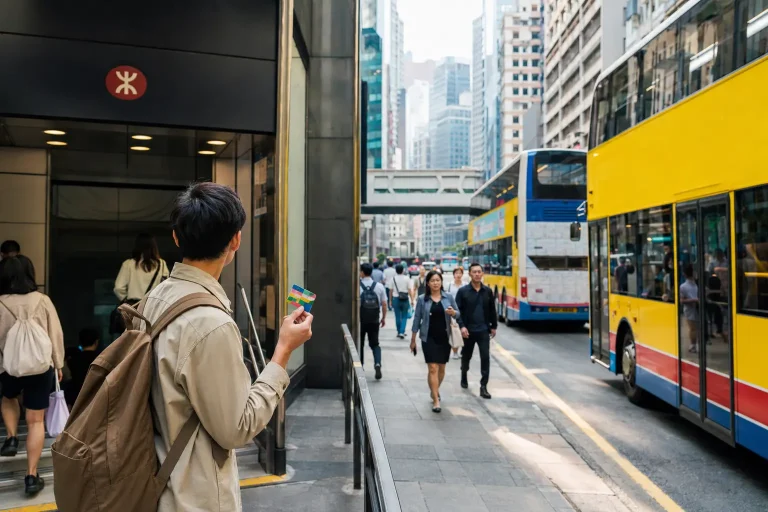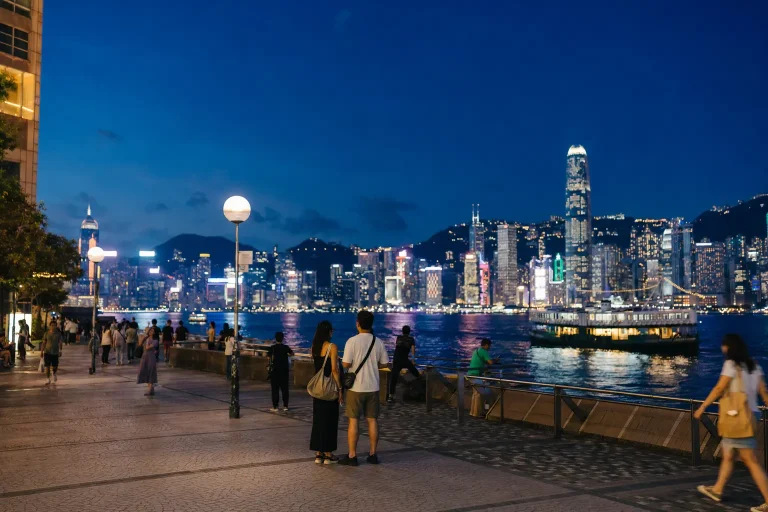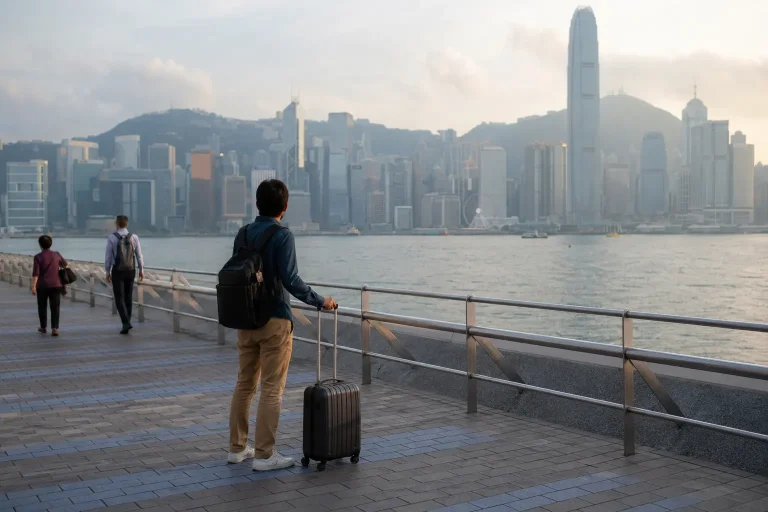
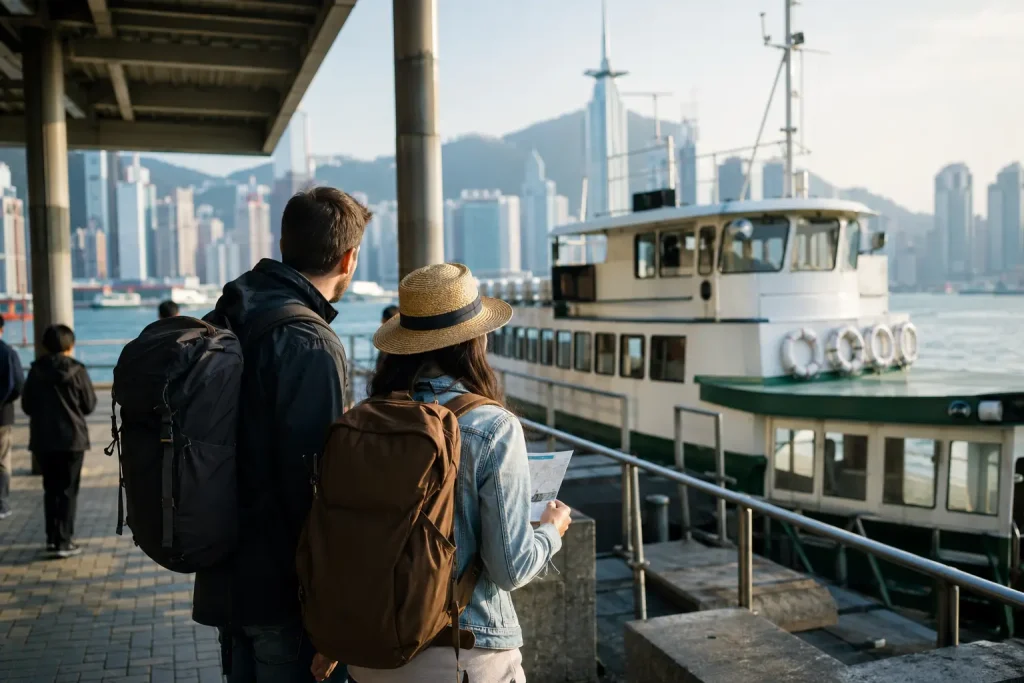
The best day trips from Hong Kong depend on how much transport uncertainty you accept. Choose Cheung Chau for an easy harbor, food and walking day; Lamma for a point-to-point trail; Tai O and Ngong Ping for Lantau culture and landscape; Sai Kung for hiking or boat access that needs weather planning; Macau for a separate immigration journey with heritage, food and far more logistics. For a first three-day visit, an island usually earns the time better than crossing a border.
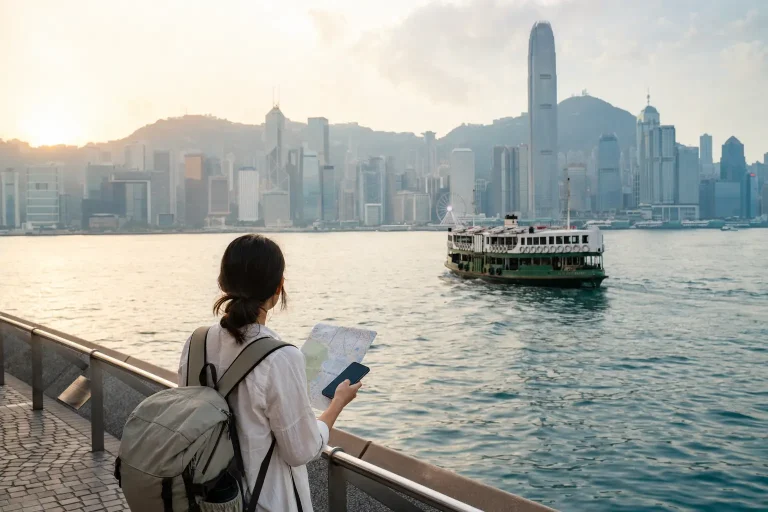
Check the return timetable before leaving, not while finishing dinner. Ferries, buses and immigration queues are the structure of the day.
Compare the realistic options
| Day trip | Best for | Travel friction | Ideal commitment |
|---|---|---|---|
| Cheung Chau | Harbor life, snacks, easy walking, beach | Low to medium | Full day |
| Lamma Island | Coastal walk and village-to-village route | Medium | Full day |
| Tai O + Ngong Ping | Lantau history, monastery, stilt-house context | Medium | Long full day |
| Sai Kung | Hiking, beaches, geopark scenery | Medium to high | Full day with weather buffer |
| Peng Chau | Quiet lanes and short walks | Low to medium | Half to full day |
| Macau | UNESCO heritage and a distinct city | High | Very long day or overnight |
Cheung Chau: the easiest all-round island day
Cheung Chau ferries leave from Central Pier 5 and currently take roughly 35–60 minutes depending on service. The compact harbor, car-light lanes, beaches, temples and food make the island workable without a complicated route.
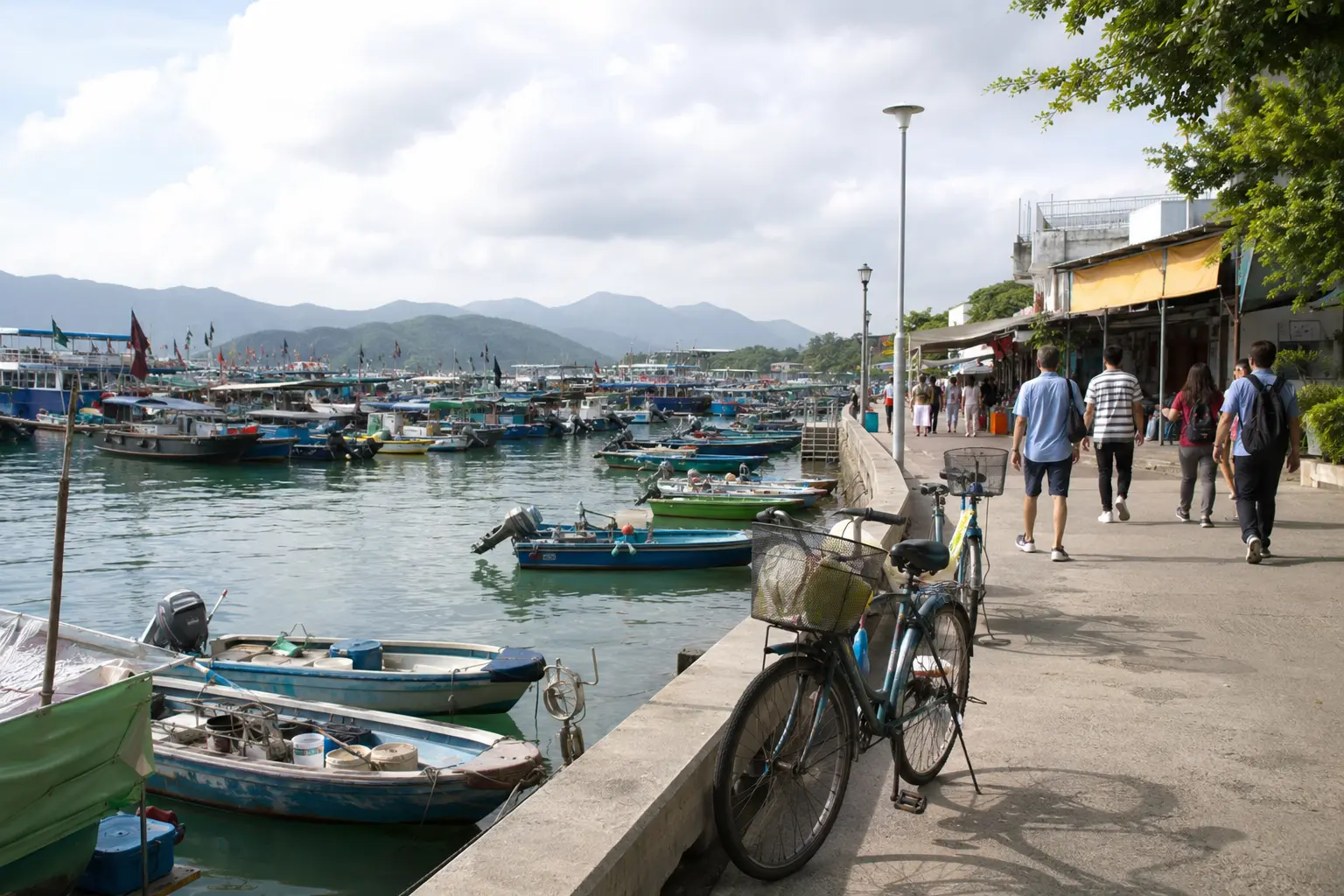
Walk the waterfront before choosing either a beach-and-headland loop or a slower circuit through the village. Bicycles are common, but narrow busy lanes are not a race course. Rent only if comfortable around pedestrians and other riders.
The Bun Festival brings major crowds and specific cultural meaning around Buddha’s Birthday. Visit for the festival only after checking official dates and transport controls. Outside the event, the island is still a working community; giant snack photos are not its complete biography.
Return sailings differ by weekday and holiday. Faster ferries may have enclosed seating, while ordinary boats can offer a different ride. Check the operator’s current vessel and schedule.
Lamma Island: choose a direction, not just an island
Lamma’s common day route links Yung Shue Wan and Sok Kwu Wan via the Family Trail. This point-to-point structure is its advantage: arrive at one pier, walk past villages, hillside and coast, then depart from the other.
The trail is paved but includes inclines, exposed sections and humid-weather effort. Carry water, sun protection and footwear more serious than a beach sandal. Restaurants and shops are concentrated around villages rather than evenly distributed.
Verify both ferry timetables before starting. Missing the intended boat can mean a long wait, particularly in the evening. Reverse the route if the return schedule or sun exposure works better.
Tai O and Ngong Ping: one long Lantau day
Tai O is a fishing settlement on western Lantau shaped by waterways, stilt-house traditions, dried seafood and shrimp paste production. It should be visited as a community with a specific economic history, not labeled a frozen village.
Combine it with Ngong Ping and Po Lin Monastery only if starting early. The usual route uses MTR to Tung Chung, then cable car or bus toward Ngong Ping, followed by a bus to Tai O. Weather, cable-car queues and winding roads can turn simple arrows on a map into a long day.
Respect residential bridges and private homes. Boat trips are sold locally, but wildlife sightings are never guaranteed. Choose an operator that does not chase animals.
The final bus and onward MTR matter more than sunset ambition. Keep enough time to return from Tai O without relying on a last possible connection.
Sai Kung: nature requires an actual route plan
Sai Kung refers to a town, peninsula, country parks, beaches, islands and geopark access—not one attraction reached by one train. MTR does not run directly to Sai Kung town; buses, minibuses, taxis and boats complete the journey.
Choose one objective: town and a short island boat, a defined country-park hike, or a beach route. Do not combine a difficult five-hour trail with an improvised seafood lunch and a speculative boat home.
Check Hong Kong Observatory warnings, heat, thunderstorms and tropical-cyclone conditions. Remote beaches and trails have limited shade and supplies. Download the route, carry water, tell someone the plan and use official safety guidance.
Kaito services and charter boats vary by day, weather and season. Confirm the return before boarding. A beautiful empty pier is less poetic when the service ended an hour ago.
Peng Chau: quieter because the itinerary is smaller
Peng Chau suits travelers who want lanes, temples, waterfront and short hills without Cheung Chau’s visitor volume. Its appeal is scale. Walk a loop, eat near the village and watch ferry traffic rather than inventing a list of minor “must-sees.”
Services are fewer than in the city, so bring water and check opening days. The island can fill half a day, though ferry timing may make a relaxed full day more sensible.
For travelers already spending several days in dense urban districts, that lack of urgency is the point.
Macau: a border crossing, not a nearby neighborhood
A Macau day trip from Hong Kong is possible by ferry or the Hong Kong–Zhuhai–Macao Bridge route, but it requires travel documents and immigration in both directions. Entry eligibility depends on nationality. Check current Macao and Hong Kong immigration rules; never assume a Hong Kong permission automatically covers Macau.
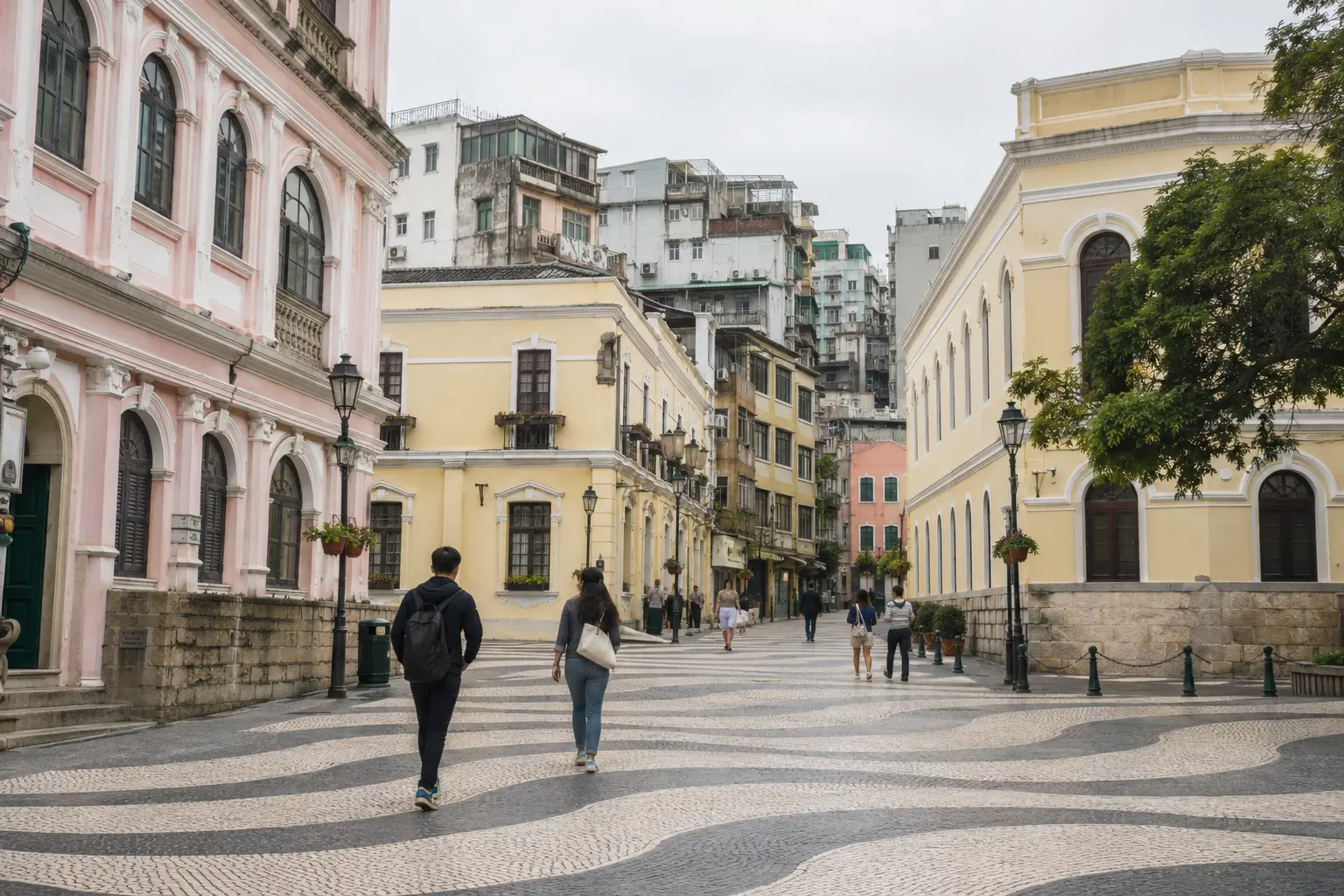
For a heritage-led day, focus on the historic center: Senado Square, nearby churches and temples, the Ruins of St. Paul’s area, Macanese food and streets that show Portuguese and Chinese institutional history. Adding Cotai resorts creates a cross-city transfer and a different experience.
Book transport with enough flexibility for queues and arrive early. Keep the return ticket and passport secure. A one-hour crossing does not mean the door-to-door journey takes one hour.
Macau deserves an overnight if food, museums or evening architecture matter. A rushed day can become four immigration lines connected by a few photographs.
Macau or Lantau?
Choose Macau for a distinct jurisdiction, layered colonial history and urban food. Choose Lantau for landscape, Buddhist sites and Hong Kong village context without immigration. With only three full days in Hong Kong, Lantau is usually the more coherent extension.
Shenzhen is not a casual substitute
Shenzhen is accessible across land boundary points, but it is mainland China. Visa and visa-free-transit eligibility vary by passport, itinerary and current policy. Apps, payments and connectivity also operate differently.
Only plan it after confirming entry rules from official sources and choosing a specific district or purpose. “It is one train away” describes infrastructure, not border formalities.
Weather can cancel the plan
Ferry and outdoor plans are exposed to strong winds, heavy rain, thunderstorms and tropical cyclones. The Hong Kong Observatory and transport operators publish warnings and disruptions. Do not hike during severe heat or storm conditions because the trip was reserved in a spreadsheet.
Keep one urban fallback
Choose a museum-and-neighborhood alternative before the excursion day. If ferries or exposed trails become poor choices, the Hong Kong neighborhoods guide offers half-day combinations that do not require gambling against a warning signal.
In summer, start early and reduce exposed distance. In cooler months, carry a layer for ferries. The best time to visit Hong Kong guide explains seasonal tradeoffs beyond a single forecast.
What to pack for a Hong Kong day trip
Carry water, sun and rain protection, a charged phone, Octopus or the required fare method, a little cash and any travel documents. For hiking, add offline navigation, food and footwear suited to the route. For Macau, take a passport and verify entry requirements.
Use a small bag that can stay with you on ferries and crowded buses. The carry-on packing list is a useful base, but an island day needs less than an airport day and more water than an urban museum route.
Fit the day trip into the main visit
Do not schedule a long excursion immediately after an overnight flight or before a fixed evening reservation. The current Hong Kong itinerary places an excursion as a deliberate third-day choice rather than an automatic extra.
Use the Hong Kong transportation guide for Octopus, ferry, bus and last-service planning. Buy the outbound journey only after understanding the return.
Leave the city without trying to escape it
Hong Kong’s islands, country parks and boundary connections do not contradict the dense city; they explain its geography. Choose one landscape or one neighboring city, allow the transport its honest share of the day, and return before the timetable becomes the main story.
Frequently Asked Questions
What is the best day trip from Hong Kong?
It depends on your tolerance for transport uncertainty. Choose Cheung Chau for an easy harbor, food, and walking day, Lamma for a point-to-point trail, or Tai O and Ngong Ping for Lantau culture and landscape. Macau is a separate immigration journey with far more logistics.
Do you need to plan Hong Kong day trips around ferry times?
Yes. Check the return timetable before you leave, not while finishing dinner, since ferries, buses, and immigration queues form the actual structure of the day for most island and Macau day trips.