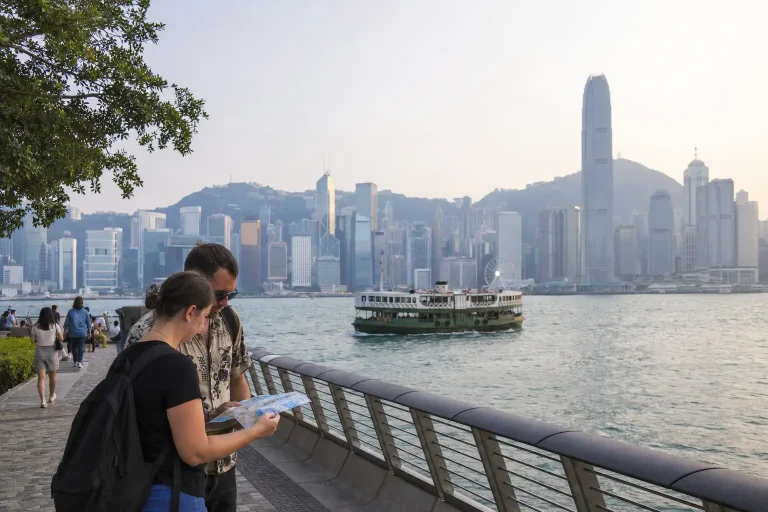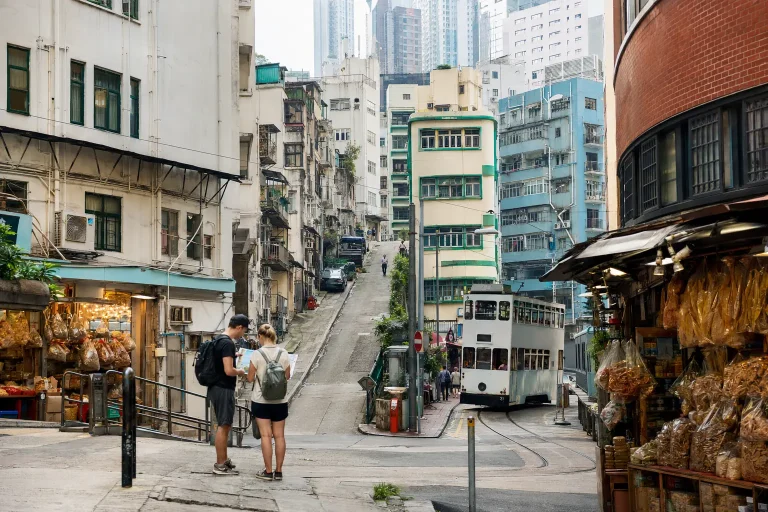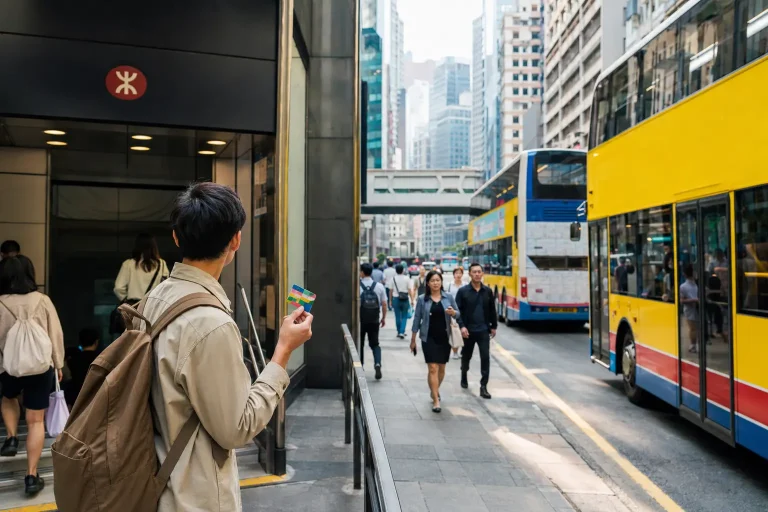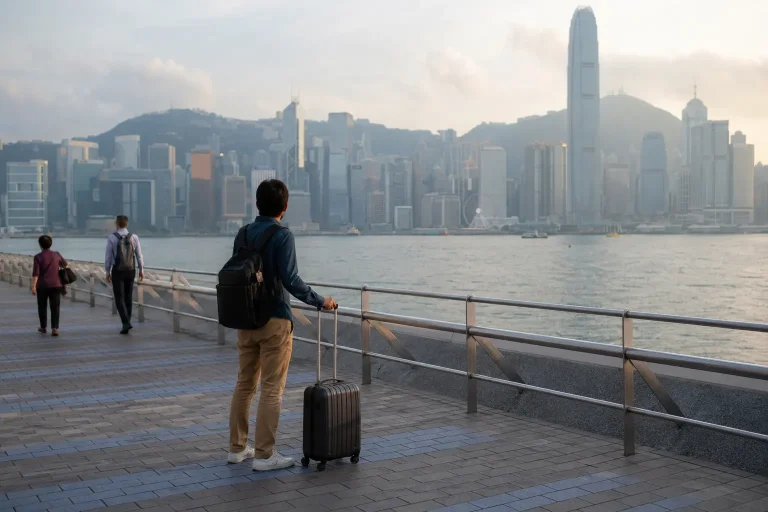
Shopping in Hong Kong is most rewarding when you decide what kind of purchase you want before choosing a district. Use Central and Admiralty for international luxury and polished malls, Causeway Bay for dense mainstream retail, Mong Kok and Yau Ma Tei for street markets, Sham Shui Po for specialist materials and electronics, and Sheung Wan or PMQ for design-led gifts. The city still offers extraordinary range, but “tax-free” does not mean every item is cheaper than at home.
The sensible approach is comparison rather than appetite. Check model numbers and warranties for electronics, distinguish locally designed goods from generic imports, and treat a market as a place to browse rather than a promise of bargains. Hong Kong makes shopping very efficient. It can also make several unnecessary purchases feel efficient.
Choose the area by what you actually want to buy
Hong Kong’s retail geography is unusually legible once the districts are separated by purpose.
| Shopping goal | Best starting area | What it does well | Main catch |
|---|---|---|---|
| Luxury and global fashion | Central, Admiralty, Tsim Sha Tsui | Flagships, department stores, high-service malls | Prices need international comparison |
| Mainstream fashion and beauty | Causeway Bay | Dense mix of malls, chains and department stores | Heavy weekend crowds |
| Street markets and inexpensive accessories | Mong Kok, Yau Ma Tei | Variety, atmosphere, bargaining | Quality and originality vary |
| Independent design | Central, Sheung Wan, Wan Chai | Small labels, ceramics, prints and homewares | Limited opening days and higher prices |
| Fabrics, beads and practical supplies | Sham Shui Po | Specialist streets and wholesale-style shops | Many stores close earlier than malls |
| Electronics and cameras | Mong Kok, Sham Shui Po | Concentrated comparison shopping | Warranty, voltage and gray-market risk |
This structure prevents the classic mistake of crossing the harbor for one shop, then crossing back for an almost identical chain. Fold shopping into the district already planned for the day. A useful Hong Kong itinerary leaves time to browse without turning transport into the main purchase.
Central and Admiralty: polished malls and quiet price tags
Central’s shopping centers connect office towers, hotels, transit and major international brands through air-conditioned walkways. IFC, Landmark and nearby complexes are convenient in bad weather and easy for shoppers who value verified inventory, alterations or after-sales service. Admiralty continues the same polished language around Pacific Place.
This is where to compare luxury goods, watches, jewelry and current designer collections. It is not automatically where to find a dramatic discount. Hong Kong generally has no VAT or broad retail sales tax, so there is no tourist refund form for ordinary purchases; the shelf price already reflects that tax structure. Exchange rates, regional brand pricing and promotions still determine whether the purchase is cheaper than in the United States.
Ask for a full receipt, confirm the return policy and compare the exact model or product code—not a similar item photographed online. For expensive goods, keep packaging and documentation accessible for home-country customs. A tax-light purchase can still exceed your personal import allowance.
Causeway Bay: maximum choice within a small radius
Causeway Bay is Hong Kong shopping in compressed form. Large malls, Japanese department stores, beauty chains, sportswear, independent upper-floor shops and restaurant queues compete for the same blocks. It suits travelers who want breadth and do not mind crowds.
Start with one anchor mall, then use street-level shops to fill gaps. Times Square, Hysan Place, Lee Gardens and the wider retail grid serve slightly different price points, but there is no prize for inspecting every floor. Department-store food halls can also solve edible gifts in a controlled, air-conditioned setting.
Weekday afternoons are calmer than weekend evenings. MTR exits matter because the district is busy and road crossings can turn a short map distance into a small urban puzzle. Note the exit nearest the first store rather than surfacing wherever the train releases you.
Tsim Sha Tsui: luxury, harbor views and very large malls
Tsim Sha Tsui combines international shopping with hotels, museums and the waterfront. Harbour City is vast enough to absorb hours, while Canton Road concentrates luxury flagships. K11 Musea mixes retail with art-forward interiors and dining near Victoria Dockside.
The advantage is convenience for visitors already staying in Kowloon. The drawback is scale: a mall may list the right brand yet place it a long walk from the entrance you used. Save the store location and floor before arriving.
Nathan Road adds pharmacies, jewelry stores and electronics retailers, but prominent signage should not replace due diligence. For watches, cameras or high-value goods, buy from an authorized dealer, request itemized paperwork and check the manufacturer’s regional warranty.
Hong Kong markets: visit for the category, not just the name
Hong Kong markets covers several streets with different specialties. Ladies’ Market in Mong Kok focuses on clothing, accessories, bags and souvenirs. Temple Street in Yau Ma Tei is more atmospheric after dark, with inexpensive goods and nearby food. Jade Market has jewelry and decorative objects, while specialist streets elsewhere concentrate flowers, birds, kitchenware or fabrics.
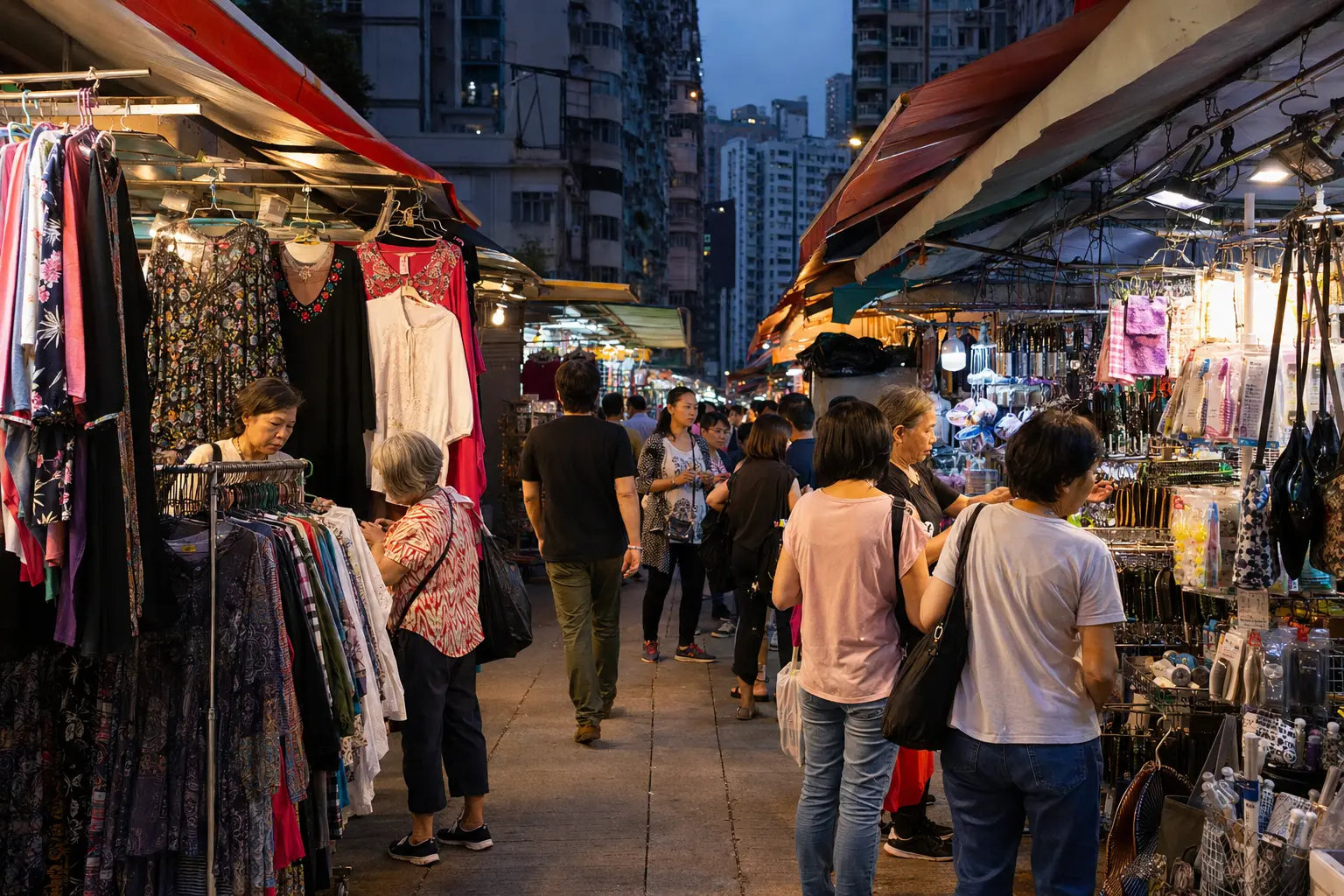
The market experience is tactile and social: fabrics hang close to the aisle, small goods repeat across stalls, and prices may be more conversational than fixed. That does not make every object locally produced. If a souvenir matters for its origin, ask where it was made and favor a designer shop, museum store or clearly identified maker.
Bargaining without turning it into theater
At stalls without fixed prices, polite bargaining can be appropriate. Ask the price, make a reasonable counteroffer and be prepared to walk away without drama. Buying multiple items may create more room than arguing over a trivial amount.
Do not bargain in malls, department stores or shops with clearly marked prices unless the store itself offers a promotion. Keep cash in small denominations, inspect seams or moving parts before paying and remember that market returns are unlikely.
Night markets are not all-night markets
“Night market” describes the evening rhythm, not a guarantee that stalls operate until dawn. Weather, weekday traffic and individual vendors affect hours. Visit after late afternoon but before the night is advanced, especially if a particular category matters.
Temple Street is as much a neighborhood evening as a shopping mission. Browse, eat nearby and let the market occupy part of the night. It need not justify an entire shopping day.
Sham Shui Po: materials, tools and practical Hong Kong
Sham Shui Po rewards shoppers interested in how things are made. Different streets concentrate fabric, ribbons, beads, leather supplies, electronics components, toys and household goods. The stock can feel closer to a working supply district than a curated tourist market, which is precisely its value.
Go with measurements, reference photos and some cash. Wholesale-oriented shops may sell by minimum quantity, close on Sundays or keep shorter hours than malls. Pavement space is limited; browsing works better when you step aside before comparing options.
Electronics shopping here requires knowledge. Component markets and computer centers are useful for specific parts, but visitors seeking a standard consumer device may prefer an authorized retailer with a clear warranty. A low price loses its charm when the charger, language settings or service coverage is wrong.
Independent design in Central, Sheung Wan and Wan Chai
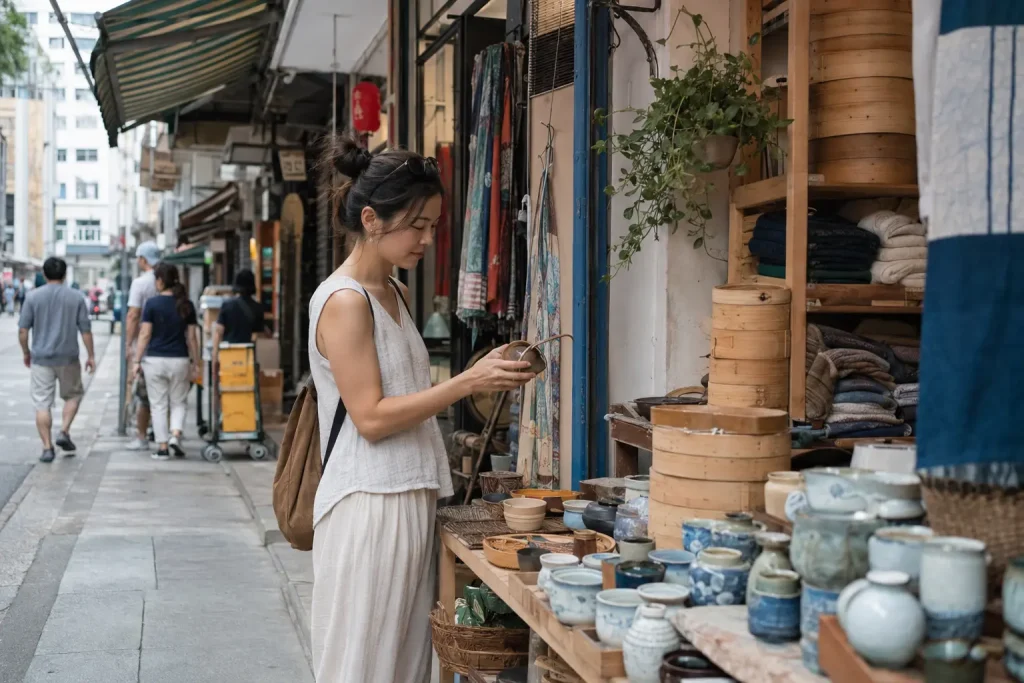
Hong Kong souvenirs become more interesting when they reflect the city’s visual and material culture rather than merely printing a skyline on plastic. Look for ceramics, small-batch tea, stationery, illustration, textiles, typography-inspired objects and practical homewares.
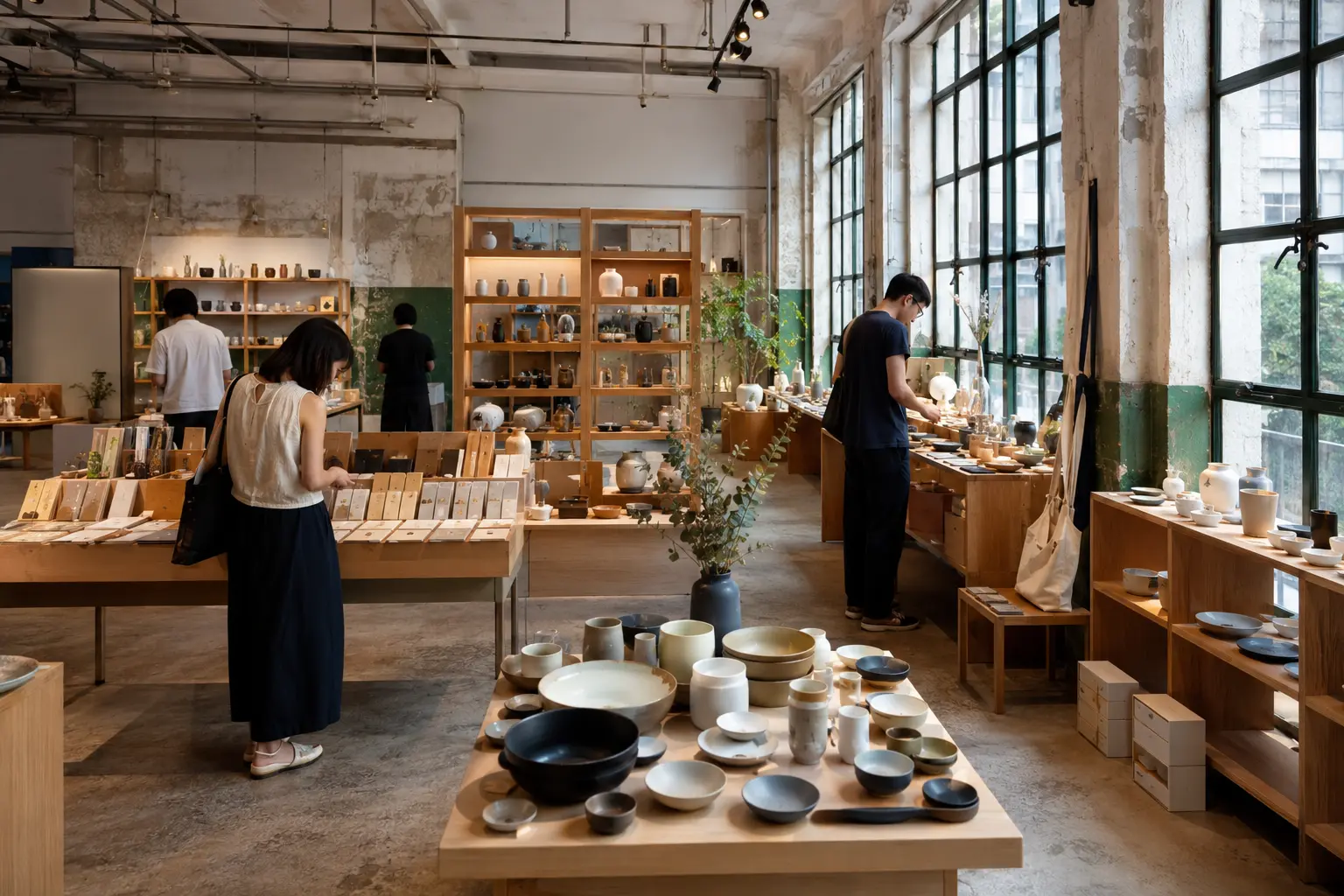
PMQ, housed in the former Police Married Quarters in Central, gathers studios and small shops in one accessible building. Inventory and tenants change, which is part of the appeal. Sheung Wan’s side streets mix contemporary design with traditional dried-goods, medicine and household businesses; the contrast is commercial rather than staged for visitors.
Wan Chai and parts of Causeway Bay contain upper-floor boutiques that are easy to miss from street level. Check the current address and opening hours before making a special trip. Small independent shops may open later, close one day a week or operate by appointment.
What souvenirs are worth buying?
Choose objects that travel well and still make sense after the holiday.
- Tea: buy from a specialist that can explain origin, roast and storage. Vacuum-packed leaves are easier to carry than elaborate gift boxes.
- Ceramics and tableware: small cups, chopstick rests and sauce dishes offer useful design without consuming half a suitcase.
- Local illustration and stationery: prints, postcards and notebooks can reflect neighborhood architecture, transport or typography without becoming generic.
- Textiles: scarves, small bags or fabric pieces are light; verify whether they are locally designed or made if that matters.
- Food gifts: packaged biscuits, sauces and sweets can work, but check customs restrictions and leakage risk.
- Traditional household items: bamboo steamers, enamelware and practical kitchen tools have cultural context, though bulky versions are rarely worth flying home.
Avoid coral, ivory, protected wildlife products and anything whose material cannot be identified. Counterfeit fashion and electronics create legal, quality and warranty problems that a low stall price does not solve.
Beauty, pharmacies and medicine require extra care
Hong Kong is known for beauty retail, with major chains, department stores and specialty shops carrying regional brands. Compare the product name, size and formulation because packaging can differ by market. Check seals and expiration dates, particularly at small discount stores.
Pharmacies range from large chains to independent dispensaries. For prescription medicine, controlled products or unfamiliar traditional remedies, use licensed providers and do not assume a product that is sold openly can be imported legally into the United States. Keep original packaging and documentation.
Skincare is also a poor place for luggage optimism. Liquids must fit the relevant carry-on rules, while checked bottles need leak protection. The city has many excellent products; your suitcase remains governed by physics.
Electronics: compare the warranty before the price
Hong Kong’s electronics reputation was built on choice and competitive retail, but online pricing has narrowed some advantages. The safest purchase is one whose exact model, voltage, plug, language options and warranty you have checked against the version sold at home.
Ask whether the item is official Hong Kong stock or a parallel import. Parallel imports may be genuine but carry retailer-only or regional warranty coverage. For cameras and lenses, inspect serial numbers and included accessories. For phones, confirm network-band and eSIM compatibility.
Pay by a method that provides a record, obtain an itemized receipt and open the box before leaving when store policy allows. Do not let urgency be manufactured by a calculator passed across the counter.
Payment, tax and customs
Cards and mobile wallets are common in malls and larger stores; markets and traditional shops may prefer cash. Dynamic currency conversion usually allows a merchant or terminal to charge in your home currency, often at an unfavorable rate. Choosing Hong Kong dollars generally lets your card network handle conversion, subject to your card’s fees.
Hong Kong does not add a broad VAT or sales tax to ordinary retail purchases, so tourists do not queue at the airport to reclaim it. That is different from duty-free limits. On return, US travelers remain responsible for customs declarations and applicable allowances.
Keep receipts for high-value items, especially if serial numbers matter. If shopping occupies a major part of the trip, leave deliberate luggage space in your carry-on packing list rather than planning to solve everything with an airport tote.
A one-day Hong Kong shopping route
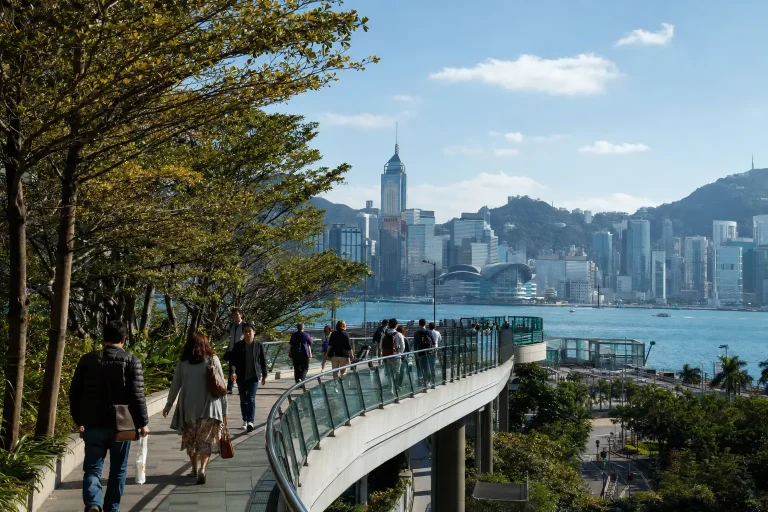
Begin in Central after stores open, using PMQ and nearby independent shops before lunch. Continue through the elevated walkways to one major mall if international brands are relevant. The route combines local design and polished retail without extra transit.
In late afternoon, take the MTR to Mong Kok for a street-market circuit, then move south toward Yau Ma Tei and Temple Street. Eat in Kowloon rather than returning across the harbor solely for dinner; the current Hong Kong food guide explains how to choose a nearby dining format.
If fabrics or electronics are the real objective, replace Central with Sham Shui Po and give the specialist streets enough daylight. A good shopping route follows the purchase, not the prestige of the district.
Buy less, but choose more carefully
The best shopping in Hong Kong comes from the city’s density of choices: a luxury flagship, a fabric wholesaler, an old household shop and a young ceramics studio can all fit within a few MTR stops. That density rewards preparation. Compare expensive items, ask where design and manufacture happened, and leave room for one object discovered without an algorithm. It will usually outlast five rushed bargains.
Frequently Asked Questions
What is the best area for shopping in Hong Kong?
It depends on what you want to buy. Use Central and Admiralty for international luxury and polished malls, Causeway Bay for dense mainstream retail, Mong Kok and Yau Ma Tei for street markets, and Sham Shui Po for specialist materials and electronics.
Is shopping in Hong Kong tax-free?
Hong Kong has no general sales tax, but that does not mean every item is cheaper than at home. Compare model numbers and warranties for electronics and treat markets as places to browse rather than a guarantee of bargains.