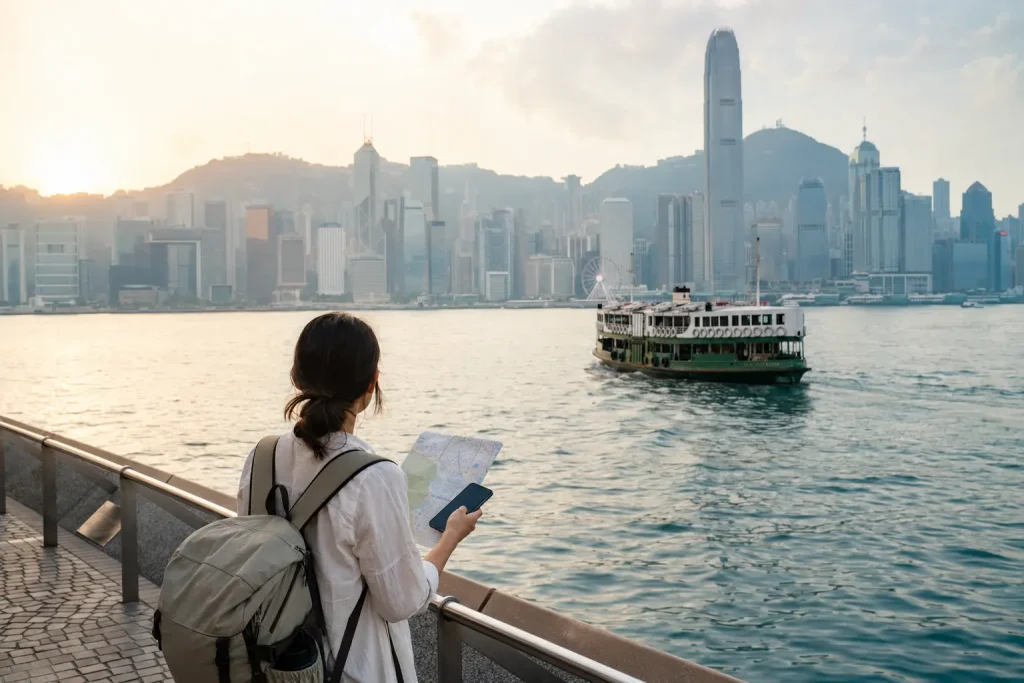
Three full days are enough for a first Hong Kong itinerary if each day stays in one part of the city. Spend the first on Hong Kong Island, the second in Kowloon and West Kowloon, and the third either on Lantau or exploring more local neighborhoods. Four or five days are better if you also want a hike, an outlying island, Disneyland or Macau.
The city’s transport is fast; the deceptive part is everything around it. A short MTR ride can include a long station corridor, a steep approach and twenty minutes spent finding the exit that actually faces your next stop. This route therefore limits cross-harbor movement and leaves meals flexible. Hong Kong is much easier to enjoy when lunch is allowed to take the time it takes.
Hong Kong itinerary at a glance
| Day | Main area | Core route | Best evening |
|---|---|---|---|
| 1 | Hong Kong Island | Central, Sheung Wan, Victoria Peak | SoHo, Sai Ying Pun or Wan Chai |
| 2 | Kowloon and West Kowloon | Tsim Sha Tsui, M+, Jordan, Temple Street | Harbour promenade or Jordan |
| 3 | Choose one | Lantau and Tai O, or northern Kowloon neighborhoods | Local dinner near the day’s final stop |
| 4, optional | Outdoors or a theme park | Dragon’s Back, Lamma Island or Disneyland | Keep the evening light |
| 5, optional | Deeper city day | Sham Shui Po, Wong Tai Sin and Kowloon City | Kowloon food neighborhoods |
This plan assumes three complete sightseeing days, not an afternoon arrival and a morning flight disguised as “three days.” If the trip includes only two nights, use Day 1 and Day 2, then choose one priority from Day 3 rather than compressing all three.
Before Day 1: arrive without wasting the evening
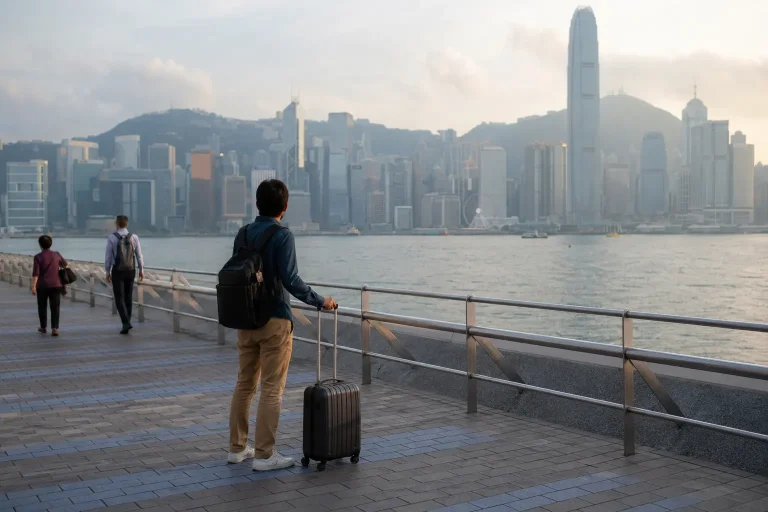
Hong Kong International Airport is on Lantau, west of the main city. MTR says the Airport Express reaches the urban area in as little as 24 minutes, with stops at Tsing Yi, Kowloon and Hong Kong stations. The train is usually the simplest arrival for Central or western Kowloon; buses can be more direct for hotels farther from those stations.
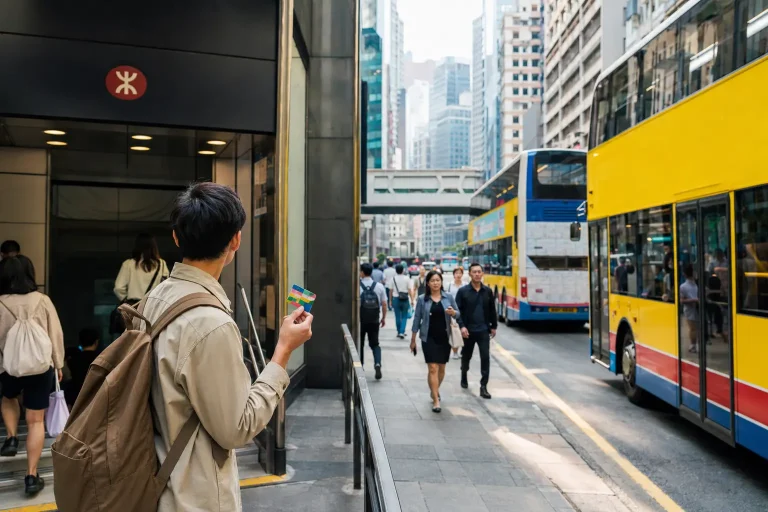
Buy or add an Octopus card before the first serious journey. It works across most public transport and many small purchases, reducing the number of ticket machines encountered while jet-lagged. Contactless payment has expanded, but Octopus remains the most consistent local tool.
Do not schedule Victoria Peak for arrival night. A delayed flight, a long immigration queue or cloud sitting on the mountain can turn the trip’s most famous view into an expensive inspection of fog. Use the first evening for a neighborhood walk and dinner near the hotel.
Day 1: Central, Sheung Wan and Victoria Peak
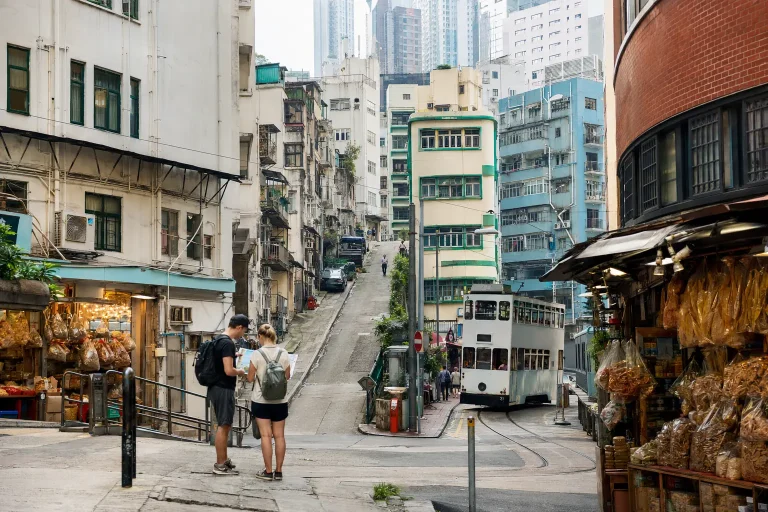
The first day explains Hong Kong’s vertical geography. The waterfront holds transport and finance; older commercial streets climb west through Sheung Wan; escalators and staircases stitch together blocks that look adjacent on a flat map. The Peak above them supplies the famous view, but the streets below provide the context.
Morning: old streets before the steepest crowds
Begin around Central Market, then walk west along Queen’s Road Central toward Sheung Wan. Detour through Graham Street Market if it is active, continue to Man Mo Temple and look into the dried-seafood shops around Des Voeux Road West. These are working commercial streets, not a heritage set, so doorways and deliveries deserve space.
Hollywood Road gives the route an easier cultural spine. Tai Kwun occupies the former Central Police Station compound and now hosts exhibitions, performances, shops and restaurants. PMQ, farther west, places independent design businesses inside former police married quarters. Check current exhibition hours rather than assuming every gallery opens early.
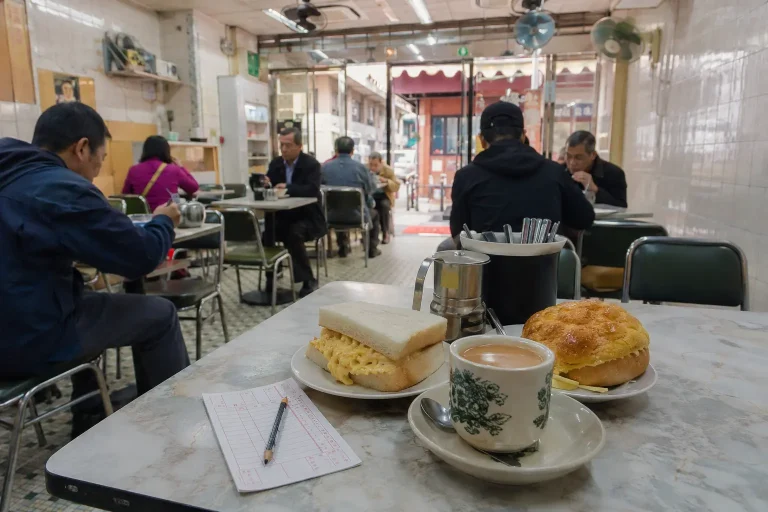
For lunch, choose the place that looks worth waiting for rather than chasing a famous dining room across town. A noodle shop, roast-meat counter or dim sum meal all fit the day. The useful rule is geographic: eat in Central or Sheung Wan before going uphill.
Afternoon: ride the Peak Tram when visibility is clear
The Peak Tram currently operates daily from 7:30 a.m. to 11 p.m., according to the official Peak site. Book ahead during weekends and holidays, but check the weather before committing to an exact sunset slot. Clear late afternoon is ideal; low cloud makes the free lower-level views and the paid terrace equally white.
At the top, walk part of Lugard Road rather than moving directly from tram to viewing deck and back. The mostly level circuit gives changing views through the trees and creates some distance from the commercial Peak Tower. Allow roughly two to three hours for the tram, walking and queues.
If the line is severe, take a bus or taxi up and use the tram in the quieter direction. The Peak is worth seeing on a first visit, but no skyline improves in proportion to time spent behind a crowd barrier.
Evening: descend into the neighborhood you actually want
Return to Central for SoHo bars and restaurants, continue west for a quieter Sai Ying Pun dinner, or take the tram east toward Wan Chai. The Hong Kong Tramways route is slow compared with the MTR and much better at revealing how the Island’s northern neighborhoods connect.
Keep only one evening reservation. The day already contains hills, queues and several possible detours. A schedule that assumes nobody stops for tea is ambitious in a city built around stopping for tea.
Day 2: Tsim Sha Tsui, West Kowloon and Temple Street
Kowloon works best as one continuous northward progression. Start beside the harbor, move west for art and public space, then finish around Jordan or Yau Ma Tei. Crossing repeatedly to Hong Kong Island would add transport without adding much understanding.
Morning: read the skyline from Tsim Sha Tsui
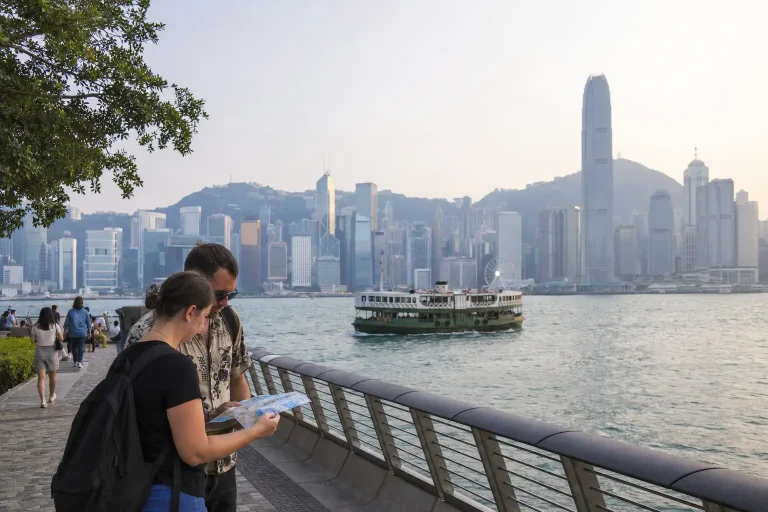
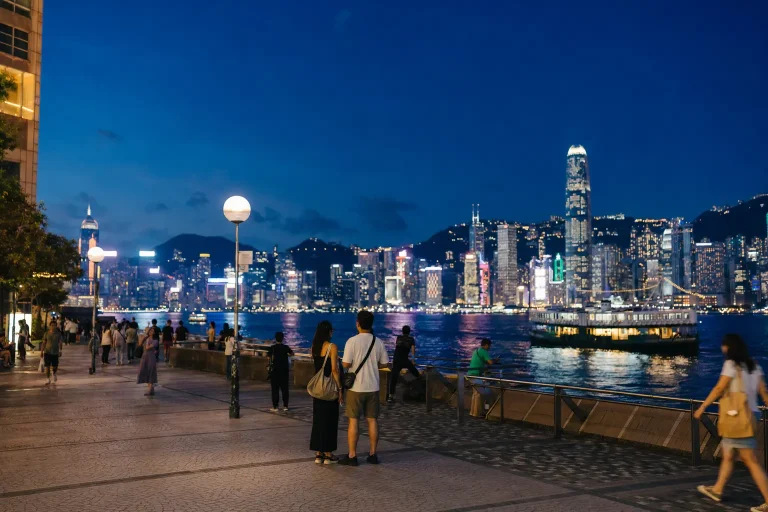
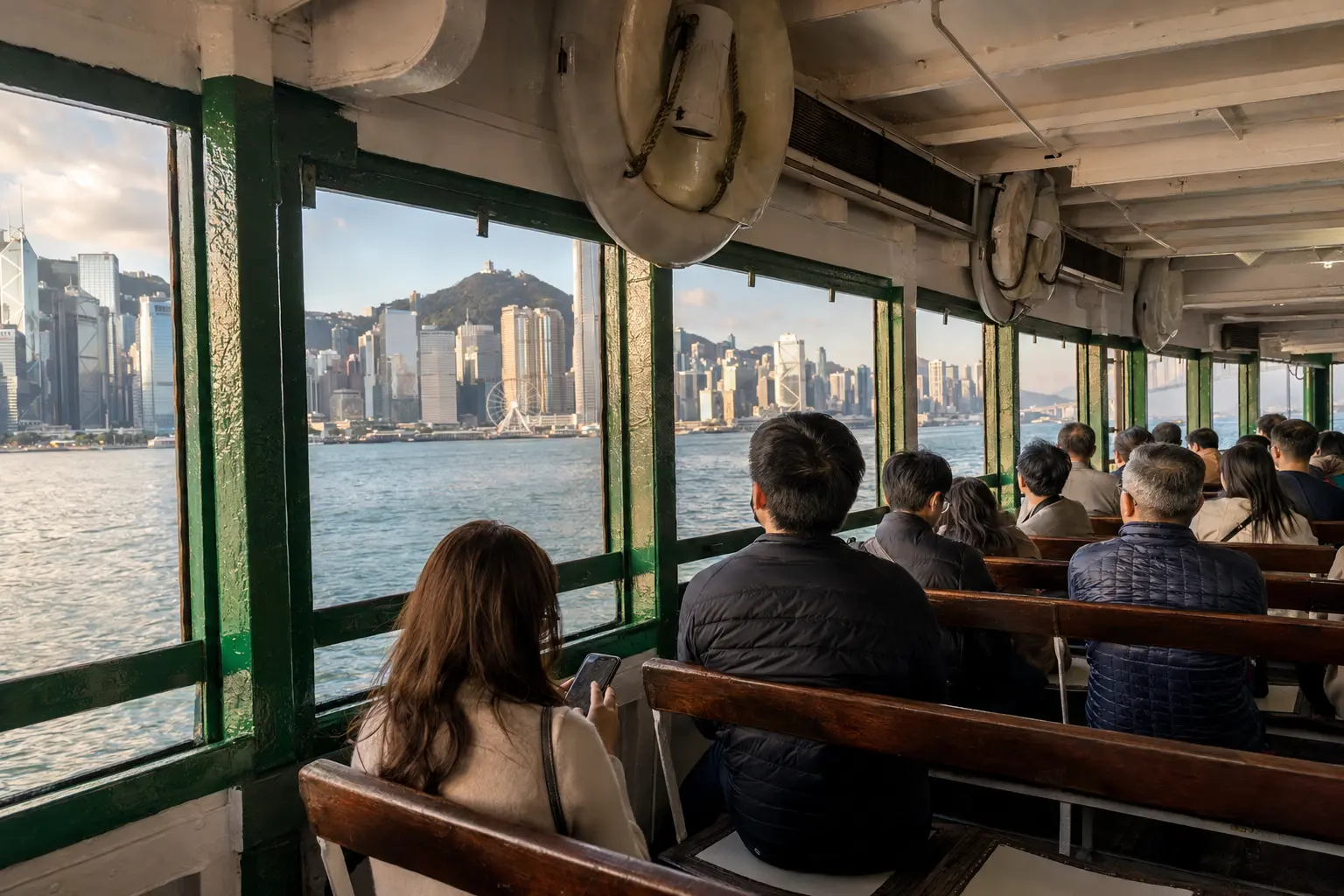
Begin on the Tsim Sha Tsui promenade before tour groups and midday heat accumulate. The Avenue of Stars explains Hong Kong’s film culture in a setting dominated by the Island skyline. Nearby, the Hong Kong Museum of Art offers a more deliberate introduction to Chinese art and the city’s collections; check its current closing day before fixing the route.
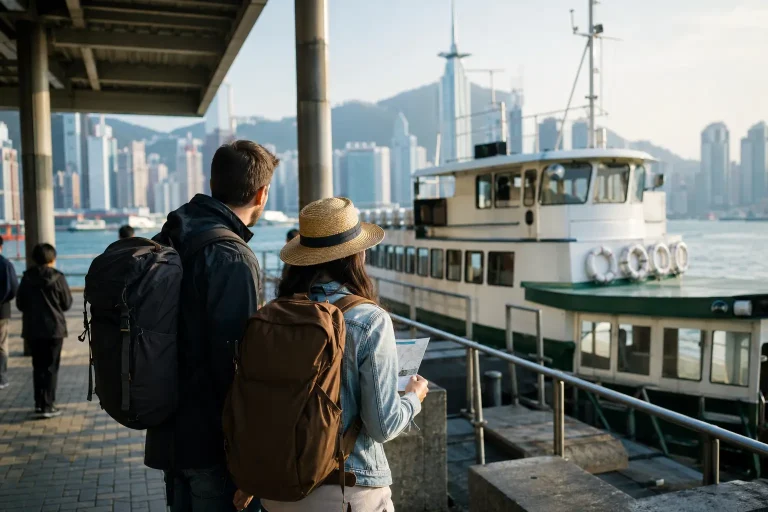
Take the Star Ferry at least once during the trip. The Central–Tsim Sha Tsui crossing is short, but the open harbor view makes the city’s two sides legible in a way the MTR cannot. Treat it as transport when it suits the route, not as an obligation to cross the water every day.
Nathan Road is useful as an orientation line, though its southern section can feel more commercial than revealing. Move one or two streets away for smaller restaurants and everyday businesses.
Afternoon: give West Kowloon real time
Walk or take a short ride to the West Kowloon Cultural District. M+ focuses on visual culture, design, architecture and moving image; the Hong Kong Palace Museum presents Chinese art and cultural material. Trying to see both major museums thoroughly in one afternoon is museum collecting rather than museum visiting. Choose one based on the current exhibitions.
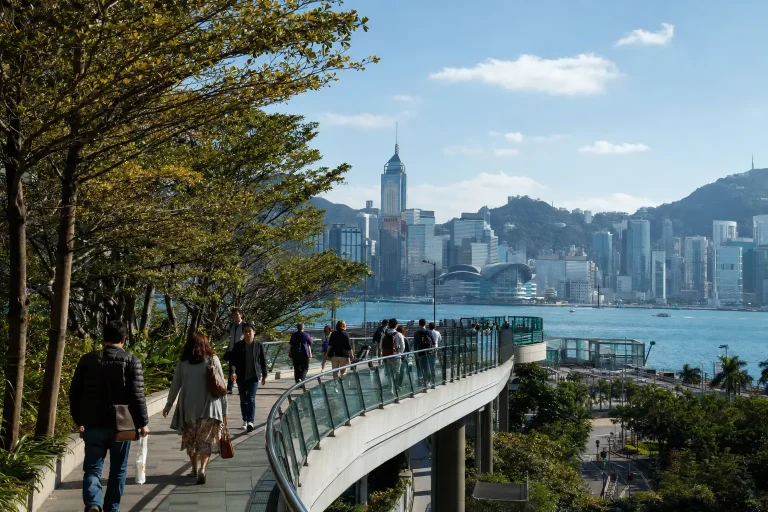
The waterfront park around them is part of the appeal. It gives Hong Kong a rare broad horizontal space, with lawns, harbor views and room to sit without ordering anything. Allow at least three hours for one museum and the surrounding district.
If museums are not a priority, replace this section with Kowloon Park, the streets around Jordan and a longer lunch. Do not add Mong Kok simply because the MTR makes it look close. It deserves a separate evening or the optional fifth day.
Evening: Jordan and Temple Street
Continue north to Jordan for dinner, then walk toward Temple Street. The night market is best understood as a changing neighborhood economy rather than a guaranteed catalogue of old Hong Kong. Stalls, restaurants, fortune tellers and visitor-oriented displays coexist, and the exact balance shifts by night.
Arrive hungry but not attached to one social-media-famous restaurant. Jordan and Yau Ma Tei reward looking down side streets, checking what a place actually serves and joining a sensible queue. If the harbor light show matters, see it from Tsim Sha Tsui before dinner; otherwise, the skyline remains available without arranging the whole evening around a short performance.
Day 3: choose Lantau or a deeper city day
The third day should not attempt both. Lantau consumes most of a day once queues and onward buses are included. A neighborhood route stays urban but shows a less polished Hong Kong. Choose according to weather, energy and what felt missing after the first two days.
Option A: Ngong Ping and Tai O on Lantau
Travel by MTR to Tung Chung and take the Ngong Ping 360 cable car toward the Big Buddha and Po Lin Monastery. The operator’s current tourist guide lists weekday hours of 10 a.m.–6 p.m. and weekend/public-holiday hours of 9 a.m.–6:30 p.m., with changes possible for weather, special events and maintenance. Check the official notice on the morning of travel.
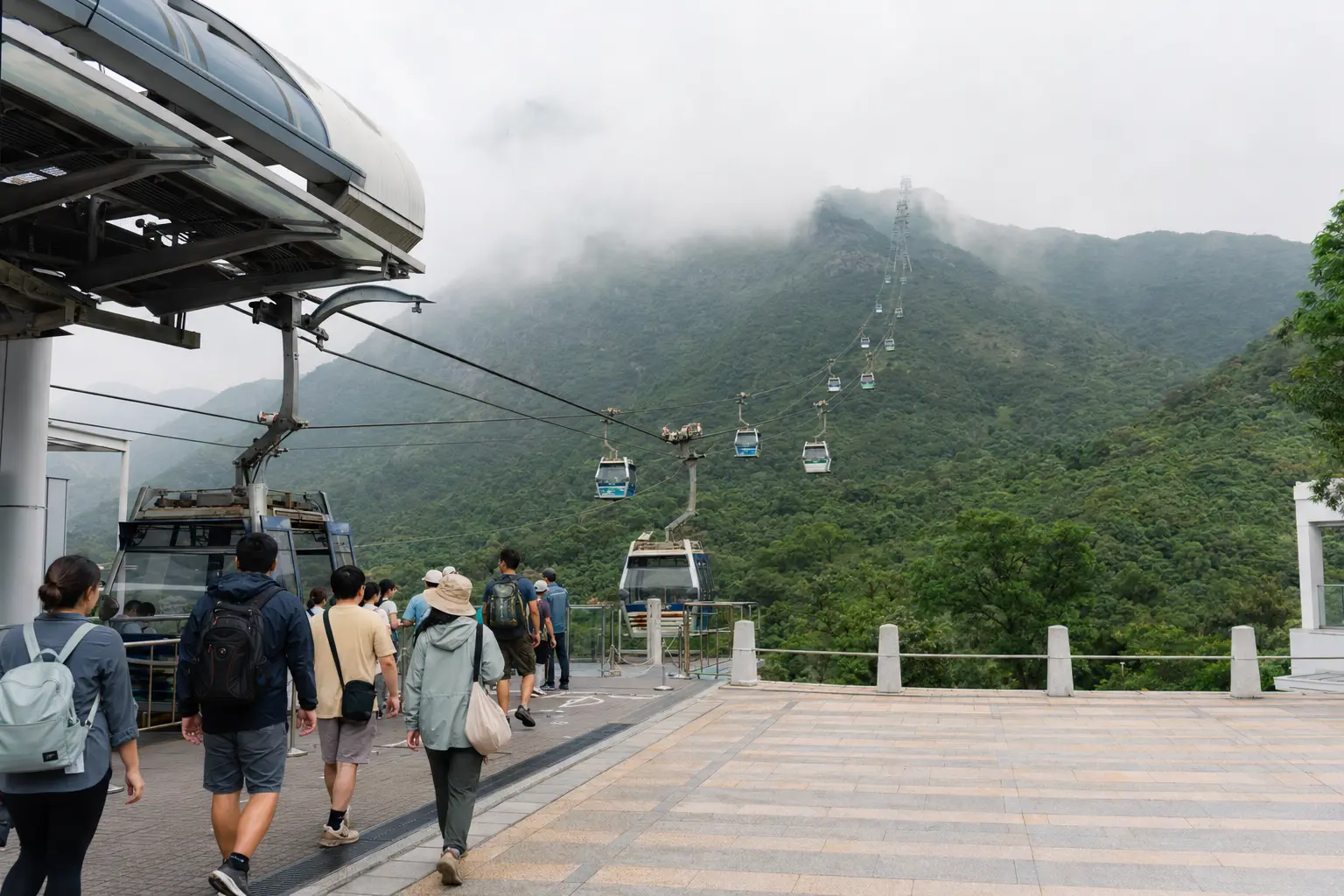
The cable-car ride is a major part of the day, with airport, sea and mountain views. At Ngong Ping, the Tian Tan Buddha and monastery require unhurried walking and stairs. Dress for heat and sudden rain; the temperature may feel gentler in the hills, but humidity still does most of the negotiating.
Continue by bus or taxi to Tai O only if the day started early. Its stilt-house waterways, seafood shops and older village fabric make more sense when there is time to walk beyond the first cluster of stalls. A boat trip can be pleasant, but wildlife sightings should never be treated as guaranteed.
Return through Tung Chung. Do not plan a formal dinner across town immediately afterward. Lantau is geographically within Hong Kong and emotionally much farther away by the end of a humid day.
Option B: Wong Tai Sin, Sham Shui Po and Mong Kok
Choose this route in poor cable-car weather or when street life matters more than a scenic excursion. Begin at Wong Tai Sin Temple, where worship, fortune seeking and large visitor flows share the same complex. Observe before photographing and avoid blocking people engaged in rituals.
Continue to Sham Shui Po for fabric, electronics, household-goods streets and a food culture shaped by a working residential district. The neighborhood is not a “hidden gem”; it is a densely used part of the city where visitors should shop and eat without turning ordinary routines into spectacle.
Finish in Mong Kok around the specialist shopping streets and markets. Exact stall patterns change, so build the evening around the district rather than one supposedly permanent photo. This version of Day 3 involves less distance than Lantau but more crowds and pavement time.
How many days in Hong Kong?
Three full days cover the essential first-trip contrast: Hong Kong Island’s vertical core, Kowloon’s harbor and street life, plus either Lantau or a deeper urban day. It is the minimum length that feels like a visit rather than a connection.
Four days allow one outdoor or special-interest day without sacrificing the core city. Add Dragon’s Back and Shek O in cooler weather, Lamma Island for a ferry-and-walk day, or Hong Kong Disneyland if it is a genuine priority.
Five days produce the best-balanced first visit. Keep both Day 3 options, add a museum or food-focused neighborhood day, and leave one afternoon less programmed. Hong Kong reveals itself through small transitions—tram to market, footbridge to wet market, tower lobby to hillside path—which disappear when every hour has a booking.
Seven days work for travelers combining serious hiking, several islands, theme parks and slower neighborhood exploration. Macau needs a full separate day and border formalities; it should not be inserted into a three-day Hong Kong itinerary unless it outranks Hong Kong itself.
What to book and what to leave flexible
Reserve the Peak Tram for a busy period, Ngong Ping cable-car tickets, major museum exhibitions with timed entry, Disneyland and any restaurant that truly drives the trip. Recheck weather-dependent attractions shortly before travel.
Leave neighborhood walks, most casual meals, the Star Ferry and market evenings flexible. Hong Kong rewards changing direction when rain starts, visibility clears or a restaurant queue is shorter than expected. The itinerary needs structure, but not a minute-by-minute hostage situation.
Practical adjustments for heat, rain and jet lag
From late spring into early autumn, humidity changes the realistic walking pace. Put outdoor hills and promenades early, use museums or long lunches during the hottest hours and carry water. Typhoon signals and heavy-rain warnings can suspend outdoor transport, including cable cars and ferries; follow official service notices rather than a saved itinerary screenshot.
Jet lag also changes the first morning. Travelers arriving from North America may wake very early, which is useful for waterfront walks but less useful for attractions that open at 10. Packing a few reliable long-flight essentials helps the arrival day, but the itinerary should still keep the first hours around public streets, breakfast and transport rather than waiting outside a closed museum.
Comfortable shoes matter more than fashionable “city break” footwear. Distances are often short, but stairs, tiled slopes and station corridors add up. A disciplined carry-on packing list is also useful when the trip involves ferries and hotel changes. Hong Kong is efficient, not flat.
A final way to keep the route realistic
Give each day one fixed attraction, one geographic area and one evening direction. Keep a nearby substitute for rain or low visibility, and remove an item whenever a major meal or museum is added. Three days will not show all of Hong Kong, but they can show how the harbor, hills, ferries, markets and neighborhoods fit together. That is a far better first trip than completing a longer list while mostly seeing station exits.
Frequently Asked Questions
Is 3 days enough for a Hong Kong itinerary?
Yes, if each day stays in one part of the city: Hong Kong Island on day one, Kowloon and West Kowloon on day two, and either Lantau or local neighborhoods on day three. Four or five days work better if you also want a hike, an outlying island, Disneyland or Macau.
Should you cross the harbor multiple times per day in Hong Kong?
No. This itinerary limits cross-harbor movement because a short MTR ride can still involve a long station corridor and a steep approach, so keeping each day within one area and leaving meals flexible makes the trip easier to enjoy.