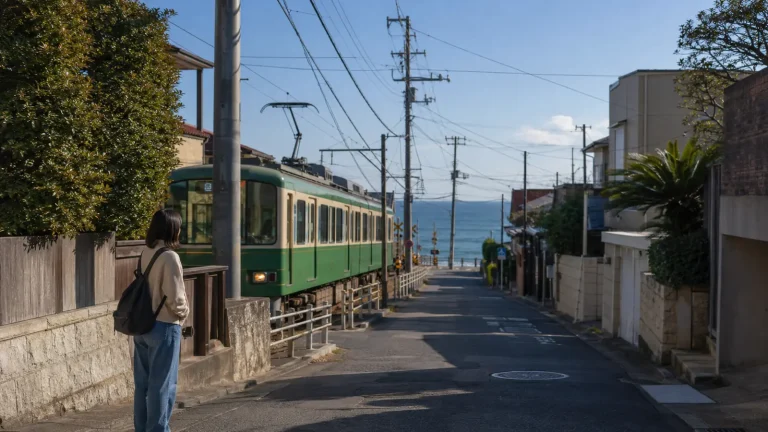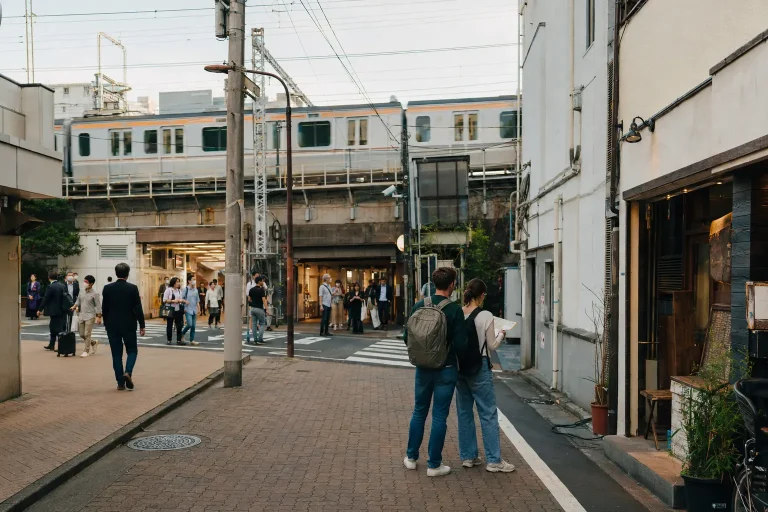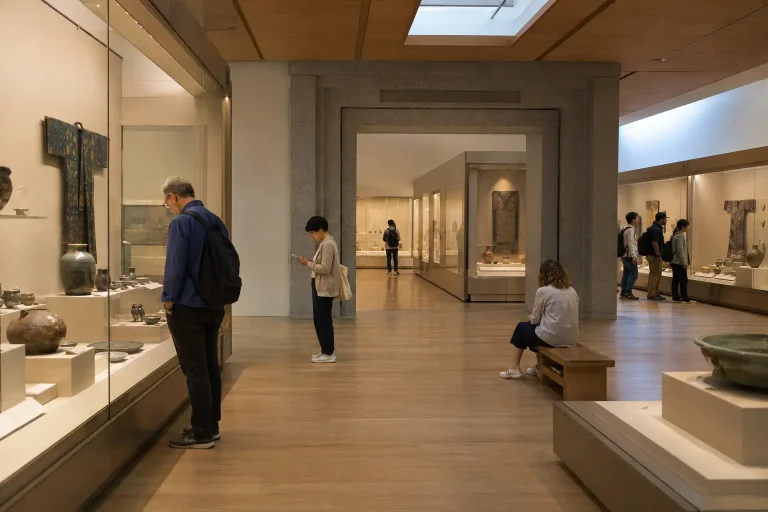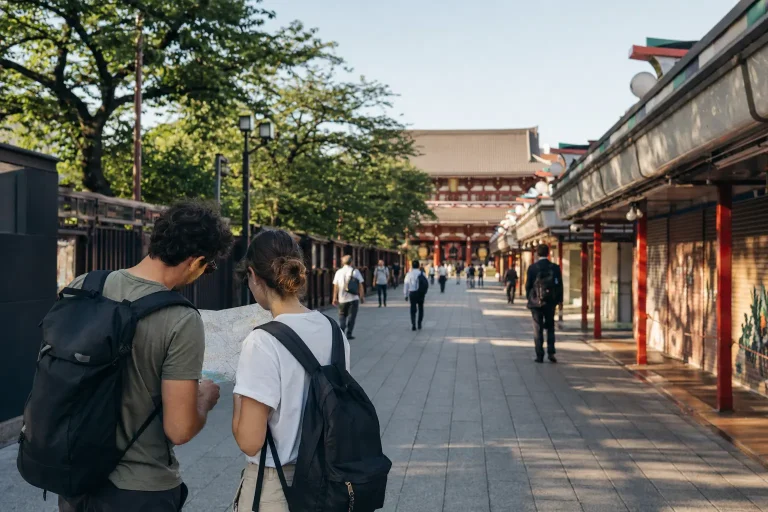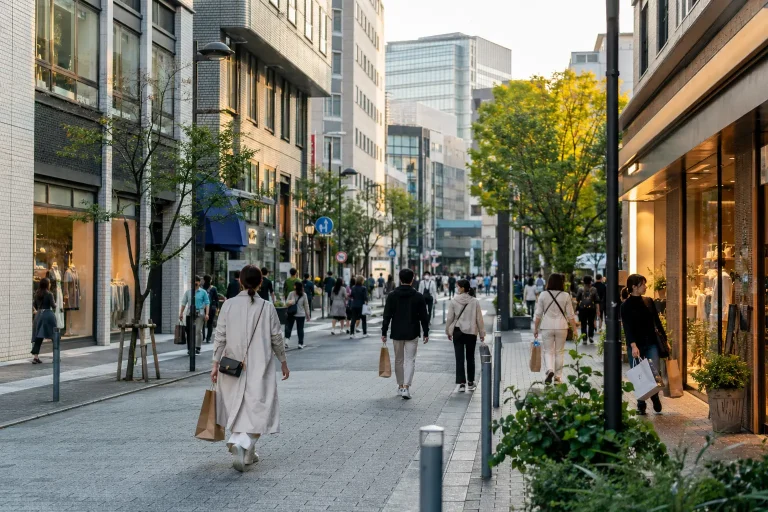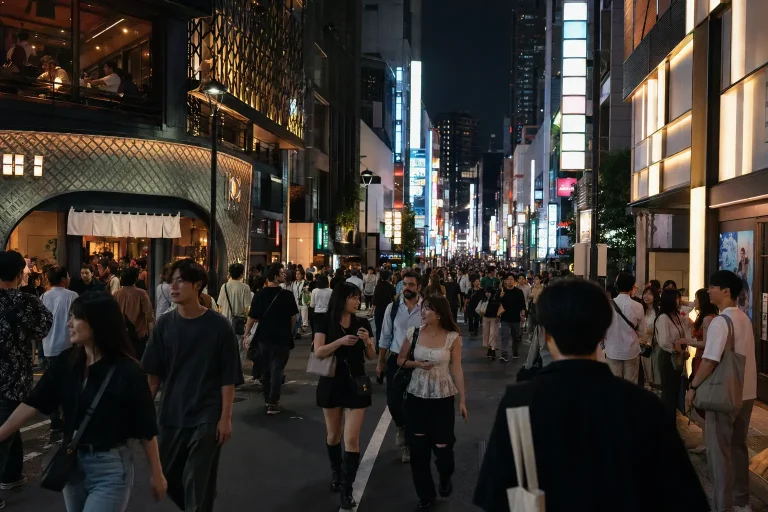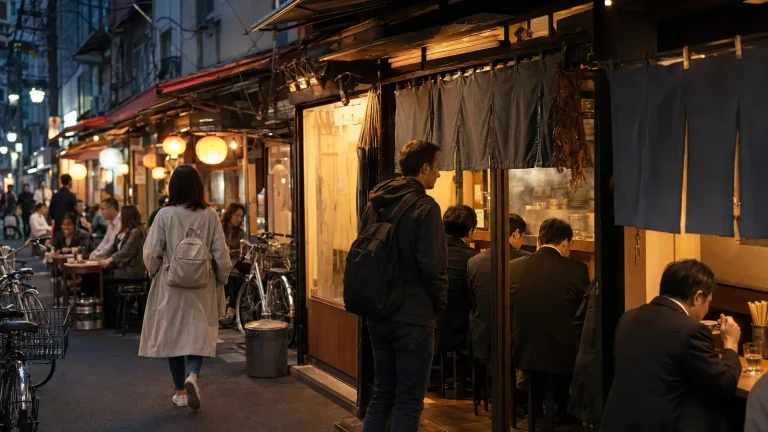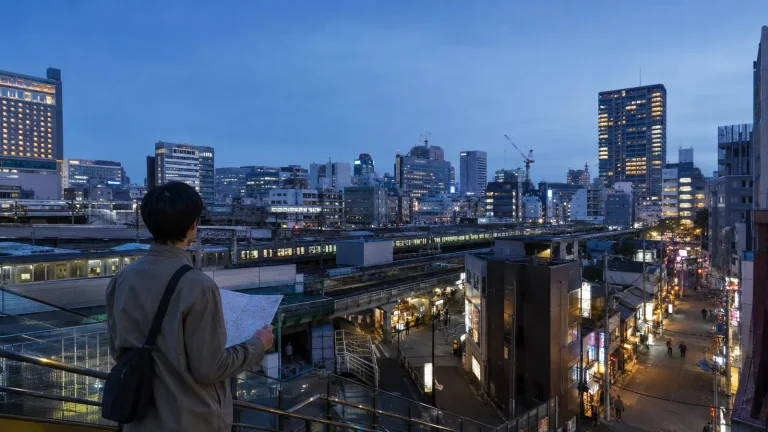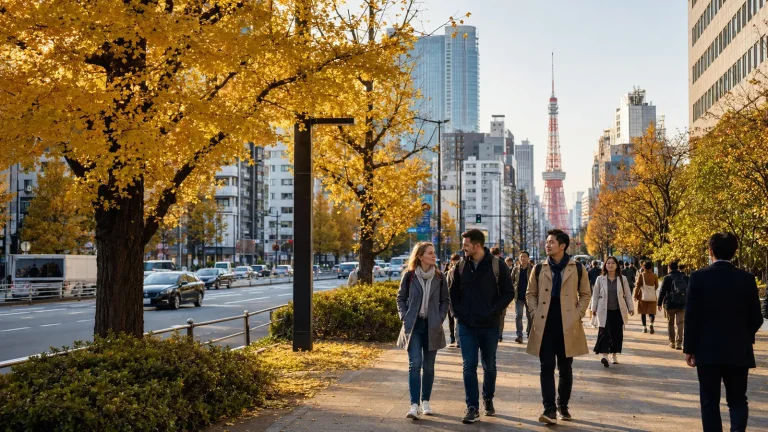
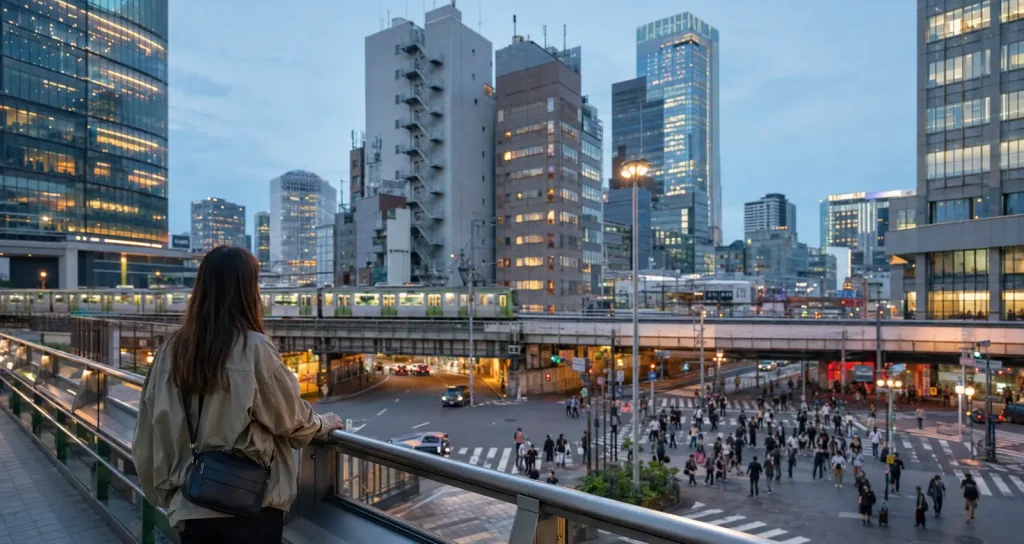
Tokyo does not have one center, which is why choosing a hotel by neighborhood reputation alone often goes wrong. For most first-time visitors, Shibuya is the strongest base for youth culture, shopping, and nights out; Shinjuku is better for the widest transport options and west-side day trips; Ginza and Tokyo Station make arrivals and intercity trains easier; while Ueno and Asakusa offer better value and a calmer base on the east side.
The best place to stay in Tokyo is ultimately the one that shortens your most repeated journeys. A hotel five minutes from a useful station usually saves more time than a fashionable address ten minutes from the wrong entrance. Tokyo rewards precision: check the station, line, exit, and walking route—not just the ward name printed on the booking page.
Where to Stay in Tokyo at a Glance
| Area | Best for | Main advantage | The catch |
|---|---|---|---|
| Shibuya | First trips, shopping, younger nightlife | Walkable access to Harajuku and excellent west-side connections | Higher prices, crowds, and a large station |
| Shinjuku | Transport, dining, nightlife, day trips | The broadest mix of rail, bus, hotels, and late-night options | The station can be exhausting; each side feels different |
| Ginza and Tokyo Station | Easy arrivals, shopping, shorter stays | Strong airport and Shinkansen connections; polished and central | Less neighborhood atmosphere after business hours |
| Ueno | Value, museums, Narita access | Direct Skyliner access and useful east-side transport | Longer trips to Shibuya and Shinjuku |
| Asakusa | Traditional streets, quieter evenings, budget stays | Character, temple access, and a gentler pace | Less convenient for repeated west-side plans |
| Akasaka | Central location without constant crowds | Several subway lines and a strong dining scene | Fewer headline sights immediately outside the hotel |
| Ikebukuro | Budget-conscious stays, anime, shopping | Major transport hub with more room-rate options | Less convenient for the far east and Tokyo Bay |
If this is your first visit and your itinerary is still a collection of saved pins, choose Shibuya or Shinjuku. If you already know that most of your plans sit east of the Imperial Palace, Ueno or Asakusa will feel far more sensible. Ginza, Tokyo Station, and Akasaka suit travelers who want the city to work smoothly without having neon outside the bedroom window.
Choose the Station Before the Neighborhood
The phrase “near Shinjuku” can describe a hotel beside a useful entrance or one that adds a long underground walk to every journey. Large stations are small cities with ticket gates, department stores, construction detours, and exits that may be several blocks apart. After a day of 20,000 steps, this distinction becomes less theoretical.
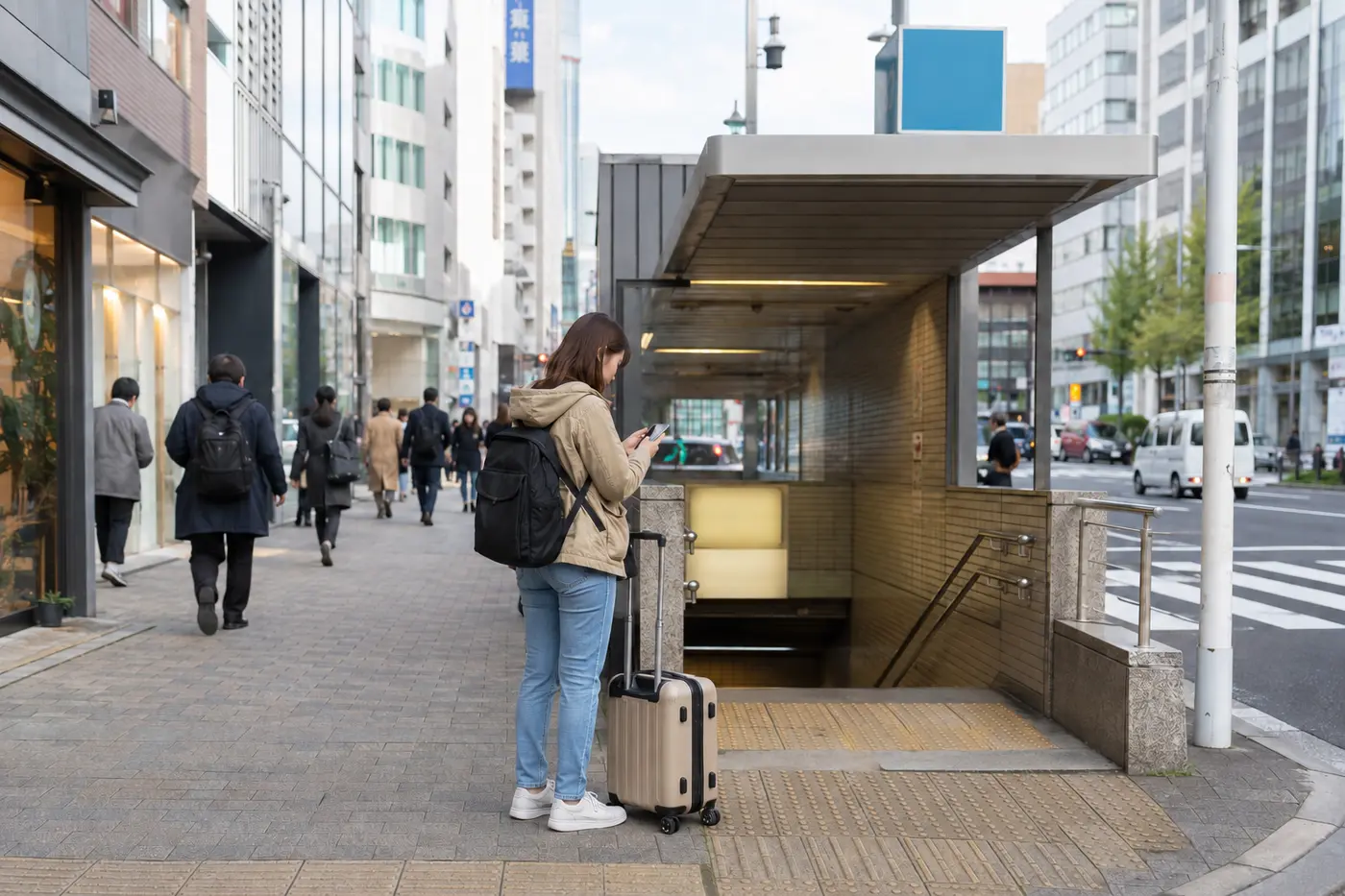
Before booking, put the hotel and the exact station entrance into a map. Check the walking route, whether it crosses a footbridge or major road, and whether the closest exit has an elevator if you will have luggage. Then test two or three journeys you expect to make repeatedly. Tokyo Metro’s official station information is useful for confirming which lines actually serve each station.
A smaller station one or two stops from a famous hub can be the more convenient choice. It may have cheaper rooms, a shorter walk to the platform, and fewer wrong-turn opportunities. The goal is not to sleep beside the biggest station; it is to reach the right train without beginning every morning with an indoor navigation exercise.
Match your base to the east or west side
Shibuya, Shinjuku, Harajuku, and Ikebukuro form the western cluster many first-time itineraries emphasize. Asakusa, Ueno, Akihabara, and Tokyo Station sit on the eastern side. Crossing between them is straightforward, but doing it twice every day quietly consumes time.
Map your fixed plans first: reserved restaurants, timed museum tickets, day-trip departure points, and nights when you expect to stay out. If most pins fall on one side, stay there. A split stay can make sense when a longer Japan trip begins and ends in Tokyo, but changing hotels during a four-day visit usually replaces train time with packing, checkout, and luggage management. That is not necessarily an upgrade.
Stay where you expect to end the night
Tokyo’s trains do not run all night. Exact last-train times vary by line and destination, so check the route for the nights that matter rather than relying on one citywide cutoff. Shibuya and Shinjuku are useful when restaurants, bars, live music, or clubs are central to the trip because walking back removes the final transport calculation.
The tradeoff is noise. Read recent hotel reviews for street sound, ambulance traffic, club bass, and hallway insulation—not just the overall rating. A high floor may help, but a quieter block often helps more. Travelers who like early mornings generally sleep better in Ueno, Asakusa, Akasaka, west Shinjuku, or the streets south of Shinjuku Station than in the middle of Kabukicho.
Check the room, not just the nightly rate
Tokyo hotel rooms can be compact without being impractical, but the headline floor area does not tell the whole story. Look at bed width, floor space for an open suitcase, under-bed storage, bathroom layout, laundry facilities, and whether two people can move around without negotiating a timetable.
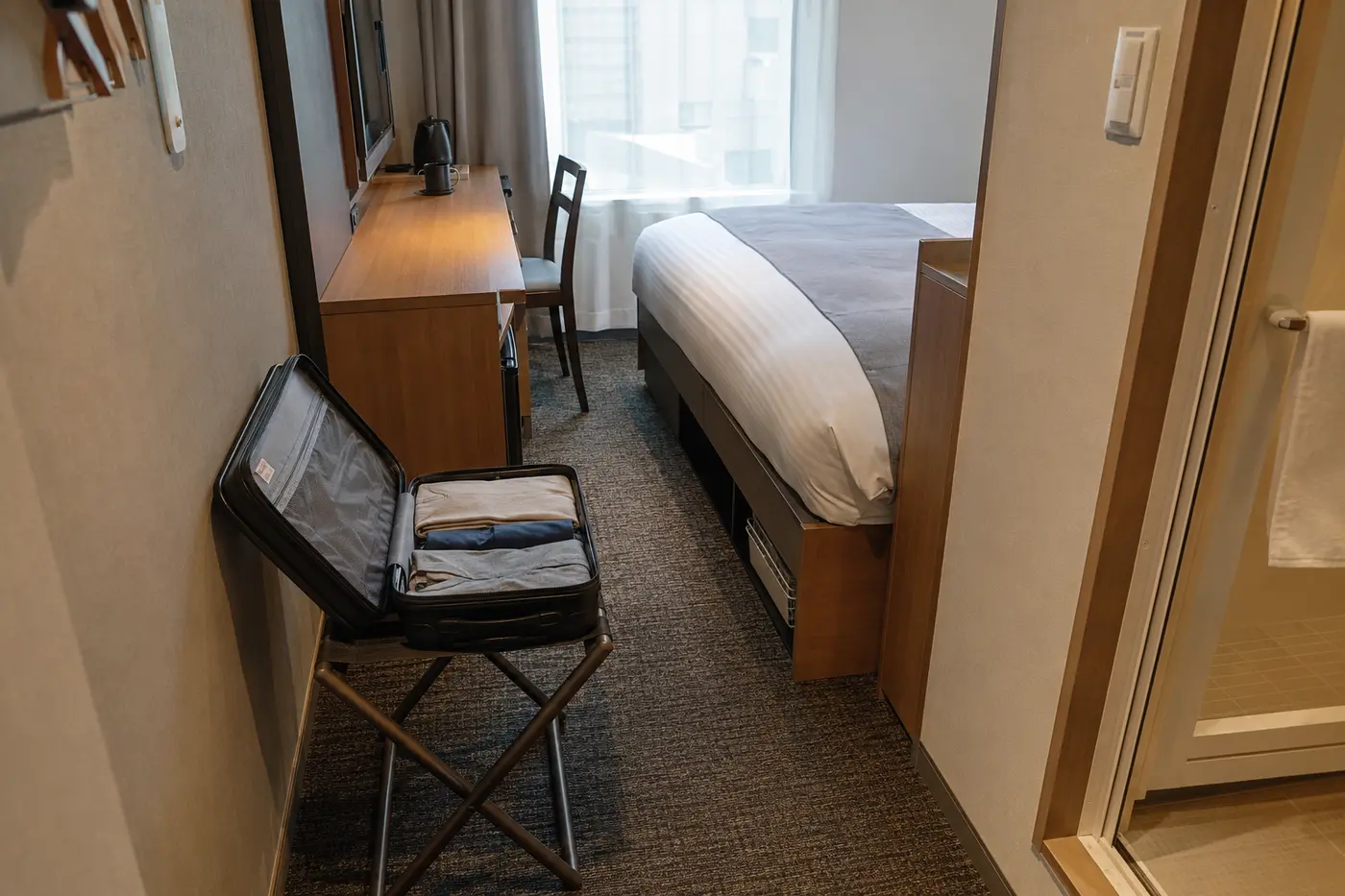
This matters particularly on a longer trip. Packing cubes and a disciplined carry-on packing list are more useful here than an extra outfit that lives on the only chair. If you are traveling with large bags, confirm luggage storage before check-in and after checkout. Japan’s visitor information explains the widely available luggage delivery and storage services, but delivery timing and acceptance still need to be confirmed with the hotel.
The Best Areas to Stay in Tokyo
Shibuya: Best for a lively first impression
Shibuya works well for travelers who want Tokyo’s youth culture, fashion, music, and late-night energy close at hand. The obvious landmarks—the crossing, Center-gai, and large shopping complexes—occupy a relatively small part of the district. Walk toward Harajuku, Cat Street, or quieter residential edges and the volume drops surprisingly quickly.
Transport is the practical advantage. Shibuya is served by JR and several subway and private railway lines, making Harajuku, Shinjuku, Ebisu, Daikanyama, and west-side neighborhoods easy to reach. It is also a useful base for travelers who plan to spend time around Shimokitazawa or make trips southwest of central Tokyo.
The catch is that Shibuya Station is large and continually evolving. A hotel advertised as being in Shibuya may still involve a substantial walk, sometimes uphill. Check which side of the station the property occupies and which entrance you will use. A five-minute walk measured to the building is not the same as five minutes to the platform.
Choose Shibuya if: shopping, cafés, concerts, clubs, and west Tokyo dominate your plans. It suits first-time visitors who want energy on the doorstep and do not mind paying more for it.
Look elsewhere if: crowds drain you, you need a large room on a modest budget, or most of your itinerary is around Asakusa, Ueno, and Tokyo Station.
For a hotel that leans fully into the location, sequence MIYASHITA PARK is integrated into Miyashita Park and sits about three minutes from Tokyo Metro’s B1 exit, according to the hotel; note that its park-side entrance closes overnight, so read the access instructions before a late arrival. all day place shibuya is a smaller lifestyle option near the station with a coffee shop and craft-beer bar downstairs. In both cases, compare the exact room category rather than relying on the hotel’s design credentials—good taste does not create extra floor space.
Shinjuku: Best for transport and variety
Shinjuku is the most flexible answer to where to stay in Tokyo, but only after deciding which Shinjuku you mean. The east side leads toward Kabukicho, department stores, restaurants, and late-night entertainment. The west side is a business district of towers and larger hotels, noticeably quieter after office hours. South of the station, the bus terminal, shopping, and calmer streets create an easier compromise.
The district’s network is its strongest argument. JR, Tokyo Metro, Toei, Keio, and Odakyu services connect here, while buses serve destinations beyond the rail network. That makes Shinjuku particularly useful for west-side sightseeing and some day trips. It also has enough restaurants at enough price points to rescue an evening when no one wants to cross the city again.
The station is also the reason some travelers regret staying here. Transfers and exits can add more walking than the map suggests. If you choose Shinjuku, favor a hotel near the lines you will actually use rather than assuming proximity to the station solves everything.
Kabukicho is busy, bright, and generally easy to walk through, but travelers should ignore street touts. The Tokyo Metropolitan Police specifically warns visitors against following touts into bars, where excessive charges and card problems can occur. For solo women who dislike a red-light-district atmosphere, south or west Shinjuku is usually the more comfortable base.
Choose Shinjuku if: you want broad transport coverage, late dining, varied nightlife, or convenient departures toward the west.
Look elsewhere if: you prefer small stations, silent streets, or a hotel area that feels coherent from the first evening.
The JR Kyushu Hotel Blossom Shinjuku is the practical pick: the official site places it three minutes from JR Shinjuku Station’s South Exit, away from the busiest part of Kabukicho. HOTEL GROOVE SHINJUKU makes the opposite argument. It rises above Tokyu Kabukicho Tower and suits travelers who want entertainment immediately outside, not those hoping the district will lower its voice at bedtime. These hotels are both described as “Shinjuku,” yet they produce very different evenings; this is why the side of the station matters.
Ginza and Tokyo Station: Best for a smooth arrival
Ginza and the Tokyo Station–Marunouchi area suit travelers who value order. Streets are broad, department stores are polished, and transport connections make it easy to arrive, leave, or continue to Kyoto and Osaka. Tokyo Station is served by the Shinkansen and Narita Express; JR East says the fastest Narita Express service reaches Tokyo Station in 53 minutes, although schedules vary.
Ginza is more atmospheric in the evening than the office blocks directly around Marunouchi, with restaurants, bars, galleries, and shops extending well beyond luxury labels. Nearby Yurakucho and Shimbashi add casual izakaya and rail access without abandoning the central location. Travelers interested in Tsukiji, the Imperial Palace area, Nihombashi, and east-central Tokyo can reduce a surprising number of cross-city trips.
The compromise is emotional rather than logistical. This part of Tokyo can feel refined, efficient, and slightly removed from the street-level intensity many visitors imagine before arriving. It is a soft landing, not the neon deep end.
Choose Ginza or Tokyo Station if: the trip is short, you have an early Shinkansen, airport and luggage logistics matter, or you want central convenience with calmer nights.
Look elsewhere if: casual nightlife, youth culture, or lower room rates are central to the experience.
Two stays illustrate the area’s range. MUJI HOTEL GINZA places the brand’s restrained wood, stone, and recycled materials above its Ginza flagship—appealing for design-minded travelers who prefer the hotel itself to feel considered. Hotel Metropolitan Tokyo Marunouchi is the logistics choice, connected to Tokyo Station and set high above the tracks. The former makes Ginza part of the stay; the latter makes an early train considerably less dramatic.
Ueno: Best value with easy Narita access
Ueno is one of Tokyo’s most useful compromises. The neighborhood combines a major JR station, subway connections, museums and parkland, the market streets of Ameyoko, and hotel prices that often compare favorably with Shibuya or Ginza. It feels active without demanding constant participation.
For travelers arriving at Narita Airport, Ueno has a clear advantage. The Keisei Skyliner runs between Narita, Nippori, and Keisei Ueno, avoiding a transfer with luggage. Ueno is also well positioned for Asakusa, Akihabara, Yanaka, and the museums around Ueno Park.
The main limitation is west-side travel. Shibuya and Shinjuku are reachable, but the commute becomes noticeable if every day ends there. Ueno’s nightlife is more local and casual than club-focused, which is either a drawback or an excellent reason to sleep here.
Choose Ueno if: you want a private room at a more manageable rate, easy Narita access, museums, markets, and uncomplicated food options.
Look elsewhere if: most days revolve around Shibuya, Harajuku, or west-side nightlife.
NOHGA Hotel Ueno Tokyo is the more neighborhood-minded option, with local craft and artwork incorporated into its rooms and public spaces. Hotel Resol Ueno is less elaborate but exceptionally close to JR Ueno Station—the hotel states one minute from the Asakusa or Iriya exit. The choice is essentially character versus minimum luggage distance, and neither requires pretending Ueno is Shibuya with cheaper rooms.
Asakusa: Best for atmosphere and quieter evenings
Asakusa changes character over the day. Sensō-ji and Nakamise are crowded during sightseeing hours, but side streets and the temple precinct become calmer in the early morning and evening. Staying nearby allows you to see that shift rather than arriving only with the midday tour groups.
The neighborhood offers guesthouses, hostels, business hotels, and some ryokan-style stays, often at gentler prices than the western hubs. The Ginza and Asakusa subway lines connect it to the rest of the city, and parts of the area have useful airport access. Still, a route to Shibuya or Shinjuku can take longer and may require more walking or a transfer.
Asakusa is not a frozen version of old Tokyo. It is a working district where temple visitors, school groups, shopkeepers, residents, and rental-kimono photography all share the same streets—sometimes with less serenity than the brochure crop suggests. The best reason to stay is the rhythm before and after the main crowds.
Choose Asakusa if: temples, traditional streets, budget-friendly lodging, and early starts appeal more than clubs and fashion districts.
Look elsewhere if: you expect to spend several nights out in Shibuya or make repeated west-side journeys.
In the center of the action, look for a property close to Asakusa Station and confirm which company’s station the distance refers to; several rail and subway facilities share the name without sharing one entrance. For something quieter and more design-led, KAIKA Tokyo by THE SHARE HOTELS combines guest rooms with contemporary art storage and exhibitions. It is an eight-minute walk from Toei Asakusa Station, according to the hotel, so it rewards travelers who value space and atmosphere more than stepping directly onto Nakamise.
Akasaka: Best central base without the spectacle
Akasaka sits between many of the places first-time visitors want to reach, yet it rarely appears in the first round of neighborhood recommendations. That is precisely its appeal. Multiple subway lines are accessible around Akasaka and Akasaka-mitsuke, restaurants stay lively after work, and the streets are calmer than Shibuya or east Shinjuku.
The area is especially practical for mixed itineraries that bounce between Shibuya, Ginza, Roppongi, and the Imperial Palace side of the city. Hotels can offer better value than the most famous districts, and returning at night feels straightforward rather than theatrical.
What Akasaka lacks is an instant postcard outside the lobby. You will usually travel to major sights instead of stepping directly into them. Travelers who want every hotel exit to feel like a movie set may find it too restrained; travelers who want to sleep may regard that as sensible urban planning.
Choose Akasaka if: you want central subway access, good dining, calmer nights, and a polished base without Ginza prices.
Look elsewhere if: being able to walk to Tokyo’s best-known sights is more important than balanced transit.
VIA INN PRIME AKASAKA makes a persuasive practical base: it is close to Akasaka Station, within walking distance of two other subway stations, and includes a large public bath. the b akasaka is another compact option on a quieter street, about five minutes from Akasaka Station. Akasaka’s hotel stock is not built around spectacle; it is built around returning from several different parts of the city without turning every transfer into a project.
Ikebukuro: Best for budget flexibility and pop culture
Ikebukuro is a major western transport hub with department stores, electronics, entertainment, and a substantial anime and manga scene. It is connected by the JR Yamanote Line and several other services, so Shinjuku and Shibuya remain easy to reach. Accommodation choice is broad, and budget-conscious travelers may find better value than around the more famous western stations.
The district is large enough that location still matters. Staying on the wrong side of the station can add walking, and the busiest entertainment streets are not quiet. Ikebukuro is also less convenient for repeated trips to Asakusa, Tokyo Bay, or the far east.
Choose Ikebukuro if: price, shopping, anime culture, and west-side transport matter, especially if Shibuya rates have become optimistic.
Look elsewhere if: your trip is short and heavily focused on east Tokyo, or you want a small neighborhood rather than another major hub.
For the simplest station relationship, Hotel Metropolitan Tokyo Ikebukuro is three minutes from Ikebukuro Station and has a wide range of room types. That size makes it useful for families or groups who need confirmed sleeping arrangements rather than creative interpretations of “double.” Smaller business and lifestyle hotels spread across both sides of the station, but compare the exit carefully: saving on the room loses some charm if the route crosses the entire station twice a day.
Shinjuku vs. Shibuya: Which Is Better?
Choose Shibuya for younger nightlife, fashion, Harajuku access, and a district that is easier to explore on foot once you are outside the station. Choose Shinjuku for a wider range of hotels, restaurants, rail lines, buses, and nightlife styles. Both are convenient, expensive in popular periods, and crowded enough to punish vague hotel-location descriptions.
For travelers in their early twenties planning clubs, live music, and shopping, Shibuya will usually place more of the trip within walking distance. Shinjuku is the stronger all-rounder for mixed-age groups, varied dining, westbound day trips, and nights that might move from a department-store basement to an izakaya and then somewhere much smaller.
Within Shinjuku, south and west are calmer; east is closer to Kabukicho and late-night entertainment. Within Shibuya, hotels toward Ebisu, Daikanyama, or the quieter edges can offer relief from the crossing without giving up the location. The neighborhood name is the opening question. The block is the decision.
Best Tokyo Area by Traveler Type
For a first-time visitor
Shibuya or Shinjuku is easiest when you want a classic first impression and have plans spread across the city. Shibuya is more compact for shopping and youth culture; Shinjuku offers broader transport. If a quieter arrival matters more, Ginza or Tokyo Station is the less overwhelming choice.
For a solo woman
Tokyo is generally considered a low-risk city for visitors, but no neighborhood makes ordinary precautions unnecessary. Akasaka, Ginza, Ueno, south Shinjuku, and many parts of Shibuya offer busy, well-lit routes and convenient transport. Check the exact walk from the station to the hotel, especially late at night; ignore touts; and plan around the last train. A practical travel-essentials list for women can also keep arrival-day friction low without turning a suitcase into emergency storage.
For nightlife
Stay in Shibuya for clubs, music, and a younger crowd; east Shinjuku for the greatest variety of bars, izakaya, and late-night dining; or Roppongi if international nightlife is specifically the plan. The useful rule is simple: sleep within walking distance of where the night is likely to end.
For a tighter budget
Start with Ueno, Asakusa, or Ikebukuro, then compare business hotels close to smaller stations one or two stops from a major hub. Capsule hotels and dorms are not the only budget options. Search specifically for private rooms if that is what you want, and compare usable floor space rather than assuming the lowest nightly rate is the best value.
For families
Ginza, Tokyo Station, Ueno, and Odaiba can make family logistics easier, depending on the itinerary. Prioritize rooms that explicitly accommodate the full group, a simple station, elevator access, breakfast options, laundry, and nearby convenience stores. A technically central hotel becomes less convenient when every station entrance involves stairs and a stroller.
For airport access and onward travel
Choose Ueno for the Keisei Skyliner to Narita, Tokyo Station or Shibuya/Shinjuku for selected Narita Express services, and Tokyo Station for the simplest transition to the Shinkansen. For Haneda, the best area depends on the exact rail or airport-bus route and arrival time. When traveling after a long flight, one direct journey is often worth more than a theoretically central hotel requiring two transfers.
Areas That Work Only for Specific Trips
Some Tokyo neighborhoods are excellent places to visit but less useful as a general first-time base.
Odaiba and Tokyo Bay make sense for waterfront attractions, trade shows, or a family itinerary centered on the bay. They are less convenient for everyday access to the older and western neighborhoods.
Maihama and the Disney Resort area are ideal for early theme-park starts, not for a broad Tokyo city break. Consider one resort night only when Disney is a major trip priority.
Roppongi suits nightlife, contemporary art, and some luxury stays, but it lacks the all-purpose rail convenience of Shinjuku, Shibuya, or Ueno.
Deep residential neighborhoods can offer more space and lower rates, but a bargain becomes less persuasive when it requires a bus, a local train, and a long walk every morning. Tokyo is safe and navigable enough that there is no single district tourists must categorically avoid; poor connectivity is the more common booking mistake.
Which Type of Tokyo Accommodation Should You Book?
Neighborhood solves only half the decision. Tokyo’s lodging categories use space, service, and privacy in very different ways, and the cheapest result on a booking site may not be a direct substitute for a conventional hotel.
Business hotels are often the best value for travelers who want a private bathroom and a location near a station. Rooms are compact, service is streamlined, and facilities may include coin laundry, vending machines, pajamas, and toiletries. Check whether the bed is a semi-double, double, or twin; translated room labels can make two arrangements sound more similar than they feel.
Lifestyle and boutique hotels invest more in design, restaurants, lounges, or neighborhood programming. They can make a stay feel less anonymous, but the attractive lobby is not included in the room’s floor area. Compare room plans with the same care you would use at a business hotel.
Hostels and capsule hotels work best for solo travelers and light packers. A capsule provides a private sleeping pod rather than a private room, with bathrooms and other facilities shared. Some properties have women-only floors, but policies, luggage lockers, and daily checkout rules vary. The novelty is real; so is hearing someone else’s alarm through a curtain.
Apartment-style and private lodging can help families and longer-stay travelers who need a kitchen or washing machine. Confirm the number of actual beds, elevator access, rubbish rules, and staff availability if something fails. Japan requires paid private lodging to operate under an approved or registered system; the Japan Tourism Agency explains the legal frameworks and registration signs. A registration number is more useful than a listing that merely promises a “local experience.”
Ryokan-style stays offer tatami rooms, futons, baths, and varying degrees of traditional service. Central Tokyo has fewer full ryokan than Kyoto or hot-spring towns, and many urban properties use the name more loosely. Read what is actually included—meals, shared baths, curfews, and bedding—rather than expecting every wooden screen to produce the same experience.
How Far Ahead Should You Book?
Reserve once your dates are firm if you are traveling during cherry blossom season, autumn foliage, Golden Week, New Year, a major concert, or a long weekend. The best-located rooms and larger family configurations disappear before the city runs out of beds. Travelers who need three or four real beds, an accessible room, or a non-smoking room should book earlier than a flexible solo traveler.
For ordinary dates, a cancellable reservation creates a useful baseline. Recheck the same room category as the trip approaches, but compare the total price and cancellation terms—not a nightly figure shown before taxes or conditions. Avoid changing hotels to save a small amount unless the new location is equally good; a cheap room on the wrong line can invoice you later in time and transfers.
There is no honest universal number of months that guarantees the lowest Tokyo rate. Demand changes by neighborhood and event, while hotel revenue systems do not consult travel-blog deadlines. Book the right location at a price you can accept, then monitor it. That is less exciting than a secret booking trick, but considerably more reproducible.
Tokyo Hotel Booking Checklist
Before paying, confirm:
- The nearest station and the line you will use most often
- The exact exit and hotel-to-platform walking route
- Elevator or escalator access with luggage
- Direct airport train or airport-bus options
- Late-night transport from your planned dining or nightlife area
- Recent reviews mentioning street and room noise
- Room area in square meters, bed width, and luggage storage
- Laundry facilities for longer stays
- Luggage holding before check-in and after checkout
- Cancellation terms and the total price, including taxes
Tokyo accommodation prices shift sharply with weekends, cherry blossom season, fall foliage, holidays, concerts, and major events. Book a cancellable option once dates are firm, then check again rather than waiting for a universal “best” booking window. If your suitcase is likely to occupy half the room, learning to pack it efficiently is a more reliable space upgrade than hoping the room photos used an unusually honest lens.
Frequently Asked Questions
What is the best area to stay in Tokyo for first-time visitors?
Shibuya is the best fit for many first-time visitors who want shopping, nightlife, and an energetic introduction to the city. Shinjuku is better when transport variety, dining choice, and west-side day trips matter more. Choose Ginza or Tokyo Station for a calmer, easier arrival.
Is it better to stay in Shinjuku or Shibuya?
Stay in Shibuya for youth fashion, clubs, Harajuku, and a more walkable concentration of attractions. Stay in Shinjuku for more rail and bus options, a wider range of hotels and restaurants, and more varied nightlife. In either area, the hotel’s exact side of the station matters.
What is the most convenient place to stay in Tokyo?
Tokyo Station is most convenient for Shinkansen travel and many east-central sights; Shinjuku is the strongest all-purpose hub for west Tokyo; and Akasaka offers balanced subway access without the crowds of either. The most convenient choice depends on where your fixed plans are clustered.
How close should a Tokyo hotel be to a station?
A genuine five- to eight-minute walk is a useful target, but check the route to the correct entrance and platform. At very large stations, walking inside the complex can add several minutes. A slightly less famous area beside a small, well-connected station may be faster in practice.
Where should you stay in Tokyo on a budget?
Compare Ueno, Asakusa, and Ikebukuro first, along with business hotels near smaller stations just outside Shibuya and Shinjuku. Filter for the accommodation type you actually want—private room, hostel, capsule, or apartment—and compare room layout and transit costs as well as price.
Should you split your stay between two Tokyo neighborhoods?
A split stay can work when a longer Japan trip begins and ends in Tokyo, allowing one west-side and one east-side base. For a short city visit, changing hotels usually costs more time than it saves. Stay in one well-connected area unless the move also solves an airport, Shinkansen, or nightlife problem.
The Best Base Is the One You Can Use
Tokyo makes famous neighborhoods easy to visit, so a hotel does not need to perform every version of the city at once. Choose the base that removes friction from the journeys you will repeat: Shibuya for youthful energy, Shinjuku for range, Ginza and Tokyo Station for smooth logistics, Ueno for value and Narita access, Asakusa for atmosphere, or Akasaka for calm centrality.
Then zoom in. Check the line, exit, final walk, and room layout. The smartest Tokyo booking is rarely the one with the most recognizable address; it is the one that still feels convenient when you are tired, carrying shopping bags, and standing on the correct side of the station.