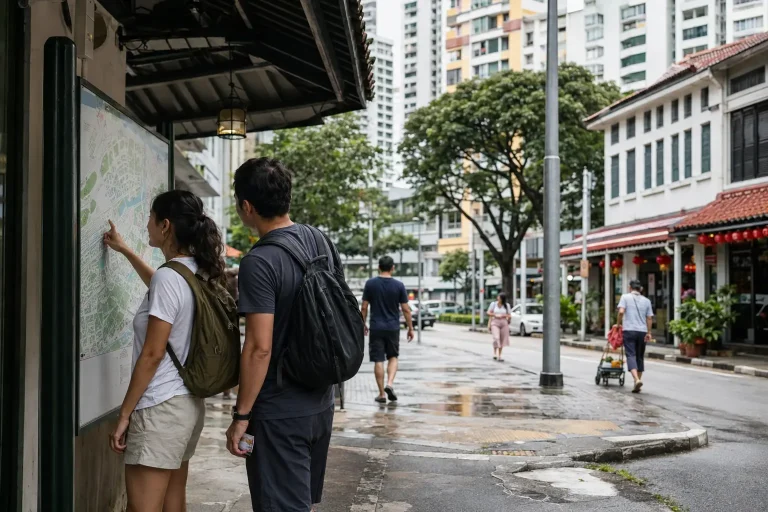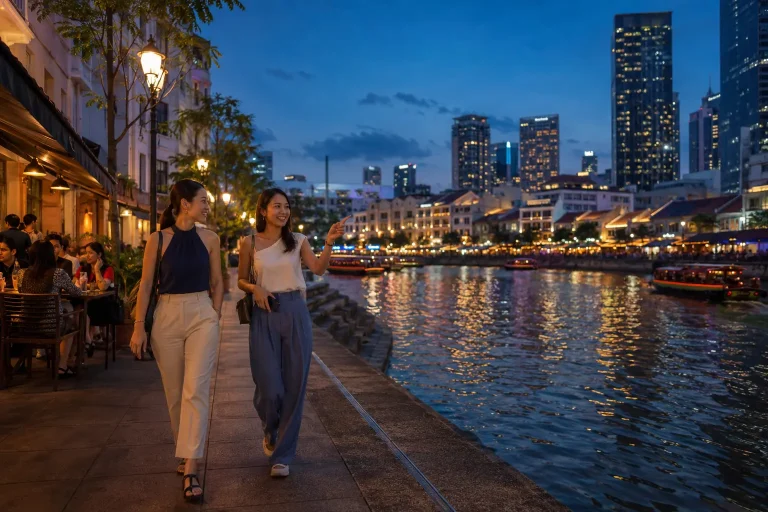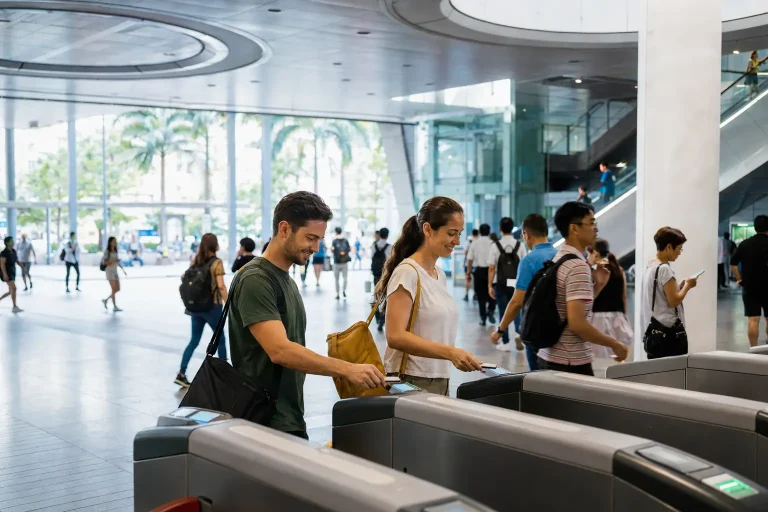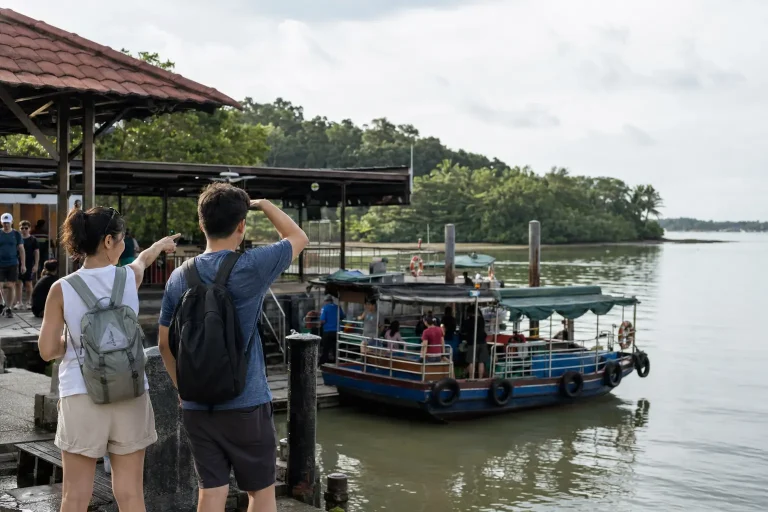
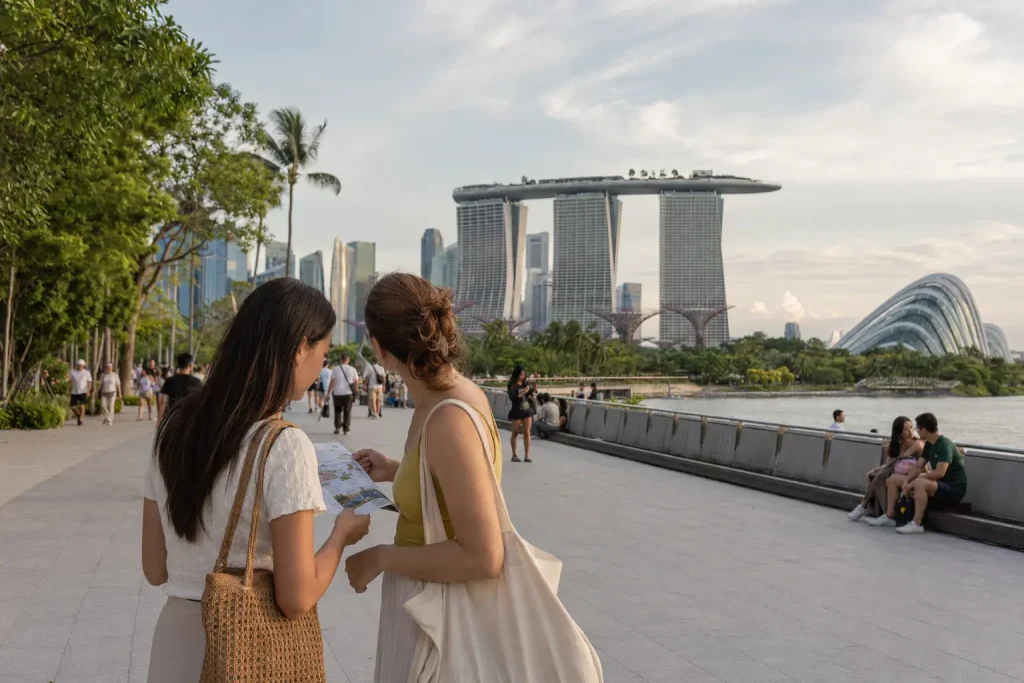
The best things to do in Singapore reveal more than a polished skyline. A strong first visit should include the engineered landscape of Marina Bay, the historical arguments inside the Civic District, at least one working neighborhood, a serious encounter with tropical nature and enough unplanned food stops to make the timetable negotiable.
These 12 experiences are selected for contrast, not simply popularity. Most need half a day or less, and several combine naturally. Check official opening hours, maintenance closures and ticket rules before committing; Singapore runs efficiently, but attractions still close when your spreadsheet would prefer otherwise.
1. Walk Marina Bay from the Civic District to the gardens
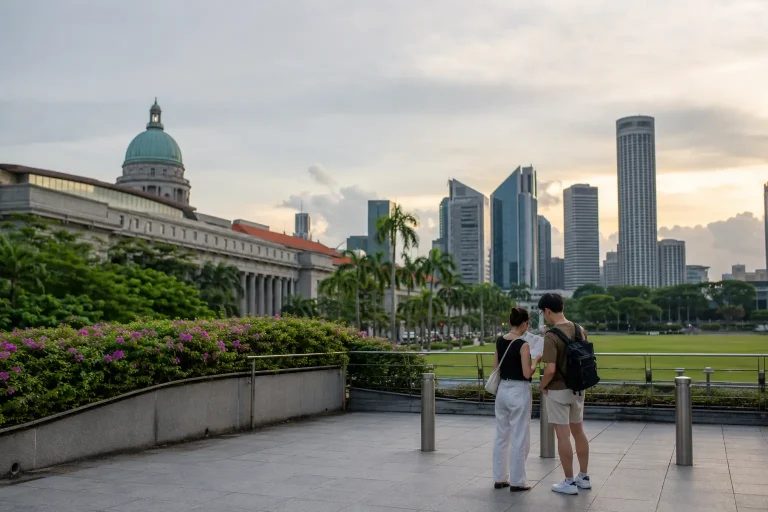
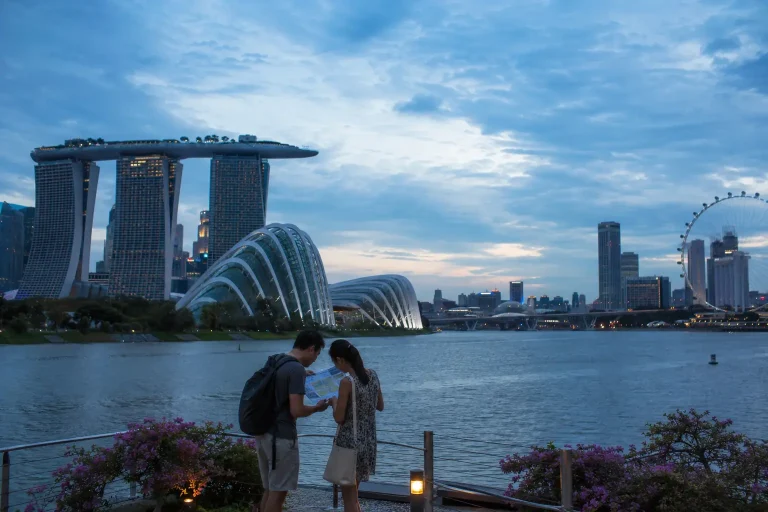
Marina Bay is the clearest introduction to Singapore’s contemporary city-making. Start near the river or Civic District, cross the waterfront and continue toward Gardens by the Bay. The route connects colonial civic architecture, financial towers, reclaimed land and landscape design without requiring a lecture before breakfast.
Go in late afternoon so the heat eases and the bay changes into its evening form. The walk is free; observation decks, river cruises and ticketed attractions are optional. Choose one paid viewpoint rather than collecting several versions of the same skyline.
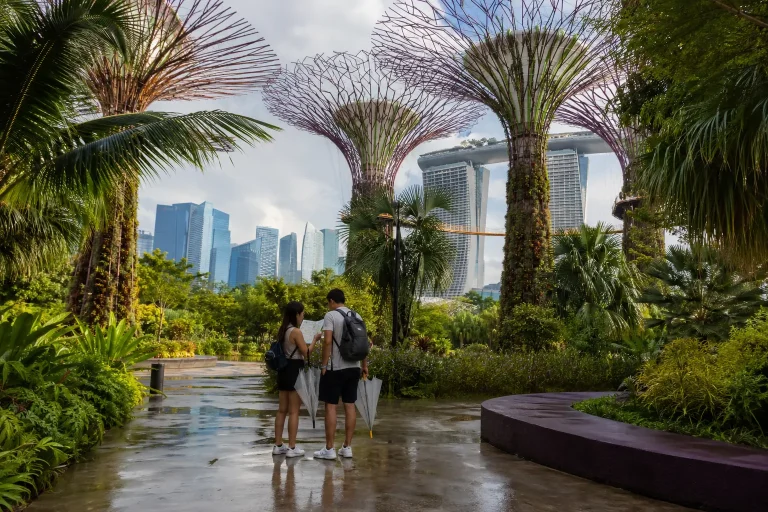
2. Explore Gardens by the Bay beyond the Supertrees
The Supertree Grove creates the photograph, but the cooled conservatories explain more of the project. Cloud Forest and Flower Dome use controlled climates to present plant communities that would not otherwise grow outdoors in Singapore. Current exhibitions and maintenance closures affect what is available.
Allow several hours if entering both conservatories. On a budget, walk the outdoor gardens and return for the evening atmosphere. Pairing every paid feature in one visit can turn botanical curiosity into ticketed horticultural administration.
3. Read Southeast Asian art at the National Gallery
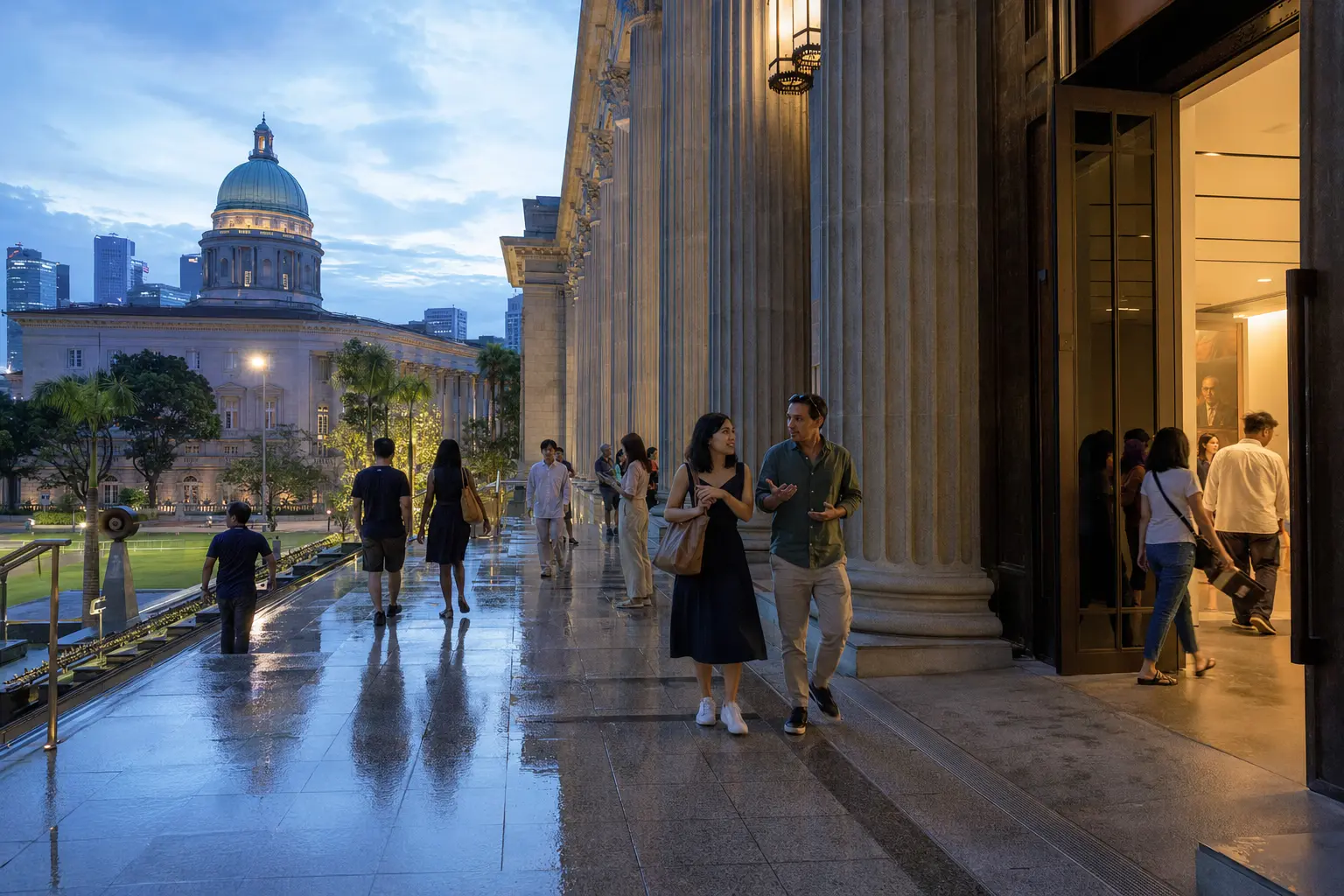
National Gallery Singapore occupies the former Supreme Court and City Hall, bringing major collections of Singaporean and Southeast Asian art into buildings associated with colonial and national history. The architecture and collection work together: this is not merely a rain shelter with paintings.
Choose a collection route or current exhibition instead of trying to finish the entire institution. The gallery suits midday heat or rain and leads naturally into a Civic District walk. Verify admission, timed programs and any gallery closures before arrival.
4. Spend a morning in Singapore Botanic Gardens
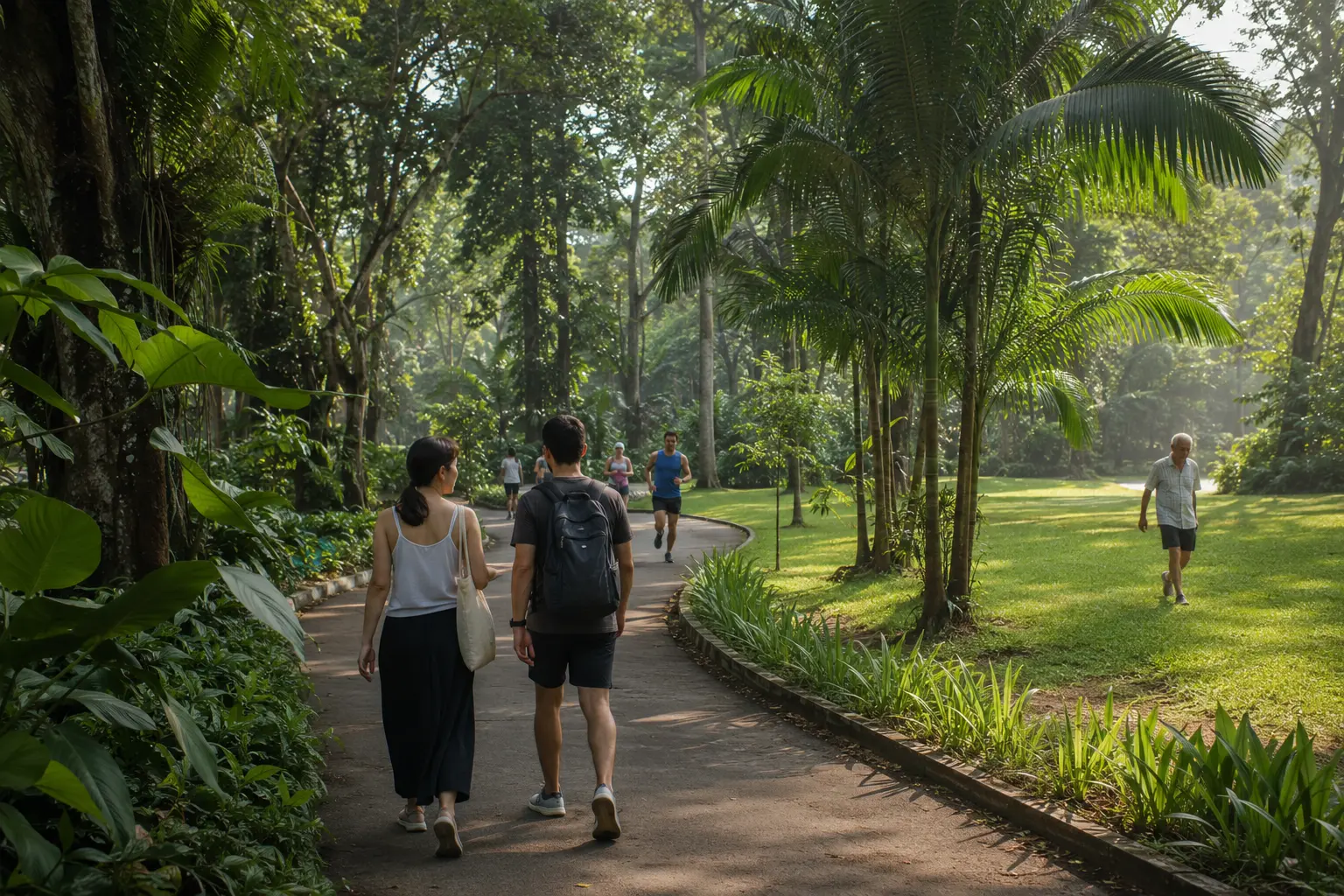
Founded in the nineteenth century and recognized as a UNESCO World Heritage Site, Singapore Botanic Gardens is both a public landscape and a scientific institution. Residents jog, walk and meet across grounds that also hold important plant collections and research history.
Arrive early for cooler paths and ordinary morning use. General garden admission is free, while the National Orchid Garden has separate conditions. Bring water and choose a few areas; the full grounds are larger than the phrase “a garden walk” implies.
5. Understand Chinatown as more than one culture
Chinatown’s close grouping of Buddhist, Hindu and Muslim religious sites complicates the district’s simple tourist label. Add shophouses, hawker centers, housing and business towers, and the neighborhood becomes a study in migration and land use rather than a decorative gate.
Visit one heritage institution or guided trail, enter places of worship respectfully and eat somewhere chosen for the dish rather than the loudest queue. Tourist-market lanes are convenient, but Telok Ayer and the streets toward Tanjong Pagar broaden the story.
6. Give Little India and Kampong Glam separate time
Little India and Kampong Glam are close enough to combine yet distinct enough to resist being compressed into a two-hour “colorful neighborhoods” tour. Little India’s markets, temples, textile and jewelry businesses carry different histories from Kampong Glam’s Malay royal, Muslim, trading and design layers.
Begin at an official heritage center when possible, then walk the surrounding commercial streets. Ask before photographing people or shop interiors, observe religious dress rules and let food become part of the interpretation rather than a detached reward.
7. Eat at a hawker center with a method
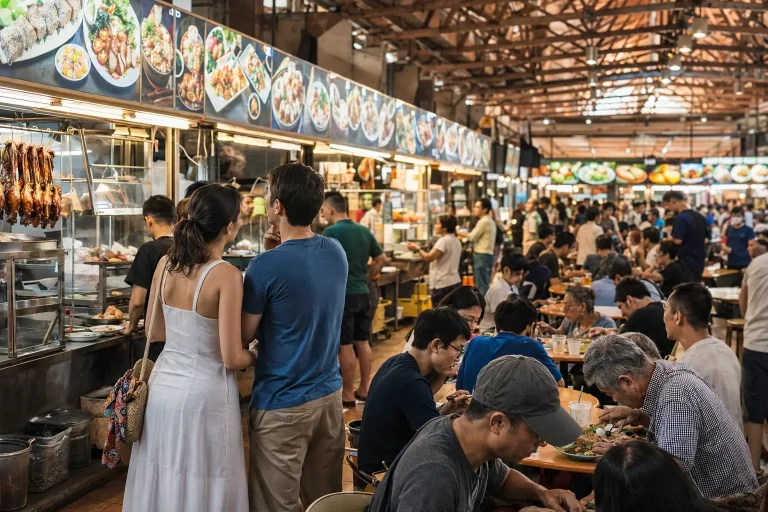
A hawker center is not one restaurant with an unmanageably long menu. Walk one circuit, note which stalls are open, choose dishes that make sense together and secure a table according to local practice without occupying more space than needed. Return trays to the designated station.
Different centers serve different routines: breakfast, office lunch, late satay or neighborhood dinner. Do not chase every famous stall. A shorter queue may leave enough time to taste another dish, which is a more persuasive use of appetite.
8. See housing history in Tiong Bahru
Tiong Bahru’s curved prewar housing blocks, market and sheltered ground-floor spaces show an earlier chapter of Singapore’s public-housing development. The estate also supports long-standing food businesses, newer cafés, shops and residents completing entirely non-photographic errands.
Go in the morning, eat at the market and follow an architectural trail without treating private corridors as public sets. The neighborhood rewards observation more than consumption; one coffee, one walk and one careful look at the buildings are enough.
9. Continue east to Joo Chiat and Katong
Joo Chiat and Katong offer Peranakan architecture, food and a mix of religious and community institutions within a living east-side district. Colorful shophouses are the entry point, not the full explanation. Look for museums, heritage businesses and food traditions that connect design to migration and family history.
Commit a half-day because the area sits beyond the central attraction cluster. Late afternoon into dinner works well. Respect residential privacy around frequently photographed façades—the house may be historic, but someone still has to take out the bins.
10. Choose one Mandai wildlife experience
Singapore’s Mandai wildlife precinct includes several distinct parks and experiences. Each requires time, transport and walking, so choose according to animals, habitat style and operating schedule rather than trying to complete the entire precinct in one day.
Night Safari is the famous after-dark option, while daytime parks may suit families or wildlife-focused travelers better. Buy only through official channels, check presentation times and understand that ethical questions about captive wildlife deserve more thought than a list of photo opportunities.
11. Walk a tropical nature route
MacRitchie, the Central Catchment and other parks offer forest, reservoir and boardwalk routes within the city-state. Trails vary in distance, exposure and surface. Begin early, carry water, use insect protection and choose a route that matches fitness and weather.
Do not feed macaques or carry visible food near them. Leave wildlife space, stay on permitted paths and turn back when storms develop. Tropical nature is not improved by treating lightning as an atmospheric filter.
12. Take the bumboat to Pulau Ubin
Pulau Ubin provides the strongest full-day change of pace without international immigration. A bumboat from Changi Point leads to village roads, quarries, forest and Chek Jawa’s coastal habitats. Cycling expands the range, while walking supports a quieter, shorter visit.
Check boat operations, tide-sensitive access guidance and weather. Inspect rental bicycles, bring cash or backup payment and keep food away from monkeys. The island matters not as “Singapore before modernity,” but as a landscape shaped by settlement, extraction, conservation and change.
What to skip when time is short
Skip attractions chosen only because they appear on every list. The Merlion is easy to see while walking the bay; it does not need a separate morning. Jewel Changi can fit an arrival or departure when terminal logistics allow, but traveling to the airport solely for a mall-and-waterfall photograph may not outrank a neighborhood.
Sentosa makes sense for beaches, family attractions or a resort day, not as a compulsory proof of visiting Singapore. Likewise, a rooftop viewpoint, river cruise and observation wheel all solve similar skyline needs. Choose one.
Free and rainy-day choices
Strong free activities include the outdoor Botanic Gardens, Marina Bay walk, many heritage districts, selected museum free areas or programs, park connectors and neighborhood markets. Costs arise when the day adds premium viewpoints, conservatories and multiple rides without deciding which experience matters most.
For heavy rain, use the National Gallery, Asian Civilisations Museum, National Museum, ArtScience Museum or covered shopping-and-food districts. Short tropical rain can be a pause; prolonged lightning is a reason to change the plan. Keep one indoor alternative near each outdoor area.
How to arrange these experiences
If you have three full days
For three full days, combine Civic District–Marina Bay–Gardens by the Bay; Chinatown–Tiong Bahru; and Little India–Kampong Glam with either the Botanic Gardens or Joo Chiat. Use a fourth day for Mandai or Pulau Ubin, not both.
If you have four or five days
Use the extra time for one full-day commitment—Mandai, Pulau Ubin or a more deliberate east-side day—then keep the other day flexible for a museum, garden or neighborhood missed earlier. Adding two distant attractions to the same day defeats the purpose of having more time.
Let the weather set the daily rhythm
Keep morning nature, midday museums and late-afternoon neighborhoods as the default rhythm. It follows heat rather than fighting it. The schedule should also leave room for meals to take longer than expected—Singapore’s food culture is not an inconvenience between attractions.
Final advice
What to do in Singapore becomes clearer once the city is not treated as a race between famous objects. Walk one engineered landscape, understand one institution, spend time in neighborhoods with different histories and choose either forest or island nature. The result is a trip with contrast and context, not merely a phone full of efficiently acquired landmarks.
Frequently Asked Questions
What are the best things to do in Singapore for a first visit?
A strong first visit should include walking Marina Bay from the Civic District to the gardens, exploring the Civic District’s history, visiting at least one working neighborhood, and a serious encounter with tropical nature.
How much time do you need for each Singapore attraction?
Most of the 12 core experiences need half a day or less, and several combine naturally, though it’s worth checking official opening hours and ticket rules before committing to a schedule.