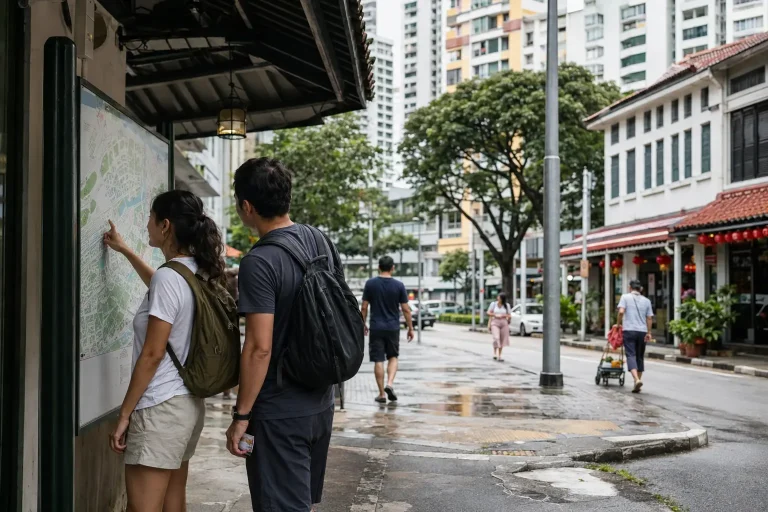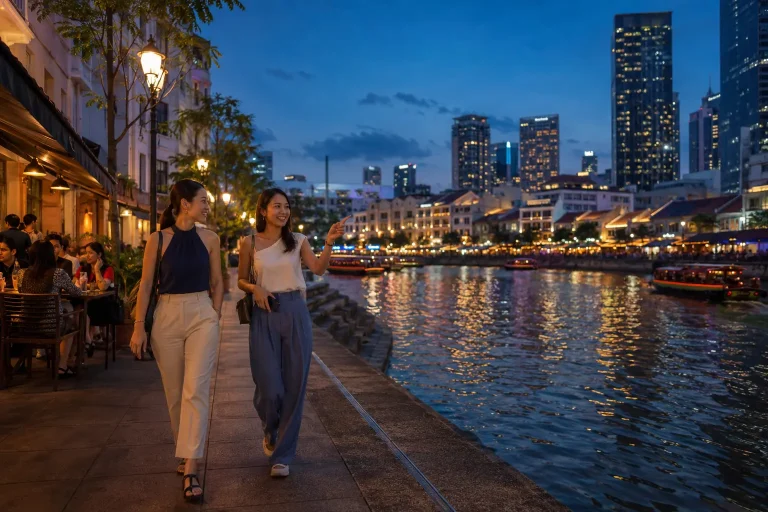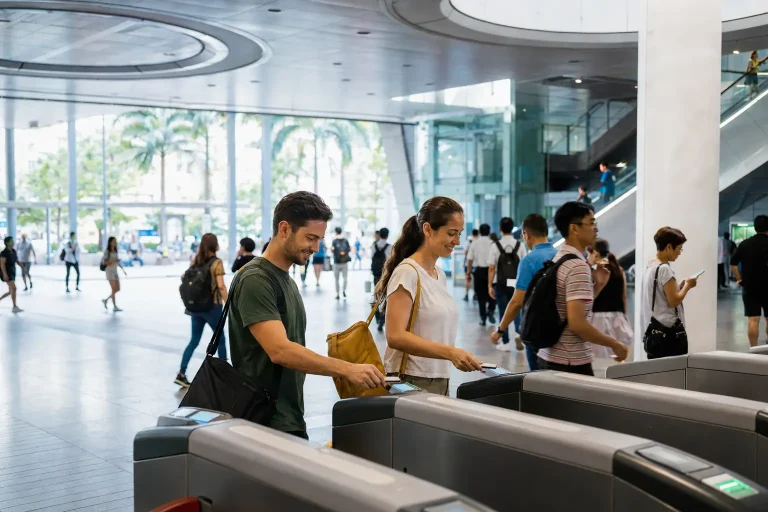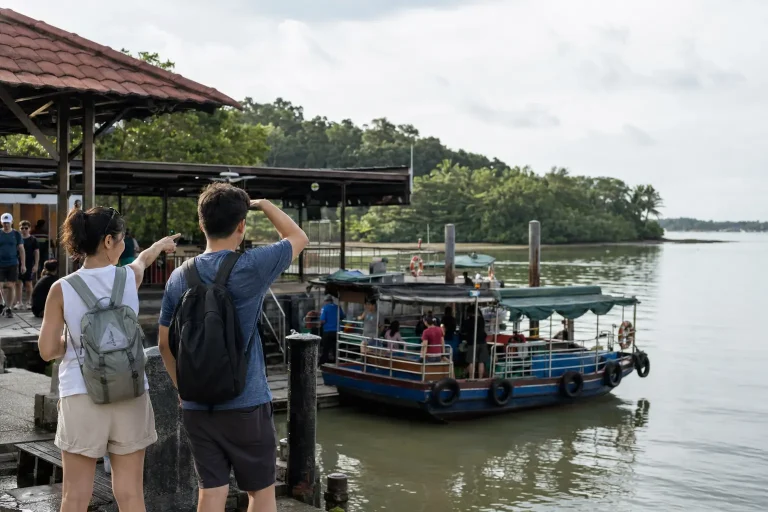
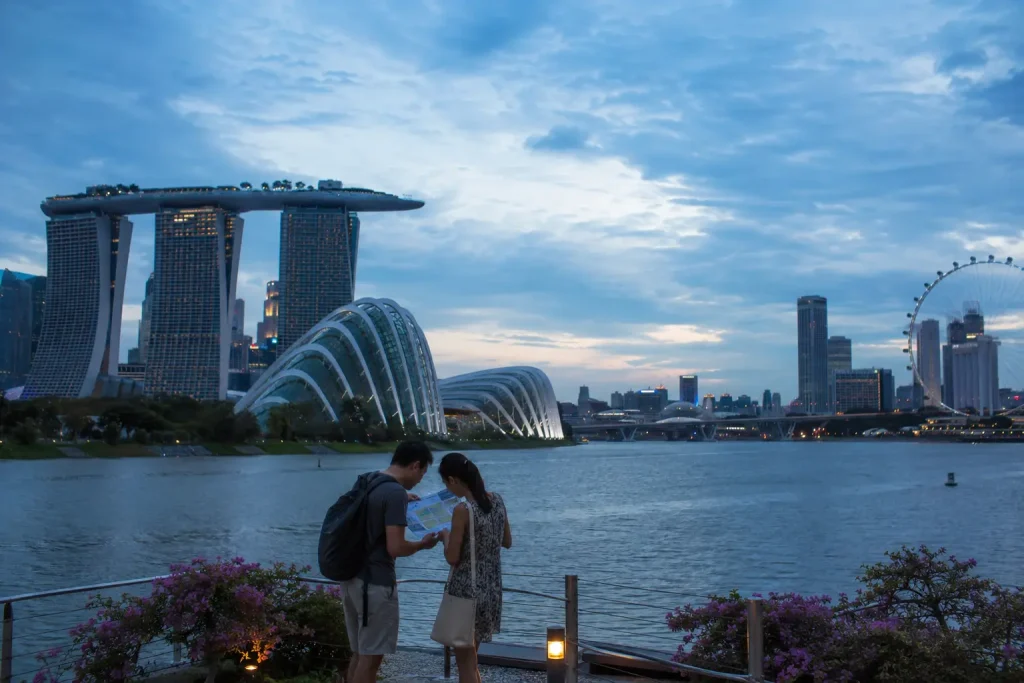
Three full days is enough for a rewarding first Singapore itinerary, provided you stop treating the island as a tray of attractions that can all be sampled between flights. Use one day for the Civic District and Marina Bay, one for Chinatown and a nearby residential district, and one for Kampong Glam and Little India. The route below keeps each day geographically coherent, includes indoor breaks for heat or rain, and leaves time to eat without making every hawker center another appointment.
If you have four or five days, add Mandai’s wildlife parks, Sentosa, the Botanic Gardens, or the east coast as complete choices. Do not squeeze a zoo, theme park, and central neighborhood into the same day because the map makes Singapore look small.
How many days do you need in Singapore?
Two full days can cover the central skyline and two heritage districts, but the pace will be brisk. Three days is the practical minimum for a first visit with contrasting neighborhoods, gardens, museums, and food. Four days allows one major outlying attraction; five days gives you room for nature, a slower neighborhood, or a weather-disrupted afternoon.
Count full usable days, not hotel nights. A “three-day trip” that lands at 4 p.m. and departs at noon contains one full day and two fragments. Changi Airport is efficient, but immigration, baggage, the transfer, and check-in still occupy real time.
| Time available | What fits comfortably |
|---|---|
| 2 full days | Civic District and Marina Bay; Chinatown plus Kampong Glam or Little India |
| 3 full days | The complete core route below |
| 4 full days | Core route plus Mandai, Sentosa, or a nature-focused day |
| 5 full days | Core route plus two deliberate additions or one slower recovery day |
Before day one: make three decisions
Stay near a useful MRT station, preferably around City Hall/Bras Basah, Bugis, or Chinatown for this route. The detailed guide to where to stay in Singapore compares the tradeoffs.
Next, choose whether you genuinely want ticketed conservatories, an observation deck, or a museum. Booking everything produces an itinerary that cannot bend when heat, jet lag, or a tropical downpour changes the day.
Finally, save an offline map and carry a contactless payment option. Singapore’s rail and bus network makes the route straightforward, but the useful skill is knowing when to stop walking outside and take one short ride.
Day 1: understand the city, then see the bay change after dark
Morning: Civic District at street level
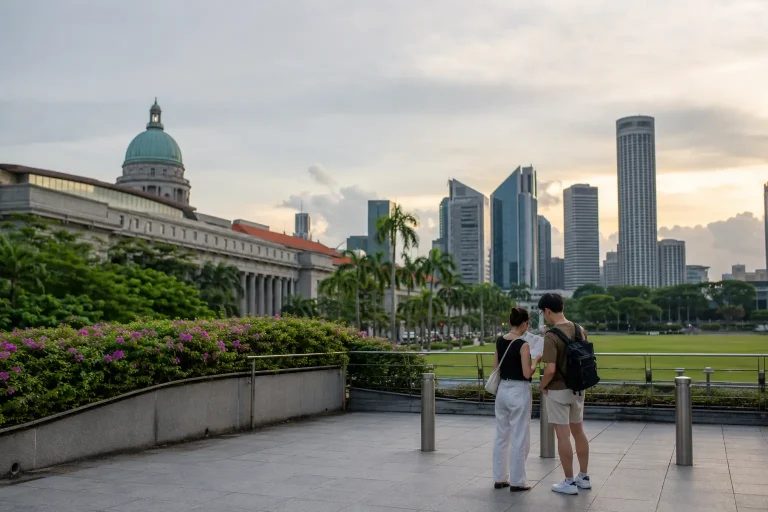
Begin around City Hall before the heat peaks. Walk past the Padang, the former Supreme Court and City Hall buildings now occupied by National Gallery Singapore, St Andrew’s Cathedral, and the river edge. This compact area introduces the colonial administrative city and the modern institutions built inside it.
Choose one museum rather than collecting entrances. National Gallery Singapore suits travelers interested in Southeast Asian art; the Asian Civilisations Museum focuses on the cultures and trade networks connected through the region. Allow two or three hours if you enter. If museums are not your priority, follow the Singapore River toward Boat Quay and keep the morning outdoors.
Lunch: eat before the famous queue becomes the activity
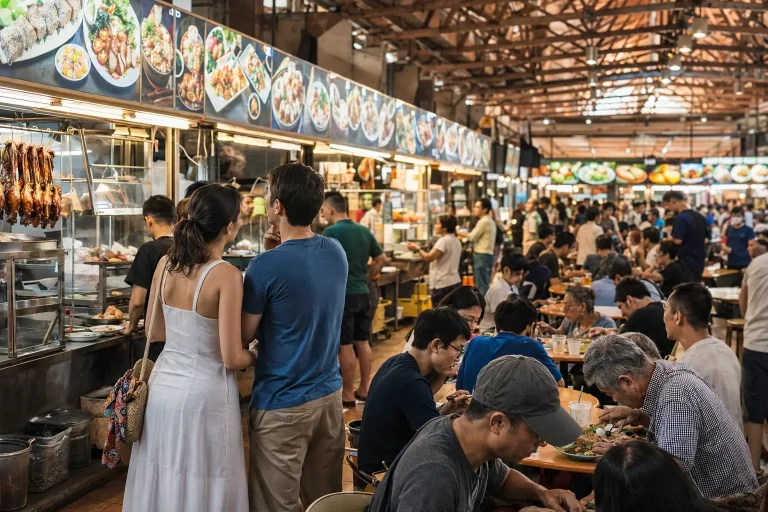
Lau Pa Sat is visually convenient and easy for a first hawker meal, but it is neither the only nor automatically the best food center. Eat there if it fits the route, or use a food court and save Maxwell or Chinatown Complex for day two. At any hawker center, divide the group, order from specialists, and return trays where the system requires it.
Afternoon: use the conservatories as a weather strategy
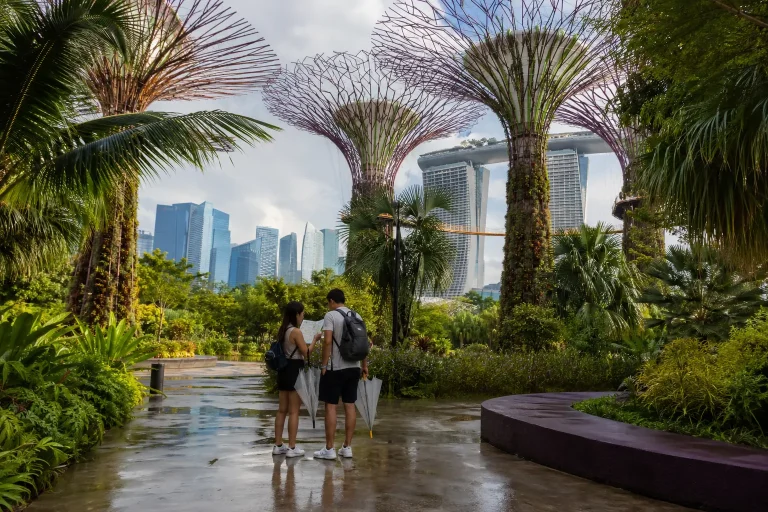
Cross toward Gardens by the Bay after lunch. The outdoor gardens are free, while Cloud Forest and Flower Dome require tickets. The official site currently lists both conservatories from 9 a.m. to 9 p.m.; recheck maintenance closures before booking because individual attractions can close on different dates.
The cooled conservatories are particularly useful in the hottest or wettest part of the day. If you have limited interest in horticulture, choose Cloud Forest rather than paying for every component. The goal is a satisfying afternoon, not proving that every ticket type was used.
Evening: Marina Bay in one continuous loop
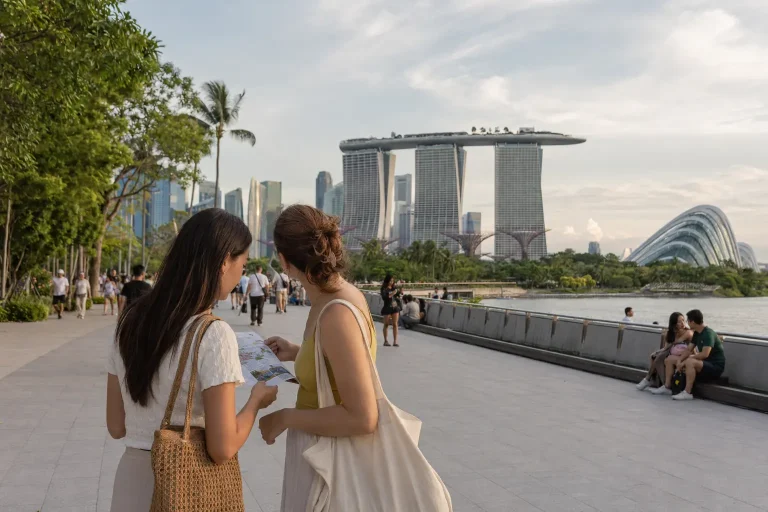
Stay around the gardens into early evening, then walk toward the Helix Bridge or the opposite waterfront as the skyline lights appear. Choose either a paid observation deck or a free ground-level loop; both explain the city’s scale, and doing both may be redundant.
Have dinner near the bay if the view matters, or ride to Chinatown, Bugis, or your hotel district for more varied prices. The light shows can be an enjoyable finish, but confirm the current schedule rather than designing the entire day around an old blog’s time.
Day 2: Chinatown, Tiong Bahru, and the river
Morning: Chinatown before its lanes fill
Start near Telok Ayer or Chinatown station. Walk through Thian Hock Keng Temple’s surroundings, the shophouse streets, Sri Mariamman Temple, and the Buddha Tooth Relic Temple area. These places belong to different communities and histories; they are not one decorative “ethnic quarter.”
Dress respectfully for religious sites and check whether photography is allowed inside. Spend time reading the street rather than rushing between façades. The district is compact, but midday crowds and exposed pavement make an early start worthwhile.
Lunch: choose one hawker center and stay curious
Maxwell Food Centre and Chinatown Complex both offer enough choice for several visits. Pick the one that matches your route. A long queue can indicate popularity, but it can also consume half a short trip; choose another busy stall if the wait is disproportionate.
Singapore’s food culture deserves more than a list of “must eats.” Order a dish you recognize and one you do not, share where practical, and notice how stalls specialize. The later Singapore food guide will handle the full dish and neighborhood map.
Afternoon: slow down in Tiong Bahru
Ride or take a short taxi to Tiong Bahru. The neighborhood combines a food market, low-rise prewar housing, bakeries, bookstores, and lived-in residential streets. It gives the itinerary a different scale after two landmark-heavy mornings.
Walk quietly around the public streets, stop for coffee if it appeals, and do not turn apartment corridors into photo sets. If humidity has flattened the group, substitute an indoor museum or return to the hotel. A useful itinerary should contain a dignified exit.
Evening: river walk or a proper dinner
Return toward Robertson Quay, Clarke Quay, or Chinatown. Robertson Quay is calmer; Clarke Quay is brighter and more commercial; Chinatown keeps late food close. Choose according to the evening you want rather than assuming “nightlife” means drinks.
Day 3: Kampong Glam and Little India without cultural whiplash
Morning: Kampong Glam before Haji Lane gets crowded
Begin around Sultan Mosque and the surrounding streets. Kampong Glam’s story includes Malay royalty, trade, pilgrimage, textiles, and later waves of retail and nightlife. Haji Lane is photogenic but small; it should not consume the whole morning.
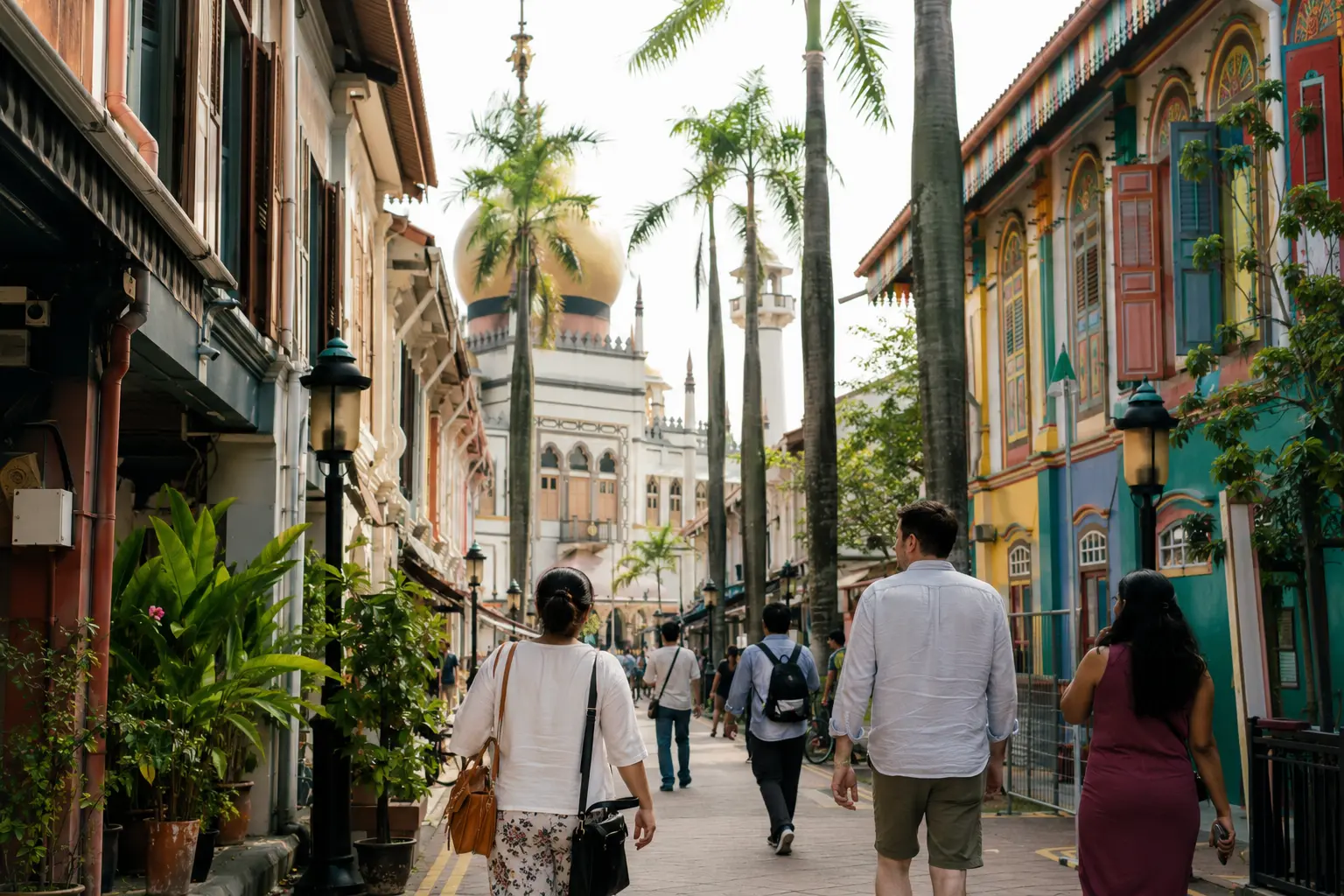
Walk Arab Street, Bussorah Street, and quieter lanes beyond the most photographed strip. Visit the Malay Heritage Centre only after confirming its current reopening and exhibition status, as long renovation timelines make old guides unreliable.
Lunch and early afternoon: move to Little India
Use the Downtown or North East line, or take a short bus, rather than forcing an exposed cross-city walk. In Little India, choose a South Indian meal, then explore around Tekka Centre, Serangoon Road, and one temple at an unhurried pace.
The district is a working commercial and religious neighborhood. Observe its produce shops, gold merchants, flower stalls, and restaurants without describing ordinary life as chaotic spectacle. Weekends are especially busy.
Late afternoon: choose one final layer
You have three sensible options. Visit the Botanic Gardens if weather and energy permit; shop or cool down around Orchard Road; or return to Bugis and Bras Basah for a smaller museum, bookstore, or café. The Botanic Gardens deserves at least two hours and is better as a fifth-day anchor if you want the National Orchid Garden as well.
Final evening: spend it where you want to linger
Return to the neighborhood you liked most rather than adding another landmark. Dinner in Little India, Kampong Glam, Chinatown, or Tanjong Pagar will usually tell you more about your preferences than a second skyline viewpoint.
If you have only two days
Keep day one intact. On day two, begin in Chinatown, eat there, move to Kampong Glam in mid-afternoon, and finish around Bugis or Little India. Skip Tiong Bahru unless residential architecture and cafés matter more than one of the heritage districts.
Do not schedule Sentosa, Mandai, and Marina Bay across two days. One outlying attraction would consume much of a day and leave the city itself as scenery between transfers.
Day 4: choose Mandai or Sentosa, not both
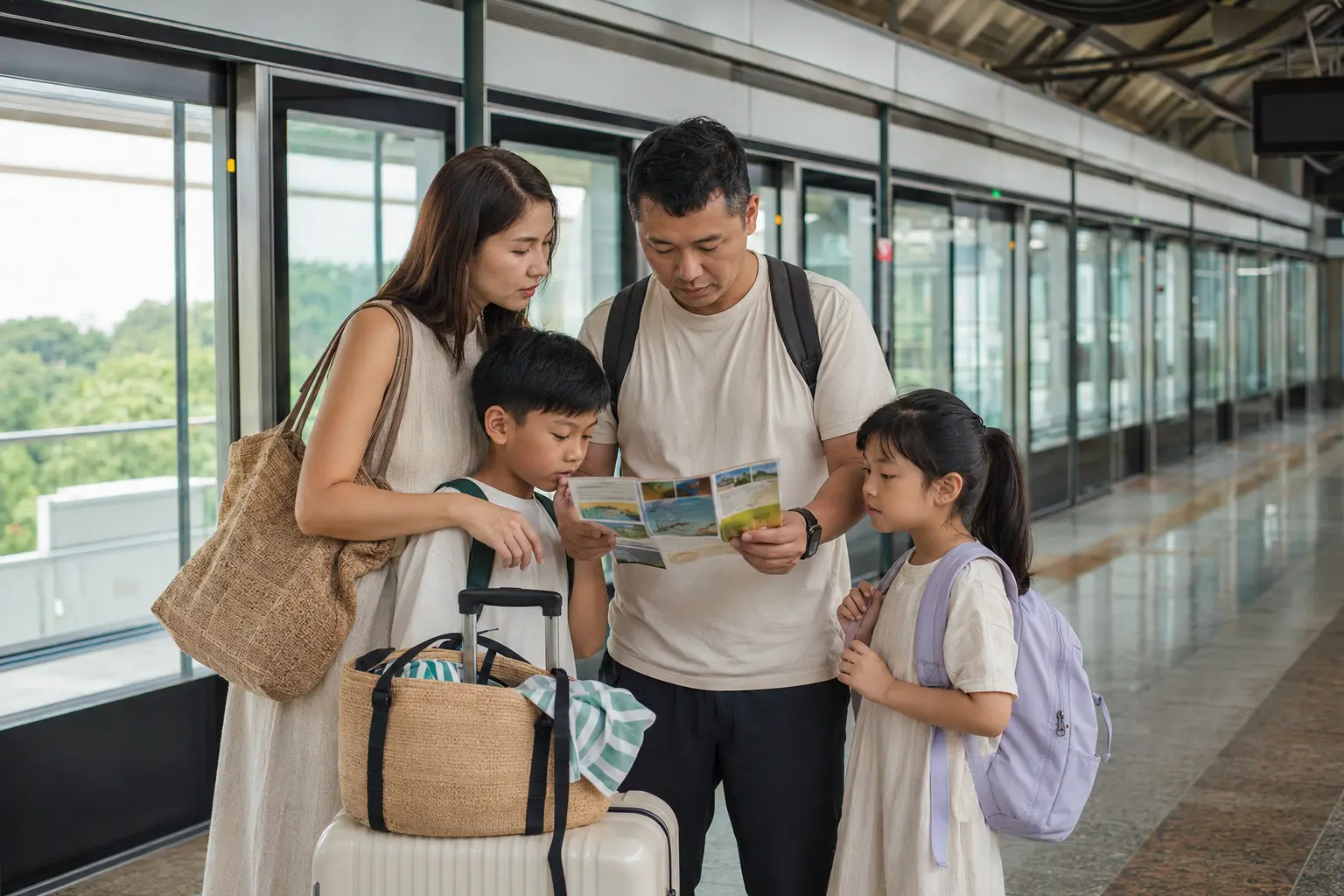
Mandai Wildlife Reserve works as a complete nature-and-wildlife day. Singapore Zoo, River Wonders, Bird Paradise, and Night Safari are separate experiences; two substantial parks are enough for most people. Night Safari can extend the day late, so avoid promising an early central-city dinner afterward.
Sentosa is the alternative for Universal Studios Singapore, beaches, resorts, or other ticketed attractions. Select one main attraction and leave buffer for transport and queues. A family can easily spend the entire day there without failure.
The choice is about trip identity: Mandai for wildlife and landscaped habitats; Sentosa for entertainment and resort infrastructure. Neither is a small add-on.
Day 5: nature, the east coast, or a slower repeat
Use a fifth day for the Botanic Gardens and Dempsey/Tanglin; Katong, Joo Chiat, and East Coast Park; or a deeper museum and neighborhood day. Katong and Joo Chiat reward travelers interested in Peranakan heritage, food, and residential architecture, while East Coast Park creates space after dense central sightseeing.
You can also repeat a district. Returning to Chinatown for breakfast or Marina Bay in different weather is not wasted time. Travel improves when curiosity, rather than coverage anxiety, determines the final day.
Practical timing that protects the itinerary
Schedule outdoor streets and gardens before 11 a.m. or later in the afternoon. Put a museum, conservatory, lunch, or hotel break in the most oppressive part of the day. Rain may be abrupt and heavy; covered walkways and malls are useful infrastructure, not an admission of cultural defeat.
Allow more time at Changi than a city-center map suggests. Jewel is connected to the airport terminals but can absorb several hours. Visit it on arrival only if you are not exhausted, or before departure with a substantial buffer after accounting for terminal transfers and formalities.
Most importantly, keep one unscheduled block each day. The extra hour might become a downpour, a hawker-center conversation, or the moment the tropical pace finally catches up with you.
The itinerary in one view
Three full days provide a coherent first look at Singapore: institutional and futuristic on day one, commercial and residential on day two, and culturally layered on day three. Four or five days let you add an attraction-heavy or nature-focused day without dismantling the city route.
Singapore is compact, but compact is not the same as frictionless. Group adjacent places, use midday interiors deliberately, and stop before the itinerary becomes an inventory. The city will still be there after you decline one more observation deck.
Frequently Asked Questions
How many days do you need in Singapore?
Two full days can cover the central skyline and two heritage districts, but the pace is brisk. Three days is the practical minimum for a first visit that includes contrasting neighborhoods, gardens, museums, and food without rushing.
What should a 3-day Singapore itinerary include?
Use one day for the Civic District and Marina Bay, one for Chinatown and a nearby residential district, and one for Kampong Glam and Little India, keeping each day geographically coherent rather than crossing the island repeatedly.