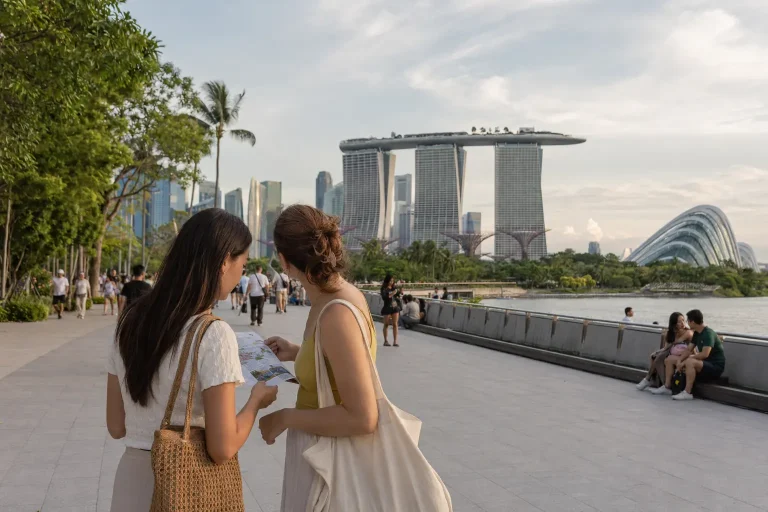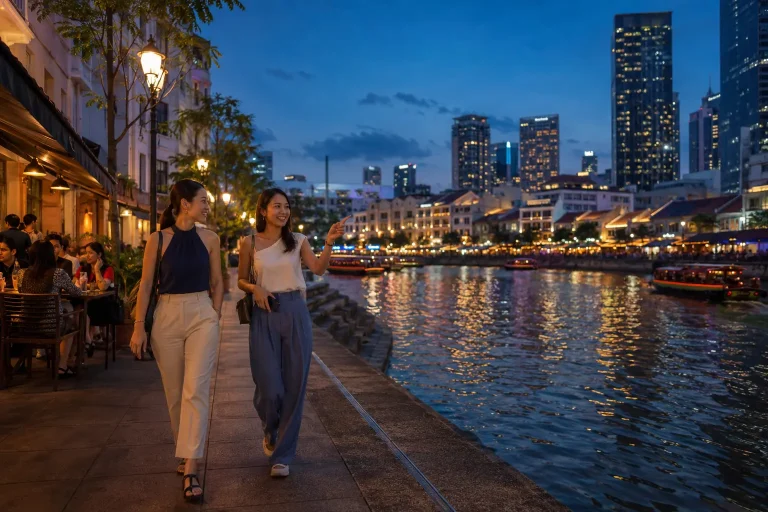
The best time to visit Singapore for most travelers is February through early April, when the Northeast Monsoon is easing and long wet spells are generally less persistent. This is an advantage, not a dry season guarantee. Singapore remains hot, humid, and capable of a sudden downpour in every month.
Choose dates around the experience you value most. February–April gives outdoor sightseeing the best odds; July–August is lively with major events and National Day preparations; September–October may suit travelers willing to trade weather certainty for events, but the Formula 1 period can raise central hotel rates dramatically; November–January is workable if you build around heavier rain.
The short answer by travel priority
| Priority | Best window | The tradeoff |
|---|---|---|
| First visit with outdoor walks | February to early April | Heat and showers remain possible |
| Gardens and nature | February–March, with early starts | No month is reliably cool |
| Events and city energy | July–October | School holidays, Formula 1, and individual events can raise demand |
| Lower-pressure sightseeing | Selected weekdays in May, late October, or November | Rain and heat are less predictable |
| Shopping and indoor attractions | Any month | Dates matter more for prices than weather |
| Christmas atmosphere | Late November–December | Northeast Monsoon rain and holiday demand |
There is no universally empty, cool, inexpensive, and dry month. If a guide promises one, it has confused Singapore with somewhere else.
Singapore weather does not have four tourist seasons
Singapore lies close to the equator. Temperatures and humidity stay relatively consistent, while rainfall varies through the Northeast Monsoon, Southwest Monsoon, and two inter-monsoon periods. The official Meteorological Service Singapore describes the seasons by prevailing winds, not by spring, summer, autumn, and winter.
The practical result is year-round heat, frequent humidity, and rain that can be highly local. A forecast icon showing rain every day does not necessarily mean continuous rain across the island. It may indicate a thunderstorm during part of the day. Conversely, a statistically drier month can still deliver the wettest afternoon of your trip.
February to April: the best general window
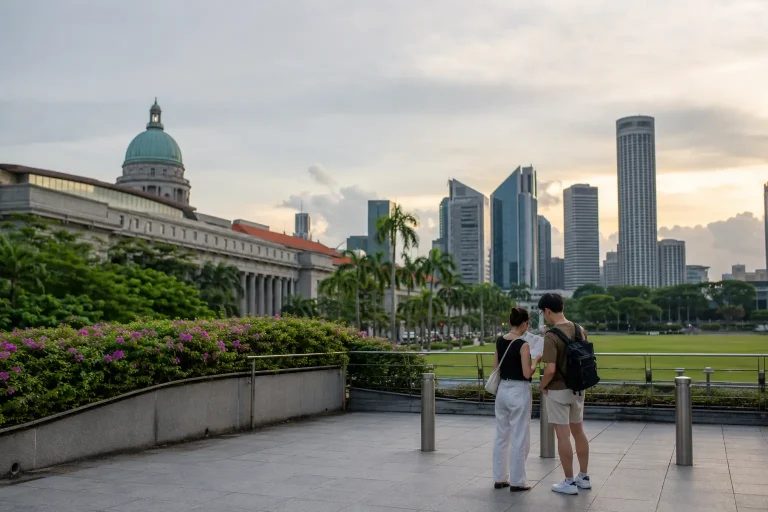
February often brings a transition away from the wetter first phase of the Northeast Monsoon. March and early April can provide useful outdoor windows for the Civic District, Botanic Gardens, Southern Ridges, and neighborhood walks.
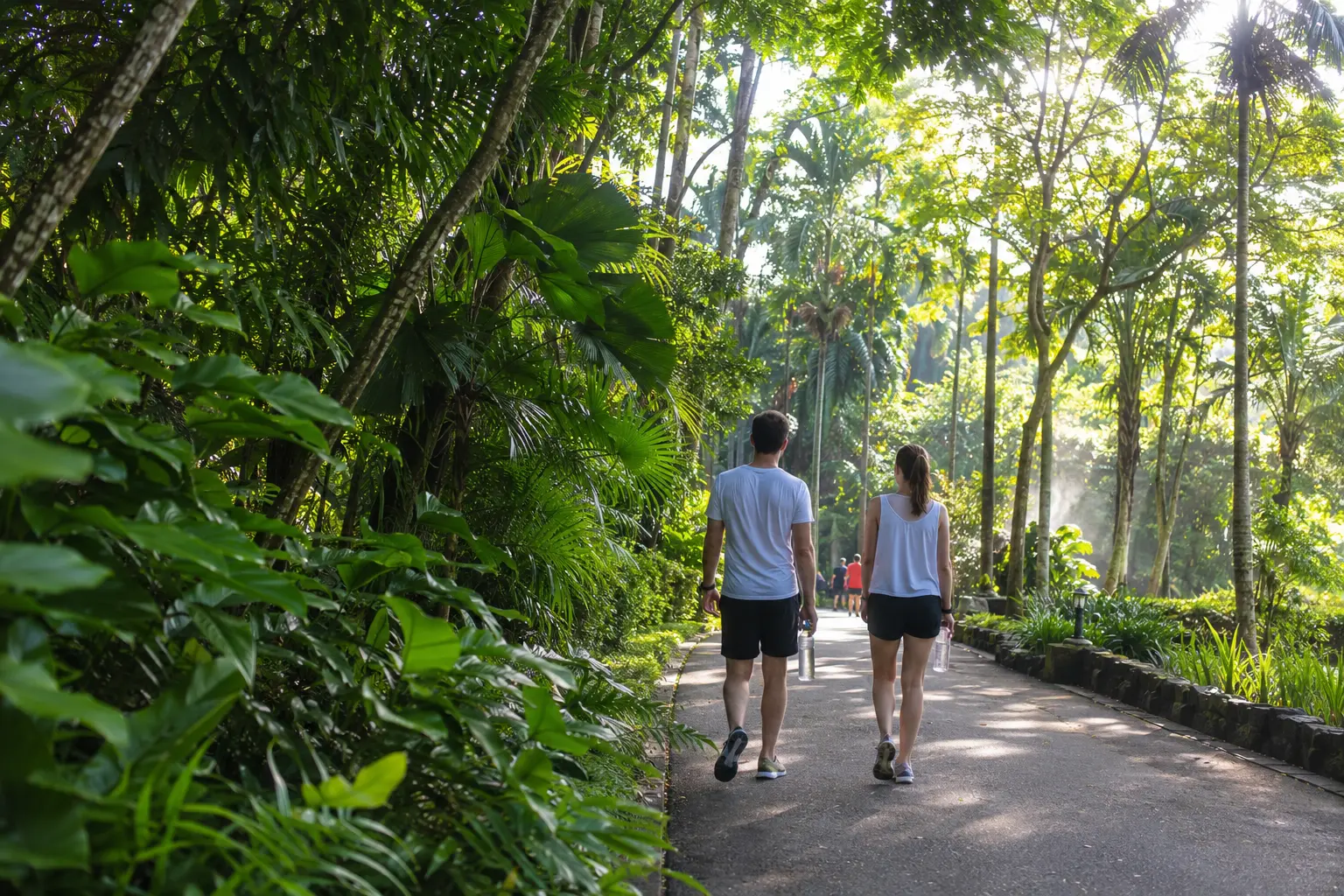
This is the most defensible answer to “when is the best time to go to Singapore,” but it needs two caveats. First, late March and April can feel intensely hot. Second, Lunar New Year dates shift annually and can affect opening hours, transport, local travel, and hotel demand.
Book early if your dates overlap a major holiday. Otherwise, organize outdoor days around mornings and late afternoons rather than assuming a favorable month makes noon pleasant.
May to June: hot, stormy, and still entirely visitable
May sits in an inter-monsoon period when afternoon thunderstorms can be frequent. June enters the Southwest Monsoon season and often brings short thundery showers or passing squalls. Neither month requires abandoning the trip.
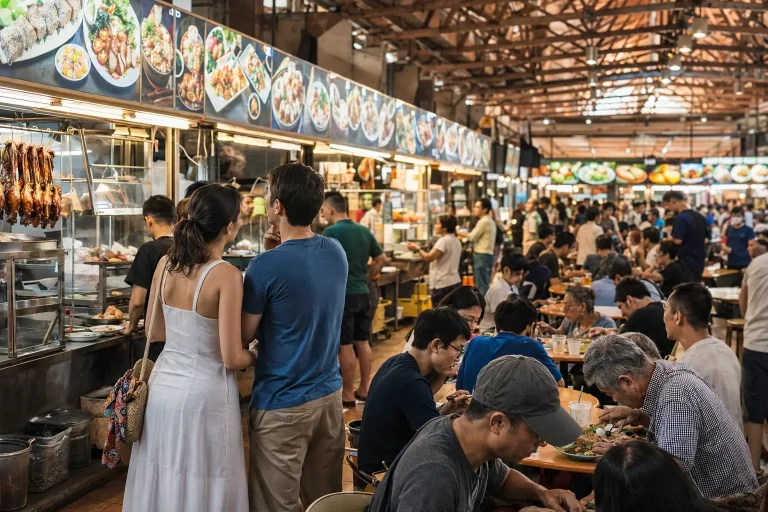
The better question is whether you tolerate heat. Travelers used to dry climates can find the humidity more demanding than the rain. Schedule hawker lunches, museums, conservatories, and hotel breaks between outdoor sections; carry water and use shade rather than trying to “push through.”
June school holidays can increase family demand at Sentosa, Mandai, and other attractions. Check exact school and event dates instead of treating the entire month as uniformly crowded.
July to September: events, outdoor plans, and price spikes
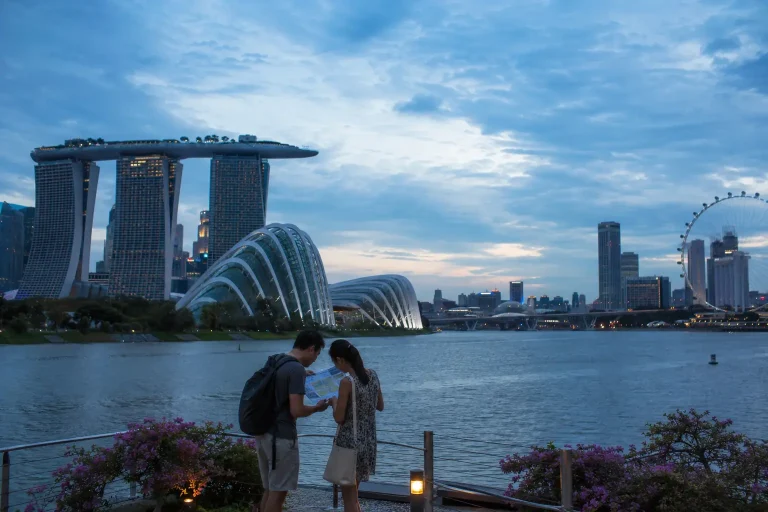
The Southwest Monsoon continues through this period. Rain may arrive in shorter bursts, while hot, breezy stretches also occur. July and August bring National Day rehearsals and celebrations, adding visible civic energy around Marina Bay.
September requires a separate price check. The Singapore Grand Prix transforms the central city on its event dates, changing access, increasing demand, and making some waterfront hotels much more expensive. Motorsport fans may consider that the purpose of the trip; everyone else should compare a different week.
Haze can occasionally affect air quality during the broader regional dry period, though severity varies by year and cannot be predicted from an evergreen calendar. Check official air-quality information close to travel rather than assuming either disaster or perfect clarity.
October and November: transitional weather with useful gaps
The October–November inter-monsoon period can bring afternoon and evening thunderstorms. November generally trends wetter as the Northeast Monsoon approaches, but individual weeks vary.
These months can still suit travelers prioritizing food, museums, shopping, and urban neighborhoods. They are less ideal for a trip built primarily around long exposed walks, beaches, and skyline photography. A lower hotel price has value only if your itinerary contains credible indoor alternatives.
December and January: wetter, festive, and not cold
December and early January are commonly associated with the wetter phase of the Northeast Monsoon. Rain can be more persistent than the brief storm people imagine when told Singapore is tropical. Temperatures may feel slightly less aggressive during wet spells, but this is not sweater weather for most visitors.
Orchard Road’s holiday decorations, year-end events, and school holidays create atmosphere as well as crowds. Christmas and New Year dates can raise rates. In January, conditions vary with the monsoon phase and the moving Lunar New Year calendar.
Visit if the dates suit your wider Asia trip. Just avoid an itinerary that depends on five consecutive outdoor evenings.
What rain actually changes
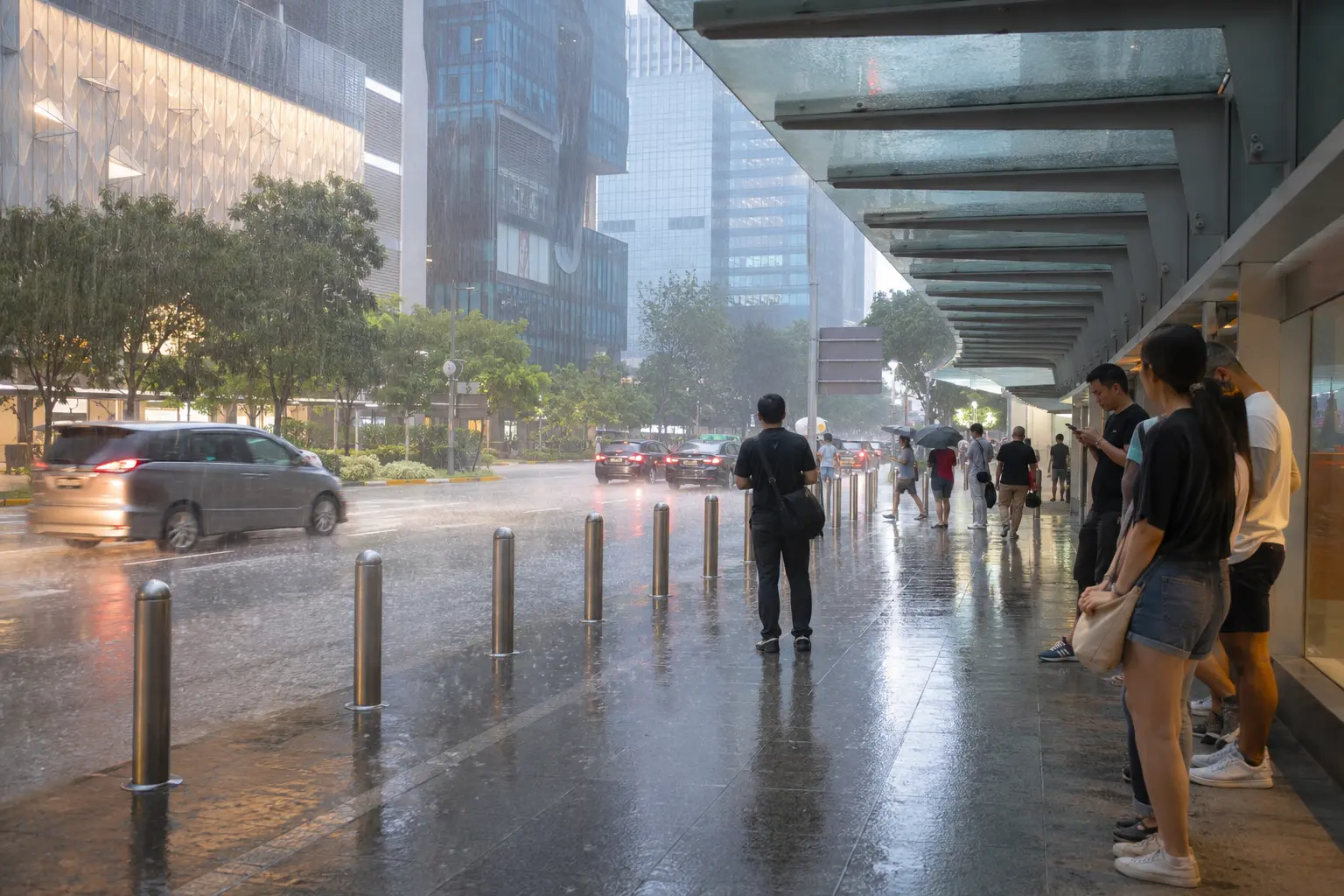
A short storm changes the order of a day, not necessarily the whole day. Move into a museum, mall, conservatory, hawker center, or café, then resume when conditions improve. Singapore’s covered walkways and connected buildings make this easier than in many tropical cities.
Persistent heavy rain has a larger effect on the Botanic Gardens, Southern Ridges, zoo visits, beaches, and open waterfronts. Wet surfaces and lightning risk matter. Follow attraction guidance and do not use an umbrella as permission to stay exposed during a thunderstorm.
Carry a compact umbrella, a light breathable layer for aggressive air-conditioning, and shoes that tolerate water. A heavy waterproof jacket often becomes its own portable climate problem.
Crowds depend on dates more than months
Hotel and attraction demand can rise around Lunar New Year, school holidays, National Day, the Formula 1 weekend, Christmas, New Year, large concerts, and conventions. The official Visit Singapore event calendar is more useful than a generic “high season” label.
Check the citywide events occurring on your exact dates before booking a refundable hotel. A convention may affect Marina Bay while leaving other districts relatively practical; a school holiday may be felt most clearly at family attractions.
Weekdays remain the simplest crowd-control tool. Visit major paid attractions near opening, eat slightly before or after the office lunch peak, and use late afternoon for outdoor areas that are unpleasant at noon anyway.
Best time for specific Singapore experiences
Neighborhood walking
Choose February–March if dates are flexible, then walk early regardless of month. Chinatown, Kampong Glam, Little India, and Joo Chiat are better understood at street level, but shade varies.
Botanic Gardens and Southern Ridges
Prioritize a dry-looking morning and use the official short-term forecast. Seasonal averages are less useful than the next four days once you are in Singapore.
Sentosa and beaches
There is no reliable beach season comparable with a monsoonal resort island farther north or south. Select a flexible day, expect humidity, and remember that many Sentosa attractions are not weather-dependent.
Food, museums, and shopping
Any month works. These interests create the strongest weather-proof trip, though hawker-center comfort and cross-neighborhood walks still improve outside the hottest part of the day.
How to plan without trying to outsmart the tropics
Build each day with one outdoor anchor, one indoor option, and a movable meal. Check the Meteorological Service Singapore forecast in the morning and its shorter nowcast before an exposed activity. Do not rebuild the entire week because a generic app displays a row of thunderclouds.
The most useful climate adaptation is pace. Start earlier, take a real midday break, drink before you feel thirsty, and move by MRT or bus when a “short” walk has lost its charm.
Final verdict
For a first trip, February through early April offers the best overall balance, with February and March especially useful for outdoor-heavy plans. But Singapore is a year-round city, not a destination that closes when the monsoon changes direction.
Choose exact dates around major events and prices, then design for tropical variability. A flexible itinerary with good indoor alternatives will outperform a supposedly perfect month paired with a rigid schedule.
Frequently Asked Questions
What is the best time to visit Singapore?
February through early April is the best window for most travelers, when the Northeast Monsoon is easing and long wet spells are generally less persistent, though Singapore remains hot, humid and capable of a sudden downpour in every month.
Does Singapore have a true dry season?
No. There is no reliably dry season; February to early April simply offers better odds for outdoor sightseeing, not a guarantee, so it's worth planning around the experience you value most rather than chasing dry weather.