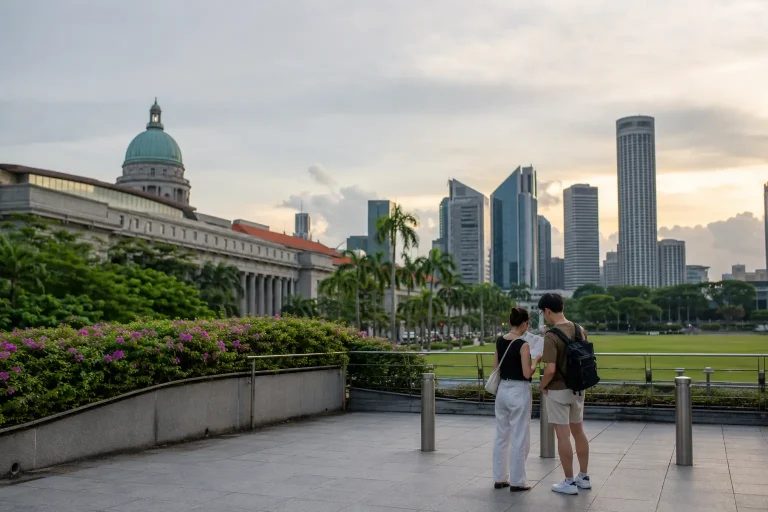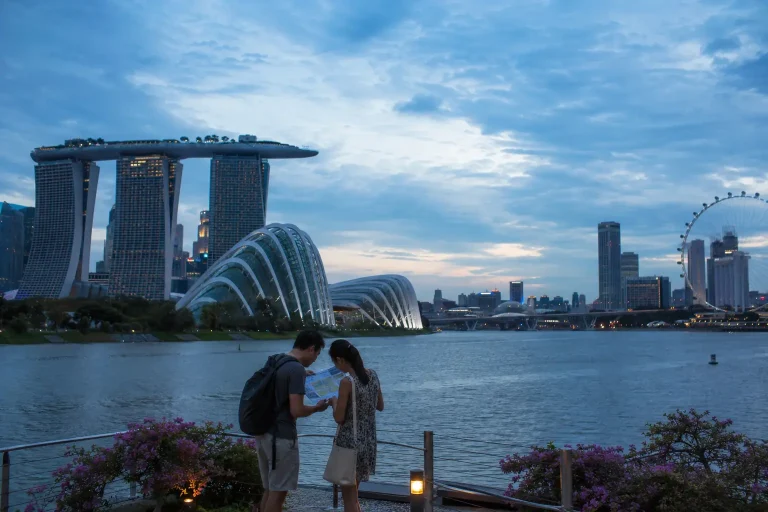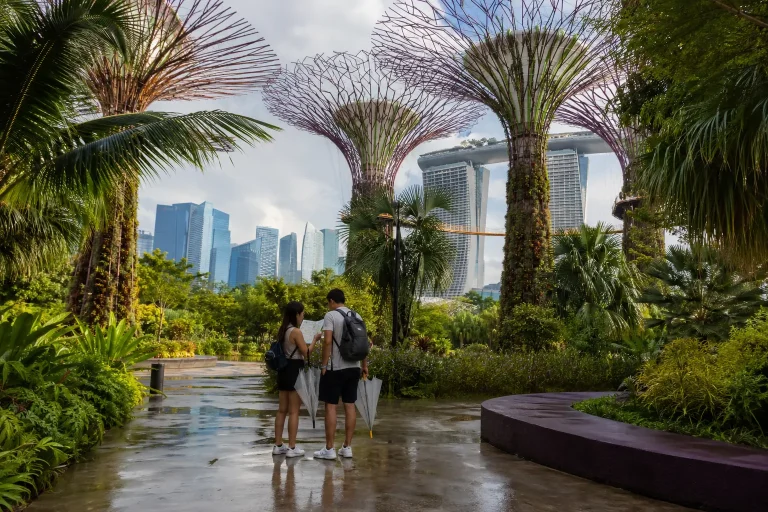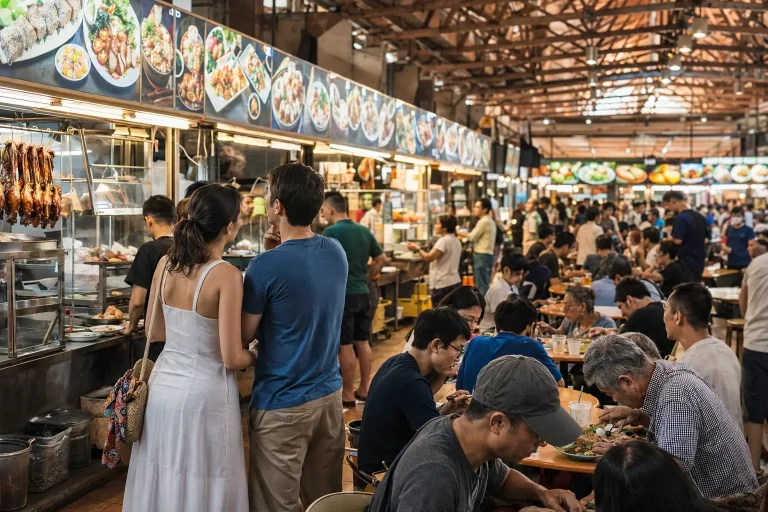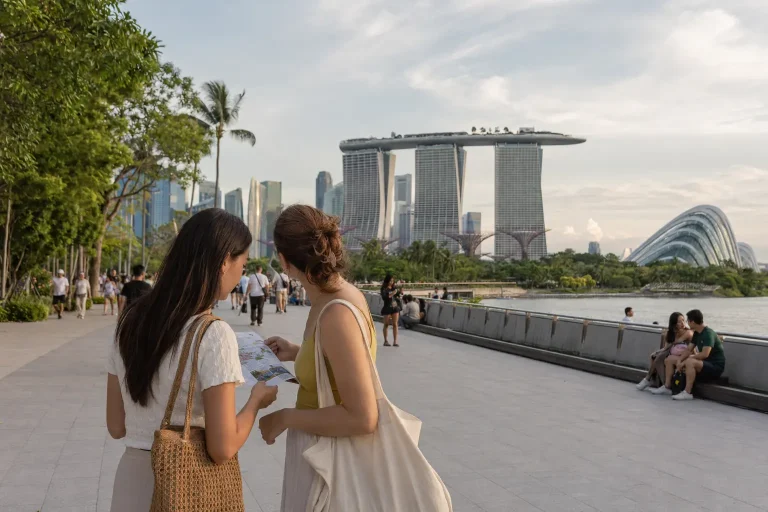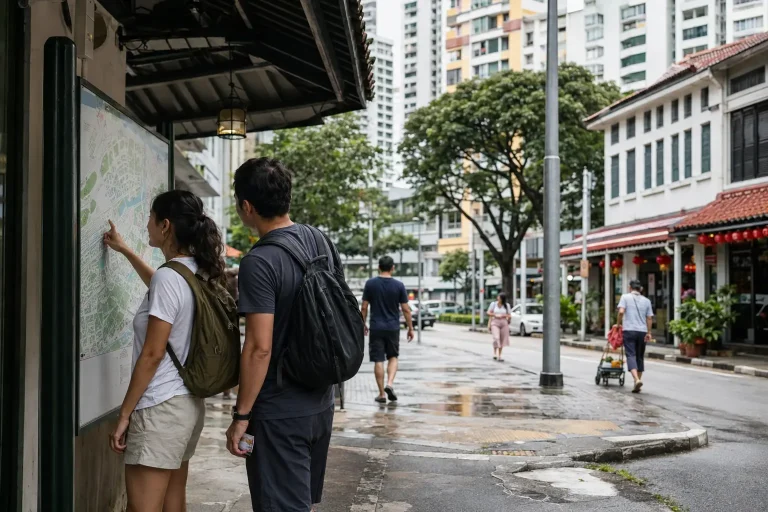
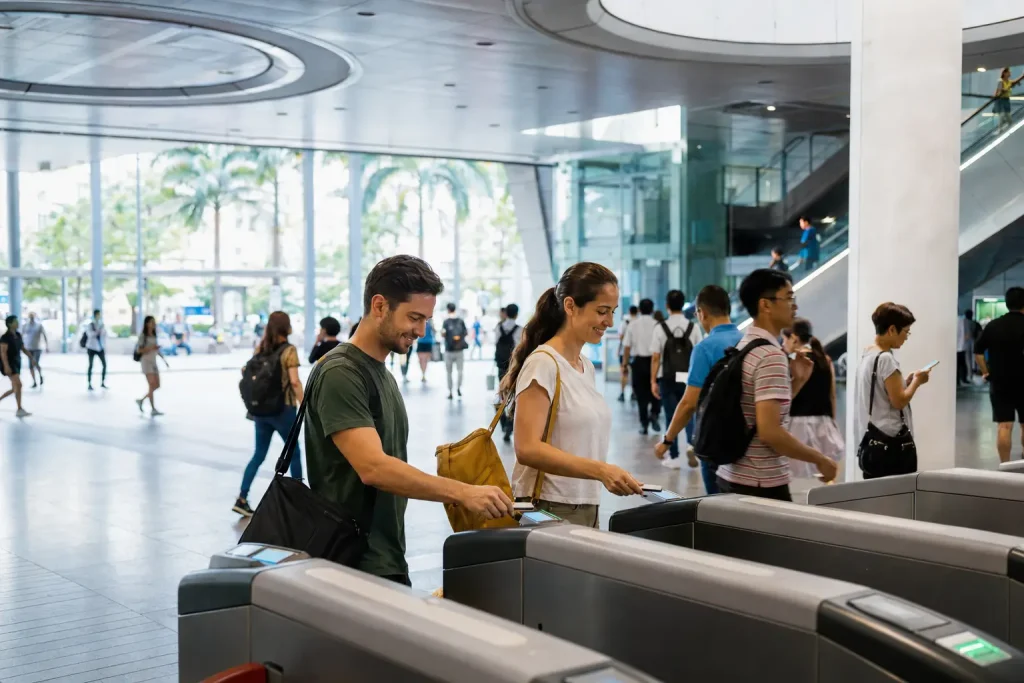
Singapore transportation is straightforward once you settle one question: how will you pay? Most short-stay visitors can use an eligible contactless bank card or mobile wallet on MRT trains and basic buses. A stored-value transit card suits travelers who prefer a dedicated card, while the Singapore Tourist Pass is useful only when its consecutive-day price beats the fares you would otherwise pay.
The network is integrated and distance-based, so transfers can be cheaper than treating every ride as separate. Tap with the same card or device at the beginning and end of each rail journey and when boarding and leaving a bus. Do not switch between a physical card and its phone-wallet version; the system may treat them as different payment methods.
The quick choice: bank card, stored-value card or Tourist Pass
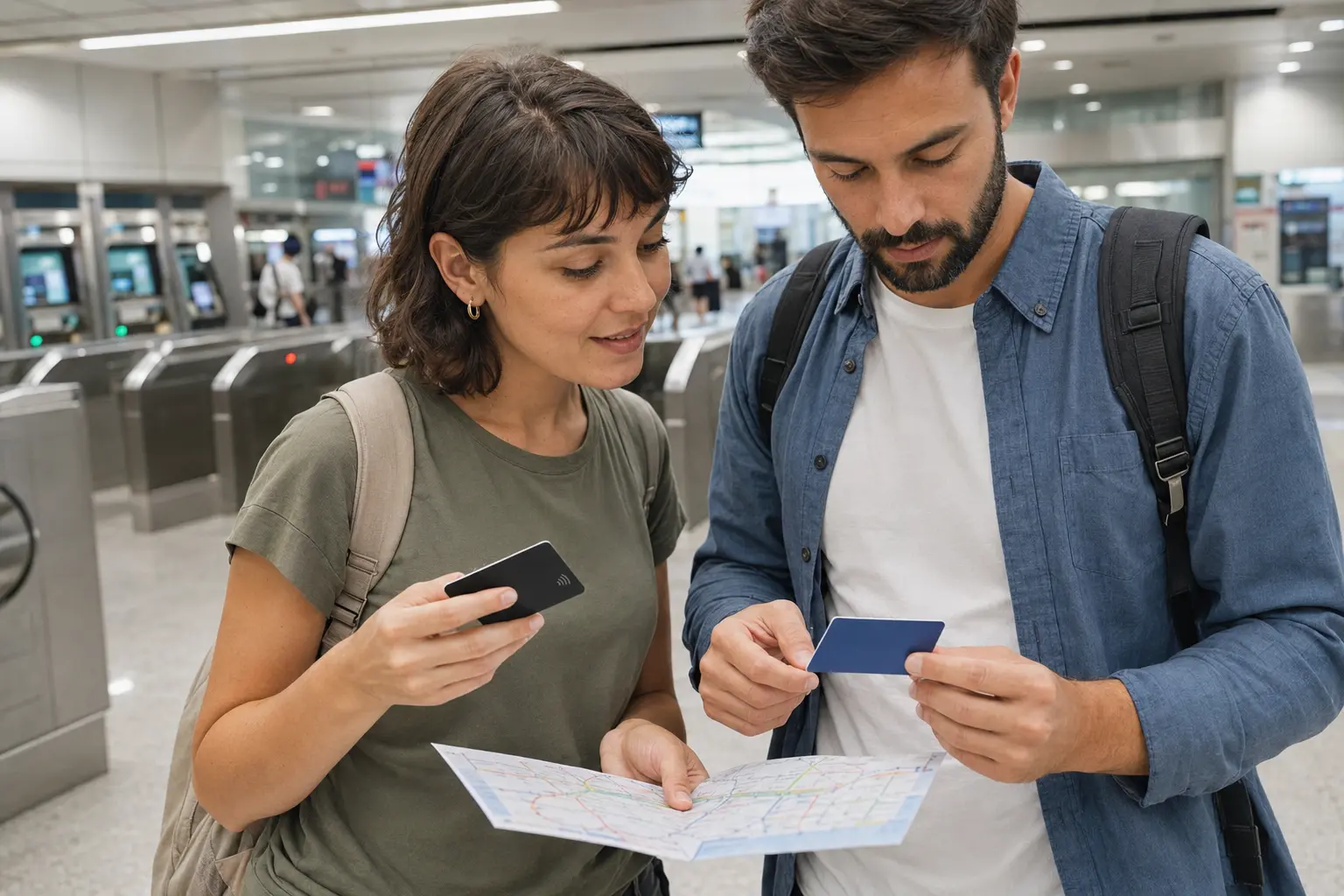
Use a contactless bank card when convenience matters and your issuer’s foreign transaction terms are reasonable. Buy a stored-value card when you want spending separated from your bank account or your card is not accepted. Consider a Tourist Pass when you expect many bus and MRT rides on consecutive days and value predictable cost over calculating every trip.
The pass does not cover every premium, express, private or attraction-linked service. Current prices, sales locations, refund conditions and coverage can change. Check the official Singapore Tourist Pass and SimplyGo pages shortly before travel rather than relying on a screenshot saved months earlier.
How MRT and bus fares work
Adult public-transport fares are generally based on distance. Eligible transfers within the rules are treated as one journey rather than a collection of unrelated tickets. This makes mixed MRT-and-bus routes practical when a station does not sit beside the final destination.
Tap in and out correctly. On buses, enter at the front, tap, move inward and tap again at the exit. On the MRT, tap through fare gates at both ends. A missing tap can trigger a higher fare, and repeatedly presenting the wrong card creates a small queue behind you—an audience nobody requested.
Using the Singapore MRT
The MRT is the default for long cross-city movement. Lines are color-coded, interchanges are clearly marked and trains connect the airport, central districts, residential towns and major attractions. Use the official network map or a current journey planner for route changes and temporary closures.
Read the direction by terminus
After choosing a line, confirm the platform direction using the line’s terminal station and the next stops. Large interchanges can require a substantial walk between platforms. Follow signs before assuming the platform across the corridor serves the return direction.
Allow time for station exits
Central stations may have many exits spread across several blocks or connected developments. Choose the exit nearest your destination before passing the final signboard. “Five minutes from the MRT” is a flexible phrase when the wrong exit adds an underground shopping center to the journey.
Singapore buses: useful beyond the rail map
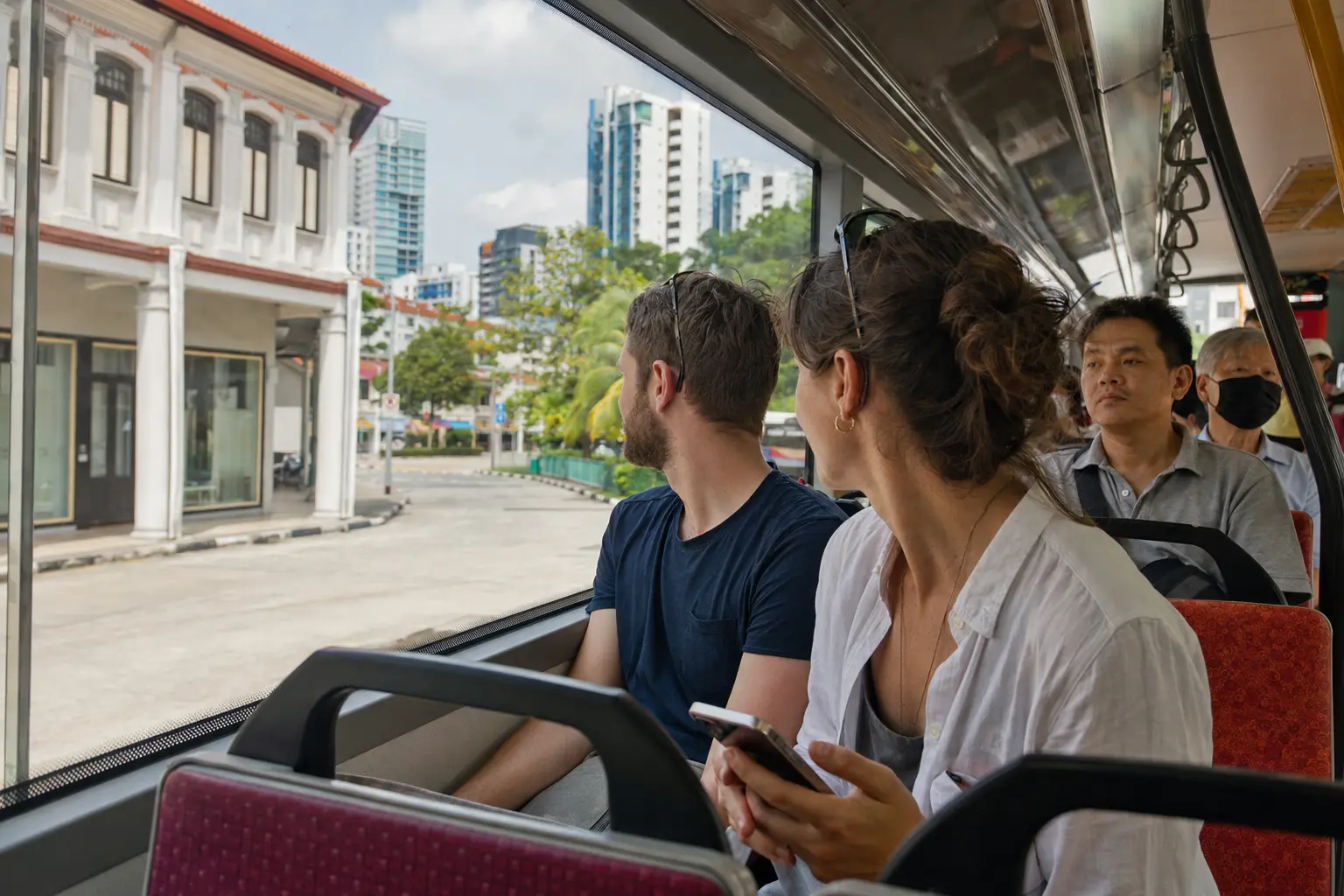
Buses cover the final gaps between stations and destinations, and they reveal neighborhood transitions that disappear underground. They are particularly helpful for Joo Chiat, park areas and routes where an MRT journey would require awkward backtracking.
Use a live journey planner, confirm the stop on the correct side of the road and signal before your stop when required. Stops may serve many routes, so check the bus number as it approaches. Inside, display information and apps can help, but watching the sequence of stops remains wise.
Give seats and space where needed
Priority seats are intended for passengers who need them, including older people, pregnant passengers and people with disabilities or injuries. Keep bags off seats, move away from doors and let passengers exit before boarding. During peak periods, removing a backpack from your shoulders is a small act of spatial diplomacy.
Changi Airport to the city
The MRT provides a low-cost route between Changi Airport and the city, normally requiring a transfer. It works well with manageable luggage and daytime arrival. Check the final train timing if landing late, and remember that immigration, baggage collection and terminal movement consume time before you reach the platform.
Taxis and ride-hailing are easier with heavy luggage, small children or a late arrival. Airport surcharges, peak pricing and road conditions affect the total. The fastest theoretical train route is not automatically the best after a long flight and an argument with a suitcase wheel.
The Singapore Tourist Pass
The official Tourist Pass offers unlimited rides on covered basic bus, MRT and LRT services for the selected validity period. As of the current official listing, versions extend from one through five consecutive days, but prices and product formats should be rechecked before purchase.
When the pass is worth considering
The pass suits travelers making several rides daily, staying away from the center or using buses frequently. It may also help families or planners who value a fixed transport budget. Compare the pass price against realistic daily trips, not an itinerary where every meal somehow requires another line.
When pay-as-you-go is simpler
If you group sights by neighborhood, many days involve only two or three paid journeys. In that case, contactless payment may cost less and avoids finding a sales location or managing pass validity. Walking remains the best transport inside compact areas such as Chinatown, Kampong Glam and the Civic District.
Taxis and ride-hailing
Licensed taxis are metered, with possible booking, airport, peak-period, location and late-night surcharges. Ride-hailing apps show an upfront or estimated price depending on the service. Pickup points at malls, hotels and attractions may be designated, so follow the app rather than standing beside the nearest traffic lane.
Use a car when rain is intense, trains have ended, luggage is heavy or the public-transport route requires several awkward transfers. During major events and storms, availability and prices can change quickly. Saving the hotel address in a form you can show the driver reduces friction.
Walking, cycling and heat
Singapore has extensive covered walkways, pedestrian links and park connectors, but midday heat and humidity change comfortable distances. A shaded kilometer can feel easy; an exposed one can rearrange the day. Carry water, use crossings and pause indoors during thunderstorms.
Shared and rental bicycles can suit park connectors or islands, but central pavements are not a casual cycling free-for-all. Follow current path rules, wear appropriate protection and avoid assuming a route is continuous because two green segments look close on a map.
Accessibility and traveling with luggage
Many MRT stations and buses provide step-free facilities, priority spaces and accessible routes, but lifts may sit at specific exits and temporary works can alter movement. Use official accessibility information for a wheelchair, stroller or mobility-sensitive itinerary.
Avoid rush-hour trains with large luggage when possible. Stand clear of doors, use lifts rather than carrying bags on escalators and allow extra interchange time. Accessibility is not merely a station icon; the final sheltered route between exit and destination matters too.
Service hours and late returns
MRT and bus operating times vary by line, station, route and day. Service may be extended for selected holidays or events, but extensions should never be assumed. Check the last journey from the actual origin, including any connection required.
For late nightlife, identify a taxi stand or ride-hailing pickup before the venue closes. A train that departs the first station before midnight may not help if your connecting line has already finished.
A simple transport strategy for three days
Use MRT for airport and cross-city trips, buses for the final neighborhood gap, and walking within each district. Pay with one consistent contactless method unless a realistic fare comparison supports the Tourist Pass. Save the official rail map offline and keep a small battery reserve for journey planning.
Group Day 1 around the Civic District and Marina Bay, Day 2 around Chinatown and Tiong Bahru, and Day 3 around Little India and Kampong Glam. Good routing reduces both fares and fatigue; the most efficient Singapore travel pass is still an itinerary that does not cross the island between lunch and coffee.
Final advice
Singapore public transit works best when you keep payment consistent, read station exits before surfacing and use buses without fearing them. Decide on a card after counting real rides, not imagined ones. Then let the MRT handle distance, buses handle the gaps and your feet handle the neighborhoods where the point is to notice what lies between stops.
That is usually all the system asks of a visitor.
Frequently Asked Questions
How do you pay for transportation in Singapore?
Most short-stay visitors can tap an eligible contactless bank card or mobile wallet directly on MRT trains and basic buses. A stored-value transit card suits travelers who prefer a dedicated card, while a Tourist Pass only pays off when its consecutive-day price beats the fares you'd otherwise pay.
Should you switch between a physical transit card and a phone wallet in Singapore?
No. Don't switch between a physical card and its phone-wallet version, since the system may treat them as different payment methods, which can break the tap-in and tap-out fare calculation.