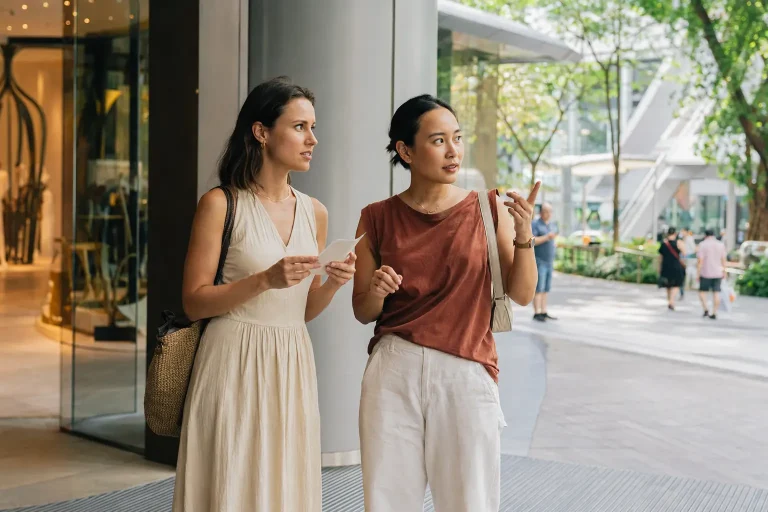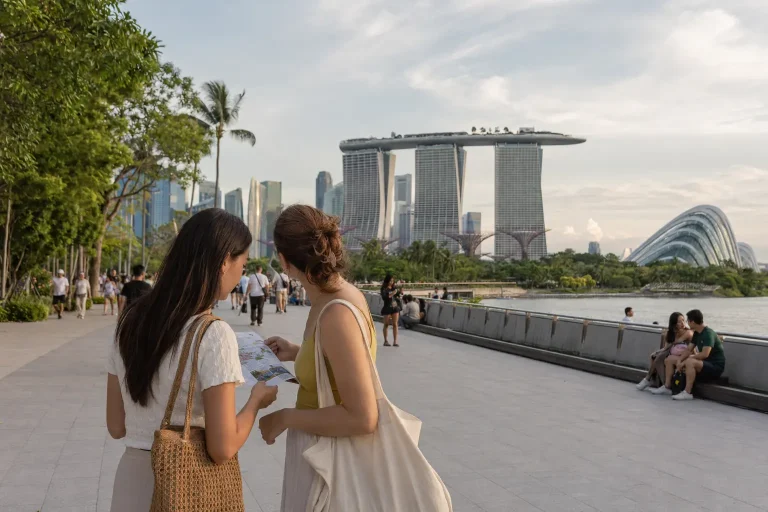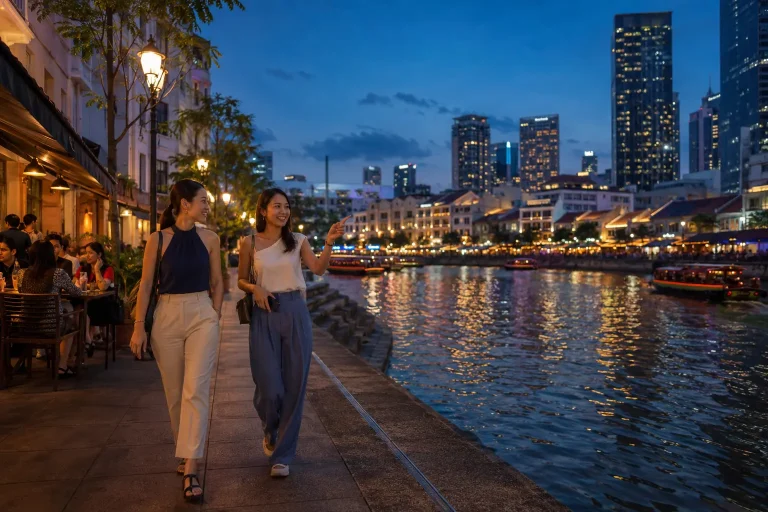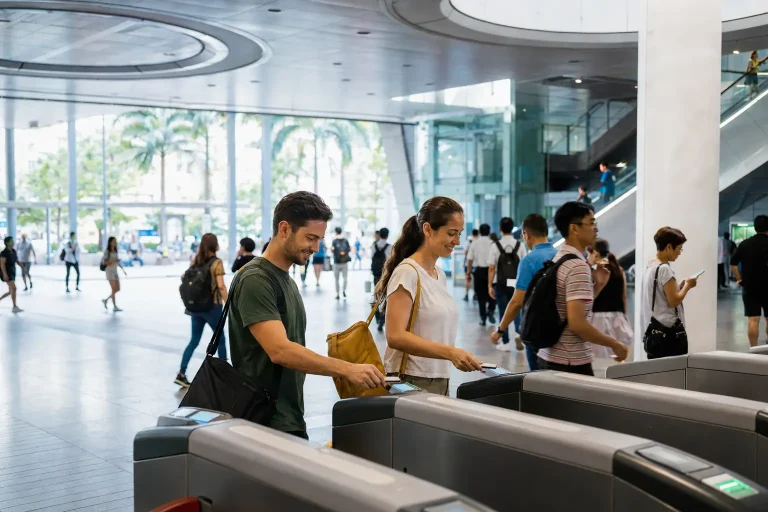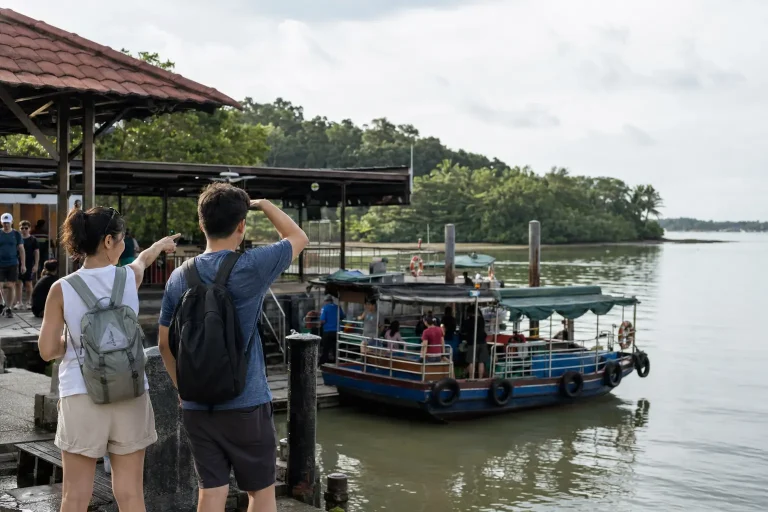
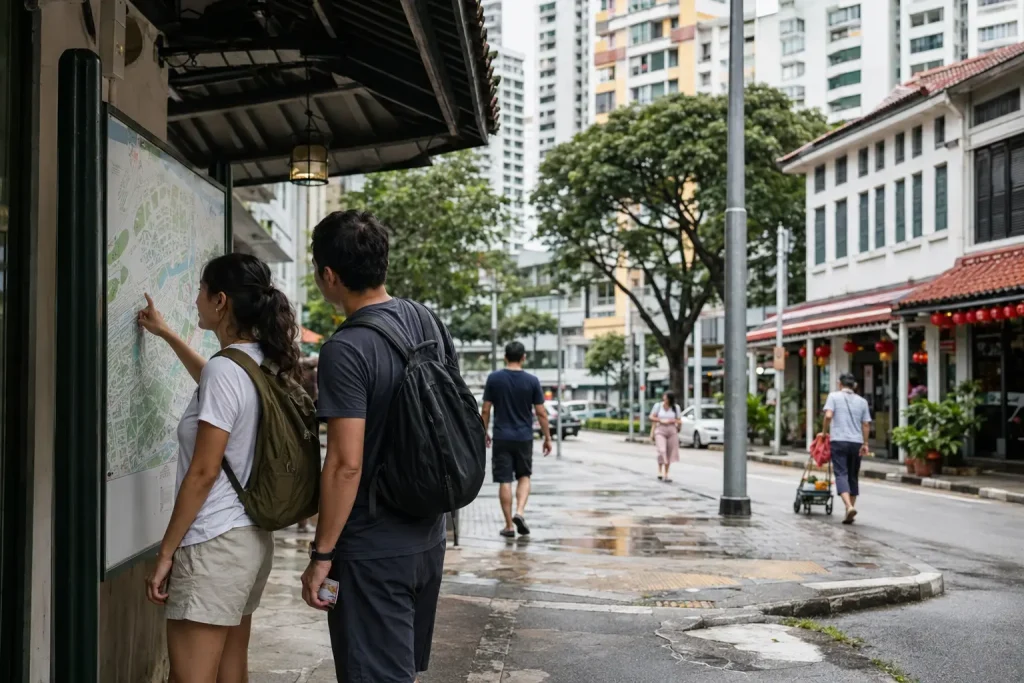
Singapore neighborhoods make more sense when treated as distinct pieces of city history, not colorful backdrops collected between attractions. Chinatown and Tanjong Pagar show how commerce, migration and redevelopment overlap; Little India and Kampong Glam remain active cultural districts; Tiong Bahru and Joo Chiat reveal residential architecture, food and daily routines beyond the skyline.
For a first trip, choose two adjacent areas for one day and one farther neighborhood for another half-day. Heat, rain and the temptation to stop for food make walking slower than the MRT map suggests. That is not inefficiency. It is usually where the city becomes legible.
A quick neighborhood guide
Choose the Civic District for museums, national institutions and colonial-era planning. Pair Chinatown with Tanjong Pagar for temples, shophouses, hawker food and the city’s business edge. Little India and Kampong Glam can share a day if you allow each enough time rather than treating both as quick color stops.
Visit Tiong Bahru for early housing architecture, a working market and an easy morning pace. Choose Joo Chiat and Katong for Peranakan heritage, food and an east-side neighborhood that rewards a longer walk. Add Queenstown, Everton Park or Toa Payoh only if ordinary housing landscapes genuinely interest you; residential does not automatically mean secret or superior.
Civic District and Bras Basah: how the national story is presented
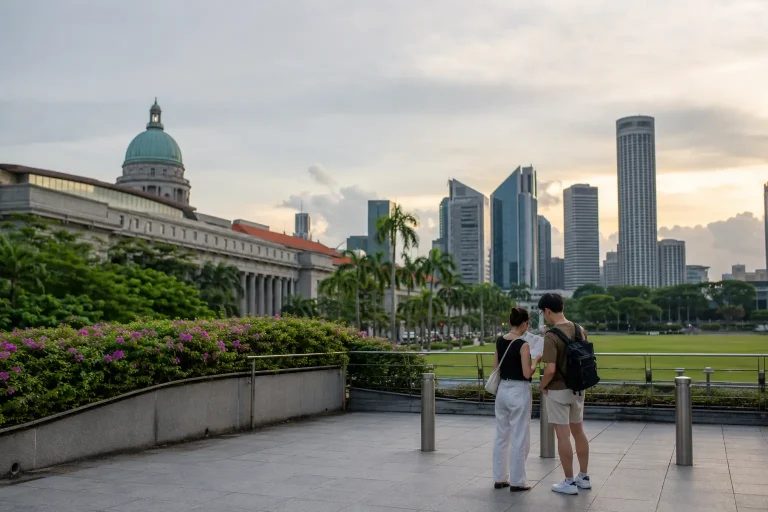
The Civic District gathers the National Gallery Singapore, Asian Civilisations Museum, Victoria Theatre, Padang and major government buildings around open lawns and the river. Bras Basah extends the cultural landscape through museums, schools, bookshops and arts spaces.
This is the best starting point for understanding how Singapore narrates its own history. Museum exhibitions provide context that a skyline walk cannot, while the surrounding architecture shows layers of colonial administration and post-independence civic identity. Begin indoors during the hottest hours, then walk toward the river later.
A sensible route
Start near City Hall, choose one major museum rather than three, cross the Padang and continue toward the Singapore River. If books or art supplies appeal, move toward Bras Basah Complex and the National Museum area. The district is compact, but institutional visits expand to fill the time available—museums have no respect for a schedule designed from thumbnail images.
Chinatown and Tanjong Pagar: temples, trade and towers
Chinatown contains Buddhist, Hindu and Muslim religious sites within a dense commercial district, reflecting migration and proximity rather than a single cultural storyline. Tourist-facing lanes sit beside traditional medicine shops, food businesses, housing and office towers.
Walk slowly around Telok Ayer, Kreta Ayer and the streets toward Tanjong Pagar. Read visitor rules at places of worship, cover shoulders or legs when requested and do not interrupt prayer for photographs. The neighborhood is most interesting when sacred sites, food and finance remain part of the same walk.
Continue into Tanjong Pagar
Tanjong Pagar shifts from conserved shophouses and Korean restaurants to office towers and newer mixed-use developments. It is useful for seeing how heritage preservation works alongside high land values. Continue toward Everton Park for a quieter housing estate with small businesses, but avoid describing residents’ front doors as undiscovered attractions.
Little India: commerce, worship and sensory density
Little India is one of Singapore’s most active street districts. Flower garlands, gold shops, fabric merchants, groceries, restaurants and religious buildings produce a density that deserves more than a fast walk down Serangoon Road.
Begin around Tekka Centre, then choose a few side streets and one religious site to visit respectfully. The Indian Heritage Centre can provide historical structure before shopping or eating. Sunday evenings and festival periods can be exceptionally busy; that energy is part of neighborhood life, but narrow pavements require patience.
Kampong Glam: Malay heritage beyond Haji Lane
Kampong Glam is associated with Malay royalty, Muslim community life, textile trade and later layers of independent retail and nightlife. Sultan Mosque anchors the district, while Arab Street, Bussorah Street and surrounding lanes each carry different commercial rhythms.
Haji Lane is visually immediate and often crowded. Photograph it, then widen the walk. Visit the Malay Heritage Centre when current opening status and exhibitions allow, browse fabric or fragrance shops and eat somewhere that helps explain the district’s regional connections.
Pairing Little India and Kampong Glam
The two areas are close enough to combine, but give each several hours. Start Little India in the morning, rest during midday heat, then continue to Kampong Glam for late afternoon and dinner. Rushing both before lunch reduces complex communities to façades and snacks.
Tiong Bahru: housing history with a working morning rhythm
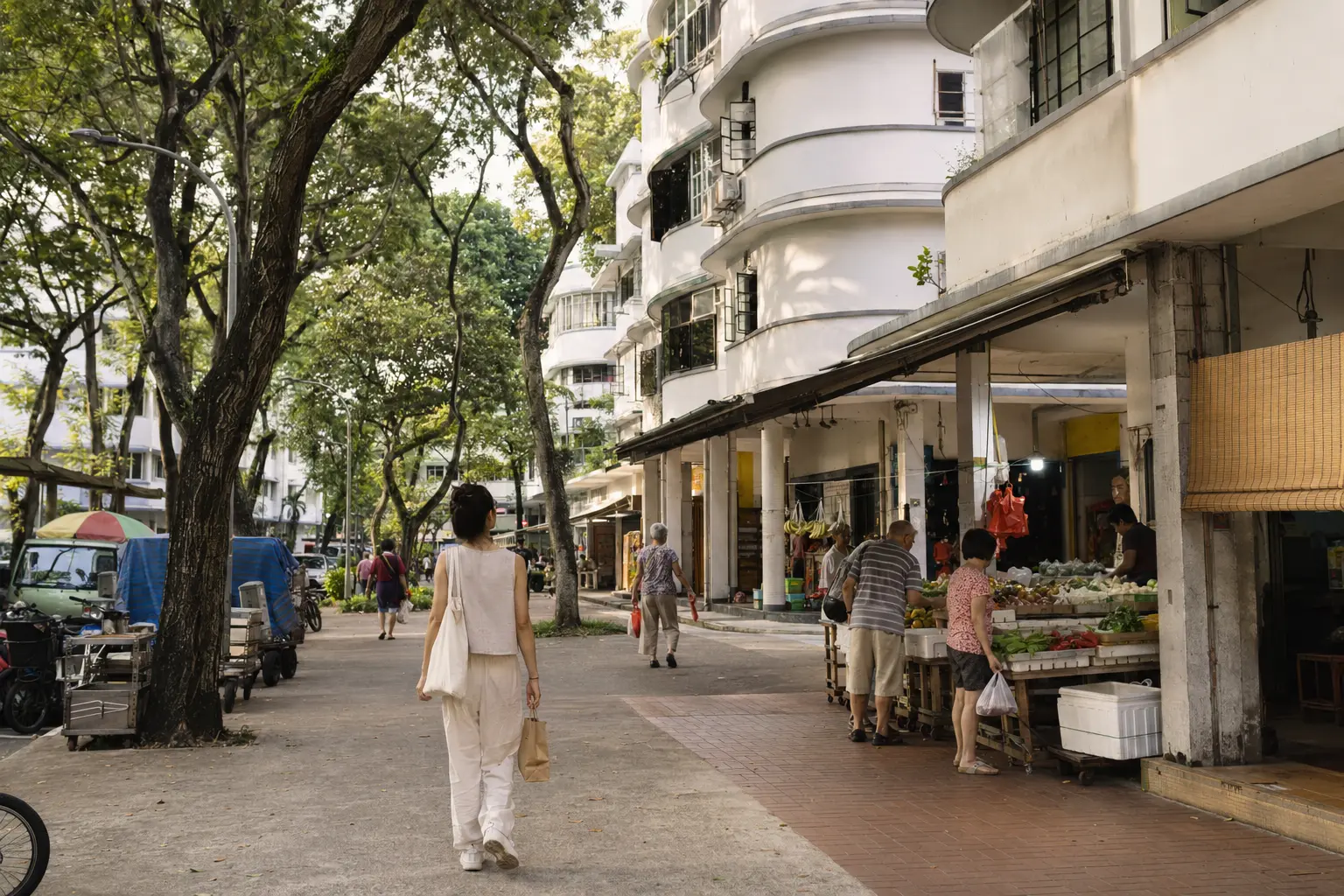
Tiong Bahru is known for low-rise Streamline Moderne blocks with curved balconies, shaded lanes and one of Singapore’s most recognizable prewar public-housing landscapes. It is also a lived-in estate with a market, hawker center, clinics, shops and residents who did not move there to improve anyone’s photo carousel.
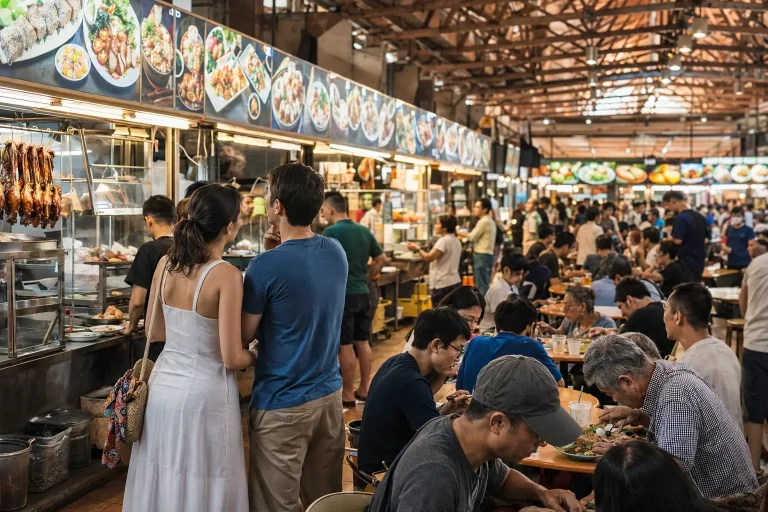
Come in the morning when the market and food stalls are active. Walk beyond the best-known bakery and bookstore, notice how sheltered ground floors and open spaces support daily errands, and keep residential privacy in mind. The area works well as a half-day rather than a full sightseeing marathon.
Joo Chiat and Katong: Peranakan heritage and east-side food
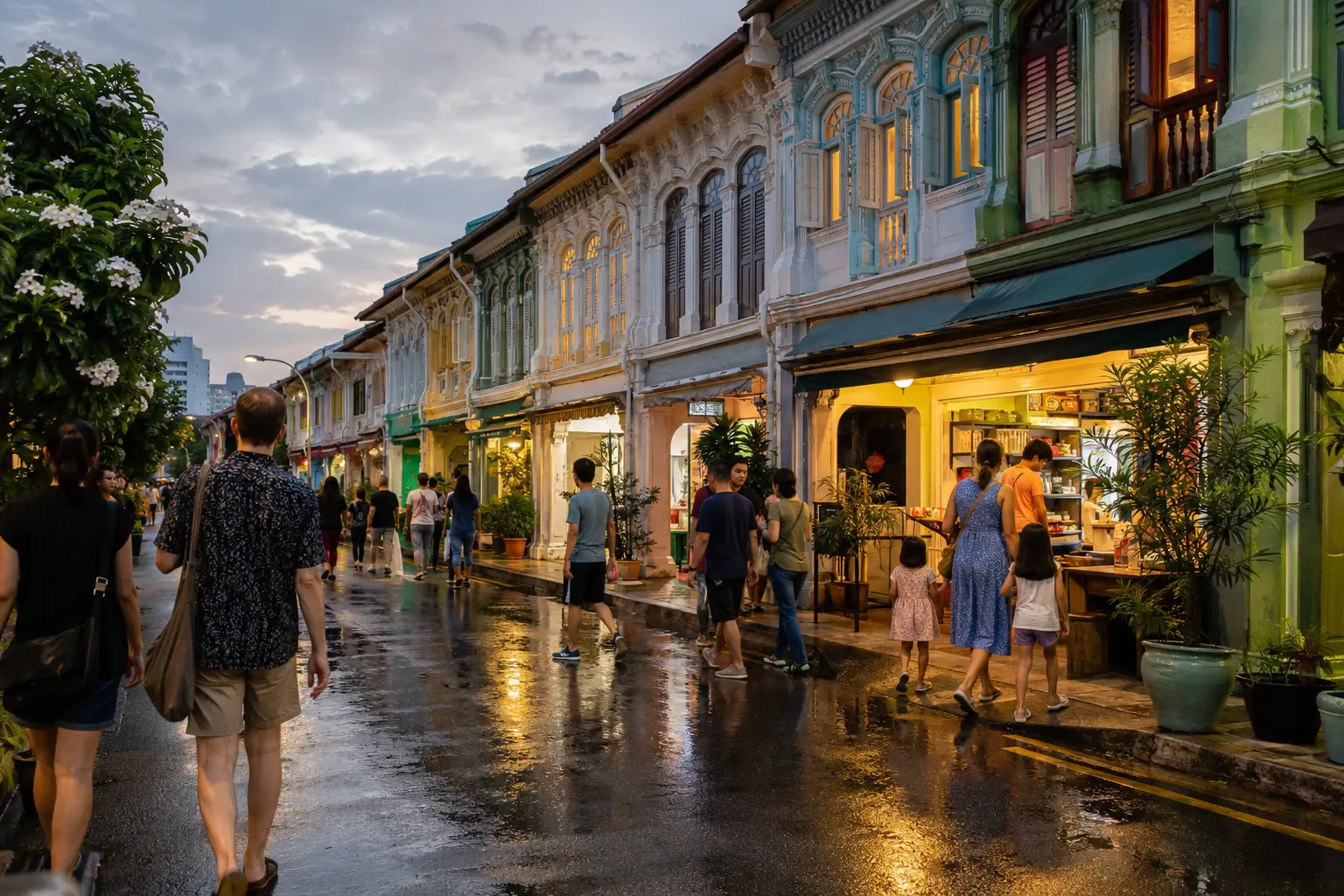
Joo Chiat and Katong contain elaborate shophouses, religious sites, schools and food businesses associated with Peranakan, Eurasian, Chinese, Malay and other communities. The famous pastel façades are only one visual layer.
Walk Joo Chiat Road and selected side streets, then continue toward Katong’s food stops. Peranakan culture developed through centuries of regional exchange and cannot be reduced to decorative tiles. Museums, heritage businesses and thoughtful food experiences provide more context than using a private house as a portrait wall.
When to visit
Late afternoon into early evening suits the architecture and dinner, while mornings are quieter. Joo Chiat is farther from the central sightseeing core than Chinatown or Kampong Glam, so commit to the east rather than inserting it between downtown reservations.
Queenstown, Toa Payoh and everyday housing landscapes
Travelers interested in planning and public housing may value Queenstown or Toa Payoh, among Singapore’s important satellite-town landscapes. Town centers, hawker centers, libraries, playgrounds and housing blocks show how daily life is organized beyond the historic core.
These areas need humility. They are not attractions in the conventional sense, and residents should not become scenery. Use official heritage trails where available, visit public commercial spaces and avoid photographing people closely or entering semi-private housing areas without reason.
How to build a neighborhood day
Plan one indoor anchor, one food stop and one long walk. In the central area, Civic District–Chinatown or Little India–Kampong Glam are workable pairs. Tiong Bahru can combine with Chinatown or the river; Joo Chiat deserves its own east-side half-day.
Use MRT for the long transfer, then walk inside the district. Buses often reveal more of the transition between neighborhoods, but allow extra time and check the stop direction. Carry water, an umbrella and a light layer for aggressively air-conditioned interiors.
Read distance by shade, not only kilometers
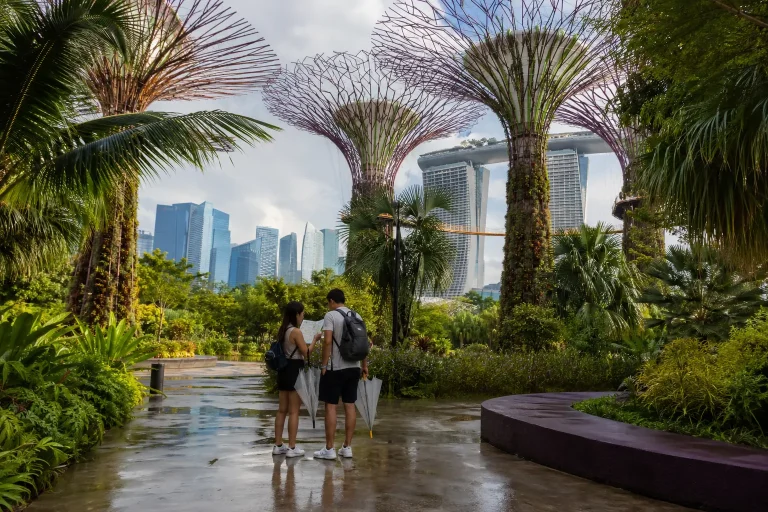
A two-kilometer route under covered walkways can feel easier than a shorter exposed stretch at noon. Build breaks around libraries, museums, hawker centers or cafés, and cross major roads at designated crossings rather than following a map pin into an unfriendly junction. During heavy rain, pause instead of trying to protect a full camera setup and navigate simultaneously.
Return visits are often more rewarding than adding another district. A neighborhood seen only at lunch may feel entirely different during morning market hours or after office workers arrive for dinner. If one place catches your attention, let it replace the weaker item on the list. The city will survive the omission.
Neighborhood etiquette
Places of worship, wet markets and housing estates operate for residents first. Follow dress and photography rules, keep entrances clear, lower your voice near homes and do not touch offerings or ceremonial objects. Ask before photographing individuals or shop interiors.
Avoid calling every ordinary street “authentic.” Singapore’s malls, towers and planned estates are as real as its shophouses. The more useful distinction is whether a place helps you understand how people live, trade, worship or spend time.
Final advice
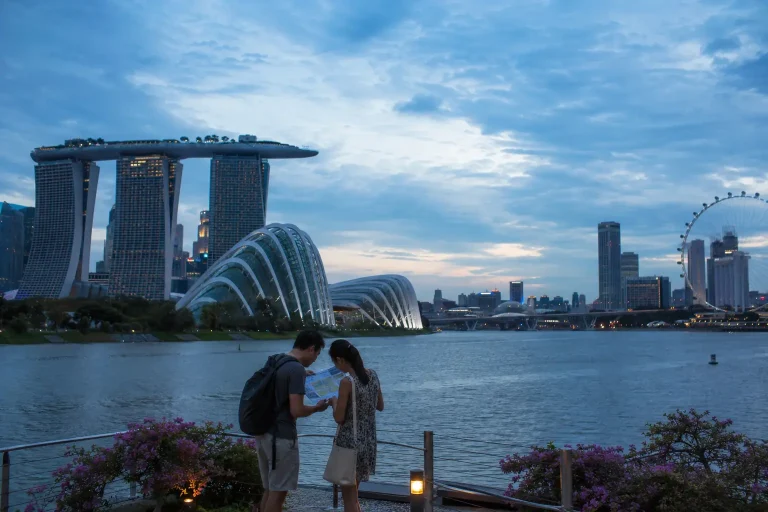
The best Singapore neighborhoods are not ranked by how different they look from Marina Bay. Choose them for the story you want to understand: national institutions, migration, religious life, housing, food or architectural change. Give each area enough time to move beyond its most photographed block, and the city begins to feel connected rather than assembled from separate postcards.
Frequently Asked Questions
What are the best Singapore neighborhoods to explore on foot?
Chinatown and Tanjong Pagar show how commerce and migration overlap, Little India and Kampong Glam remain active cultural districts, and Tiong Bahru and Joo Chiat reveal residential architecture and daily routines beyond the skyline.
How many Singapore neighborhoods should you visit in one day?
Choose two adjacent areas for one day and one farther neighborhood for another half-day. Heat, rain, and food stops make walking slower than the MRT map suggests.