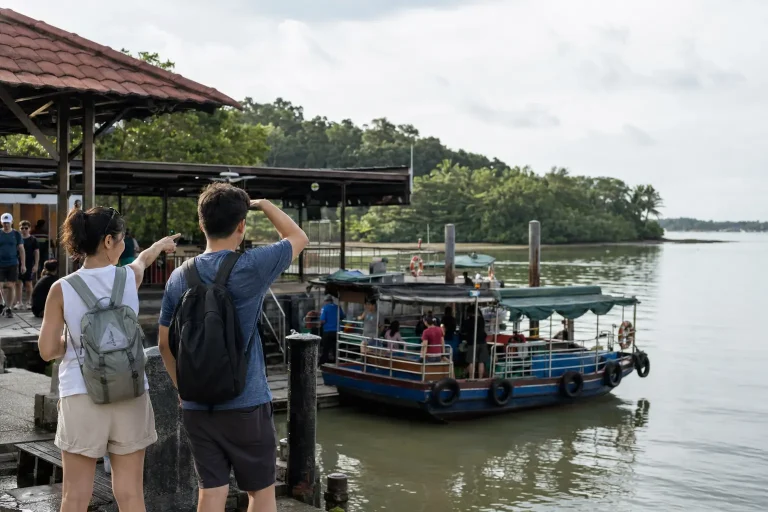
Singapore food is not a single cuisine politely contained by national borders. It is the result of Malay, Chinese, Indian, Peranakan, Eurasian, and other communities cooking beside one another, adapting ingredients, and developing fiercely specific versions of familiar dishes. The best way to begin is not by chasing a definitive top-ten list. Eat across several meal settings: a kopitiam breakfast, a specialist hawker lunch, a shared dinner, and one dessert or late snack.
The quick answer: ten dishes that form a useful first taste
| Dish | What to expect | Best moment |
|---|---|---|
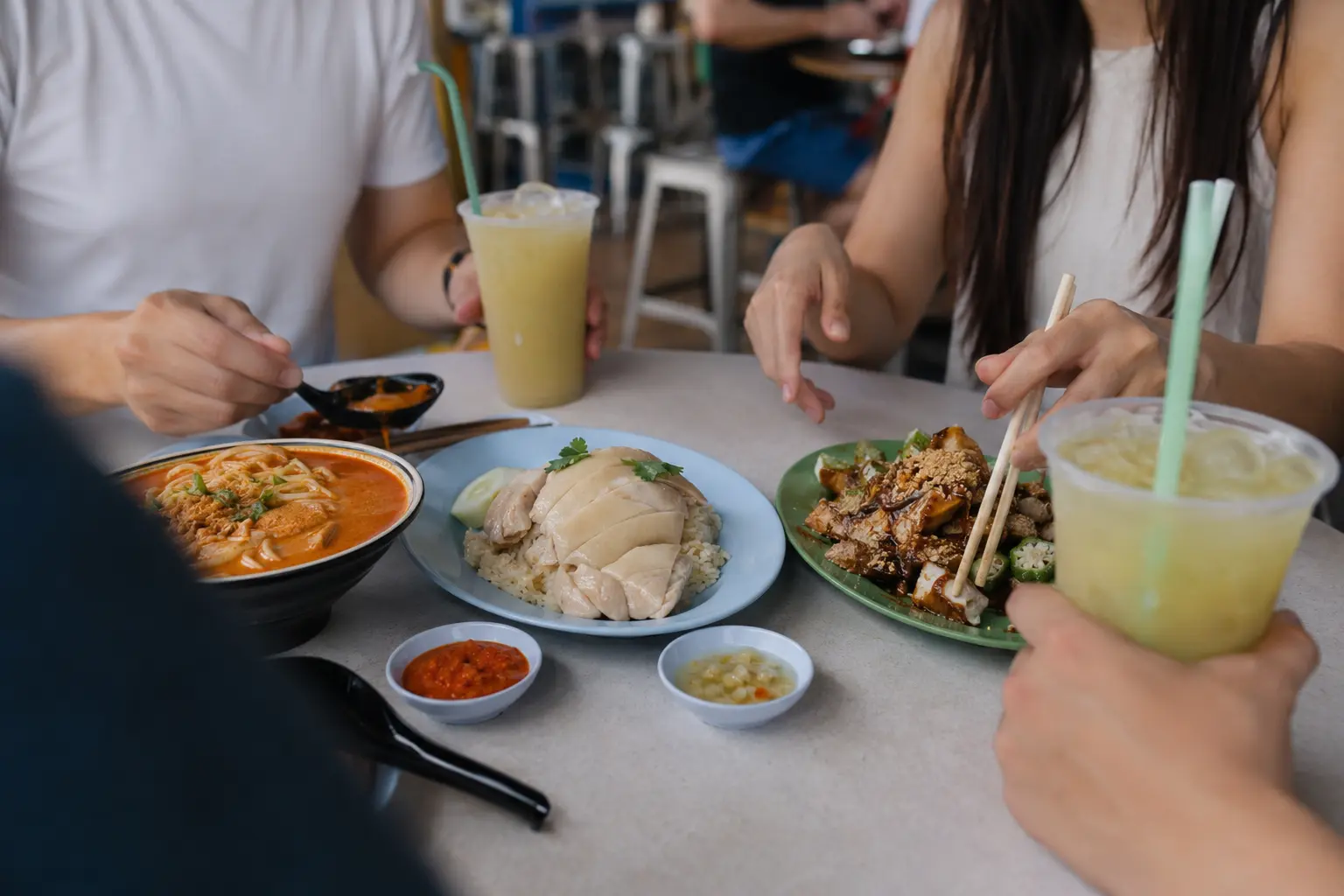
| Hainanese chicken rice | Poached or roasted chicken, fragrant rice, chili and ginger | Straightforward first hawker lunch |
| Laksa | Coconut-rich spicy noodle soup, often with seafood | Lunch when you can sit and linger |
| Char kway teow | Wok-fried rice noodles with dark sauce and savory additions | Shared as part of a larger meal |
| Hokkien mee | Prawn-stock noodles with seafood and lime | Dinner at a specialist stall |
| Nasi lemak | Coconut rice with sambal and varied accompaniments | Breakfast or casual lunch |
| Roti prata | Flaky griddled bread with curry | Breakfast or supper |
| Satay | Skewers grilled over charcoal with peanut sauce | Evening, especially with a group |
| Bak kut teh | Peppery pork-rib soup in the common Singapore style | Breakfast or lunch |
| Rojak | Fruit, vegetables and fried dough in a dark sweet-savory dressing | A contrasting shared plate |
| Kaya toast set | Toast, coconut-egg jam, soft eggs and coffee | The classic kopitiam start |
This is an opening vocabulary, not a culinary constitution. Availability, preparation, and community associations matter more than the number of boxes checked.
Start at a hawker center, but understand what it is
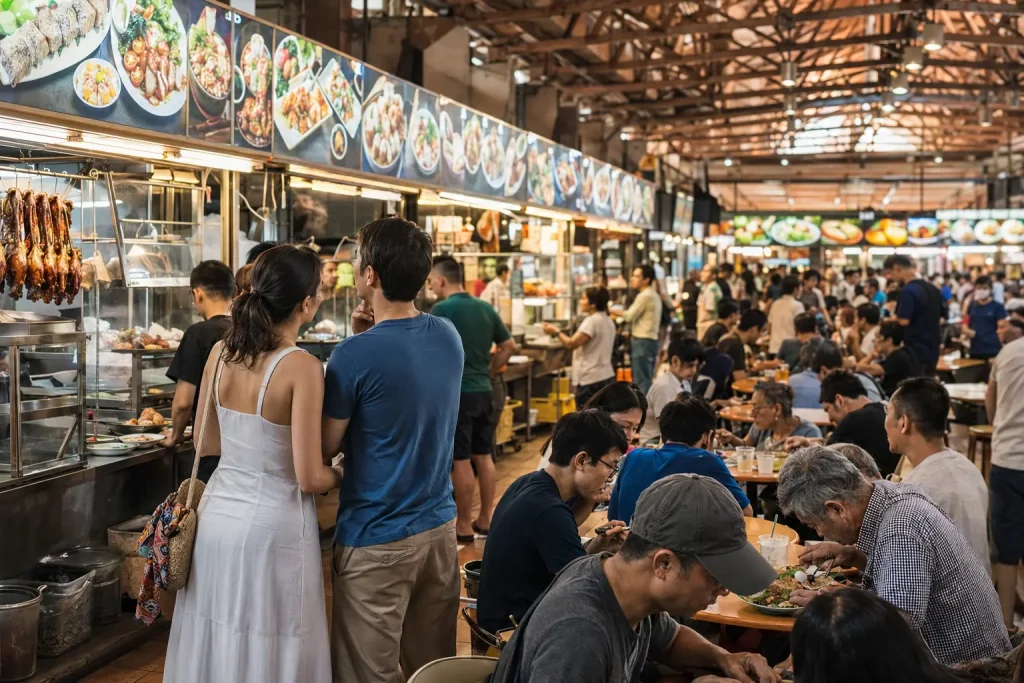
Singapore’s hawker culture is recognized by UNESCO, yet hawker centers are working public dining rooms rather than heritage performances. Individual stalls commonly specialize in one dish or a narrow family of dishes. That specialization is why ordering from several stalls works better than expecting one vendor to produce a banquet.
Choose a center that fits your route. Maxwell and Chinatown Complex are convenient for Chinatown; Old Airport Road offers enormous variety away from the postcard core; Tekka Centre connects naturally with Little India; Tiong Bahru Market suits a neighborhood morning; Lau Pa Sat is architecturally memorable and central, though its location and evening satay scene attract visitors.
Newton Food Centre is famous, but fame does not make it compulsory. Check prices before ordering seafood, confirm portions, and treat aggressive recommendations as sales rather than fate.
How to order without turning lunch into an exam
Walk one circuit before choosing. Look for stalls preparing a focused dish and observe what nearby diners are eating. A long line may signal quality, but queues also follow social media; another busy specialist can be the better use of a short trip.
Order at the stall, note the table number if delivery is offered, and ask when you are unsure whether to collect. Cashless payment is widespread, but an international card will not work at every small vendor, so keep some Singapore dollars available.
Return trays and crockery to the designated station. Singapore’s tray-return system is part of normal hawker-center use, not an optional gesture. At peak lunch, secure a legitimate seat without occupying a large table for two people.
Breakfast: learn the kopitiam rhythm
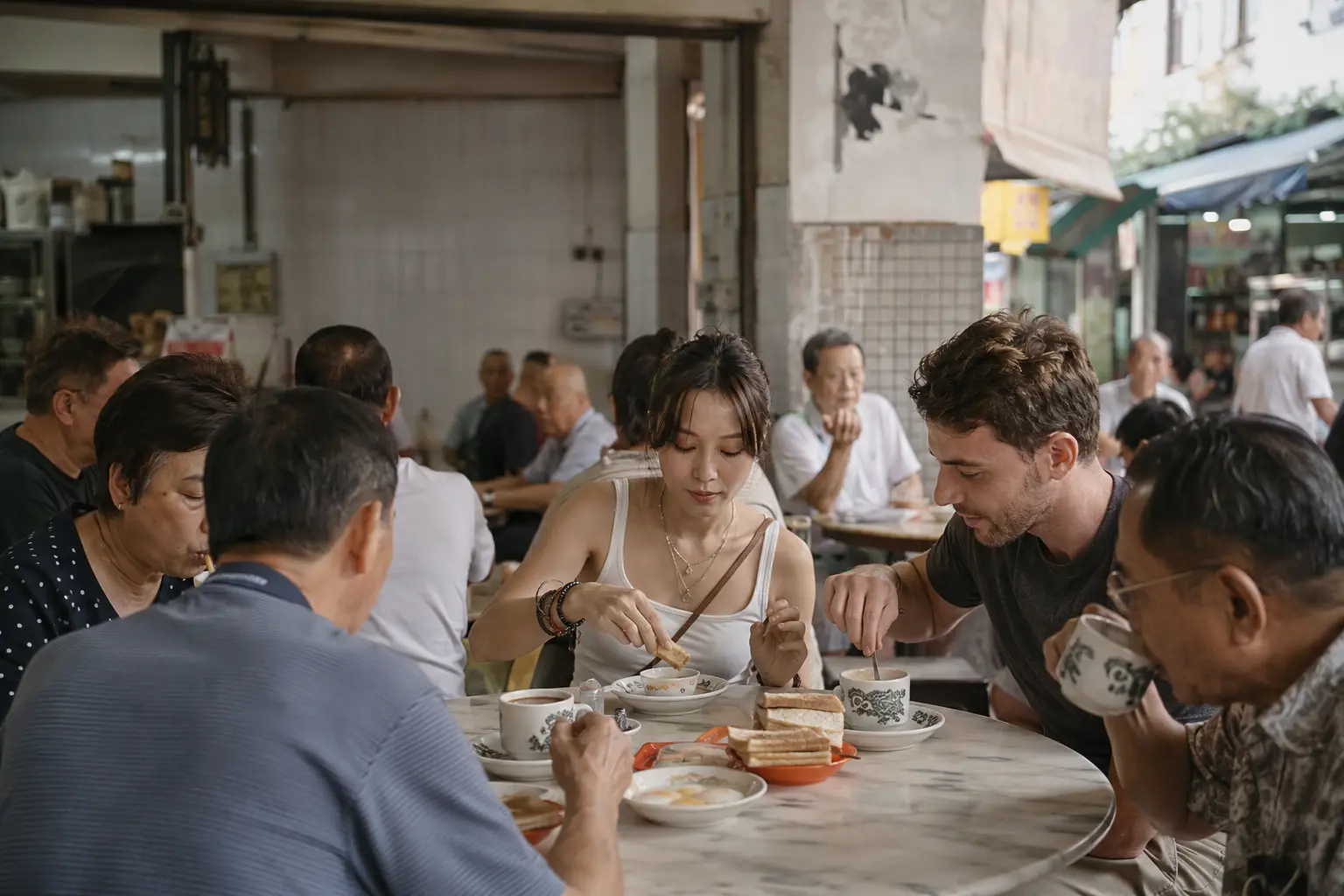
A kaya toast set combines crisp toast spread with kaya and butter, soft-boiled eggs seasoned to taste, and kopi or tea. The pleasure lies in contrast: hot toast, cool butter, sweet coconut jam, savory eggs, and strong coffee.
Coffee vocabulary varies by preparation. Kopi uses coffee with condensed milk; kopi-o omits milk but commonly includes sugar; kopi-c uses evaporated milk. “Siew dai” asks for less sugar. If that linguistic choreography feels ambitious before caffeine, point politely or use the displayed menu.
Roti prata, nasi lemak, congee, noodles, and dim sum also belong to Singapore mornings. Do not eat identical hotel buffet eggs for five days and conclude breakfast culture was hiding.
Rice dishes: simple forms with serious detail
Hainanese chicken rice depends as much on the rice, sauces, broth, and chicken texture as on the meat itself. Try poached and roasted versions if sharing. The chili should sharpen the dish rather than become a bravery test.
Nasi lemak begins with coconut rice and sambal, then expands through fried chicken, fish, egg, peanuts, anchovies, and other accompaniments. Malay and Chinese versions may present different combinations; neither needs to be reduced to the other.
Claypot rice rewards patience because it is cooked to order and develops a crisp layer at the base. Order it when you have time, not seven minutes before a museum reservation.
Noodles and soups: choose by mood, not ranking
Laksa offers a rich, spicy coconut broth, with Katong laksa particularly associated with the east. Hokkien mee uses noodles cooked with a deep prawn and seafood stock. Char kway teow is darker, smokier, and best appreciated fresh from a hot wok.
Fishball noodles, wanton mee, mee rebus, mee siam, and prawn noodles demonstrate why “best noodles” is a largely decorative argument. Decide whether you want broth, wok char, tang, coconut richness, or a lighter meal, then find a stall that specializes.
Bak kut teh in Singapore is commonly peppery and clear in the Teochew style, served with rice, tea, and optional sides. It is fortifying rather than delicate, especially in an over-air-conditioned dining room.
Indian and Malay meals deserve more than one token stop
Little India is useful for dosa, idli, biryani, banana-leaf meals, sweets, and regional Indian cooking beyond the dishes most familiar abroad. Ask about spice if necessary, but do not assume every red gravy has the same heat or origin.
Kampong Glam, Geylang Serai, and hawker centers across the island provide Malay dishes such as nasi padang, mee rebus, lontong, soto, and grilled seafood. A nasi padang counter lets you combine rice with several prepared dishes; clarify prices when selecting premium seafood.
Roti prata crosses meal boundaries with admirable confidence. Eat it plain or with egg before moving to novelty fillings that photograph better than they taste.
Peranakan food: plan one sit-down meal
Peranakan cooking developed through Chinese and Malay cultural exchange, with distinct local histories and labor-intensive spice pastes. Dishes may include ayam buah keluak, babi pongteh, chap chye, assam fish, and kueh.
A sit-down restaurant is often the best introduction because several dishes are meant for sharing and require explanation. Reserve if the restaurant is small, and bring enough people to taste contrasts without ordering a diplomatic summit.
Katong and Joo Chiat provide a geographically coherent day for Peranakan architecture, food, and sweets, though excellent restaurants exist elsewhere.
Seafood and chili crab: order with your wallet awake
Chili crab is sweet-savory, gently spicy by many local standards, and designed for sharing with buns that collect the sauce. Black-pepper crab is a drier, more aromatic alternative. The crab itself is often sold by weight.
Ask the price per unit or weight, request the estimated total, and confirm before cooking. This is especially important at visitor-heavy venues. The mess is part of the experience; provide no white linen with emotional significance.
Snacks, desserts and drinks worth making room for
Try popiah, curry puffs, otak-otak, or satay when they naturally fit the day. Ice kacang and chendol answer the weather with shaved ice, coconut milk, syrups, beans, jellies, or palm sugar in varying combinations. Kueh offers an entire vocabulary of steamed, baked, glutinous, coconut-rich, and vividly colored sweets.
Fresh sugarcane juice is refreshing but still sweet. Calamansi adds acidity. Bandung, teh tarik, soy drinks, and local coffee create alternatives to treating every hot afternoon as an invitation for another imported café chain.
Food safety, dietary needs and useful manners
Hawker centers are regulated environments, but use ordinary judgment: choose busy stalls, eat cooked food promptly, and keep hydrated. Diners with severe allergies should carry translated details and understand that shared woks, sauces, stocks, and utensils complicate guarantees.
Vegetarian does not automatically mean fish-free or shellfish-free; stocks, sambal, and sauces may contain seafood. Halal-certified stalls display recognized certification, while a meat-free appearance is not evidence of halal preparation.
Queue calmly, do not block stall fronts while debating, and clear the table after eating. Photographing your own food is easy; filming workers at close range deserves permission.
A practical three-day eating plan
Day one: learn the everyday formats
Eat a kopitiam breakfast, a chicken-rice or noodle lunch near the Civic District, and satay or a shared seafood dinner. This gives you three different ordering systems before chasing individual dishes.
Day two: Chinatown and a shared dinner
Use Chinatown for hawker specialties and book a Peranakan or contemporary Singaporean dinner. Keep lunch selective so the evening meal still has an audience.
Day three: Indian and Malay Singapore
Eat in Little India or Kampong Glam and finish with chendol, kueh, or a late roti prata. Choose the district that already fits your sightseeing instead of commuting solely for a famous stall.
The point is contrast, not volume. Singaporean food becomes legible when you notice who cooks a dish, when people eat it, and what kind of dining room surrounds it. Follow specialists, share widely, and leave one meal unplanned—the stall you notice while hungry often beats the one saved in your phone for six months.
Frequently Asked Questions
What is the best Singapore food for a first visit?
Start with a kopitiam breakfast, a specialist hawker lunch, a shared dinner, and one dessert or late snack rather than chasing a single top-ten list. Hainanese chicken rice makes a straightforward first hawker lunch.
Is Singapore food all one cuisine?
No. Singapore food reflects Malay, Chinese, Indian, Peranakan, and Eurasian communities cooking alongside one another, each developing distinct versions of familiar dishes rather than a single unified national cuisine.