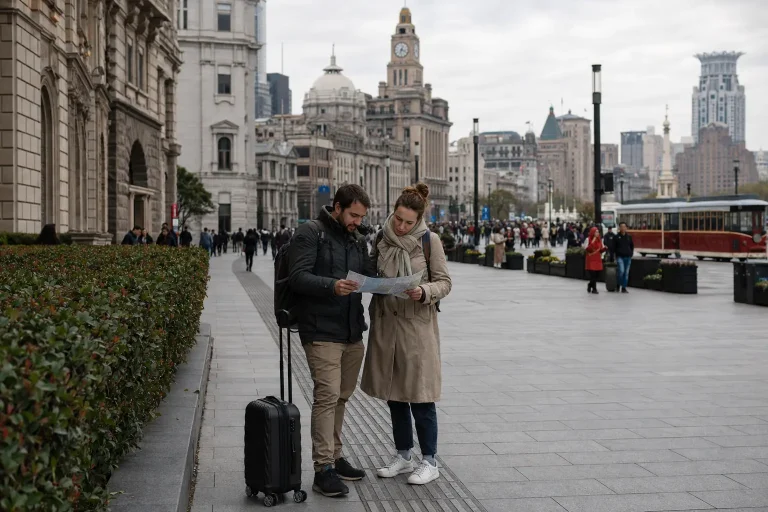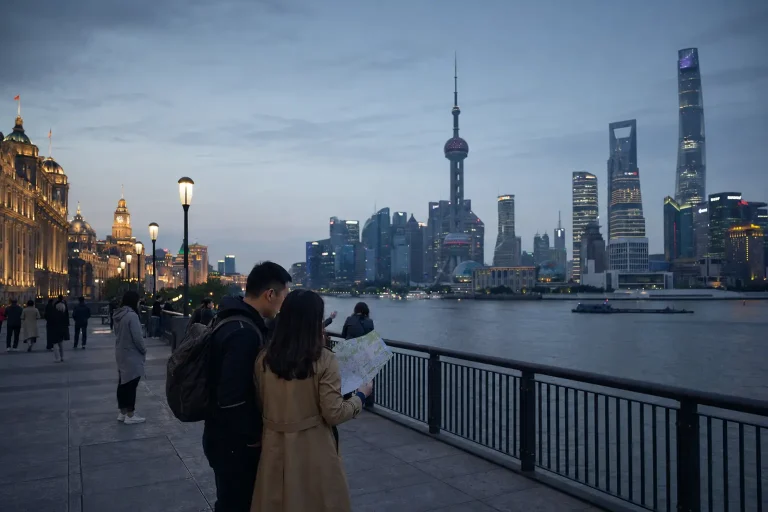
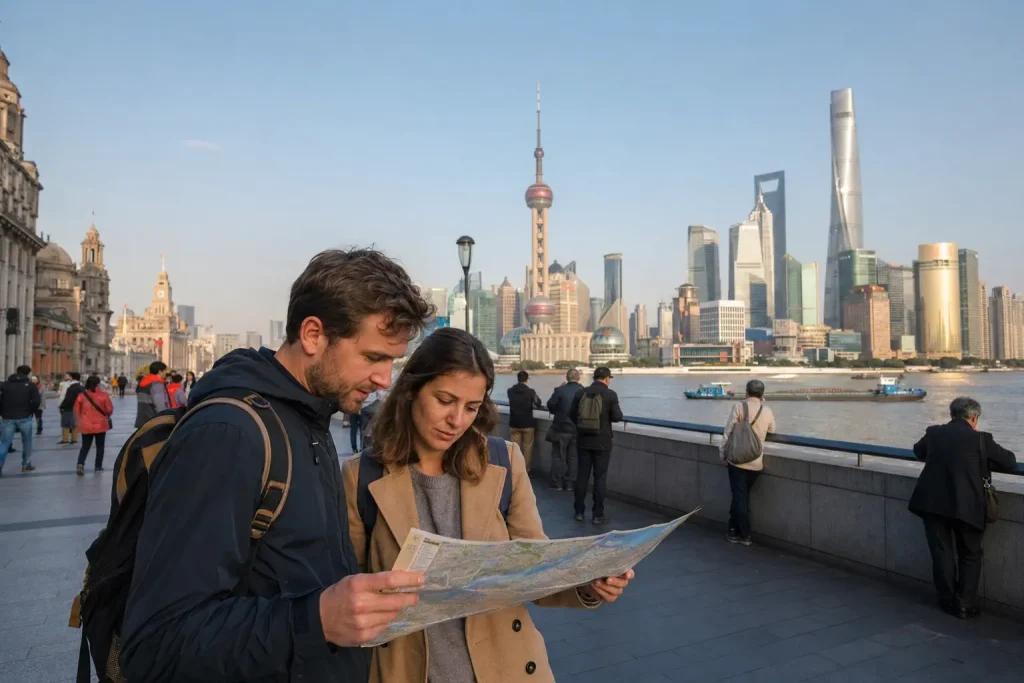
A good Shanghai itinerary needs three full days. Use day one for the Bund, People’s Square and Nanjing Road; day two for Yu Garden, the old city and Lujiazui; and day three for the former French Concession, Jing’an and one cultural stop. With four or five days, add Shanghai Museum East, a West Bund art afternoon, a water town or a deeper neighborhood day. Do not count an evening arrival and morning departure as two sightseeing days.
Shanghai’s scale rewards geographic discipline. Group each day by side of the Huangpu River and nearby metro corridors, leaving enough unscheduled time for meals, security checks and the wrong station exit.
Shanghai itinerary at a glance
| Day | Main area | Core experiences | Evening |
|---|---|---|---|
| 1 | Central Puxi | People’s Square, Nanjing Road, Bund | Bund lights or nearby dinner |
| 2 | Old city + Pudong | Yu Garden, lanes, ferry/metro, Lujiazui | Pudong view or Puxi food |
| 3 | Former French Concession + Jing’an | Residential streets, shikumen context, temple or museum | Jing’an or Xintiandi |
| 4 | Culture or local neighborhoods | Shanghai Museum East, West Bund or northern districts | Flexible |
| 5 | Excursion | Zhujiajiao, Suzhou or Hangzhou | Return without a fixed late plan |
For a first visit, resist moving the day-trip column into day three. Shanghai needs more than a skyline photograph to make sense.
Before day one: make the city usable
Set up a payment method accepted in mainland China, download a map that works reliably there and save hotel details in Chinese. International roaming or an appropriate eSIM may provide access to familiar services, but connectivity varies by provider and policy. Keep an offline copy of the address.
Shanghai has two major airports. Pudong is far east of the center; Hongqiao is much closer to western central districts and shares a transport hub with the high-speed railway station. Metro, Maglev, airport bus and taxi operating hours matter after a late flight.
Choose a central base before optimizing every attraction. The where to stay in Shanghai guide compares People’s Square, the Bund, Jing’an, the former French Concession and Lujiazui by actual daily friction.
Day 1: People’s Square, Nanjing Road and the Bund
Begin at People’s Square to establish the city’s civic and commercial center. If Chinese art and material culture are priorities, visit the Shanghai Museum on the square early. Its current official guidance lists Tuesday–Sunday hours, with Monday closure except national holidays; since September 2025, individual visitors may enter with valid ID without advance reservation. Temporary exhibitions and holiday rules still require a fresh check.
From the square, walk east along or parallel to Nanjing Road. The pedestrian street is useful for scale and people-watching, but side streets such as Fuzhou Road provide bookstores, smaller food options and a less polished version of central Huangpu.
Reach the Bund before sunset
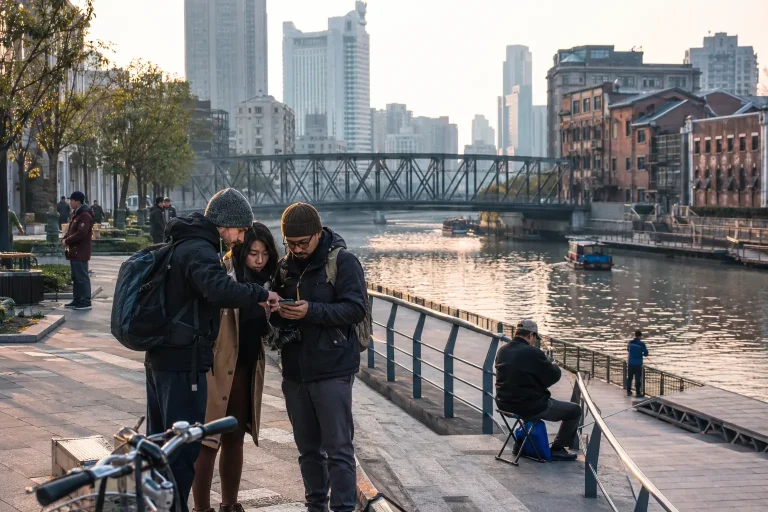
Continue to the Bund in late afternoon. Read the Puxi buildings first: they were banks, trading houses, clubs and institutions tied to Shanghai’s treaty-port economy. Across the river, Lujiazui presents a later financial city. The contrast is visually convenient; the history behind it is not a tidy “old meets new” slogan.
Walk north or south according to energy rather than completing the entire waterfront. Stay through blue hour if visibility is good, then eat in Huangpu or return toward the hotel. A river cruise can be pleasant, but it is unnecessary if the promenade already delivers the view.
A rainy-day replacement
Move the museum to the afternoon and use covered shopping or a long lunch. The Bund is still atmospheric in light rain, but wind along the river can make an umbrella perform interpretive dance. Avoid the waterfront during severe weather warnings.
Day 2: Yu Garden, the old city and Lujiazui
Arrive at Yu Garden near opening time. The classical garden is distinct from the surrounding commercial bazaar, City God Temple area and reconstructed shopping streets. The garden normally closes one weekday and uses timed ticketing or current entry procedures, so confirm the official schedule rather than relying on a screenshot from last year.
Allow roughly two hours for the garden and another one or two for nearby streets, food and temple context. The commercial complex becomes extremely crowded at peak times. Moving a few blocks beyond it reveals ongoing residential and redevelopment patterns that complicate the idea of a preserved “old Shanghai.”
Cross the river at street level
After lunch, use a public ferry or metro to reach Pudong. The inexpensive ferry makes the river geography tangible, while the metro is more predictable when weather is poor. Check the exact route because not every ferry terminal serves the same crossing.
In Lujiazui, choose one high viewpoint rather than paying for several. Shanghai Tower, the Oriental Pearl Tower and other decks offer different angles, but haze can erase the value of altitude. The riverside walk and elevated pedestrian network already show how Pudong’s financial district is organized.
Finish with dinner in Pudong if the skyline evening matters, or cross back to Puxi for a wider choice of neighborhood restaurants. Do not reserve an inflexible distant dinner immediately after a timed observation deck.
Day 3: former French Concession, shikumen and Jing’an
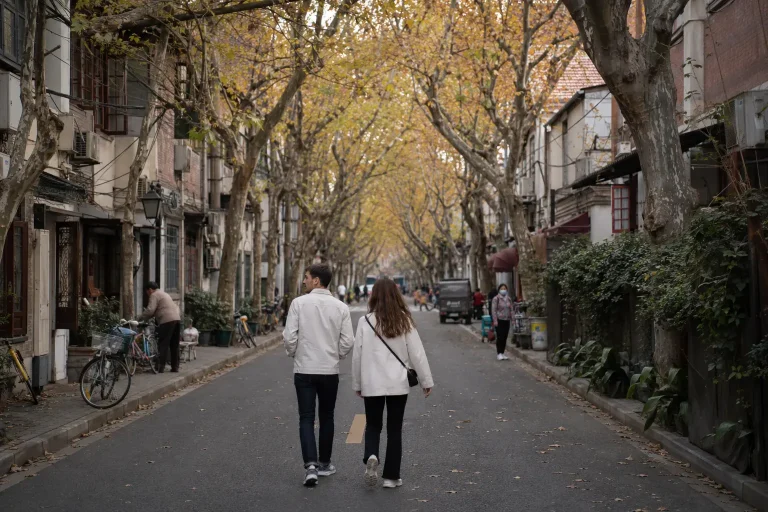
The former French Concession is a broad historical area across parts of modern Xuhui and Huangpu, not a single attraction. Start around Wukang Road or Shanghai Library, then walk through residential streets toward Huaihai Road, Fuxing Park or South Shaanxi Road. Keep the route selective; the reward is detail, not distance.
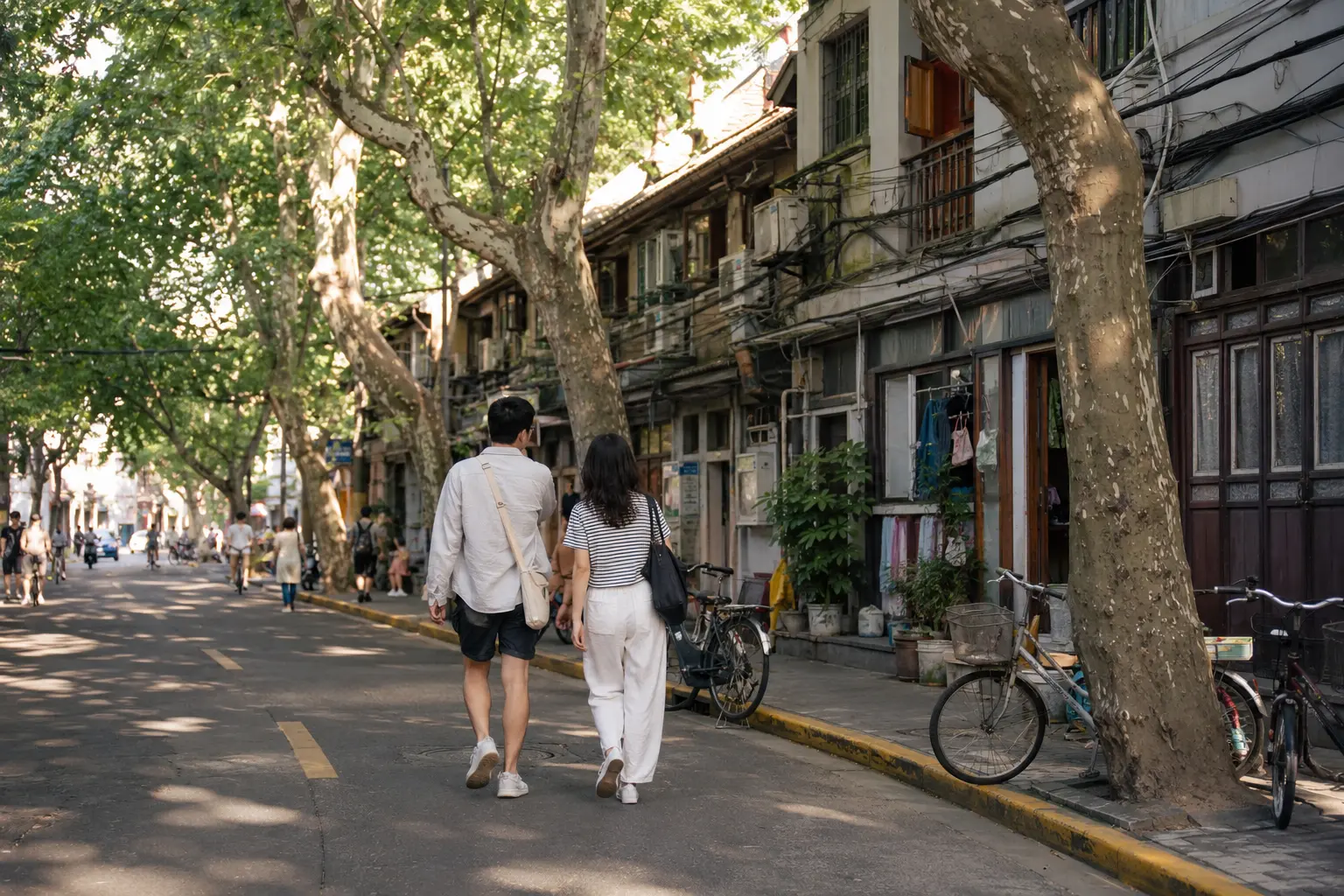
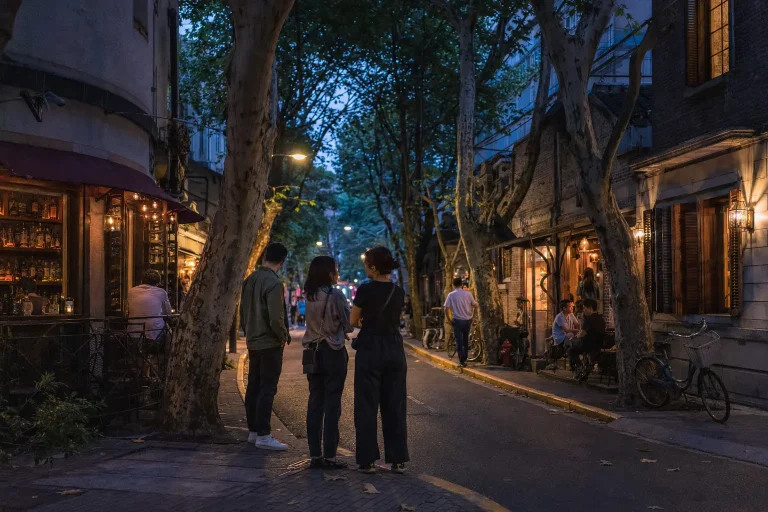
Plane trees, apartment blocks, villas and lane houses reflect different periods and social histories. Many lanes remain residential. Step aside for bicycles, keep voices down and avoid photographing directly into homes.
Xintiandi or Tianzifang?
Xintiandi presents a polished reuse and reconstruction of shikumen forms, with restaurants, boutiques and public space. It is easy to navigate and useful for understanding how heritage becomes commercial real estate.
Tianzifang is denser, more souvenir-heavy and threaded through lived-in lanes. Visit if the compressed spatial experience appeals, but do not call it undiscovered. Choose one rather than forcing both into a heritage-shopping relay.
Continue to Jing’an Temple or a museum according to opening day. Jing’an offers a strong evening finish because restaurants and transit remain close. A final neighborhood dinner usually tells more about Shanghai than adding one more rooftop.
Day 4: choose a culture day or a neighborhood day
Shanghai Museum East in Pudong provides a substantial culture day, especially for ancient Chinese art and archaeology. Current official guidance lists Wednesday–Monday opening, Tuesday closure and no reservation requirement for individual visitors, though valid identification and security checks remain. Its schedule differs from the People’s Square museum, a detail many copied itineraries miss.
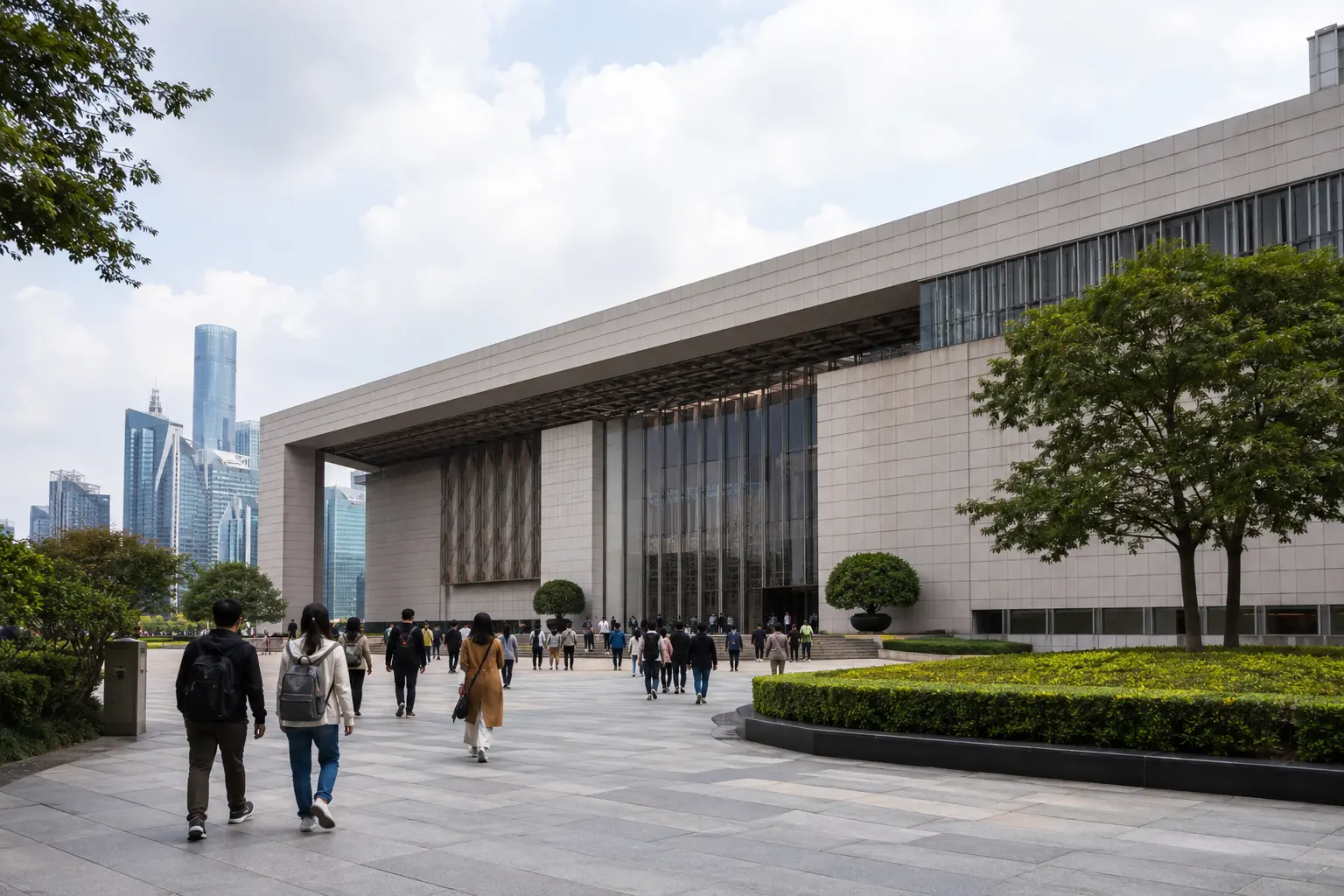
Option A: Shanghai Museum East and Pudong
Give the East museum at least half a day. Pair it with Century Park, another Pudong cultural venue or a relaxed meal rather than returning to three Puxi attractions. Museum fatigue is not evidence of insufficient enthusiasm.
Option B: West Bund art and river space
The West Bund combines museums, galleries, converted industrial architecture and long riverside public spaces. Exhibition schedules and institutional openings change, so choose one anchor venue and verify it directly.
Option C: deeper urban neighborhoods
Walk Yuyuan Road, explore parts of Hongkou connected to literary and Jewish refugee history, or spend time in Yangpu’s revived riverfront. These areas work better with focused historical context than a list of “local spots.”
Day 5: a water town, Suzhou or Hangzhou
Zhujiajiao is the simplest water-town extension within Shanghai municipality, useful for canals, bridges and a compact old-town pattern. It can be visited independently, though weekends and holidays are busy.
Suzhou offers classical gardens, canals and a distinct city whose main sites deserve a full day; high-speed rail is fast, but stations, security and local transfers add time. Hangzhou’s West Lake and urban scale also justify more than a rushed checklist. Both are better as an overnight when the wider China itinerary allows.
Choose one excursion. Adding a water town, Suzhou and Hangzhou to a five-day Shanghai plan produces impressive train statistics and very little Shanghai.
If you only have two days
On day one, combine People’s Square, central streets and the Bund. On day two, choose either Yu Garden plus Lujiazui or the former French Concession plus Jing’an. The first option covers landmark contrast; the second gives more neighborhood texture.
Skip a day trip, theme park and distant museum. Two days are sufficient for orientation, not completion.
If you have a week
Keep the three-day core, add one museum or art day, one neighborhood day and one excursion, then leave one day partially unplanned. Use it for weather recovery, shopping, food or a place discovered during the trip.
Shanghai Disneyland requires a full day and current real-name ticket rules. Shanghai Legoland, opened in Jinshan in July 2025, is also a destination day rather than a central attraction. Families should choose the park that genuinely matters instead of treating both as compulsory.
Plan around closures, weather and public holidays
Museums commonly close on Monday or Tuesday, but not all follow the same day. Public-holiday schedules can override normal rules. Recheck each official site during the week before visiting.
National holidays bring heavy domestic travel and reservation pressure. Metro trains still move efficiently, but entry lines, restaurants and popular streets change character. Start earlier, reduce the number of timed commitments and keep one indoor alternative.
Summer heat, plum-rain humidity and typhoon-related weather can slow walking days. Winter is drier but can feel cold in exposed river areas. Move the Bund and neighborhood walks to the clearest hours rather than obeying the itinerary like a court order.
A practical daily rhythm
Start major sights around opening time, take lunch before or after the busiest 12–1 p.m. window, and leave one unscheduled 60–90 minute block each afternoon. Metro trips, security and navigation regularly use it.
Carry a small day bag, water, a power bank and a copy of the hotel address. The carry-on packing list is a sensible base, while long-haul flight essentials help if day one follows an overnight arrival.
Three well-grouped days show Shanghai as a river city, financial center, port, residential metropolis and cultural producer. Five days add depth. The useful itinerary is the one that still has room for breakfast.
Frequently Asked Questions
How many days do you need for a Shanghai itinerary?
Three full days covers a good first-visit itinerary: day one for the Bund, People's Square and Nanjing Road, day two for Yu Garden, the old city and Lujiazui, and day three for the former French Concession, Jing'an and one cultural stop.
Should you count an evening arrival as a full sightseeing day in Shanghai?
No. Don't count an evening arrival and morning departure as two sightseeing days. Group each day by side of the Huangpu River and nearby metro corridors, leaving unscheduled time for meals and transit.