Shanghai food is best understood through several meals, not one dumpling queue. Start with soy milk, fried dough or a rice roll at breakfast; compare pan-fried shengjian with steamed xiaolongbao; try noodles or wontons for lunch; then order a shared benbang dinner built around red braises, river fish or shrimp, seasonal vegetables and cold appetizers. In autumn, add hairy crab only when it is genuinely in season.
Local cooking often balances soy sauce, sugar, rice wine and vinegar, but “sweet” is a tendency rather than a complete definition. Shanghai has absorbed ingredients, techniques and diners from across the Yangtze Delta, China and the wider world for generations.
What is Shanghainese food?
The local tradition is often called benbang cai, literally “local-style cuisine.” Its roots lie in home and rural cooking around Shanghai, using pork, freshwater fish, shrimp, crab, tofu, vegetables, rice wine and soy sauce. Urban restaurants refined those dishes as the city grew.
Red braising gives many classics their glossy brown appearance and sweet-savory depth. Sugar may round the sauce rather than make it taste like dessert. Vinegar, ginger, scallion and preserved ingredients provide contrast.
Shanghai cuisine also overlaps with Jiangnan cooking from nearby Jiangsu and Zhejiang. Restaurant menus rarely respect the tidy borders that guidebooks prefer.
Begin with a Shanghai breakfast
Breakfast shops work early and efficiently. Common choices include warm or cold soy milk, youtiao fried dough, scallion pancakes, small wontons, noodles and cifantuan—sticky rice wrapped around fillings such as fried dough, pickles or pork floss.
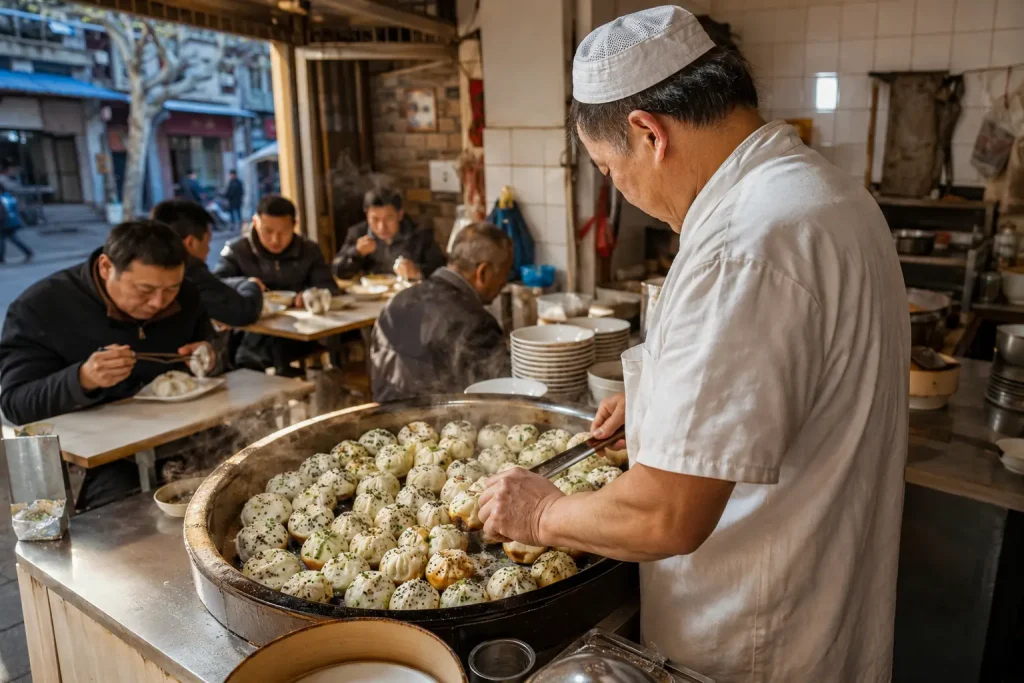
Shengjian, pan-fried buns with a crisp base and juicy filling, can also be breakfast or a quick meal. They are cooked in a broad covered pan, with the bottom frying while steam finishes the upper dough.
Arrive before 9 or 10 a.m. for the widest choice. Some specialist shops sell out or shift menus later. A storefront busy at breakfast may look half asleep at 2 p.m.; this is scheduling, not evidence that the internet betrayed you.
Xiaolongbao: soup dumplings, not a stunt
Xiaolongbao are thin-skinned steamed dumplings filled with meat and hot broth created by stock that melts during cooking. Pork is the standard reference point; crab meat or roe versions appear, especially around autumn.
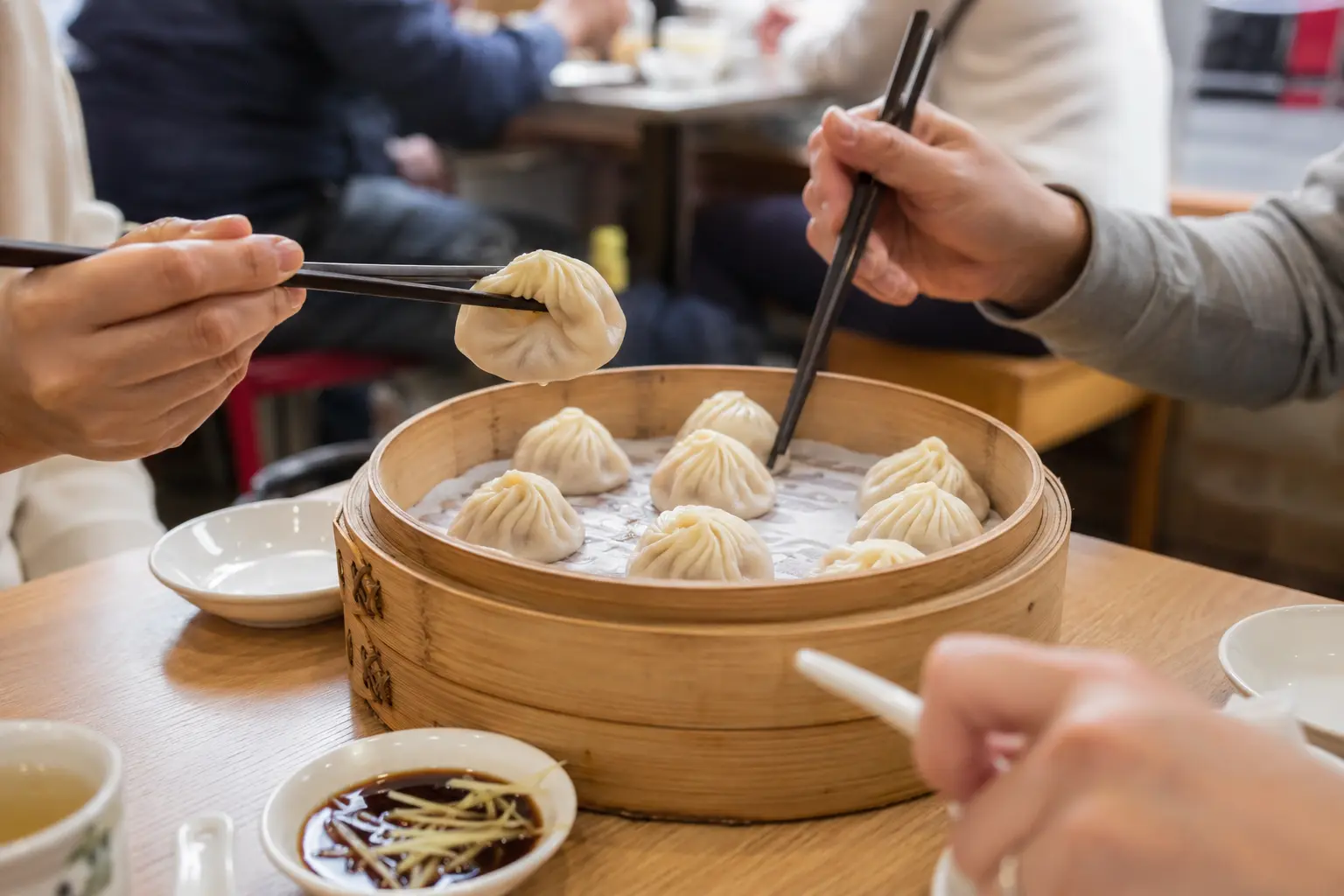
Lift one by the pleated top, place it in a spoon, pierce or nibble a small opening and let steam escape. Add a little dark vinegar and ginger if provided. The goal is to taste the filling, broth and wrapper—not to demonstrate immunity to mouth burns.
Xiaolongbao versus shengjian
Xiaolongbao are steamed in bamboo baskets with a delicate wrapper. Shengjian are larger, yeastier and pan-fried, with a crisp base and soft top. Both can contain hot broth, but their texture and eating rhythm differ.
Try them at different meals. Ordering both in one sitting is possible; claiming they are interchangeable after doing so is harder.
Noodles, wontons and rice cakes
Scallion-oil noodles are deceptively simple: wheat noodles coated in aromatic oil and dark sauce, sometimes topped with crisp scallion. The dish depends on balance and texture rather than a mountain of ingredients.
Other useful orders include noodles with yellow croaker, eel, pork chop or preserved vegetables; small wontons in a light broth; larger wontons with richer fillings; and stir-fried niangao rice cakes. Menus vary by neighborhood and season.
Pork chop with rice cakes, associated with old-school snack shops and recently revived through popular culture, combines fried meat and chewy sliced rice cake with a savory-sweet sauce. It makes more sense as substantial street-side comfort food than as a tasting-menu collectible.
Build a proper benbang dinner
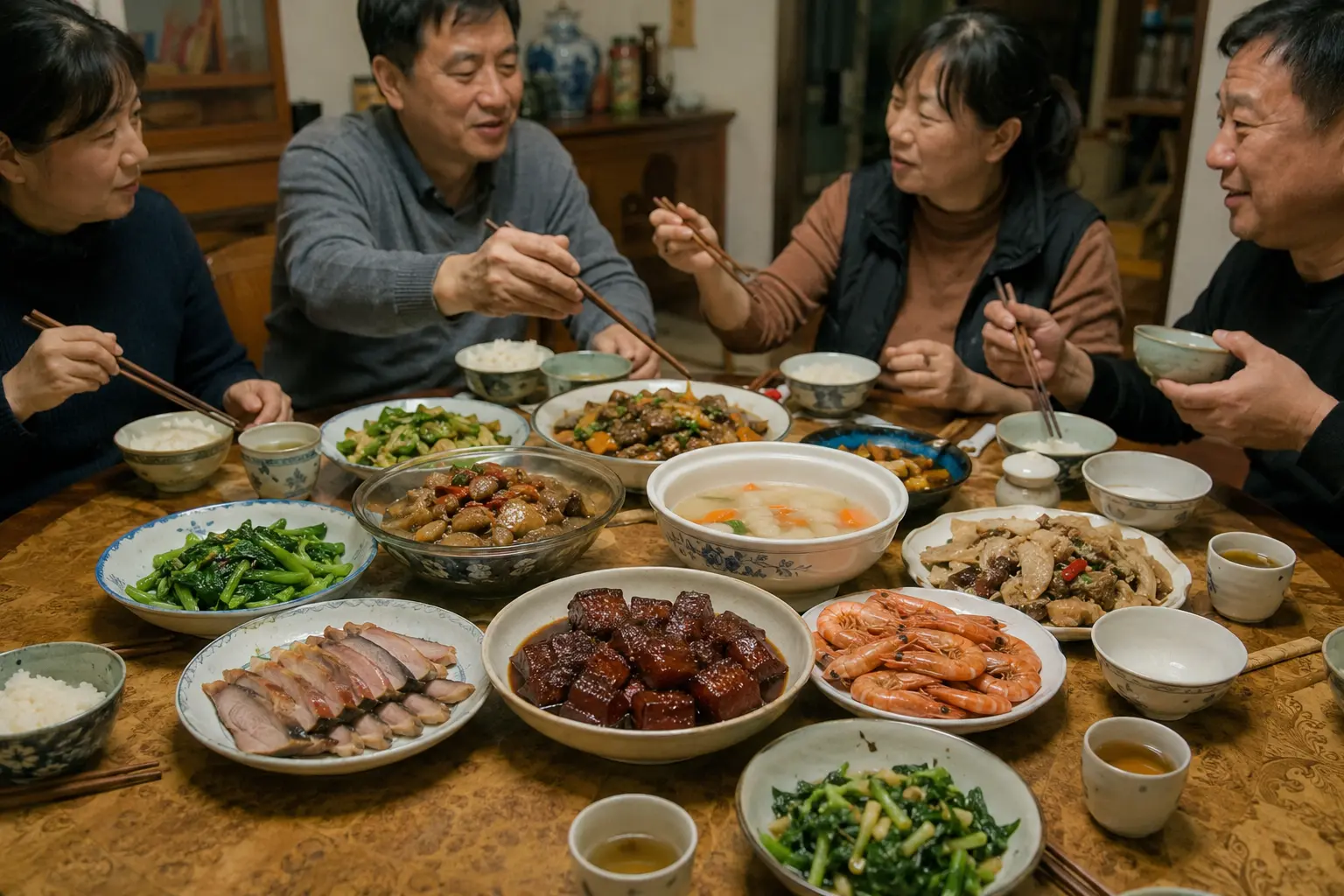
Shanghainese dishes are designed for sharing. Two people should order modestly; four people can explore cold appetizers, a braise, fish or shrimp, vegetables and soup without turning dinner into inventory management.
Start cold, then move to braises
Cold Shanghai-style “smoked” fish is commonly fried and marinated rather than smoked in the modern sense. Drunken chicken uses Shaoxing wine aroma and is served chilled. Kaofu, a spongy wheat-gluten dish braised with mushrooms and other ingredients, offers a useful non-meat contrast.
For warm dishes, hongshao rou red-braised pork belly is the famous reference, but order vegetables and lighter dishes beside it. Sweet-and-sour ribs, braised fish, oil-blanched river shrimp and lion’s-head meatballs may appear depending on the restaurant.
Rice is ordered separately in many restaurants. Ask rather than expecting it to arrive automatically with every dish.
Hairy crab is seasonal
Chinese mitten crab, commonly marketed as hairy crab, is associated with autumn. Roe-rich female and male crabs peak at different points, and quality, origin and price vary. Outside the season, crab-roe sauces or frozen products may still appear, but they are not the same experience.
Eat whole crab only if willing to work through shell and small joints. A restaurant specializing in prepared crab roe can be easier for first-time diners, though prices rise quickly.
Confirm current sourcing and market rules. Wildlife, aquaculture and transport regulations change; “famous local delicacy” is not a permanent sustainability certificate.
Do not overlook freshwater fish and shrimp
Shanghai sits near rivers, lakes and the Yangtze Delta, so local menus historically feature freshwater species more prominently than the city’s coastal location might suggest. Yellow croaker is one important marine exception.
Fish may arrive whole, with bones. Ask about preparation and size before ordering. River shrimp are often small and valued for tenderness rather than visual drama.
Seasonal greens, bamboo shoots, edamame, fava beans and shepherd’s purse can be as locally revealing as a meat centerpiece. Order by what looks good now, not solely by a prewritten list.
Vegetarian eating requires precise questions
Vegetable dishes may use lard, meat stock, dried shrimp or oyster sauce. “No visible meat” is not always vegetarian. Use a translation card that specifies no meat, poultry, fish, shellfish, lard or meat stock as relevant.
Buddhist vegetarian restaurants offer clearer options, while modern plant-based places can be easier for strict diets. Tofu, gluten, mushrooms and seasonal vegetables already belong to local food culture, but preparation matters.
For allergies, carry the ingredient name in Chinese and state the severity. Cross-contact is possible in small kitchens. A food tour is not the place to discover that “a little” and “none” were different questions.
Shanghai’s haipai and adapted Western food
Shanghai’s port history created haipai culture, a local cosmopolitan style shaped by Chinese and foreign influence. Food examples include Shanghai-style “Western” restaurants, bakeries, butter-rich pastries, local borscht variants, pork chops with Worcestershire-like spicy soy sauce and old hotel dining rooms.
These foods are not failed copies of Europe. They developed for Shanghai diners and persisted through changing political and commercial eras. Try them when interested in the city’s social history, not as relief from Chinese food.
The contemporary restaurant scene goes much wider, with regional Chinese cuisines, international chefs, coffee, cocktail bars and bakeries. Local food and global food are not opposing teams here.
Where to eat without chasing one famous queue
People’s Square and Huangpu are convenient for time-honored snack shops and central meals. The former French Concession and Jing’an mix neighborhood restaurants, modern dining and bars. Hongkou, Yangpu and residential parts of Pudong reward more targeted research.
Use current Chinese map and review platforms where possible, then confirm hours by phone, mini-program or recent posts. English listicles often preserve a restaurant long after its address, chef or opening hours have changed.
Choose specialist shops for one item and broader restaurants for shared dinners. A long line can indicate quality, social-media fame, limited seating or all three. Walk away when the queue consumes the meal slot.
Ordering, payment and table habits
Many restaurants use QR-code menus and mobile ordering, though paper or staff-assisted ordering may be available. Set up a reliable payment method before the trip and keep a backup card or cash for exceptions.
Sharing tables is normal in some casual places. Tea or hot water may arrive automatically, and napkins can be packaged or charged separately. Service is often fast and direct rather than ceremonially attentive.
Pointing at displayed dishes or neighboring tables can help, but ask permission before photographing people. In wet markets, stay out of working lanes and avoid turning ordinary shopping into a performance.
Fit Shanghai food into the trip
Use the Shanghai itinerary to keep meals near each day’s neighborhoods. Breakfast is easiest around the hotel, while a serious benbang dinner deserves a reservation or a deliberately chosen area.
The where to stay in Shanghai guide helps choose a base with useful evening food, and the best time to visit Shanghai guide explains autumn crab season, summer heat and holiday demand.
Eat one quick breakfast, one dumpling meal, one noodle lunch and one shared dinner before deciding what Shanghai food tastes like. The city’s cuisine is not hidden; it is simply distributed across different hours, rooms and appetites.
Frequently Asked Questions
What is Shanghainese food called?
The local tradition is often called benbang cai, literally local-style cuisine, with roots in home and rural cooking around Shanghai using soy sauce, sugar, rice wine, and vinegar.
What is the difference between shengjian and xiaolongbao?
Shengjian are pan-fried, giving them a crisp bottom, while xiaolongbao are steamed soup dumplings. Comparing the two side by side is a good way to start a Shanghai food day.