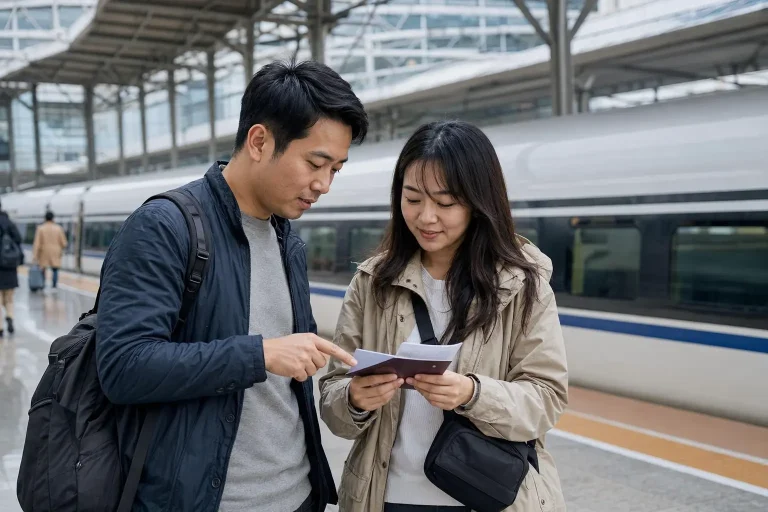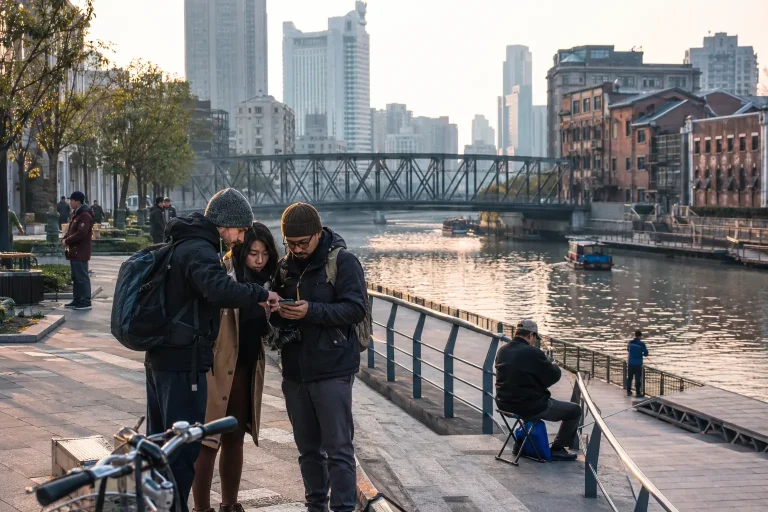
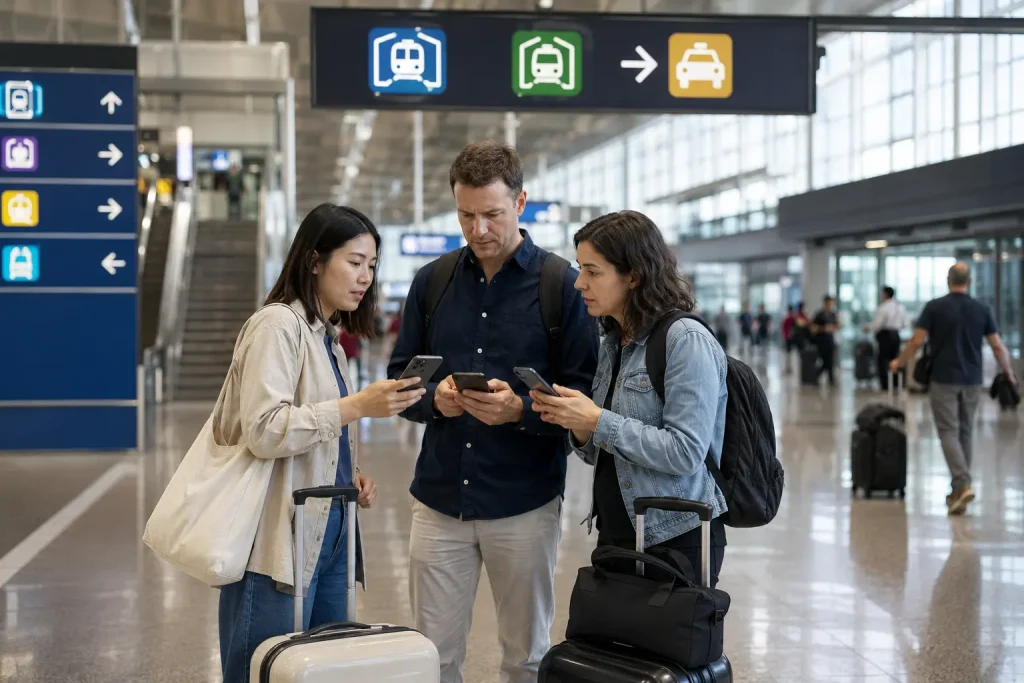
Shanghai transportation is easier than the map suggests once three things are ready: a working payment method, a map that recognizes Chinese place names and the correct station exit. The metro handles most visitor journeys; taxis or ride-hailing solve luggage, rain and late nights; ferries add a useful river crossing; and the Airport Link Line changes the calculation between Pudong and Hongqiao.
Do not optimize every trip for the lowest fare. Saving a few yuan while moving two suitcases through a four-level interchange is a distinctive form of false economy.
Choose transport by the trip
| Situation | Usually best | Watch for |
|---|---|---|
| Airport to central hotel, light luggage | Metro or Airport Link plus transfer | Operating hours and long station walks |
| Airport to hotel, heavy luggage or group | Official taxi or ride-hailing | Traffic, tolls and correct pickup zone |
| Central sightseeing | Metro plus walking | Exit numbers and security checks |
| Short neighborhood hop | Walking, bus or taxi | Map pin on the wrong side of a block |
| Crossing the Huangpu | Metro or ferry | Ferry frequency and final service |
| After midnight | Licensed taxi or reputable ride-hailing | Plate and pickup verification |
| Pudong–Hongqiao airport transfer | Airport Link Line | Terminal and last departure |
Pudong Airport to central Shanghai
Pudong International Airport (PVG) is far east of central Shanghai. Metro Line 2 is the low-cost, straightforward option for light travelers; the official city guide estimates roughly one hour to People’s Square. It serves Lujiazui, East Nanjing Road, People’s Square and Jing’an along the way, but crowded cars and long platforms make luggage less charming.
The Maglev runs between the airport and Longyang Road, not the Bund or People’s Square. It is an experience and can shorten the airport segment, but nearly every visitor must transfer to metro or car at Longyang Road.
The Airport Link Line connects Pudong Airport with Hongqiao Airport and railway hub much faster than an all-stops metro journey. It is especially useful for an inter-airport connection or destinations near its stations. Check the current official timetable; the airport’s June 2026 information lists daily service with the final airport departures around 10 p.m., but schedules can change.
Use the official taxi queue for a door-to-door ride. Ignore solicitors inside arrivals.
Hongqiao Airport and railway station
Hongqiao Airport (SHA) sits west of the center beside a major high-speed railway station. Metro Lines 2 and 10 serve the hub, and the Airport Link Line connects it with Pudong.
Confirm the terminal: Hongqiao’s terminals do not share identical transport options. For a train departure, budget time for the correct building, security and the walk to the gate. “Hongqiao” on a ticket is a district-sized clue, not yet a platform.
The Shanghai itinerary helps decide whether a Hongqiao arrival can sensibly become a western-city day or should go directly to the hotel.
Shanghai Metro: the default for sightseeing
Shanghai Metro is fast, frequent and extensive. Fares are distance based; the official visitor guide states a starting fare of RMB 3 for journeys under 6 kilometers, then incremental increases.
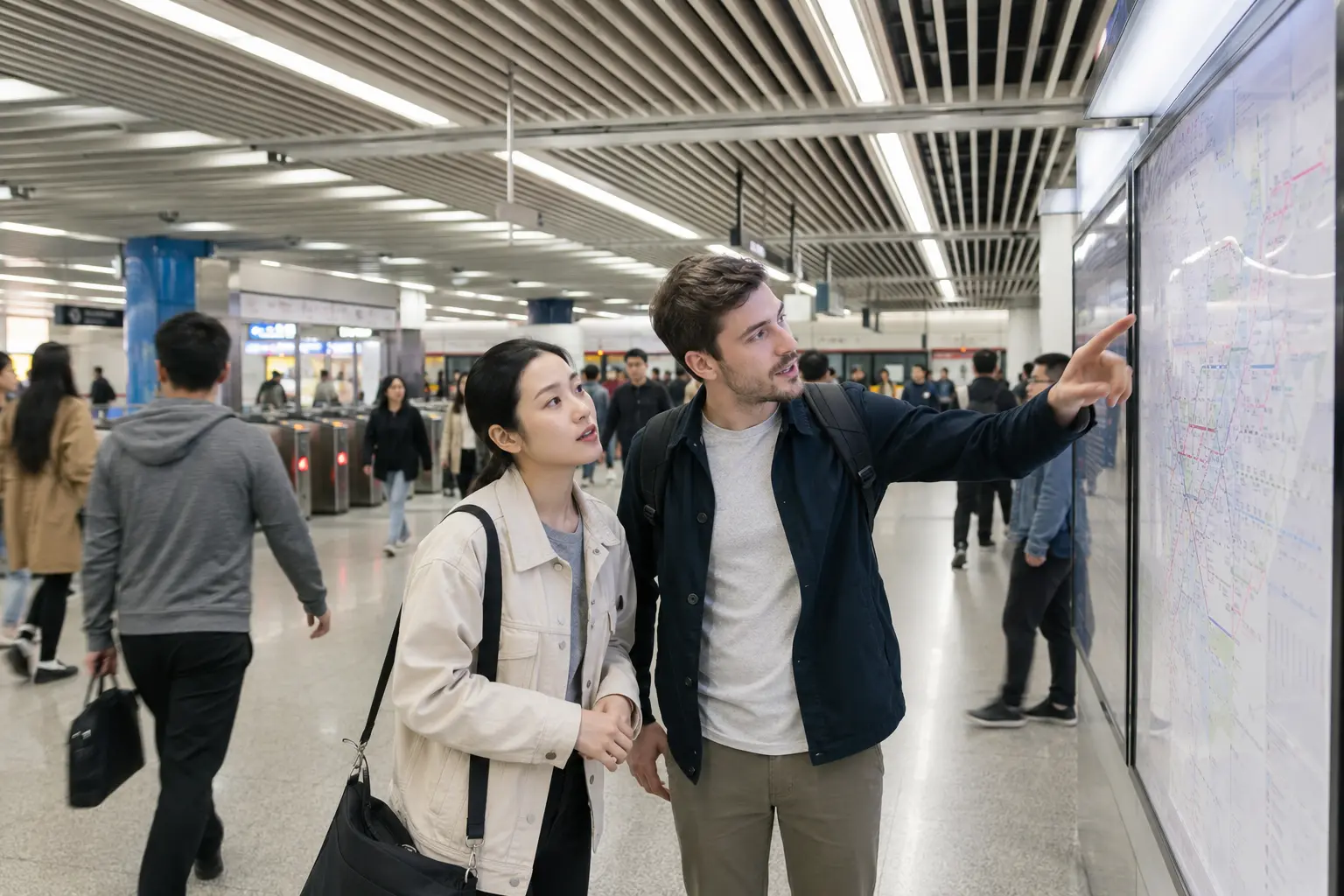
Station signs use Chinese and English. Security screening is routine, so place bags on the belt when directed. Keep drinks accessible for possible inspection.
The exit matters
Large stations can span several blocks, and the wrong exit can add an awkward road crossing or a ten-minute walk. Before leaving the paid area, check the attraction’s Chinese address and exit number in a current map.
At interchanges, follow the line number and terminal direction. A route with one transfer can be faster than a supposedly direct line if the latter requires a long walk at each end.
How to pay for the metro
Visitors can use single-journey tickets, supported transit QR codes (most commonly through WeChat Pay or Alipay, the two apps that also handle most retail and food payments in the city), a Shanghai Public Transportation Card or Shanghai Pass, and current bank-card options. Shanghai’s official guidance says metro service centers have POS facilities for domestic and international cards; it also describes supported international bank-card tap-and-ride access.
Acceptance depends on card network, contactless settings and current implementation. Carry a backup rather than testing the entire holiday on one card.
QR code, physical card or single ticket?
- Use a transit QR code if mobile payment is already working and Shanghai is selected as the city.
- Use a physical transport card or Shanghai Pass if several travelers need independent access or phone setup is unreliable.
- Use single tickets for a short stay with few rides.
One phone QR code generally represents one passenger’s journey. Families should not assume a single account can wave everyone through in one flourish.
Buses: useful when the route is simple
Buses reach streets between metro stations and can be excellent for short, direct trips. They are less forgiving when a visitor cannot read the stop list or identify the correct direction.
Use a live map, board at the marked stop and prepare the valid payment code or card before arrival. A bus is especially useful along a single corridor; a journey with multiple unfamiliar bus changes is rarely the best introduction to Shanghai.
Taxis and ride-hailing
Licensed taxis are metered. Have the destination name and full address in Chinese, because an English hotel name may not identify the entrance. At airports and stations, use official ranks.
Ride-hailing gives a fixed pin and vehicle details, but foreign-number registration, payment or mini-program interfaces can create friction. Set it up before it becomes the only late-night option.
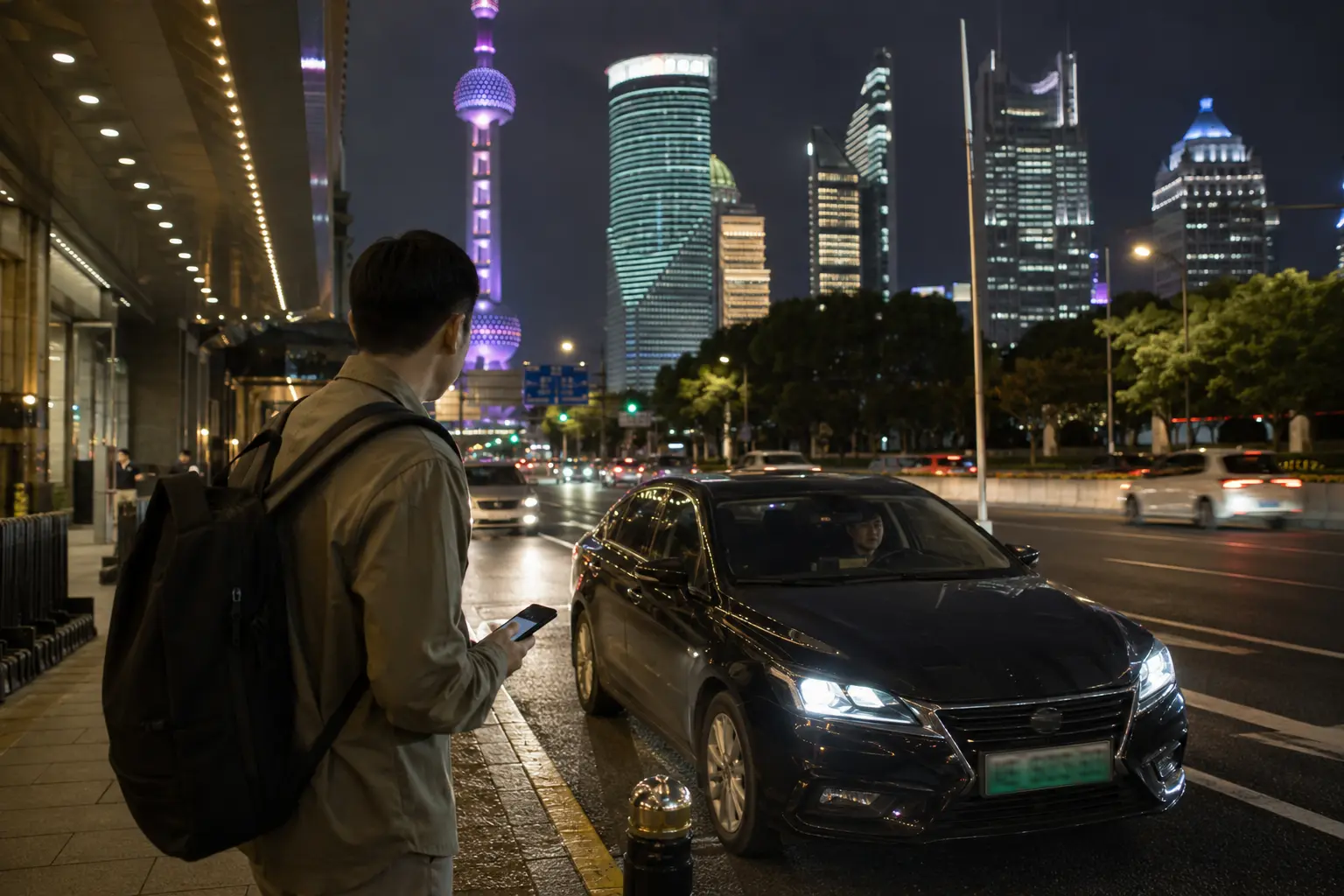
Verify the pickup
Match the plate and car details before entering. Choose a legal, well-lit pickup point and message the driver through the app if the pin is inaccessible. Traffic restrictions can place the actual pickup across a large road or on another level of a mall.
Keep the hotel address saved offline. The Shanghai nightlife guide covers last-train planning and getting home after venues close.
Ferries across the Huangpu
Public ferries offer a low-cost river crossing and a street-level view between Puxi and Pudong. They are transport, not a narrated cruise. Routes, bicycle access and operating hours vary.
Use a ferry when its terminals align with the day, such as combining the Bund side with Pudong waterfront. Do not force one into a schedule if the metro connects the actual destinations more directly.
Sightseeing cruises are a separate product with different boarding points, duration and prices. Verify the operator and pier before paying.
Walking and cycling
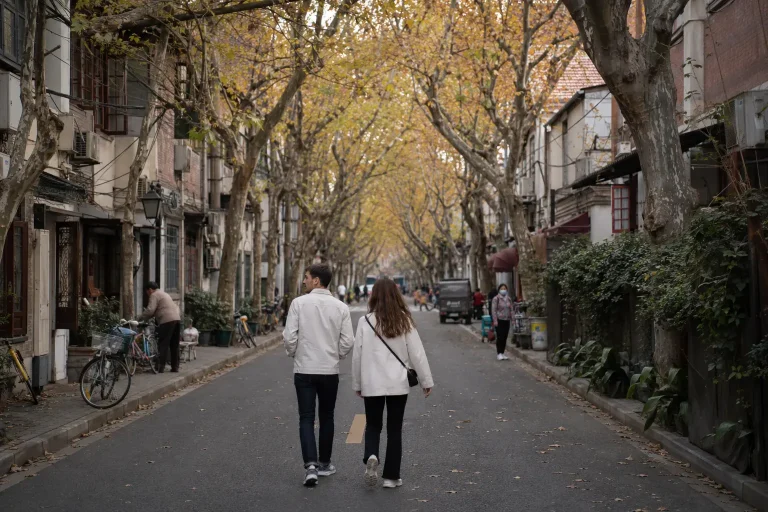
Shanghai is rewarding on foot within a chosen neighborhood, but poor for walking between every famous sight. Blocks are large, elevated roads complicate crossings and summer heat can turn a “short” map line into a slow hour.
The Shanghai neighborhoods guide groups sensible walks. Shared bicycles can help on protected or quiet routes, but registration, local phone requirements, traffic rules and parking zones vary. Wear a helmet where available and do not learn Shanghai traffic etiquette in a major intersection.
Accessibility, strollers and luggage
Many metro stations have elevators, yet the convenient elevator may be far from the desired exit or temporarily unavailable. Search for an accessible route by exact station and allow extra time.
At rush hour, avoid large suitcases where possible. A taxi from the airport or railway station can be the reasonable accessibility choice even when the metro is cheaper. For accommodation, the where to stay in Shanghai guide emphasizes the correct station exit rather than a vague “near metro” claim.
A transport setup that works
Before arrival:
- Install a current map and save hotel addresses in Chinese.
- Set up one mobile payment option, then carry a backup card and cash.
- Screenshot airport and first-night routes.
- Check the final service for any late arrival.
- Keep each traveler’s ticket, QR code or transit card separate.
For daily sightseeing, use metro between clusters and walk within them. Take a car when luggage, mobility, weather or time makes it rational. Shanghai’s network is not the difficult part; the difficult part is pretending the last 800 meters do not exist.
Frequently Asked Questions
What is the best way to get around Shanghai?
The metro handles most visitor journeys, taxis or ride-hailing solve luggage, rain, and late nights, ferries add a useful river crossing, and the Airport Link Line changes the calculation between Pudong and Hongqiao airports.
Should you always choose the cheapest transport option in Shanghai?
No. Saving a few yuan while moving two suitcases through a multi-level interchange is a false economy. Choose transport by the situation, such as heavy luggage or a group, rather than by fare alone.