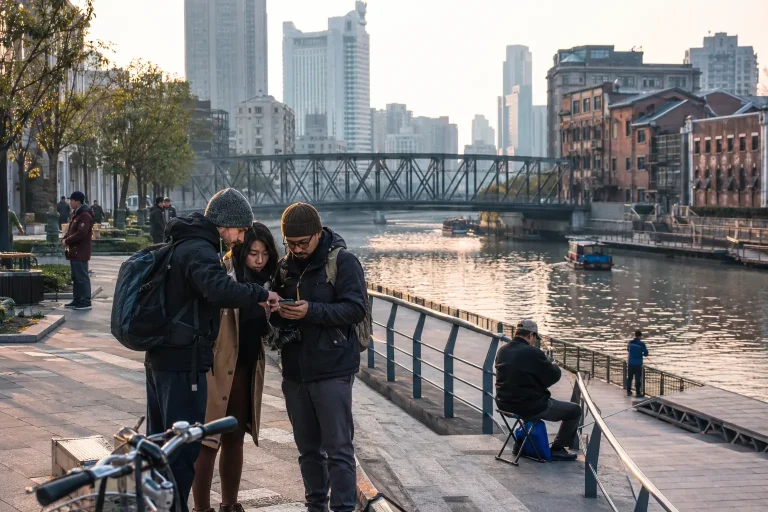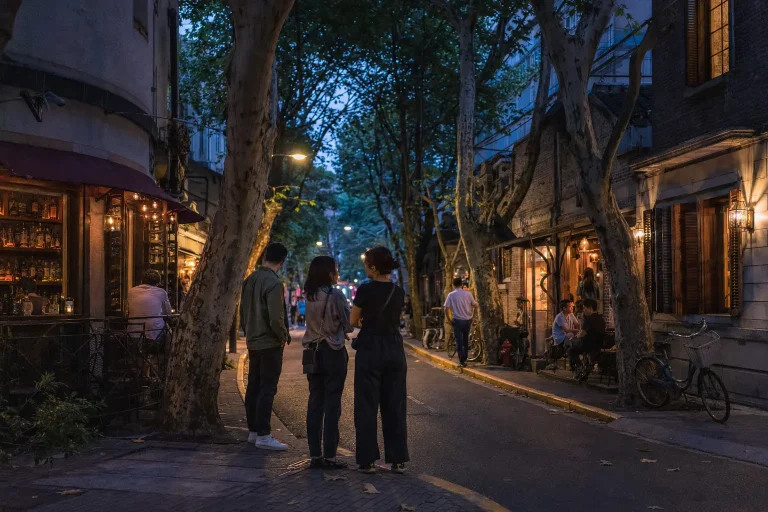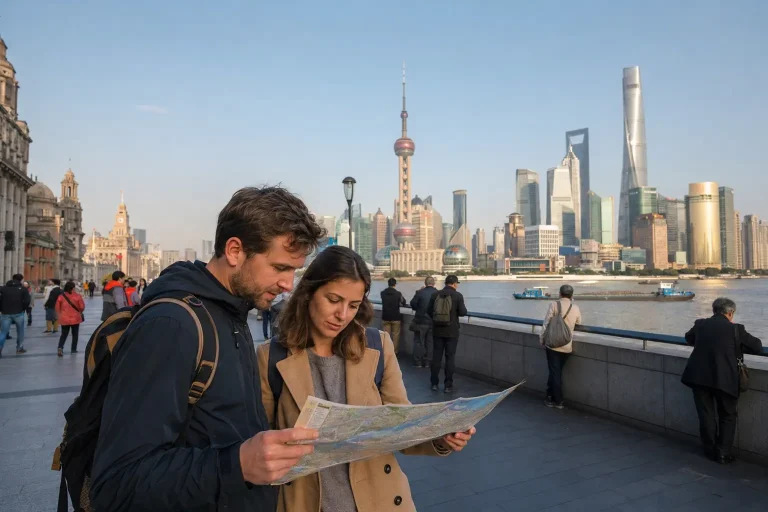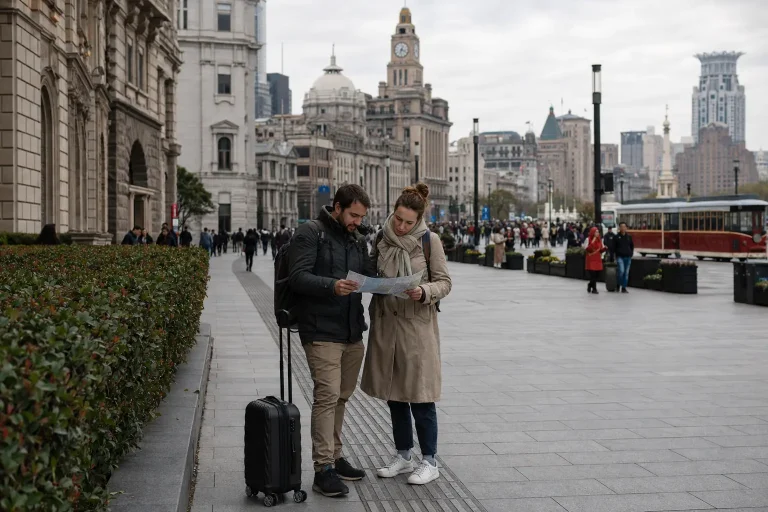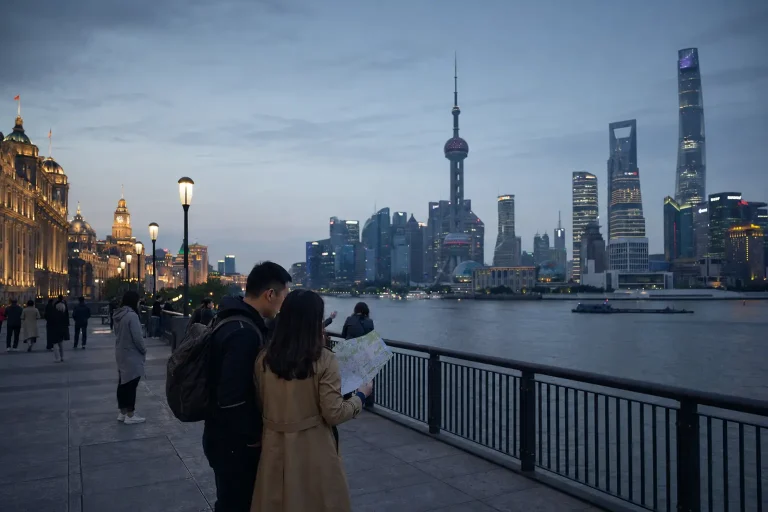
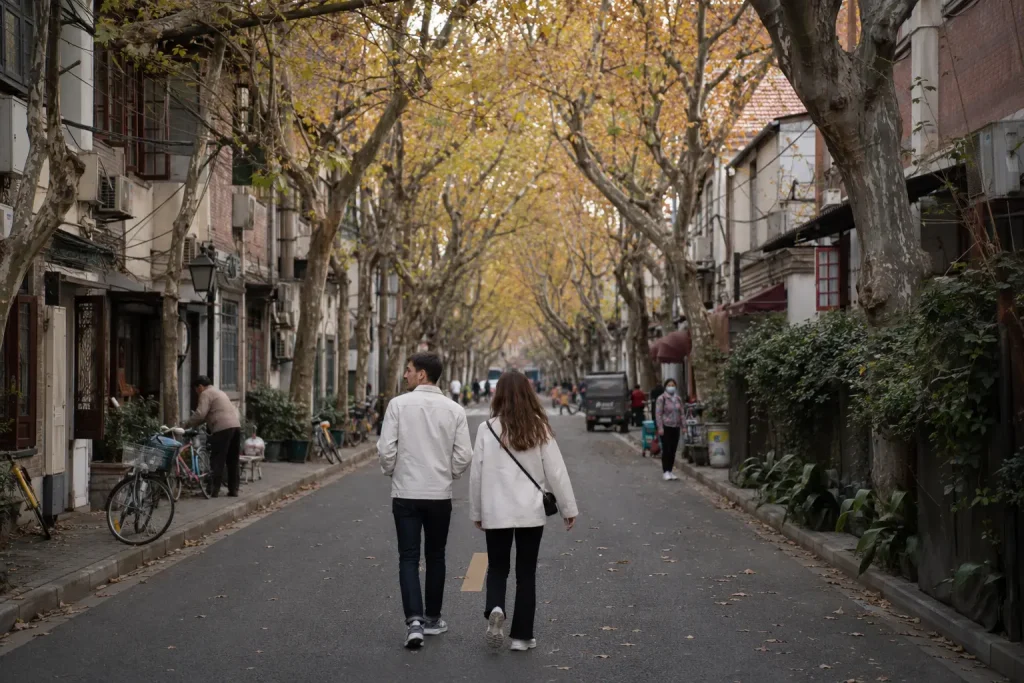
The best time to visit Shanghai is from mid-October to mid-November, after the National Day holiday and before winter turns damp and cold. Days are usually mild enough for long walks, humidity is lower than in summer and the plane-tree streets begin to change color. Mid-April to mid-May is the second-best window, with comfortable temperatures and spring growth, though rain becomes more likely.
Avoid choosing by temperature alone. Public holidays, humidity, heavy rain and typhoon disruptions affect a Shanghai trip more than a neat monthly average.
Shanghai seasons at a glance
| Period | Typical experience | Best for | Main risk |
|---|---|---|---|
| March to mid-May | Mild, changeable, increasingly wet | Walking, parks, first trips | Rain and holiday crowds |
| Late May to June | Warm, humid, plum-rain conditions | Museums and food | Persistent rain |
| July to August | Hot, very humid, storm-prone | Night activities and indoor culture | Heat stress and thunderstorms |
| September | Still warm, gradually improving | Flexible urban trips | Typhoons and Mid-Autumn travel |
| Mid-October to November | Cooler, less humid, often clearer | Walking and day trips | National Day crowds in early October |
| December to February | Cold, comparatively dry, shorter days | Museums and lower-demand travel | Damp cold and Spring Festival closures |
The city works year-round, but the daily pace changes. A four-hour neighborhood walk in November and the same route in July are technically identical only to a spreadsheet.
Mid-October to mid-November: the best overall window
Autumn offers the strongest balance for most travelers. Shanghai’s official seasonal guidance describes temperatures cooling from around 25°C (77°F) in early fall toward roughly 15°C (59°F) later, with breezes and plane-tree color supporting outdoor activities.
This is the easiest time for the Bund, former French Concession streets, West Bund paths and a water-town day trip. Humidity usually becomes less oppressive, while winter wind has not yet taken over the riverfront.
Start after the National Day holiday
In 2026, the National Day holiday runs October 1–7. Trains, attractions and popular streets face much heavier domestic demand, and hotel pricing can rise. The Mid-Autumn holiday falls September 25–27, creating another travel surge shortly before it.
Aim for the middle of October onward. Exact weather varies each year, so check the seven-day forecast rather than booking an “autumn” label and expecting permanent blue sky.
Mid-April to mid-May: the best spring alternative
Spring warms quickly, trees leaf out and parks become active. Mid-April through mid-May generally supports full walking days without summer heat. It is especially good for neighborhood architecture, gardens and a mixed indoor-outdoor itinerary.
Rain is the compromise. Pack a compact waterproof layer and shoes that tolerate wet pavement. Pollen may also affect sensitive travelers.
Avoid the Qingming holiday window and the May Day break when possible. In 2026, May Day runs May 1–5. A normal Tuesday in late April and a holiday Saturday can feel like different cities.
March: cool, changeable and useful
Shanghai weather in March can shift between damp winter residue and genuine spring. Layers are essential: a mild afternoon does not guarantee a warm morning beside the Huangpu River.
March works for travelers who value museums, food and moderate crowds more than reliable garden weather. Blossoms and warm spells are possible, but forecasts become meaningful only close to the date.
Use a flexible Shanghai itinerary that can swap a river walk with a museum. The city has enough indoor depth that one wet day should not become a referendum on the trip.
Late May and June: understand plum rain
Early summer brings rising humidity and the East Asian plum-rain period, often associated with repeated rain bands rather than one tidy daily shower. Streets may be wet for long stretches, visibility can drop and laundry dries according to its own philosophical schedule.
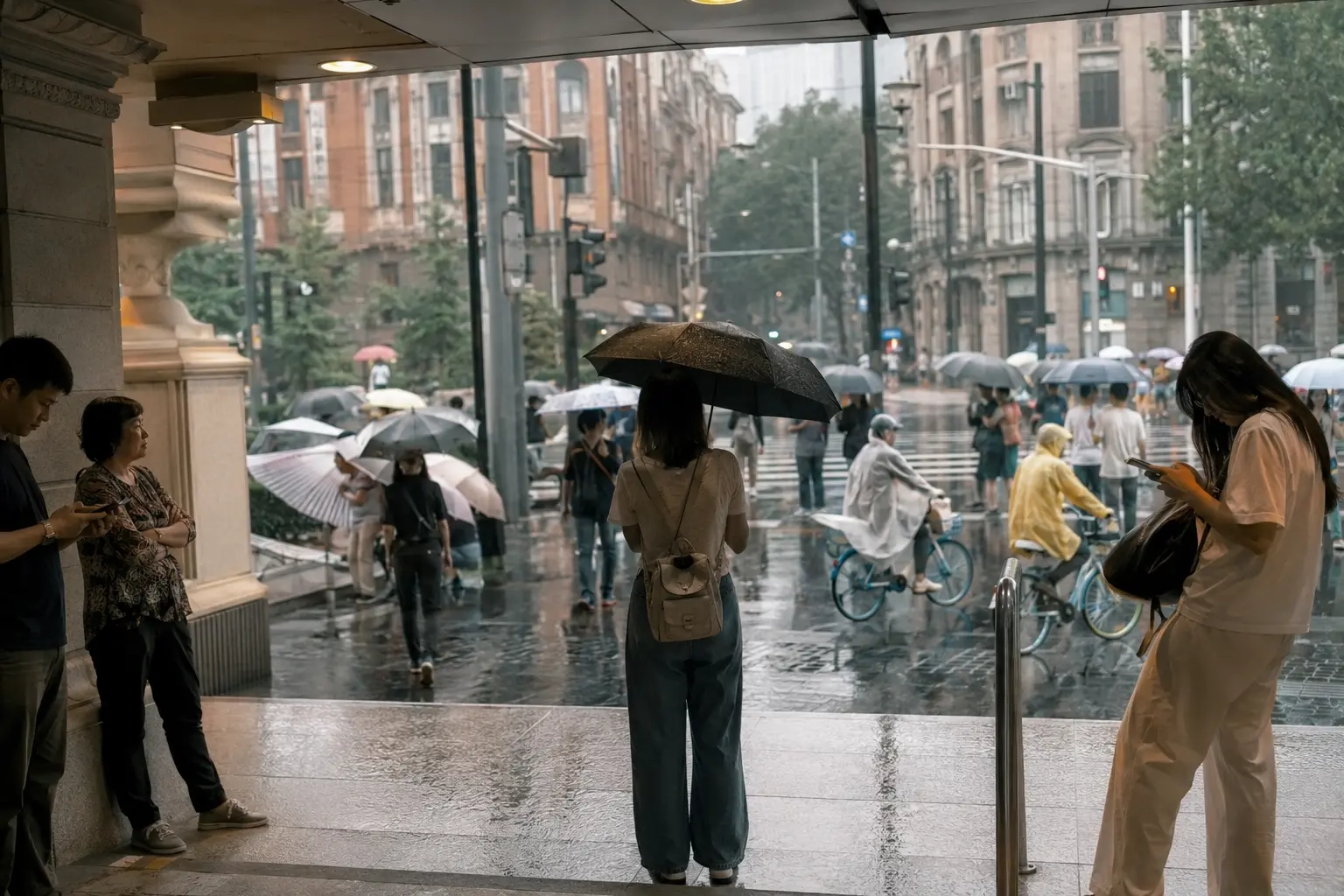
This period can still work for food, design, museums and shopping. Build days around one major indoor anchor, keep outdoor routes shorter and place the Bund when the forecast offers a clearer window.
June festivals do not cancel the weather
The Dragon Boat Festival can add cultural interest and domestic travel demand. In 2026, the holiday runs June 19–21. Check event details directly; not every waterfront hosts a visitor-friendly race.
Carry a robust umbrella, but remember that wind makes rain gear more useful than a delicate folding canopy.
July and August: hot, humid and still possible
Shanghai summers are demanding. High humidity reduces the body’s ability to cool through evaporation, and heatwaves can push daytime conditions well beyond comfortable sightseeing. Thunderstorms can arrive quickly.
Start outdoor activities early, take a long indoor break around midday and return outside in the evening. Metro stations, malls and museums provide cooling, but walking between them still counts as heat exposure.
Drink water before feeling thirsty, replace electrolytes during heavy sweating and reduce the route during official heat warnings. A prepaid attraction is not a medical exemption.
Families limited to school holidays should choose one major activity per half day. Shanghai Disneyland and the suburban Legoland resort require full-day heat and queue planning rather than being treated as casual add-ons.
Late August to mid-September: typhoon flexibility matters
Shanghai’s official seasonal guidance identifies late August to mid-September as the general peak typhoon period. A tropical cyclone does not need to pass directly over the city to disrupt flights, trains, ferries, outdoor attractions or river activities.
Monitor official local weather alerts and airline notices. Keep the first and last nights in Shanghai free of tight, separate-ticket connections when a system is forecast.
Do not interpret “typhoon season” as continuous dangerous weather. Many days are ordinary, but the probability of a disruptive day is higher. Flexible bookings and an indoor backup are the useful response.
December to February: colder than the number suggests
Winter temperatures in Shanghai are moderate compared with northern China, but humidity, wind and limited indoor heating in some older buildings can make the cold feel persistent. The Bund and elevated viewpoints are particularly exposed.
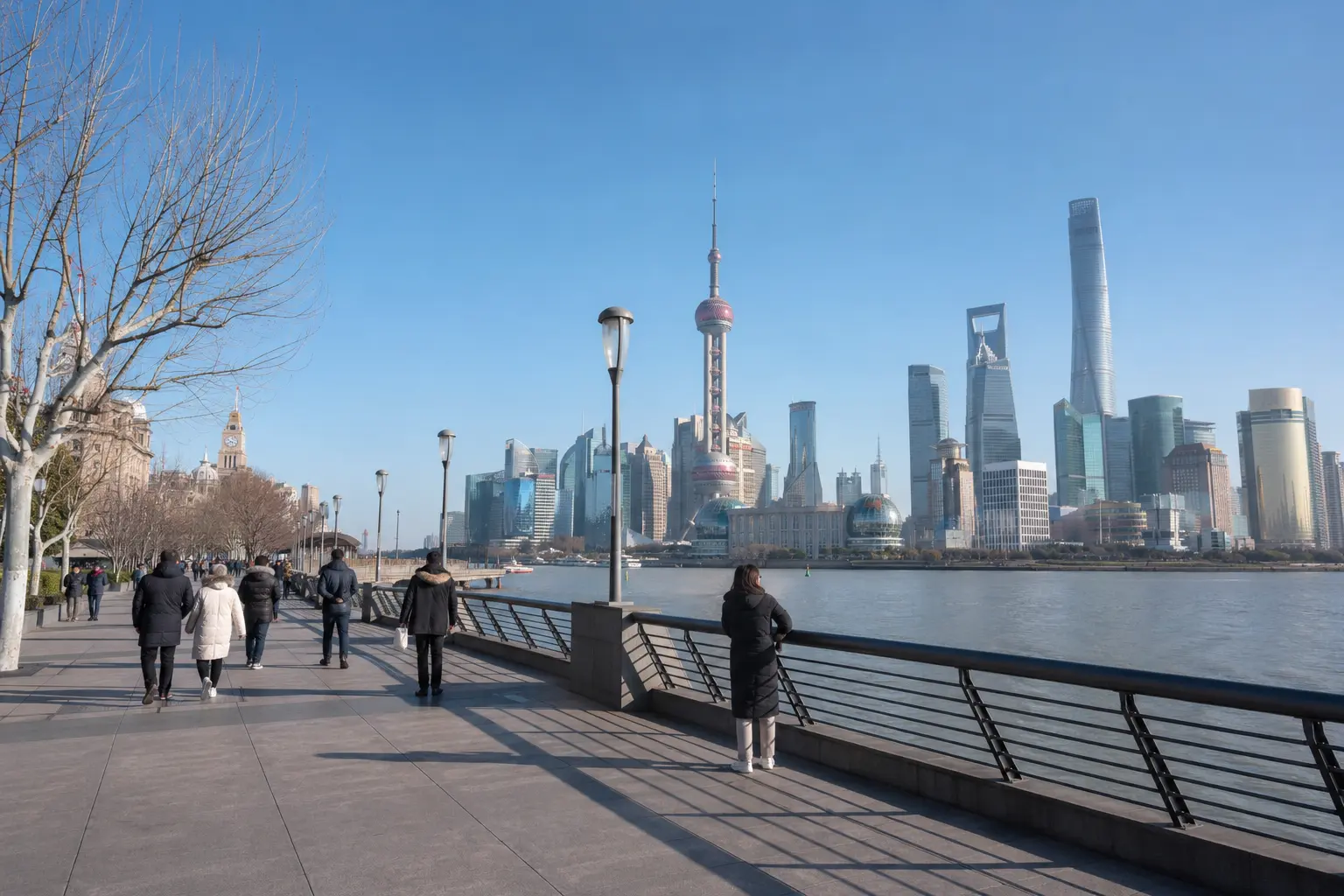
Clear winter days can deliver excellent visibility, fewer outdoor crowds and crisp architectural views. Museums, restaurants and shopping also make a strong cold-weather itinerary.
December or January?
December has holiday lighting and often retains slightly longer, milder conditions than midwinter. January is colder and may offer lower demand outside the New Year period. Snow is uncommon and should not be expected as an attraction.
Pack a wind-resistant outer layer, warm socks and indoor-friendly layers. The carry-on packing list provides a base, but add insulation for riverside evenings.
Spring Festival changes operations
Spring Festival is culturally significant and can be fascinating, but it is not a low-crowd loophole. In 2026, the official holiday runs February 15–23. Transport demand is immense before and after the holiday as people travel home and return.
Some independent restaurants and shops close or reduce hours, while temples, lantern events and central attractions can become very busy. Book rail and air travel early, confirm every small-business opening and expect schedules to differ from an ordinary week.
Travelers interested in the festival should plan around it deliberately. Travelers seeking routine city operations should choose another period.
Best time by travel goal
For long city walks, choose mid-October through November. For gardens and spring streets, choose mid-April through mid-May. For museums, food and potentially better value, consider March, late November or winter outside Spring Festival.
For day trips to Suzhou, Hangzhou or water towns, autumn provides the most reliable balance, though no season guarantees clear weather. For nightlife and late urban energy, summer evenings work if daytime plans remain modest.
Photography depends on visibility more than season branding. Check air quality, cloud and precipitation close to the day; move the skyline viewpoint when conditions are poor.
How far ahead to book
For an ordinary shoulder-season trip, book core international transport and a well-located hotel first, then reserve only attractions that currently require it. The where to stay in Shanghai guide helps choose a base that reduces weather-exposed transfers.
For National Day, May Day, Spring Festival or a major event, book earlier and expect limited train inventory. Always verify the current official holiday calendar because adjusted workdays and break lengths change annually.
Shanghai’s best season is not a secret week with perfect weather and empty pavements. It is the period when the city’s likely conditions match the way you want to use it—and when the national calendar is not sending everyone else in the same direction.
Frequently Asked Questions
What is the best time to visit Shanghai?
Mid-October to mid-November is the best window, after the National Day holiday and before winter turns damp and cold. Days are mild enough for long walks and humidity is lower than in summer.
Is spring a good time to visit Shanghai?
Mid-April to mid-May is the second-best window, with comfortable temperatures and spring growth, though rain becomes more likely than in the autumn window.