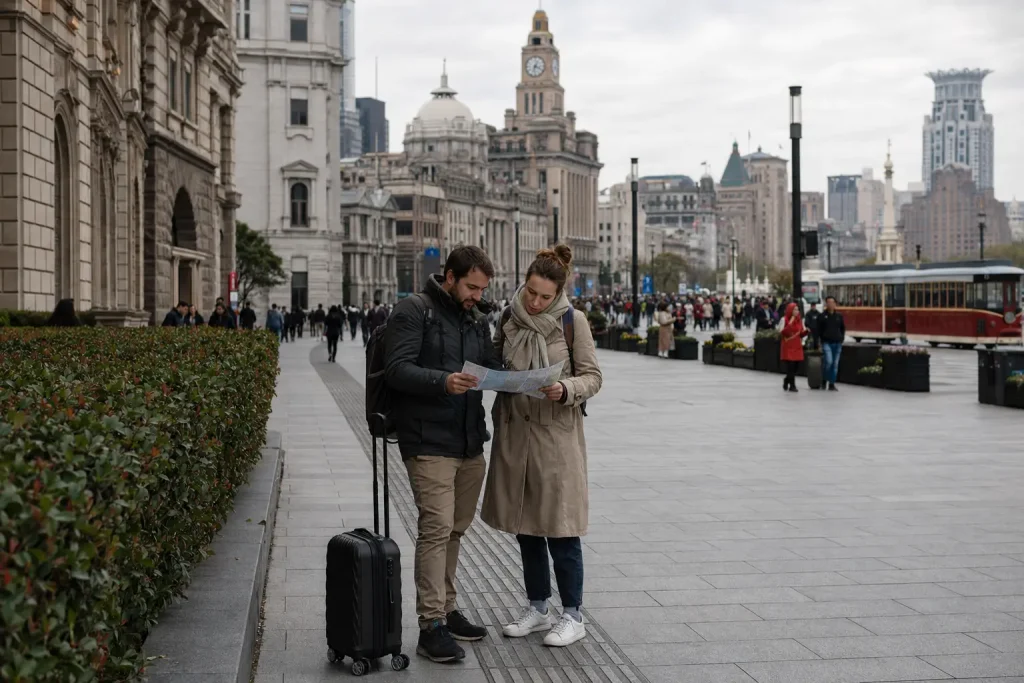
For most first-time visitors deciding where to stay in Shanghai, the best all-round base is Puxi between People’s Square, East Nanjing Road and the western edge of the Bund. It offers strong metro connections, easy access to major sights and food after dark. Choose Jing’an for a more residential, restaurant-rich stay; the former French Concession for leafy streets and slower neighborhood time; or Lujiazui for skyline hotels and business travel, accepting that many daily sights sit across the river.
Shanghai is too large for “central” to mean close to everything. The useful question is what you want within a 15-minute walk when you are tired.
Compare the best areas to stay in Shanghai
| Area | Best for | Main advantage | Main tradeoff |
|---|---|---|---|
| People’s Square / East Nanjing Road | First visits and short stays | Metro access and central sightseeing | Crowds and chain-heavy blocks |
| The Bund | Historic architecture and river views | Walkable waterfront atmosphere | Some hotels are farther from metro entrances |
| Jing’an | Food, nightlife and balanced city life | Strong transport and evening options | Less immediate access to the Bund |
| Former French Concession | Walking, cafés and residential streets | Character and slower pace | Large, loosely defined area |
| Xintiandi | Dining, design and polished nightlife | Convenient, pedestrian-friendly core | Higher prices and curated atmosphere |
| Lujiazui | Skyline views, luxury and business | Pudong towers and river-facing rooms | Repeated cross-river travel |
| Xujiahui | Shopping, families and value | Malls, transport and larger hotel choice | Farther from classic first-trip sights |
People’s Square and East Nanjing Road: best for a first visit
This is the most practical answer for a three- or four-night trip. People’s Square connects several metro lines and places the Shanghai Museum, Nanjing Road and much of central Huangpu within easy reach. East Nanjing Road extends toward the Bund, with hotels at many price levels and plenty of food, convenience stores and late activity.
The weakness is atmosphere. Parts of the pedestrian street are intensely commercial, and the busiest blocks can feel like a permanent public holiday. Move one or two streets away and the district becomes more useful: Fuzhou Road, side streets toward the Bund and blocks south of the main retail corridor provide a better balance.
Choose the station before the hotel
“Near Nanjing Road” may mean People’s Square, East Nanjing Road, West Nanjing Road or a long walk between them. Check the exact metro station and exit on a current map. A hotel 600 meters from a station can still involve a vast intersection, an underground passage and the moment when a rolling suitcase develops a moral objection to brick paving.
For most first-timers, a location within a comfortable walk of People’s Square or East Nanjing Road station works better than a slightly cheaper room far north or south of the corridor.
The Bund: best for historic Shanghai and river views
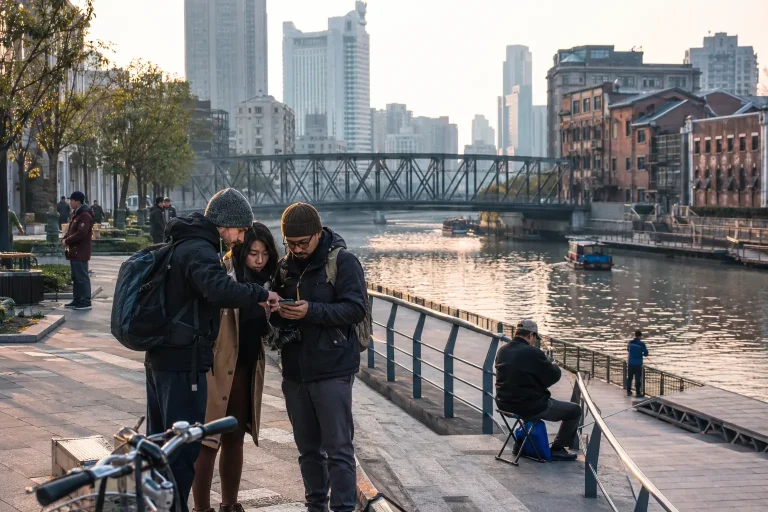
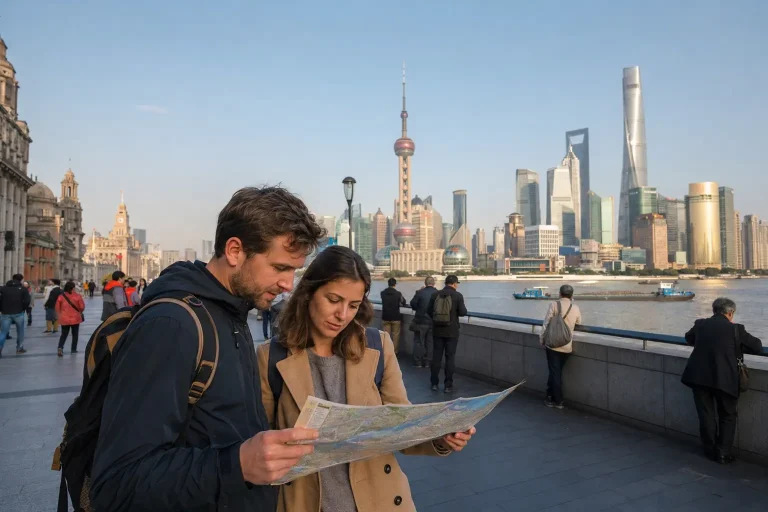
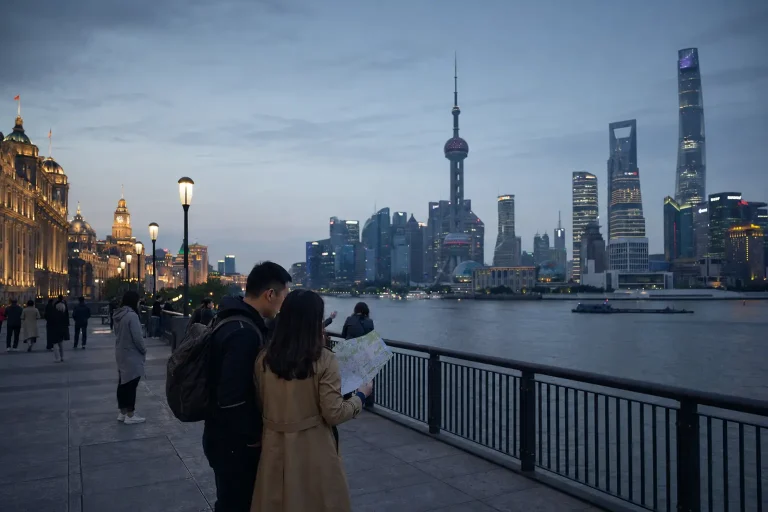
The Bund gives Shanghai its most recognizable visual conversation: early-20th-century commercial buildings on the Puxi waterfront facing Pudong’s towers. Staying here makes morning and evening walks easy, and a river-facing room can be memorable.
The tradeoff is transport. The waterfront itself does not have a metro station at every convenient point; depending on the hotel, East Nanjing Road or Yuyuan Garden may require a real walk. Road crossings and tourist crowds add time. Check the door-to-station route rather than assuming a hotel labeled “Bund” sits beside a train.
Stay here when architecture, sunrise walks and the river are priorities. If most days begin elsewhere, People’s Square or Jing’an may be more efficient.
Jing’an: best for restaurants and a balanced city stay
Jing’an suits travelers who want a polished but lived-in base. Around Jing’an Temple, West Nanjing Road and nearby streets, hotels sit close to malls, restaurants, bars, offices and metro lines. The district remains active after sightseeing hours without relying on one night-market strip.
It is also a useful compromise between central Huangpu and western Shanghai. Reaching the Bund takes a ride, but access to the former French Concession, museums, dining and Hongqiao transport is generally straightforward.
Do not treat the entire administrative district as one neighborhood. A property marketed as “Jing’an” may sit well north of the temple and central shopping corridor. Search the exact address and nearest station.
The former French Concession: best for walking and neighborhood texture
The former French Concession is a historical and cultural label, not one modern administrative district. It spans parts of today’s Xuhui and Huangpu, so a hotel can use the name while sitting several kilometers from the streets a visitor pictured.
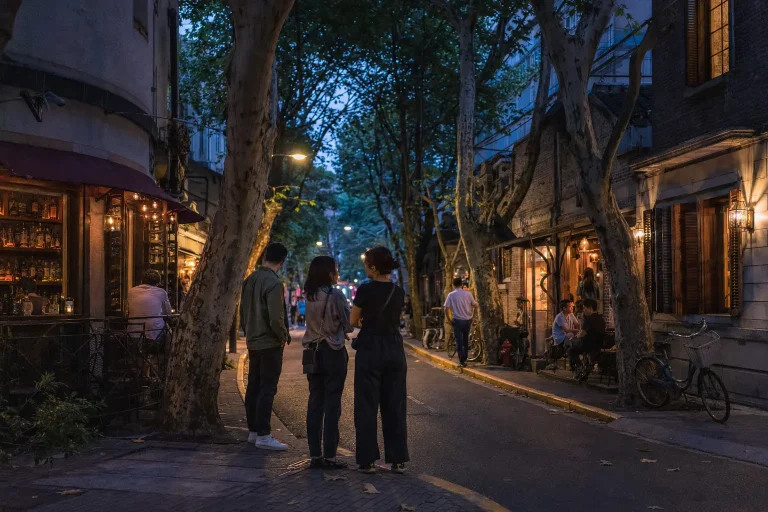
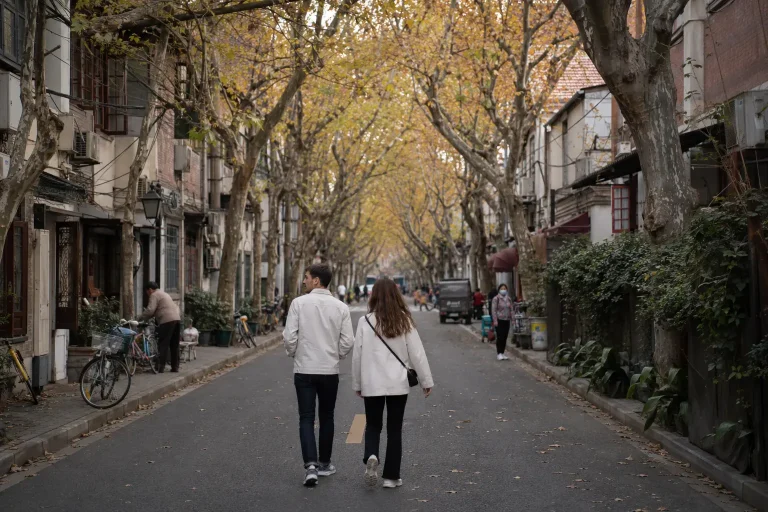
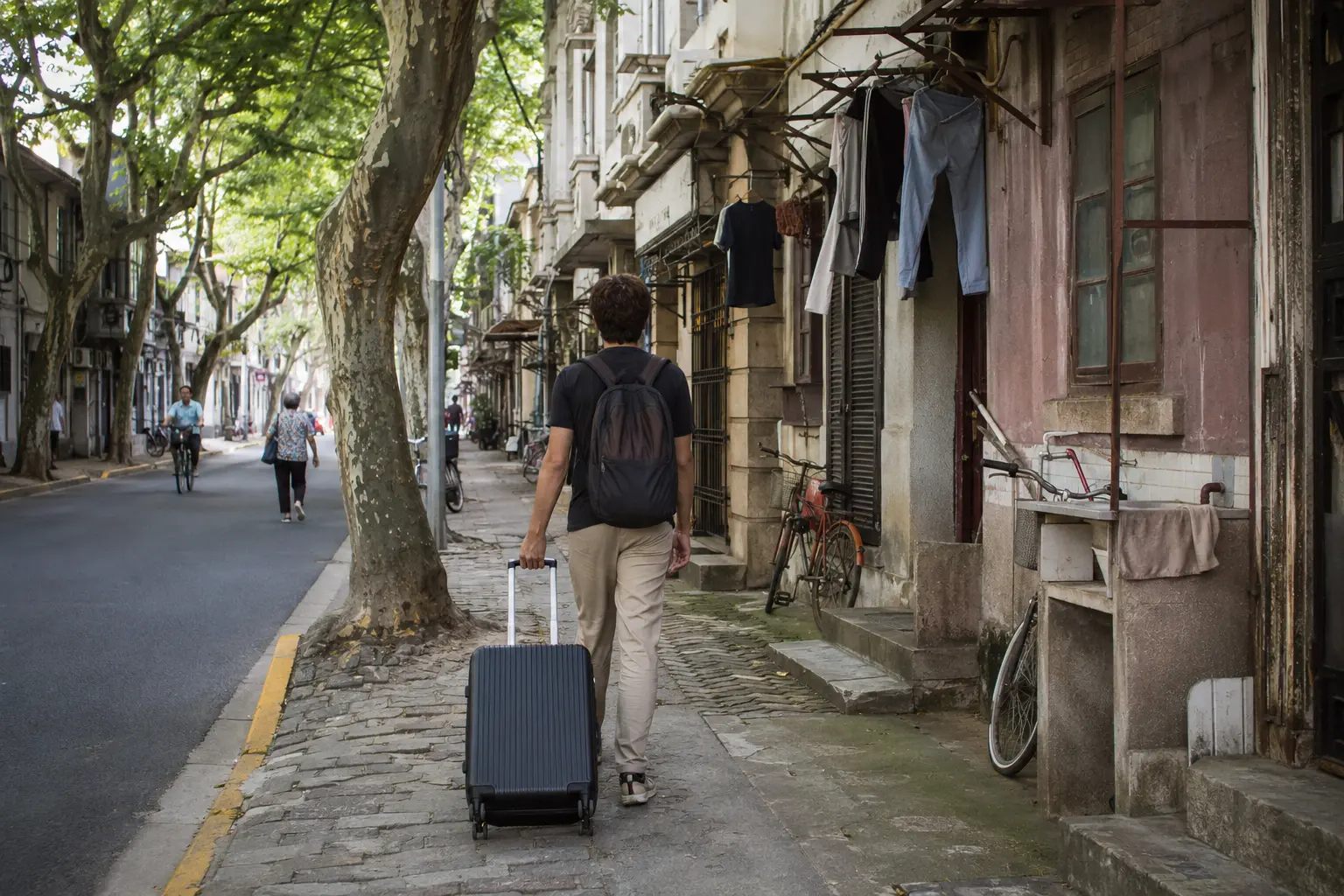
Around Wukang Road, Hengshan Road, Huaihai Road and the lanes of Xuhui, the appeal is low-rise architecture, plane trees, small shops, cafés and residential life. The area rewards walking without a fixed attraction every ten minutes.
Pick a useful edge of the area
For easier transport, look near South Shaanxi Road, Changshu Road, Hengshan Road or Shanghai Library stations, depending on the desired streets. South Shaanxi Road and Huaihai Middle Road offer more shopping and connections; western sections feel quieter but lengthen trips to the Bund.
Sidewalks can be narrow or uneven, and heritage lanes remain homes. A photogenic street is not automatically a convenient place to drag luggage or call a car. Stay here for everyday walks and evenings, not because every first-trip sight is nearby.
Xintiandi: best for a polished, easy evening
Xintiandi combines restored and reconstructed shikumen-style architecture with restaurants, boutiques, offices and high-end hotels. It is central, comfortable for walking and convenient for travelers who want dinner close to the room.
The district is carefully curated and priced accordingly. It offers an accessible introduction to Shanghai’s lane-house form, but not a complete account of how shikumen neighborhoods functioned. Nearby residential and commercial streets add context.
Choose Xintiandi for a short upscale stay, couples who value evening convenience or business travelers mixing meetings with sightseeing. Budget travelers can visit without sleeping here.
Lujiazui: best for skyline hotels and business travel
Lujiazui is the financial core of Pudong, home to Shanghai Tower, the Oriental Pearl Tower and a dense cluster of high-rise hotels. Rooms can deliver extraordinary views across the Huangpu River toward the Bund.
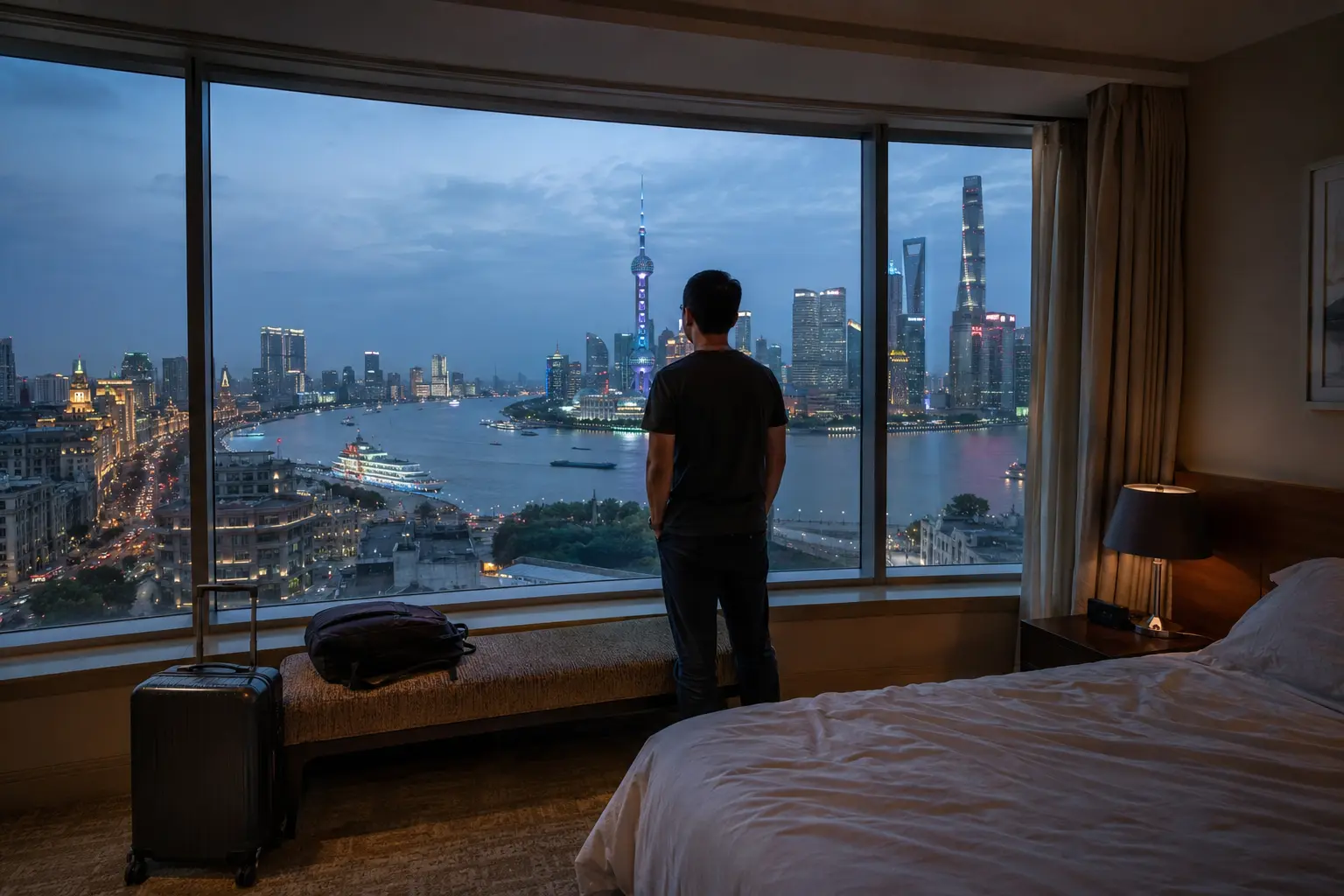
The view comes with a geographic bargain. Many historic areas, neighborhood walks and classic food destinations are in Puxi. Metro and taxi connections are efficient, but repeated river crossings shape the day. The distance between adjacent towers can also be larger and less pedestrian-friendly than the skyline suggests.
Stay in Pudong when the reason is specific
Lujiazui makes sense for business appointments, a luxury hotel experience, Pudong-side attractions or a brief stop focused on modern architecture. It is less compelling as a default first-time base simply because the room faces the city visitors plan to explore.
Pudong Airport is also far beyond Lujiazui. A Pudong address does not automatically mean an easy airport transfer.
Xujiahui: best for families, shopping and better value
Xujiahui is a major transport and shopping hub in southwest central Shanghai. Large malls, restaurants, metro connections and a broader selection of modern hotels can make it practical for families or longer stays. Some rooms offer more space for the price than equivalent central Huangpu options.
The district has its own cultural sites, including St. Ignatius Cathedral and nearby museums, but most first-trip days still require metro travel east or north. Choose it when room size, shopping and access to western Shanghai matter more than walking to the Bund.
The same logic applies farther southwest: excellent local bases can become poor tourist bases when every day starts with 45 minutes underground.
Hongqiao and the airports: only for transit-led stays
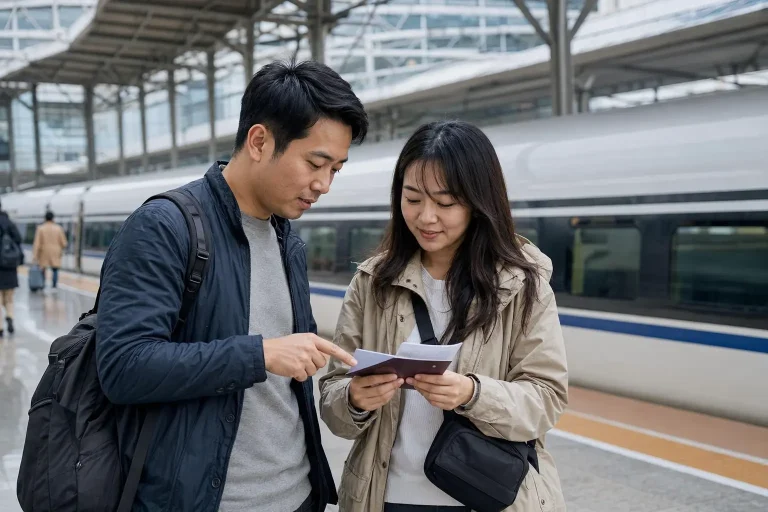
Hongqiao Airport and Hongqiao Railway Station share Shanghai’s western transport zone, making nearby hotels useful for an early domestic flight or high-speed train. They are not convenient bases for central sightseeing.
Pudong International Airport sits much farther east. Metro Line 2 reaches the airport, while the Maglev connects Pudong Airport with Longyang Road rather than carrying passengers directly to the Bund. Check current service hours because a late arrival may require a taxi or prearranged transfer.
For one ordinary flight day, staying centrally and leaving with a reasonable buffer is usually better than sacrificing the final evening to an airport district.
How close should the hotel be to the metro?
Aim for a genuine 5–10 minute walk, then inspect the route. Shanghai stations can have many exits, long underground corridors and entrances on opposite sides of very wide roads. Map distance to the station label is less useful than walking distance to the correct entrance.
Lines 1, 2, 10, 12 and 13 are useful across many central visitor routes, but the best line depends on the itinerary. People’s Square is a strong interchange; East Nanjing Road connects central Huangpu with Pudong; Jing’an Temple and South Shaanxi Road serve western central districts.
Do not choose a hotel solely because it sits above a station. Verify noise comments, elevator access and whether the useful entrance is inside a mall that closes overnight.
Booking a Shanghai hotel: details to verify
Use a booking platform or hotel website that clearly accepts international cards and shows a complete address in Chinese and English. Confirm the property will register your passport on arrival, and ask directly about foreign-guest procedures if recent reviews are unclear. Regulations and enforcement can change; a successful online reservation is not a substitute for knowing the check-in requirements.
Check room configuration carefully. “Family room,” extra bed and two-double-bed inventory do not mean the same thing across properties. Travelers with children should request the sleeping layout in writing.
Also verify deposit policy, breakfast inclusion, smoking or nonsmoking floors, air-conditioning dates and laundry access. Recent guest reviews are more useful than a five-year-old score for these operational details.
Match the area to the trip
For a first three-night visit, choose People’s Square, East Nanjing Road or the western Bund edge. For food and evenings, choose Jing’an. For long walks and smaller streets, choose the former French Concession. For a skyline-led luxury stay or Pudong meetings, choose Lujiazui. For families needing space and malls, consider Xujiahui.
Pack for the actual door-to-door route, not only the flight. The long-haul flight essentials guide helps with arrival comfort, while the carry-on packing list is useful if the hotel route includes stairs, transfers or a high-speed train.
The best area to stay in Shanghai is the one that protects the hours after breakfast and before bed. A skyline view is lovely; a good bowl of noodles, a nearby station and an easy walk home usually influence the trip more.
Frequently Asked Questions
Where is the best area to stay in Shanghai for first-time visitors?
Puxi, between People’s Square, East Nanjing Road, and the western edge of the Bund, is the best all-round base. It offers strong metro connections and easy access to major sights and food after dark.
Should you stay in Pudong or Puxi in Shanghai?
Puxi suits most first-time visitors for sightseeing and metro access. Lujiazui in Pudong works for skyline hotels and business travel, but many daily sights sit across the river from there.