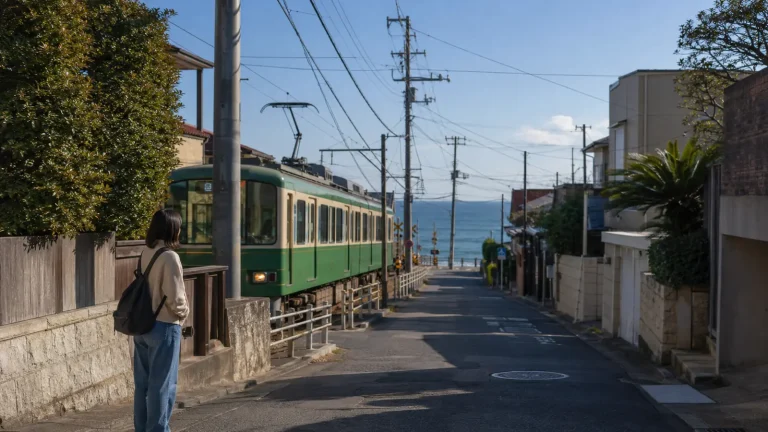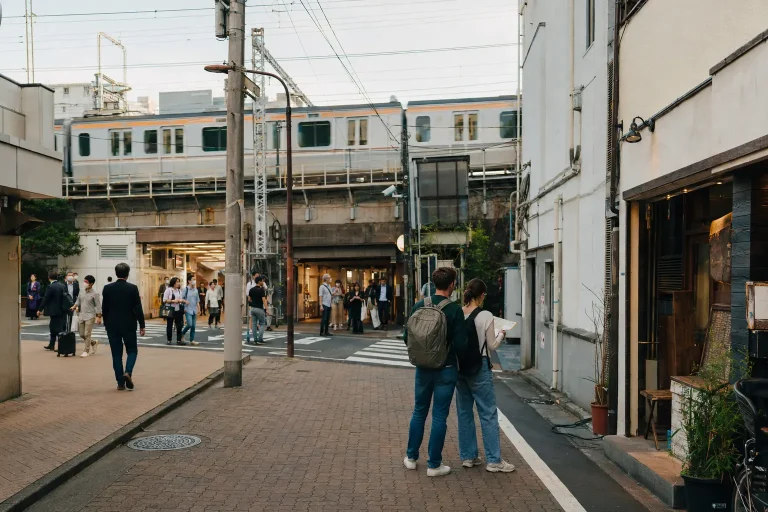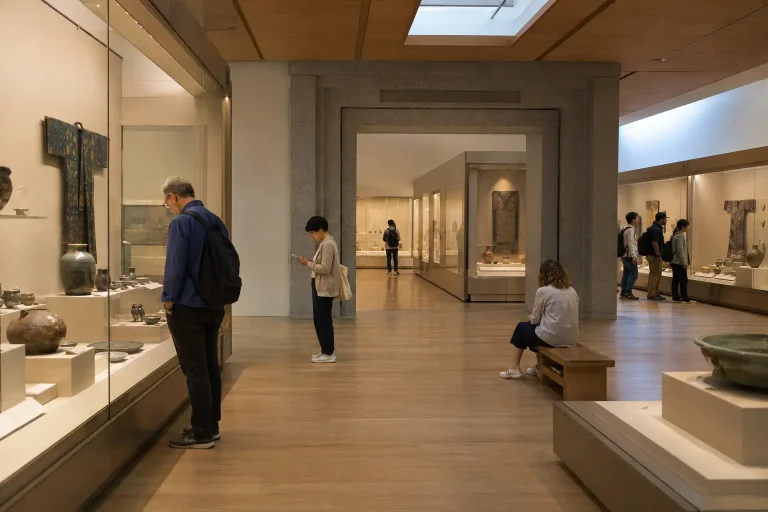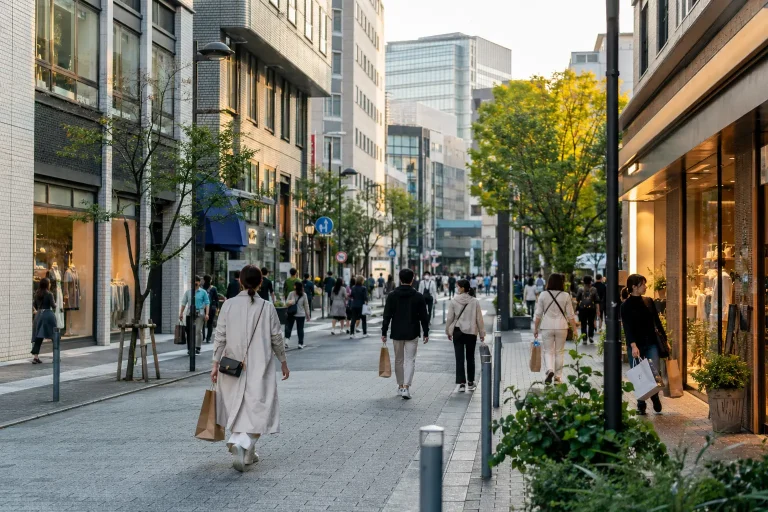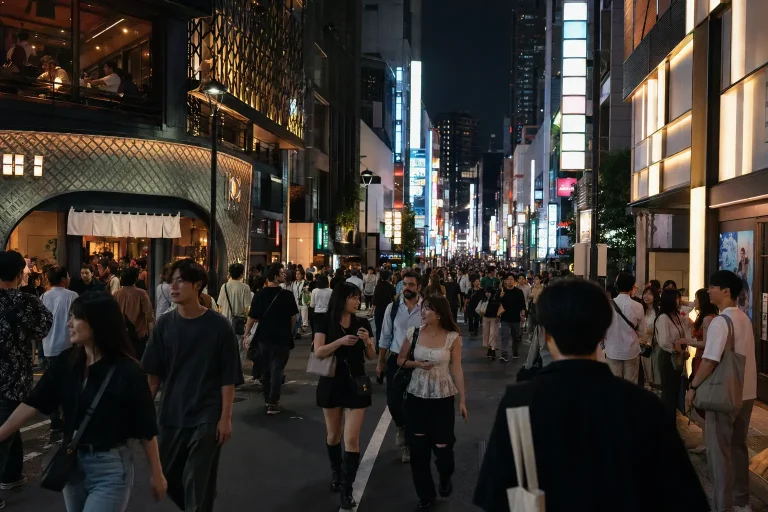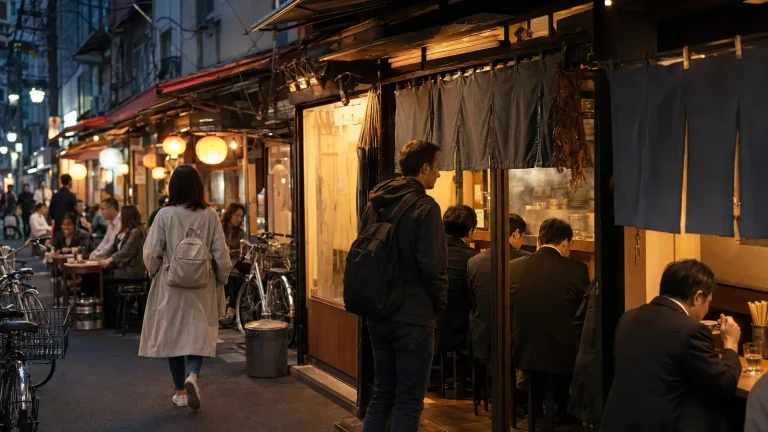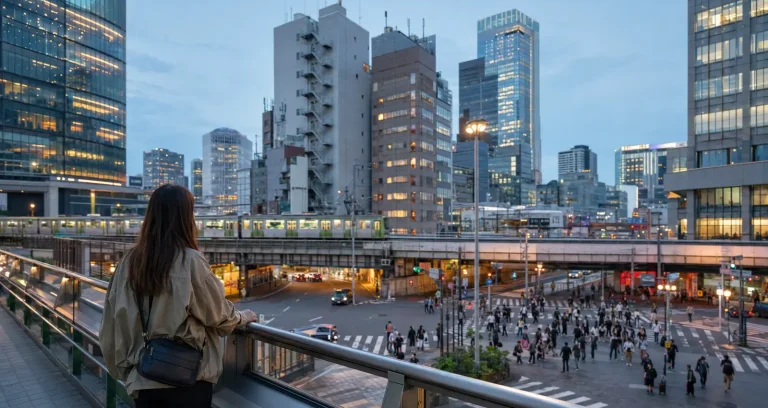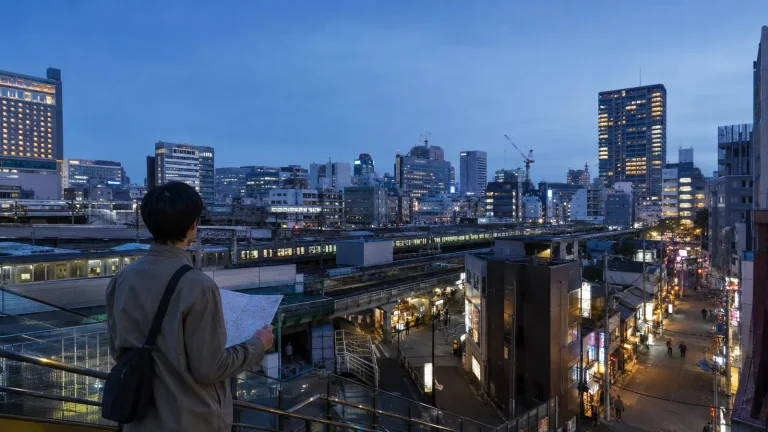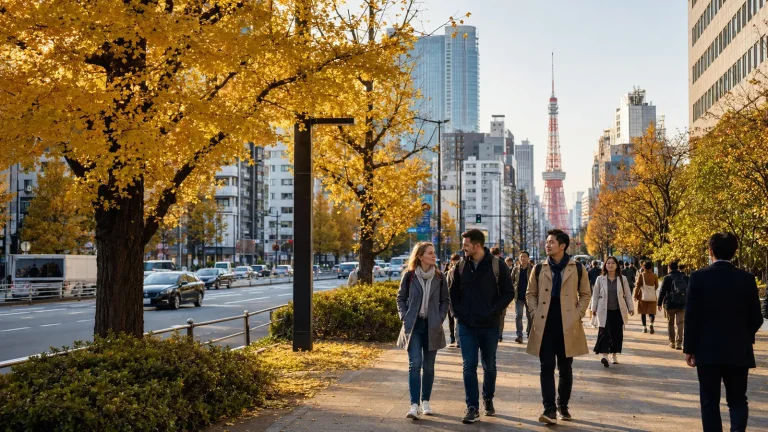
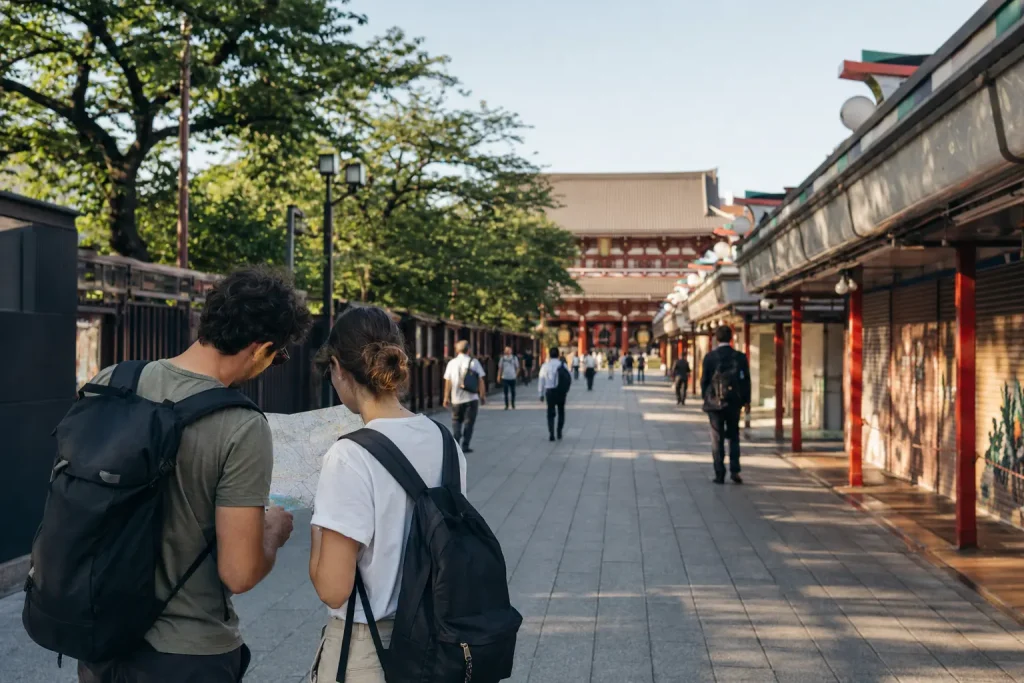
Five full days in Tokyo are enough for a first visit if each day stays in one part of the city. A practical Tokyo itinerary for 5 days should cover historic eastern neighborhoods, the fashion and nightlife districts of western Tokyo, the central business and shopping areas, one day shaped around personal interests, and one flexible day for weather or a short trip beyond the center.
That is not the same as spending five nights in Tokyo. An arrival afternoon and a departure morning rarely add up to two sightseeing days, especially after a long flight. Use the plan below for five usable days. If your schedule is really five days and four nights, keep Days 1–4 and choose the most appealing half of Day 5.
Five days in Tokyo at a glance
| Day | Main area | Best for | One decision to make |
|---|---|---|---|
| 1 | Asakusa, Ueno and Akihabara | Temple streets, museums and pop culture | Museum afternoon or more neighborhood time |
| 2 | Meiji Jingu, Harajuku, Shibuya and Shinjuku | Fashion, youth culture and the city after dark | Reserve one observation deck or skip it |
| 3 | Tsukiji, Ginza, Marunouchi and Tokyo Station | Food, design, shopping and central Tokyo | Garden, palace grounds or a longer lunch |
| 4 | A personal-interest route | Art, animation, architecture or waterfront Tokyo | Choose one route, not pieces of all three |
| 5 | Flexible Tokyo or a day trip | Weather recovery, deeper neighborhoods or a change of scale | Stay in the city or leave it for the day |
The order can move. Put outdoor-heavy days under the clearest forecast, check museum closure days before assigning dates, and place any timed ticket first. Tokyo rewards planning, but it also punishes schedules that assume every station exit will reveal itself immediately.
Before Day 1: set up the trip without sacrificing a day
Treat arrival as setup time. Reach the hotel, eat nearby, walk to the closest station entrance, and learn which exit is most useful. A “five-minute walk from the station” can become a 20-minute introduction to underground Tokyo when the wrong exit deposits you across a six-lane road.
Add a digital transit card or buy a physical IC card if available, set up mobile data, and save the hotel name and address in Japanese. Put the places you have actually reserved on a map, but do not schedule a cross-city victory lap on the first evening. If the flight is long, the most useful preparation may be a realistic set of long-flight essentials and permission to go to bed early.
Choose accommodation for station access rather than a famous neighborhood name alone. A smaller station on a useful line can be calmer than sleeping beside Shinjuku Station and then spending the week negotiating its exits. Check the walking route from platform to hotel, not only the straight-line map distance.
Day 1: Asakusa, Ueno and Akihabara
Eastern Tokyo works well on the first day because it moves from an easily understood historic district to a major cultural park, then ends somewhere visually unmistakable. Start early, keep the afternoon adjustable, and allow the evening to finish when jet lag says it is finished.
Early morning at Senso-ji
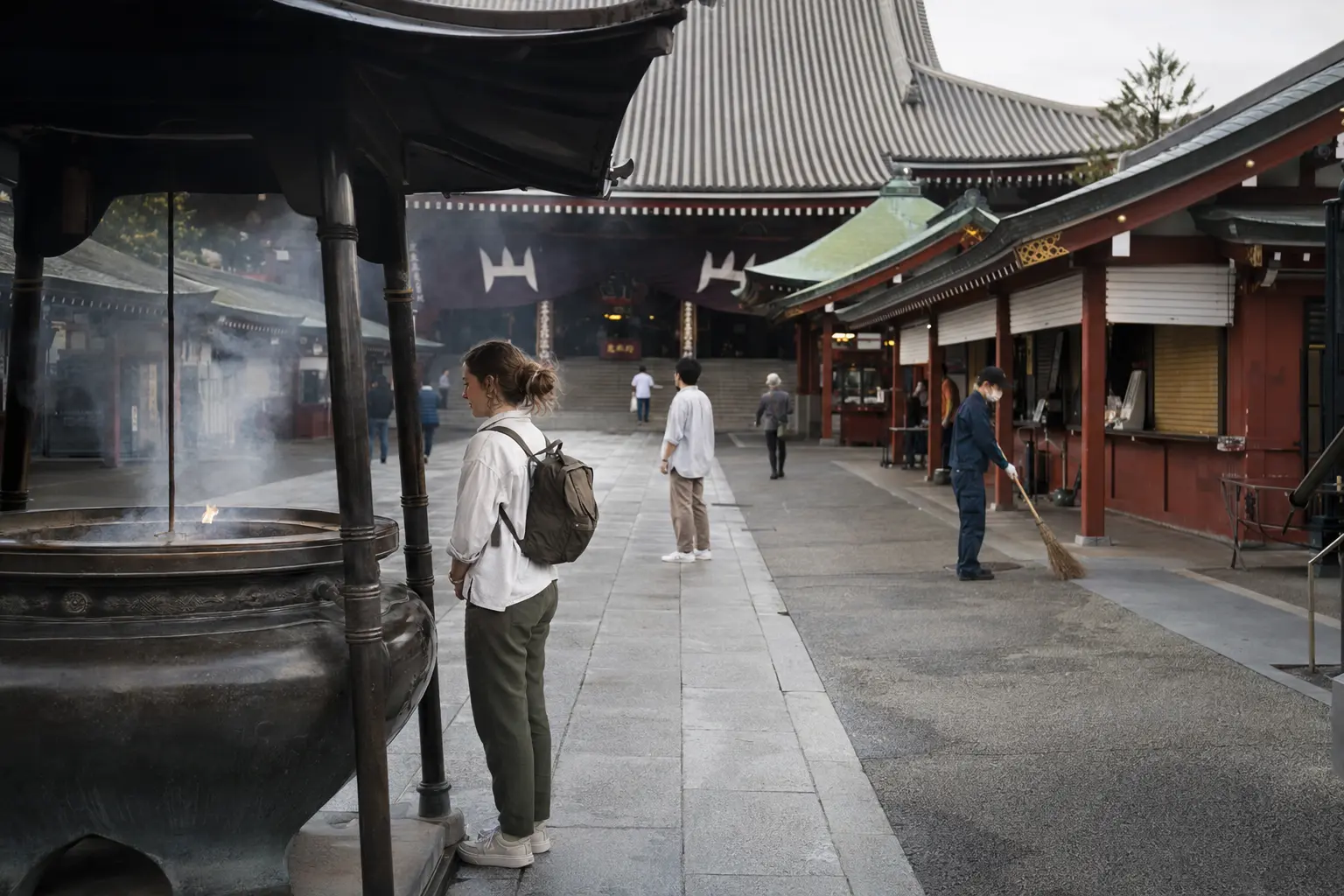
Reach Asakusa around 7:30 or 8:00 a.m. The main grounds of Senso-ji can be entered early, before Nakamise’s souvenir shops are fully awake. Kaminarimon, the long approach and the temple buildings are not secret at this hour, merely less compressed. That distinction matters.
Pause at the temple rather than treating it as a red gate on the way to breakfast. Senso-ji grew around a Buddhist image traditionally said to have been found in the Sumida River, and Asakusa remained an entertainment and commercial district through very different versions of Tokyo. The incense smoke, shutters lifting along the arcade and delivery carts in side lanes reveal more of the neighborhood’s working rhythm than a rushed midday photograph.
After the temple, walk the quieter streets north and west or continue toward Kappabashi if kitchenware interests you. Nakamise is convenient for small gifts, but it is not the only place to browse. One hour around the temple is enough for a focused visit; two to three hours allows breakfast, shopping and the Sumida riverfront.
Choose one serious stop in Ueno
Take the Ginza Line or walk through Kappabashi toward Ueno if the weather is comfortable. Ueno Park contains enough museums and cultural sites to consume a full day, so choose one institution instead of sampling several lobbies.
The Tokyo National Museum is the strongest first choice for Japanese art, Buddhist sculpture, ceramics, textiles and archaeological material. Give it at least two hours and confirm the current calendar; exhibitions and gallery access change. Travelers more interested in science, children’s exhibits or Western art may prefer another Ueno institution, but the rule stays the same: a museum is an afternoon, not punctuation between snacks.
If the weather is excellent and indoor time feels wasteful, trade the museum for Yanaka. The streets north of Ueno preserve a lower-rise residential scale, with cemeteries, small temples and neighborhood shops. It is not “old Tokyo frozen in time”—residents live here, deliveries arrive, and new cafés appear—but it offers a useful contrast with the city’s commercial centers.
Let Akihabara be specific
Continue to Akihabara in late afternoon. The district makes most sense after deciding what you want from it: retro games, current electronics, manga, model kits, arcades or simply the visual theater of the main streets after dark. Without a category, it can become several hours of fluorescent browsing with no clear memory of what was on which floor.
Specialist stores often become more interesting one or two streets away from the largest billboards. Check prices and voltage before buying electronics for use in the United States, and inspect secondhand grading carefully. End with dinner in Akihabara, Ueno or near the hotel. There is no prize for reaching a fifth neighborhood on Day 1.
Day 2: Meiji Jingu, Harajuku, Shibuya and Shinjuku
The west-side day follows the city’s contemporary cultural axis. It begins in forest, passes through fashion districts with very different audiences, and ends under the lights that many travelers imagined before arriving.
Start at Meiji Jingu before the shopping streets
Enter Meiji Jingu from the Harajuku side in the morning. The long gravel approach is part of the experience: traffic recedes, torii gates change the scale, and the shrine complex appears only after a substantial walk. Meiji Jingu commemorates Emperor Meiji and Empress Shoken, whose era was tied to Japan’s rapid modernization. It is a religious site rather than a themed historical enclosure, so keep voices low and avoid blocking worshippers for photographs.
Allow 60–90 minutes for the main route. Yoyogi Park is worthwhile for a picnic, seasonal foliage or weekend people-watching, but it is optional on a five-day first visit. It is a large urban park, not an ornamental Japanese garden.
Read Harajuku as more than Takeshita Street
Takeshita Street remains a concentrated display of youth-oriented retail, sweets and trend cycles. Visit if that is the point, preferably before its busiest midday period. Then cross toward the backstreets around Cat Street and Omotesando, where independent labels, global brands and carefully designed commercial buildings occupy a different version of “Harajuku.”
This is a good place to stop for lunch, but avoid chaining several viral food queues together. A day that includes a pancake queue, a crepe queue and an observation-deck queue has quietly become a study of barriers. Choose the one item that matters and let the rest be incidental.
Give Shibuya an afternoon and an evening
Walk or take one short train ride to Shibuya. The scramble crossing is brief; the district around it is the real activity. Department stores and vertical retail complexes can cover fashion, design goods, records, character merchandise and food halls without requiring multiple cross-city journeys. Prioritize what cannot be bought easily at home rather than browsing the same global labels on several consecutive floors.
If a skyline view matters, reserve one observation deck for late afternoon or evening and build the day around its entry time. Do not reserve multiple distant attractions on the same day. Weather can erase the value of a view, while a fixed ticket can erase the flexibility of the itinerary.
End in Shinjuku only if energy remains
Shinjuku is a short train ride away, but Shibuya already supports a full evening. Go to Shinjuku for a different nightlife scale: large department stores on the west and south sides, dense entertainment streets to the east, and much smaller bars tucked into narrow lanes.
Choose dinner before drinks, note the last useful train, and do not assume every tiny bar welcomes a large group. Some have cover charges or limited English service; neither is automatically a scam. The neighborhood becomes easier when you decide whether the goal is food, cocktails, music, people-watching or a late walk. This itinerary needs only one good evening, not an audit of every entertainment district.
Day 3: Tsukiji, Ginza, Marunouchi and Tokyo Station
Central Tokyo is less immediately theatrical than Shibuya, which is exactly why it belongs in a five-day plan. The day connects a working food district, formal retail, imperial geography and the business center that helped shape modern Tokyo.
Eat one breakfast, not six samples
Visit Tsukiji Outer Market early, but do not arrive expecting the old wholesale fish auction; that operation moved to Toyosu. Tsukiji is now a dense mix of restaurants, food stalls, ingredient shops and businesses serving both visitors and professionals.
Pick one proper breakfast or a few small items rather than purchasing the first photogenic skewer at every corner. Stay aware of queues and private working space, and avoid eating while blocking narrow lanes. The useful question is not how many foods can fit into breakfast, but which experience is worth slowing down for.
Walk Ginza with a purpose
Ginza’s broad grid and polished storefronts make it easy to dismiss as luxury retail, but the area is also useful for department-store food halls, stationery, architecture, galleries and Japanese design. Choose a category. Itoya can absorb stationery enthusiasts; a depachika basement can turn lunch shopping into field research; flagship buildings reward travelers interested in contemporary commercial architecture.
Many shops open later than temples and markets, which is why Tsukiji comes first. On weekends, part of the main avenue may become pedestrian space, changing the area’s pace. Confirm current arrangements rather than designing the day around an assumed closure.
Pick a garden or palace walk
From Ginza, choose either Hamarikyu Gardens or the Imperial Palace East Gardens and outer grounds. Hamarikyu offers a designed landscape and tidal pond near the former shogunal hunting grounds. The palace area provides scale: moats, stone walls and the visual gap between imperial land and Marunouchi’s offices.
Opening days and admission conditions can change, and the palace itself is not generally open for casual wandering. Check the Imperial Palace visitor information before treating a gate on the map as an entrance. If the chosen garden is closed or the weather turns, move directly to Marunouchi.
Finish under and around Tokyo Station
The restored red-brick Marunouchi façade deserves a look from the plaza, while the station’s interior deserves patience. Tokyo Station is a transport hub, shopping complex, restaurant network and underground navigation exercise in one.
Spend the evening in Marunouchi, Nihonbashi or Yurakucho. This is also the sensible day to buy train snacks or gifts, because the station and nearby department stores collect regional specialties without requiring a separate souvenir expedition. Carry only what fits; a disciplined carry-on packing list is more useful after the third shopping bag than before the flight.
Day 4: choose the Tokyo you actually care about
By Day 4, the itinerary should stop insisting that every first-time visitor has identical interests. Pick one of these routes and give it the day. Combining the headline item from each route creates unnecessary transit and a suspicious number of ticket windows.
Route A: museums, design and Roppongi
Start with one major museum in Ueno, Aoyama or Roppongi, depending on the exhibitions currently running. The National Art Center has no permanent collection and is only as relevant as its current shows. Other institutions require timed entry or close on particular weekdays. Check official exhibition pages, not an old list of “best museums.”
Pair the museum with nearby architecture and a long lunch, then stay in the same part of the city for the evening. Roppongi and Azabudai can support contemporary art, design, skyline views and dinner without turning the day into museum speed-dating.
Route B: animation, neighborhoods and western Tokyo
If the Ghibli Museum is the priority, secure tickets before building the day. It is in Mitaka, west of central Tokyo, and entry is controlled. Combine it with Kichijoji and Inokashira Park rather than racing back to Asakusa.
Without a museum ticket, spend the day between Kichijoji, Koenji, Nakano or Shimokitazawa according to interests in vintage clothing, records, live music, cafés and secondhand pop-culture goods. These are not empty “local alternatives”; they are active neighborhoods where normal errands continue around visitors. Browse with the same awareness you would bring to a residential district at home.
Route C: Toyosu, teamLab and the bay
Choose this route for digital art, contemporary waterfront development and broad views rather than historic street texture. A timed teamLab ticket should anchor the day. Toyosu Market is a functioning wholesale complex with visitor areas, but it is not a direct replacement for the old Tsukiji experience, and its most interesting activity happens early.
Odaiba and the bay area are spread out. Select one or two additional stops—science, architecture, a waterfront walk or a bath complex—rather than assuming every attraction sits beside the next station. Return toward central Tokyo for dinner if the waterfront options do not fit.
Day 5: use the forecast, not your fear of missing out
The fifth day is the itinerary’s pressure valve. Keep it open until the weather and energy level are clearer, unless the chosen activity requires advance booking. This is the day that prevents a rainy Tuesday from ruining an outdoor plan and stops a sunny Friday from being spent underground simply because a spreadsheet said so.
Option 1: take an easy day trip
Choose Kamakura for temples, shrines and a coastal change of scale; Nikko for more ambitious travel and ornate religious architecture; Kawagoe for a shorter historic excursion; or Mount Takao for a walk when conditions are suitable. A Mount Fuji view is weather-dependent, so do not make a clear panorama the sole measure of whether the day succeeded.
Travel times must be measured from the hotel, including the transfer to the departure station. Nikko and the Fuji Five Lakes can be satisfying, but they are not casual extensions of a Tokyo morning. For this itinerary, pick one place and return without adding another city on the way.
Option 2: stay in Tokyo and go deeper
Use the day for a neighborhood that matched your interests earlier: return to Yanaka, browse Kiyosumi-Shirakawa, walk Kagurazaka’s slopes, spend more time in Kichijoji, or explore the smaller galleries and shops around Kuramae. A repeat visit is not wasted time. Tokyo often becomes more legible on the second pass, when finding lunch no longer competes with locating the station.
This option also works for laundry, a slower meal and one carefully chosen shop. Five days of continuous sightseeing can turn the final afternoon into movement without attention. Stopping is part of the route.
Option 3: build a rainy-day cluster
On a wet day, choose a cluster with several indoor options: Tokyo Station and Marunouchi; Ginza and Yurakucho; Ueno’s museums; Roppongi and Azabudai; or Shibuya’s retail complexes. Keep one outdoor walk for a lighter spell, but do not cross the city each time rain changes intensity.
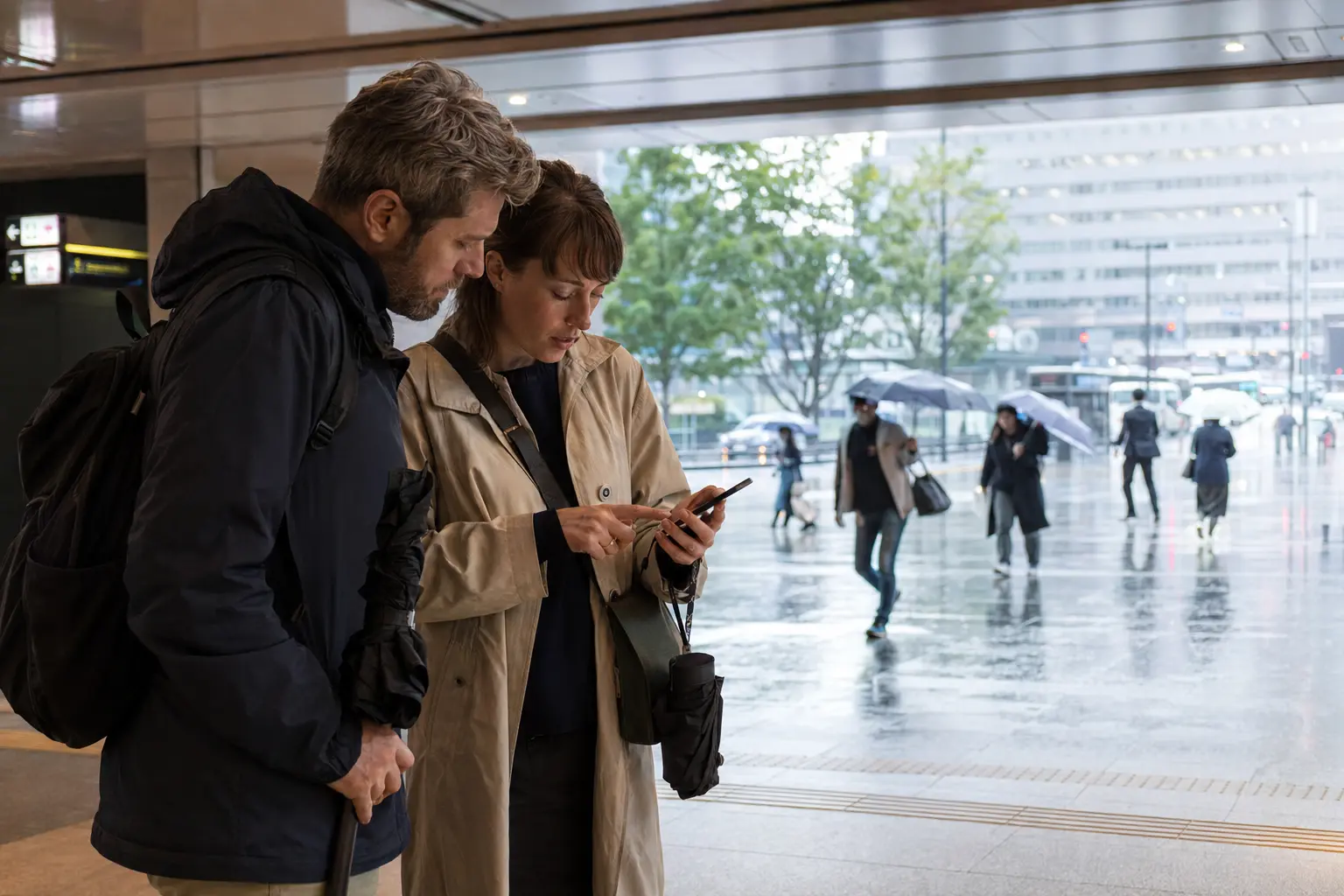
Carry a compact umbrella and footwear that tolerates wet station floors. Museums may become busier when the forecast collapses, so reserve where possible. The practical advantage of a flexible day is not that rain disappears; it is that the plan stops arguing with it.
How to customize this five-day Tokyo itinerary
If you have only five days and four nights
Do not count the arrival and departure edges as full days. Keep the three core city days, choose one Day 4 route, and use the remaining half-day for either Asakusa early or Shibuya late. Skip the day trip unless leaving central Tokyo matters more than one of the city themes.
If food is the main reason for the trip
Retain the geographic structure but reduce attractions. Allow a market breakfast, a proper lunch and a reserved dinner without putting them in three distant districts. Department-store basements and station food halls are useful between meals, but five tasting queues do not create a better food day.
If shopping is a priority
Make Day 2 the contemporary-fashion day, Day 3 the design and department-store day, and use Day 4 for vintage or specialist shopping. Bring a foldable extra bag only if checked-baggage rules allow it; otherwise apply the logic in how to pack a suitcase efficiently before purchases colonize the hotel floor.
If you are traveling with children
Cut each day to one main attraction plus one flexible neighborhood. Parks, trains, arcades and food halls can be experiences rather than filler. Avoid late-night transfers and confirm age, height and stroller rules for ticketed attractions. A child who enjoyed the subway is still unlikely to celebrate a fourth cross-city transfer.
If mobility or fatigue is a concern
Station maps understate effort. Long underground corridors, stairs, standing on trains and hard museum floors accumulate. Use buses or taxis selectively for the final short connection, choose hotels close to an accessible entrance, and alternate standing-heavy days with seated meals and gardens. The best route is the one the group can still enjoy at 6:00 p.m.
Booking rules that keep the itinerary usable
Reserve only the experiences that genuinely sell out: a specific observation time, Ghibli Museum, teamLab, a small restaurant or a limited exhibition. Aim for one hard reservation per day. Two can work when they are close together; three turns Tokyo’s train network into a countdown clock.
Recheck official hours during the week before travel. Museums commonly have closure days, gardens may stop admission before the posted closing time, and seasonal events can change crowd patterns. Save confirmation emails offline and note the nearest correct entrance.
Keep unscheduled alternatives in the same district. If a museum is closed, the replacement should be a nearby garden, gallery or shopping street—not another major attraction 45 minutes away. Good flexibility is geographic.
Is five days in Tokyo enough?
Five days are enough to understand Tokyo’s main contrasts and learn which version of the city you want more of. They are not enough to complete Tokyo, a goal the city has not made especially realistic.
The strongest 5-day Tokyo itinerary leaves some spaces unfilled. Start in the east, follow the city west, spend one day in its center, choose one interest-led route, and protect a final day for weather or curiosity. The result covers less on paper than an overpacked schedule and considerably more in memory.
Frequently Asked Questions
Is 5 days enough for Tokyo?
Yes, if each day stays in one part of the city. Five full sightseeing days can cover historic eastern neighborhoods, the fashion and nightlife districts of western Tokyo, central shopping areas, and one flexible day for weather or a short trip beyond the center.
Does a 5-night Tokyo trip give you 5 full sightseeing days?
No. An arrival afternoon and departure morning rarely add up to two full sightseeing days, especially after a long flight, so a 5-night trip is closer to 4 usable days plus a partial fifth.