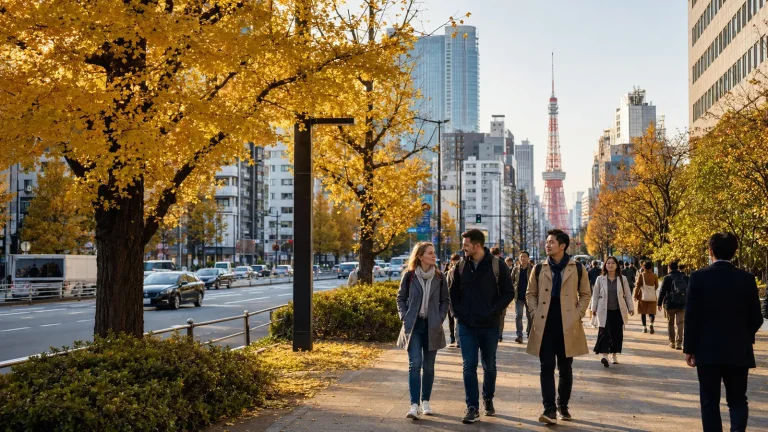
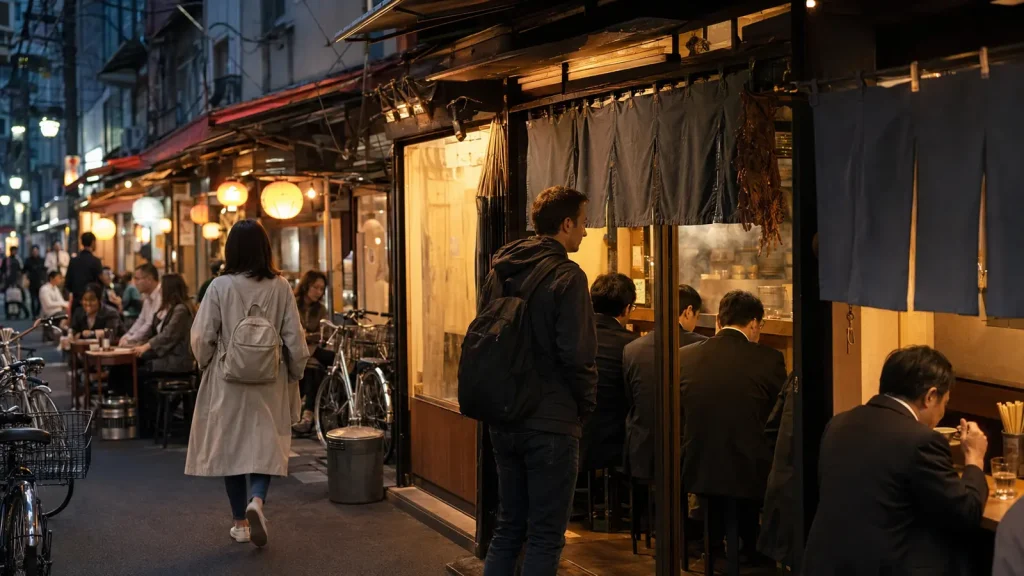
Tokyo food is easier to enjoy once you stop trying to eat everything. A first trip may contain ten dinners in theory, but airport arrivals, day trips, jet lag, and the occasional lunch that becomes a two-hour queue quickly reduce the useful total. The sensible question is not “What are the 40 best foods in Tokyo?” It is “Which meals would I regret missing, and which can fit wherever I already am?”
Start with five experiences: Edomae sushi, tempura or soba, one bowl of ramen, an izakaya evening, and one distinctly local dish such as monjayaki or chanko-nabe. Add unagi, tonkatsu, department-store food, and market grazing according to budget and appetite. This covers both old Edo cooking and the everyday Japanese favorites Tokyo handles extremely well, without turning the trip into competitive eating with a transit pass.
This Tokyo food guide explains what is actually local, which format suits each dish, what needs a reservation, and how to recover when the famous place has a 90-minute line.
The Short List: What to Eat in Tokyo First
| Food or experience | Why it earns a meal | Best format | Planning friction |
|---|---|---|---|
| Edomae sushi | Tokyo’s defining seafood tradition | Lunch set, counter sushi, or omakase | Low to high |
| Tempura | An Edo street food refined into specialist cooking | Tendon for value; counter for a splurge | Low to medium |
| Soba | Historic Tokyo fast food that still works for a quick lunch | Specialist noodle shop | Low |
| Monjayaki | A genuinely local griddle dish | Tsukishima with two or more diners | Medium |
| Chanko-nabe | Communal hot pot tied to sumo culture | Ryogoku dinner | Medium |
| Unagi | Rich, carefully grilled eel with an Edo connection | Specialist shop | Medium |
| Ramen | Not uniquely Tokyo, but endlessly varied and easy to fit in | Ticket-machine counter | Low |
| Tonkatsu | Crisp pork cutlet, cabbage, rice, and useful predictability | Set-meal specialist | Low |
| Izakaya meal | The best introduction to ordering several small dishes | Neighborhood tavern | Low to medium |
| Depachika dinner | Excellent prepared food without a restaurant commitment | Department-store basement | Low |
If you have only three days, do not cross the city for all ten. Pick one special meal, two Tokyo-linked dishes, and two casual formats near the neighborhoods already on your itinerary. Tokyo rewards specificity, but it punishes unnecessary transfers with remarkable efficiency.
What Makes Tokyo Food Different?
Tokyo’s food culture is both local and national. You can eat regional cooking from Hokkaido to Okinawa without leaving the city, which is excellent for diners and mildly inconvenient for anyone trying to define “Tokyo cuisine” in one sentence.
The local historical layer comes from Edo, Tokyo’s former name. As Edo grew into a dense city, quick foods such as soba, tempura, and nigiri sushi became popular among ordinary residents. Seafood from Edo Bay and nearby waterways shaped preparations now grouped under the term Edomae. The Ministry of Agriculture, Forestry and Fisheries’ Tokyo cuisine history traces this relationship between the city, its waters, and its cooking.
That does not make every bowl of soba or piece of sushi in modern Tokyo “authentic Edomae.” It does give travelers a useful filter:
- Tokyo specialties have a strong local origin or place association, including Edomae sushi, monjayaki, Fukagawa-meshi, chanko-nabe, and tsukudani.
- Tokyo styles are local expressions of broader foods, such as traditional dark soy-based soba broth or prepared Edomae sushi toppings.
- Japanese favorites in Tokyo include ramen, tonkatsu, curry, yakiniku, and pastries. They may not belong to Tokyo alone, but the city’s depth and competition make them worth eating here.
The distinction is not a purity test. It simply stops a list of “Tokyo famous food” from quietly becoming a list of every Japanese dish an English-speaking traveler has heard of.
Six Foods With a Real Tokyo Connection
1. Edomae sushi
Nigiri sushi developed in Edo as convenient urban food. Traditional Edomae technique is not limited to placing raw fish on rice. Toppings may be marinated, vinegar-cured, simmered, steamed, or cured with kombu; conger eel and prawns may be cooked, and the rice can carry the deeper flavor of red vinegar. MAFF’s guide to nigiri-zushi provides a useful primer before a serious counter meal.
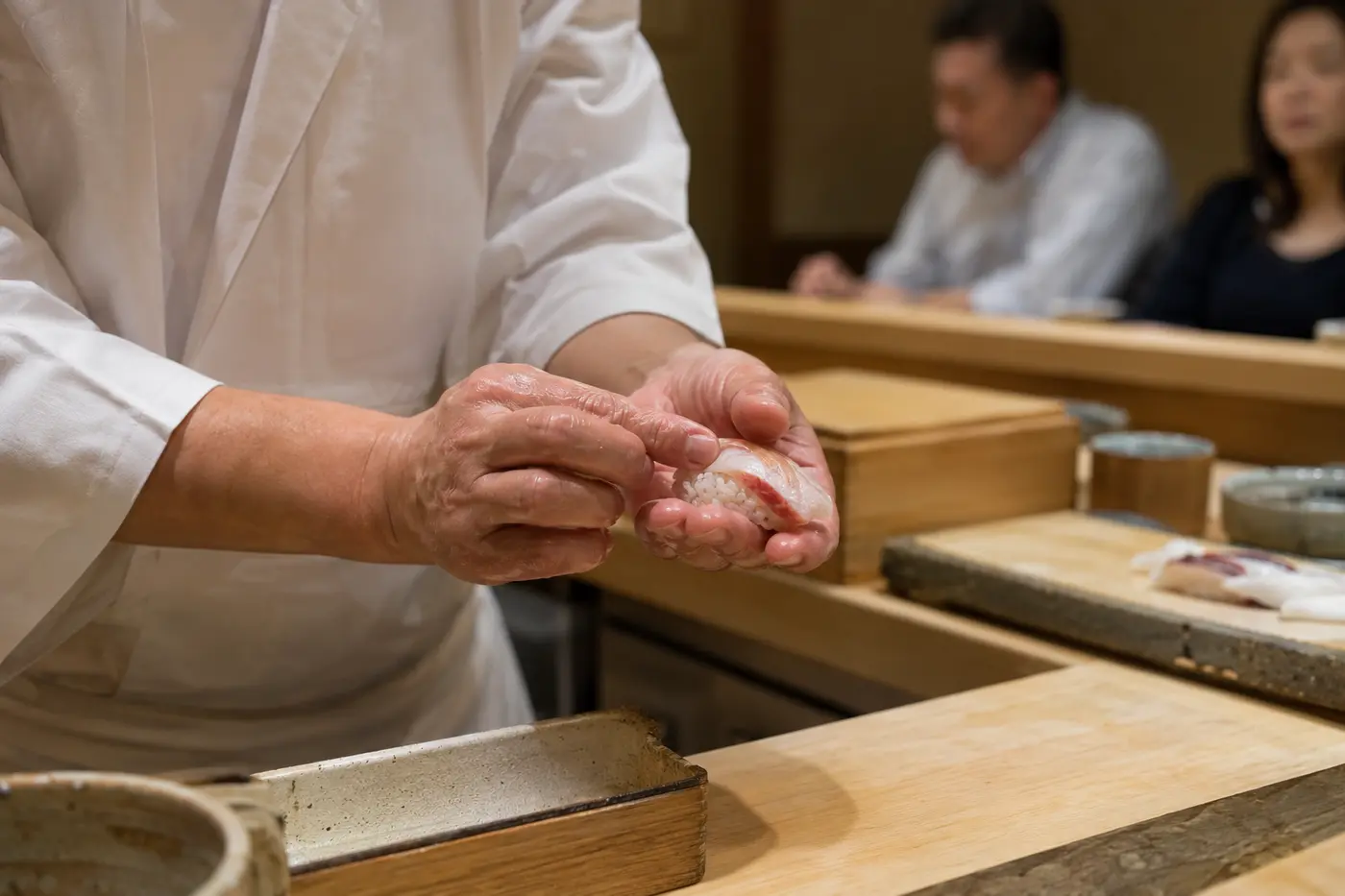
For a first experience, choose the level of ceremony you actually want:
- A lunch set at a respected sushi shop offers structure and often better value than dinner.
- A neighborhood counter lets you order a modest sequence without turning the meal into an event.
- Omakase suits diners happy to surrender choice, pace, and usually more money to the chef.
- Conveyor-belt sushi is casual, visual, and perfectly legitimate when the goal is variety rather than reverence.
Reserve small or destination counters because missing the meal would disrupt the trip, not because every sushi lunch in Tokyo requires weeks of planning. Confirm raw-food preferences, allergies, budget, cancellation rules, and whether the course price includes tax or service before booking.
2. Tempura
Tempura’s frying idea has European antecedents, but Edo cooks developed the seafood-and-vegetable style associated with the city. It became practical street food before becoming specialist counter cuisine. The official MAFF tempura history notes the Edo preference for frying in sesame oil.
At a counter, pieces arrive one at a time so each can be eaten while the coating is fragile and hot. This is the version for travelers who care about batter texture and timing. Tendon places tempura over rice with sauce; it is faster, cheaper, and more satisfying after a long morning of walking. One is not a failed version of the other. They serve different days.
3. Soba
Soba became established as fast food in Edo, and it remains one of Tokyo’s best low-drama lunches. A specialist shop may offer cold noodles with dipping sauce, hot broth, tempura, duck, or seasonal toppings. Cold zaru soba makes the noodle’s texture and aroma easiest to notice; hot soba is kinder on a wet winter afternoon.
Slurping is acceptable, but it is not an entrance exam. Eat neatly, follow the room, and do not perform enthusiasm for the sake of cultural theater.
Soba also requires more dietary caution than its plain appearance suggests. Buckwheat is an allergen, many noodles contain wheat, and dipping broth commonly contains bonito-based dashi. “No visible meat” is not the same as vegetarian or gluten-free.
4. Monjayaki
Monjayaki is a loose batter cooked with cabbage and other ingredients on a tabletop griddle. It looks less polished than okonomiyaki and is all the better for not trying. Diners use small spatulas to cook and eat it gradually, allowing the edges to become crisp.
Tsukishima is the obvious place to try it. Its Monja Street has dozens of specialists, so there is little reason to wait indefinitely at one famous door. If the restaurant expects customers to cook, staff will usually demonstrate the method; if they offer to handle it, accept the help and enjoy not having to interpret bubbling batter as a moral challenge.
Monjayaki is best with at least two people because it is social, shareable, and not the most elegant solo dinner. Solo travelers need not force it. Choose soba or a sushi counter instead and save monja for a day when company appears.
5. Chanko-nabe
Chanko-nabe is a substantial hot pot associated with sumo wrestlers. It has no single required recipe: broth, meat, seafood, tofu, and vegetables vary by kitchen. Ryogoku, Tokyo’s sumo district, gives the meal useful context without requiring a tournament ticket.
This is a strong cool-weather dinner and a practical group meal. It is less suitable for one diner, a tight lunch break, or anyone who dislikes negotiating shared pots. Do not assume every chanko restaurant is run by a former wrestler; verify the individual restaurant if that detail matters.
6. Unagi
Tokyo-style unagi is opened, skewered, steamed, sauced, and grilled, producing tender eel beneath a lacquered surface. It usually arrives over rice as unaju or unadon. The process takes time, so this is not always a spontaneous 20-minute meal.
Unagi is rich, relatively expensive, and distinctive enough to replace a more obvious steak dinner. Choose a specialist, check its last order time, and allow the kitchen to work. Travelers concerned about eel sourcing should research the current restaurant’s policy rather than relying on a timeless claim in a general city guide.
Six Japanese Favorites Tokyo Does Exceptionally Well
7. Ramen
Ramen is not one Tokyo dish. The city contains regional styles, new-school bowls, austere shoyu ramen, heavy tonkotsu, miso, salt, spicy variations, and dipping noodles. The useful strategy is to choose by broth and location, not by the longest line on social media.
Many shops use a ticket vending machine near the entrance. Select the dish and any toppings, pay, take the ticket, and hand it to staff when directed. Newer machines often have English, but photographs and translation apps cover much of the remaining gap.
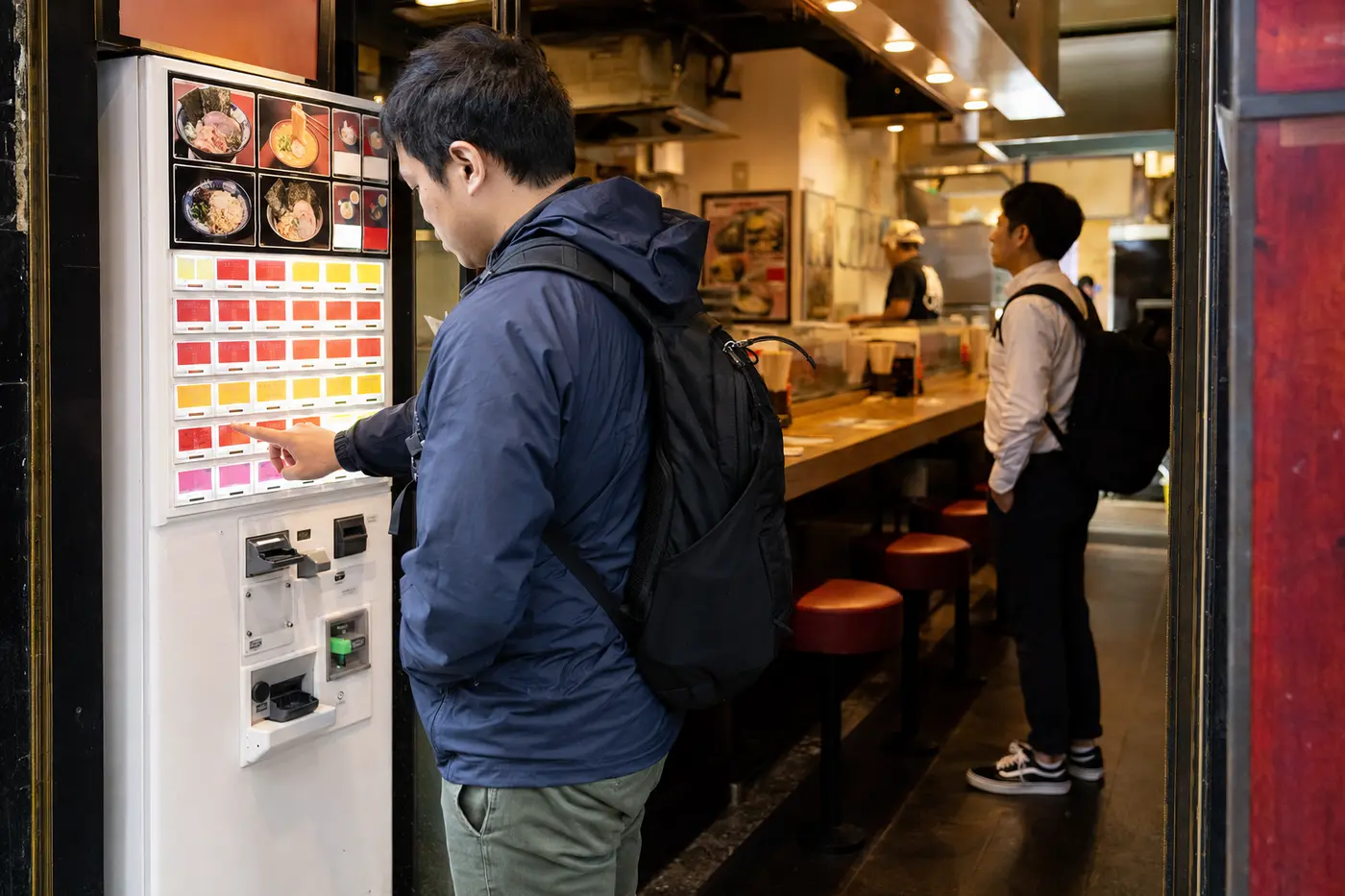
A compact counter may expect you to eat and leave rather than settle in with a laptop. If a queue barely moves, search maps for the same ramen style within a few blocks. Tokyo rarely contains only one competent bowl.
8. Tonkatsu
Tonkatsu is breaded pork cutlet served with shredded cabbage, rice, soup, and sauce. It is not a Tokyo-only food, but it is one of the city’s most reliable answers to “I need a proper meal without a reservation.”
Specialists often let diners choose the pork cut and size. Tenderloin is leaner; loin is richer. Set meals make the final quantity and price easier to understand, and solo dining is normal. The main dietary traps are pork, wheat in the breading and sauce, and shared frying oil.
9. Yakitori and an izakaya evening
Yakitori turns chicken parts, charcoal, salt, and tare into an education in texture. An izakaya broadens the lesson: order several small dishes, drinks if wanted, and something more substantial after seeing the menu’s rhythm.
This is where travelers most often meet otoshi, a small dish brought automatically that commonly functions as a cover charge. It is not necessarily a free appetizer. Some establishments also expect each person to order at least one dish or drink.
Choose a neighborhood izakaya near the hotel for the first night. Jet lag and a complicated alley on the far side of Tokyo are a poor pairing. Tiny counter bars can be wonderful, but a visible menu, clear pricing, and enough space to read the room are useful on arrival day.
10. Japanese curry
Japanese curry is thick, savory, gently sweet, and built for customization. Common additions include pork cutlet, cheese, vegetables, or egg. It is quick, affordable, and often ordered from a machine or a simple bilingual menu.
Use curry as a flexible meal, not a pilgrimage. It fits beside a museum day, a rainy evening, or the moment everyone in a group has lost the ability to make another decision. Chain restaurants can be useful because spice, portion, and topping systems are legible; independent curry shops reward anyone willing to browse locally.
11. Yakiniku
Yakiniku places a grill at the table and lets diners cook sliced meat and vegetables. It works for groups that want a lively dinner and control over each piece. It works less well for a rushed solo lunch or clothing that must remain smoke-free for an important event.
Price varies sharply by cut and beef origin. Set menus reduce uncertainty, while à la carte ordering suits diners who know what they like. “Wagyu” is a category, not a guarantee that every expensive plate is transcendent. Read the exact cut, portion, and origin rather than purchasing a famous noun.
12. Wagashi, kissaten, and Tokyo’s quieter sweets
Tokyo’s sweet side is broader than towering Harajuku desserts. Traditional wagashi reflect season and texture; kissaten serve carefully made coffee, toast, pudding, and a slower version of the city; department-store counters offer immaculate small cakes and gifts.
Choose one sweet format that changes the pace of the day. A quiet coffee break after a crowded attraction may contribute more than an hour in line for a photogenic crepe. Viral food is still food, but it should have to earn its transit time.
Build a Tokyo Food Plan Around Meal Slots
Most visitors do not need a restaurant spreadsheet for every day. They need a few anchors and enough flexibility to respond to weather, energy, and the sudden realization that lunch ended at 3 p.m.
A sensible five-day pattern
- Arrival night: neighborhood izakaya, curry, or a department-store food hall near the hotel.
- Old Tokyo day: soba or tempura around Asakusa, Ueno, or Nihonbashi.
- Special meal: Edomae sushi at lunch or dinner, reserved if the counter is small.
- Local-dish evening: monjayaki in Tsukishima or chanko-nabe in Ryogoku.
- Flexible favorite: ramen, tonkatsu, yakiniku, or whatever the trip has made you crave.
This pattern gives each meal a job. It also leaves breakfast and several lunches unclaimed, which is where bakeries, convenience stores, cafés, fruit, and accidental discoveries belong.
Choose one meal worth crossing town for
A reservation at a special counter can justify a dedicated transfer. An ordinary bowl of noodles usually cannot. Tokyo’s rail system makes distant neighborhoods look close on a map, but the platform walk, transfer, exit, and queue still consume the afternoon.
Match food to the day already planned:
- Asakusa and Ueno work well with soba, tempura, sweets, and casual old-school shops.
- Nihonbashi and Ginza suit sushi, unagi, depachika, and more formal counters.
- Tsukishima is the clear monjayaki detour.
- Ryogoku pairs sumo context with chanko-nabe.
- Shinjuku, Shibuya, Ikebukuro, and Tokyo Station offer enormous choice when convenience matters more than a historical origin story.
Keep one backup within ten minutes
Save a second restaurant for each reserved neighborhood, not a second restaurant for every dish in Tokyo. If the first choice is closed, sold out, or buried beneath a line, the backup should protect the day rather than create another cross-city mission.
Look for specialists with a focused menu, recent opening information, and photographs that clarify the format. Ratings are culturally and platform dependent; a small numeric difference does not reliably measure your future happiness.
Tokyo Food Markets, Halls, and Convenience Stores
Tsukiji Outer Market is not the wholesale market
Tsukiji’s inner wholesale operation moved to Toyosu in 2018. The Outer Market remains a compact district of shops, wholesalers, kitchens, and prepared food. It is a working commercial area rather than a pedestrian food theme park.
The official Tsukiji visitor guidance asks visitors to give professional buyers priority until 9 a.m., avoid large luggage, move in small groups, and eat at the shop or its designated space rather than while walking. Arriving before dawn simply “to beat the crowds” can therefore make visitors part of the problem.
Go for several small tastes, kitchenware browsing, and the energy of street-level commerce. Check individual shop hours; the market does not share one universal timetable.
Toyosu is the functioning wholesale-market complex
Toyosu is where the wholesale market operates. Visitors use designated observation corridors, restaurants, and shops rather than entering working areas. The closer tuna-auction observation deck requires advance application, while an upper public viewing area offers a less intimate look.
Check the Tokyo Metropolitan Government’s current Toyosu information and closure calendar before going. Many restaurants finish far earlier than the market’s general closing time. Choose Toyosu for wholesale-market context and auction interest, not because every traveler needs breakfast at 6 a.m.
Depachika are the low-friction alternative
Department-store basement food halls, called depachika, gather prepared meals, sushi, salads, sweets, bread, gifts, and seasonal specialties in one polished space. They are excellent when a group wants different things or when dinner needs to travel back to the hotel.
Do not assume there is seating. Many purchases are intended for takeaway, and eating while walking is generally discouraged. Buy dinner, find the store’s designated eating area if it has one, or carry the food back to the hotel while it is still presentable.
Konbini are useful, not the summit of Japanese cooking
Convenience stores solve breakfast, drinks, snacks, and late arrivals. Supermarkets often offer broader prepared-food sections and evening markdowns; depachika generally deliver better presentation and specialist counters.
Try the egg sandwich if curiosity demands it. Then allow the city to continue.
How Much to Budget for Food in Tokyo
There is no single honest daily number because a ramen-and-onigiri day and an omakase dinner barely belong to the same accounting system. Build the budget by meal type:
- Low-friction casual meal: noodles, curry, donburi, or a set meal.
- Ordinary sit-down dinner: izakaya, tonkatsu, casual sushi, or yakiniku.
- Specialist or destination meal: counter tempura, unagi, omakase, kaiseki, or premium beef.
- Flexible food: coffee, sweets, market snacks, alcohol, and the second dessert nobody planned.
Check current menus rather than relying on a dollar conversion published months earlier. Exchange rates move, and some restaurants show tax-inclusive prices while others may add service or table charges. Japan’s standard consumption-tax rate is 10%; qualifying takeaway food can receive the 8% reduced rate, while restaurant dining and alcohol do not.
Tokyo can offer excellent value at casual specialists, particularly compared with major US cities. It can also spend any budget presented to it. “Cheap” and “expensive” are incomplete descriptions without the dining tier.
Reservations, Queues, and Ordering Without Drama
Reserve the meals that can break the itinerary
Book small sushi counters, fixed-course dining, and destination restaurants if losing the meal would be genuinely disappointing. Use the restaurant’s official site or a booking service it links to. Verify the branch, date, local time, party size, deposit, cancellation policy, and late-arrival terms.
Keep casual noodles, set meals, food halls, and many neighborhood shops flexible unless the specific venue says otherwise. A trip containing three hard dinner reservations can become less spontaneous than the food deserves.
Treat queues as a budget
Decide in advance how much time a meal is worth: perhaps 20 minutes for an ordinary lunch, 45 for a specific bowl, and longer only for something central to the trip. If the line exceeds the budget, use the backup.
Queue length proves that a place is popular at that moment. It does not prove that nearby alternatives are poor. Tourists often form lines around names they recognize; Tokyo continues cooking one street over.
Ticket machines are a menu, not a test
At a ticket-machine shop, decide before blocking the screen if possible. Insert cash or follow the card prompt, select the dish and toppings, collect the ticket and change, then give the ticket to staff. Follow any posted instructions about lining up before or after purchase.
Photograph translation can help, but avoid pointing a phone at other diners. If the machine defeats you, a simple gesture and the dish name usually work better than a speech.
Solo dining is normal
Ramen, soba, sushi, curry, tonkatsu, and counter set meals are especially easy alone. Larger shared dishes such as monjayaki, chanko-nabe, and yakiniku are more comfortable with company, though some restaurants accommodate solo portions.
Counter seating is not a consolation prize. It is often the clearest view of the cooking and the least complicated seat in the room.
Tipping, Table Charges, and Payment
There is no normal tipping custom in Japan. Pay the stated final bill rather than adding a percentage. This does not mean the meal can never include extra charges.
An izakaya may bring an otoshi and charge for it as a cover. Hotels and fine-dining restaurants may add a service charge. Check whether tax and service are included, and ask whether payment happens at the table or register.
Cards are widely useful, but small shops and older ticket machines can still require cash. Carry a modest amount rather than assuming either “Tokyo is cash only” or “my phone will pay everywhere.” Both slogans eventually meet a machine that disagrees.
Food Allergies and Dietary Restrictions
Travelers with a severe allergy should plan at restaurant level. Fish-based dashi, meat extracts, gelatin, and animal-derived ingredients can appear in food that looks vegetarian. Ordinary soy sauce often contains wheat; tempura batter generally contains wheat and may contain egg; soba can include both buckwheat and wheat. Cross-contact remains possible even when the ingredient itself is absent.
Send restrictions before making an important reservation and ask the restaurant to confirm whether it can accommodate them. A translated sentence or “vegan” label is useful communication, not a medical guarantee.
Tokyo’s Bureau of Public Health provides a multilingual Food Allergy Communication Sheet with pictograms. Download or print it, mark the exact allergens, and still speak directly with the restaurant. If the risk is high, choose establishments with explicit allergen procedures rather than trying to negotiate at a busy counter after arrival.
Tokyo Dining Etiquette That Actually Helps
Most Tokyo restaurants do not expect foreign visitors to perform perfect etiquette. They do expect ordinary consideration.
- Wait to be seated when the entrance is unclear.
- Do not bring outside food or drink.
- Use the oshibori for your hands, not the table or dishes.
- Remove shoes where the room or staff indicates.
- Order at least one item per diner when that is the house rule.
- Keep calls and loud conversation out of compact dining rooms.
- Pay the bill where the restaurant directs and do not add a tip.
At Tsukiji, eat in the shop’s designated area rather than walking through the market with food. At a noodle counter, finish without lingering through the next queue. At a fine counter, arrive on time. The useful principle is simpler than a long list of prohibitions: notice what kind of room you entered.
Tokyo Food FAQ
What food is Tokyo famous for?
Tokyo is most strongly associated with Edomae sushi, tempura, soba, monjayaki, chanko-nabe, unagi, Fukagawa-meshi, and tsukudani. Ramen, tonkatsu, curry, yakitori, and yakiniku are also excellent in Tokyo but belong to a broader Japanese food story.
What are the five must-eat foods in Tokyo for a first visit?
Choose Edomae sushi, tempura or soba, ramen, an izakaya meal, and either monjayaki or chanko-nabe. This creates variety in history, format, price, and social setting without assigning every meal to a checklist.
Is food expensive in Tokyo?
Tokyo spans inexpensive noodle and set-meal shops through extremely costly counter dining. Casual specialists can offer strong value compared with large US cities, while omakase, premium beef, alcohol, and hotel dining raise the budget quickly. Check current menus and build the budget by meal type.
Do I need restaurant reservations in Tokyo?
Not for every meal. Reserve small counters, fixed courses, and restaurants central to the trip. Keep casual noodles, curry, set meals, and food halls flexible unless the venue states otherwise.
Where can I find street food in Tokyo?
Tsukiji Outer Market, Asakusa, and selected shopping streets offer snack-style eating, but Tokyo does not operate as one continuous night-market city. Follow local rules about where to eat, and save a dedicated Tokyo street-food guide for the stalls, alleys, and market details.
Is Tokyo easy for solo diners?
Yes. Counter seating, ticket-machine ramen, soba, sushi, curry, tonkatsu, and set meals are particularly straightforward alone. Shared griddle dishes and hot pots may require more planning.
The Sensible Way to Eat Through Tokyo
Pick one special reservation, two foods with a real Tokyo connection, and several flexible meals near the day’s sights. Save backups by neighborhood. Leave one evening unplanned. The best food in Tokyo is not always behind the most famous door, and a technically perfect bowl is rarely worth making the rest of the day unpleasant.
Before flying from the United States, sort the practical pieces with these long-haul flight essentials and a compact travel toiletries list. For the next city, browse more Lush Nomad destination guides.
Tokyo offers enough good food to make completion impossible. This is a relief, not a failure.
Frequently Asked Questions
What food should you try first in Tokyo?
Start with five experiences: Edomae sushi, tempura or soba, one bowl of ramen, an izakaya evening, and one distinctly local dish such as monjayaki or chanko-nabe.
Can you eat everything you want in Tokyo on one trip?
Not realistically. Airport arrivals, day trips, jet lag, and long queues quickly reduce the useful number of meals, so it helps to ask which meals you’d regret missing rather than chasing a huge list.