
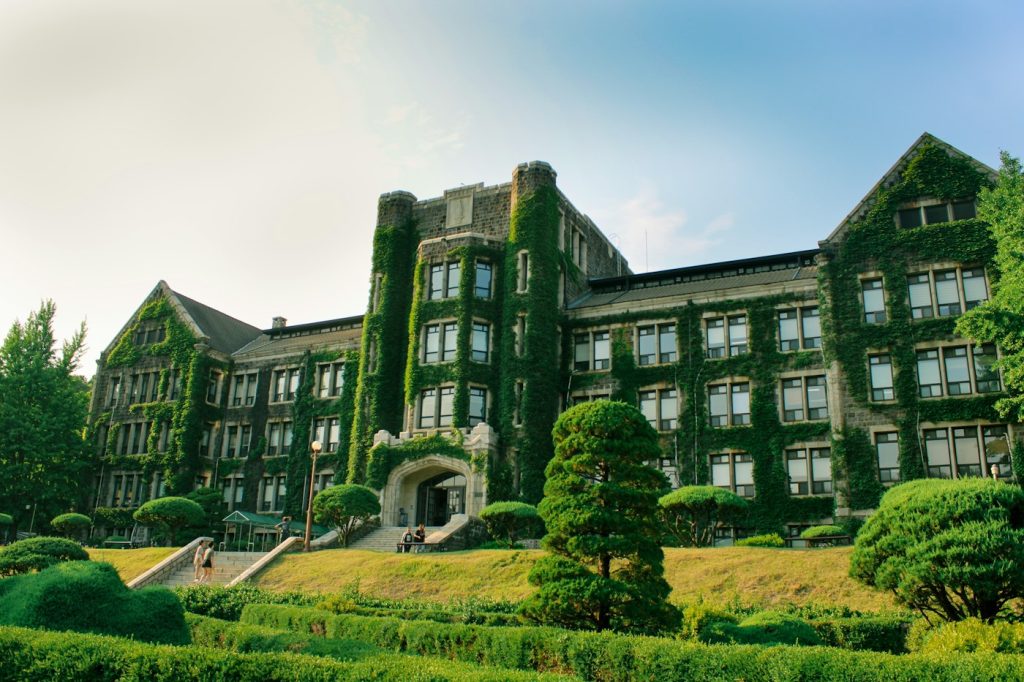
Cover photo: Yonsei University campus in Seoul, by Janet Ganbold / Unsplash.
What Is a Korean Language Program?
A Korean language program is a structured course that teaches Korean through scheduled lessons, guided practice and, often, assessments. Options include university language institutes, private schools, short cultural courses and online classes. A language program does not necessarily award a university degree.
For travelers considering a stay in Korea, the useful question is which format fits the life they want there: a few weeks of cultural exploration, a semester of intensive study or preparation for further education. The right choice depends on your learning goal, available time and complete budget.
Studying abroad can give a trip a welcome rhythm: class, lunch, homework, then a familiar neighborhood. It also brings deadlines and ordinary responsibilities. A language course is a commitment worth understanding before booking the flight.
Choose the Course Format Before the School
University language institutes
University-affiliated institutes offer structured Korean courses separate from degree programs. Regular courses usually suit learners who want sustained study and can organize their stay around a term calendar.
For a concrete example, the Yonsei Korean Language Institute Regular Program runs for 10 weeks and provides 200 instructional hours. It offers six levels and weekday morning or afternoon classes. Other institutions have their own schedules, placement procedures and progression rules.
University enrollment does not automatically mean degree credit. If credit transfer matters, confirm acceptance with your home institution before paying.
Short-term and cultural programs
Short courses can suit a limited leave period or a first experiment with studying abroad. Compare actual teaching hours: two courses lasting three weeks may involve very different amounts of instruction.
Check whether excursions, accommodation and cultural activities are included. A language-focused course and a summer package with sightseeing can both be useful, but they are different purchases. Choose according to how much classroom time you actually want.
Private schools and tutoring
A private school or tutor may offer a schedule better suited to a shorter visit or a specific speaking goal. Flexibility varies, so ask about start dates, minimum enrollment and cancellation terms.
Compare group size, teacher feedback and opportunities to speak. One-to-one lessons provide individual attention; group classes offer practice with classmates. Neither format helps much if its pace or teaching method consistently leaves you disengaged.
Online Korean classes
Live online classes let you test a structured routine before committing to an overseas stay. They also provide continuity after returning home.
Distinguish live teaching from prerecorded lessons. A recorded course offers scheduling freedom, while a live class can provide feedback and interaction. The Korean American Center is one example of an organization offering structured online classes for adult learners.
How to Compare Korean Language Programs
Start with an outcome you can describe plainly: handling everyday conversations, understanding relatives, preparing for university or studying toward the Test of Proficiency in Korean, commonly called TOPIK. These goals overlap, but they require different priorities.
For speaking, ask how lessons actually work. Do students create their own sentences, receive corrections and practice unfamiliar situations? Repeating a textbook dialogue can build confidence, but it should not be your only opportunity to speak.
For exam or academic goals, investigate reading, writing, assessment and any separate preparation classes. Completing a school level does not automatically establish a particular TOPIK score.
Compare these details before deciding:
- Weekly teaching hours and expected homework.
- Placement tests and the balance of skills assessed.
- Typical class size and individual feedback.
- Attendance, advancement and repeat-level rules.
- Course dates, refund terms and student support.
- Housing availability and the actual journey to class.
Request current course information from each shortlisted institute. University prestige cannot tell you how comfortable you will feel asking a teacher to explain something again.
What Six Former or Current Students Say
These public Reddit accounts describe firsthand attendance. They are individual, self-reported experiences, not verified enrollment records or a representative survey. Course formats and teaching can change. The short quotations below preserve the users’ wording; the surrounding summaries are paraphrases.
Speaking practice still requires study. HallaTML reported completing 1,000 hours and graduating from Sogang KLEC. They valued the speaking practice but described a fast pace: “You need to study 1-2 hours a day to keep up.” This is their personal workload estimate, not a school requirement.
The same school can suit a different goal. Zepherine52 said they attended both Ewha and Yonsei: “I liked Yonsei because I was more interested in grammar and writing.” Their experience is a useful counterpoint to recommendations based mainly on conversation practice.
Adult learners can feel comfortable. salsamochi attended Sogang in their early 30s and described classmates of similar ages and older: “I didn’t feel out of place at all.” They also reported improved speaking, while noting that they already had a good foundation before enrolling.
Progress can mean adjusting expectations. ericaloveskorea described studying at SKKU, Yonsei and Sogang. Reflecting on an accelerated learning goal, they wrote: “my goals were entirely unrealistic.” They valued SKKU’s detailed grammar teaching and described Sogang’s partner activities as helpful for speaking and bonding with classmates.
A less famous city may work just as well. OpalCardFraud described attending Hanyang in Seoul and later Busan National University, reporting that “the quality was pretty similar.” They preferred Busan’s less crowded environment and found rent cheaper during their stay. This is a personal comparison, not a current price benchmark.
A course can be a poor personal fit. Old-Dimension1452 completed Yonsei Level 1 but struggled with writing and felt they needed more guidance: “it just wasn’t the right fit for me.” They appreciated the friendships, yet wanted a course more closely aligned with everyday Korean.
Read these accounts for questions to ask a school: how feedback works, how quickly lessons move and which skills receive the most attention. They offer context for a decision, rather than a universal ranking.
How Much Does a Korean Language Program Cost?
The tuition figure is only the beginning. For its Regular Program, Yonsei lists tuition of KRW 1,860,000 per 10-week semester and a KRW 120,000 application fee for 2026. Its published 2027 figures are KRW 1,960,000 and KRW 130,000 respectively. Textbooks are additional.
These are fees for one specific program, not an average for Korea. Check the official page for your intended intake and confirm whether enrollment requires payment for more than one term.
Build your budget from separate categories:
- Tuition, application fees and textbooks.
- Accommodation, deposits, utilities and bedding.
- Meals, transport, phone service and laundry.
- Flights, insurance and applicable administrative costs.
- Document preparation, payment fees and an emergency buffer.
Keep refundable deposits separate from ordinary spending: money you expect back still needs to be available upfront. Compare housing for the full stay, including days before classes and any gap after the term ends.
Ask what happens if admission, accommodation or travel plans change. A cheap headline price becomes less attractive when the refund rules do not suit your situation.
Plan for Progress, Homework and Life Outside Class

An intensive program can improve your foundation and give you repeated opportunities to use Korean. It cannot promise fluency by a fixed date. Starting level, consistency, feedback and practice outside class all affect progress.
Use practical milestones: introducing yourself without a script, ordering a meal and understanding a follow-up question, or explaining a simple problem. Passing a course assessment is useful, but it is only one measure of what you can do.
Build small practice habits around your day. Review useful phrases before an errand, try them when appropriate, then note what you could not understand. Ask your teacher about those gaps. Everyday interactions provide material for learning, although shop staff and strangers are not responsible for turning each encounter into a lesson.
Leave room for review and rest. If you also work, assess class hours, homework and your own commitments together. Scheduling four hours of lessons, a full workday and nightly sightseeing is optimistic even before laundry enters the conversation.
For exploring, treat a five-day Seoul itinerary as a collection of weekend routes. Spread the experiences across your stay rather than fitting a vacation schedule around every school day.
Choose a City and Home You Can Live With

Seoul is one option, but compare programs elsewhere in Korea if a different city better suits your budget or interests. Request current prices instead of assuming every school outside the capital is cheaper.
Within Seoul, evaluate the daily commute before choosing accommodation. The most attractive visitor neighborhood may be inconvenient for your campus. Our guide to where to stay in Seoul explains neighborhood tradeoffs, while the Seoul transportation guide helps you assess routes and transfers.
Confirm whether language students can apply for a dormitory, whether a place is guaranteed, and what alternatives exist. Solo travelers should also check arrival access, room security, recent accommodation reviews and the route home after evening activities.
Classmates can provide a social starting point. Shared meals, clubs and manageable activities in Seoul offer ways to spend time together without turning every conversation into an exercise.
What to Check Before Applying
Apply to the exact course you intend to take. A university may offer regular language classes, short intensives and international summer programs with different requirements.
Read the current application instructions, then confirm deadlines, eligibility, document formats, payment stages and placement arrangements. If you are unsure about certification or translation, ask the admissions office before paying to prepare documents.
Entry and visa requirements depend on your nationality, intended stay and circumstances. Use the relevant Korean embassy or consulate and the official Korea Visa Portal for current guidance. A school’s acceptance letter is not itself permission to enter or work.
Frequently Asked Questions
Can beginners join a Korean language program?
Yes, programs with entry-level classes can accommodate beginners. Check whether the course starts with Hangul or expects you to read it already, and ask how placement works.
Am I too old to study Korean in Korea?
Age limits vary by program. Yonsei’s Regular Program currently states that there is no age limit, although academic eligibility requirements still apply. Ask about the class environment if studying alongside other adults matters to you.
Should I study in Korea or start online?
Start online if you want to test your interest, routine or readiness. Studying in Korea adds everyday exposure and a different living experience, but requires a larger financial and logistical commitment.
Final Thoughts
A useful shortlist begins with your goal and ends with a workable daily routine. Compare teaching methods, complete costs and accommodation before choosing a familiar university name. Then ask each school the questions its website leaves unanswered. A manageable course gives you room to study consistently and notice the country around you: menus, conversations, neighborhood habits and small moments that become easier to understand. Choose a program you can sustain, with enough space left to enjoy being in Korea.