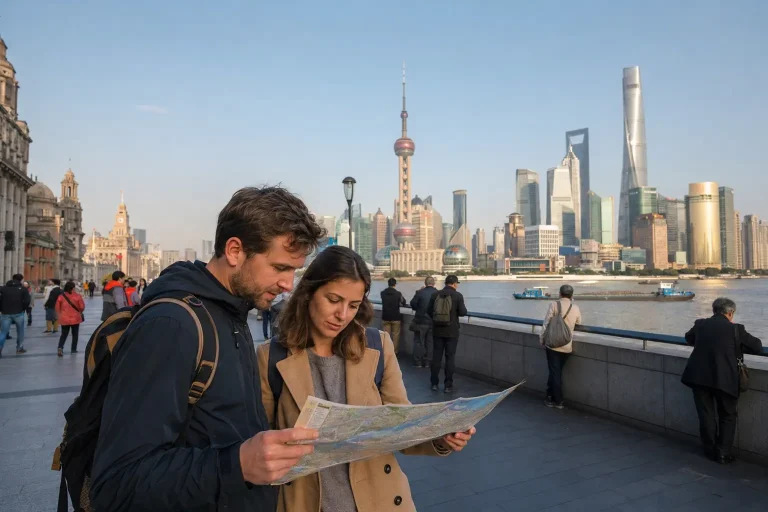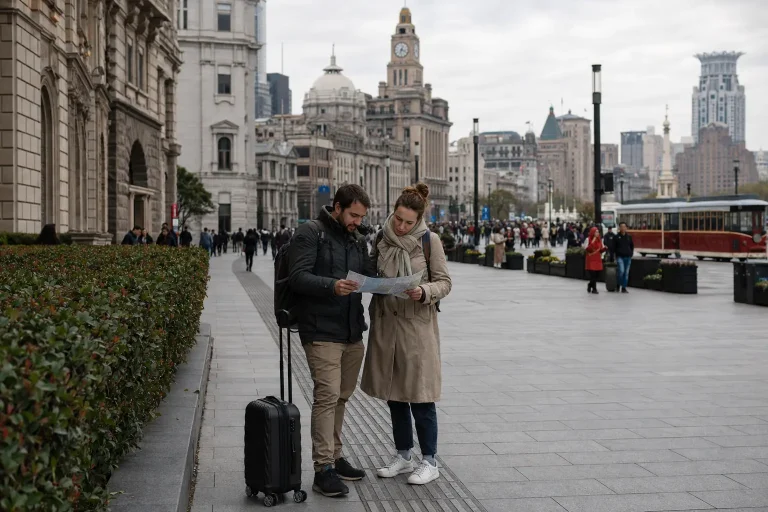
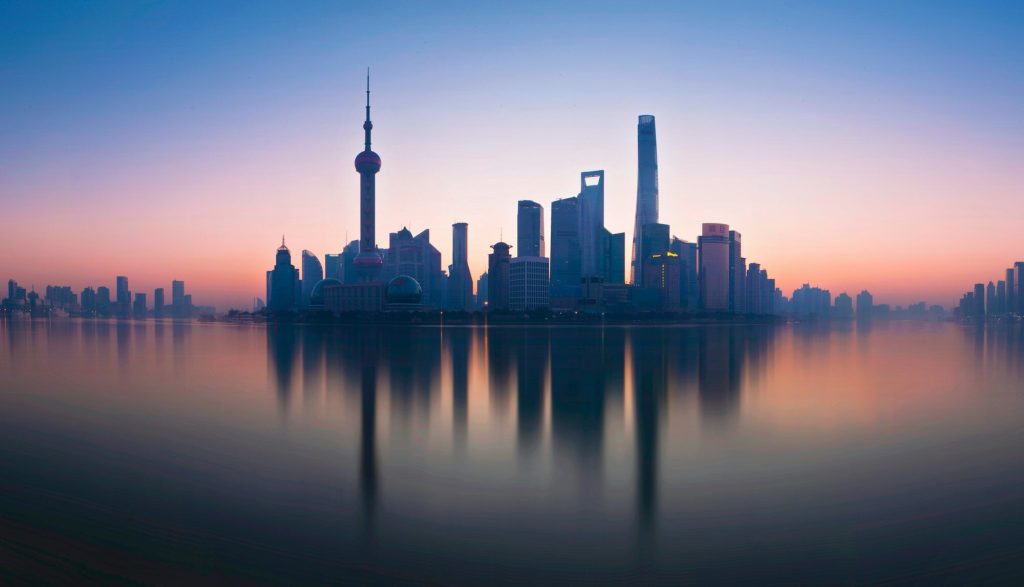
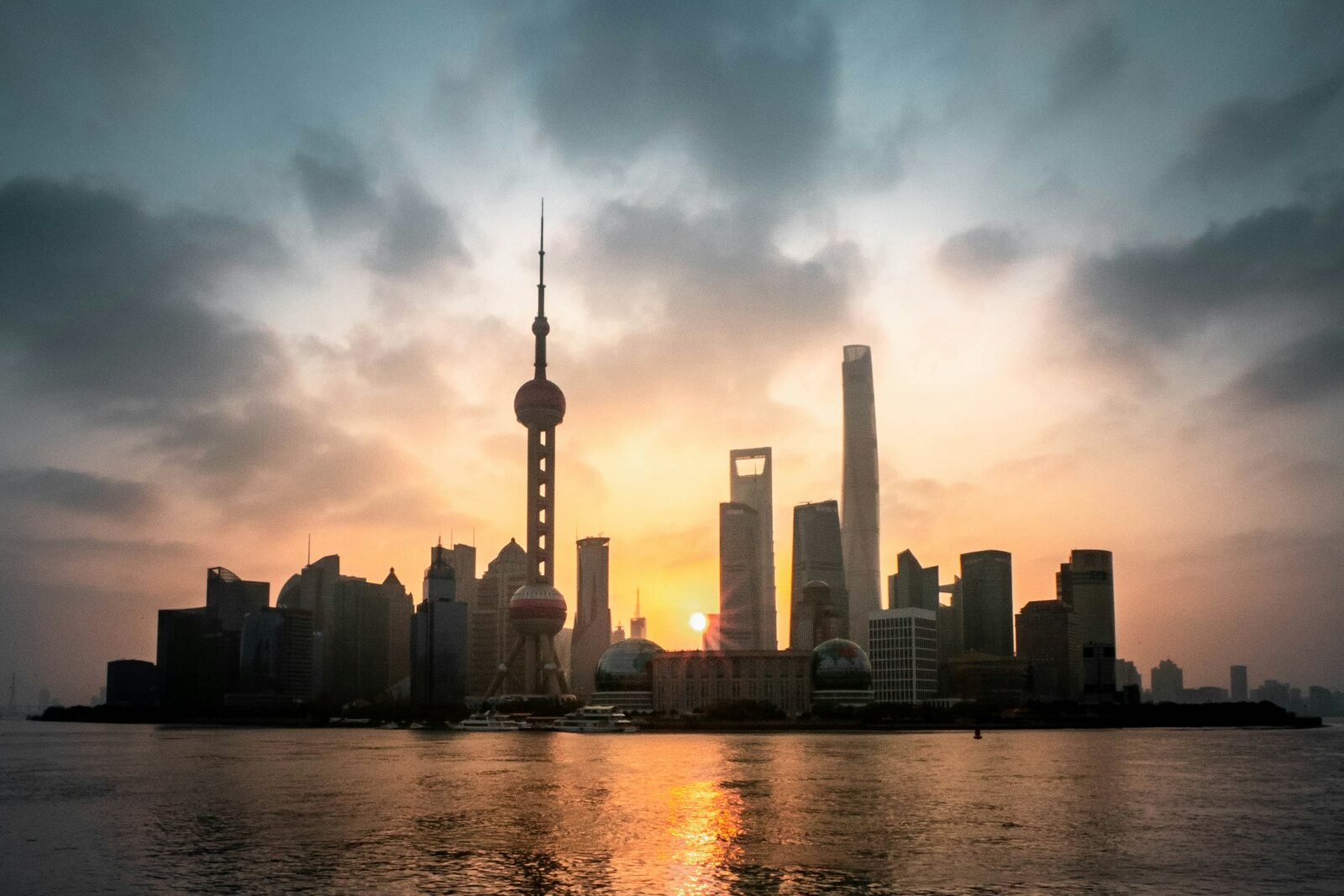
The Lujiazui skyline from the Bund. Photo by Freeman Zhou on Unsplash.
The Bund is most convincing when you stop treating it as one
viewpoint. This is the day I would give a friend: river light, an
ordinary ferry, old facades, noodles, and enough unplanned time for
Shanghai to feel like a city rather than a backdrop.
I lived in Shanghai for five years, and the version of the Bund I
would show a friend is not a straight march from East Nanjing Road to
the railing. That route delivers the famous photograph, but it misses
the pleasure of the place: the Huangpu changing color, ferries cutting
across the water, breakfast shops opening behind the grand facades, and
the strange visual conversation between 1930s stonework and Pudong’s
towers.
The Bund works better as a day in motion. Begin on the bank that
suits the light, cross the river instead of only looking at it, then let
the walk loosen as it reaches Suzhou Creek. You can do the whole thing
in one long day, but I would choose either the sunrise morning or the
late-afternoon crossing and leave the other for a second visit. Shanghai
rarely improves when every hour has been bullied into productivity.
The evening I
would give a first-time visitor
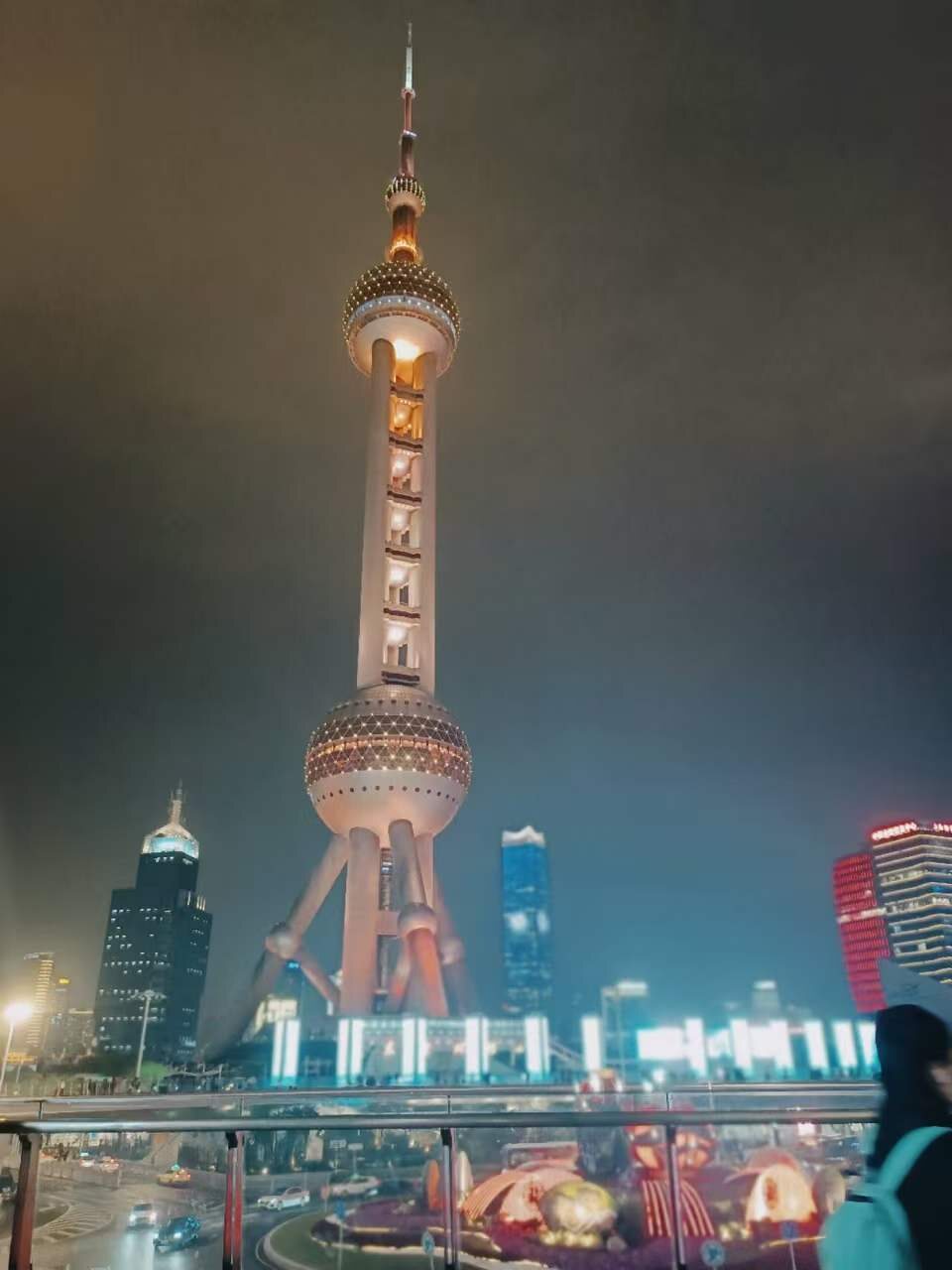
Start in Lujiazui around 4 or 5 p.m. This is early enough to see the
towers in daylight and late enough that the city is beginning to soften.
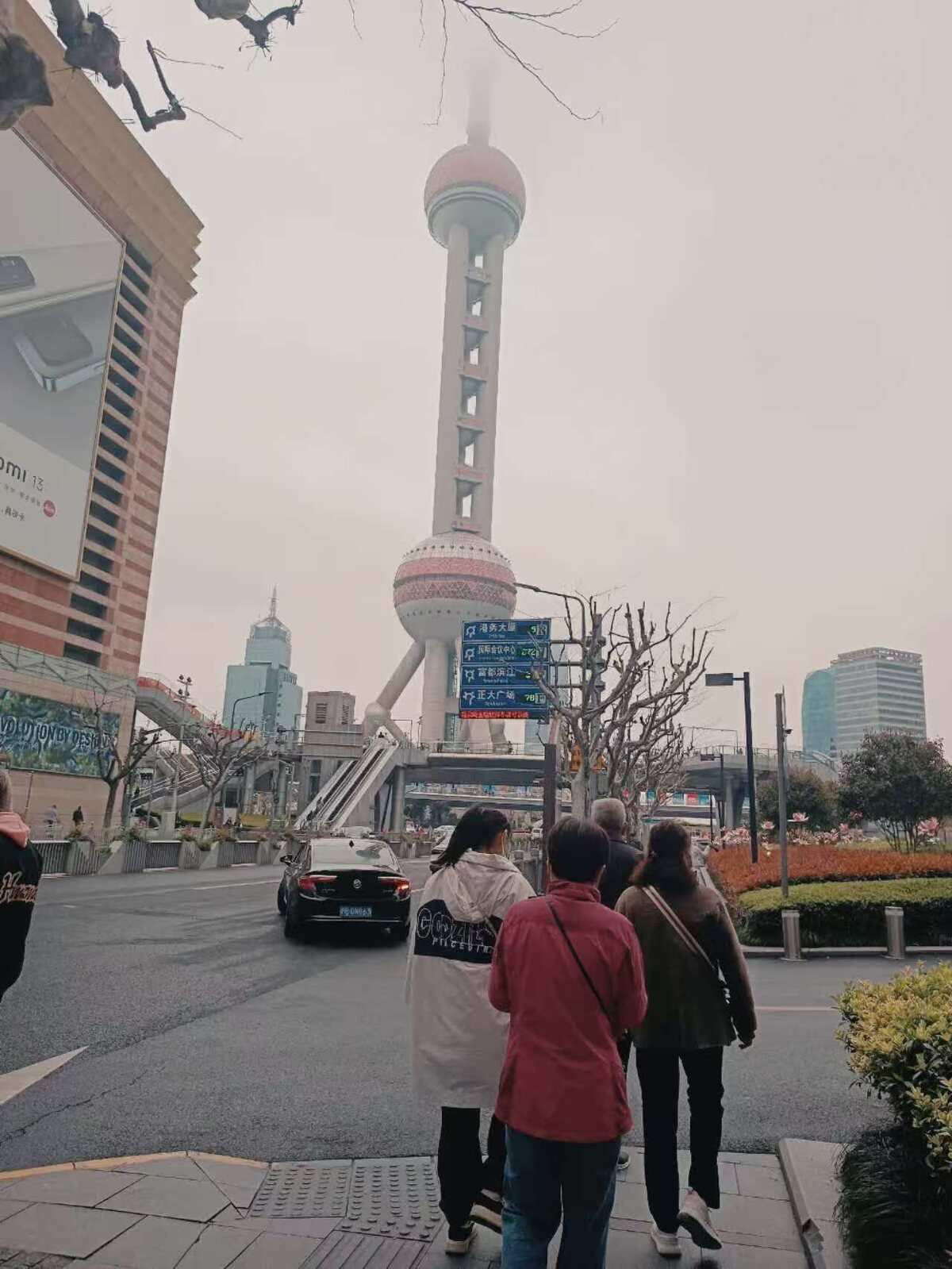
Come out near the Oriental Pearl Tower, but do not feel obliged to pay
for an observation deck. At ground level, the scale is already slightly
absurd: broad roads, elevated walkways, reflective office towers, and
the river somewhere beyond the malls.
Walk south toward Dongchang Road ferry terminal. If you need food
first, Super Brand Mall is practical, though I would save a proper meal
for the west bank. The more memorable move is to board the public ferry.
The crossing is short and workmanlike, used by commuters and scooters as
well as visitors. That ordinariness is the point. A sightseeing cruise
explains itself; the ferry simply carries you through the middle of the
view.
At the time of writing, the pedestrian fare is RMB 2. Services from
Dongchang Road connect with terminals on the Puxi side, but exact
terminal pairings and final departures vary by line. Check the Shanghai
Ferry mini-program or the terminal board on the day rather than building
an evening around an old screenshot. Lush Nomad’s Shanghai
transportation guide also explains when a ferry is useful and when
the metro is the saner choice.
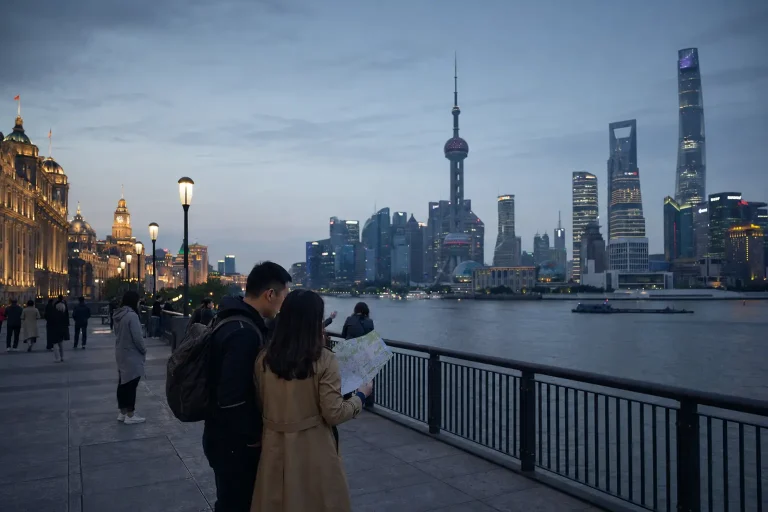
On the Puxi side, turn north and walk toward the main Bund promenade.
The reward is not a single reveal but a sequence: the towers lose their
hard afternoon edges, the river turns metallic, the lamps along the
historic bank come on, and office windows begin to pattern the Pudong
skyline.
Give this transition at least 45 minutes. If you arrive, take one
photograph, and leave, the Bund can feel like an expensive screensaver.
Stay through blue hour and it becomes a working river with weather,
noise, and scale. Chen Yi Square is a useful point on the walk, but
there is no sacred paving stone. Keep moving until the view opens and
the crowd feels tolerable.
Sunrise belongs to the North
Bund
Social posts often say to arrive at 5 a.m. That works only when the
season agrees. Shanghai’s sunrise time moves considerably across the
year, so check it the night before and aim to reach the North Bund
waterfront about 30 minutes early. The useful part is not only the
moment the sun appears. It is the blue-gray half hour beforehand, when
the skyline is lit but the promenade still belongs to runners, dog
walkers, photographers arranging tripods, and people who appear
suspiciously cheerful before breakfast.
The North Bund waterfront in Hongkou gives a wide view across the
river toward Lujiazui, while the older Bund facades remain visible
farther south. The perspective feels more spacious than the classic
promenade. A wide-angle lens helps, but a phone is enough if you resist
zooming into a soft, hazy sun. Use railings or a small tripod for the
low-light minutes, wipe river mist from the lens, and expose for the sky
rather than the darkest buildings.
Cloud and haze matter more than a heroic alarm. Check visibility as
well as the forecast; a clear icon does not guarantee a crisp skyline.
Bring a wind-resistant layer even in mild weather. The riverfront has a
talent for finding the gap between scarf and collar.
If sunrise is the priority, do not begin on the classic Bund and walk
north in the dark. Go directly to the North Bund viewing area, settle
in, and walk south after the light is established. This keeps the
morning generous rather than turning it into a race against
astronomy.
After sunrise walk
toward the older city
From the North Bund, follow the waterfront toward Waibaidu Bridge.
Shanghai begins to layer itself here. Behind you are new riverfront
towers; ahead are Suzhou Creek, the old bridge, the former postal
building, and the cluster of streets now usually called Rockbund or
Waitanyuan.
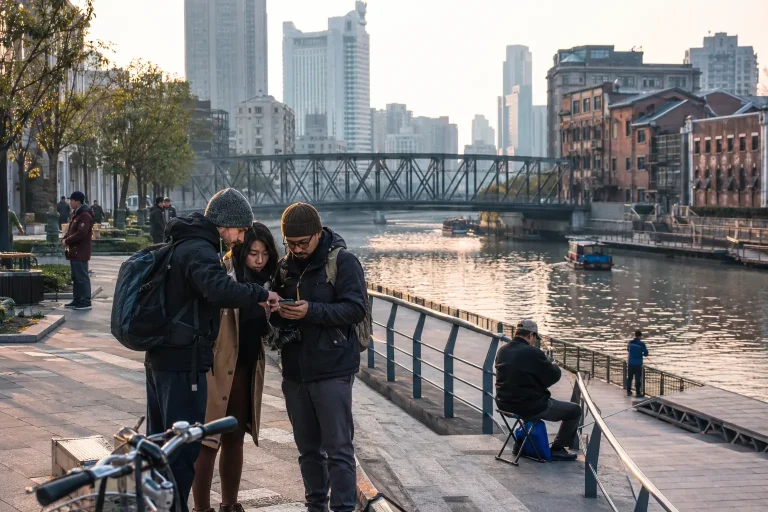
Crossing toward Zhapu Road Bridge gives one of the best compositions
in the area: Suzhou Creek in the foreground, the older riverfront
architecture at the confluence, and Lujiazui rising beyond it. It is
calmer than the main Bund platform and more interesting than another
symmetrical skyline shot. Early light catches brick, stone, steel, and
water differently; let the frame stay slightly untidy.
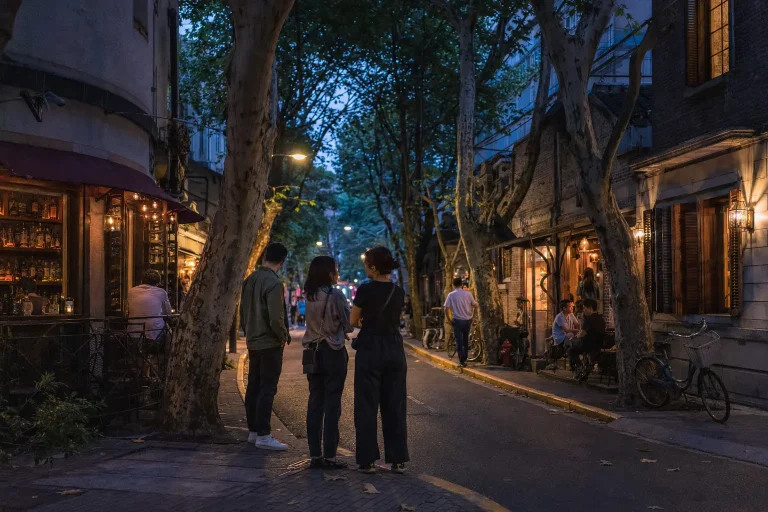
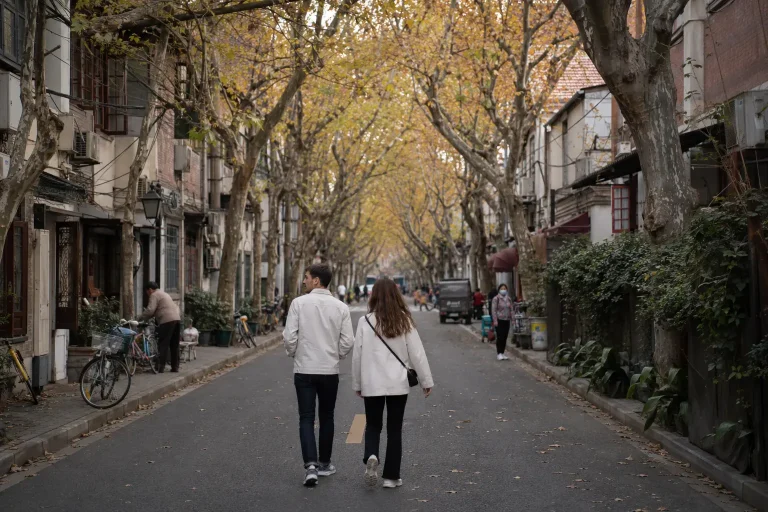
Then wander through Yuanmingyuan Road and the nearby historic
streets. This part of the walk is about building entrances, carved
details, plane-tree shade, and the shift from monumental banking
architecture to narrower commercial streets. Some buildings are public
cultural venues; others are offices or private spaces. Enjoy the
exterior unless entry is clearly invited. A photogenic doorway is still
a doorway somebody may need to use.
Allow two or three hours from the North Bund to Rockbund if you like
stopping for photographs and breakfast. If the weather turns, shorten
the riverside portion and spend more time around the restored buildings.
The Shanghai
neighborhoods guide is useful for connecting this walk with Hongkou
or a longer Suzhou Creek day.
Where I would actually
eat near the Bund
Restaurants around the Bund tend to sell one of three things:
Shanghai cooking, a skyline, or the feeling that you have dressed
correctly. Decide which one you want before sitting down. Paying for all
three at once is possible, but hardly compulsory.
De Xing Guan for
noodles after an early start
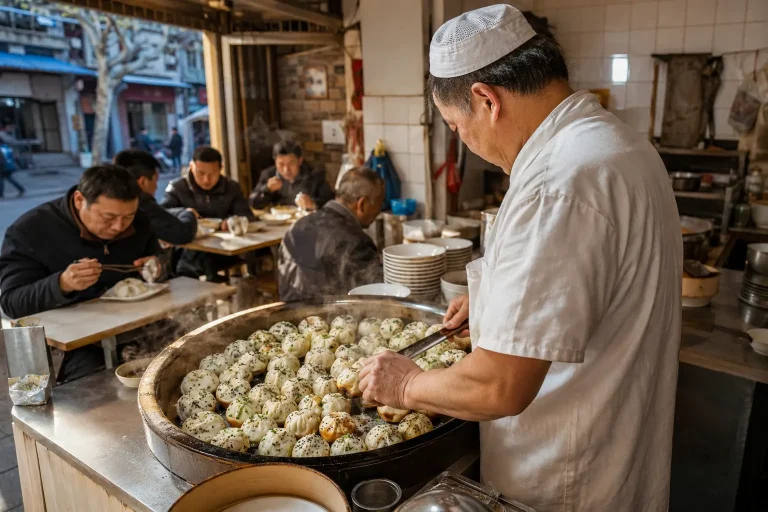
After sunrise, I would walk to the Guangdong Road branch of De Xing
Guan. Founded in 1878, this two-story noodle shop is known for noodles
and dim sum made in-house. The signature three-treasure soup noodles
combine fried eel, fried fish, and pork hock; it is a substantial bowl
after a windy morning, not a delicate prelude to brunch.
The ground floor is the straightforward noodle-shop experience.
Upstairs offers a broader Shanghainese menu if you are with a group and
want more than one dish. De Xing Guan is not on the waterfront, and that
is part of its usefulness: you leave the view for an hour and eat
somewhere with a life beyond it. The MICHELIN
Guide listing confirms the Guangdong Road address; verify opening
hours on the day.
Shanghai
Grandmother for an unfussy local lunch
Shanghai Grandmother on Fuzhou Road is the practical choice when a
group wants recognizable benbang cooking near the Bund without turning
lunch into a formal event. Go with people who share. Red-braised pork,
seasonal greens, tofu, and rice make more sense together than a table
full of individual main courses.
Shanghai flavors often lean sweet and soy-rich, particularly in
braised dishes. If that is not your preference, order one rich signature
dish and balance it with vegetables and something lighter. This is a
busy, central restaurant rather than a secret address. Arrive before the
main lunch rush or expect to wait, and recheck the current listing for
hours and queue arrangements.
Lost Heaven for
atmosphere and Yunnan flavors
Lost Heaven on the Bund is the dinner I would choose when the room
matters as much as the river. The interior is dark, theatrical, and
warmly colored; it suits an evening when you want dinner to feel like
part of the outing rather than refueling between photographs.
The food is Yunnan-inspired, not Shanghainese. Expect herbs,
mushrooms, spice, and flavors from southwest China rather than
red-braised local classics. That distinction is worth making: eating
near the Bund does not automatically make a restaurant representative of
Shanghai. Reserve ahead and confirm the current entrance and hours
before going.
The Captain for a drink
with the view
For a skyline drink without committing to a luxury-hotel dinner, The
Captain on Fuzhou Road is the easy answer. Its rooftop terrace looks
toward Pudong and feels more relaxed than many formal Bund bars. I would
use it for one drink and a light bite around sunset, then eat elsewhere
if food is the main event.
Terrace seats are the entire point, so weather and timing matter.
Arrive before peak sunset, ask specifically about outdoor seating, and
keep a backup plan for rain or poor visibility. The venue’s official site carries
current contact details and booking information.
If you want a broader introduction to local dishes, pair one of these
meals with the food section in Lush
Nomad’s Shanghai guide. The Bund is a good place to begin eating,
but it should not become your definition of the city’s food.
A slower afternoon around
the facades
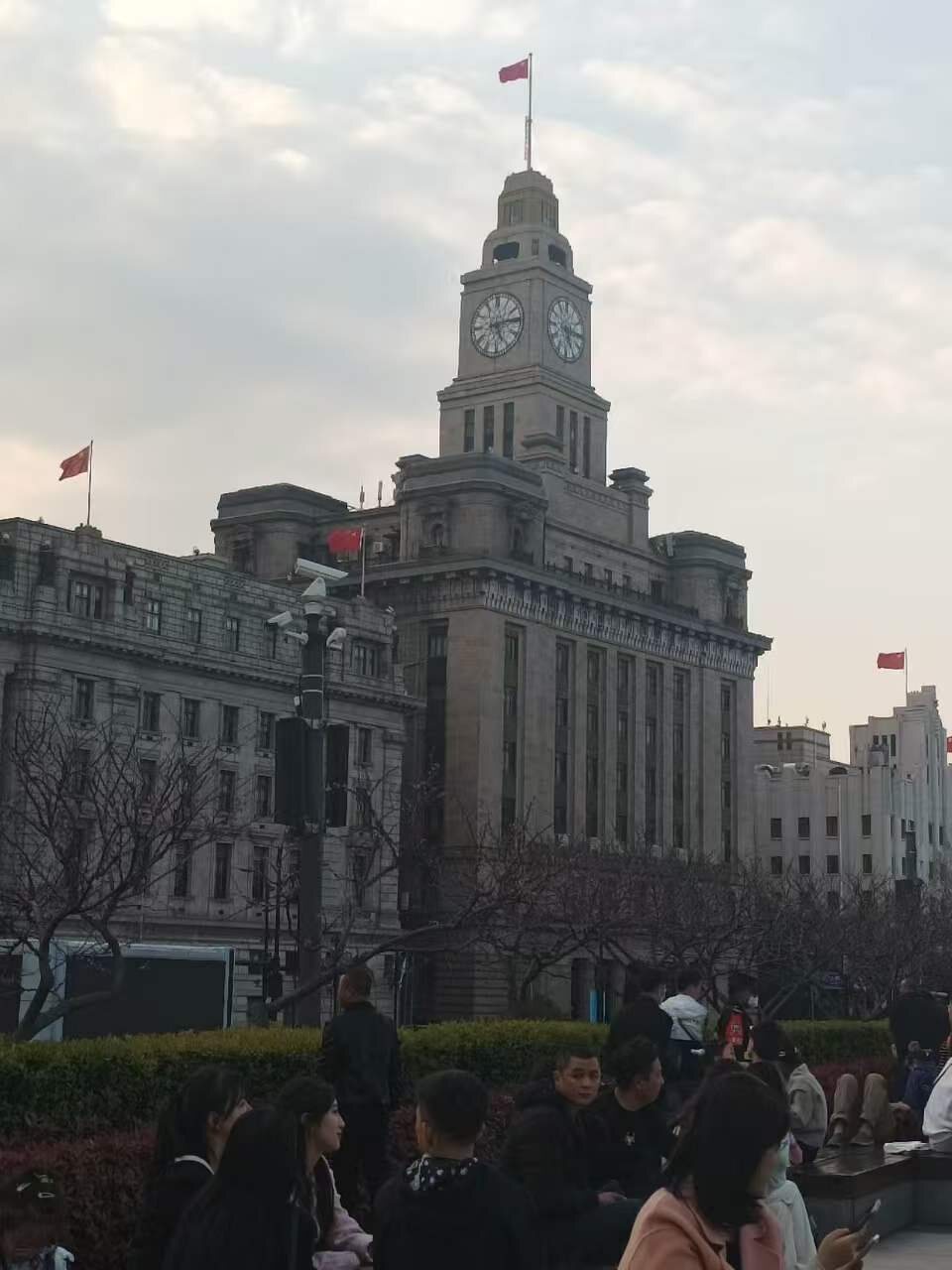
The skyline gets the photograph, but the west-bank buildings explain
why this stretch matters. Former banks, trading houses, hotels, and
clubs were built to project money and permanence. Their stone fronts are
best seen from the inland pavement, where you can look up without the
river railing and crowds competing for attention.
Walk one direction only. Start near the southern Bund and continue
north toward Suzhou Creek, or reverse the route after a North Bund
morning. Moving back and forth along the same promenade adds steps, not
revelation. Slip inland for Fuzhou Road, Yuanmingyuan Road, or a meal,
then return to the water when the light changes.
In summer, make the middle of the day an indoor interval. In winter,
the river wind can make sunset feel much colder than the forecast
suggests. The best
time to visit Shanghai guide has the useful seasonal trade-offs, but
the daily rule is simpler: save the exposed riverfront for the gentler
edges of the day.
Choose the hour not the
checklist
For an early morning, go straight to the North Bund before sunrise,
walk south through Suzhou Creek and Rockbund, then finish with noodles
at De Xing Guan. You will see the city wake up and still have the
afternoon for another neighborhood.
For a first evening, begin in Lujiazui around 4 or 5 p.m., take the
public ferry across, and walk north as the lights come on. Add a rooftop
drink or dinner afterward, not before; the blue-hour transition is the
part that cannot be moved to a reservation slot.
For a slower day, begin with the historic streets around Rockbund,
have lunch nearby, rest during the brightest afternoon hours, and return
to the river for sunset. This version contains fewer landmarks and more
Shanghai.
The Bund does not need to be conquered. Pick the light you want,
cross the river at least once, and leave enough room for a bowl of
noodles or a bridge you had not planned to photograph. The skyline will
still be there when you look up.