
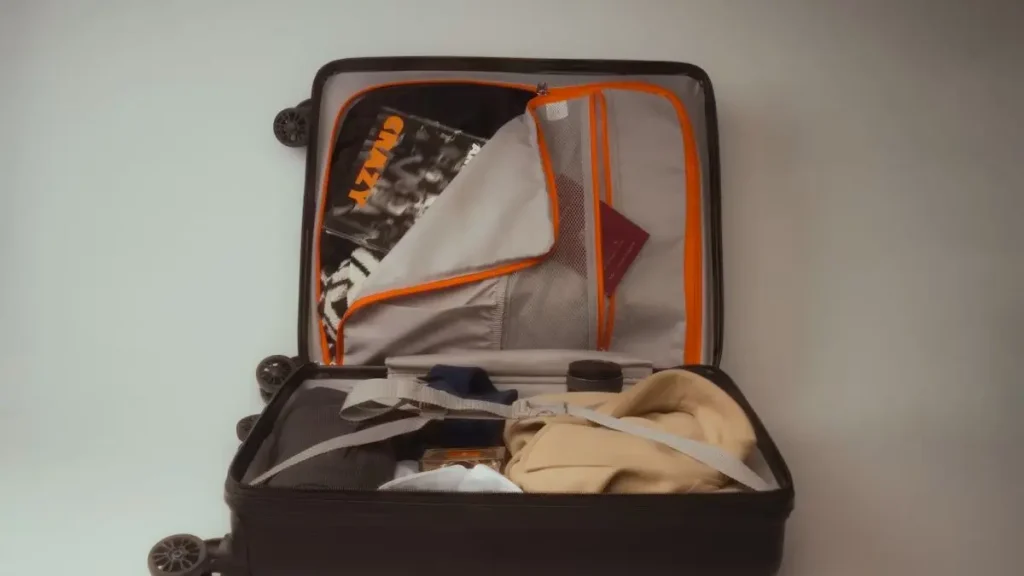
A practical Europe packing list for city walking, rail transfers, mixed weather and the quiet realization that most “just in case” outfits never leave the suitcase.
For most 10-day to two-week Europe trips, pack five tops, three bottoms, one polished outfit, two layers, two pairs of shoes and enough underwear for seven or eight days. Add a compact rain shell, then adjust for the coldest and wettest stop on your route. This is enough variety for museums, long lunches and ordinary travel days without turning every station staircase into a small personal crisis.
A quick Europe packing list
Use this as the core list, then add destination- and activity-specific items only when the itinerary gives them a real job.
Clothing and shoes
- 5 tops: a mix of short sleeves, long sleeves and one smarter option
- 3 bottoms that work with at least two tops each
- 1 dress, jumpsuit or polished outfit for dinner or a performance
- 1 cardigan, light sweater or fleece
- 1 weather-appropriate jacket or compact rain shell
- 2 pairs of broken-in shoes: one primary walking pair and one lighter or dressier pair
- 7–8 sets of underwear and socks
- Sleepwear
- Swimwear if the itinerary includes a coast, pool, spa or thermal bath
Documents, health and technology
- Passport, any required visa or travel authorization, and travel insurance details
- Prescription medication in your personal item, plus copies of prescriptions when useful
- Phone, charging cable and portable battery
- Plug adapter suitable for every country on the route
- Payment cards and a small amount of local cash where practical
- Digital and offline copies of key bookings and emergency contacts
- Travel-size toiletries and a few basic first-aid items
Start with the route, not a fantasy wardrobe
Europe is not one climate, one dress code or one type of trip. A June route through Lisbon and Seville asks for different layers than a week split between Amsterdam and Copenhagen. Add an alpine stop, a windy ferry or a formal evening, and a generic checklist starts to lose its nerve.
List each destination, the likely weather range and the activities already booked. Check the forecast again a few days before departure. Pack for the coolest wet day rather than the warmest afternoon, but do not prepare for every historic temperature the continent has ever produced.
Movement matters just as much as weather. Cobblestones, train platforms, narrow sidewalks and older buildings without elevators favor luggage you can lift without assistance. A carry-on or medium suitcase is often the sensible choice for a multi-city rail trip; a checked bag is easier to justify when you are staying in one place, traveling by car or carrying specialized gear.
What to pack for 10 days or two weeks in Europe
A longer trip does not require one outfit per day. Plan around a seven-day clothing cycle and do laundry once. For a 10-day trip, a sink wash or hotel laundry may be enough; for two weeks, schedule one proper wash around the middle. The resulting list is smaller, easier to organize and far more forgiving when a train platform changes at the last minute.
| Item | 10 days | 2 weeks | Useful adjustment |
|---|---|---|---|
| Tops | 4–5 | 5–6 | Include at least one long sleeve |
| Bottoms | 3 | 3–4 | Choose pieces that share the same shoes |
| Polished outfit | 1 | 1–2 | Repeat it with different accessories |
| Mid-layers | 1–2 | 2 | Use thin layers instead of several bulky sweaters |
| Shoes | 2 pairs | 2 pairs | Add a third only for a specific activity |
| Underwear and socks | 7–8 sets | 7–8 sets | Launder once rather than packing 14 sets |
Travelers who prefer more outfit variety can add one top and one bottom. Remove something else of similar bulk. The suitcase does not negotiate merely because the extra blouse is charming.
The popular 5-4-3-2-1 packing rule is another useful starting point: five tops, four bottoms, three pairs of shoes, two dresses or outer layers and one set of accessories. Versions vary, and three pairs of shoes are generous for a mobile Europe trip. Keep the mixing principle, then reduce the categories that do not match your itinerary.
Build a capsule wardrobe that survives real travel days
Choose one dark neutral, one light neutral and one restrained accent color. Every top should work with at least two bottoms, and both shoe choices should suit most of the clothing. This does not require dressing entirely in beige; it simply prevents one beautiful but incompatible item from demanding its own shoes, bag and diplomatic entourage.
Favor fabrics that can handle sitting, walking and an imperfect hotel iron. Lightweight cotton, linen blends, merino and technical fabrics can all work, depending on the season and your tolerance for wrinkles. Pack one layer that makes a daytime outfit feel more finished: a light jacket, cardigan, overshirt or scarf often does more useful work than a second evening-only look.
Choose shoes for the ground you will actually walk on
Bring one broken-in pair that can manage a full day on hard pavement and uneven streets. The second pair can be lighter, weather-resistant or slightly dressier, depending on the route. Pack hiking shoes only for real trails and formal shoes only for an event with a genuine dress expectation. New shoes should not make their European debut during a 20,000-step day.
Adjust the list for season and region
Season names are only a starting point. Northern coasts can feel cool and damp in summer, southern cities can remain warm well into fall, and elevation changes the calculation quickly. Use the following adjustments after checking the actual route.
| Conditions | Add or change | What to avoid |
|---|---|---|
| Hot Mediterranean cities or islands | Breathable tops, sun hat, sunscreen, swimwear and a light coverage layer | Heavy denim for every day |
| Mixed spring or fall weather | Water-resistant shoes, compact rain shell and two thin layers | One bulky coat with nothing underneath |
| Northern Europe or exposed coasts | Wind-resistant outer layer, light knit and quick-drying basics | Assuming summer removes the need for a jacket |
| Alpine areas or higher elevations | Warm mid-layer, rain protection and activity-appropriate footwear | Using a city forecast for a mountain day |
| Winter city trip | Thermal base layers, warm coat, hat, gloves and weather-resistant shoes | Several thick sweaters that fill the case before it closes |
Some churches, religious sites, restaurants and performances have clothing expectations. Check the specific places on your itinerary and pack one adaptable coverage layer or polished outfit. There is no need to prepare for an imaginary gala, but a large scarf or light overshirt can solve several very ordinary wardrobe problems.
Keep irreplaceable items in your personal item
Your passport, medication, valuables, phone, chargers and one clean layer belong under the seat rather than in checked luggage. Add the first night’s essentials if you check a bag. A delayed suitcase is inconvenient; a delayed suitcase holding every prescription and charging cable is a more elaborate form of travel planning.
Keep liquids in containers that meet the rules at your departure airport. Travelers leaving the United States can check the current TSA liquids rule; airport equipment and local procedures elsewhere can differ, so verify every airport on the route. The detailed carry-on packing list explains how to separate in-flight items from things you only need after arrival.
Pack documents, medication and technology with fewer assumptions
Documents and money
Carry your passport and any visa or travel authorization required for your nationality and destinations. Save offline copies of accommodation addresses, transport bookings, insurance details and an emergency contact. Entry requirements can change, so check the official destination pages linked through the U.S. State Department country information rather than relying on an old packing graphic.
Bring at least two payment methods and store them separately. A small amount of cash is useful for minor purchases or the occasional machine that has developed strong opinions about foreign cards, but carrying a large reserve creates a different problem.
Medication and toiletries
Pack enough prescription medication for the trip, plus a modest buffer when permitted, and check destination restrictions for controlled medicines. Keep important medication in labeled packaging and in your personal item. Toiletries should reflect the routine you will actually follow, not the optimistic routine reserved for quiet evenings at home. The travel toiletries list helps reduce full-size products without abandoning essentials, while the separate travel essentials for women covers period care, personal safety and other needs that do not belong in every traveler’s core list.
Adapters and charging
Europe uses several outlet types. Continental Europe, the United Kingdom, Ireland, Switzerland and parts of Italy do not all share the same socket, so check every country on the route. A plug adapter changes the shape of the plug; it does not automatically change voltage. Read the input range printed on each device before connecting it, especially for hair tools and other high-heat appliances.
What not to pack for Europe
- Unbroken-in shoes: even attractive shoes become less persuasive after several miles of stone pavement.
- Too many single-purpose outfits: one formal option is usually enough unless the itinerary says otherwise.
- Several bulky layers: thin layers combine more easily and dry faster.
- High-value jewelry: bring only pieces you are comfortable wearing, storing and potentially losing.
- Full-size toiletries: refill small containers or buy ordinary replacements after arrival.
- A device without checking voltage: a plug adapter alone may not protect incompatible equipment.
- Duplicate “emergency” items: most European cities have pharmacies, supermarkets and clothing stores.
If the trip is hostel-based, outdoors-heavy or built around frequent train moves, use the separate backpacking Europe packing list. That journey has different luggage, laundry and security priorities and should not be squeezed into a general city-vacation checklist.
How to pack light without feeling underprepared
- Write down the route, weather range, laundry access and booked activities.
- Build complete outfits on the bed and remove any item that works only once.
- Limit shoes before organizing the rest of the suitcase.
- Pack for seven or eight days, even when the trip lasts two weeks.
- Wear the bulkiest shoes and outer layer in transit when practical.
- Leave a little free space for ordinary purchases rather than packing a second empty bag.
The step-by-step suitcase packing method covers folding, rolling, packing cubes and weight distribution. For a personalized version of this list, set the trip length, climate, luggage type and activities in the interactive travel packing list.
Europe packing FAQ
What should I pack for 10 days in Europe?
For 10 days, pack four or five tops, three bottoms, one polished outfit, one or two mid-layers, two pairs of shoes and seven or eight sets of underwear and socks. Add outerwear for the coldest destination and plan one small laundry session if needed.
What is the 5-4-3-2-1 rule for packing?
A common version means five tops, four bottoms, three pairs of shoes, two dresses or outer layers and one set of accessories. Treat it as a mixing formula rather than a fixed law. For a train-heavy Europe trip, two pairs of shoes and fewer bottoms may be more practical.
Can I pack for two weeks in Europe in a carry-on?
Yes, if you use a seven-day clothing cycle, do laundry once and keep shoes to two pairs. It is easiest in mild weather. Winter travel, formal events, hiking equipment or medical needs may justify a larger bag.
Is a backpack or suitcase better for Europe?
A small suitcase suits city hotels, smooth station connections and travelers who prefer wheels. A travel backpack is more practical for stairs, hostels, uneven streets and frequent transfers, provided you can carry it comfortably. Choose for the route rather than for a generalized idea of Europe.
What should I not forget when traveling to Europe?
Do not forget your passport, required entry documents, prescription medication, travel insurance details, payment cards, phone charger and the correct plug adapter. Keep these in your personal item and save offline copies of essential bookings and contact information.
Pack for the trip you planned
The best Europe packing list is specific enough to handle weather, walking and laundry, but restrained enough to move easily between stops. Start with a seven-day capsule, protect the items that cannot be replaced quickly and let the route justify every extra. Repeating a good outfit is rarely memorable. Dragging an overfilled suitcase up four flights of stairs usually is.
Frequently Asked Questions
How many outfits do you need for a 2-week Europe trip?
For most 10-day to two-week Europe trips, pack five tops, three bottoms, one polished outfit, two layers, and two pairs of shoes, then do laundry partway through rather than packing a fresh outfit for every day.
Do you need a rain layer for a Europe trip?
Yes, a compact rain shell is worth including on most Europe packing lists, then adjust the rest of the layers for the coldest and wettest stop on your specific route.