
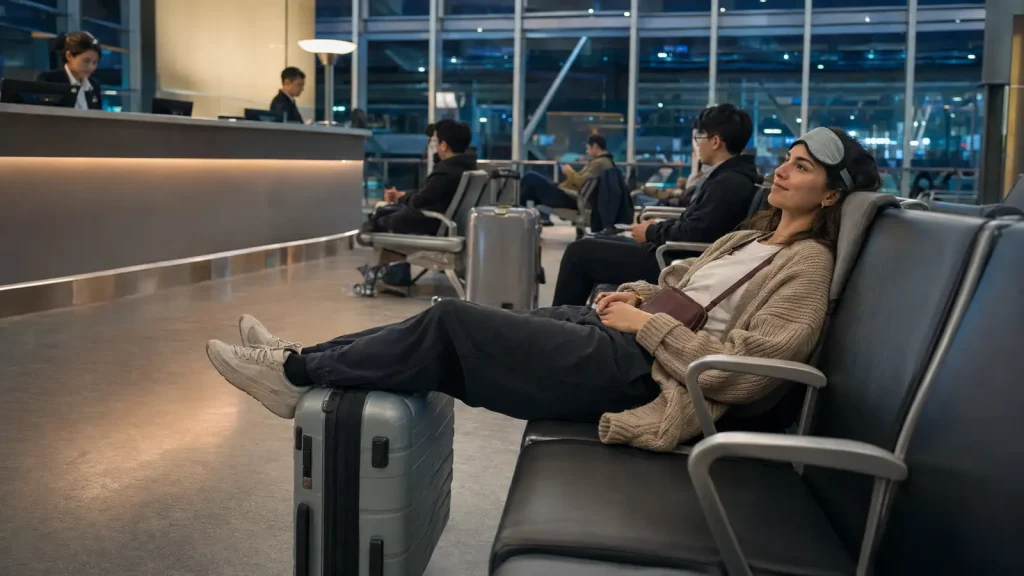
An eight-hour overnight layover sounds long enough to sleep. Then the plane parks late, immigration takes 50 minutes, the bag appears with theatrical reluctance, and the next airline wants you back at check-in before dawn. Your “night” has become a two-hour nap under fluorescent lighting beside a floor polisher with strong opinions.
Sleeping in airports can be practical when the terminal permits it and the alternative is an expensive room for very little usable time. It can also leave you cold, sleepless and unexpectedly outside security. Before packing an eye mask, confirm the airport process—not merely its opening hours.
First calculate how much sleep the layover contains
Start with scheduled arrival and the next departure, then subtract everything between an airplane seat and actual rest:
- Taxiing, deplaning and walking from the gate
- Immigration, customs and baggage reclaim
- Terminal or airport transfer
- Finding the sleep location and getting settled
- The next airline’s check-in or bag-drop deadline
- Security and the walk to the gate
- A delay buffer in both directions
A hotel may be worthwhile during a 10-hour connection at an airport hotel attached to the terminal. It may be absurd during a six-hour connection that requires two shuttle rides and an international recheck. Compare usable sleep, not the large number printed between flights.
Is the airport open overnight?
Check the official airport website for terminal hours, overnight-access rules and construction notices. Then look for the exact terminal. An airport can remain open while one concourse closes, arrivals stays accessible and security shuts for several hours.
San Francisco International Airport offers a useful example: its official FAQ says the airport is open 24 hours and restricts overnight access to ticketed passengers, while its security page lists different operating hours for each checkpoint. Once a checkpoint closes, “the airport is open” does not necessarily help you reach the gate-side chair you saw in a photo.
Confirm:
- Whether ticketed passengers may remain overnight
- Which terminal and level remain open
- Whether airside passengers are moved landside
- When the correct security checkpoint reopens
- Whether renovation or seasonal operations change access
If the website is vague, contact the airport—not only the airline. The airline controls the flight; the airport controls the building.
Can you stay inside security?
Airside is often calmer and has more seating, but staying there depends on the arrival flow, terminal layout and checkpoint schedule. You may be required to leave the secure area after an international arrival, when terminals close or when your onward boarding pass cannot yet be issued.
SFO states that most arriving international passengers connecting onward complete federal inspection, exit and re-enter security, except qualifying precleared arrivals. Other countries and airports use different transit systems, so verify the exact route.
Ask these questions in order:
- Do I pass immigration or can I remain in international transit?
- Do I already have a valid onward boarding pass?
- Is my next gate area connected airside?
- Does the secure area stay open through the night?
- If I leave, when can I clear security again?
If your plan requires going landside, use the visa and passport checks for that country. “I am only sleeping near the terminal” is not a visa exemption.
What happens to checked baggage?
On a protected connection, the bag may be tagged to the final destination and held by the airline overnight. On separate tickets, or at airports where customs requires it, you may need to reclaim the bag and check it again after counters reopen.
Look at the bag tag and ask the first airline where you will next see the suitcase. If it comes out overnight:
- Check whether baggage storage is open during your hours
- Keep essentials and medication in the carry-on
- Know the next airline’s bag-drop opening and cutoff times
- Add the full recheck and security process to the morning plan
A self-transfer deserves extra caution because the flights are not usually managed as one connection.
Choose the right kind of airport sleep
| Option | Best when | Main drawback |
|---|---|---|
| Public seating or floor | Budget matters and usable rest is short | Noise, light, cleaning and little privacy |
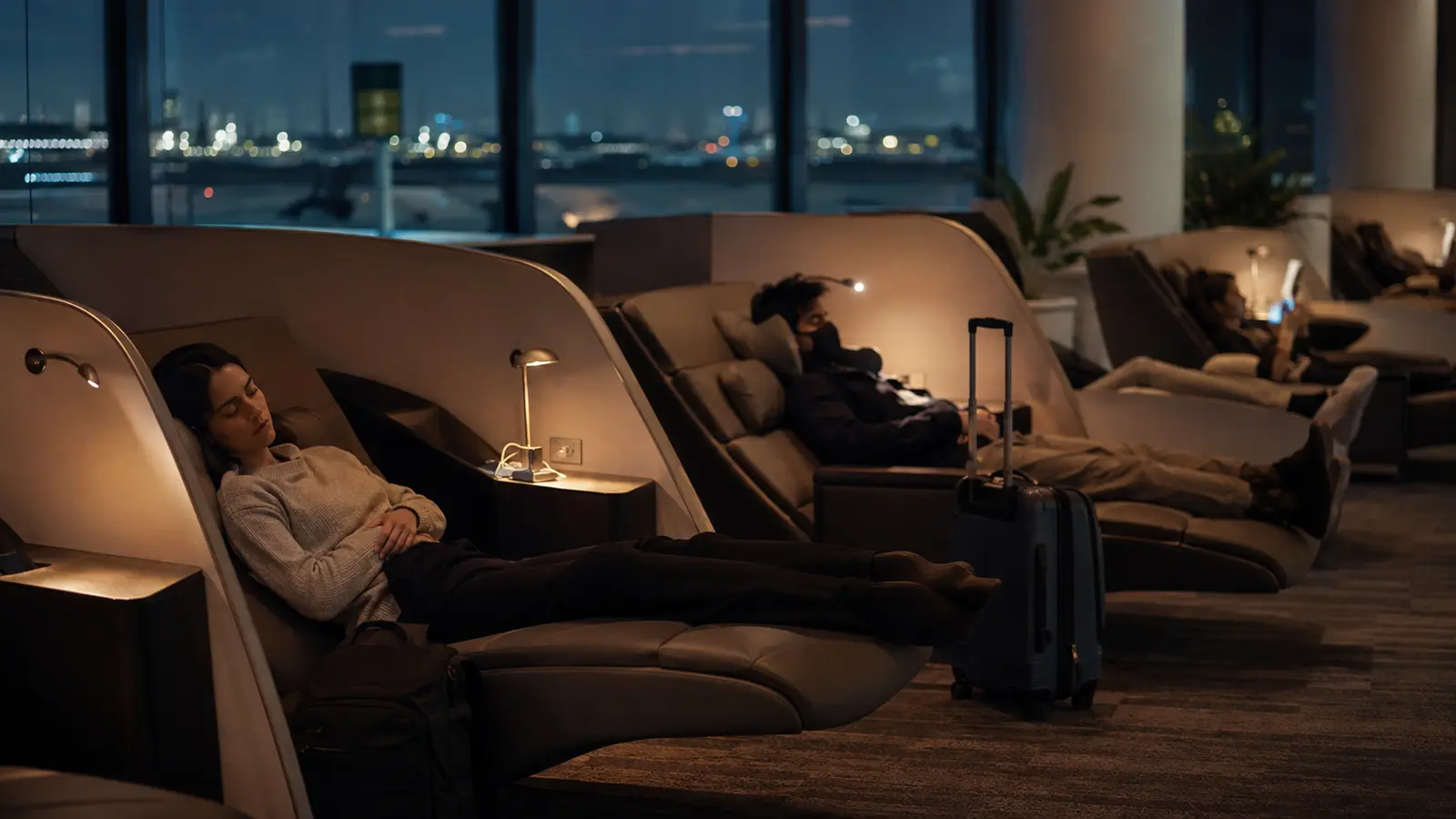
| Free rest or snooze zone | The airport provides reclined seats airside | First-come access and public surroundings |
| Paid lounge or sleep pod | You want a shower or a few quieter hours | Limited overnight hours, time caps or no guaranteed bed |
| Airside transit hotel | You can remain in transit and have enough usable time | Location may serve only certain terminals or passengers |
| Landside airport hotel | You must enter the country and can walk to the room | Immigration and security reduce sleep time |
| Off-airport shuttle hotel | The layover is long and the price saving is meaningful | Shuttle frequency and road time add failure points |
Changi Airport’s official transit guide neatly shows the range: free rest areas, lounges, transit hotels and showers. Changi also says its free snooze lounges are designed primarily for short naps; passengers may use them overnight, but the public space and terminal activity make them less suited to a full night’s rest.
When booking a pod, lounge or transit hotel, verify the terminal, airside/landside location, access direction, hours, maximum stay, shower reservation and cancellation terms. “Inside the airport” can still mean a 25-minute walk and an immigration decision.
How to choose a safer place to rest
Look for a staffed, well-lit area where other ticketed passengers are resting. Stay within sight of an information desk, open business or regular security patrol without blocking their work. Avoid isolated stairwells, parking connections, train platforms and exterior doors.
Before settling:
- Ask airport staff where overnight passengers are allowed
- Locate the nearest staffed desk and restroom
- Keep corridors, exits and accessible seating clear
- Check whether cleaning begins overnight
- Move if the area feels uncomfortable, even if the bench is excellent
Airport-specific experience reports can reveal noise, armrests and overnight enforcement that official pages do not describe. Use a current guide such as Sleeping in Airports as a secondary check, but let official operating and immigration information control the plan.
Secure your belongings without creating a hazard
Keep your passport, phone, cards and medication in a zipped pouch against your body. Close and lock the carry-on, place it where movement would wake you, and avoid spreading belongings across nearby seats. Do not attach luggage in a way that traps you during an evacuation.
Back up important documents and keep one payment method separate. If traveling alone, share the flight and overnight plan with a trusted contact. Bright, occupied space is usually a better bargain than a dark corner with a softer floor.
Pack a small overnight layover kit
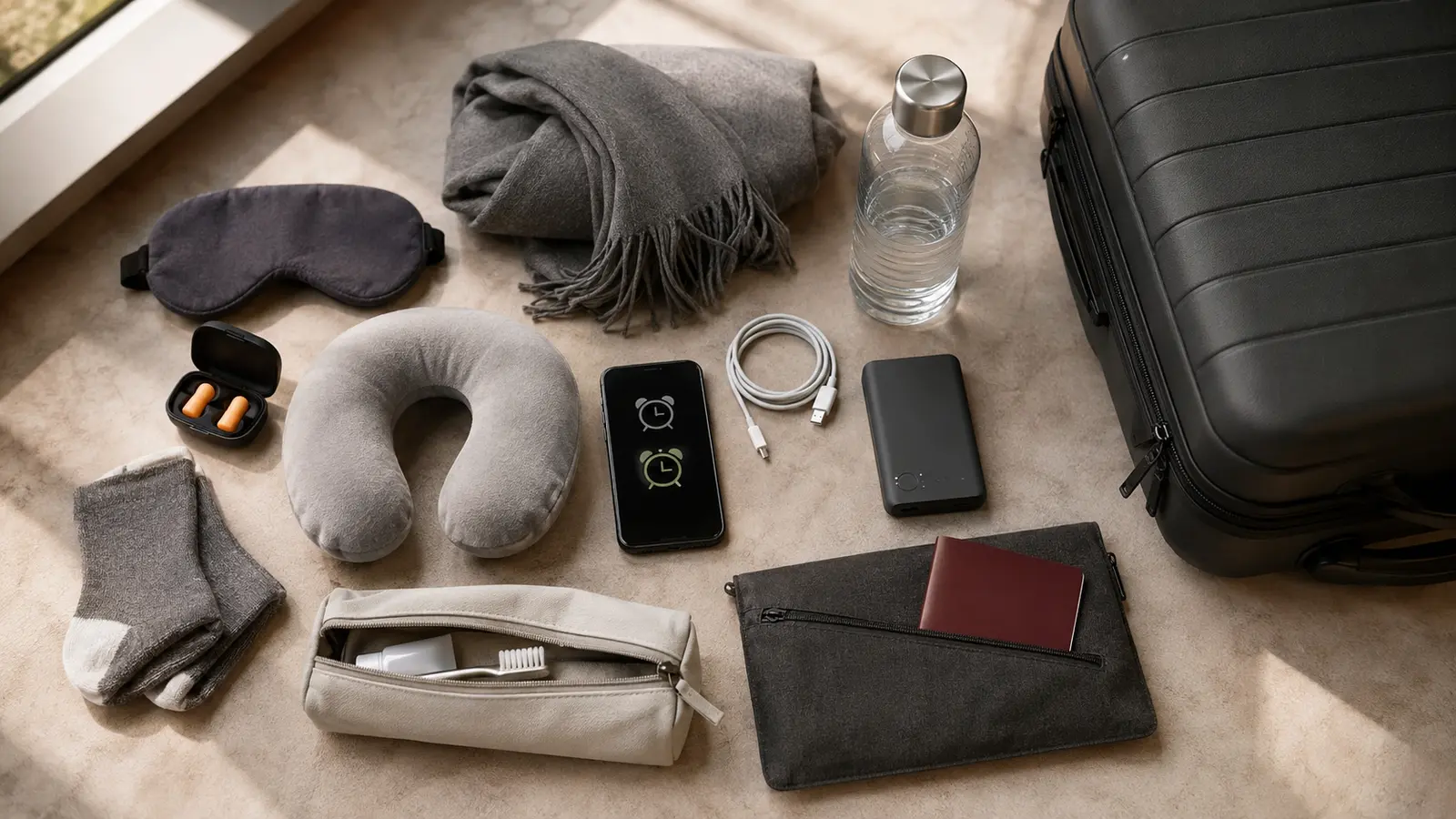
- Eye mask
- Earplugs or noise-canceling headphones
- Warm layer and clean socks
- Compact travel pillow or folded scarf
- Charging cable, plug and power bank permitted by airline rules
- Toothbrush and small toiletries within security limits
- Water bottle to fill after screening
- Medication and one change of essentials
The long-flight essentials guide covers the pieces that work both onboard and in the terminal. Keep the kit in the personal item; an eye mask in a checked suitcase is merely a future eye mask.
Plan the wake-up before you sleep
Work backward from boarding, not departure. Set two alarms with different sounds, keep the phone charged and confirm that the time zone updated correctly. Note the terminal, checkpoint and gate-change notification method.
Allow the normal departure process described in our guide to how early to get to the airport. If you need to recheck a bag, you are effectively arriving for a new flight even though you never left the building.
Before closing your eyes:
- Check the flight status
- Confirm the morning checkpoint and opening time
- Save the boarding pass offline
- Use the restroom and fill water
- Eat before overnight concessions close
- Set a backup alarm with enough recovery time
Keep an accommodation Plan B
Save two viable alternatives before travel: an airside option if eligible and a landside hotel you can legally reach. Note late check-in, shuttle hours, walking route and same-night cancellation policy. If the terminal becomes unsafe, staff move passengers, you become ill or sleep is simply not happening, use the backup.
Include the plan in your international travel checklist. If the connection is long enough to leave the terminal for more than sleep, first work through our guide to leaving the airport during a layover.
An airport night is successful when it protects the next day, not when it proves you can endure a carpet. Verify permission and process, calculate the hours that remain, and buy a proper bed whenever the numbers and budget make one sensible.
Frequently asked questions
Can you sleep in an airport overnight?
Sometimes. The airport must be open to ticketed passengers, and the terminal or area must permit overnight stays. Security zones may close even when the landside building remains open.
Do airports close at night?
Some do; others remain open while particular terminals, concourses or security checkpoints close. Check the official page for the exact terminal and date.
Can I stay airside during an overnight layover?
It depends on immigration flow, terminal rules, your onward boarding pass and security hours. International arrivals and terminal closures may require you to go landside.
What happens to checked luggage overnight?
It may be held and tagged through on a protected itinerary, or you may need to reclaim and recheck it. Ask the airline and inspect the bag tag before the first flight.
Are airport sleep pods worth it?
They can be when the location is convenient and the booking yields several real hours of quiet rest. Compare the time cap, terminal access and total price with an airport hotel.