
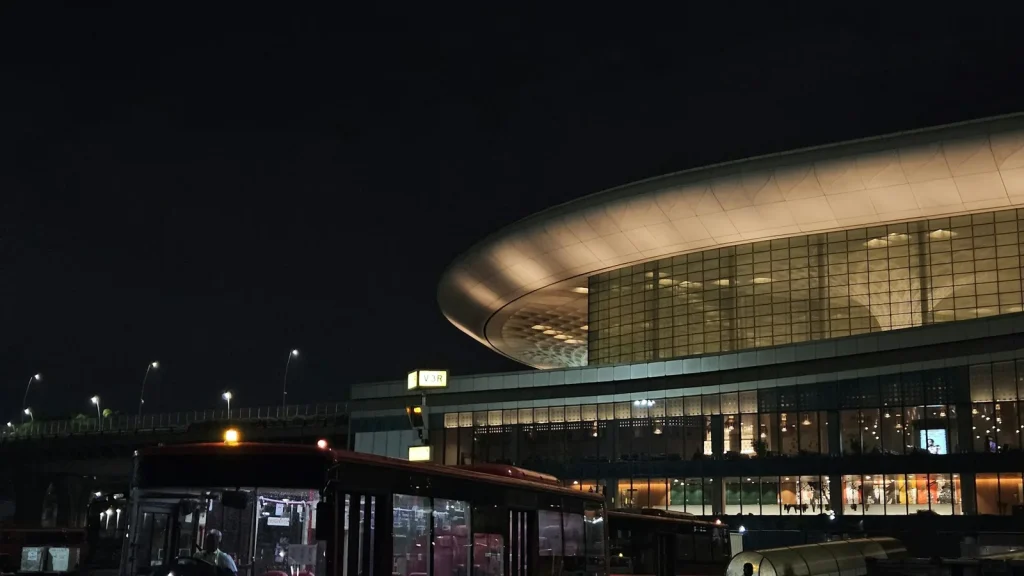
In most airports, yes. Nobody issues permission and nobody stops you, and on any given night thousands of people are doing it. What decides whether it works for you is narrower than the question suggests: whether your terminal stays open overnight, whether you can remain inside security, and whether you have landed at one of the few airports that has decided it would rather you didn’t.
An overnight layover — sometimes called an overnight stopover — is any connection long enough that you will be at the airport through the small hours, usually eight to fourteen hours between flights.
Before going further, one fork. If you are here because a flight was cancelled and you are stuck, skip ahead to what the airline owes you; your situation has rules attached to it that a voluntary overnight does not. If you chose this connection deliberately, or you are arriving the night before an early departure, the rest applies.
Can you sleep in an airport? Usually yes, with three exceptions
The terminal has to be open. Most large international airports run 24 hours. Plenty of mid-size ones do not, and will clear the building after the last departure and reopen at four or five in the morning. Dublin is open 24 hours a day, 364 days a year — it closes on Christmas Day, which is exactly the kind of detail that ruins a plan if you assume otherwise.
You have to be on the right side of security. This is the one that catches people. Airside areas usually close with the last departure, and checkpoints reopen only a few hours before the first morning flights. At JFK, checkpoints close somewhere between 10 p.m. and 1 a.m. depending on the terminal, and you need a same-day boarding pass to be back there. Toronto Pearson’s checkpoints typically reopen around 4:30 a.m. Heathrow’s current guidance goes further: passengers should not expect to remain airside overnight at all, which means clearing UK Border and sleeping landside or in a hotel.
A few airports have decided against it. London Stansted is the clearest case. Since 2018 it has periodically closed the departures area between midnight and 2 a.m., and it prohibits sleeping on the floor along with camp beds and sleeping bags. Staff now wake sleepers both landside and airside. Passengers genuinely stranded by a cancellation are handled separately — which tells you how the airport sees the distinction between being stuck and choosing to be there.
Everywhere else the honest answer is that sleeping is tolerated rather than permitted. No one will hand you a blanket, and no one will throw you out either.
Where you can actually sleep: ten airports
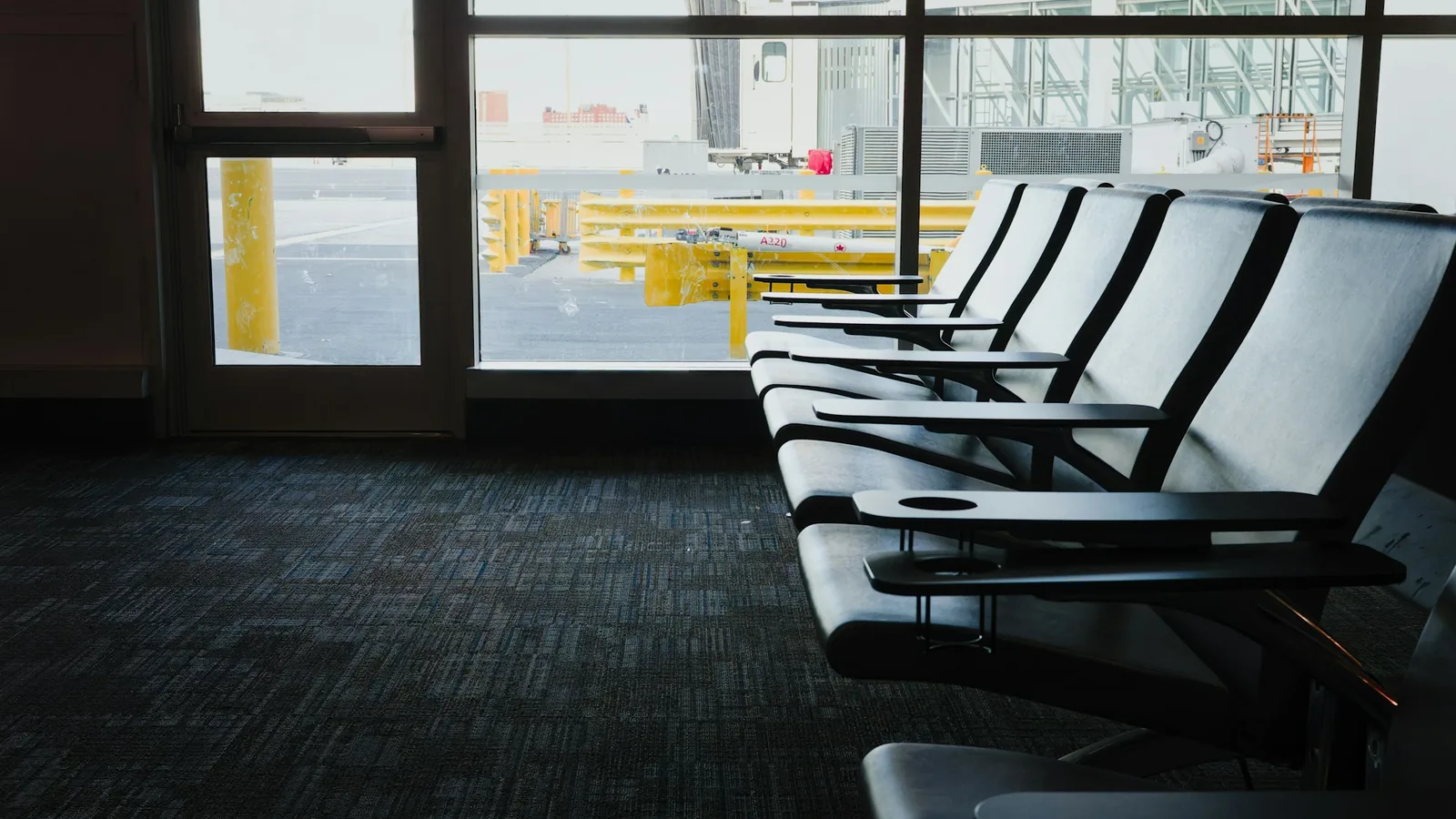
Here is the awkward part. Almost no airport publishes a policy on this. We checked the official help pages for every airport below: Heathrow, JFK, Stansted, LAX and the rest say nothing about overnight terminal access or sleeping, and several have no working FAQ page at all. Singapore Changi is the exception, and only because its free rest areas are a facility it advertises rather than a rule it enforces.
So the table below is assembled from what travelers report on public forums, cross-checked against the Sleeping in Airports guides, rather than from airport policy — because airport policy on this mostly does not exist in writing. Each row links to the discussion it came from. Treat it as current consensus, not a guarantee, and confirm with your terminal. Compiled September 2026.
| Airport | Open overnight | Airside overnight | What travelers report |
|---|---|---|---|
| Singapore Changi (SIN) | Yes | Yes | Seven free snooze lounges in the transit halls, open 24 hours (airport-published). Travelers note a free chair is dependent on your luck; transit hotels sell in six-hour blocks |
| Amsterdam Schiphol (AMS) | Yes | Yes | Parts of Schiphol Plaza restricted to ticketed passengers and staff between midnight and 4 a.m.; travelers warn that each gate has its own security, so you may re-clear regardless |
| Dublin (DUB) | Yes, 364 days | Only once security reopens | Closed Christmas Day; no cots. Travelers advise asking when security reopens and being first in the queue, and say the terminal fills from about 4:30 a.m. |
| Chicago O’Hare (ORD) | Yes | Yes, checkpoint hours vary | Concrete floors, armrests on most gate seating; staff wake sleepers on morning rounds |
| New York JFK | Yes | Limited | Checkpoints close roughly 10 p.m.–1 a.m.; most people wait landside. Travelers call it safe, just with bright lights and generally uncomfortable. Sleep pods in T4 and T8 |
| Miami (MIA) | Yes | Depends on flights | Ask the checkpoint schedule before you exit; staff wake sleepers to check IDs and tickets |
| Toronto Pearson (YYZ) | Yes, landside | No | Travelers report plainly that you can’t remain in the airside areas overnight; checkpoints reopen around 4:30 a.m. Bring a layer, it gets cold |
| Los Angeles (LAX) | Yes, landside | Not reliably | Tom Bradley runs 24 hours, but travelers report the domestic terminals are all supposed to close at some point during the night; bag counters open around 3:30 a.m. |
| London Heathrow (LHR) | Yes | No | Forum consensus is blunt — you can’t stay airside overnight. You clear UK Border and stay landside, which means you need the right visa to do it |
| London Stansted (STN) | Limited | No | Departures closes periodically midnight–2 a.m.; floors, camp beds and sleeping bags prohibited. Travelers report cleaners with heavy floor polishers and security not opening until 3 a.m. |
The pattern worth noticing: almost every airport is open, and almost none of them will guarantee you a place inside security. Toronto, Heathrow, Stansted and, in practice, LAX all push you landside. Plan for the public side of the building unless you have confirmed otherwise — and if you will be landside in a country you need a visa to enter, that changes the plan entirely.
If you are stranded rather than choosing this
A cancelled flight puts you in a different category, and it is worth knowing that before you settle onto a bench. Depending on the airline, the route, and the cause of the disruption, the carrier may owe you a hotel, ground transport, and meals — and the way to find out is to ask at the desk rather than to assume the answer is no. Airports occasionally issue cots during mass disruptions; travelers reported them at O’Hare during a major weather event. Dublin, by its own guide, offers none.
Ask before the queue forms. The traveler who asks first gets the last room at the airport hotel; the one who waits gets the floor and a voucher for a coffee.
How much sleep the layover actually contains
A twelve-hour layover is not twelve hours of sleep, and the gap between those two numbers is where most overnight plans go wrong.
Subtract, in order: deplaning and walking to the terminal, immigration if you are entering the country, baggage reclaim if you have to collect and recheck, transfer between terminals, the twenty minutes it takes to find somewhere tolerable and settle, and the check-in and security you need to complete on the far end. On a self-transfer — two separate tickets rather than one itinerary — add the full check-in process, because nothing is connected for you. Add more time if visa and passport checks apply, and build in whatever buffer your departure airport requires; our guide to how early to get to the airport has the realistic figures.
Twelve hours routinely becomes five and a half. If the remainder is under four, treat it as a long rest rather than a night’s sleep, and plan your next day accordingly.
Where to sleep, and what it is actually like
The best spots share three qualities: visible to staff or cameras, away from the main walkway, and near something that stays open. A row of seats without armrests near a 24-hour café beats a secluded corner every time, because the secluded corner is where things get taken.
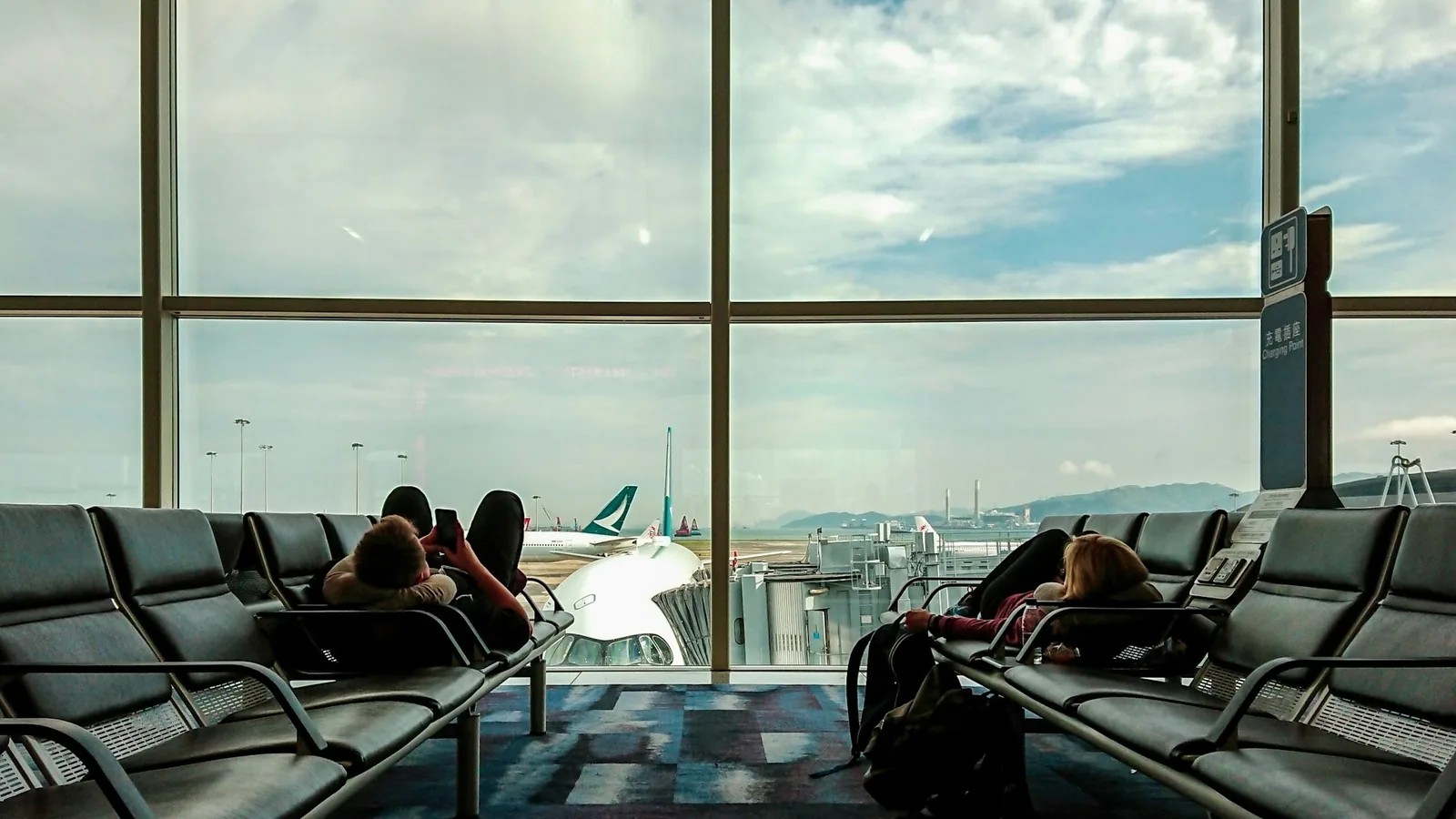
What nobody tells you is how cold and how bright it is. Travelers describe Glasgow with the lights on full and cleaners polishing the floors all night. Rome Fiumicino has security watching the lobbies where people gather until morning. This is not a hotel with bad reviews; it is a building that has no intention of letting you sleep and merely tolerates you trying.
A handful of airports do better. Changi’s free snooze lounges — seven of them, across all four terminals, inside the transit halls and open around the clock — are the gold standard, though Changi itself notes they suit naps more than full nights. Airport chapels and interfaith rooms are quiet, dim, and almost always empty at 3 a.m.
Sleep pods and capsules are the paid middle ground, and they are genuinely useful at the right price. They are also inconsistent: one traveler described a pod in Milan as a hot tin can with malfunctioning climate control, positioned next to the restrooms. Because availability and cost vary enormously by airport, pods deserve their own guide, which is coming.
How to sleep without being moved on
Tolerance has conditions, and they are mostly about not looking like you have moved in.
Do not unroll a sleeping bag or set up a camp bed; at Stansted they are explicitly banned, and elsewhere they are the single fastest way to attract staff. Do not take an entire row of seats when the terminal is filling up. Avoid sleeping in the middle of a check-in hall, where you are in the way of the morning shift. Keep your boarding pass somewhere you can produce it half-asleep, because at Miami and elsewhere staff will wake you to check it. And when security does its rounds at five in the morning, sit up and gather your things without an argument.
There is, inevitably, an entire subculture devoted to getting into lounges people have no right to be in — forged emails, tailgating behind legitimate passengers, and at least one documented case of a man locking himself in a lounge bathroom and later claiming he was looking for his mother. Lounge staff have heard every version. It also has nothing to recommend it: forging credentials is fraud, not a travel hack, and the realistic outcome is being escorted out at the worst possible hour of the night. A day pass costs less than the embarrassment.
Your overnight kit and the wake-up plan
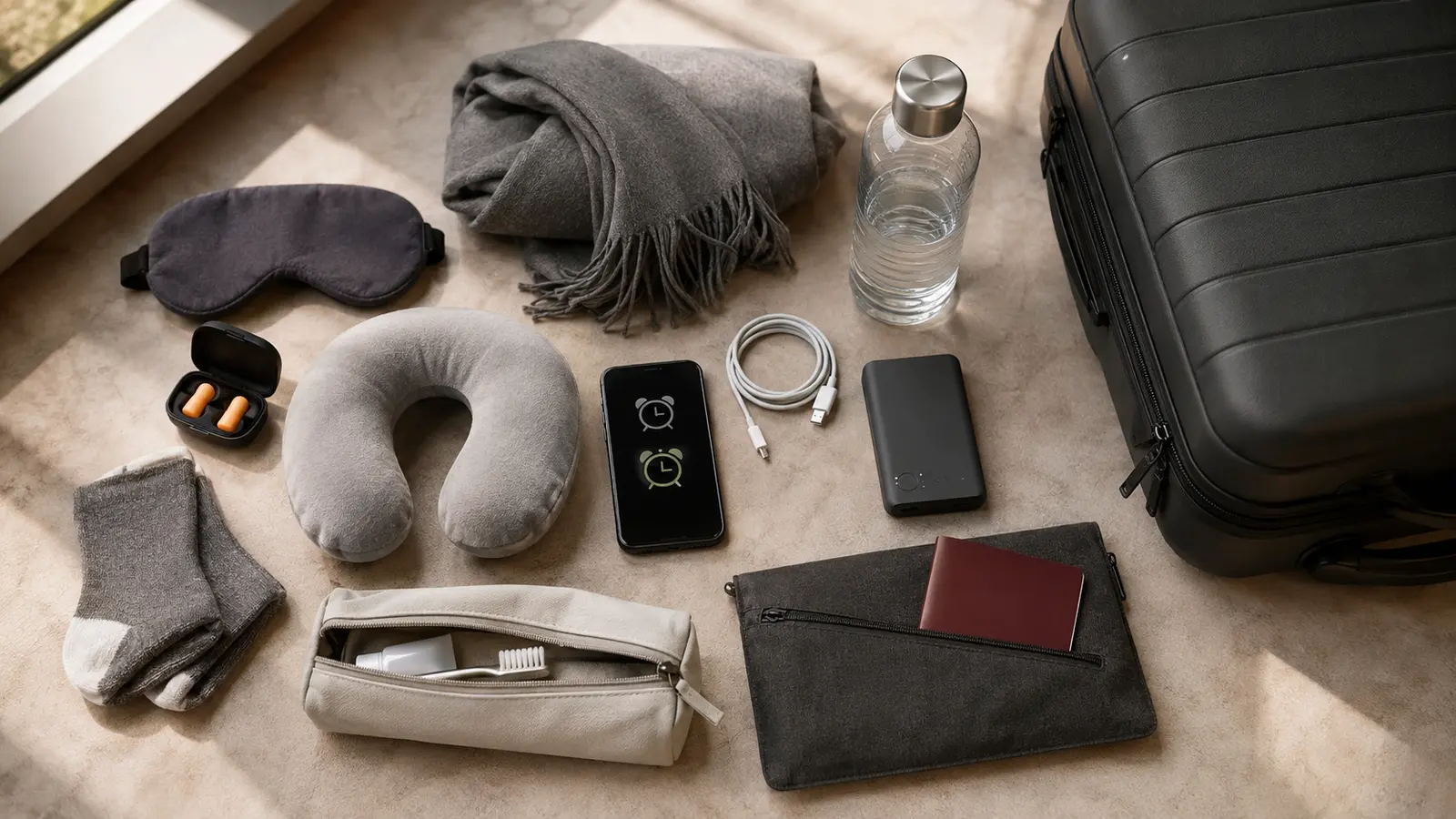
Pack for cold and light, because those are what actually keep you awake: a warm layer, an eye mask, earplugs or noise-cancelling headphones, a power bank, and a scarf or jacket that doubles as a pillow. Our long-flight essentials guide covers most of this. Buy water and something to eat before the shops close, because at 2 a.m. the choice is a vending machine or nothing.
Secure your bag by sleeping with a strap around your arm or leg — not by locking it to furniture, which creates a hazard and gets you moved on. Showers exist at many large airports for a small fee, and a shower at 6 a.m. changes the next day more than the extra hour of sleep would have.
Set three alarms: one on your phone, one on a watch or second device, and one as a backup thirty minutes later. Put the phone somewhere you have to reach for it. Note your gate and the walking time to it before you sleep, not after.
Keep a Plan B
Decide your cutoff in advance — the hour at which you stop trying to sleep here and book something. Know which hotels are inside the terminal, which run 24-hour shuttles, and roughly what a same-night room costs at that airport. Transit hotels and day rooms sell out on exactly the nights you need them.
If you are cleared to enter the country, leaving the airport during a layover is sometimes the better call, and our international travel checklist covers what you need in order to do it.
Frequently asked questions
Can you sleep in an airport?
At most airports, yes. It is tolerated rather than officially permitted. The exceptions are airports that close overnight and a small number, such as London Stansted, that actively prohibit it.
Are you allowed to sleep in airports?
There is no general rule against it. Individual airports set their own policies, and staff can ask you to move if you block walkways, occupy several seats, or use bedding.
Can I stay in the airport overnight?
Usually, if the terminal is open. Whether you can stay inside security is a separate question that depends on checkpoint hours and, at some airports, on holding a same-day boarding pass.
Do airports close at night?
Large international airports mostly do not, but security checkpoints and individual terminals often do. Smaller regional airports frequently close entirely after the last departure.
Can I stay airside during an overnight layover?
It depends on the airport. Changi and Schiphol allow it; Heathrow’s current guidance says not to expect it. Check your specific terminal before you plan around it.
Nobody’s best night of sleep happened in a terminal. But a night in an airport is survivable, sometimes free, and occasionally the difference between making an early flight and missing it. Know which side of security you will be on, bring something warm, and set the second alarm.