
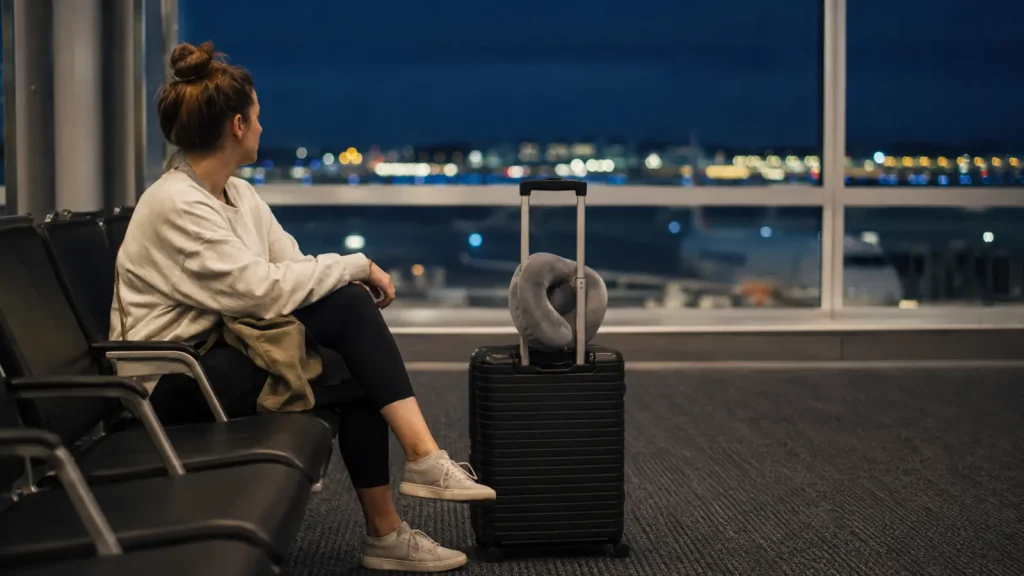
A red-eye flight is an overnight flight that departs in the evening or late at night and arrives the following morning. The name is less a promise of sleep than a description of how many passengers look afterward. These flights are common on west-to-east routes across the United States and on long-haul journeys that use the night to cover distance.
A red eye can preserve a vacation day, avoid a hotel night and occasionally lower the fare. It can also exchange a bed for interrupted hours in an upright seat and an arrival long before your room is ready. Judge the whole arrival day, not simply the departure time.
What counts as a red-eye flight?
There is no single legal time range. In ordinary travel use, a red eye leaves during normal sleeping hours, continues overnight and lands in the morning. A classic U.S. example is a late flight from the West Coast to the East Coast: the time-zone change turns a flight of roughly five or six hours into an early-morning arrival with less usable sleep than the schedule first suggests.
Not every overnight flight feels the same. A ten-hour flight may allow a long sleep period; a shorter transcontinental route may offer only three or four quiet hours after boarding, taxiing and cabin service. Scheduled flight time is not available sleep time.
Red-eye flight pros and cons
| Possible advantage | The practical catch | Best fit |
|---|---|---|
| Travel happens overnight | You may lose most of a night’s restorative sleep | Travelers who sleep reasonably well on planes |
| Morning arrival preserves daytime | The first day may be too tired for demanding plans | Trips with a gentle arrival day |
| One fewer hotel night may be needed | Early check-in is rarely guaranteed without paying for it | Travelers with confirmed luggage storage or room access |
| Some red eyes have lower fares | Seat fees, transport and recovery time can erase the saving | Flexible travelers comparing the complete trip cost |
| Late terminals can feel calmer | Food, lounges and public transport may have reduced hours | Travelers who check airport services in advance |
The U.S. Department of Transportation notes that lower fares may be available on overnight red eyes, but “may” matters. Compare the same route across several departure times and include baggage, seats and ground transport. A fare that lands after the last train and requires a long taxi ride deserves less applause.
Use a travel budget spreadsheet to compare the full options. The red eye can be financially sensible when it replaces a hotel night without creating a second cluster of arrival costs.
Who should consider a red eye—and who should skip it?
A red eye is most convincing when the flight offers a real sleep window, the fare or schedule advantage is meaningful, and the first day can absorb fatigue. It suits travelers who can sleep upright and do not need to drive, present or make a tight connection after landing.
Choose a daytime flight if poor sleep triggers migraines, nausea or significant anxiety; if medical routines are difficult overnight; or if the arrival plan requires immediate performance. Families should judge the route by the child they have, not the theory that every child sleeps wherever bedtime happens.
Jet lag and sleep deprivation are related but different. A domestic red eye within one time zone can leave you exhausted without creating major circadian misalignment. Crossing several time zones adds another layer because the local morning may arrive while your body still expects night.
How to prepare before the overnight flight
Choose the flight by usable sleep time
Subtract the parts of the trip when sleep is unlikely: boarding, taxiing, meal or drink service, cabin announcements and preparation for landing. A six-hour schedule may contain a three-and-a-half-hour quiet period. A longer flight with an earlier departure can be easier than a shorter flight leaving after midnight, even if both wear the same red-eye label.
Also check when the operating airline opens bag drop, which terminal you need and whether your planned transportation still runs late at night. Add those details to the same trip organization system as the booking rather than discovering them at 11:40 p.m.
Pick a seat that matches how you sleep
A window seat provides support and prevents other passengers from climbing over you, but it is awkward if you stand frequently. An aisle seat offers easier access at the cost of interruptions. Seats near galleys and restrooms collect light, conversation and door movement.
Check recline limits before paying for an exit row or the last row of a cabin. Extra legroom is useful; a seat that remains upright all night is a less charming surprise.
Pack a small sleep kit where you can reach it
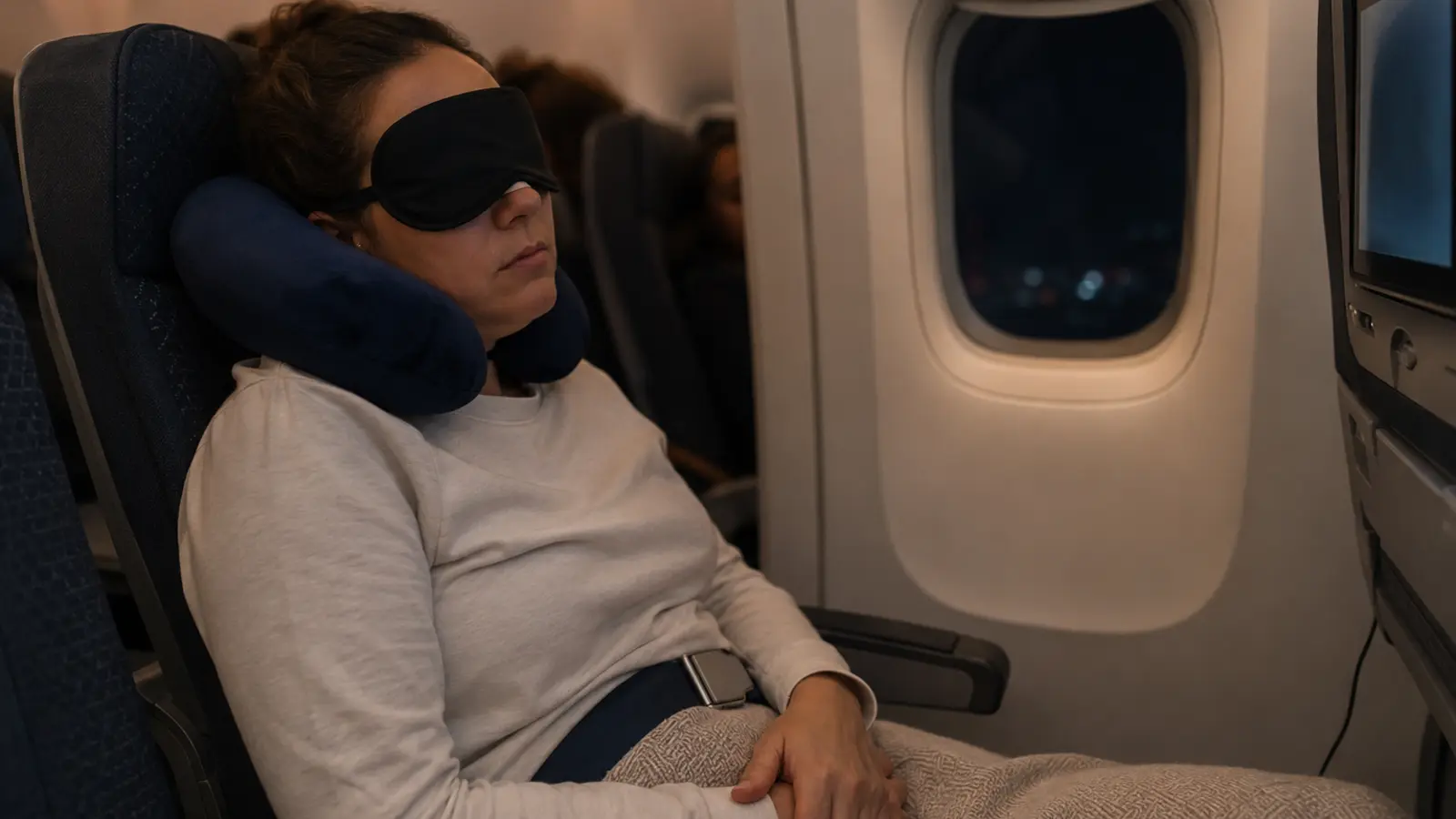
Keep an eye mask, earplugs or noise-canceling headphones, a supportive travel pillow, water and one warm layer in the personal item under the seat. The long-flight essentials guide covers the broader comfort kit, while a well-planned carry-on keeps medication and arrival basics out of checked luggage.
Dress in breathable layers and keep shoes on unless airline rules and the situation allow otherwise. Cabins can be cool, and searching an overhead bin in darkness is a poor bedtime ritual.
How to improve your chances of sleeping
Eat before boarding if the flight departs near your usual bedtime, then decide whether cabin service is worth shortening the quiet window. Settle early: arrange the pillow, fasten the seat belt over your blanket or outer layer so it remains visible, and reduce screen light when you intend to sleep.
The CDC’s jet lag guidance recommends hydration and limiting excess alcohol; alcohol may make you drowsy while fragmenting sleep. Caffeine can be useful later for alertness, but taking it shortly before the sleep period works against the plan.
Do not test an unfamiliar sleep aid in the air. Sedating medication can last beyond the available sleep window, interact with other medicines or be restricted at an international destination. Personal medication decisions belong with a qualified clinician who knows your health and itinerary.
Plan the morning before you book the night
Check the airport’s transport schedule and when you can reach the accommodation. Ask about luggage storage, paid early check-in or day rooms. A request is not a reservation; if immediate access is essential, confirm a paid arrangement or book the preceding night and notify the property.
Keep the first half-day light. Breakfast, an outdoor walk, one easy neighborhood and a flexible lunch beat a timed museum followed by a cross-city tour. Save the ambitious itinerary for a day when sentences are once again forming in the intended order.

Use daylight and naps carefully
When the flight crosses time zones, local daylight can help the body adjust, although ideal timing depends on direction and distance. The CDC advises maximizing appropriately timed natural light and avoiding long daytime naps; a short nap may improve alertness without making local bedtime impossible.
If you are too tired to drive safely, do not treat fresh air and coffee as a substitute for sleep. Arrange public transportation, a taxi or a pickup. The time saved by flying overnight is not worth preserving at any cost.
A quick red-eye decision checklist
- Is the flight long enough to offer a meaningful quiet period?
- Can you sleep at least somewhat in an economy seat?
- Does the fare or schedule advantage remain after seats and ground transport?
- Will transportation be available at both the late departure and early arrival?
- Can the accommodation store luggage or confirm early access?
- Is the arrival day light enough to tolerate poor sleep?
- Can you avoid driving or high-stakes work immediately after landing?
If most answers are yes, the red eye may be an efficient use of a limited trip. If the plan depends on sleeping perfectly, checking in hours early for free and feeling excellent by breakfast, a daytime flight is the more honest booking.
Frequently asked questions
Why is it called a red-eye flight?
The name refers to the tired, dry or bloodshot eyes associated with traveling overnight and getting limited sleep.
Are red-eye flights always cheaper?
No. Some overnight departures cost less because demand is lower, but the pattern varies by route and date. Compare the complete fare and arrival costs.
Do you get a meal on a red-eye flight?
It depends on the airline, route, cabin and flight length. Check the operating airline’s current service details; many shorter overnight flights offer only drinks or snacks.
Is a red eye the same as an overnight layover?
No. A red eye is a flight operating overnight. An overnight layover is a connection that leaves you between flights during the night, possibly inside or outside the airport.
A red-eye flight works best when it is booked as part of the first day, not merely as a cheaper line in the search results. Give sleep a realistic window, give the morning somewhere to go, and the overnight journey can save time without quietly consuming the day it was meant to protect.