

An international travel checklist should answer the questions that can stop a trip, cost serious money or leave you unreachable. It does not need to remind you how many socks exist. Packing is its own task; this list covers documents, entry rules, health preparation, insurance, money, phone access, confirmed reservations and emergency backups.
When the documents and entry requirements are settled, build the separate physical packing checklist with the travel packing list generator.
Work through it in stages rather than the night before departure. Passport renewal and travel vaccines are not famously responsive to last-minute enthusiasm.
This checklist was reviewed against current U.S. State Department and CDC guidance on July 28, 2026. Requirements depend on nationality, destination, transit points and personal circumstances. Always verify official destination and carrier sources.
Three to six months before international travel
Check passport validity and condition
Find the physical passport and inspect it. Confirm:
- The name matches the name you will use for every booking
- The expiration date satisfies the destination and transit-country rules
- Any required blank pages remain
- The passport is not damaged
- Children have their own valid documents where required
Do not rely on a general “six-month rule.” Some destinations require six months beyond travel, others use different periods, and some apply rules based on arrival or departure. Check the official immigration authority and your government’s country information page.
The U.S. State Department advises checking expiration as soon as planning begins and applying early if renewal is needed. Remember that U.S. passports issued to children under 16 are valid for five years rather than ten.
Verify visa, electronic authorization and transit rules
Check requirements for every country you will enter and every airport where a connection may require immigration or a transit visa. The answer can depend on:
- Your passport and any dual nationality
- The purpose and length of the visit
- Where you arrive from
- Whether you leave the international transit area
- Whether separate tickets require baggage collection
Use government websites. Visa agencies and search summaries can help locate a rule but should not be the final authority. Record the application number, approval document, validity dates and entry conditions in the trip file.
Review health guidance early
Check the CDC destination page or your national public-health authority. Some vaccines require more than one dose, and preventive medication may need to start before travel.
Discuss the specific itinerary, duration and activities with a qualified health professional, particularly for remote travel, pregnancy, chronic conditions or destinations with vaccination requirements. The CDC advises seeing a provider as soon as possible because some vaccine schedules take time.
Confirm whether prescribed medicines are legal in the destination and transit countries. Carry documentation where required and know the generic names of important medication.
One to three months before departure
Buy the right travel insurance
Check what existing health, credit-card or employer coverage actually provides outside your country. “Travel benefits included” can conceal impressive amounts of excluded detail.
Review a policy for:
- Every country on the itinerary
- The full dates, including travel days
- Emergency medical treatment
- Medical evacuation or repatriation
- Pre-existing conditions and any waiver deadline
- Activities such as hiking, diving, skiing or motorbike use
- Trip cancellation, interruption and delay
- Deductibles, exclusions and claim procedures
The State Department specifically recommends checking destination validity, emergency care, medical transportation and planned activities. The CDC notes that travelers are often responsible for medical costs abroad and should understand whether their health plan covers overseas care.
Save the policy number, emergency-assistance number and claims instructions offline. Insurance is less impressive when the only proof of it is trapped in an email account requesting a verification code.
Check current advisories and local laws
Read the full destination information, not only the headline advisory level. Look for:
- Entry and exit requirements
- Regional restrictions
- Local laws that affect common traveler behavior
- Health or natural-hazard information
- Currency declaration rules
- Embassy or consulate contact information
U.S. travelers can use the State Department international travel checklist and destination pages. Travelers of other nationalities should consult their own foreign ministry as well.
Confirm the complete transport chain
Review every flight, train, ferry and transfer as one itinerary. Check:
- Names, dates and local times
- Departure and arrival airports, terminals or stations
- Connection time and whether baggage transfers automatically
- Separate-ticket risk
- Airport-to-accommodation transport
- Late-arrival and missed-connection options
Record the operating carrier as well as the company that sold the ticket. Baggage, check-in and disruption procedures may follow the operator.
Confirm accommodation details
For every stay, save:
- Full address in English and the local language where useful
- Telephone number and contact method
- Check-in and checkout times
- Late-arrival instructions
- Booking reference and amount due
- Cancellation deadline
Contact the property in advance if arrival will be late or if access depends on an app, door code or identity verification.
Two to four weeks before departure
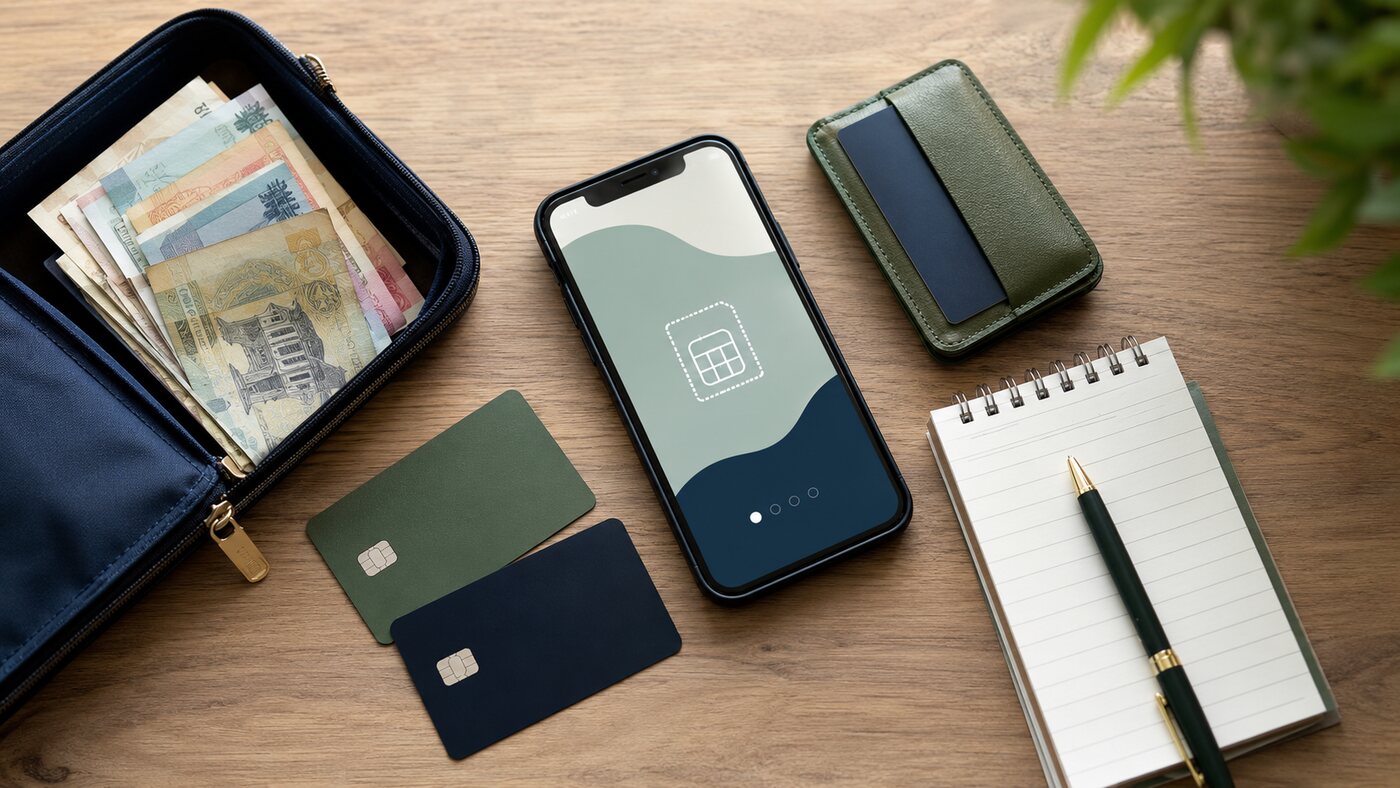
Prepare two independent ways to pay
Check card expiration dates, foreign transaction fees, cash-advance terms and international ATM access. Ask each issuer whether travel notification is needed; many institutions no longer require one, while others still provide travel settings.
Plan for:
- A primary card suitable for ordinary purchases
- A backup card from a different account or network, stored separately
- A small amount of accessible cash
- A way to obtain more cash without depending on one wallet
Save issuer contact numbers that work internationally. Know how to lock a card in the app and how you would receive a replacement or emergency funds.
When a terminal offers to charge in your home currency, review the conversion carefully. Dynamic currency conversion may use a less favorable rate; paying in local currency often lets your card network perform the conversion, though your own fees still apply.
Set up phone and authentication access
Choose between carrier roaming, a local SIM, an eSIM or a combination. Confirm that the phone is unlocked if another provider is needed.
Before leaving:
- Install the eSIM but follow its activation timing instructions
- Know which line will handle data, calls and messages
- Check roaming settings and expected charges
- Save the provider’s support method
- Download offline maps and essential translation data
Audit two-factor authentication. If bank, email or booking accounts send codes only to your home number, make sure that number can receive them abroad or add a secure alternative. Store account-recovery codes appropriately; do not place them in an unprotected itinerary.
Enroll for official alerts where available
U.S. citizens can enroll in the free Smart Traveler Enrollment Program (STEP) to receive embassy and consulate updates. Other governments may offer traveler registration or advisory alerts.
Also enable airline and transport notifications, but do not depend exclusively on push alerts. Check the operating carrier directly before departure.
Create document backups without oversharing
Make secure copies of:
- Passport identification page
- Visa or authorization approval
- Travel insurance certificate
- Transport and accommodation confirmations
- Important prescriptions or medical letters
- Driver’s license and international permit if required
Keep one protected digital set accessible offline and another secure copy with a trusted person. Store a paper copy separately from the originals where appropriate. Do not keep every copy in the same bag or expose sensitive documents in a broadly shared folder.

One week before departure
Build an emergency contact sheet
Create one concise page with:
- Local emergency numbers
- Nearest relevant embassy or consulate
- Insurance emergency-assistance number
- Card-issuer loss and theft numbers
- Accommodation contacts
- A trusted contact at home
- Essential medical information you choose to disclose
Save it offline and give the appropriate version to your emergency contact. Avoid recording passwords or full payment-card numbers.
Share the route at the right level
Give one trusted person the main itinerary: flight numbers, cities, accommodation and expected return. Agree on when you will check in and what they should do if they cannot reach you.
Do not post an empty-home timetable publicly. “Away for two weeks” is an unnecessary degree of transparency.
Secure home and ongoing obligations
- Arrange pet, plant, mail or property care
- Schedule essential bills and check account balances
- Secure valuables and important home documents
- Give access instructions only to the person who needs them
- Check that smoke alarms and other safety systems are working
Forty-eight hours before international travel
Recheck current conditions
Review the operating carrier, airport, government advisory and local weather or disruption information. Confirm that entry forms, digital arrival cards or health declarations are complete within the permitted window.
Complete check-in carefully
Verify passenger names, passport details, destination address where requested and document requirements. Save the boarding pass in more than one accessible place if possible.
Confirm money and phone readiness
- Primary and backup cards are active and stored separately
- Mobile banking access works
- A small amount of emergency cash is accessible
- eSIM or roaming setup is understood
- Offline maps and critical documents open in airplane mode
Test the arrival plan
You should be able to answer, without searching email:
- Which terminal or station do I arrive at?
- How do I reach the accommodation?
- What happens if the flight is late?
- Can I contact the property without mobile data?
- Where is the first night’s confirmation?
International travel documents to keep immediately accessible
On the travel day, keep direct access to:
- Passport and required visa or authorization
- Boarding pass or transport ticket
- Destination address and onward-travel evidence if required
- Insurance information
- Prescription documentation when needed
- Emergency contact sheet
This is not a packing list; it is a document-access list. The point is to prevent a border or check-in question from triggering a deep search through four apps and an email folder last opened during a password reset.
What this checklist deliberately does not include
Clothes, shoes, toiletries, laundry and suitcase organization belong in a packing checklist. Keeping them separate protects the purpose of this page: ensuring you are legally able to travel, medically prepared, insured, reachable, financially resilient and able to prove what you booked.
For the physical contents of a smaller bag, use our carry-on packing list. For airport liquids specifically, consult the current security rules rather than treating shampoo as an immigration issue.
The final five-minute check
- Passport validity and entry authorization confirmed
- Insurance and health preparation complete
- All transport and accommodation reservations verified
- Primary and backup payment methods separated
- Phone, maps, documents and emergency contacts available offline
If those five systems work, the serious preparation is done. You may still forget a minor object. Most destinations contain shops. They are less likely to contain a spare valid passport issued while you wait.
Frequently Asked Questions
How far in advance should you start an international travel checklist?
Start three to six months before departure, since passport renewal and travel vaccines are not things you can rush the night before. Work through documents, entry rules, health prep, insurance, money, and phone access in stages rather than all at once.
What is the most commonly missed item on an international travel checklist?
Passport validity and condition. Confirm the name matches every booking exactly and that the expiration date satisfies the destination’s own entry requirement, not just today’s date, since many countries require months of remaining validity.