
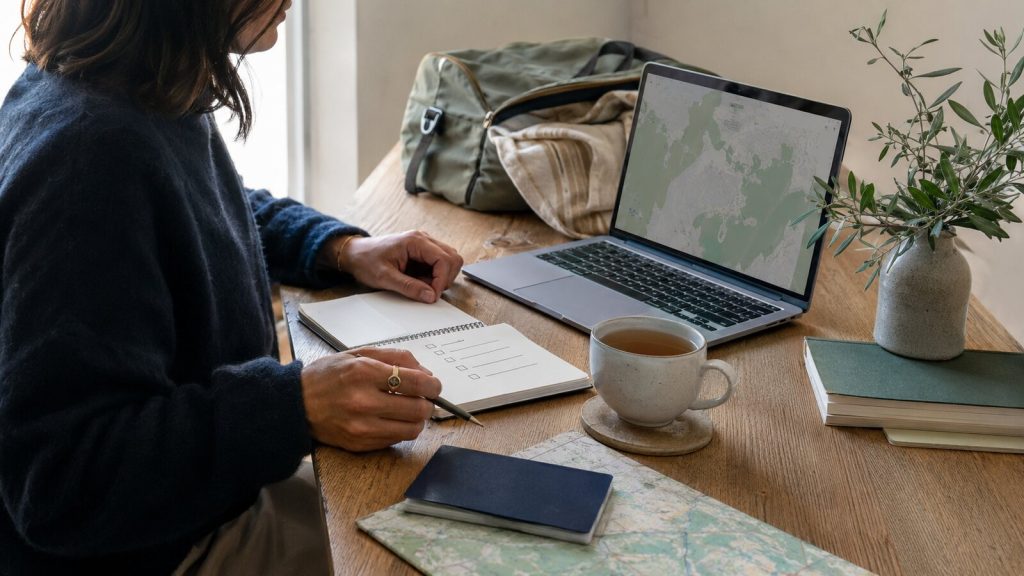
How to travel solo as a woman starts with a manageable trip, not a test of bravery. Choose a place you actually want to visit, check the current advice for that destination, book a stay with a clear arrival route, and leave room in your schedule to adjust. You can travel independently while using a walking tour, a local guide, or a friend on the phone when that helps.
The first trip does not have to be long or international. A two-night city break can teach you how you like to arrive, eat, explore, rest, and make decisions on your own. Use this guide to build a trip you can look forward to and handle when plans change.
1. Pick a first trip you can comfortably manage
Begin with three limits: the time you have, the total you can spend, and the amount of unfamiliarity you want to handle at once. A short trip close to home is a real solo trip. If you want to go farther, consider one base rather than a route with several transfers.
Write down what you want the days to feel like. Do you want museums and cafés, time by the sea, a hike, or a change of scenery without a packed itinerary? Then compare two or three destinations on factors you can act on: arrival time, local transport, accommodation in a convenient area, activities you enjoy alone, and the current travel advice that applies to you.
Check official advice from your own government and the destination's official entry information before booking. A country-level advisory is a starting point; your actual journey depends on the city, neighbourhood, season, transport and activities you choose. The UK government's solo travel guidance and Australia's solo traveller advice both emphasize researching the destination and planning transport and accommodation.
If choosing a place is your sticking point, compare the best places to travel for solo female travelers by the kind of day you want, not by a promise that any one place is universally right.
2. Set a budget for one person
An appealing flight price does not tell you what a solo trip will cost. There may be no one to split a room, taxi or rental car with, so price the trip from the largest fixed costs outward:
- Transport to and from the destination.
- Accommodation in an area where you would actually stay.
- Transfers, local transport, entry requirements and insurance.
- Food and the activities you care about.
- A buffer for a delayed arrival or a change of plan.
Compare the total, not only the nightly rate. A cheaper room far from the places you want to visit can add transport costs and complicated late returns. If the total is too high, shorten the trip, move the dates, or choose a simpler base before removing the buffer. The travel budget calculator can help you lay out the numbers; verify current prices directly before paying.
3. Choose accommodation around your arrival and daily routine
Look for a place with recent, detailed reviews, a clear check-in process and a route you understand from the airport or station. Read comments from solo guests when available, especially about the surrounding streets, noise, reception hours and how easy it is to reach transport and food.
You do not need to choose a dorm to meet people, or a private room to prove that you can travel independently. Pick the sleeping arrangement and social level that suit you. If a listing leaves the entrance, late check-in or exact location unclear, ask before you pay or choose another property.
Save the address, contact number and check-in instructions offline. Also save the booking confirmation somewhere you can reach without mobile data. Australia's official solo safety advice recommends researching accommodation and having a dependable place to stay.
4. Solve the arrival before filling the rest of the itinerary
The first hour often needs more thought than the third afternoon. Before departure, answer these questions:
- When will you reach the city, rather than when will the plane land?
- How will you get to the accommodation, and what will it cost?
- Will check-in still be available if transport is delayed?
- What is your alternative if your first transport option stops running?
- Is the address saved in a form a driver or station worker can recognize?
Arriving in daylight can make a first visit easier when your schedule allows it. If an evening arrival is unavoidable, pre-check the transfer and check-in rather than improvising after a tiring journey. The UK solo travel guidance specifically calls out the vulnerability of unfamiliar arrival and the need to plan transport.
Share the arrival plan with a trusted person if that helps, and agree on one check-in message. That is a practical backup, not an obligation to report every movement.
5. Give the first 48 hours a light shape
Plan the arrival day and the next morning in detail. Know where you will eat a simple first meal, how you will get back to your room, and what one enjoyable activity could anchor the first full day. A museum, walking tour, market or short day trip can give you a starting point without taking over the entire visit.
After that, use one main plan and one optional plan each day. Leave enough space for a slow meal, a longer walk or a change in weather. You are allowed to discover that you enjoy a place more when you do less.
If you feel unsettled on the first evening, check the basics before judging the whole trip: have you eaten, rested, found your route back and worked out tomorrow's first step? The goal is to make the next decision small enough to handle.
6. Build a short safety and backup plan
Useful preparation should give you options, not keep you anxious. Save the local emergency numbers and your accommodation address, keep a backup payment method apart from your main wallet, and know how to contact your insurer and your own country's consular service if relevant. Check what support your policy actually covers.
Use transport you can identify and confirm. For an app-booked ride, check the vehicle and driver against the booking before getting in. For an ordinary taxi, research the official local taxi process. If you are uncomfortable with a route, accommodation or activity, changing it is a valid decision even when it costs a little more.
Destination-specific conditions change. Consult official advice shortly before travel and again if events change while you are away. For a fuller, practical checklist, read our travel safety tips for women. No checklist can guarantee safety, and someone else's harmful behaviour is never the traveller's fault.
7. Decide how much company you want
Solo travel means you choose the trip. It does not mean you must spend every minute alone. A guided walk, cooking class or small-group activity can offer company with a clear beginning and end. Equally, a quiet day without conversation can be the best part of going alone.
If eating alone feels unfamiliar, start with breakfast or lunch in a casual place. Bring a book if you like, sit at the counter if that feels comfortable, or simply order what you want and stay for the meal. You do not need to perform confidence for anyone.
Make room for the possibility of loneliness or sensory overload. A short call home, a familiar meal or an early night may help more than forcing yourself into a social setting. Tomorrow can have a different pace.
8. Keep an exit plan for ordinary setbacks
Missing a train, disliking a room or running out of energy does not mean you failed at solo travel. Before the trip, decide what you could change: another transport option, a different hotel, a rest day, or a shorter route. Keep the money and phone access needed to make a modest change.
When a problem happens, focus on the next safe, practical step. Find a staffed place, contact the relevant provider, tell a trusted person where you are if needed, and check official local information. You do not have to solve the entire trip at once.
A one-page first solo trip checklist
- I know why I chose this destination and how I will get there.
- I checked current official travel and entry information.
- I priced the whole trip for one person and left a buffer.
- I confirmed my first stay and saved its address offline.
- I know my arrival route, check-in time and backup option.
- I have one plan for the first full day and room to improvise later.
- I saved emergency contacts and separated a backup payment method.
- I know what I can change if the trip feels too busy or a booking falls through.
Start with a trip that fits your life now. Independent travel grows from making a few sound decisions, taking the trip, and learning what you would do differently next time.
Frequently asked questions
Is it safe to travel alone as a woman?
Risk depends on the destination, neighbourhood, activity, timing and individual circumstances; no destination or routine is risk-free. Check current official advice, plan your arrival and accommodation, and keep practical backups. Our separate safety guide goes into more detail.
Where should I go for my first solo trip?
Choose a place that fits your budget, interests and comfort with unfamiliar logistics. A short, easy-to-reach trip can be a useful first step. Compare arrival, transport and the neighbourhood where you would stay, not only lists of popular destinations.
Do I need to join a group tour to travel solo?
No. You can book the journey yourself and still join a guided activity for a few hours or days. Choose the amount of structure and company that makes the trip enjoyable for you.
What if I feel lonely on my first solo trip?
Loneliness can happen without meaning the trip was a mistake. Rest, eat, check in with someone you trust, or choose one low-pressure activity. You can change the pace of the day without abandoning the trip.
Source and editorial notes
- Official travel advice: UK FCDO solo and independent travel; Australian Smartraveller solo safety. Verify destination-specific advice near publication and again before travel.
- Editorial research: AAA, RACV, REI. These informed intent and coverage only; the text above is original.
- Pre-publication checks: ensure every internal link resolves after URL migration; replace any country-specific advice only after checking current official information; verify article hero image rights and alt text.