
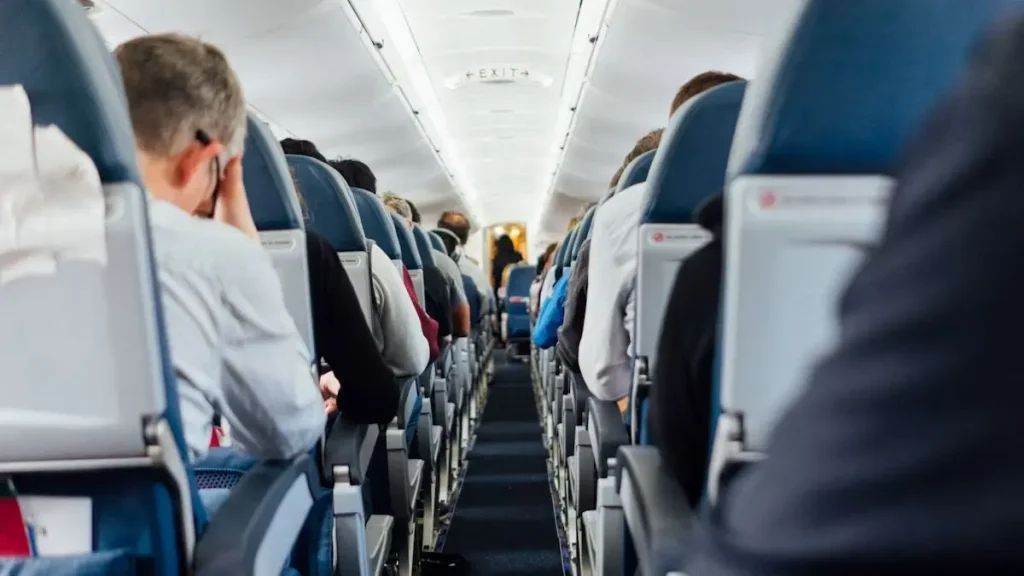
The goal is not to turn economy into a private suite. It is to sleep a little, stay reasonably comfortable and arrive with the essential parts of the day still working.
The Short Answer
The most useful long-flight essentials are medication, documents, a water bottle to fill after security, a light layer, eye mask, earplugs or headphones, charging cable, portable battery, lip balm, toothbrush and one clean base layer. Keep them under the seat in a small kit, not dispersed through the overhead bin.
Long-Flight Essentials Checklist
Irreplaceable items
- Passport or required identification
- Boarding details, arrival address and entry documents
- Prescription medication in cabin baggage
- Payment methods and essential contact information
- Phone and any necessary medical device
Sleep and comfort
- Eye mask
- Earplugs or noise-reducing headphones
- Light sweater, jacket or wrap
- Neck support only if you have tested it
- Fresh socks
- Comfortable, nonrestrictive clothing
Personal care
- Toothbrush and small toothpaste
- Lip balm and moisturizer
- Deodorant
- Tissues and hand sanitizer
- Period care if needed
- Clean shirt, underwear or base layer for arrival
Power and entertainment
- Phone cable
- Charged portable battery
- Headphone adapter if the aircraft requires one
- Downloaded books, music, podcasts, maps and bookings
- Pen for forms where still required
Build One Under-Seat Flight Kit
Put everything you expect to use during the flight in one pouch or reachable compartment: headphones, cable, lip balm, tissues, medication, eye mask and toothbrush. Keep documents and valuables in the same personal item but in a separate secure pocket, so the passport does not disappear into a nest of adapters.
The overhead bin is poor storage for anything needed repeatedly, especially when the cabin is dark or the seatbelt sign remains on. Use the carry-on packing guide for the rest of the bag and airline-rule checks.
How to Handle a 12-Hour Flight in Economy
Divide the flight into simple phases instead of attempting twelve continuous hours of sleep: settle in, eat if you choose, reduce light and noise, rest, move periodically as circumstances allow, then freshen up before landing. Set your watch to the destination time when that helps you follow the arrival schedule.
Choose a seat based on your priorities. A window can support uninterrupted rest; an aisle makes movement and bathroom access easier. Neither creates extra legroom by moral virtue. Check the aircraft layout and avoid relying on a single generic “best seat.”
Wear Clothes That Tolerate Sitting
Soft, breathable layers with a comfortable waistband generally work better than stiff or tight clothing. Jeans are not forbidden; a familiar, flexible pair may be perfectly comfortable. The problem is restrictive fabric, hardware or a waistband that becomes increasingly opinionated after hour six.
Wear shoes that can accommodate ordinary swelling and remain secure during an evacuation. Put shoes back on before walking to the bathroom. A clean top or base layer in the personal item can do more for arrival than several ambitious wellness gadgets.
Choose Sleep Support You Have Tested
An eye mask and earplugs occupy almost no space. Noise-reducing headphones can help, but charge them and download audio in advance. A neck pillow earns its place only if it supports the way you actually sleep; try it at home rather than discovering its geometry at 35,000 feet.
Avoid trying an unfamiliar sleep medication or supplement for the first time on a flight. If you have a medical condition, are pregnant, have circulation concerns or are considering compression garments, seek individualized guidance from a qualified clinician.
Plan Hydration and Personal Care Without Theater
Carry an empty bottle through security and fill it where safe drinking water is available. Drink according to thirst and personal medical guidance; alcohol and excess caffeine may make sleep or dehydration feel worse for some travelers. Bring a compact snack if dietary needs or a tight connection make the meal service unreliable.
A toothbrush, small toothpaste, lip balm, moisturizer and deodorant make the final hour more civilized. Keep liquids compliant with the departure airport’s current rules and skip any elaborate skin routine that requires occupying the lavatory sink. The travel toiletries list keeps this pouch small and leak-resistant.
Movement, Compression Socks and Health
Long periods of sitting can be uncomfortable, and some travelers have a higher risk of blood clots. Follow crew instructions, change position and move when safe and appropriate. Compression socks are not a universal fashion requirement or a substitute for medical advice; correct sizing and suitability matter.
If you have risk factors, recent surgery, pregnancy, mobility limitations or a history of clotting, ask a clinician about flight-specific precautions before travel. Generic packing content cannot assess individual risk.
Protect Power and Arrival Information
Download entertainment, maps, accommodation details, transfer instructions and the arrival address before boarding. Keep the phone cable and power bank reachable, and verify current airline and aviation-authority battery rules. Portable batteries generally belong in cabin baggage, not the checked suitcase.
Save the information needed immediately after landing in a format that works offline. A depleted phone and an immigration queue are a poor moment to discover that every booking lives behind a two-factor login.
The “3-3-3 Rule” for Flying Is Not One Universal Rule
Online references to a 3-3-3 flying rule describe different ideas, including airport timing, packing formulas and anxiety exercises. It is not a single official aviation standard. For liquids, security timing and check-in deadlines, use the current instructions from the departure airport, airline and relevant security authority.
What You Probably Do Not Need
- A bulky pillow that has never been tested
- A separate gadget for every minor discomfort
- Full-size beauty products
- Strongly scented sprays or foods in a shared cabin
- Unfamiliar sleep aids
- Every possible cable instead of the correct two
Long-Flight Questions
What are the ten most useful long-flight essentials?
Medication, documents, phone, charging cable, portable battery, headphones or earplugs, eye mask, light layer, water bottle and a compact personal-care pouch. Add medical, accessibility or childcare items before optional comfort accessories.
Should I bring a neck pillow?
Only if it supports your sleeping position and is comfortable when tested. Inflatable or compressible versions save space, but a rolled layer may be enough for travelers who rarely sleep upright.
What should I pack for a long flight with children?
Add age-appropriate food, medication, diapers or period care, wipes, a change of clothing for child and caregiver, comfort objects and offline entertainment. Confirm airline rules for strollers, car seats, bassinets, formula and liquids directly.
Save the flight kit as its own category in the packing list generator so it remains separate from the overhead suitcase.
Continue Packing
- What to Pack in a Carry-On: The Essential List
- Travel Toiletries List: A Smaller Routine That Still Feels Like Yours
- Travel Essentials for Women: A Practical Packing List
- What to Pack for a Europe Trip
Editorial note: Airline, security and medical guidance can change. Check the relevant airline and authorities, and seek individualized medical advice when appropriate.
Frequently Asked Questions
What are the most important long-flight essentials?
Medication, documents, a water bottle to fill after security, a light layer, an eye mask, earplugs or headphones, a charging cable, a portable battery, lip balm, a toothbrush, and one clean base layer.
Where should long-flight essentials be packed?
Keep them in a small kit under the seat in front of you, not dispersed through the overhead bin, so they’re reachable without disturbing other passengers mid-flight.