Airport liquid rules are simple in principle and oddly talented at producing questions. Does toothpaste count? What about a half-empty 200 ml bottle? Can medicine exceed the limit? And why does hummus, an apparently peaceful lunch, suddenly have a regulatory identity?
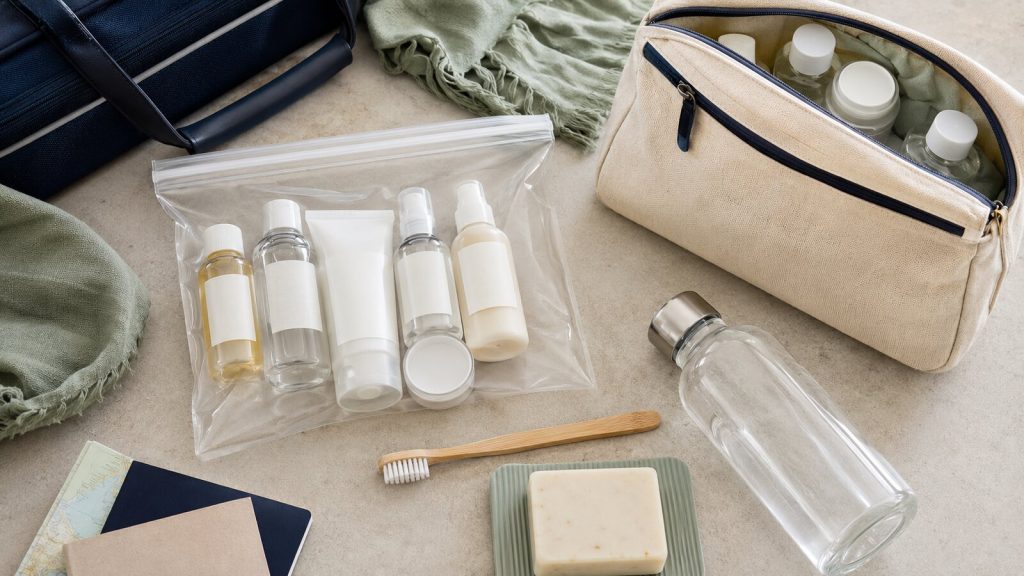
For flights departing from the United States, the standard answer is the TSA 3-1-1 rule: most liquids, aerosols, gels, creams and pastes must be in containers of 3.4 ounces (100 ml) or less, and those containers must fit in one quart-size clear resealable bag per passenger. The details matter, especially for medicines, infant feeding, duty-free purchases and hazardous products.
Rules can vary by country, airport, route and airline. Check the departure airport and operating carrier shortly before travel. This guide was reviewed against current TSA, FAA, EU and UK official guidance on July 28, 2026.
The TSA 3-1-1 liquids rule in plain English
For a standard U.S. security checkpoint:
- 3.4 ounces / 100 ml: the maximum capacity of each ordinary liquid container
- 1 quart-size bag: one clear, resealable bag containing those containers
- 1 bag per passenger: the allowance for each traveler
The container’s printed capacity is what matters, not how much remains inside. A 200 ml bottle containing only 50 ml is still a 200 ml container and normally cannot pass under the standard rule.
The TSA’s official liquids, aerosols and gels guidance is the final reference for U.S. checkpoints. Screening officers make the final decision at the checkpoint.
What counts as a liquid, gel, aerosol, cream or paste?
If a product can be poured, pumped, sprayed, squeezed, spread or smeared, assume it belongs in the liquids bag unless official guidance says otherwise.
Common examples include:
- Shampoo, conditioner, shower gel and liquid soap
- Toothpaste and gel deodorant
- Foundation, mascara, lip gloss and cream makeup
- Sunscreen, moisturizer, serum and perfume
- Hairspray, shaving foam and other toiletry aerosols
- Peanut butter, yogurt, jam, dips, sauces and soft spreads
- Drinks, soup and liquid-solid mixtures
Solid soap, solid shampoo, powder makeup and standard solid deodorant do not normally count toward the liquid bag. A product marketed as a “balm” can vary in consistency, so check the specific item if it sits somewhere between candle wax and face cream.
How to pack carry-on liquids for security
- Choose containers whose stated capacity is 100 ml / 3.4 oz or less.
- Fill only what you will use; smaller bottles leave room for more products.
- Label refillable containers clearly enough that you can identify them.
- Tighten every cap and use caps that protect pump or aerosol nozzles.
- Place the containers in one clear resealable quart-size bag.
- Keep the bag easy to reach in case the checkpoint requires separate screening.
TSA PreCheck passengers generally do not need to remove the 3-1-1 bag from their carry-on, but the size limits still apply. At other checkpoints, procedures can depend on the equipment in use. Follow the officer’s instructions rather than performing airport-security choreography from memory.
Medically necessary liquids can exceed 100 ml
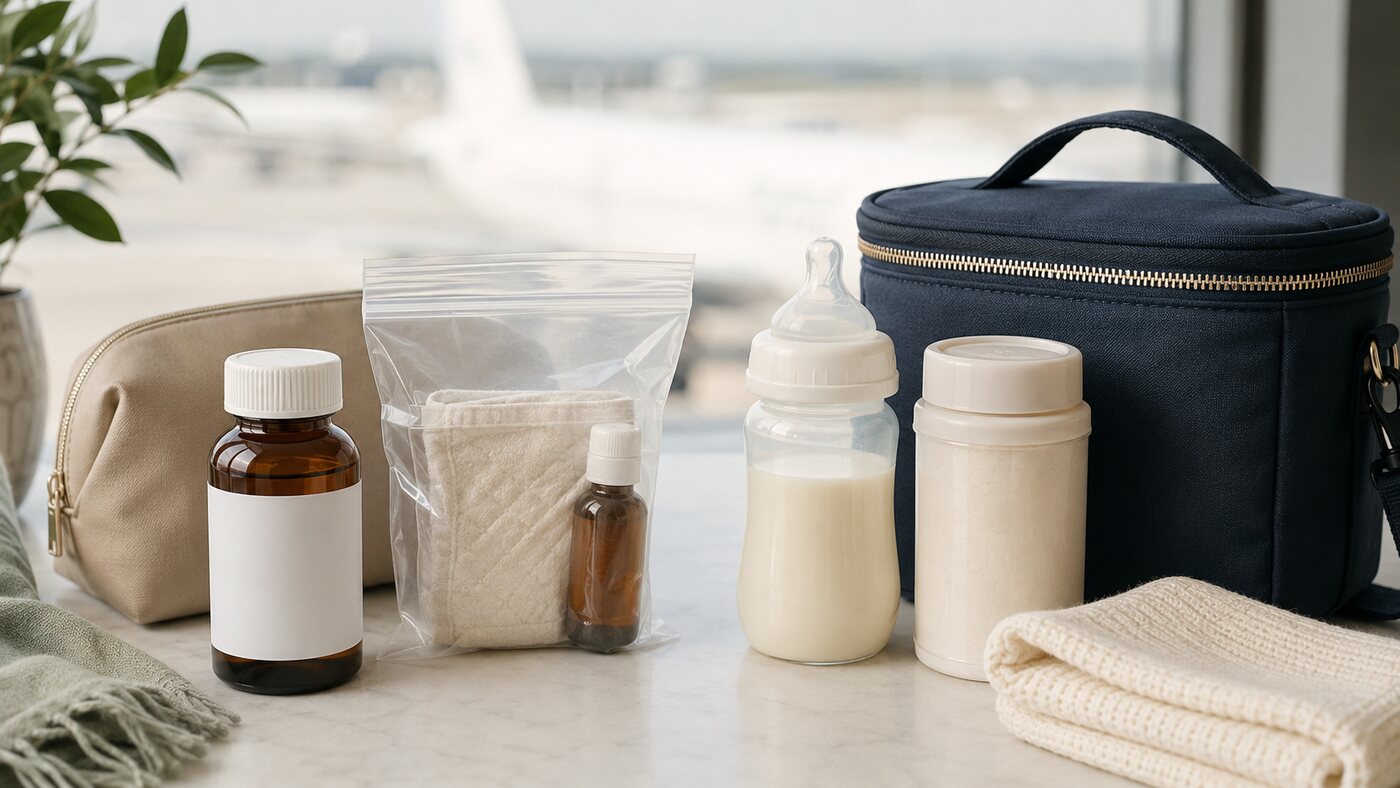
TSA permits medically necessary liquids, medications and creams in reasonable quantities beyond the standard 3.4-ounce limit. They do not need to fit inside the quart bag, but you should tell the officer about them at the start of screening and present them for inspection.
They may receive additional screening. Keeping medicine clearly identifiable and separate from ordinary toiletries makes the process easier. TSA does not require liquid medication to be in a prescription bottle, but state or international rules may differ, and a labeled original container can be useful.
Ice packs, freezer packs or gel packs used to keep medically necessary items cold can also be screened. For assistance related to disabilities or medical conditions, travelers can contact TSA Cares in advance.
For international journeys, verify medicine rules for the destination and any transit country. A medicine allowed through airport security may still be restricted by customs or local drug law.
Formula, breast milk and toddler drinks are exempt
Under TSA rules, formula, breast milk, toddler drinks and baby/toddler food may be carried in quantities greater than 3.4 ounces or 100 ml. They do not need to fit in the quart bag. This applies even when the child is not present, according to TSA guidance.
Tell the officer at the beginning of screening and remove the items for separate inspection. TSA recommends clear or translucent containers where possible because some screening methods may not work with opaque containers. Cooling accessories such as ice packs are also allowed when used for these items and may require screening.
The exemption is for reasonable quantities appropriate to the journey. Pack them accessibly and allow additional time at the checkpoint.
Duty-free liquids over 100 ml have conditions
TSA may allow duty-free liquids larger than 3.4 ounces in carry-on baggage when they were purchased internationally, remain sealed in a secure tamper-evident bag, and meet the receipt and timing conditions described in TSA guidance. The container may also need to pass screening.
Do not open the security bag before completing all relevant connections. Rules at a connecting airport may differ, particularly if you must collect checked baggage and pass through security again. Keep the receipt inside the sealed bag.
EU guidance similarly permits qualifying duty-free liquids when the item and receipt remain sealed inside the security bag. This is an area where route-specific checking is worth five minutes; an expensive bottle is a poor object for regulatory improvisation.
Liquids bought after security
Water, drinks and other liquids purchased after the checkpoint can generally be taken onto the flight, subject to airline and destination rules. An empty reusable bottle can pass through security and be filled airside.
If you connect through another airport and must be screened again, ordinary liquids may become subject to that checkpoint’s limits. Do not assume that buying something airside at the first airport protects it through every later screening point.
Aerosols need both security and hazardous-material checks
A toiletry aerosol such as hairspray, shaving cream or spray sunscreen may be allowed, but two sets of rules apply:
- At a U.S. checkpoint, a carry-on aerosol still needs to satisfy the 100 ml / 3.4 oz liquids limit unless an exception applies.
- FAA hazardous-material rules also limit medicinal and toiletry articles. Release devices must be protected from accidental activation.
Flammable aerosols that are not toiletry or medicinal articles—such as many spray paints, cooking sprays and some cleaners—can be forbidden in both carry-on and checked baggage. The FAA’s PackSafe aerosol guidance explains the distinction.
When in doubt, search the precise product in the TSA “What Can I Bring?” tool and the FAA PackSafe chart, then check the airline. “It is in a spray can” is not enough information; neither, unfortunately, is “but I bought it at a normal shop.”
Alcohol rules are not just about bottle size
Alcohol in carry-on baggage is subject to checkpoint liquid limits before security. FAA rules also restrict strength and quantity:
- Alcohol over 70% by volume (over 140 proof) is forbidden in carry-on and checked baggage.
- Alcohol over 24% and up to 70% must be in unopened retail packaging and is limited to 5 liters per passenger in checked baggage.
- Beverages at 24% alcohol or less are not subject to that FAA hazardous-material quantity limit, though baggage and customs rules still apply.
Passengers may not drink their own alcohol on board unless it is served by the airline. Check the FAA’s current alcoholic beverage guidance and the carrier’s policy.
Checked baggage allows larger toiletries—with limits
Ordinary shampoo, conditioner and similar non-hazardous liquids can generally travel in checked baggage in containers larger than 100 ml. FAA limits still apply to medicinal and toiletry aerosols and certain flammable products.
For permitted medicinal and toiletry articles, the FAA states an aggregate limit of 2 kg or 2 liters per person, with each container no larger than 0.5 kg or 500 ml. Aerosol nozzles must be protected. Airlines may impose additional restrictions.
Never assume checked baggage accepts every liquid rejected at security. Paint thinner, high-proof alcohol, fuel and some aerosols may be prohibited entirely.
How the rules differ outside the United States
The European Union’s current standard allows liquids in containers no larger than 100 ml, packed in one transparent resealable bag with capacity up to one liter. Medicines, special dietary products and baby food have exemptions.
UK rules are airport-specific. Official UK guidance states that most airports still limit containers to 100 ml, while some airports may permit containers up to 2 liters because of newer screening equipment. Check every departure and connection airport instead of assuming the outbound rule will match the return.
A safe default for an international itinerary is to pack ordinary liquids in containers of 100 ml or less inside one clear one-liter or quart-size bag. Then verify exceptions and local procedures for each security checkpoint.
Prevent leaks without wrapping your bathroom in plastic
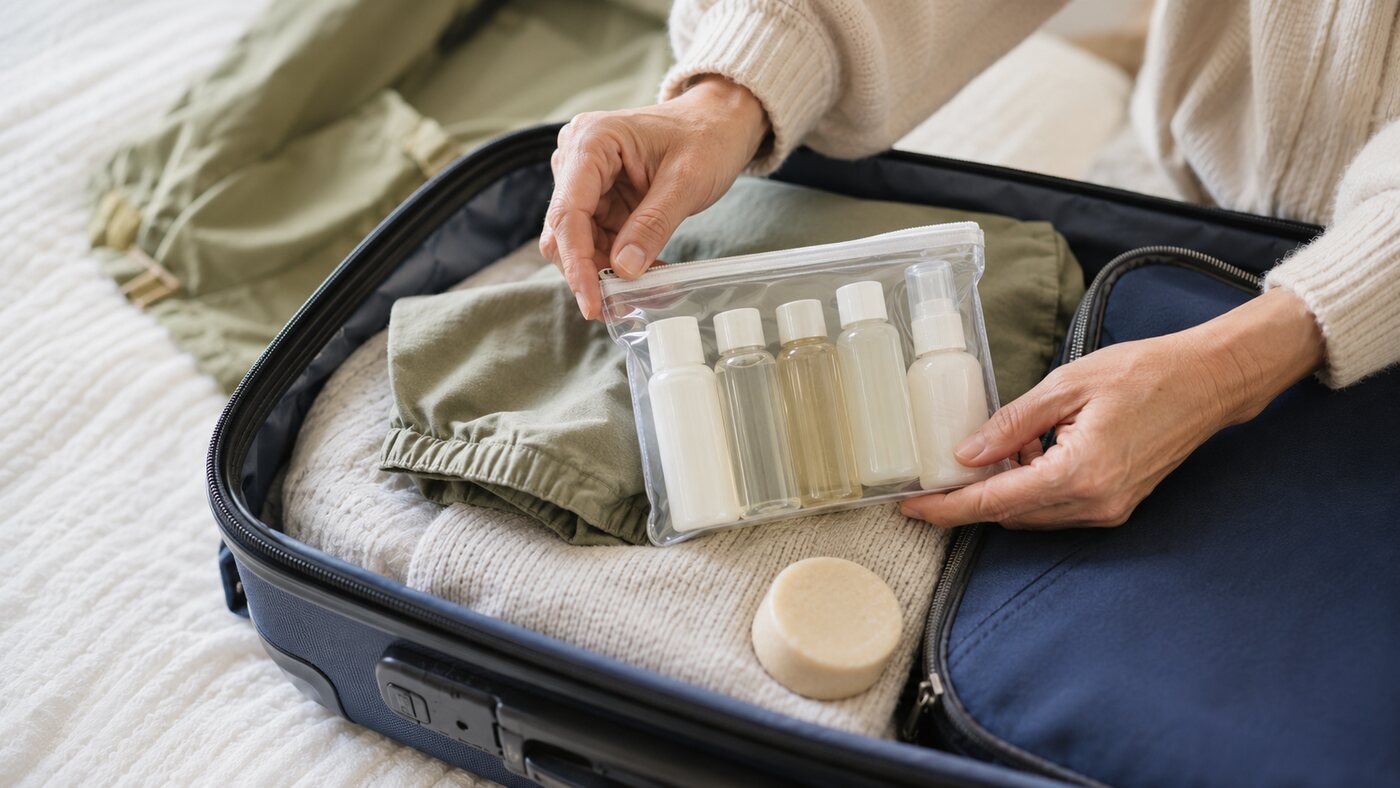
- Use screw caps or locking pumps rather than loose flip tops.
- Do not fill refillable bottles to the brim; leave a little expansion space.
- Wipe the threads before tightening the cap.
- Place leak-prone bottles inside the required clear bag rather than loose in the suitcase.
- Keep oils away from documents and electronics.
- Choose solids for products you use often: soap, shampoo, cleanser or fragrance.
Store the liquids bag upright when possible and place it near the top of the carry-on. A leak is easier to manage when it has not been given several hours beneath a carefully folded wardrobe.
Common liquid-packing mistakes
Using an oversized half-empty bottle
The container capacity is the issue. Decant the product into a compliant bottle.
Putting every toiletry in the liquids bag
Solid products do not need to occupy the limited space. Separate solids, powders and tools.
Forgetting that food can count
Sauces, spreads, yogurt and similar foods can be treated as liquids or gels. Check the specific item.
Assuming an airport’s new scanner changes the whole route
A relaxed procedure at one airport does not guarantee the same limit at a connection or return airport.
Gate-checking a bag with restricted items inside
A bag accepted in the cabin may be checked at the gate. Remove items that cannot go in checked baggage, including spare lithium batteries and certain devices; liquid size is only one part of packing safely.
A final carry-on liquids check
Before leaving for the airport, confirm:
- Every ordinary liquid container is 100 ml / 3.4 oz or less
- All ordinary containers fit in one clear resealable bag
- Medically necessary and infant-feeding liquids are separate and easy to declare
- Aerosols have protected nozzles and are permitted products
- Duty-free liquids remain sealed with their receipt
- The rules have been checked for every departure and connection airport
Then keep the bag within reach. Airport security is not improved by discovering, at the front of the queue, that the shampoo has been packed beneath three sweaters, a camera and the complete private archive of charging cables.
Frequently Asked Questions
What is the TSA 3-1-1 liquid rule?
For flights departing the United States, most liquids, aerosols, gels, creams, and pastes must be in containers of 3.4 ounces (100 ml) or less, and all containers must fit into one quart-size clear resealable bag per passenger.
Do all US airports still require the TSA 3.4-ounce liquid limit in 2026?
Yes, the 3-1-1 rule remains the nationwide standard at the vast majority of checkpoints. A small number of airports with newer CT scanners offer limited exemptions for specific items like baby formula, breast milk, and documented liquid medications, not general toiletries, so standard 3-1-1 compliance is still the safest assumption.