

A first cruise is easiest to plan when you treat it as three connected trips: the journey to the port, the voyage itself, and the short days you will spend ashore. Start by choosing a region and realistic dates, compare itineraries and ships together, calculate the price beyond the advertised fare, and only then select a cabin. After booking, work backward from embarkation day to arrange documents, insurance, port transport, excursions, dining, and the few onboard extras you genuinely expect to use.
The order matters. A beautiful ship cannot rescue an itinerary that spends too little time in the places you wanted to see, while a bargain fare becomes less persuasive once gratuities, flights, a hotel night, drinks, Wi-Fi, and excursions join the invoice.
Start with the trip you want, not a cruise-line sale
Before opening comparison tabs, write a short brief with five decisions: who is traveling, the date range, total vacation time, approximate all-in budget, and preferred pace. A family looking for water slides and flexible dining is choosing a different floating neighborhood from a couple who wants quiet decks and long port days. Both can have an excellent trip. They probably should not book the same ship.
For a first cruise, a sailing of five to seven nights is long enough to understand the rhythm without committing half your annual leave to an unfamiliar travel style. Shorter cruises can be convenient, but embarkation and disembarkation consume a larger share of the trip. Longer voyages make more sense when you already know how you feel about sea days, organized dining, and waking up according to a port schedule.
Choose the region and season together
Weather, daylight, sea conditions, school calendars, and local high seasons all affect the experience. Alaska is not simply a colder Caribbean cruise with better jackets; the scenery, excursion costs, daylight, and reasons for choosing a balcony are different. If that is your route, keep a separate Alaska cruise packing list for later rather than letting clothing decisions shape the booking too early.
Check how many days the itinerary spends at sea and how long it stays in each port. A port name in a brochure may represent a full day, a brief afternoon, or a dock located well outside the city named in large type. Maps are candid in ways that marketing copy occasionally finds inconvenient.
Compare the itinerary and the ship as one decision
The itinerary determines where you go; the ship determines how the hours between ports feel. Compare both before ranking fares. On a port-heavy Mediterranean route, convenient dock times may matter more than an elaborate pool deck. On a Caribbean itinerary with several sea days, public spaces, shade, entertainment, and dining variety carry more weight.
Read the schedule, not only the destination list
Create a simple table with each port, scheduled arrival, scheduled departure, docking or tender status, and the main experience you would consider doing. Tender ports require small boats to reach shore and can reduce usable time. A distant commercial port may also add a shuttle or train before sightseeing begins.
Pay attention to one-way versus round-trip sailings. A one-way route can cover more ground, but it may require two different airports and more complicated transfers. Price those flights before celebrating the cruise fare.
Research the exact ship, not only the cruise line
Ships within the same company can vary considerably in size, age, passenger capacity, restaurants, children’s facilities, accessibility, and entertainment. Look at a current deck plan and recent ship-specific reviews. Note which dining venues are included, which require an extra charge, whether key activities need reservations, and whether the ship’s personality fits the people traveling.
Families considering a themed sailing should also compare what is included with the expectations the brand creates. A Disney cruise packing list can wait until after you have confirmed that the ship, route, children’s spaces, and total price make sense for your group.
Calculate the real cruise cost before booking
The advertised fare is the beginning of a cruise budget, not the conclusion. Build an all-in estimate for the whole party and compare like with like. One fare may include drinks, Wi-Fi, or service charges while another presents each as an optional or automatic addition.
| Budget category | What to check |
|---|---|
| Cruise fare | Cabin price, taxes, port fees, deposit terms, and whether the rate is refundable. |
| Getting to the port | Flights or driving, baggage fees, transfers, parking, and a pre-cruise hotel. |
| Onboard charges | Gratuities or service charges, specialty dining, drinks, Wi-Fi, spa use, and paid activities. |
| Port days | Excursions, local transport, admission tickets, meals, cash tips, and currency costs. |
| Protection and documents | Travel insurance, passport renewal, visas, vaccinations when required, and medical preparation. |
Compare packages against your actual habits. A beverage package is not automatically a saving, and Wi-Fi for every traveler may be unnecessary if the goal is to spend less time looking at the internet. Read package rules closely: limits, required purchases for cabin companions, excluded drinks, and added service charges vary by cruise line and fare.
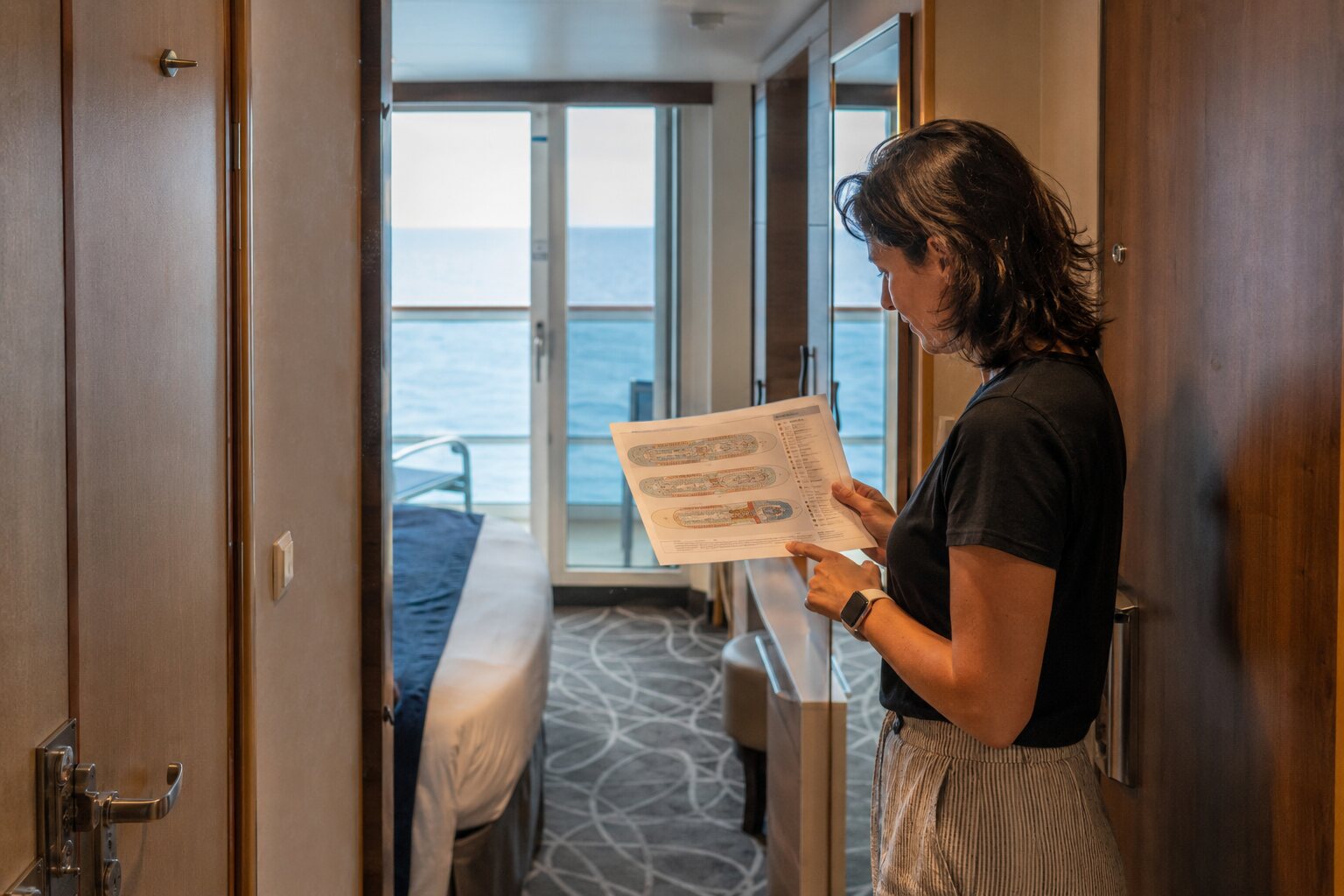
Choose a cabin by location as well as category
Inside, ocean-view, balcony, and suite categories describe the broad room type. The deck plan reveals the more consequential details: what sits above, below, and beside the cabin; the distance to elevators; potential obstructions; and the room’s position on the ship.
Travelers concerned about motion often prefer a lower, more central location. Light sleepers may want distance from theaters, nightclubs, pool decks, service areas, connecting doors, and elevator lobbies. A balcony can be worthwhile for private outdoor space or scenic routes, but it is not a compulsory admission fee to cruising. An inside cabin can be the sensible choice for travelers who mainly return to sleep.
Verify bed configuration, occupancy, bathroom layout, storage, accessibility, and any obstructed-view note before paying. Search the exact ship and cabin number for recent photos or video when available. The category photograph is an example; your assigned geometry may have opinions of its own.
Book with the cancellation terms in view
You can book directly with the cruise line or through a travel adviser who specializes in cruises. Direct booking keeps communication in one place. A knowledgeable adviser may help compare ships, explain cabin locations, monitor fare changes, or add agency benefits. In either case, confirm who will handle changes if flights move, a traveler drops out, or the cruise line alters the itinerary.
Read the deposit, final-payment, cancellation, and change conditions before choosing between refundable and nonrefundable rates. Record what is included in writing and take screenshots of the booked fare details. Promotions change; memory is a poor substitute for documentation.
Confirm documents and insurance early
Document requirements depend on citizenship, itinerary, departure port, destinations, and whether the cruise returns to the same U.S. port. Do not rely on a social-media claim that a birth certificate is “always enough.” Check the cruise line’s instructions and each government authority that controls entry. The U.S. Department of State cruise guidance is a useful starting point for American travelers, but the exact itinerary still governs.
Check passport validity, blank-page needs, visas, permissions for children traveling without both parents, and any health documentation. Start early enough to resolve a renewal or visa issue without paying rush fees.
Travel insurance deserves the same itinerary-specific reading. Review medical treatment and evacuation, trip interruption, missed connections, weather, pre-existing-condition rules, and cruise-specific exclusions. Onboard medical care and an unexpected journey home can be costly; the relevant question is not whether a policy exists, but what it actually covers.
Plan to reach the departure city early
If you must fly, arriving at least one day before embarkation creates a buffer for delays, cancellations, and misplaced luggage. For an international departure or a route with limited replacement flights, two nights may be more comfortable. A ship has a published departure time and will not hold the cabin in place while you negotiate with an airline.
Choose a hotel based on reliable transport to the terminal, not only straight-line distance. Confirm the terminal, transfer time, checkout policy, and embarkation window. If the flight is long, the long-flight essentials guide can help with the journey to the port without turning this planning article into another packing list.
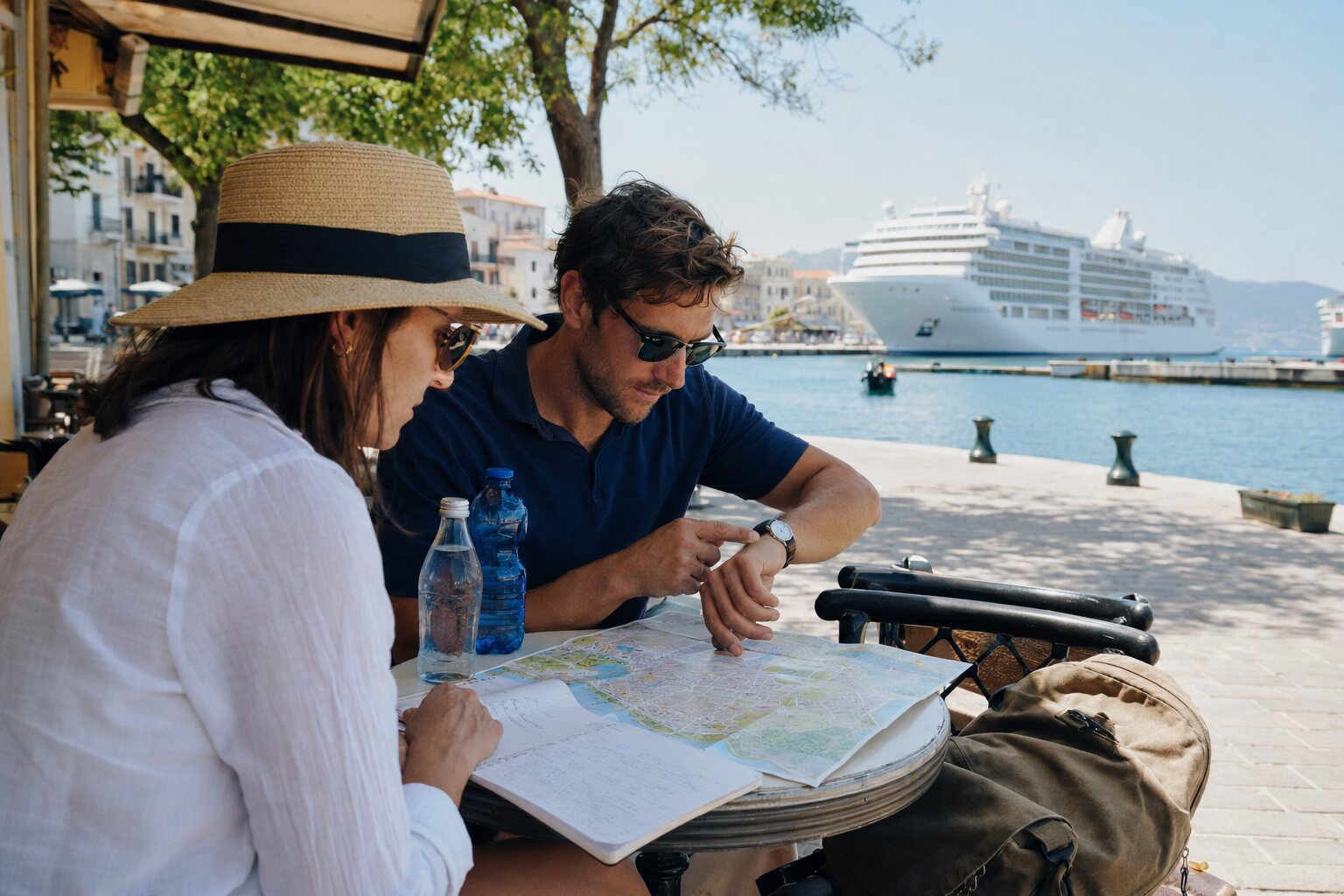
Plan port days around time, distance, and risk
For each port, decide whether to book a cruise-line excursion, use a reputable independent operator, or explore on your own. Cruise-line tours are usually simpler and may provide stronger support when delays occur, though they can cost more and move in larger groups. Independent plans offer flexibility, but you are responsible for returning before the ship’s all-aboard time.
Research the actual dock, local transport, tender process, time zone, attraction opening hours, and realistic return buffer. Ship time and local time do not always align. Treat the all-aboard time as a boundary, not a suggestion to test with one final drink by the waterfront.
Avoid scheduling a major excursion in every port. Sea days and quiet afternoons are part of the product you paid for, and constant early starts can make a seven-night cruise feel like a commute with better sunsets.
Reserve only the onboard experiences that need it
After booking, download the official cruise-line app and note when online check-in, dining, entertainment, spa appointments, children’s programs, and activity reservations open. Popular specialty restaurants and limited-capacity activities can fill before sailing. Reserve the priorities; leave ordinary meals and some open time alone.
Check what is included in the main dining room, buffet, casual venues, and room service before buying dining packages. Do the same for drinks and Wi-Fi. Planning should remove friction, not pre-schedule every hour until the vacation needs its own project manager.
Use a simple first-cruise timeline
Before paying a deposit
- Compare region, season, ship, itinerary, and total trip length.
- Price flights, hotel, transfers, service charges, and likely excursions.
- Check documents, cabin location, accessibility, and cancellation terms.
After booking
- Arrange passports or visas, insurance, flights, hotel, and port transfers.
- Research each port and reserve only high-priority excursions.
- Track final-payment and online check-in dates.
In the final weeks
- Complete check-in, review arrival instructions, and confirm reservations.
- Download documents for offline access and share emergency details.
- Use the separate cruise packing list to prepare clothing and gear without duplicating the booking plan.
- Keep medication, documents, valuables, and immediate boarding-day needs in your carry-on.
Common first-cruise planning mistakes
- Choosing by fare alone: compare the full trip cost and what the fare includes.
- Ignoring the exact ship: ships under one brand can offer very different experiences.
- Flying on embarkation day: one disruption can make the entire departure impossible.
- Selecting a cabin without a deck plan: category tells you less than location.
- Booking every package: calculate likely use instead of treating bundles as automatic savings.
- Overloading port days: protect return time and leave space for fatigue, weather, and ordinary curiosity.
Frequently asked questions
How far in advance should you plan a cruise?
Many travelers begin six to twelve months ahead, especially when they need a specific cabin, school-holiday dates, accessible accommodation, or popular seasonal route. Flexible couples willing to accept fewer cabin choices may book later. Compare the entire trip price because a late cruise fare can be offset by expensive flights.
What is the first thing to do when planning a cruise?
Define the travelers, dates, trip length, total budget, and preferred pace. Then choose a region and compare itineraries and ships together. Do not select a cabin until you understand the schedule and complete cost.
Is it better to book a cruise through a travel agent?
It depends on how much support you want. A cruise specialist can help compare ships, cabins, and fare rules, while direct booking keeps communication with the cruise line. Ask who controls the reservation and who handles changes before paying.
Do you need a passport for a cruise?
Requirements vary by citizenship and itinerary. Some closed-loop U.S. cruises may accept other documents for eligible travelers, but that does not apply universally and may complicate an emergency flight home. Verify the cruise line and official government requirements for every destination.
How much extra money should you budget for a cruise?
There is no reliable universal percentage. Add transportation, hotel, taxes and fees, service charges, insurance, excursions, drinks, dining, Wi-Fi, and port spending to the quoted fare. The resulting total is the useful number.
A first cruise should still contain some open water
Good cruise planning protects the expensive, difficult-to-change decisions: route, ship, cabin, documents, arrival, and port timing. It does not require reserving every dinner or turning each sea day into a color-coded endurance event. Once the structural choices are sound, leave enough unscheduled time to notice what makes this form of travel unusual—the horizon stays put, while the address changes overnight.