Three full days in Kyoto are enough for a first visit if each day stays in one part of the city. Spend day one in Southern Higashiyama and Gion, day two in Arashiyama and northwest Kyoto, and day three at Fushimi Inari before choosing central Kyoto, northern Higashiyama or Uji for the afternoon. This arrangement protects the early hours, avoids repeated cross-city journeys and leaves room for an actual meal rather than a convenience-store sprint between temples.
It is not a challenge to fit every famous Kyoto sight into three days. The challenge is to notice any of them after the fifth garden, third bus queue and second unnecessary trip across town. This Kyoto itinerary therefore has one anchor each morning, a geographically coherent afternoon and a clearly marked item to delete when weather, crowds or tired feet intervene.
Before using this three-day Kyoto itinerary
This plan assumes three complete sightseeing days and a hotel in downtown Kyoto or near Kyoto Station. An arrival at 2 p.m. followed by check-in is not a full day, however optimistic the spreadsheet. If the trip is really two full days plus an arrival afternoon, use the first evening for the Kamo River and Gion, then follow days two and three.
Opening hours, special viewings and temple closures change. Recheck each official site shortly before travel, particularly during New Year, spring blossom season and autumn foliage. The route matters more than any single stop.
The daily rhythm
- Early morning: one popular outdoor or early-opening sight.
- Late morning: a nearby temple, garden or neighborhood.
- Afternoon: one or two places in the same part of Kyoto.
- Evening: dinner and a walk near the hotel rather than another major attraction.
Kyoto rewards an unfashionable amount of sleep. A 6:30 a.m. start is useful only if it does not produce a 3 p.m. collapse and an evening conducted entirely through foot complaints.
Day 1: Southern Higashiyama, Gion and downtown
Begin on the eastern slopes, walk downhill through historic streets, then finish beside the river and downtown. Gravity and geography are both on your side.
Early morning at Kiyomizu-dera
Start at Kiyomizu-dera around opening time after checking the official temple schedule. The approach involves a hill, so use a taxi or bus to reach the upper area if mobility or summer heat makes the climb a poor opening move.
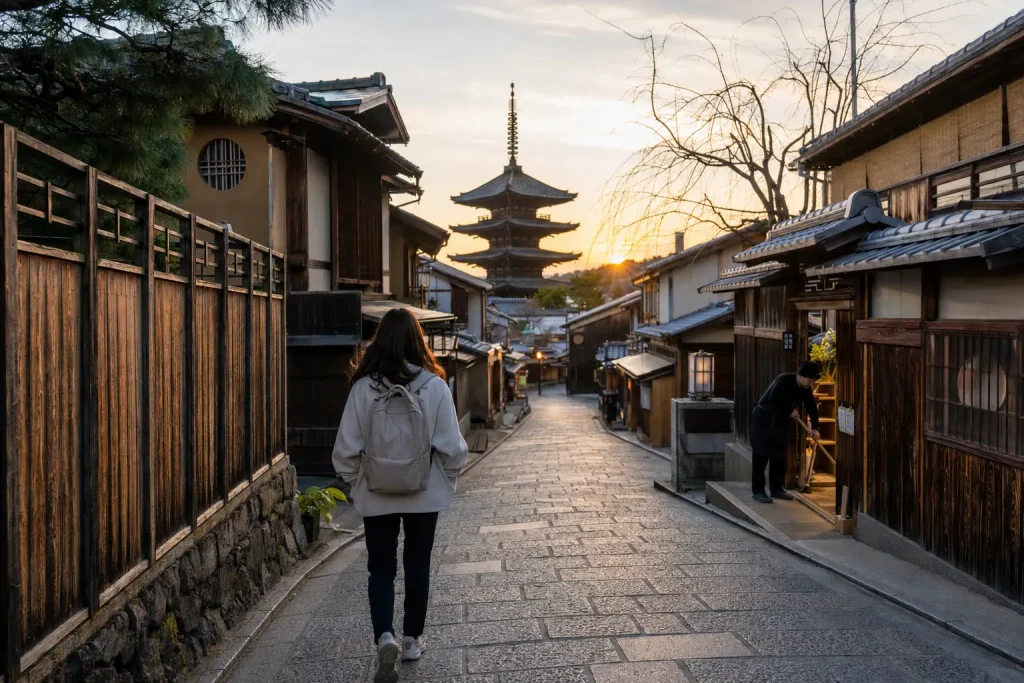
The temple’s stage and city view are the obvious draw, but the useful reason to arrive early is the surrounding street network. Ninenzaka and Sannenzaka become much busier later in the morning. Walk them as shops begin to open, then continue toward Kodai-ji or Kennin-ji rather than trying to visit every gate visible on the map.
Choose one additional temple. Kodai-ji fits naturally on the downhill route and has gardens with a different scale from Kiyomizu-dera. Kennin-ji sits closer to Gion and works well if the morning is already moving slowly. Visiting both is possible; needing to is another matter.
Lunch between Gion and the Kamo River
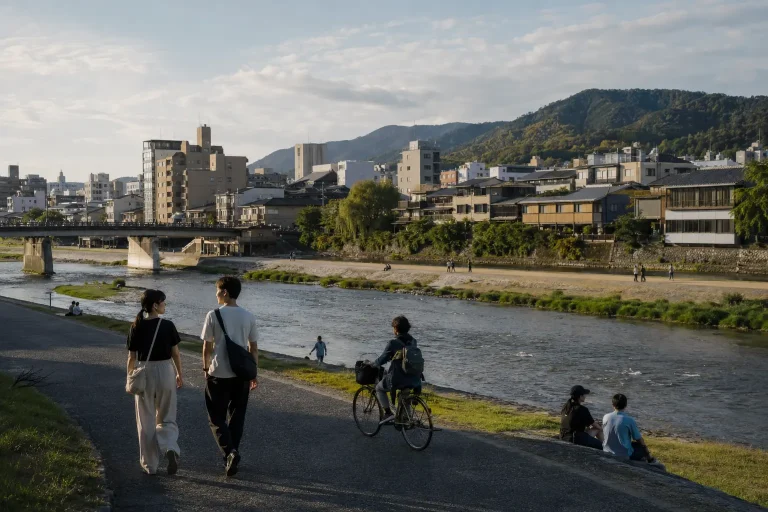
Cross through Gion with the understanding that it is a living entertainment and residential district, not a public photo set. Follow signs, keep out of private lanes and do not block or pursue geiko and maiko. Hanamikoji can be part of the route, but the quieter Shirakawa canal usually provides a more relaxed walk.
Book lunch when there is a particular restaurant worth organizing the day around. Otherwise, keep options open around Gion-Shijo, Kawaramachi or the east end of Shijo. A three-day itinerary becomes brittle when every meal has a fixed start time in a different neighborhood.
Afternoon choices: one market and one calm stop
Walk across the Kamo River into downtown. Nishiki Market is compact, covered and convenient, but it is a working food market rather than a progressive lunch buffet. Follow posted rules, eat where requested and keep large luggage elsewhere.
Afterward, choose one:
- Kyoto International Manga Museum for an indoor cultural stop and a weather-resistant afternoon.
- Nijo Castle for architecture and political history, allowing enough time before last admission.
- A downtown craft or tea appointment when a booked experience matters more than another monument.
- The Kamo River when energy is low and the weather is kind.
Nijo Castle and the Manga Museum are not essential companions. Pick according to interest and current hours.
Evening in Pontocho or around Shijo
Have dinner downtown and take an unhurried river walk. Pontocho is atmospheric but narrow, popular and uneven in value. A restaurant on an ordinary side street can produce a better evening than waiting for the alley to perform Kyoto on command.
The first delete item is Nishiki Market if shopping and food browsing are not priorities. The second is the extra temple. Keep the morning route intact.
Day 2: Arashiyama and northwest Kyoto
Western Kyoto is the day most itineraries overstuff. Arashiyama, Kinkaku-ji and Ryoan-ji look loosely adjacent on a city map, yet the connections require care. Treat Arashiyama as the morning anchor and add no more than two northwest stops.
Reach Arashiyama before the day-trip flow
Take the JR Sagano Line to Saga-Arashiyama when leaving from Kyoto Station, or use Hankyu if it fits the hotel location. The stations called “Arashiyama” belong to different railways and sit in different places. Check the exact arrival point before following a route that quietly assumes another line.
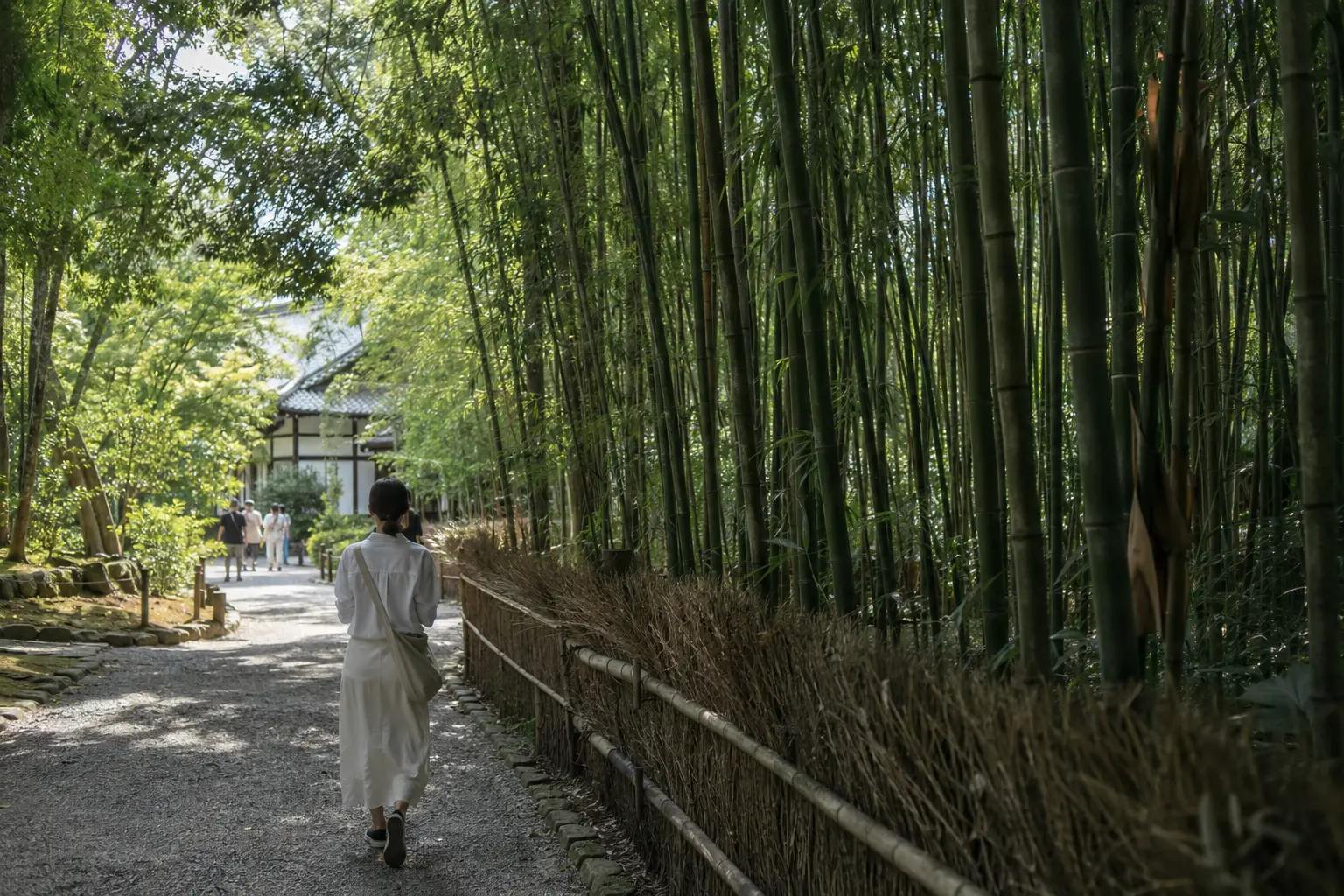
Walk through the bamboo grove early, but do not give it the entire morning. It is a public path through a striking stand of bamboo, not an endless wilderness. Continue to Tenryu-ji when its gates open. The official Tenryu-ji visitor page currently lists regular hours of 8:30 a.m.–5 p.m., with last admission at 4:50 p.m.; buildings can close for ceremonies.
Tenryu-ji’s garden, borrowing the mountain scenery beyond its pond, gives the morning a stronger center than the bamboo path alone. From there, walk toward the Katsura River and Togetsukyo Bridge.
Choose the north side or a slower riverside morning
For a longer walk, continue toward the quieter northwestern edge of Arashiyama and Adashino Nenbutsu-ji or Otagi Nenbutsu-ji. These are not quick add-ons. The distance and return journey consume a meaningful part of the day.
For a gentler plan, stay near the river, have an early lunch and allow time for one garden or small museum. Arashiyama is more pleasant when it is not treated as a five-stop extraction exercise.
Afternoon: Kinkaku-ji and, optionally, Ryoan-ji
Travel to Kinkaku-ji by taxi or the most sensible current bus connection. This is the day’s awkward transfer, so budget for it rather than pretending the west side forms one walkable district. The official Kinkaku-ji page lists regular visiting hours of 9 a.m.–5 p.m.
The Golden Pavilion visit is relatively compact. If time and attention remain, continue to Ryoan-ji for its rock garden. If not, return downtown. Ryoan-ji is the delete item on this day, not a moral obligation attached to the taxi fare.
Trying to add Nijo Castle, the Imperial Palace or Ginkaku-ji after this route makes the day worse. Those places have not moved closer merely because the itinerary uses bullet points.
Evening: stay close to the hotel
Make no major evening booking before checking the realistic return time. Dinner near Kyoto Station suits travelers based there; downtown visitors can use Shijo-Karasuma, Kawaramachi or the river. A bath, laundry and a short walk are legitimate itinerary items after a high-mileage day.
Day 3: Fushimi Inari plus a flexible Kyoto afternoon
Fushimi Inari is south of central Kyoto and easy to reach by rail. Start there, then choose an afternoon that fits weather and energy. This flexibility is more valuable than forcing a fixed final day.
Fushimi Inari before breakfast
Take the JR Nara Line to Inari Station or the Keihan Line to Fushimi-Inari Station. The shrine precinct and mountain remain accessible outside standard staffed hours; consult the official Fushimi Inari site for ceremonies and current notices.
The walk does not have one correct finish line. The lower torii corridors provide the most familiar view. A longer climb reaches viewpoints and smaller shrine areas, while the full mountain circuit can take several hours. Decide before starting whether this is a short early visit or the day’s main hike.
Respect worshippers, keep the route clear and avoid using tripods where they obstruct the path. Early does not mean private.
Option A: Tofuku-ji and central Kyoto
Walk or take the JR line one stop toward Tofuku-ji when its gardens and architecture are a priority. This pairing is geographically efficient, especially during foliage season, when timing and crowd conditions require extra patience.
Continue to Kyoto Station for lunch, then use the Karasuma subway for the Imperial Palace area or return downtown for Nijo Castle. This is the most balanced option for a first visit.
Option B: Uji for tea culture and a smaller city
Remain on the JR Nara Line to Uji. Byodo-in, the river and tea shops create a coherent half-day beyond central Kyoto. Uji should replace the central Kyoto afternoon, not join it. Check Byodo-in’s current entry arrangements and allow time to return before a fixed dinner.
This option suits travelers who prefer one substantial excursion to collecting two more city temples.
Option C: Northern Higashiyama
Return by Keihan toward the east side, then continue to Ginkaku-ji and walk part of the Philosopher’s Path. This creates a garden-and-neighborhood afternoon distinct from Southern Higashiyama.
The route is less direct than central Kyoto, so choose it when Ginkaku-ji or the Philosopher’s Path is a genuine priority. In winter, remember that some sites use shorter hours.
Final evening
Use the last evening for the meal or neighborhood skipped earlier. This may be a reservation, a small bar, a sento or a river walk. It should not be a desperate attempt to fit Arashiyama into darkness because day two was given to Osaka.
What to book in advance
Many temples do not require advance tickets, but that does not make the entire trip spontaneous.
- Reserve a restaurant when its cancellation would genuinely disappoint.
- Book a tea ceremony, craft workshop or cultural performance with a fixed capacity.
- Confirm seasonal special openings directly with the venue.
- Reserve the Sagano Scenic Railway only if it is intentionally part of the Arashiyama day.
- Arrange luggage delivery when moving hotels or sightseeing before check-in; Hands Free Kyoto lists current services.
Do not stack two timed experiences on opposite sides of the city. One hard reservation per day is a sensible ceiling.
Getting around without living on a bus
Kyoto’s official transport guidance recommends combining trains, subway and buses. The Kyoto City getting-around guide explains current tickets and alternatives. Rail works especially well for Fushimi Inari, Arashiyama and travel along the Keihan corridor. Subway lines cover central axes. Buses fill the gaps but are vulnerable to traffic and crowding.
Use a taxi for one strategically awkward transfer, such as Arashiyama to Kinkaku-ji, when it protects an hour and the budget allows. That is different from taking taxis for every journey.
Keep large luggage off sightseeing buses. If the accommodation cannot hold bags, use station storage or a delivery service. A practical carry-on packing list also reduces the daily negotiation with stairs and small rooms.
Rain, heat and crowded-season changes
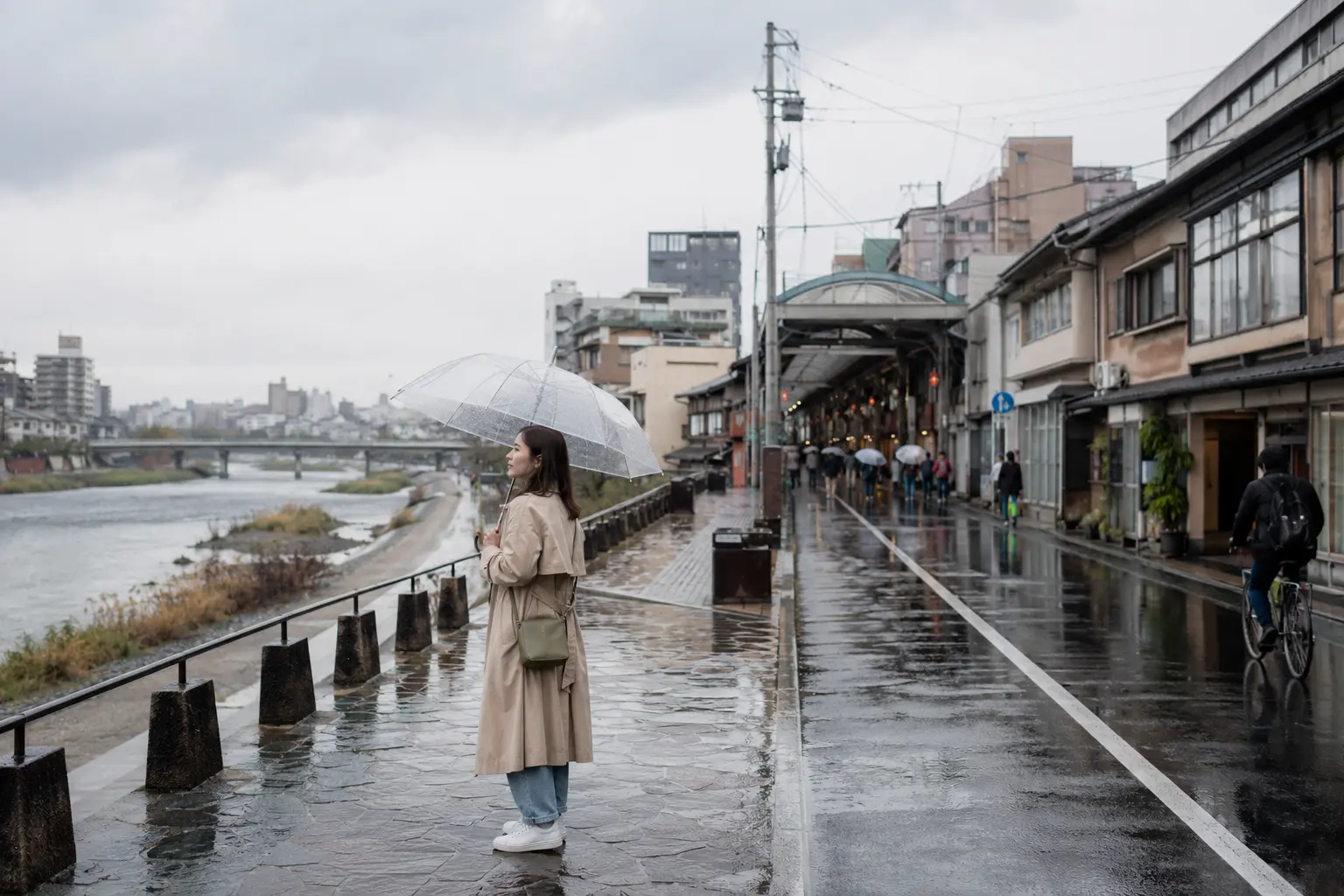
Rain rarely ruins Kyoto, but it changes surfaces and pace. Higashiyama’s stone streets and temple steps become slippery. Replace a long hillside walk with the Manga Museum, Kyoto National Museum, a covered arcade or a booked workshop. Keep one garden if the rainfall is light; wet moss has its own argument.
In summer, move outdoor climbs to early morning, use air-conditioned midday stops and drink before thirst becomes the day’s organizing principle. During blossom and foliage peaks, assume popular transport and paths will take longer. Delete a stop rather than shortening every visit.
If day two has heavy rain, swap it with day three. Fushimi Inari plus central indoor options is more adaptable than a full western Kyoto day.
Is three days in Kyoto enough?
Three days in Kyoto are enough for the first layer: an eastern historic district, Arashiyama and western Kyoto, Fushimi Inari, and one personal-interest branch. They are not enough for every major temple, a day trip, deep food exploration and slow mornings.
Four days allow Northern Higashiyama, Uji or a quieter outer district without displacing a core day. Five days make room for a day trip and weather flexibility. Travelers strongly interested in gardens, architecture or craft will not run out of reasons to stay.
Do not borrow time from Kyoto automatically because Osaka has more obvious nightlife. The two cities do different work in an itinerary. Decide by interests, not by the number of hotel changes a rail pass appears to permit.
The compact version
| Day | Morning anchor | Afternoon | Evening |
|---|---|---|---|
| 1 | Kiyomizu-dera and Southern Higashiyama | Gion, Nishiki and one central stop | Downtown and Kamo River |
| 2 | Arashiyama and Tenryu-ji | Kinkaku-ji; optional Ryoan-ji | Near the hotel |
| 3 | Fushimi Inari | Central Kyoto, Uji or Northern Higashiyama | The meal or neighborhood missed earlier |
This three-day Kyoto itinerary works because it accepts that the city is spread out and attention is finite. Keep the mornings strong, the afternoons local and one item disposable. Kyoto will still contain more temples when you leave. That is not evidence of failure; it is one of the city’s better reasons to return.
Frequently Asked Questions
Is 3 days enough for Kyoto?
Yes, if each day stays in one part of the city. Spend day one in Southern Higashiyama and Gion, day two in Arashiyama and northwest Kyoto, and day three at Fushimi Inari before choosing one afternoon area.
What is the biggest mistake when planning a Kyoto itinerary?
Trying to fit every famous sight into three days. The real challenge is staying interested after the fifth garden and third bus queue, so this itinerary keeps one anchor per morning and a geographically coherent afternoon.