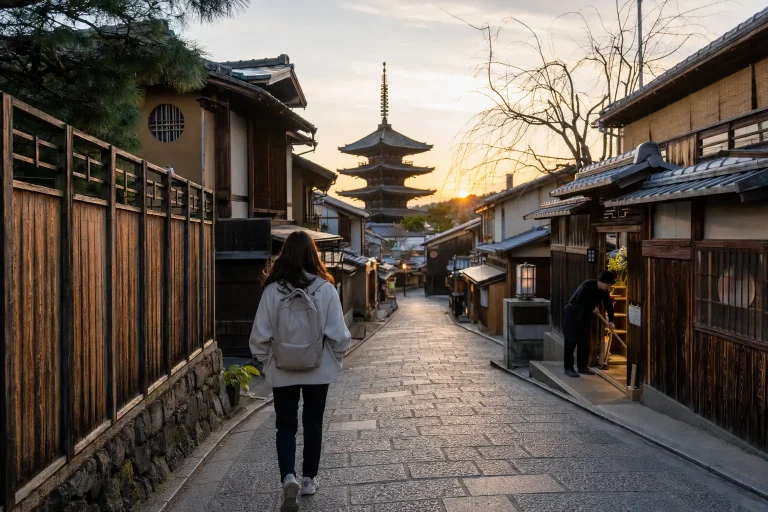
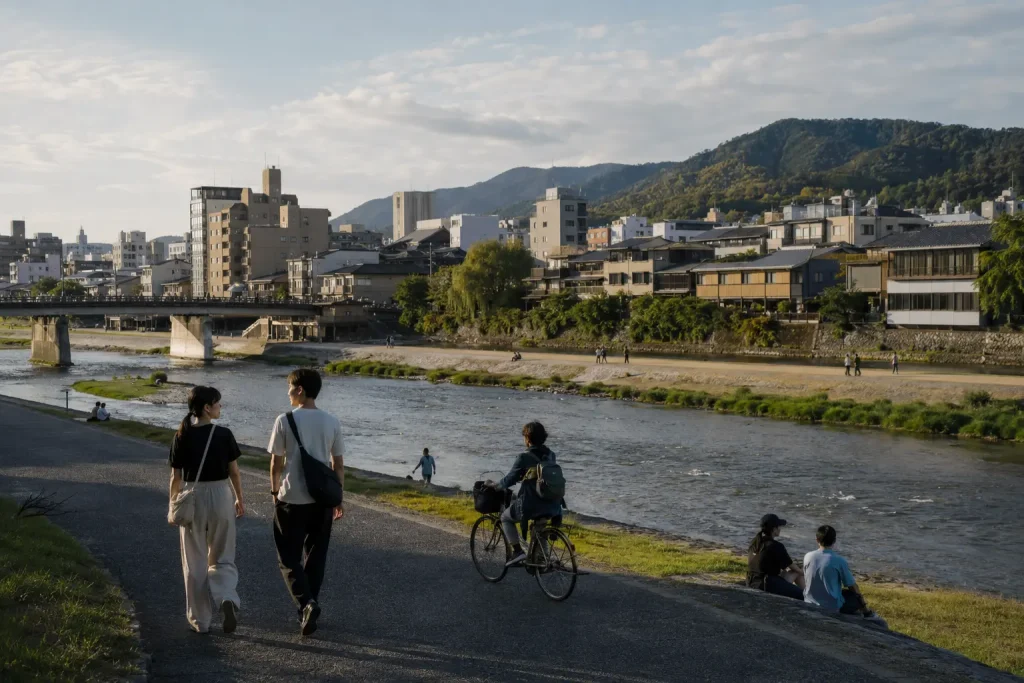
Downtown Kyoto around Shijo-Kawaramachi or Shijo-Karasuma is the best area to stay in Kyoto for most first-time visitors. It balances restaurants, shopping, rail and subway access, and a walkable route toward Gion and the Kamo River. Stay near Kyoto Station for easy train connections and a short visit; choose Southern Higashiyama for early access to historic streets; or book Arashiyama only when quiet evenings and an experience-led stay matter more than central convenience.
Kyoto’s attractions do not form one compact center. Fushimi Inari lies south, Arashiyama west, Kinkaku-ji northwest and Higashiyama’s temple corridor east. No hotel makes all of them walkable. The useful question is which daily friction you prefer: a bus, a transfer, fewer late dinner options or a less atmospheric view from the window.
Kyoto areas at a glance
| Area | Best for | Transit strength | Main compromise |
|---|---|---|---|
| Downtown: Shijo-Kawaramachi / Shijo-Karasuma | First visits, food and evenings | Subway, Hankyu, buses; Keihan nearby | Busy and more commercial than picturesque |
| Kyoto Station | Short stays, day trips and luggage | Shinkansen, JR, subway and airport links | Weak historic atmosphere; buses can be crowded |
| Gion and Southern Higashiyama | Early temple walks and traditional streets | Keihan rail plus buses and walking | Tourist crowds, hills and limited cross-city rail |
| Central Kyoto / Imperial Palace | Calm streets and longer stays | Karasuma subway; buses | Attractions and dinner may require longer walks |
| Northern Higashiyama / Okazaki | Museums, gardens and slower pace | Tozai subway in parts; buses | Less convenient for west and south Kyoto |
| Arashiyama | Ryokan, nature and quiet evenings | JR, Hankyu and Randen serve different points | Far from eastern and central sights |
The table describes areas, not individual properties. Before booking, inspect the route from the exact station exit to the accommodation. A pin that appears central may sit across a river, up a slope or 15 minutes from the line you intended to use.
Downtown Kyoto: the best overall base
Downtown Kyoto is the broad central area around Shijo-dori and Kawaramachi-dori, extending west toward Karasuma and east toward the Kamo River. Shijo-Kawaramachi is the commercial and evening center; Shijo-Karasuma is more businesslike and sits directly on the Karasuma subway line. Between them are shops, restaurants, department stores, covered arcades and access toward Nishiki Market.
This is the best place to stay in Kyoto for travelers who want dinner without planning the return journey first. Pontocho and the Kamo River are close to the east side, while Gion begins across the river. The Hankyu Line provides useful access toward Osaka and the Arashiyama direction; Keihan stations sit east of the river for Fushimi Inari and eastern Kyoto; the subway runs north–south from Karasuma.
The compromise is visual. Many hotel streets look like a modern Japanese city rather than the wood-fronted Kyoto of brochures. That normality becomes useful at 9:30 p.m., when restaurants, convenience stores and transport are still within reach. The historic districts are nearby enough to visit early; they do not need to occupy the hotel lobby.
Choose Kawaramachi for food and evenings
Stay near Kyoto-Kawaramachi, Sanjo or the west bank of the Kamo River if the trip prioritizes restaurants, bars, shopping and walking into Gion. Check nighttime noise and whether the room faces a major street. Pontocho is atmospheric, but luggage and taxis do not enjoy narrow alleys as much as photographs do.
Choose Karasuma for transport and calmer nights
The Shijo-Karasuma area suits travelers who want a subway station, straightforward streets and a somewhat quieter business district. It offers less immediate evening theater but often easier access to Kyoto Station and northern central Kyoto. It can also be better value than the most in-demand riverfront and Gion addresses.
Kyoto Station: best for short stays and regional travel
Kyoto Station is the practical winner for a two-night visit, an early Shinkansen, a late arrival or several day trips. JR lines reach Fushimi Inari, Uji, Nara, Osaka and Arashiyama’s Saga-Arashiyama Station; the Karasuma subway runs north through central Kyoto; airport and intercity connections concentrate here.
The station itself contains restaurants, food shops and services, while the surrounding area includes business hotels, larger properties and several temples. The north side faces Kyoto Tower and the city center; the south side often feels quieter and can offer easier airport-bus or rail logistics. Neither side delivers the historic atmosphere many first-time visitors imagine.
The main weakness is sightseeing by bus. Routes from Kyoto Station toward Higashiyama and other major sights can be busy, and road traffic makes travel time less predictable. Kyoto’s official visitor guidance encourages rail and subway alternatives where possible. Staying near the station should mean using its trains well, not automatically boarding the first famous bus route every morning.
Choose this area when the trip includes Nara, Uji, Osaka or an early departure. For a four- or five-night stay focused mainly on Kyoto itself, downtown usually offers better evenings and more balanced access.
Use luggage delivery instead of carrying bags onto buses
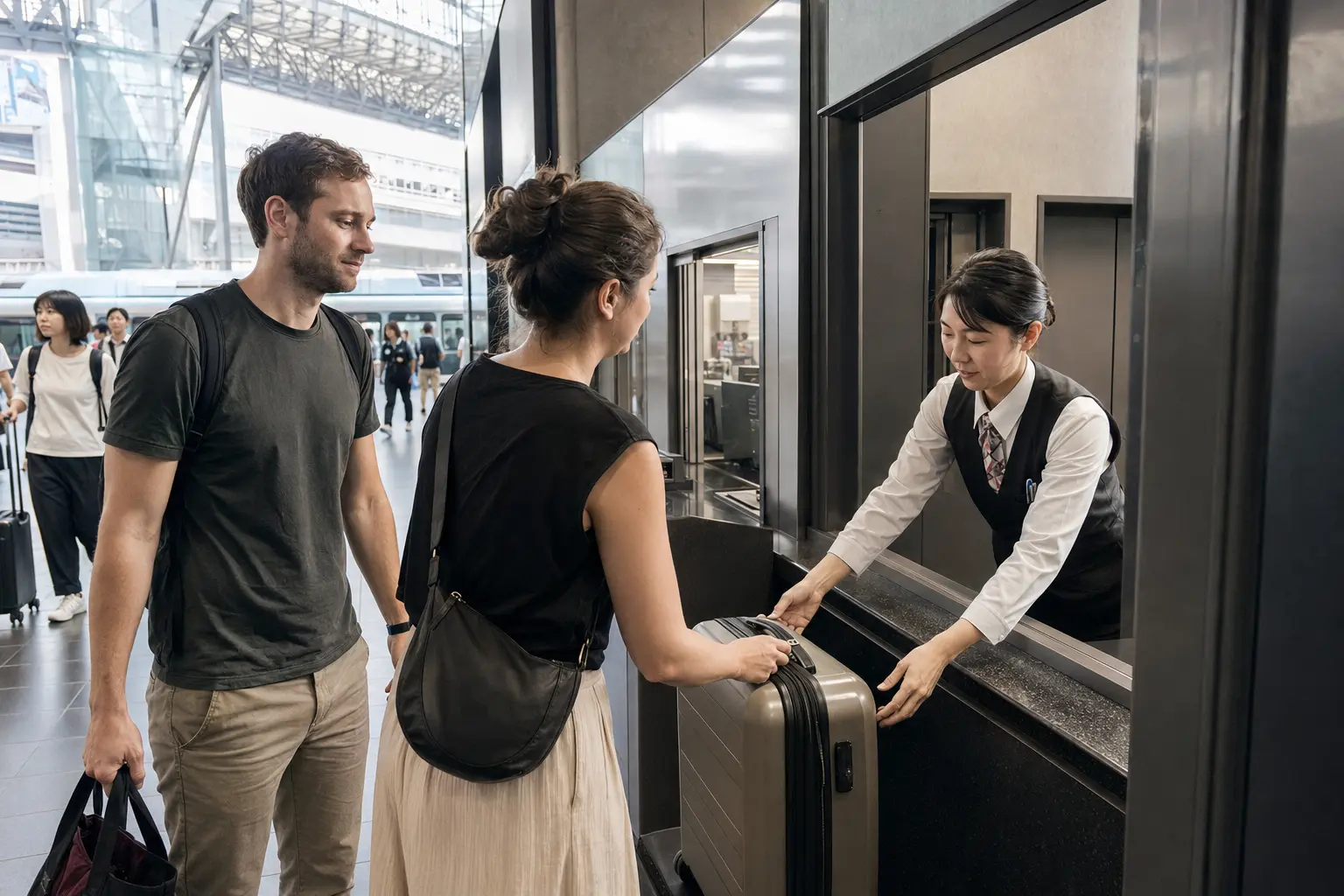
Kyoto promotes hands-free sightseeing because large luggage consumes space on local transport and makes narrow stations and streets harder for everyone. The official Hands Free Kyoto portal lists delivery and storage services between Kyoto Station and participating accommodations. Conditions, cut-off times and eligible properties vary.
This is especially useful when arriving before check-in or moving from a station-area hotel to a ryokan. Drop the large suitcase, keep a small day bag and begin the day without turning a city bus into a luggage rack. Packing efficiently before departure also helps; use a clear carry-on packing list rather than bringing an extra bag solely because it folds flat.
Gion and Southern Higashiyama: best for morning atmosphere
Southern Higashiyama covers the temple slopes and historic streets east of the Kamo River, including areas around Yasaka Shrine, Kodai-ji, Ninenzaka, Sannenzaka and Kiyomizu-dera. Gion sits closer to the river and contains active entertainment districts, restaurants, residences and public streets shaped by the culture of geiko and maiko.
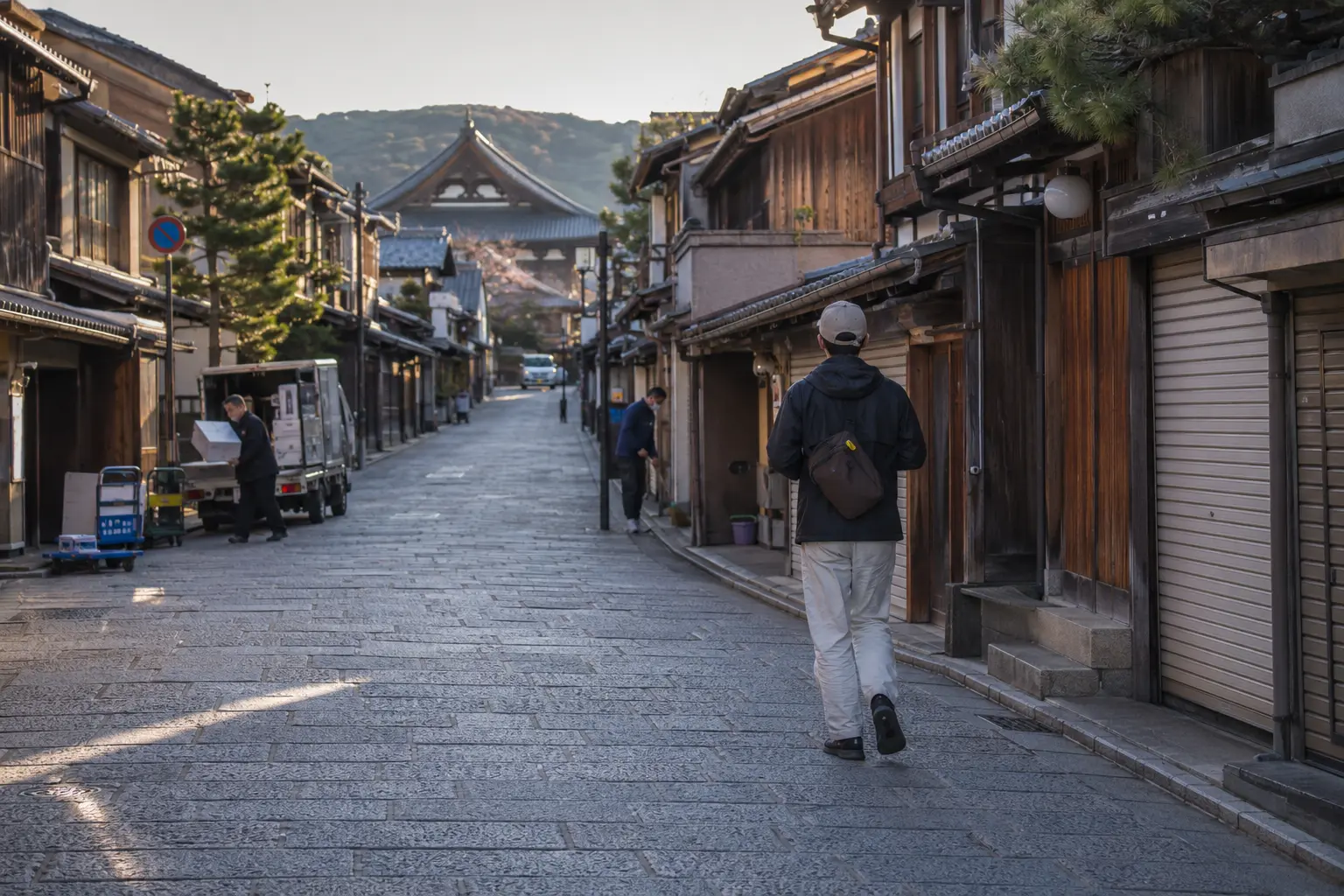
Staying here earns one valuable privilege: walking before the tour groups arrive and after many day visitors leave. An early route through the slopes can show delivery carts, shutters opening and residents moving through streets that become intensely photographed later. The area also makes an evening walk toward Yasaka Shrine or the Kamo River easy.
The price is transport geometry. The Keihan Line helps along the eastern corridor and south toward Fushimi Inari, but many hillside accommodations rely on buses, taxis or walking. Slopes, stone paving and steps matter with luggage, strollers or reduced mobility. Restaurants may close earlier away from central Gion, and popular lanes can feel more commercial than serene during the day.
Stay here for atmosphere, photography, temple mornings or a special machiya or ryokan experience. Choose downtown instead if every day points in a different direction or if late dining matters more than dawn walks.
Respect public and private space in Gion
Gion is not an open-air costume set. Some lanes are private, signs restrict entry or photography, and geiko or maiko traveling to appointments are not street performers. Stay on public routes, follow posted rules and never block or pursue someone for a picture. A hotel address inside a historic district does not grant access to its private life.
Central Kyoto and the Imperial Palace: best for calm and longer stays
Central Kyoto north of Shijo includes the Imperial Palace, broad residential streets, small restaurants, universities, gardens and cultural institutions. Areas near Marutamachi or Imadegawa stations sit on the Karasuma subway line, making Kyoto Station and downtown relatively simple to reach.
This is a good base for a longer visit, repeat travelers, families who prefer quieter evenings or anyone renting an apartment-style room. Morning walks around the palace grounds and access toward Nishijin can add texture that a purely sightseeing district does not.
The compromise is immediacy. Dinner options thin out on some streets, and major eastern or western sights still require a bus or transfer. A property described as “near the Imperial Palace” can be on any side of a very large site, so measure the walk to the usable gate and station.
Stay here if the accommodation itself has more space, laundry or kitchen facilities that improve a weeklong trip. For two nights, the calm may not repay the extra connections.
Northern Higashiyama and Okazaki: best for art, gardens and a slower east side
Northern Higashiyama includes the Philosopher’s Path and temple areas around Nanzen-ji, Eikan-do and Ginkaku-ji, while Okazaki adds museums, cultural venues, canals and Heian Jingu. It feels less dominated by late-night commerce than downtown and less compressed than Southern Higashiyama’s most famous lanes.
This area suits travelers who want garden and museum days, morning walks and a quieter hotel. Properties near Sanjo Keihan, Higashiyama Station or the Tozai subway line keep better transport than addresses farther north along the Philosopher’s Path.
The tradeoff is dinner and cross-city access. Northern addresses can depend heavily on buses, and west Kyoto becomes a longer project. Check whether the hotel has a restaurant, whether nearby places require reservations, and how late the preferred return route runs.
Choose it for a three- or four-night cultural stay with a deliberate east-side itinerary. Do not choose it solely because a map shows many temple icons; those icons include hills, closing times and considerable walking.
Arashiyama: best for an experience-led night
Arashiyama lies in western Kyoto near the Katsura River, Togetsukyo Bridge, Tenryu-ji, bamboo groves and access to Sagano. It is extremely busy during the day in peak seasons, but the center quiets markedly after many visitors leave.
An overnight stay can create an entirely different visit: river light in the evening, an early walk before the main tour flow and time for temple gardens without crossing the city first. Ryokan with dinner and breakfast turn the lodging into part of the itinerary rather than a place to store a bag.
That is also the reason not to use Arashiyama as a default base. Eastern Kyoto, Gion and Fushimi Inari require longer journeys. The area’s JR, Hankyu and Randen stations serve different parts of Arashiyama and are not interchangeable. A beautiful property can be inconvenient if the next three mornings begin on the opposite side of Kyoto.
Stay one or two nights for the experience, or make it the whole base only when western Kyoto, nature and a slower schedule dominate the trip.
Should you stay in a ryokan, machiya or hotel?
Ryokan: choose hospitality, not décor alone
A ryokan stay may include tatami rooms, futon bedding, baths, dinner and breakfast served according to the property’s style. The meal schedule and hospitality are central, which means a guest planning to eat elsewhere and return late may be paying for an experience they repeatedly skip.
One or two ryokan nights can fit well at the end of a busy itinerary. Confirm meal times, bathing arrangements, luggage storage, curfew or entry procedures, and whether stairs are involved. “Traditional” does not define accessibility.
Machiya: check what has actually been preserved
Kyoto machiya are traditional townhouses, but the accommodation market uses the term across a wide range of restorations and new interiors. Look beyond exterior photographs. Check insulation, heating and cooling, bathroom location, stairs, noise transfer, bedding and emergency information.
A whole-house rental offers space and privacy, yet may have less on-site support than a hotel. Verify legal registration and management contact details. Residential lanes require quiet arrivals and responsible waste handling.
Hotels: often the most efficient choice
Hotels provide staffed reception, elevators, predictable beds, luggage handling and a range of room types. In Kyoto, efficiency is not a cultural failure. A good central hotel can free enough time and energy for meaningful temple, garden and food experiences outside the room.
Room size still matters. Compare square meters, bed width and open-floor space, especially if traveling with large luggage. A photograph taken from the doorway can make 16 square meters negotiate like 30.
How to choose the exact property
Measure the real route to transport
Check the walking route to the specific subway, Hankyu, Keihan or JR entrance you will use. “Near a station” can hide a long underground passage or a crossing that takes several light cycles. For a bus-dependent property, inspect the alternative rail or subway route in case roads are congested.
Read reviews for noise, stairs and room function
Search recent reviews for street noise, soundproofing, elevator access, air-conditioning control, luggage space, mattress type and bathroom layout. Overall scores blur these practical details. The room is where a wet coat, two suitcases and a 6:00 a.m. alarm eventually meet.
Confirm meal and check-in rules
Ryokan and small properties may have firm arrival or dinner windows. Late arrival after a long flight is a poor time to discover that dinner service ended. Message the property when transport delays are possible and keep the address in Japanese.
Budget for Kyoto’s accommodation tax
Kyoto’s accommodation tax changed on March 1, 2026. The current per-person, per-night rates are:
| Room charge per person per night | Tax |
|---|---|
| Under ¥6,000 | ¥200 |
| ¥6,000–¥19,999 | ¥400 |
| ¥20,000–¥49,999 | ¥1,000 |
| ¥50,000–¥99,999 | ¥4,000 |
| ¥100,000 or more | ¥10,000 |
The city defines the taxable accommodation charge separately from meals and consumption tax. Check whether a booking platform collects the local tax in advance or the property charges it at check-in. The official Kyoto accommodation-tax notice should be the final reference if rates or implementation details are updated.
Best area by traveler type
- First-time visitor, three to five nights: Downtown around Shijo-Kawaramachi or Shijo-Karasuma.
- One or two nights with trains before and after: Kyoto Station.
- Photographer or early temple walker: Southern Higashiyama, with honest attention to slopes and transport.
- Food and evening priority: Downtown, especially toward Kawaramachi and the Kamo River.
- Family needing space and quiet: Central Kyoto near a subway station, or a well-equipped downtown apartment-style hotel.
- Ryokan-centered stay: Arashiyama, Higashiyama or a central ryokan whose meal schedule fits.
- Several day trips: Kyoto Station or the Karasuma subway corridor.
- Repeat visit: Northern Higashiyama, Okazaki or a residential central area with a specific cultural focus.
The simplest decision
Choose downtown Kyoto when no single part of the trip dominates. Choose Kyoto Station when the rail schedule dominates. Choose Higashiyama when the first and last hours of the day matter most, and choose Arashiyama when the accommodation experience is one of the trip’s main events.
Where to stay in Kyoto is ultimately a decision about which journeys should be easy. No base removes every transfer, but the right one puts the day’s most important hour—an early temple walk, a late dinner or an early train—close enough that it still feels like part of the trip.
Frequently Asked Questions
Where is the best area to stay in Kyoto?
Downtown Kyoto around Shijo-Kawaramachi or Shijo-Karasuma is the best area for most first-time visitors. It balances restaurants, shopping, rail and subway access, and a walkable route toward Gion and the Kamo River.
Why is choosing a Kyoto hotel area harder than in other cities?
Kyoto’s attractions don’t form one compact center. Fushimi Inari lies south, Arashiyama west, and Higashiyama’s temple corridor east, so no single hotel location makes all of them walkable.