
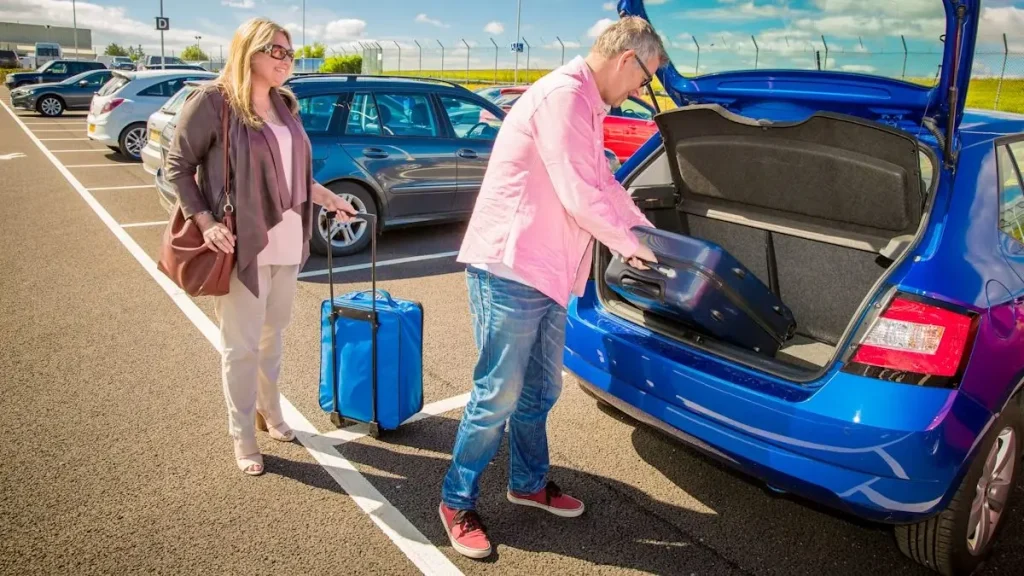
A road trip packing list works best in three zones: safety gear in a fixed accessible place, comfort and navigation in the cabin, and ordinary luggage in the trunk.
Bring license, registration, insurance, roadside-assistance details, phone navigation with an offline backup, charging cables, water, snacks, medication, weather layers and a route-appropriate vehicle emergency kit. Inspect the car before departure and keep safety equipment reachable without unloading every suitcase. The exact kit depends on distance, weather, road conditions, vehicle and who is traveling.
Road trip essentials at a glance
Vehicle and emergency items
- Driver’s license, registration, proof of insurance and rental agreement if applicable
- Roadside-assistance contact and emergency numbers
- Spare tire or vehicle-supplied repair system, jack and tools you know how to use
- Warning triangles or other locally appropriate visibility equipment
- Flashlight, work gloves and basic first-aid kit
- Phone charger and backup power
- Water and route-appropriate emergency food
- Seasonal equipment required or recommended for the roads ahead
Cabin bag
- Phone mount used legally and safely
- Offline maps or printed route backup
- Wallet, toll payment method and small cash backup
- Prescription medication
- Reusable water bottles and manageable snacks
- Sunglasses, tissues, hand sanitizer and trash bags
- Weather layer and one change of underwear
- Headphones for passengers only; the driver needs full awareness
Trunk and overnight luggage
- Clothing organized by stop rather than traveler when useful
- Compact toiletry kits
- Accommodation and activity equipment
- Cooler secured against movement
- Laundry or wet bag
- Reusable tote for groceries and loose items
Check the car before you pack it
A packing list cannot compensate for neglected maintenance. Check the owner’s manual and arrange appropriate inspection or service before a long journey. Tires, lights, fluids, brakes, battery condition and wipers deserve attention, but the correct procedure and limits depend on the vehicle. If you are not qualified to assess them, use a professional rather than a roadside tutorial.
Confirm that the spare tire or repair kit is present and usable, and learn how roadside assistance works in the areas on your route. Remote roads, winter conditions and extreme heat need more planning than a highway between populated cities.
Keep safety equipment accessible
Do not bury the flashlight, warning equipment or first-aid kit beneath luggage. Give emergency gear a consistent location near a hatch or door, then secure everything so it cannot become a projectile during sudden braking. Heavy items belong low and against a seatback or cargo barrier where the vehicle design supports it.
Pack for the route’s realistic delay, not an apocalypse catalog. Water, warmth, visibility and communication are core needs; extra fuel, traction devices, recovery gear or specialist supplies require lawful storage and the knowledge to use them safely.
Organize the cabin around the next stop
The cabin should hold only what people need between stops. Put water and snacks where passengers can reach them without the driver searching, keep medication temperature requirements in mind and use one small trash container. Download maps, lodging addresses and important route notes before losing signal.
Plan breaks based on distance, road conditions and driver fatigue. The so-called 3-3-3 rule appears online in several forms, often suggesting limits on driving hours, daily mileage or arrival time; it is not one universal safety standard. Use conservative timing and current official road-safety guidance instead of treating a catchy number as permission to keep driving tired.
Pack food and water without creating cabin chaos
Choose snacks that are easy to portion and unlikely to melt, leak or require two hands. Keep perishable food properly chilled and clean the cooler between uses. Refill water at reliable stops and carry an additional emergency amount when the route has long gaps in services.
A cooler should be secured, not balanced on a seat. Keep a small day supply in the cabin and the reserve elsewhere. Strong-smelling snacks are a private decision until several people share the car for six hours.
Road trip packing list with kids
Use the correct child restraint for each child’s age, size and local law, installed according to the manufacturer. Add water, familiar snacks, medication, wipes, a change of clothing and a few low-mess activities. Store small toys so they cannot roll under the driver’s pedals, and schedule more breaks than an adult-only itinerary.
For pets, use appropriate restraints or carriers, bring water, food, medication, waste supplies and lodging records, and never leave an animal in a parked vehicle where temperature can rise dangerously. Check pet rules at every stop.
Pack overnight bags by stop
When changing hotels, use one small overnight bag for each stop or group everyone’s next-day items together. This prevents the nightly ritual of unloading the entire trunk for a toothbrush. Keep valuables, documents, medication and electronics with you rather than visible in a parked car.
For a short journey, the weekend trip packing list covers clothing quantities. Use the travel toiletries list to reduce bathroom items and the packing list generator for trip length, travelers and activities.
Frequently asked questions
What are the must-haves for a road trip?
Carry legal vehicle documents, communication and navigation, water, medication, payment methods, weather protection and a vehicle-specific emergency kit. The route, season, distance and passengers determine what must be added.
What is the 3-3-3 rule for road trips?
The phrase has several competing definitions involving driving time, mileage or arrival time, so it is not a dependable universal rule. Plan conservative daily distances, take regular breaks and stop when tired, following official safety guidance.
The best road trip packing list is designed for access. Safety gear should be reachable, cabin items should reduce distraction and luggage should stay secured. That organization matters more than adding another gadget to the glove compartment.
Editorial note: Vehicle, road, weather and legal requirements vary. Check the owner’s manual and current official transport and emergency guidance for your route.