
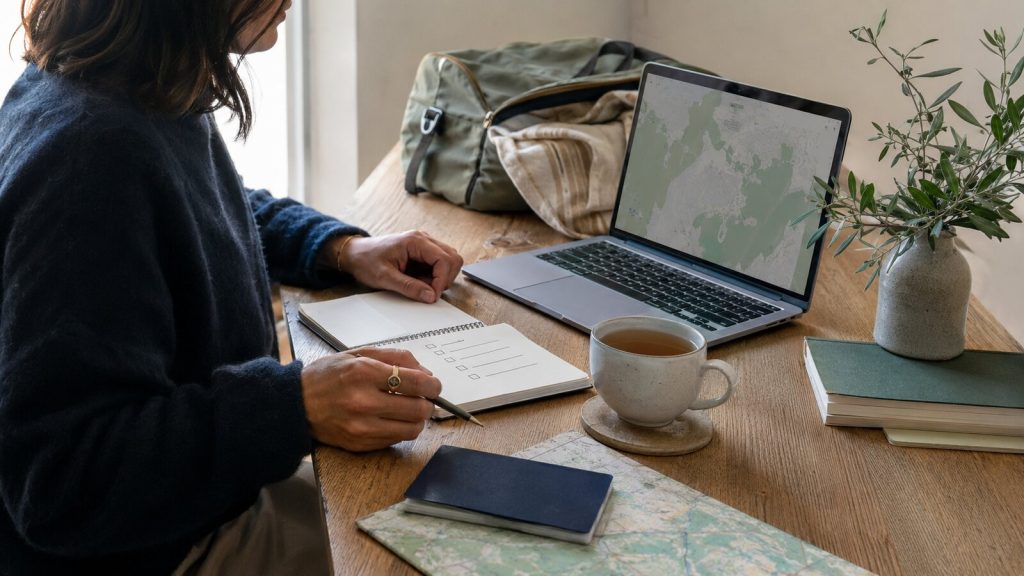
Planning a solo trip can feel strangely more difficult than planning for two. There is no argument over dates, no committee choosing the hotel and nobody lobbying for a 6 a.m. food tour—yet every decision lands on the same desk. Yours.
The solution is not to research until uncertainty disappears. It will not. A calmer approach is to make the few decisions that remove the most friction, then leave the trip enough room to become a trip. This step-by-step system shows you how to plan solo travel without trying to anticipate every possible version of the future.
Start with the shape of the trip, not the destination
Before opening twelve tabs of cheap flights, decide what you want the trip to feel like. “I want to go somewhere” is an excellent impulse but a rather poor search filter.
Write down four constraints:
- Time: the dates you can travel and the maximum number of nights
- Budget: the total you can spend without making the return home unnecessarily dramatic
- Energy: whether you want rest, culture, nature, food, nightlife or a mix
- Complexity: how much unfamiliar transport, language and logistics you want to handle alone
A first solo trip does not need to prove anything. A long weekend in a city with direct transport can teach you more about your preferences than a three-week, six-country route designed mainly to look adventurous from a distance.
Choose a destination by friction, not reputation
There is no universally perfect solo destination. The useful question is whether a place suits you on this particular trip. Compare two or three candidates using practical friction points:
- Can you reach the destination without an exhausting chain of connections?
- Is public transport understandable and available when you arrive?
- Can you afford accommodation in a convenient area?
- Are the activities you actually enjoy easy to do alone?
- Will language differences be stimulating or draining for you?
- Are entry rules, local laws and current travel advisories clear?
Use official sources to verify entry requirements and current conditions. U.S. travelers can start with the State Department’s international travel planning guidance; travelers from elsewhere should use their own government’s foreign-travel service as well as the destination’s official immigration site.
Do not choose a place solely because it appears on every “best for solo travel” list. Ease matters, but interest matters too. A flawless transport network will not rescue a destination you do not particularly want to visit.
Set a solo travel budget with the expensive parts first
Solo travel can cost more per person because there is nobody to split a room, taxi or car hire with. Work from the fixed costs outward:
- Price transport to and from the destination.
- Check accommodation in areas you would genuinely stay, not the cheapest bed at the far edge of the map.
- Add travel insurance, visas, airport transfers and essential local transport.
- Estimate food and paid activities.
- Add a buffer for changes, missed connections or the occasional strategic taxi.
If the total is too high, shorten the trip, change the dates or choose one base instead of several. Do not quietly remove the emergency buffer and call the result affordable. That is merely optimism wearing a calculator.
Book the first night and solve the arrival
The arrival deserves more planning than the fourth afternoon. You will be carrying luggage, interpreting a new transport system and possibly operating on the nutritional remains of an airport sandwich.
Before booking, answer these questions:
- What time will you arrive in the city—not merely land?
- How will you travel from the airport or station to the accommodation?
- Will reception or self-check-in still be available?
- Do you have the address saved offline and in the local language?
- What is the backup if the train stops running or the flight is delayed?
Official U.S. guidance recommends arranging reputable airport transport and researching local taxi or rideshare options before arrival, particularly for women traveling alone. Whatever your gender, the principle is useful: the fewer improvised decisions you make while tired and encumbered, the better.
Choose accommodation for location and recovery
A cheap room can become expensive in time, taxis and depleted energy. For a first solo trip, prioritize a well-reviewed property in an area with straightforward transport, food nearby and an arrival route you understand.
Read recent reviews from solo travelers and look for comments about:
- What the immediate streets feel like after dark
- Noise, locks, reception and late check-in
- Walking distance to useful transport
- Whether staff are present and helpful
- How accurately the listing describes the room and neighborhood
A hostel is not mandatory for meeting people, and a private room is not evidence that you are doing solo travel incorrectly. Choose the environment in which you can sleep. Confidence tends to improve after rest; almost everything becomes a moral crisis when it is three in the morning.
Plan only the first 48 hours in detail
Research from experienced solo travelers is remarkably consistent on one point: the beginning is the hardest part. Give your first two days a light structure so you are not making every decision from scratch.
For arrival day, plan:
- The route to your accommodation
- A nearby place to buy water and an easy meal
- One short walk around the immediate neighborhood
- An early night or quiet evening with no heroic expectations
For the first full day, choose one anchor activity: a walking tour, museum, market, class or familiar kind of outing. Add one optional place nearby. That is enough. Your task is to learn the city’s rhythm and your own energy, not to complete it.
After the first 48 hours, plan in broad blocks. One main activity and one optional plan per day leaves space for transport, meals and the fact that interesting streets do not adhere to itineraries.
Build a small solo safety system
Safety planning should reduce anxiety, not become a catalogue of everything that could go wrong. Create a short system you can actually follow:
- Share your overall route and accommodation details with one trusted person.
- Agree on a check-in rhythm that is useful but not constant surveillance.
- Save local emergency numbers and the address of the nearest relevant embassy or consulate.
- Keep backup payment access separate from your main wallet.
- Store copies of important documents securely, not in a public itinerary.
- Download offline maps and translation tools.
- Know how you will leave a situation or return to the accommodation.
U.S. citizens traveling abroad can also consider the free Smart Traveler Enrollment Program for embassy and consulate alerts. This article focuses on the planning process; our separate guide to solo travel tips for women covers more gender-specific situations.
Reduce decisions before you leave
Overwhelm often comes from decision volume rather than danger. Remove small choices in advance:
- Save three nearby meal options instead of forty restaurants across the city.
- Download the transit app and learn how tickets work.
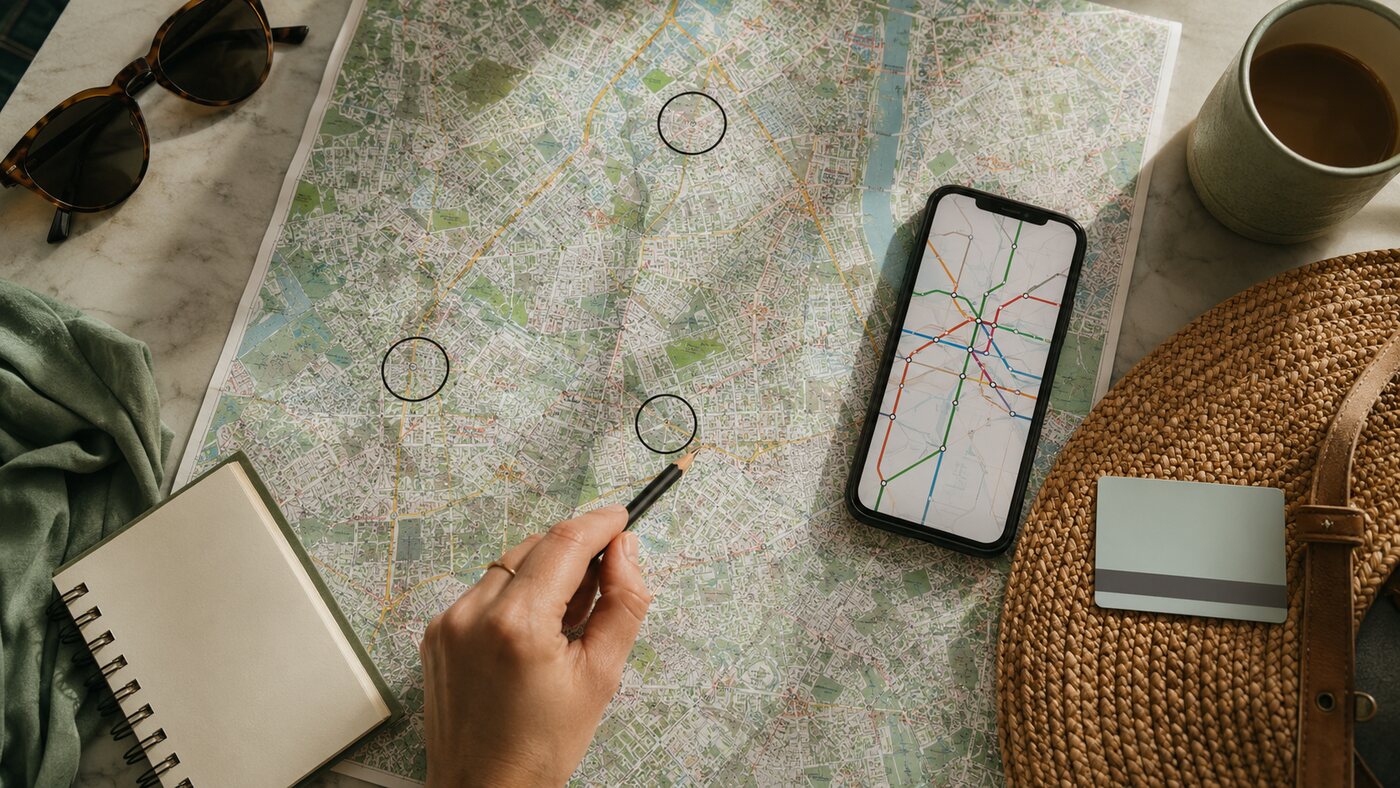
- Pin your accommodation, arrival station and first-day activity on one map.
- Choose a simple airport outfit and pack lightly enough to manage your own bag.
- Keep confirmation emails, tickets and insurance information in one accessible folder.
A concise carry-on packing list can prevent the packing stage from expanding to fill the emotional space available. Bring what you can comfortably move, lift and keep track of alone.
Make a plan for loneliness and sensory overload
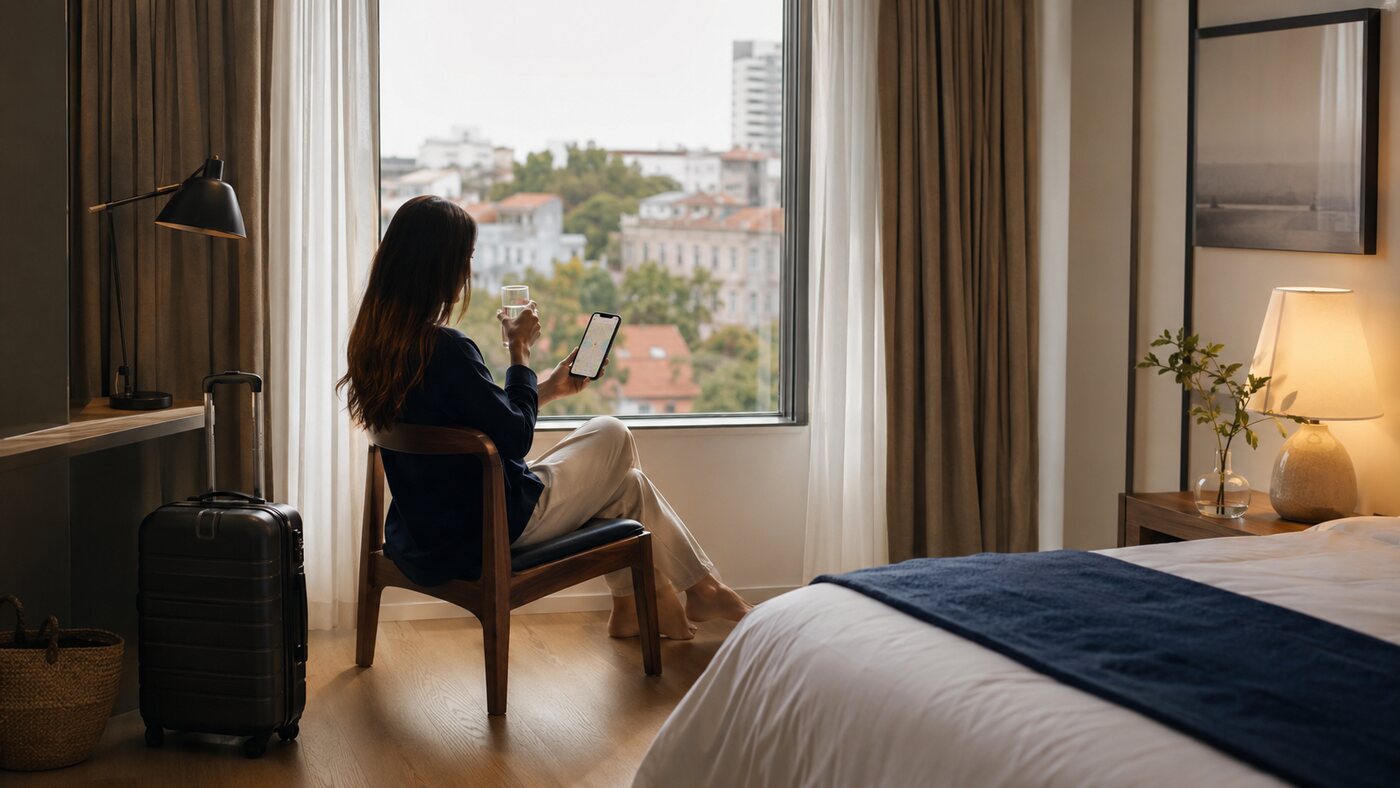
Feeling lonely, tearful or overwhelmed on arrival does not mean the trip was a mistake. First-day posts in solo-travel communities often describe the same combination: fatigue, hunger, heat, crowds and the sudden absence of familiar cues. The immediate answer is usually less philosophical than it feels.
Create a reset list before departure:
- Eat something simple and drink water.
- Shower, unpack the essentials and sleep.
- Walk to one nearby café or shop, then return if you want.
- Message someone who knows the difference between reassurance and an interrogation.
- Cancel an optional activity without putting yourself on trial.
- Reassess after a full night rather than during the first exhausted hour.
If you worry about being watched or judged while eating, sightseeing or sitting alone, our guide to getting over the fear of being seen alone addresses that particular mental spotlight. Most people are thinking about themselves, which is both mildly insulting and enormously freeing.
Practice one solo skill at home
You do not need to rehearse the entire trip, but one small practice can turn an abstract fear into information. Take a train to a nearby town, eat lunch alone, navigate with an offline map or spend an afternoon without asking anyone else what they want to do.
Notice what felt easy and what drained you. Perhaps you enjoy museums alone but dislike returning late. Perhaps you love making spontaneous choices but need a reserved room and a clear arrival route. These are not flaws; they are planning data.
A simple solo trip planning order
When the tabs multiply and the plan starts to feel shapeless, return to this sequence:
- Define dates, budget, desired pace and acceptable complexity.
- Choose a destination and verify current entry and safety information.
- Book the main transport.
- Reserve well-located accommodation, starting with the arrival night.
- Solve the airport or station transfer and late-arrival backup.
- Arrange insurance and essential documents.
- Plan the first 48 hours and one anchor activity per later day.
- Create the safety, payment and offline-access backups.
- Pack a bag you can manage without assistance.
- Stop researching when the essential questions have answers.
The goal is not to feel fearless
You may still feel nervous after planning well. That is not evidence of poor preparation; it is a reasonable response to doing something unfamiliar on your own.
A good solo travel plan gives you a secure first night, a clear arrival, enough money, access to help and a gentle beginning. It does not script every hour or eliminate every awkward moment. Leave space to learn what kind of solo traveler you are. That discovery is part of the itinerary, even if it refuses to fit neatly into a cell.
Frequently Asked Questions
How do you start planning a solo trip?
Start with the shape of the trip, not the destination. Write down four constraints first: your available time and maximum nights, total budget, energy level, and what pace of travel you actually want, before opening flight search tabs.
Is it hard to plan a solo trip?
It can feel harder than planning with others because every decision lands on one person, but a calmer approach is to make the few decisions that remove the most friction first, then leave room for the trip to unfold rather than trying to plan every detail in advance.